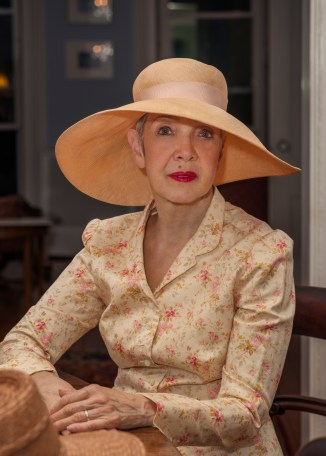
An Interview with Claire Clairmont from Claire’s Last Secret By Marty Ambrose

Claire Last Secret CoverWe are going to speak today with Claire Clairmont at the Palazzo Cruciato in Florence, Italy.  She is a nineteenth-century woman of “a certain age” and, most interestingly, the last living survivor of the Byron/Shelley “Haunted Summer” of 1816!  Welcome, Claire!

Q:  First of all, I want to ask about your connection to Mary Shelley.  Wasn’t she your stepsister?

Claire:  Yes, her father, William Godwin, married my mother when I was a young girl.  We grew up together, along with my brother, Charles, and her stepsister, Fanny.  It was an unusual “blended” family for the time, but we loved each other.  I miss them all very much.

Q:  Do you mind telling us about your relationship with Mary?

Claire:  It was . . . complicated.  We had so much in common, especially our love of books; and, when she fell in love with Shelley, I accompanied them on their elopement to Europe.  Mary and I were both barely seventeen when we traveled together with him through France, Switzerland, and Italy—rarely spending any time apart, sharing the good times and the bad.  But, later, I think Mary grew tired of always having me around; she wanted Shelley to herself.  I suppose that I cannot blame her.  Eventually, we grew quite distant—especially after Shelley drowned near Le Spezia. She returned to England with her sole surviving son and achieved fame with her novel, Frankenstein, while I stayed in Europe.  But we were always sisters in our hearts.

Q:  Speaking of hearts, you were involved with a famous poet yourself:  Lord Byron.  Do you want to tell us about him?

Claire:  It was such a long time ago . . . but he is not the type of man you could ever forget. Handsome, magnetic, brilliant—he was all of those things, but he could also be cruel.  What can I say, except that I loved him, body and soul?  We first met in London and, then, connected in Switzerland when he, Mary, Shelley and I spent the summer of 1816 on the shores of Lake Geneva.  It was truly a magical time.  Because of the violent thunderstorms, we were driven indoors to Byron’s Villa Diodati and would tell ghost stories at night.  One evening, Byron even proposed we all write a tale to frighten each other—and that’s how Mary came to write Frankenstein. When not trying to scare each other, we sailed the lake and read poetry together.  Unfortunately, our idyll did not last beyond the summer—and there were consequences: Byron and I had a daughter, Allegra. She was the greatest joy of my life.

Q: I know this part is a little difficult, but what happened to your daughter?

Claire:  Well . . . Byron and I could never marry since his wife would not grant him a divorce, so I sent Allegra to live with him in Ravenna, Italy.  It was a dark time politically, and Byron became involved with the Carbonari—Italian revolutionaries who fought to free their country from the Austrians.  Byron thought it was unsafe for Allegra to be there, so he sent her to a convent school at Bagnacavallo.  I wanted her to live with me, but he stubbornly refused my request.  After less than two years at the convent, Allegra caught typhus, and supposedly died in 1822.  It was the greatest tragedy in my life . . .

Q: Supposedly?  So, there’s a mystery surrounding her fate?

Claire:  Oh, yes . . . which I learned only recently!

Q: I am intrigued, especially since you spent many years believing she had not survived.  It must have taken a lot of fortitude to go on.  What do you believe is your strongest trait?

Claire:  My strongest trait is my ability to survive.  I had to live by my own wits for most of my life, yet I always tried to rebound quickly from even the most difficult of circumstances.  I had a child on my own, traveled the world, and always believed that a woman could have the same freedom as a man.  I embraced life wholeheartedly, even when my choices didn’t always produce the effects for which I hoped.   I lived life on my own terms.

Q:  Worst trait?

Claire:  Impulsiveness—but this quality has been tempered over the years.  I risked everything when I was young and I do not regret it, but now that I am the sole support my dear niece and her daughter, I find that their welfare must be considered first.  But I would not mind one more big adventure . . .

Q:  Really? At your age?

Claire:  Please.

Q:  All right. I hope you find the answers about your daughter, Allegra.

Claire:  Thank you . . . sometimes life takes one in a most unexpected direction; to know about Allegra’s fate has been one of my most cherished dreams. I know I will find the truth.

Marty Ambrose has been a writer most of her life, consumed with the world of literature whether teaching English at Florida Southwestern State College or creating her own fiction.  Her writing career has spanned almost fifteen years, with eight published novels for Avalon Books, Kensington Books, Thomas & Mercer—and, now, Severn House.

Two years ago, Marty had the opportunity to apply for a grant that took her to Geneva and Florence to research a new creative direction that builds on her interest in the Romantic poets:  historical fiction.  Her new book, Claire’s Last Secret, combines memoir and mystery in a genre-bending narrative of the Byron/Shelley “haunted summer,” with Claire Clairmont, as the protagonist/sleuth—the “almost famous” member of the group.  The novel spans two eras played out against the backdrop of nineteenth-century Italy and is the first of a trilogy.

Marty lives on an island in Southwest Florida with her husband, former news-anchor, Jim McLaughlin.  They are planning a three-week trip to Italy this fall to attend a book festival and research the second book, A Shadowed Fate

Christmas, 2017 068


Review: Hidden Among the Stars by Melanie Dobson

978-1-4964-1732-9In most dual-time period novels I prefer the historical line more than the contemporary one. In Melanie Dobson’s new novel, Hidden Among the Stars, I was deeply immersed in both. In the contemporary line we meet Callie, a bookstore owner who reads stories to children and is comfortable living in the secluded nest of Mount Vernon, Ohio. This appealed to me because I live nearby. The author has definitely been here as everything she described was completely accurate from the hiking trail to the Ohio State campus. That was a bonus, however, because the world of children’s stories and the compelling backstory of Callie and her sister and their mysterious but loving mentor Charlotte kept me turning pages.

Likewise the stories of Annika and the boy she admires Max and the girl he longs to marry Luzia set in Austria at the onset of WWII was so vividly drawn and compelling that I could not say which storyline I preferred.

The stories are tied together at the beginning. We know what the mystery is about: A bookstore owner discovers a cryptic list in an old book and finds herself linked to the story of a mysterious Austrian castle, where priceless treasures were hidden in the early days of WWII. We, along with Callie, suspect that Charlotte, who spent time in an orphanage in France during the war, has some connection to this old book that no one yet understands, not even Charlotte. All the characters, even Josh the man that Callie finds herself drawn to, have pasts that make it hard for them to trust and love again, and that makes a reader root for them all.

The faith element is clear in this novel and the characters cling to the hope that Jesus brings into their lives. If I have any complaint, it’s very slight. I thought the first time Josh tells Callie about his faith it seemed more like a sermon than a conversation. However, when it comes up later it flows naturally within the story. And when you are dealing with personal loss (contemporary) and persecution of the Jews (historical) clinging to one’s faith is expected. The novel did not come off preachy in my opinion.

In the Author’s Note, Melanie explains that she indeed has been to the places she writes about. From a bookstore in a small Ohio town to a castle beside a lake in Austria, these places spoke to her and they certainly spoke to me as I read the story, not just as interesting locations, but as places where common people lived, loved, and did the best they could to overcome obstacles and evil. I loved this book. I think you will too!

pic_FULL_Dobson_MelanieMelanie Dobson is the award-winning author of more than fifteen historical romance, suspense, and time-slip novels, including Catching the Wind and Chateau of Secrets. Three of her novels have won Carol Awards, and Love Finds You in Liberty, Indiana won Best Novel of Indiana in 2010. Melanie loves to explore old cemeteries and ghost towns, hike in the mountains, and play board games with her family. She lives near Portland, Oregon, with her husband, Jon, and two daughters.

An advance copy of Hidden Among the Stars by Melanie Dobson was provided to me by the publisher for the purpose of review without any requirements. I have given my honest opinion.

***

Cindy Thomson is the author of eight books, including her newest novel, Enya’s Son, third in the Daughters of Ireland series based on ancient legends. Being a genealogy enthusiast, she has also written articles for Internet Genealogyand Your Genealogy Today magazines, and children’s short stories for Clubhouse Magazine. She has also co-authored a baseball biography. Most everything she writes reflects her belief that history has stories to teach. Cindy and her husband live in central Ohio near their three grown sons and their families, and can be found online at www.cindyswriting.com, on Facebook www.facebook.com/cindyswritingand on Twitter: @cindyswriting.


An Interview with the main character from Annie’s Stories by Cindy Thomson


coverOptions_AnnieStories_110113.pdfAnnie’s Stories tells the story of Annie Gallagher, an immigrant from Ireland. We first met Annie in Grace’s Pictures, the first book in the Ellis Island Series. Annie is the housekeeper at Hawkins House, a boarding house for new immigrants run by Mrs. Agnes Hawkins.

Annie, can you tell us how you came to work at Hawkins House?

Oh, now, that’s a question that requires a whole novel to explain. But I’ll give you just a bit of it. I had the unfortunate experience of being put in a place called a Magdalene Laundry back in Ireland, and against my will too! I’ll not tell you how I got out, but I was sent to Hawkins House in Manhattan where a woman named Mrs. Hawkins (better known to some of us as the Hawk) set me up as her housekeeper. I was happy to be there, but I wanted more for my new life in America. The stories my father wrote for me turn out to have a part in helping me achieve my goal, and then some!

On the cover you’re holding a copy of L. Frank Baum’s The Wonderful Wizard of Oz. Can you tell us why? I mean, it is a children’s book.

Then perhaps you’ve not read it? The book is a wonder for several reasons. I was drawn to the story because Dorothy Gale feels neglected by her aunt and uncle, and everything in Kansas is so gray and unwelcoming. She wants excitement. And she certainly gets that in Oz. I know what it’s like to feel that way. And besides all that, the book is printed in such wonderful colors. I had never seen anything else like it. And as for it being for children, ’tis a well-known fact that Mr. Baum has stated the book will appeal to adults as well as children. I would not be surprised if someone made a stage production out of this story. I’ve read it more than once.

Tell us something about the other characters who appear in Annie’s Stories.

Well, there is Mrs. Hawkins, of course. She’s a kindly soul, but rather mysterious. Readers will learn a lot more about her than they did in Grace’s Pictures. Grace and Owen from the first book in the series are in Annie’s Stories as well. Readers of Grace’s Pictures will remember Reverend Clarke and Mr. Parker. There is a terrible Pinkerton man, although if you want my opinion he should not be around at all. And then my troublesome cousin Aileen comes through Ellis Island from Ireland, like I did except not from the laundry. She really should have been the one sent to the laundry, although I would not have wished that on her or anyone. But I’ll let you read about that. We have a new boarder at Hawkins House named Kirsten. She and her perplexing brother Jonas keep us busy. And then there is Stephen Adams the postman. I won’t tell you much about him except that he’s handsome. There are a few other important folks, but you can meet in them in the pages.

I hear that you like to read. Why are books and stories so important to you?

I was raised on stories. My father, God rest his soul, was a seanchai back in Ireland. That’s the word for storyteller. It was his occupation. Stories and the telling of them is my precious link to his memory, and without that I would feel lost. Stephen loves books as well, and he even lives over top of the offices of a publisher. Books feed our souls in a way that no other entertainment can. Wouldn’t you agree?

Thanks so much for chatting with us, Annie. We look forward to your story.

Thank you for inviting me. I hope we meet again in the pages of Annie’s Stories.

About the book:

The year is 1901, the literary sensation The Wonderful Wizard of Oz is taking New York City by storm, and everyone wonders where the next great book will come from. But to Annie Gallagher, stories are more than entertainment—they’re a sweet reminder of her storyteller father. After his death, Annie fled Ireland for the land of dreams, finding work at Hawkins House.

But when a fellow boarder with something to hide is accused of misconduct and authorities threaten to shut down the boardinghouse, Annie fears she may lose her new friends, her housekeeping job . . . and her means of funding her dream: a memorial library to honor her father. Furthermore, the friendly postman shows a little too much interest in Annie—and in her father’s unpublished stories. In fact, he suspects these tales may hold a grand secret.

Though the postman’s intentions seem pure, Annie wants to share her father’s stories on her own terms. Determined to prove herself, Annie must forge her own path to aid her friend and create the future she’s always envisioned . . . where dreams really do come true.

Cindy Thomson is the author of eight books, including her newest novel, Enya’s Son, third in the Daughters of Ireland series based on ancient legends. Annie’s Stories is book two in the Ellis Island Series, published by Tyndale House Publishers. Each book can be read stand alone. Being a genealogy enthusiast, she has also written articles for Internet Genealogyand Your Genealogy Todaymagazines, and children’s short stories for Clubhouse Magazine. She has also co-authored a baseball biography. Most everything she writes reflects her belief that history has stories to teach. Cindy and her husband live in central Ohio near their three grown sons and their families, and can be found online at www.cindyswriting.com, on Facebook www.facebook.com/cindyswritingand on Twitter: @cindyswriting.

authorpiccindy-thomson-HR-2


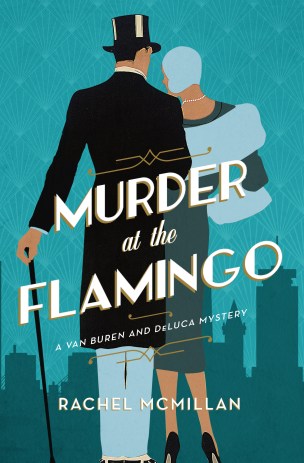
All About Reggie from Rachel McMillian’s Murder at the Flamingo

Flamingo9_8_1Name: Regina Van Buren (but I only get Regina from my mother’s bridge club. I go by Reggie).

Parents: William Van Buren and Patricia Van Buren

Siblings: an older brother who is a stock broker in New York, Richard.

Places lived: New Haven Connecticut, Charlestown/Boston

Jobs: debutante (is this a job? No wonder I ran away), secretary to Luca Valari

Friends: Hamish DeLuca, Nate Reis, Vaughan Vanderlaan ( though I currently would like to throw a glass of chardonnay in his face, we are still friends).

Enemies: every other socialite at my parents’ tea socials who wish Vaughan Vanderlaan was on their arm instead of hers.

Dating, marriage: Vaughan proposed out of nowhere, in front of an entire garden party.  Obviously, I slapped him across the face and then hopped the first milk train run to Boston. Haven’t heard from him since so unsure if we’re still dating.

Children: none

What person do you most admire?  I’d love to have the panache and guts of Myrna Loy. She and William Powell just run headfirst into mystery and mayhem and adventure—and she does it with such style.  But speaking to people of my personal acquaintance, I would have to say Hamish DeLuca.  He has these episodes of nerves, see. Sometimes I think he is even having a heart attack. They can stutter his voice and cause his hand to shake but he is still determined to overcome and to see us to the end of our first amateur sleuthing opportunity. I admire his loyalty to his cousin Luca, too. Even if Luca doesn’t deserve it.

Overall outlook on life: I want adventure! And romance! And dancing! Life is exceptional, isn’t it? All the interesting people you meet and the corners to be turned … and the friends to be had.  Why, just the past Summer I met two new friends—Nate and Hamish.  Hamish of course looks at me in a way Nate never would… but he’s a dear, dear friend. Something in the tingles I feel down to my toes when we dance at the Flamingo make me wonder just how dear a friend…

Do you like yourself? I would rather be inimitable me than anyone else in the world! I mean look at the adventures I am having!  Cannoli every day, an office in the North End, a glistening world of night clubs and enough mystery to keep me jogging in my oxfords around the cobblestoned streets of Boston’s North End during the day.

What, if anything, would you like to change about your life? I wish that I didn’t feel guilty about the amount of wealth I had while so many have had nothing. Of course, Roosevelt’s New Deals are going a long way and I mean to start volunteering at Mildred Rue’s Temporary Employment Agency: but I have never known loss or suffering. I wish there wasn’t such a great divide between those who have and those who have not.  I am seeing it more and more as I work in the office for Luca Valari while he gets his Flamingo Club up and running.

How are you viewed by others?  I suppose as another New Haven debutante.  As someone who ought to be more graceful than she is. I feel like a dandelion at the end of a long line of roses.  But I am trying. I know that Hamish thinks me trustworthy and Nate thinks I am smart and Luca thinks I have the taste and class to help him manage before his club’s opening.

Physical appearance:

Eyes: brown

Hair: brown. I try to set it in finger waves carefully but the Boston humidity can wreak havoc on all my efforts. And unlike home when there was always someone to do it for me, it’s gotten harder.

Voice: Hamish says I have a bit of the Brahmin about me. Crisp glass like Clara Bow or Katharine Hepburn.  Alto.

Right- or left-handed? Right.

Characteristics: I have freckles.

When are you happy?  The first bite of Mrs. Leoni’s cannoli, ripping up the dance floor with Hamish.

What do you like best about the other main characters in your book? I like Luca’s suave sophistication and the way he can Clark Gable a room, I like that Hamish has a good heart and a need to see everything right. Not to mention his loyalty to Luca.  I like Nate’s sense of humour.

What do you like least about the other main characters in your book? I don’t trust Luca Valari as far as I can throw him.

Thanks for visiting with us today on PASTimes, Reggie!

Rachel McMillan is a history enthusiast, lifelong bibliophile, and author of the Herringford and Watts series. When not reading (or writing), Rachel can be found at the theater, traveling near and far, and watching far too many British miniseries. Rachel lives in Toronto where she works in educational publishing and is always planning her next trip to Boston. Facebook: RachKMc1; Twitter: @RachKMc; Instagram: RachKMc.

Snip20180703_285

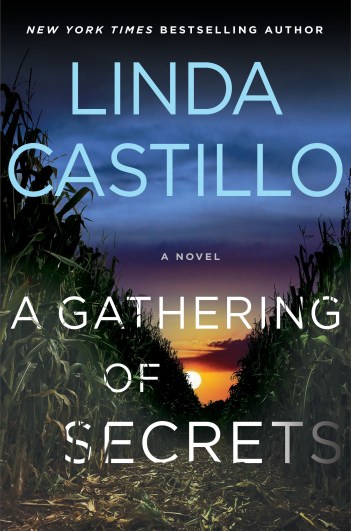
An interview with Kate Burkholder from Linda Castillo’s A Gathering of Secrets

Thanks to Elise Cooper for conducting this interview!

Editor’s note: While this is a contemporary novel, we are including it here because of the historical background it offers readers.

For those who do not know Kate Burkholder she helped to break the glass ceiling by becoming Chief of Police in a small town whose community consists of Amish and “Englishers.” Some cases she has to solve are more personal than others.  Chief Burkholder has had to deal with her own Amish MeToo Moment, but also wonders if many of the Amish girls have a similar experience.  Kate has spoken many times of her struggles with this peaceful and deeply religious community that at times appears to be conspiring to hide a truth no one wants to talk about. Kate has agreed to open up about her personal and professional experiences.


a gathering of secrets copy

Elise Cooper: Having left the Amish community are there any parts of you that you consider were influenced by your Amish upbringing?


Kate Burkholder: Every part of me was influenced by my Amish upbringing.  Good or bad or somewhere in between, I think that’s true for most of us.  The Amish influence on my life was mostly positive.  I was raised in a very traditional family with a lot of rules (some of which I didn’t follow) and structure.  I was close to my siblings.  As kids, we worked hard, but we played just as hard.  My father was the disciplinarian.  I was close to my mother.  Everything changed in the summer of my fourteenth year, and I never saw my family—or the Amish community—in quite the same light.


EC: What do you miss most and least about the Amish? 


KB: What I miss most about being Amish is the sense of belonging, of being part of such a close-knit community.  I also miss the closeness I once had with my family.  That said, there are a couple of things about being Amish I didn’t like and ultimately couldn’t live with.  One is that it tends to be a patriarchal society (not always, but generally speaking.)  And one of the Amish tenets is to be compliant and accepting.  I couldn’t always abide.  Even when it came to something as final as death, I would not readily accept it and I would rail against the unfairness of it.  The Amish are also pacifists.  I am not.


EC: Do you ever want the approval of the Amish community or your Amish Family? 


KB: That need for approval is important to a young Amish person growing up. Your family and the Amish community are the center of your universe.  But I do still find myself craving the approval of my brother, Jacob, and my sister, Sarah.  And then there’s Bishop Troyer, one of the elders who has been a fixture in my life for as long as I can remember.


EC: Do you think having been Amish helps or hurts you as police chief? 


KB: Being born and raised Amish in the town of Painters Mill (where one third of the population is Amish) has definitely made me a better and more effective police chief.  I understand the culture, the religion, and I also speak Deitsh, the language. All of those things have gone a long way toward bridging the gap that exists between the Amish community and the “English” government.


EC: One of those you interviewed, Milo Hershberger, is under the bann.  Can you tell us what that’s like for an Amish person?


KB: The bann is the Amish practice of social avoidance.  Basically, when an Amish person breaks the rules set forth by the church district, that person is called out and excluded from the entire community, including his or her family members.  No one will speak with them or associate with them or even take meals with them.  What many non-Amish people don’t realize is that the practice is intended to be redemptive. A way to bring the person back into the fold.  With the family and community being the nucleus of an Amish person’s life, taking away those associations can be devastating.  Most often, if an Amish person wants to get back in the good graces of the community, all he or she must do is confess their sins and follow the rules. Some of the Old Order practice excommunication, which, depending on the offense, can be permanent.


EC: Because the Amish are somewhat a “closed society” and keep to themselves, are crimes more difficult to solve? 


KB: Sometimes an investigation is much more difficult if it involves the Amish, mainly because of the “tenet of separation” many of the Amish practice. They try to remain separate from the rest of the world.  Sometimes they try to protect their own.  The reluctance of some Amish to come forward makes information hard to come by.  In the course of any case, information is the most important commodity.


EC:  You once told me about the Amish rule of forgiveness?


KB:  An Amish boy who does something terribly wrong, even raping someone, can get off.  If he confesses before the Church congregation, he is forgiven.  This is why many of the girls do not speak up, some committing suicide, because they knew the boy would have been forgiven and they would be caught up in the stigma.


EC: Are you content with your life?


KB: I’ve come a long way since the first major case I worked as chief of police in Painters Mill.  I attribute that mostly to my relationship—and love—for BCI agent John Tomasetti.  My love for my small department of officers plays a role, too.  They are my family when my own aren’t there for me.  I would be remiss not to mention my love for the community as a whole—both Amish and “English”—all of those souls who call Painters Mill home.


EC: Through the years what has made you stronger?


KB: You’ve heard the axiom: What doesn’t kill you makes you stronger. That’s the way life works and I’m a stronger and a more centered person because of the curve balls life has thrown my way, some in the form of difficult cases and various investigations. On a more personal level, I’ve worked through the trials and tribulations of being formerly Amish and a female chief of police in a small town.  All of that combined has made me a stronger person.


THANK YOU!


LINDA CASTILLO is the New York Times bestselling author of the Kate Burkholder novels centering around the Amish community. She is the recipient of numerous industry awards including a nomination by the International Thriller Writers for Best Hardcover, the Daphne du Maurier Award of Excellence, and a nomination for the RITA. In addition to writing, Castillo’s other passion is horses. She lives in Texas with her husband.

Linda Castillo_credit Pam Lary 2017 BB copy
photo by Pam Lary 2017


Coffee Chat with Ariadne from Tessa Afshar’s Thief of Corinth

978-1-4964-2865-3We are sitting down this morning for a latte and chocolate cake with Ariadne of Corinth, who is the main character from the book Thief of Corinth. Ariadne has never tasted coffee or chocolate. How do you like your first taste?

 

Ariadne (swallowing a large mouthful): I am sorry. I am too distracted to conduct an interview. How did we survive in the first century without these delicacies?


Interviewer: I feel for you. So you are from the first century. Can you tell us a little about yourself?


Ariadne: I was born in Corinth, but when I was eight, my mother divorced my father and took my brothers and me to Athens to live with our grandfather. Like my grandfather, Athens was strict and conservative. Life became intolerable when my grandfather threatened to marry me to a cruel man. So I ran away to join my father in Corinth.


Interviewer: We are told you won an award. Could you tell us a little about that?


Ariadne: I ran the short race in the Isthmian Games and was declared a champion. The Isthmian Games were similar to the Olympic Games, though they were slightly smaller. In the footraces, men and women competed against one another. (Washes down an enormous mouthful of chocolate cake with a gulp of latte.) I fear I might not have managed that feat if we had this ravishing pastry in my time.


Interviewer: Was it common for women to participate in national games?


Ariadne: In Corinth where the Isthmian Games were held, there was more tolerance toward female athletes, though it was unusual for women of good families to participate.


Interviewer: Speaking of unusual, you open your story by mentioning that you are a thief. Surely that is not a common occupation for women of good family either.


Ariadne: That is true. I convinced myself it was the only way I could help my family. It is not a chapter of my life I am proud of. But I admit it was an exciting time.


Interviewer: You fell in love in the midst of difficult circumstances.


Ariadne: Didn’t one of your famous poets say that “the course of true love never did run smooth?”


Interviewer: His name was William Shakespeare.


Ariadne: He was a wise man. There were many obstacles in our path that had to be overcome. I confess, some of those obstacles were of my own making.


Interviewer: Speaking of wise men, what did you think of the Apostle Paul when you met him?


Ariadne: I did not like him. He annoyed me with all his talk of love being patient and kind. My brother Dionysius was very fond of him, which only annoyed me further. (The physician Luke wrote the story of how Paul met my brother in Athens in his famous tome called Acts.) In time, I came to realize that Paul was a brilliant man. I finally understood that I needed the unfailing love of his God more than anything.


Interviewer: What did you think of Tessa Afshar, the scribe who wrote down your story?


Ariadne (polishing off the cake): She can’t run to save her life, poor thing.


Interviewer: Why did you want her to tell your story?


Ariadne: I wanted the scribe to talk about the lingering wounds of divorce. My parents’ divorce left a mark in my life that affected me for many years. Because of the divorce, my father was absent from our lives, and my mother grew hard and distant. I tried to fill that void in my life by trying to win affirmation, affection, and admiration.  In spite of all my efforts, I found that love fails; it is imperfect and broken. Paul and my brother Dionysius taught me that the sole solution to all my struggles was God Himself.


To read Ariadne’s full story, look for Thief of Corinth by Tessa Afshar.

TESSA_A_FULL-235-3109650834-OTessa Afshar is the award-winning author of historical and biblical fiction whose work has received the prestigious Christy and Inspy Awards. Her novel, Land of Silence was chosen by Library Journal as one of top five Christian Fiction titles of 2016, and nominated for the 2016 RT Reviewer’s Choice Award for best Inspirational Romance. Her book, Harvest of Rubies was a finalist for the 2013 ECPA Book Award in fiction, and chosen by World Magazine as one of four notable books of the year. Tessa was born in the Middle East to a nominally Muslim family, and lived there for the first fourteen years of her life before moving to England and eventually settling in the United States. Her conversion to Christianity in her twenties changed the course of her life forever. Tessa holds an MDiv from Yale University where she served as co-chair of the Evangelical Fellowship at the Divinity School.
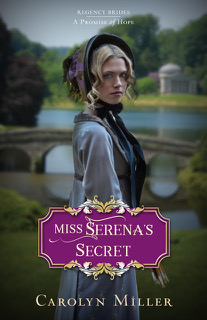

 

Character Interview with Serena Winthrop from Miss Serena’s Secret by Carolyn Miller.

9780825445347.jpeg

Today we have the pleasure of hearing from the protagonist of Carolyn Miller’s new novel!


Q: Miss Serena Winthrop, welcome. I’d like to start by asking about your pretty name, Serena, and whether it is a family name passed through generations of Winthrops.


A: Thank you. Serena is not a family name as such, but a name my father chose, as he was hopeful it would prove indicative of a calm and temperate character. I believe some might think it well chosen, although those who know me well would likely beg to disagree.


Q: Would you mind telling us more about your family?


A: I am the younger daughter of Lord and Lady Winthrop. My father, the Baron, died last year, and circumstances led to a distant cousin inheriting the title, which proved quite shocking at the time. Now, however, my mother and sister are reconciled to the situation—and to him. My sister, Catherine, recently married Jonathan, so I am very pleased to have someone so kind and generous as Jon look out for me as an elder brother.


Q: I’m so sorry to hear about your father. That must have been extremely trying. Would you mind telling us about where you went to school and your time there?


A: I attended Miss Haverstock’s Seminary for Young Ladies in Bath, Somerset. Beyond that, I have nothing more to say.


Q: Oh! Well, now that you to graduate from the school room, I imagine you will be embarking upon your first London season soon. Could you please tell us about what you most look forward to?


A: While I understand it is the usual thing for young ladies to look forward to such things, I have no great desire to attend balls or dinners or engage in the sorts of flirtations most people seem to think appropriate. In fact, the only thing in which I would take any real pleasure would be a visit to Somerset House for the Summer Exhibition of the Royal Academy of Art.


Q: Yes, I understand you are something of an artist. Would you care to tell us about your interest in this field?


A: I loveart. I love to draw, to paint, to see how a scene of beauty or an image in my mind can be translated to the page. I find myself getting lost to all else when I am in the throes of sketching or painting, much to my mother’s chagrin. I like both portraits and landscapes, but I’m afraid I have no patience for still life. I know it can prove helpful for developing my technique, but truly, I cannot take any great pleasure in painting a bowl of fruit. A bowl of fruit? I ask you!

Whilst I have worked mostly with watercolors, I would love to try oils even though some consider it an unladylike thing to do; there is something so rich and vibrant about the colors and textures of oils. And while my art never feels like it reaches that sense of truly being complete, in the process of creating, I imagine it must be a tiny bit like what our Heavenly Father must feel in His creation of the world. Not that I think I am like God, though. Far from it!


Q: You sound like you do have faith, though.


A: Of course! I might live in Christian England, but I would call myself a Christian, someone who not only believes in God and in His forgiveness of sins through our Savior Jesus Christ, but someone seeking His direction and guidance every day, through reading the Bible and prayer. I certainly am aware that I need God’s help, as my blunt manner of speaking canlead to trouble sometimes.


Q: Oh my! I hesitate to enquire, but would you care to share an example?


A: I’m afraid I have at times been rather too candid in my assessment of Lord Henry Carmichael’s character. He was dining with my family one time and made one of his usual tiresome remarks which I dared to point out. My mother hushed me to not bother him, and I mighthave said something about his not being bothered by what anyone might say, but rather always feels a sense of superior amusement. I believe my mother despairs at my prospects at ever contracting an eligible match.


Q: Forgive me, but were you truly so bold to the most eligible bachelor in England?


A: (Sniffs) He might be the heir to the Earl of Bevington, and some might call him charming and handsome, but I mistrust gentlemen of manners too smooth; one never really knows where one stands with such a man. And his reputation as a flirt and a gambler does not impress me one jot.


Q: After the gambling debts incurred by your own poor father such a sentiment is understandable. But truly, you do not consider the Bevington estate in Derbyshire something to aspire to? I understand the house and gardens are extremely beautiful, and possess something of a mysterious treasure.


A: I have heard the estate is very grand, but I hold no desire to evenseesuch a thing if it means marriage to a man of Lord Carmichael’s character. However, as he is one of my brother-in-law’s best friends, avoidance of him will likely prove impossible. So I shall just have to grit my teeth for Jonathan and Catherine’s sake, and try to remember to practice charity.


Q: To love one’s enemy?


A: It would be amiss to say Lord Carmichael is my enemy, perhaps better to admit he is merely someone I find intensely irritating. But I am hopeful that I shan’t have much to do with him, and can concentrate on my artwork instead. My dream is to one day have a painting exhibited in the Summer Exhibition, so such a thing demands my full attention.


Q: Our best wishes for your artwork, Miss Serena, and for all your future plans. Perhaps in time your mother’s wishes for your matrimonial success will come true.


A: Thank you. Though I think such an event unlikely, one must surely possess the promise of hope, mustn’t one?


Carolyn Miller lives in the beautiful Southern Highlands of New South Wales, Australia, with her husband and four children. Together with her husband she has pastored a church for ten years, and worked part-time as a public high school English and Learning and Support teacher. E 011 copy 2 square.jpeg

A longtime lover of romance, especially that of Jane Austen and Georgette Heyer’s Regency era, Carolyn holds a BA in English Literature, and loves drawing readers into fictional worlds that show the truth of God’s grace in our lives. Her Regency novels include The Elusive Miss Ellison, The Captivating Lady Charlotte, The Dishonorable Miss DeLancey, Winning Miss Winthrop and Miss Serena’s Secret, all available from Amazon, Book Depository, Koorong, etc


Connect with her:        website | facebook | pinterest | twitter| instagram


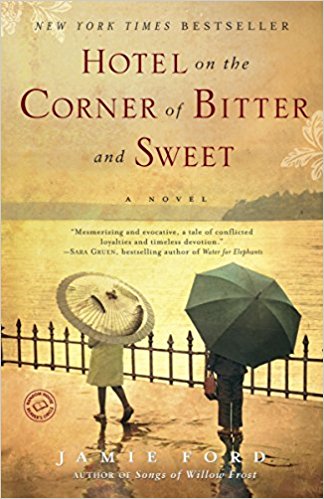
Book Review: Hotel on the Corner of Bitter and Sweet by Jamie Ford

From Amazon:

51eNxTSY3aL._SX322_BO1,204,203,200_

In the opening pages of Jamie Ford’s stunning debut novel, Hotel on the Corner of Bitter and Sweet, Henry Lee comes upon a crowd gathered outside the Panama Hotel, once the gateway to Seattle’s Japantown. It has been boarded up for decades, but now the new owner has made an incredible discovery: the belongings of Japanese families, left when they were rounded up and sent to internment camps during World War II. As Henry looks on, the owner opens a Japanese parasol.

This simple act takes old Henry Lee back to the 1940s, at the height of the war, when young Henry’s world is a jumble of confusion and excitement, and to his father, who is obsessed with the war in China and having Henry grow up American. While “scholarshipping” at the exclusive Rainier Elementary, where the white kids ignore him, Henry meets Keiko Okabe, a young Japanese American student. Amid the chaos of blackouts, curfews, and FBI raids, Henry and Keiko forge a bond of friendship–and innocent love–that transcends the long-standing prejudices of their Old World ancestors. And after Keiko and her family are swept up in the evacuations to the internment camps, she and Henry are left only with the hope that the war will end, and that their promise to each other will be kept.

Forty years later, Henry Lee is certain that the parasol belonged to Keiko. In the hotel’s dark dusty basement he begins looking for signs of the Okabe family’s belongings and for a long-lost object whose value he cannot begin to measure. Now a widower, Henry is still trying to find his voice–words that might explain the actions of his nationalistic father; words that might bridge the gap between him and his modern, Chinese American son; words that might help him confront the choices he made many years ago.

Set during one of the most conflicted and volatile times in American history, Hotel on the Corner of Bitter and Sweet is an extraordinary story of commitment and enduring hope. In Henry and Keiko, Jamie Ford has created an unforgettable duo whose story teaches us of the power of forgiveness and the human heart.

My Review:

Henry Lee is so young when he is estranged from his father—right at the kitchen table. Mr. Lee is proud of his Chinese heritage, yet ambitious for his son to assimilate into American society. So much so that he won’t allow Henry to speak anything but English at home, even though he and Henry’s mother only know their native Mandarin.

At the prestigious Rainier Elementary in the 1940’s most of the local children only see Henry’s Asian complexion and almond eyes. The bullies are happy to lump him together with the “enemy” Japanese, even though he wears a button saying he isn’t. Things are about to change. When Keiko begins to attend Rainier they strike up an alliance since they are both falsely accused and bullied. As they become friends, an even deeper bond is formed. The loneliness resulting from the limited communication with his parents is ironically one of the very things which compels the young boy to look for companionship where it’s unexpected.

Despite his father’s prejudice against the Japanese who had killed his family in China, Henry learns that you can’t tell a book by its cover. Keiko is more American than Japanese. Since they live in separate neighborhoods, with separate cultures they might as well be a world apart. When the U.S. government moves Japanese American citizens to internment camps Henry and Keiko don’t allow the prejudices of others to separate them in heart. A sweet young love develops that cannot be completely torn apart by distance or time.

While the story begins decades later as Henry is reminded of the past, after he has been widowed, the poignancy of a first love shines through and unfolds beautifully through the telling of the story. The ongoing struggle between generations is illustrated in not only Henry’s relationship with his father but also his own son. Henry must learn from the past to move into his future.

I enjoyed the depth of the characters, the rich description of Seattle’s China Town, Japan Town, and even its jazz culture. Hotel on the Corner of Bitter and Sweet brings to life the different kinds of battles fought on the home front during World War II through the eyes of a young Chinese American boy in a very touching way. Highly recommended!

An Interview with CeeCee from Karen White’s Dreams of Falling

Thanks to Elise Cooper for providing this interview. You can find more from Elise here.

For those who do not know CeeCee Purnell she is a reflection of her times, growing up during the 1950s and 1960s in the South.  Her life is a plateau, with many ups and downs. Growing up and living in Georgetown, South Carolina, she raises her late friend’s daughter, Ivy, and her daughter, Larkin. CeeCee is grateful that Larkin has returned home after nine self-exiled years to help locate her missing mother, Ivy. Larkin finds out that in 1951 three best friends, Ceecee, Margaret and Bitty have just graduated from high school with all their dreams ahead of them.  CeeCee has agreed to open up about her experiences and what happened during those turbulent years.

It must be bittersweet for you to have your granddaughter returning home, while your daughter, her mom, is trying to survive a horrific accident. It must have brought back memories from 1951 when your life changed forever. Thank you for consenting to this interview because you can be an inspiration as someone who had hard knocks but survived.


9780451488411 (5) 

NPT: Do you see yourself as a product of the 1950s?

CeeCee:Definitely.  Especially Southern small-town 1950s.  Being the only daughter of a pastor, I was definitely sheltered from the realities of the world outside of Georgetown, South Carolina.


NPT: Do you regret going on the road trip after graduating high school?

CeeCee: No.  I wish I could go back and change a few things, but if I hadn’t gone, I never would have met the love of my life, Boyd.


NPT: Do you think writing on ribbons and sticking them in a tree is rather nerdy?

CeeCee: I’m not sure what you mean about the word ‘nerdy’?


NPT:  A geek?

CeeCee:If you mean fanciful or even a little far-fetched, then yes.  It’s like blowing on a dandelion and making wishes on the seeds—we know it’s not real, but we can’t help but believing there’s a small part of truth in the legend.


NPT: Were you, Bitty, and Margaret considered The Three Musketeers?

CeeCee:We were never called that, but I felt that way many times throughout our childhoods together.  We were rarely apart, and believed we really were “all for one, and one for all.”


NPT: How would you define friendship?

CeeCee:A good friendship can be defined as loving someone unconditionally—even when things in your own life are sliding into the ocean and all has been stripped away, you can still be loving, giving and kind to your friends.


NPT: How did it feel to be a surrogate mother to Margaret’s daughter Ivy and a surrogate grandmother to her daughter Larkin?

CeeCee:I don’t feel as if you need to be related by blood to feel a kinship with someone.  I was raised with two younger brothers, but always felt as if Margaret and Bitty were my blood sisters.  My mother was a wonderful example of how to mother, and I suppose that’s why when I saw two children who needed mothering, it was easy for me to step in.


NPT: Do you agree with your granddaughter’s friend, Bennett’s attitude about Carrowmore and developers?

CeeCee:Absolutely.  Few people seem to realize anymore that our history lives on in old buildings, and that once they are gone, along with the stories and memories that are contained within their walls, they are gone forever.


NPT: Do you wish Bennett and Larkin hooked up?

CeeCee:When, while back in high school?


NPT:  Yes?

CeeCee: No. They were friends first.  It’s only when they became adults and Larkin could see Bennett with adult eyes did it make sense for their relationship to move into something deeper.  And neither Larkin nor Bennett are the ‘hooking up’ kind of people—their relationships are meaningful.


NPT: Do you think it is good or bad to keep a secret?

CeeCee: It depends on the motive.  If it’s to protect a loved one, then it can be excused and/or forgiven.  If it’s used for subterfuge, or to keep hiding something that might help another person, then no.


NPT: Does Bitty still play an important role in your life?

CeeCee:I think it’s natural for people who’ve known each other for so long to get on each other’s nerves sometimes, just as it’s natural for your love to grow to something deeper.  There is something special about someone who’s known you your whole life, knows all your secrets and flaws, yet loves you anyway.


NPT: After the accident and Ivy unconscious, was it hard to see her physically there, but unable to communicate with her?

CeeCee:Of course—she’s always been like a daughter to me.  The one thing that got me through those early days was believing she would wake up and be able to answer all the questions we had for her.


NPT: Do you think dreams really do come true?

CeeCee:Only when hard work and determination are added to the dreaming!


NPT: Who taught Larkin how to shag dance?

CeeCee:I’m thinking probably her mother, or Bennett.  They used to have impromptu dance/ barbecue parties when they lived near each other.


NPT: What do you do for fun?

CeeCee:I love to work in my garden and of course I love to bake.  I always make sure I have something in the freezer waiting to be defrosted in case of unexpected company.


NPT: What are your interests besides baking and gardening?

CeeCee:I love keeping in touch with my friends and being an active member of my church and community.


NPT: Are you content with your life?

CeeCee:Absolutely.  I’m surrounded by family and loved ones.  I’ve had losses, but I’ve also had a great deal of love and blessings in my long life.


NPT: If you could put another ribbon in the tree what would it say?

CeeCee:I wish Larkin would stay in Georgetown forever!


NPT: Is there anything you want to add, if so please do?

CeeCee:Be kind to one another.  And honest. Those two things alone will guide you through life.


NPT:Thank you for your time and insight!

Karen White is the New York Times bestselling author of twenty previous books, including The Night the Lights Went OutFlight PatternsThe Sound of GlassA Long Time Gone, and The Time Between, and a coauthor, with Beatriz Williams and Lauren Willig, of The Forgotten Room.

Karen White credit Marchet Butler

Penelope Howard from Jennifer A. Davids’ A Perfect Weakness

Today we welcome Penelope Howard from Jennifer A. Davids’ A Perfect Weakness

A Perfect Weakness_Front CoverHello Miss Howard. Won’t you tell us a little about yourself?

Of course. I live in the village of Woodley with my brother, Thomas, our housekeeper Hannah Trull and Fanny our maid-of-all-work.

Woodley? Where exactly is that?

In Hampshire, England.

Ah I’ve been to England several times but never Hampshire. I have been to London and enjoyed myself very much. Have you or your bother ever been to London?

Well, yes…but I’m afraid we did not enjoy ourselves as much as you must have. Although perhaps my brother would not agree.

Oh, I’m sorry. Did you go there together?

No. No we did not. They were quite separate occasions.

What do you do in Woodley?

I help manage the Home Farm for Ashford Hall as well as visit it’s tenants on behalf of the lord of the Hall. I also help our reverend, Mr. Gregory with a number of church related activities. And then there is my work as a volunteer nurse at our cottage hospital.

You do keep yourself busy.

Yes, it helps…well it helps pass the time.

I see. What is the lord of Ashford Hall like?

Lord Turner has very recently inherited. My brother has been bringing him up to date with everything. Thomas is Ashford Hall’s estate agent. He manages all the Hall’s properties. From what we can tell, Lord Turner is a very good man. An American, actually. He was cousin to my uncle, the late Lord Renshaw.

So you’re related to Lord Turner?

Not exactly. The late Lord Renshaw was our uncle by marriage; my aunt being my mother’s sister. Lord Turner is a cousin to my uncle by blood. Otherwise he could not have inherited the barony.

I’m surprised an American could have inherited at all.

As were we. But the solicitor, Mr. Smith assures us it is legal. Though he cannot sit in the House of Lords unless he renounces his American citizenship. He has surprised me though.

Oh? How?

He is a doctor. Or was. I’m not sure which. He gets so very odd when someone mentions medicine. Tense. We were under the impression that he would be very involved with the cottage hospital but we have lately heard he will not. He says Hall business will keep him busy. But I cannot see how since Thomas is so very good at managing things. It’s as if a great pain keeps him from practicing medicine. But then he served in the recent conflict in America. Perhaps that is why.

The recent conflict? Do you mean the Civil War?

Yes. I believe he was a doctor in the field or something like that. I wish he would tell me what is wrong. I could help, perhaps.

Well thank you for sharing with us Miss Howard. 


Jennifer A. Davids is a self-professed book nerd. The shelves of her office are overflowing with books and there are stacks of them by her bedside.Jennifer A Davids When she’s not reading, she’s dreaming up a new story to tell her readers. She lives in Central Ohio with her husband, two children, and two cats.


Website: www.jenniferadavids.com

Blog: jenniferadavids.wordpress.com/

Facebook: www.facebook.com/jenniferadavids

Instagram: www.instagram.com/jennifera.davids

Twitter: www.twitter.com/JenniferADavids

Pinterest: www.pinterest.com/jenadavids

Goodreads: www.goodreads.com/author/show/5385735.Jennifer_A_Davids

You Tube: https://www.youtube.com/channel/UC9q-ufqnR08MHejl8WspXLQ?view_as=subscriber


A Perfect Weakness Pre-Order Link: https://www.amazon.com/Perfect-Weakness-Jennifer-Davids/dp/194601656X/ref=sr_1_1?ie=UTF8&qid=1528805917&sr=8-1&keywords=a+perfect+weakness