Is there anything special about your name?
My birth name was Ana. The High Priest of Nippur, head of the holiest temple in Akkad, gave me the name Enheduanna when I was inducted as High Priestess of Ur. It means Ornament of the Heavens.
Tell us something about where you live:
As High Priestess of Ur, I live in the giparu, or priestess quarters, at the Temple of Ur complex in the Sumerian city-state of Ur, in southern Akkad near the Lower Sea. I grew up in the royal palace in Agade, the capital of the Akkadian Empire.
Many people know you today as the world’s first named author. If you could choose one achievement to be remembered for, what would it be?
I want to be remembered for how I shaped and solidified an enduring high priestess tradition. As High Priestess of Ur, I hold one of the most powerful religious and economic roles in the Akkadian empire. I oversee vast temple estates, personnel, and ritual life, where the gods determine everything. I am the intermediary between my followers and the gods. I was appointed by kings and gods, but I am surrounded by rebels, so I am a warrior too. I serve and enrich the lives of my followers. I have elevated the power and importance of the high priestess role everywhere.
You were born a princess, yet your life was anything but comfortable. What was the greatest sacrifice required of you?
My father, Sargon the Great, did not want a comfortable life for me, but my brothers were in line for his succession. When I was an infant, he chose my path as a high priestess. Although he passed away when I was only six years old, I honored his wish. My brothers chose to betray me and appoint me to the Temple of Ur, in the heart of rebel territory. They gave me little in the way of support. I had to build the wealth and levy fighters to protect my territory. There was never an easy day. Over the years, I was assaulted, forced into temporary exile, and my temple and people were attacked. I lost people close to me whom I loved.
How did you feel when you first arrived in Ur as High Priestess?
I was a very different person when I arrived in Ur than I had been just months earlier, when I left Agade, the capital. Those months began smoothly enough. I was trained by the High Priest of Nippur, but my journey from Nippur to Ur changed me forever. I was captured, assaulted, and left alone, unprotected. In the aftermath, I found myself in the underworld, where the Queen of that realm offered to help me. She gave me the confidence to arrive in Ur as a true leader. I knew that there were many who assumed me to be an ineffective, powerless young woman. When I arrived in Ur, all I wanted from the people who doubted me was for them to fear me.
Did you ever resent your father, Sargon, for appointing you to such a dangerous position?
Never! My father was a great man. It was my brothers, who succeeded him as kings, who made my path so dangerous. Had my father appointed me to a difficult territory — and perhaps that would still have been Ur, as it is an important one — he would have ensured that I had armed forces, so that I could focus solely on enriching the lives of my followers. Instead, it was many years later when I could finally do that without distraction from the rebels.
What does power mean to you? Is it something to possess or something to survive?
Power is something that is learned and possessed. If one has to survive it, they likely have a tenuous hold on it. I had a tenuous hold on power in my early reign. Then I learned that power exercised through violence, even if justified, generates only fear, not true loyalty. I was appointed to lead people, to solidify their faith. I had to find my way there. Ultimately, verse was the tool I chose.
Your hymns reveal remarkable emotion. Was writing an act of worship, politics, survival, or something else entirely?
I was, quite literally, writing for my life. I believed that the Queen of the underworld was my patron god, the one who could teach me how to lead my people and hold my enemies at bay. I had forsaken my father’s patron god, Inanna. When I realized that she alone had the power to teach me what I needed to learn and restore me from exile, I had to find a way to gain her favor. I knew praying would not be enough. I chose words.
You lived in a world where the gods were believed to shape every aspect of life. Did you ever question them?
Yes! In my verses, I tell of how my own god-husband would not intervene on my behalf. At first, I questioned my true patron god, Inanna, and her ability to lead me toward my best, most powerful future. Then I questioned the Queen of the underworld, whom I had once believed in implicitly. Faith is ever-changing, until one finds the divine power in the pantheon most aligned to one’s life.
Who was your greatest adversary—the rebels, your family, or yourself?
All were my greatest adversaries at different points in time, though I did not always realize it. My brothers appointed me High Priestess of Ur to insult the rebels, then sent me with inadequate protective forces. The rebels tried, and for a time succeeded, in disrupting the lives of my followers and forcing me into temporary exile. I discovered that I had used the wrong tools to keep my followers and solidify my power. I had to learn to honor my people by leading with my gift of language, not force.
If you could leave one message for women thousands of years in the future, what would it be?
In my era, I was well known. For hundreds of years after my death, I was remembered, particularly through my hymns and narrative poetry — but at some point in the ancient world, I was forgotten. I was rediscovered by chance during an excavation about a hundred years ago.
Historians know only scant details of my life. This troubles me, not so much for my own sake, but for all the great women who have been forgotten, whose lives the historical record never attested to.
Society loses the most when remarkable women and their achievements remain unrecovered. We need to insist on finding them, and their full stories.
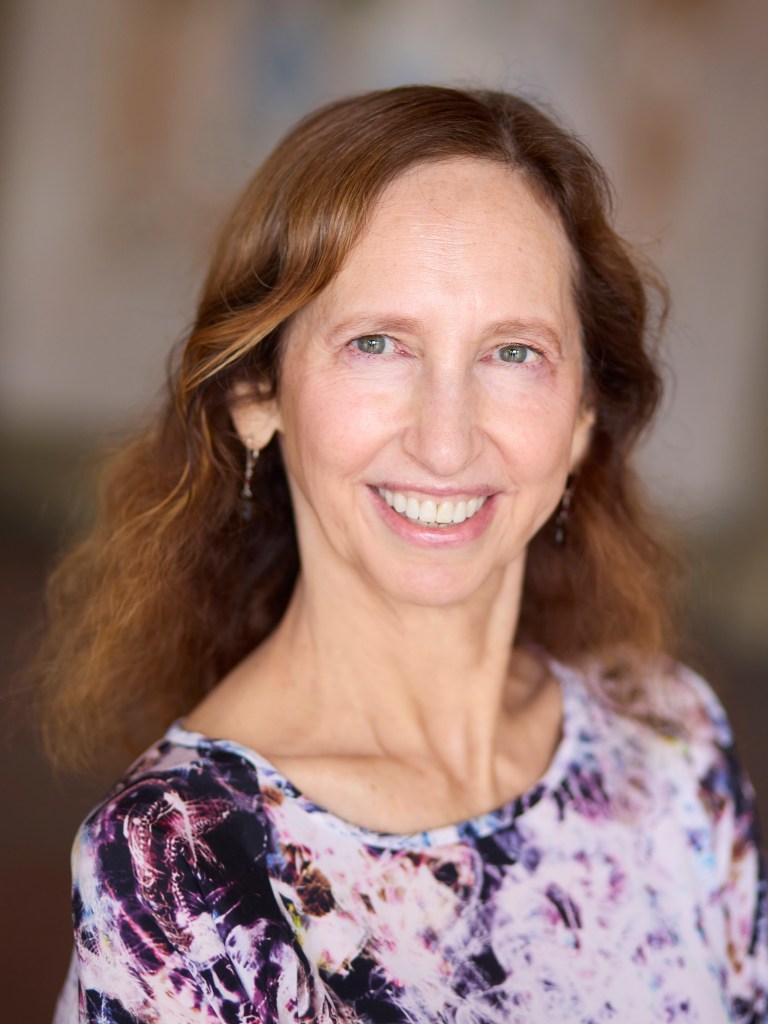
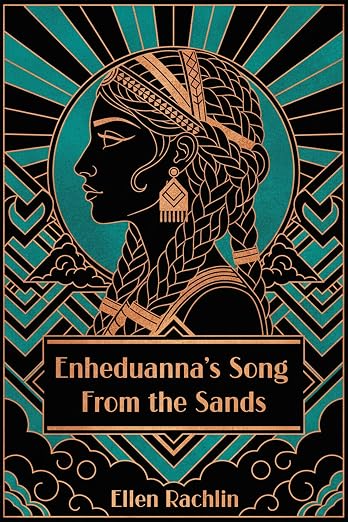
ELLEN RACHLIN is the author of the historical fiction novel Enheduanna’s Song From the Sands (Histria Fiction) and five poetry collections. Her most recent collection, Permeable Divide, received the IBPA Benjamin Franklin Silver Award and was a finalist for other awards. Her poetry collections also include Until Crazy Catches Me, Captive to Residue, Waiting for Here, and At the Big Bang Resort (Red Hen Press, March 2027). Her writing has appeared widely in journals, anthologies, and books. During her financial career, she also authored textbook chapters (Wiley and McGraw Hill), along with journal articles on investing and finance. Rachlin is a Taekwondo grandmaster. You can view her website at www.ellenrachlin.com.