Introducing Frannie Reilly from The Fault Between Us by Stephanie Landsem

Amazon Affiliate link used helps to support this blog.

Frannie Reilly, thank you for joining us on the North Coast Limited to Livingston, Montana. Are you excited to be on a train headed to Yellowstone National Park?

Gosh, no. I’m on this train against my will! 

My Dad sent me away to spend the rest of my precious summer with my sister Claire and be miserable. He thinks I’m running around with “a bad crowd” back at home. Sure, I got in a little trouble. And maybe the police were involved. But it was just a lark, not the end of the world. Instead of just grounding me like usual, he banished me to nowheresville. My bossy sister, Bridget, is in the car behind us and watches me like a hawk. As if I could escape from a train! 

Both your sisters will be with you in Yellowstone? That sounds like fun.

Are you kidding me? They treat me like a baby even though I’m eighteen years old. Sure, Claire and Bridget used to love me, and we used to have fun. But that was before Claire married her cowboy and moved to Montana. She left me with Dad and bossy Bridget, who works all the time. Dad pretends everything is fine and dandy, but he’s beside himself with worry about Claire, especially now that she and Red have a baby.

What do you think of your new brother-in-law, did you say his name was Red?

Yes, because he has red hair. And I think he’s swell. He and Claire had only known each other for a couple weeks – I know because Claire’s best friend Millie told me the whole story about that summer she and Claire worked in Yellowstone and met these cowboys – and then the next spring Red showed up in Willmar with a ring! Dad had a conniption. Even Bridget, who loves all that romantic junk, was worried that Claire was moving too fast. But Claire said yes and three weeks later they were married. She really stood up to Dad. I kinda felt bad, though, about what Dad did at the wedding. Red didn’t deserve that. 

What happened at the wedding, if you don’t mind me asking?

Well . . . I better not say. Claire would be mad at me and Bridget would tell me not to air our dirty laundry in public or something dumb like that. That’s the problem in this family. Claire and Bridget and Dad pretend everything’s just perfect, but it’s not. We never talk about anything real —  like Mother, or the world ending in a mushroom cloud, or about how Claire left and doesn’t call home anymore. Bridget didn’t even tell Claire that I’m coming out with her, she’s just going to dump me on Claire and Red and go off to her job as a nurse.

But hey, I’ll tell you a secret . . . I have another plan and it’s a doozy. I’m not going to waste my summer babysitting, no siree. I’m going to have some fun, and Bridget and Dad won’t be able to do a thing about it.

Oh, no. Here comes Bridget now. Don’t tell her I said anything about anything.

(Bridget Reilly) Hello. I do hope my sister hasn’t been making a nuisance of herself.

Not at all. We’re just talking about her trip to Yellowstone. Do you mind telling us what brings you to Yellowstone National Park, Miss Reilly?

I’ll be working at the hospital in a place called Mammoth Hot Springs. They apparently are quite short on nurses this summer and are in dire need of help. It will be a wonderful way to add to my nursing experience. My sister, Claire, lives in a town called West Yellowstone and I’ll get to spend some time with her and meet our new niece, Jenny. 

It will be a terrific visit, won’t it Frannie?

(Frannie) If you say so.

What are you looking forward to seeing the most in Yellowstone?

(Frannie) I want to see a Grizzly!

(Bridget) Frannie, don’t be ridiculous. We don’t want to see any bears . . . or snakes . . . or anything else that can kill us. Dad told me to take care of you and I’m going to do just that.

(Frannie) For your information, Bridget, I can take care of myself.

(Bridget) Don’t be rude, Frannie.

If you’ll excuse us, we’re about to arrive in Livingston and need to get our things. It was lovely talking to you. Frannie, say goodbye.

(Frannie) Goodbye. Remember, I didn’t tell you anything about anything.

(Bridget) What on earth do you mean by that, Frannie?

(Frannie) That’s for me to know and you to find out.


Stephanie Landsem writes historical fiction for women, about women. She’s traveled the world in real life and traveled through time in her research and imagination. As she’s learned about women of the past, she’s come to realize that these long-ago women were very much like us. They loved, dreamed, and made mistakes. They struggled, failed, and triumphed. She writes to honor their lives and to bring today’s women hope and encouragement. Stephanie makes her home in Minnesota with her husband, two cats and a dog, and frequent visits from her four adult children. Along with reading, writing, and research, she dreams about her next travel adventure—whether it be in person or on the page.

Meet Betty Floyd from To Outwit Them All by Peggy Wirgau

Welcome to Novel PASTtimes! Today we are visiting with Miss Betty Floyd from the
novel To Outwit Them All, which is based on the true story of the only female member in
George Washington’s group of spies during the American Revolution, known as the
Culper Ring.

Amazon Affiliiate Link Helps Benefit this blog


Miss Floyd, are you willing to answer a few questions about your role as a spy for General Washington?


I beg your pardon, but I’m afraid I have no idea …. A spy? For their general? I’m terribly sorry, but I’m a supporter of the king. You must have mistaken me for someone else. Good day!


Of course, of course …. Forgive me, Miss Floyd. I assure you, we are among friends here and your secrets are safe with us. Allow me to rephrase my question: If you were a spy for Washington, would you please explain how you became a member of the Culper Ring?


If I was, and I’m not admitting to anything of the sort, I would say that when my family and I had to leave our Long Island farm and move to New York City, I only
wished to ignore the war. I enjoyed attending the balls and parties given for His Majesty’s officers stationed here in the city, and I assisted my mother on her visits to one of the prisons for Patriot … ahem, rebel soldiers. How they manage to survive in such deplorable conditions …. I became acquainted with one such prisoner and nursed him through dysentery until he thought he might be paroled
or exchanged. Instead, he and other prisoners were shot and killed by their captors. And what could be done? The British had occupied New York and they were the law. I could ignore the war no longer. I wanted revenge. In desperation, I went to my cousin, Robert Townsend, to pour out my anguish and seek his advice. He and his family had suffered greatly at the hands of the British on Long Island, yet he seemed to tolerate them and remain oblivious as they frequented his store near the wharf. Not long afterward, he contacted me to explain that he is working to gather information and sending it to General Washington via a secret group of spies called the Culper Ring.
And because I happen to socialize with the officers, he implored me to become apart of it. I was shocked at first, however, I had already met the British Director of Intelligence, Major John André, and I still wanted revenge. Therefore, I
reconsidered. Little did I know what I was getting myself into. Although, please remember that this is all strictly hypothetical.

Yes, of course, and thank you for humoring us. Now, if you were a spy, is
there anything in your background that would make you qualified?


I suppose I have an ability to engage the officers in conversation and gain their trust. I would not call it flirting, yet I can be persuasive if the occasion presents itself. And I do possess a good memory, which could be helpful. Otherwise, I’m
probably the least qualified of anyone. For one thing, I am much too impulsive to be a proper spy.


What would you say is the most difficult part of being a Culper spy, hypothetically of course?


The most difficult part is … hypothetically … taking orders from Robert Townsend. He can be so infuriating, so bent on following the rules! No writing notes of any sort, no using the Culper code, no circumventing his authority. I have one rule—Do Not Get Caught. There is one other difficult part that I will reveal— ‘tis becoming too attached to the very man whose main objective is to catch Washington’s spies in New York. To catch me. I am speaking of Major André. That is all I will say in that regard, however.


What do you enjoy the most about your role, that is, if you were a spy?


The satisfaction of knowing that my work makes a difference. I’ve seen it on occasion—a bit of intelligence I managed to glean and pass on in a timely manner has benefited the fight for freedom. Perhaps it will affect the outcome of the war. Ah, yet again, that is only if I truly were in the Culper Ring.

When you aren’t acting in your role as the Culper’s “lady,” can you describe your typical day?


If, as you say, I did play that role, on other days I tend to household chores and tutor my younger brother. Yet ‘tis impossible to simply be Betty Floyd without constantly thinking through my latest actions and words with the major or other officers and loyalists I’ve met. Did I ask too much? Did I say enough? Am I safe? How can I learn more of their plans? What is next for the Ring? And another thing … I bake a great deal of bread as of late, and during the process of mixing and kneading, I attempt to sort out my constant conflicting feelings for the major versus my duty to my country. There is a great battle inside me that never seems to end. Again, this is all conjecture, of course.

If you could do anything in the world, Miss Floyd, what would it be?


All I can tell you is that I would like to do something good and be remembered for it, yet, what that might be is as far off as the shores of England. When I was a child, my father said some things to me that I don’t care to repeat. I have struggled all my life, believing what he said. Recently, someone else has told me that he believes I am extraordinary. ‘Tis about time for me to believe it, and to act on it. Perhaps then I shall do something truly good. And that is not the
least bit hypothetical!


Peggy Wirgau loves true stories and writes through the eyes of history’s ordinary women who faced extraordinary challenges. Her award-winning debut novel, The Stars In April, is based on the true story of a twelve-year-old Titanic survivor. Her newest novel, To Outwit Them All, will release on October 14, 2025. Peggy and her husband reside in Colorado near their three small book-addicted grandchildren. https://www.peggywirgau.com

An interview with Bertha “Birdie” Stauffer from Whistling Women and Crowing Hens by Melora Fern

Amazon Affiliate Link Used Benefits this blog

THE EVENING TIMES
Salisbury, Maryland Wednesday, August 20, 1924
Archie Drake, reporter


PACKED HOUSE AT OPENING OF WESTDALE CHAUTAUQUA
Program of Entertainment Is a Most Varied One And Appeals To All Classes of
People—

Last Night’s Opening Concert Featuring The Versatile Quintet Was Greeted With Much Applause
The Chautauqua Season opened last night to a standing-room-only crowd. The ladies of the renowned Versatile Quintet entertained the audience with a varied program starting with a rousing patriotic medley, followed by equally brilliant piano, then trombone solos and a knee-slapping duet of the banjo and violin. Several other varied numbers including a musical saw solo, a hilarious monologue
along with an outstanding a cappella rendition of “Where the Lilies Bloom” finished the fine evening of entertainment. Yet, it was the two whistling numbers
that had the audience on their feet. First, the unusual harp and whistling duo of Mendelssohn’s “Spring Song” and then the finale, a mesmerizing arrangement of
Rimsky-Korsakov’s “The Flight of the Bumblebee.” This reporter was able to catch a few moments with Miss Bertha Stauffer, the whistling sensation who
dazzled tonight’s crowd, as she was leaving the Chautauqua tents.


AD: I’m Archie Drake (AD), reporter for The Evening Times of Salisbury, Maryland and all of Wicomico county. So, Miss Stauffer (MS), please tell me how a woman like you learned to whistle.


MS: I practiced whistling bird calls with my older brother, Edwin. We’d stroll around our apple orchard mimicking different birds starting when I was about five or six years old. He’s the one who told me I had perfect pitch. Then my mother taught me to whistle hymns and such while she accompanied me on the piano.

AD: Your folks approved of your whistling?


MS: Ab-so-lute-ly. My mother encouraged it. I was eleven when I whistled with the West Chester United Methodist Church choir for the first time. AD: Is that so? I don’t think I’ve ever heard a woman whistle in perfect pitch.

MS: It’s a gift, isn’t it? My older sister still doesn’t approve of my whistling; she thinks it’s not proper. But whistling is what got me this job with Westdale Chautauqua. It’s our duty to bring education and enlightenment to all of America
and that includes whistling women!


AD: I’ll say! How many bird calls can you imitate?


MS: Over forty and counting. I hear new songs as we travel across North America so I’m adding more bird calls to my repertoire daily. I just learned the Black- Throated Blue Warbler. Do you know it?


AD: Let’s hear it.


Note: Miss Stauffer proceeded to whistle the five-count buzzy, slurred call that sounded like “please, please, please, and squeeze” in a sweet high pitch to this reporter.


AD: Who arranges your music? I’ve never heard whistling with a harp accompaniment. And the way each instrument was brought in at such fast tempos for the finale number definitely captured my attention.


MS: Both arrangements were written by our brilliant pianist, Miss Helen Wilcox. She composes all the musical pieces for the Versatile Quintet and is a student at the Curtis Music Institute out of Philly. And our harpist is Miss Florence
Armstrong—she’s pos-i-tive-ly the bees knees, isn’t she?


AD: A woman composer? That makes my head spin. I wouldn’t use that particular phrase, Miss Stauffer, however you have an impressive harpist in your troupe.


MS: Please, call me Birdie, all my friends do. And don’t forget to mention Mary and Adelle in your article. I mean, Miss Mary Brewer on violin and Miss Adelle Rowley on banjo. Goodness sakes, their duet was glorious as well, wasn’t it?


AD: Ah, how is it that five women travel to so many towns unaccompanied?

MS: Oh! We’re not unaccompanied. Our assistant circuit manager, Mr. Teddy Zimmerman is with us on every train. The Westdale Chautauqua circuit takes care of their talent. They schedule our train travel, purchase our tickets, and arrange for our lodging. Tonight, we’re staying at the Whitehaven Hotel. I hear that’s a fine establishment.


AD: Why yes, it is. And what musical arrangements are you delighting us with tomorrow?


MS: You’d have to travel to Staunton, Virginia to hear the Versatile Quintet tomorrow. We’re the opening act of opening night for every Westdale Chautauqua circuit A. I know it sounds crazy but we travel to a different town every day. As a
matter of fact, I must skedaddle. I’m to meet the other girls at the hotel’s restaurant for a late-night dinner. It was nice to meet you, Mr. Drake.


And with a tip of her cloche, Miss Stauffer dashed away. The Versatile Quintet was followed by a rousing reading of “The Charge of the Light Brigade” by Miss Mable Walker Willebrand. The crowd had been expecting Mr. Walter Grantham as
the lecturer however, the esteemed Miss Willebrand was substituted at the last minute and was quite a success.
Tomorrow’s program is as follows: Morning: Junior Chautauqua for the children; Afternoon lecture “Our Crowned Kings” by Arthur W. Evans, concert by the Durieux-Carley Company; Evening: Artistic recital by Louise Stallings, lecture
“World Building” by Honorable Frank B. Pearson. Based on tonight’s sensational program, this reporter is looking forward to all that Westdale Chautauqua has to offer Salisbury and all of Wicomico county.


Growing up as the perpetual “new kid” Melora Fern persevered by making up stories and recently has learned how to hone that skill into writing fiction. As a recovering CPA, she now counts seashells, colorful stones, or words discovered on her walks. She loves a good local gin, hiking, feeding songbirds, moonrises and joyfully sharing bites of your dinner. After eight years of perfecting her craft with writing classes, workshops, retreats, and an awe-inspiring critique group, Melora’s months of querying agents and small presses has paid off. Her novel, “Whistling Women and Crowing Hens” (Sybilline Press) is out now. Learn more at: https://www.melorafern.com/

Additional buy links:

Bookshop:

Barnes & Noble:

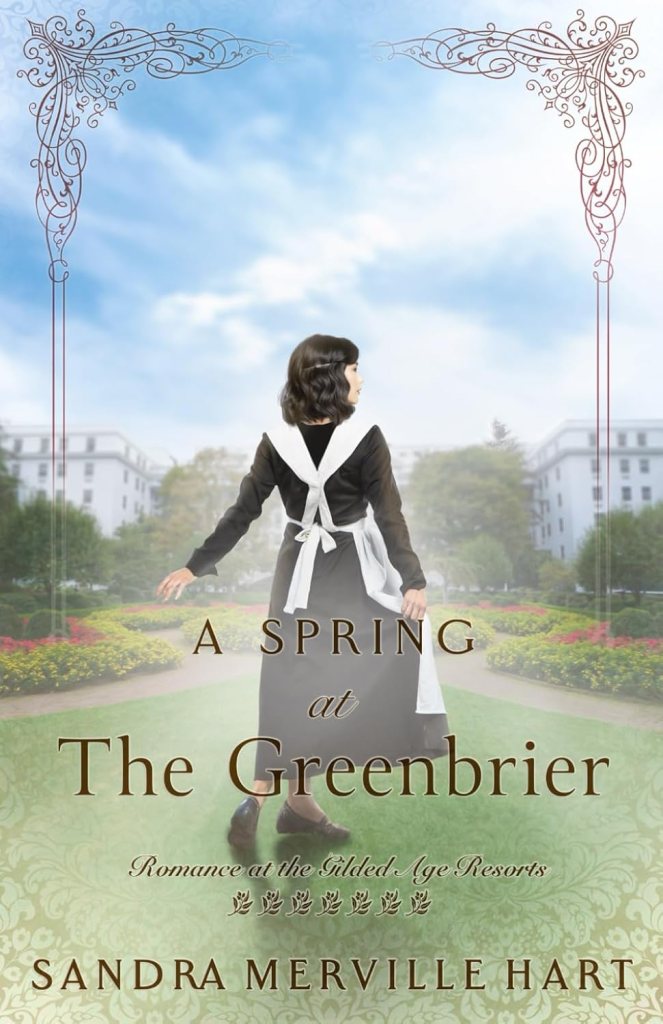
Book Review: A Spring at The Greenbrier by Sandra Merville Hart

Amazon Affiliate link used helps to support this blog.

It’s 1914 at White Sulphur Springs in West Virginia. That unique setting is enough to pique my interest. It’s not a book about war, which for me is a refreshing thing. I’ve enjoyed a lot of WWII novels and a few WWI novels but I’m always ready for something different.

Marilla works at the Greenbrier Resort, helping guests enjoy the benefits of the hot springs baths. She’s there for two reasons. Her widowed mother and her disabled little sister depend on her income. And her sister needs the benefit of the baths.

This is a romance so of course there is a love interest. They both have little sisters who need healing. Their mothers become friends. But (there’s always a but) Marilla and Wes are from two different classes.The time period marked a crosswords between the old ways and the modern ways. Class distinctions were still followed but the younger generation at this point was beginning to move away from them. Wes isn’t as concerned, although the question of “is she after my money” lingered at the back of his mind. Marilla, however, believes these distinctions still exist and she doesn’t want to lose her job where employees are not allowed to mingle with resort guests. There is a boundary that the characters debate throughout the book.

I don’t normally read romances. Just not my cup of tea. But Sandra Merville Hart does a wonderful job with her historical details (my favorite part) so it is certainly worth the read.

If historical romances are your cup of tea, check hers out!

Review by Cindy Thomson, www.cindyswriting.com

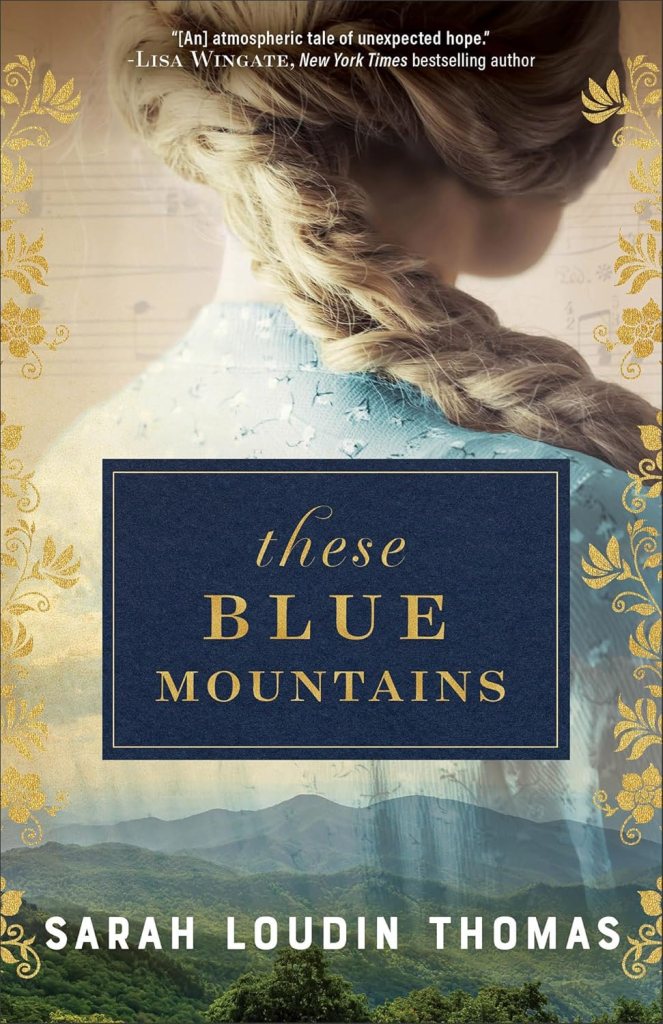
Book Review: These Blue Mountains by Sarah Loudin Thomas

Amazon Affiliate LInk Used Helps Support this Blog.https://amzn.to/3GBnF8f

Release date: July 15, 2025

Bethany House Publishers

I enjoyed this story of German immigrant Hedda who comes to America (North Carolina) many years later looking for her fiancé, whom neither she nor his mother have heard from.. She is a talented pianist and soon finds a place at a newly opened collage with new friends and old ones who came to teach at the collage.. There are many twists in the story I won’t spoil.

I liked that the story takes place in a time period not often explored in historical fiction in connection with Germany,—the time between the wars. I also liked that while not really a mystery, readers are led through the tale in unexpected ways. The romance in the book develops slowly (something else I like because it’s so much more realistic that way).It can be difficult to convey hope in a story during a tragic time in history, but this novel does so well.

Can we talk about that cover? So beautiful! It conveys the theme of the novel so well: historical, longing, beauty.

Historical fiction fans will enjoy this novel.

Reviewed by Cindy Thomson. I received a complimentary audiobook of the novel from NetGalley and the publisher. This review is my honest opinion.

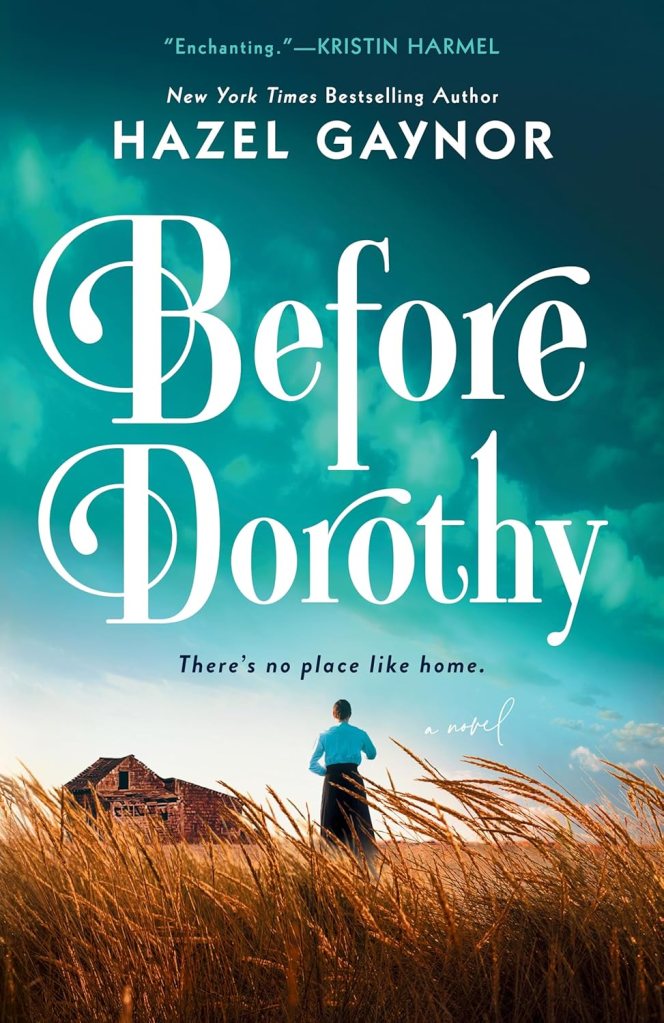
Book Review: Before Dorothy by Hazel Gaynor

Amazon Affiliate Link Used Helps Support This Blog

Berkley, June 17, 2025

This story is a mesmerizing creation of Dorothy’s Auntie Em before Dorothy came to live with her in Kansas and then their life right after. Emily immigrated with her parents from Ireland and her two sisters. She was very close to Annie, Dorothy’s mother, until Emily learns Annie’s secret. Emily feels displaced until she marries Henry and goes from city life in Chicago to being a homesteader. Things are wonderful until the dust bowl. This reimagining of the story of Dorothy from the Wonderful Wizard of Oz is creative, engaging, and taught me a lot about the time period.

Gaynor blends in what we know about Dorothy and makes it make sense in the context of the setting. There was a great drought in the Great Plains and a rainmaker comes with dynamite and pyrotechnics, reminding us of course of the Wizard of Oz, for example. I also enjoyed the theme of the story which is no surprise: home is about being with the people you love.

Hazel Gaynor is a wonderful writer of historical fiction. If you haven’t had a chance to check out her books, this one would be a great start. I really enjoyed it.

I was given an advance review copy from Net Galley and all opinions are my own.

Reviewed by Cindy Thomson, www.cindyswriting.com

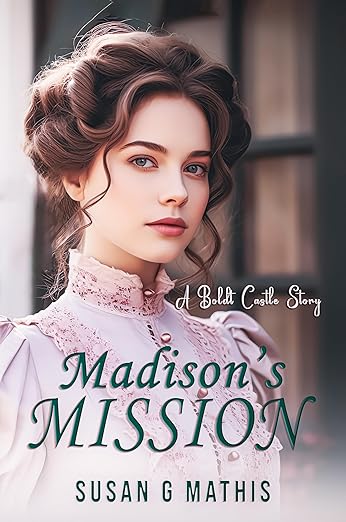
An Interview with Madison Murray from Madison’s Mission by Susan G Mathis – A Journey of Faith, Love, and Healing

Madison, thank you for joining us. Let’s start at the beginning—what brought you from Ireland to America?

Thank you kindly for having me. It’s been a long road, truly. I came to America after losing my father and brother back home in Ireland and then my mama on the ship over. I was barely holding on, but the Lord opened a door for me to serve as a lady’s maid to Mrs. Louise Boldt. I never imagined how that position would change the course of my life.

You became very close to Mrs. Boldt. Can you tell us about your relationship with her?

She was more than an employer—she was a dear friend, a mentor, and in many ways, a mother figure. I saw how deeply she loved her family and how her strength shone through her illness. Caring for her gave me purpose, especially when I was drowning in grief. But I also feared losing her. After so much loss, my heart wasn’t sure it could bear another goodbye.

]During your time on Heart Island, you met Emmett O’Connor. What were your first impressions of him?

Oh, he was quite proper—and a bit intimidating at first. Always focused, always composed. But there was a kindness in his eyes I couldn’t ignore. He carried his own burdens, though he rarely spoke of them. Over time, I came to see that his strength wasn’t just in his hands—it was in his heart. He’s a man who walks with integrity, even when it costs him.

You and Emmett faced some heartbreaking trials. How did your faith sustain you through
those times?

 There were moments I felt utterly alone—especially after Mrs. Boldt passed. I questioned everything. But time and again, the Lord reminded me that He was near, even in my sorrow. Sometimes He whispered through Scripture, other times through the quiet support of Emmett or in hope itself. I had to learn to trust that even when I couldn’t see the way forward, God was already at work.

You were hesitant to open your heart again. What helped you find the courage to love?

It was a slow surrender. Grief can be like chains around the heart, but love—true, God-given love—breaks those chains. Emmett never pushed me, never demanded anything. He simply stayed. And through his gentleness and God’s leading, I began to believe that love isn’t something to fear—it’s a gift, even when it comes with risk. The Lord doesn’t ask us to protect our hearts—He asks us to give them to Him and trust that He’ll care for them.

What lessons did you take from your time on Heart Island?

That healing is a process, not a moment. That people are placed in our lives for a reason. And most importantly, that the Lord never wastes our pain. Boldt Castle may have been built for love and abandoned in grief, but even that brokenness was restored in time. That mirrors what God did in me—He took the ruins of my life and began to build something beautiful.

For those struggling with grief or fear, what would you say to encourage them?

Don’t give up hope. Your story isn’t over. The ache in your heart doesn’t mean God has forgotten you—it means He’s preparing to do something new. Lean into His love, even if it feels risky. And let others walk with you. You don’t have to face the darkness alone. God is still writing your story, and I promise, His pen is steady.

And finally, what does life look like for you now?

It’s quieter, simpler—but filled with purpose. I’ve found peace in new beginnings and joy in the little things—sunlight on the water, laughter shared over tea, the sound of Emmett’s voice reading Scripture aloud in the evening. It’s not perfect, but it’s full of grace. And that’s more than I ever hoped for.

About Madison’s Mission:

Step into the captivating world of Boldt Castle in 1903, where dreams are forged in the fires of adversity and love.

Madison Murray, the devoted maid to the legendary Louise Boldt, harbors a singular mission—to care for her ailing mistress while hiding her own painful past. Her life takes an unexpected turn when she meets Emmett O’Connor, the distinguished foreman overseeing Boldt Castle’s extravagant construction. Their connection sparks with promise, yet the chasm of class difference and hidden secrets loom large. 

Just as their budding romance begins to flourish, tragedy strikes, shattering their world. A deadly accident leaves Emmett wrestling with guilt and at the center of an investigation that could unravel everything he holds dear. Then Madison finds herself ensnared in a dangerous coverup that threatens her very life.

When Mrs. Boldt passes away, Madison is left reeling—jobless and burdened by the weight of her perceived failures. In a world filled with uncertainty, can she summon the strength to move forward and confront her past? Will Emmett rise above his challenges to forge a future alongside the woman who has captured his heart?

Susan G Mathis is an international award-winning, multi-published author of stories set in the beautiful Thousand Islands, her childhood stomping ground in upstate NY. Susan has been published more than thirty times in full-length novels, novellas, and non-fiction books. She has fifteen in her fiction line including, The Fabric of Hope: An Irish Family Legacy, Christmas Charity, Katelyn’s Choice, Devyn’s Dilemma, Sara’s Surprise, Reagan’s Reward, Colleen’s Confession, Peyton’s Promise, Rachel’s Reunion, Mary’s Moment, A Summer at Thousand Island House, Libby’s Lighthouse, Julia’s Joy, Emma’s Engagement and Madison’s Mission. Her book awards include four Illumination Book Awards, four American Fiction Awards, three Indie Excellence Book Awards, five Literary Titan Book Awards, two Golden Scroll Awards, a Living Now Book Award, and a Selah Award. Susan is also a published author of two premarital books, two children’s picture books, stories in a dozen compilations, and hundreds of published articles. Susan makes her home in Northern Virginia and enjoys traveling around the world but returns each summer to enjoy the Thousand Islands. Visit www.SusanGMathis.com/fiction for more


Buy links: Amazon | Barnes&Nobles | 

Social media links:  Website |Author Central |  Facebook | Twitter | Blog | InstagramGoodreads l Book BubPinterest | 

Madison’s Mission book trailer: https://www.youtube.com/watch?v=viMY4EJLRZc

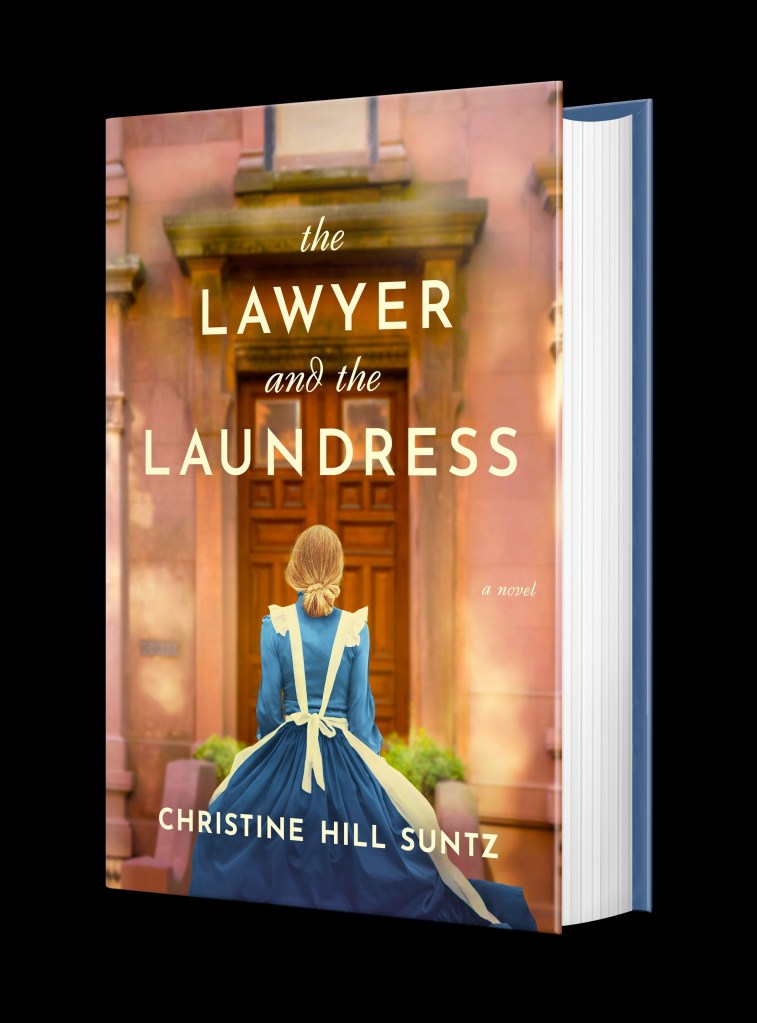
Meet Sara from Christine Hill Suntz’s The Lawyer and the Laundress

book cover
Amazon Affiliate Link Used Helps Support this Blog

Welcome to Novel PASTimes! We haven’t seen you around Cooper’s Inn before. Where are you from?

I’m Sara O’Connor, the new laundress. I’ve always lived here in Toronto, but this town has changed so much. When I was a child, people called it “muddy York”. The buildings were rough and the streets nearly impassable after a rain. 

It’s 1837 now, and Toronto is a city. New settlers come through every day. Farms are springing up in the wilderness that used to surround the city. Cooper’s Inn is a busy place. I suppose that’s why Mrs. Cooper hired me.

I thought I saw a little girl here a moment ago. Is she your daughter?

Oh, heavens, no. That was Evie. She takes lessons with the Cooper girls, but they exclude her every chance they get. She visits me instead, and I’m happy to see a friendly face. We have to be careful, though. Mrs. Cooper saw me talking to her and gave me a warning. Doesn’t want a girl from a fine family mixing with the riffraff from Irishtown like me, I suppose. 

Evie’s father has it out for me, too. He’s forbidden her from speaking to me. Can you imagine? What does he think I’ll do, force her to do my work? I’m the one friend she has here, and he wants to take that away. 

He’s a lawyer, so I shouldn’t be surprised. He lives by the rules and doesn’t understand a young girl’s heart. I’d like to go right up to him and make him open his eyes, but I can’t risk losing my position. 

Still, I won’t push Evie away. I guess I see in her the little girl I once was. We neither of us knew our mothers. We even love the same books. Have you read Ivanhoe

No, I can’t say that I have. I don’t mean to offend, but how does a laundress come to read Ivanhoe? You don’t sound like you’re from Irishtown, either.

Well, the truth is, I didn’t always live in Irishtown. In fact, I might have more in common with Evie than anyone realizes. 

I could earn more money as a lady’s maid or even a governess, but I have my reasons for working as a laundress. There are people I’d rather not see again, people who let me down when I needed them. I wouldn’t go back to that world, even if I could.

That’s why I keep to myself here at Cooper’s Inn. Or, at least, I did until Evie came along. Now I’m not sure what to do. Someone has to make her father understand her, but it can’t be me. I have too much at stake.

You see, I need to money to take care of Granny. She was a laundress, too. She taught me the trade and gave me a home when I had nothing. Now, it’s my turn to take care of her. She’s all I have left. 

Thanks for taking the time to chat with us today. Before we go, any idea what’s happening in the common room? It’s full to the brim, and those men sound angry.

Meetings like this are happening all over the colony. No surprise, I say. Hundreds of newcomers arrive here, hoping for a better life, but the same systems that held them back in Britain exist here. A few wealthy families hold all the power and run our colonial government. The elected assembly can do very little to sway the Queen’s appointed governor. They’re frustrated.

So you’re a rebel, then?

No! I’m just a laundress who lives among the poor. I see how they struggle. You won’t repeat anything I’ve said, will you? 

Your secret is safe with us, Sara. It sounds like you have some big decisions ahead of you. Good luck!


Christine Hill Suntz knew she wanted to write novels the day she finished Anne of Green Gables, and she’s been lost in her imagination ever since. Her love of language led her to study French and German and pursue a graduate degree in Comparative Literature before finding a home teaching high school French. Her work has won numerous prizes, including the 2022 ACFW Genesis competition.

Christine lives in Ontario on a hobby farm with her family, a flock of chickens, one attack rooster, and a herd of entitled goats. When she’s not writing or teaching, she enjoys trying out historical recipes on her (mostly) willing family.

Instagram: @christinehillsuntz Facebook: Christine Hill Suntz Author

https://www.tyndale.com/p/the-lawyer-and-the-laundress/9798400507755

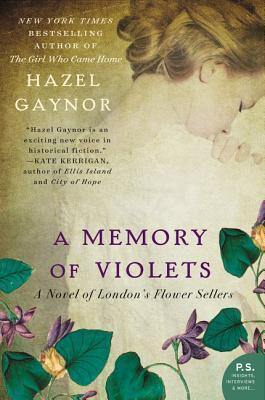
A Memory of Violets by Hazel Gaynor Book Review

Amazon Affiliate link used helps support this blog.

This book was first published 10 years ago, and I missed it. When the audiobook came up for sale recently on Chirp, I grabbed it. As the subtitle says, it’s a novel of London’s flower sellers. Two poor orphan sisters who sell flowers on the streets are separated due to the dangers 19th century children faced being homeless.. They grow up in very different circumstances. It’s a story that is both heart breaking and heart warming.

Tilly, who also grew up enduring family tragedy, goes to work as a type of house mother for girls who work making fabric flowers. She finds letters in her room written by one of the orphan sisters who had lived there and never gave up hope of finding her sister. The way these stories come together was not what I expected but satisfying all the same. Hazel Gaynor is a wonderful storyteller. I have loved all the books written by her that I’ve read. I think you’ll like this one too if you haven’t read it yet.

Reviewed by Cindy Thomson, www.cindyswriting.com

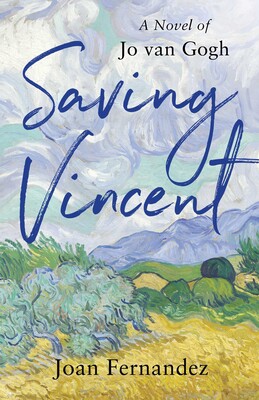
Meet Jo Van Gogh Bonger from Joan Fernandez’s Saving Vincent

Affiliate link used helps to support this blog.

ABOUT THE BOOK:

How did a failed belligerent Dutch painter become one of the greatest artists of our time?

In 1891, timid Jo van Gogh Bonger lives safely in the background of her art dealer husband Theo’s passion for selling the work of unknown artists, especially his ill-fated dead brother, Vincent. When Theo dies unexpectedly, Jo’s brief happiness is shattered. Her inheritance—hundreds of unsold paintings by Vincent—is worthless. Pressured to move to her parents’ home, Jo defies tradition, instead choosing to open a boarding house, raise her infant son alone, and promote Vincent’s art herself. Her ingenuity and persistence draw the powerful opposition of a Parisian art dealer who vows to prevent her success, and so sink Vincent into obscurity. How will Jo overcome the forces working against her, and save herself along with Vincent?


In the spring of 1894, a young Parisian—an aspiring newspaperman —pauses at the doorstep of the Dutch widow’s guesthouse. By chance, he’d become stranded in the town, for he’d miscalculated the amount of time the train would stop in the Bussum station and gotten off to stretch his legs, only to find himself running behind the disappearing caboose not fifteen minutes later. Now stuck in this backwater village, he’d asked the stationmaster for a place to lodge. “Try the widow Johanna van Gogh,” he’d said, pointing down a dirt road adding, “The art dealer.” A woman art dealer!What luck! It was just the type of curiosity he could sell. He bounds up the steps and raps sharply on her door. 

But thirty minutes later, he’s sitting on Mevrouw van Gogh’s sofa more bewildered than ever. This is not the grey-haired widow he’d imagined. She hands him a steaming cup of hot tea and takes a seat in a large stuffed chair opposite him.

Jo: All right then. I have just a few minutes before supper preparation. Tell me what you want to know.

Newsman: Well, for starters, the artwork you have hanging all over your house is stunning. Gauguin, Degas, Lautrec and of course, your brother-in-law Van Gogh. . .It’s like a museum! But tell me, why here? Bussum is such an out-of-the-way little Dutch town. Surely cities like Rotterdam or The Hague would be better?

Jo: I don’t think so. I know cities. I grew up in Amsterdam and lived in Paris for nearly two years when my husband Theo was alive. Art dealing is like a street fight there. There are so many dealers and hundreds, if not thousands, of aspiring artists. Competition is cutthroat.

Newsman: You have art collectors in Bussum?

Jo: Not many. 

Newsman: Then how can you make money as an art dealer here?

Jo: Well, first of all, my guesthouse earnings literally keep a roof over me and my son’s head. I need independent income. After Theo died, my father assumed I’d move back home, but I couldn’t. I’m no longer a frightened little rabbit. Marriage to Theo changed me. He listened to my ideas. We shared both our dreams and worries. I never dreamed that a marriage could be like that. A partnership. My father doesn’t understand. 

Newsman: Did Theo train you to become an art dealer? 

Jo: Not. . . intentionally. He was sick but it never occurred to either of us he would die. When I found out that the inheritance my son and I share was all of Vincent’s artwork—we’re talking hundreds of paintings and drawings—I needed to see if it could all amount to something.

Newsman: What do you mean?

Jo: Theo was only ever able to sell a handful of Vincent’s paintings. Most art critics panned Vincent. His paintings were nearly worthless.

Newsman: But what made you think you could sell the paintings when your husband couldn’t?

Jo: I would never compare myself to Theo!

Newsman: If anything, I think it would be more difficult. Art dealing is a man’s occupation. You said yourself that it’s cutthroat.

Jo: I’m persistent. I write letters to Dutch galleries asking them to display Vincent’s work. I’ve given art to influential friends who then loan them back to me for exhibits. When I add a little note in the catalog that the work is owned by a private collector, patrons tend to give the art a second look. It’s gotten to the point that dealers are starting to contact me to see if they can sell Vincent’s work. Paintings are being crated and shipped every week. I have so many lists! It’s a lot to keep track of.

Newsman: Is that why I smelt wood shavings when I came in?

Jo: Oh dear (laughter). When the weather’s bad we hammer the crates here in the salon. The broom can’t seem to get all the wood slivers.

Newsman: Are your efforts working?

Jo: Do you mean am I persuasive? I actually sold more paintings in my first year than Theo did in the ten years he supported Vincent.

Newsman: I wouldn’t expect that from a woman!

Jo: (smiling) Most people don’t. Let me tell you what I think my best idea’s been so far to attract interest to Vincent’s work. In 1893 Theo and Vincent’s good friend, Émile Bernard, approached the editor of Le Mercure de France to do an article about Vincent.

Newsman: Mercure the Parisian art journal?

Jo: That’s the one. When the editor agreed, I sent him not only drawings, but translated excerpts from letters Vincent wrote to Theo. They’re a treasure trove! Witty, angry, frustrated and most of all, so passionate about trying to produce art his own way. I came to know Vincent myself through those letters, for I only met him three times in person. Theo was a packrat. He kept all of their correspondence. It wasn’t until a year after his death that I began to read the letters he’d crammed into the nooks and crannies of his writing desk. So, for Mercure, I chose excerpts that would spark the public’s curiosity—and they did. Instead of one article, the editor increased the plan to six. 

Newsman: I’m astounded at your pride! Women are meant to be mothers, not to be in commerce. 

Jo: Come now! I am a mother. I’ve been raising my son on my own since he was a baby. He’s four years old now. I want him to know his father left him a legacy of value and that neither his uncle nor his father worked in vain. I didn’t realize it until a friend pointed it out to me, but I’m what they call a “New Woman.” A woman capable of many things outside of traditional female occupations. I’ve changed a lot from that frightened rabbit. I think that’s progress, and it’s the perfect role model for my son.

Newsman: I beg your pardon, but it’s not quite adding up. You’ve been at this for nearly three years. Vincent van Gogh’s art is too controversial to ever catch on. Why haven’t you given up?

Jo: Vincent. I think I understand him.

Newsman: What do you mean?

Jo: (looking down at the clasped hands in her lap) When I came to Holland—completely sure in myself about the great—the indescribable height of that solitary artist life—what I felt then, faced with the indifference that met me on all sides where Vincent and his work was concerned—the burning sense of the whole world against him—I felt so abandoned—that I understood for the first time what he must have felt—in those times where everyone turned against him and it was as if there was no place for him on earth. I wish you could feel what Vincent’s influence on my life has been. I’m grateful to him. . . (Looking up she smiles and quickly swipes at a tear). Now, do you have enough? My guest Mevrouw van Dijk becomes quite grumpy if supper is late!

Newsman: Yes, plenty. Thank you, Mevrouw van Gogh. I’m honored. . .

Jo: You’re most welcome.


“Lovers of Van Gogh will find this story intense, vibrant and deeply moving.” Based on a true story, Jo van Gogh, a timid widow, takes on the male-dominated art elite to save her brother-in-law Vincent’s art from obscurity. She must prove that the hundreds of worthless paintings she inherited are world-class to ensure her young son will have an inheritance.

In 2018, Joan Fernandez retired from a 30+ year career as a senior marketing executive to be a full-time writer. Her short story, “A Parisian Daughter,” is published in the anthology, Feisty Deeds: Historical Fictions of Daring Women. Her debut novel, Saving Vincent, A Novel of Jo van Gogh, will be published in April 2025 by She Writes Press. Joan is a sought-after public speaker, reviewer and blogger. She calls both St. Louis and Sedona, Arizona, home, and enjoys foodie meals with her Cuban husband and antics with grandkids. Subscribe to her free newsletter at joanfernandez.substack.com Follow her at @joanfernandezauthor and see her website at www.joanfernandezauthor.com