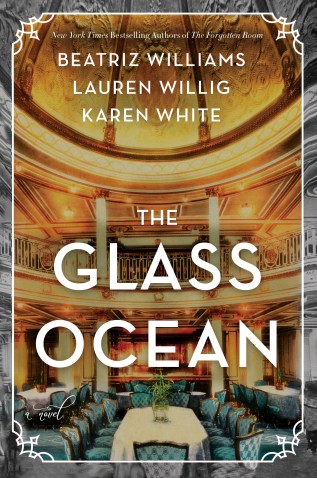
 Thank you for doing this. You have had some hard knocks in your life. As a British gentleman who lives during the Victorian years you had to conform to your father’s wishes. Now you are heading back to England, after taking some time away in America, on the lavish ocean liner, Lusitania. I am sure there are times on that ship where you tried to put the world behind you, but I am also sure you understand the inherit dangers considering the Germans warned all passengers that they are sailing at their own risk.
Let’s start out by going back in time.
Elise Cooper: Do you think your childhood impacted who you are today?
Robert Langford: You want me to talk about my childhood. You Americans. Always so familiar. Next, you’ll be wanting to call everyone by their first names. Doesn’t everyone’s childhood impact who they are? It was a normal childhood: growing up at Langford Hall, barley water with Nanny, being brought down to the drawing room once a day to see Mother and Father, that is when he was down from London, listening to the sound of my mother’s piano playing through the closed doors of the music room. Just like anyone’s childhood. Well, at least I had my brother Jamie…
EC: Why did you trail off, you appear deep in thought?
RL: You haven’t heard about the accident? I thought everyone knew. My father certainly made sure everyone knew. Jamie, my older brother, and I were sailing. My brother was fearless and brave and very clever. The perfect brother. The perfect son. Just perfect, really. They do say whom the gods love die young. Or perhaps it’s just easier to blame the gods than blame myself. I was the one who should have drowned that day. I was the one who went overboard. When Jamie went after me….
EC: Do you need a few minutes?
RL:Ahem. I beg your pardon. My glass appears to be empty, a lamentable oversight. I must remedy it.
EC: Let me rephrase the question, while growing up, did you feel like a stepchild regarding how your father interacted with you?
RL: Ah, that’s better. Mmmm, a stepchild? There was never any doubt I was a true-born Langford, but I was a second son. I was meant to be superfluous. I never begrudged Jamie his place and I was content to live in his shadow. Once he died, it was clear to everyone that I could never fill his shoes, so I selected the squeakiest shoes I could find.
EC: Is one of your hobbies playing the piano?
RL: Hobby—what a quaint way of putting it. I’ve been known to dabble. If you want to hear a true virtuoso, you should listen to Caroline…pardon me, Mrs. Hochstetter.
EC: Any other hobbies?
RL: Espionage, alcohol, and bedeviling my father.
EC: Espionage, is that why you want to be a spy novelist?
RL: Have I spoken of this? I’m not aware. Unless you’re referring to those little pieces I wrote for the New York TimesandThe Spectator. Those aren’t meant to be fiction. I do enjoy the odd novel, but I sometimes find their plots too fantastical to be true.
EC: Being an Englishman it appears you like to tease your American friends about their different habits and culture?
RL: When the Americans manage to acquire a culture, I will make a note to tease them. I do find this side of the pond quite refreshing. One is freed from the heavy gaze of one’s ancestors.
EC: You are heading back home to England on the RMS Lusitania. Why travel knowing it would be dangerous?
RL: Langfords laugh in the face of danger. Have I told you about my ancestor the Admiral?
EC: If you are from a military family don’t you have some guilt about not enlisting to fight in WWI?
RL:Isn’t the pen meant to be mightier than the sword? We all serve in our own way.
EC: For those of us who never went on a cruise ship can you please describe it?
RL: What is a… cruise ship? Are you referring to an ocean liner? It is a floating conveyance meant to mimic the sort of hotel frequented by debutantes, dowagers, and dandies who prefer to travel with all the comforts of home– assuming your home is in Mayfair or on Fifth Avenue. I understand there may also be a second class.
EC: You were seen breaking some rules of class by offering a lower-class traveler first class privileges?
RL:Only those who have no class are concerned by it. Americans, for instance.
EC: Rumor has it you are attracted to two women on the ship, an old flame, Caroline, and someone you just met, Tess?
RL:A gentleman never tells.
EC: Do you see similarities or differences in these two women?
RL:Would you have me compare orchids and daisies? Each has its own charms.
EC: Someone told me one of the Schuyler women said this, “Mrs. Hochstetter is an orchid, elegant and rare, while Tess is a common daisy.” Do you agree or disagree?
RL:I try not to listen to the Schulyer women. One usually exits discreetly when they enter a room.
EC: Do you think all these worlds collided on the ship?
RL: Ships are like Continental hotels; one can never tell whom one might meet. The difference is the only means of egress would leave one quite damp.
EC: If you had a crystal ball what would your life be like in five years?
RL: Does any man know what the future holds? My family only looks at the past, not the future.
EC: What are your hopes and dreams?
RL: To get off this blasted boat. Oh, bother. The Schulyer women approach. Is that whiskey in that decanter?
EC: Anything else you would like to say that has not been asked?
RL: Rule Britannia. God save the King. And put on that bloody life vest.
Thanks again for doing this. It is much appreciated. Please stay safe!
Beatriz Williams: A graduate of Stanford University with an MBA from Columbia, Beatriz Williams spent several years in New York and London hiding her early attempts at fiction, first on company laptops as a communications strategy consultant, and then as an at-home producer of small persons, before her career as a writer took off.
LAUREN WILLIG: is the author of several New York Times bestselling works of historical fiction, She is a RITA Award-winner for Best Regency Historical for The Mischief of the Mistletoe. A graduate of Yale University, she has a graduate degree in history from Harvard and a J.D. from Harvard Law School.
Karen White is the New York Times bestselling author of twenty previous books, including The Night the Lights Went Out, Flight Patterns, The Sound of Glass, A Long Time Gone, and The Time Between
 Thank you for doing this. It looks like you are trying to find your place in this post World War II world where anti-Semitism still looms large. Yet, being a Jew collided with the WASP world of the Bellamy family after Patricia hired you to tutor her daughter Margaux. Unfortunately, the father and husband Wynn sexually harassed you and you fell in love with Patricia’s brother Tom. Both these caused conflicts within the New York societal norms; yet, there was a bond formed between you and the Bellamy women.
 Name: Carrie Adell Green Strahorn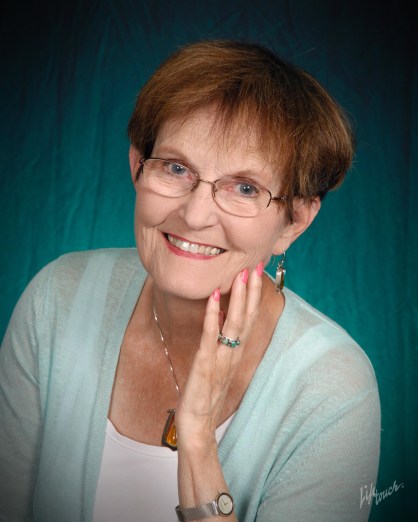
 We are going to speak today with Claire Clairmont at the Palazzo Cruciato in Florence, Italy. She is a nineteenth-century woman of “a certain age” and, most interestingly, the last living survivor of the Byron/Shelley “Haunted Summer” of 1816! Welcome, Claire!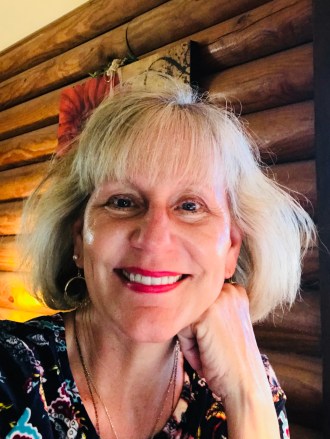
 In most dual-time period novels I prefer the historical line more than the contemporary one. In Melanie Dobson’s new novel, Hidden Among the Stars, I was deeply immersed in both. In the contemporary line we meet Callie, a bookstore owner who reads stories to children and is comfortable living in the secluded nest of Mount Vernon, Ohio. This appealed to me because I live nearby. The author has definitely been here as everything she described was completely accurate from the hiking trail to the Ohio State campus. That was a bonus, however, because the world of children’s stories and the compelling backstory of Callie and her sister and their mysterious but loving mentor Charlotte kept me turning pages.
 Melanie Dobson
 Annie’s Stories tells the story of Annie Gallagher, an immigrant from Ireland. We first met Annie in Grace’s Pictures, the first book in the Ellis Island Series. Annie is the housekeeper at Hawkins House, a boarding house for new immigrants run by Mrs. Agnes Hawkins.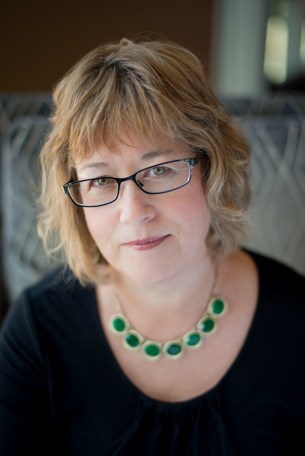
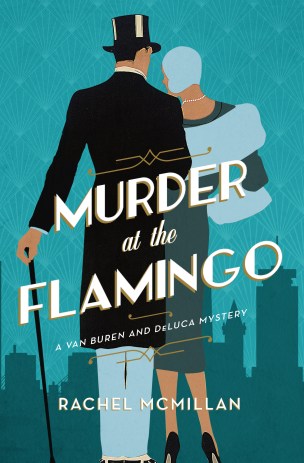 Name: Regina Van Buren (but I only get Regina from my mother’s bridge club. I go by Reggie).

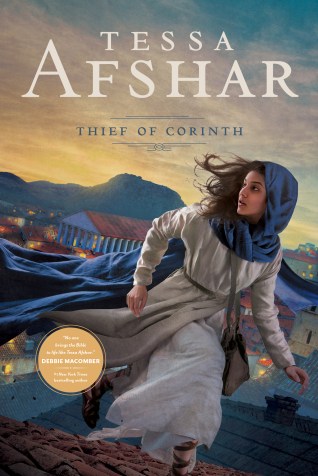 We are sitting down this morning for a latte and chocolate cake with Ariadne of Corinth, who is the main character from the book Thief of Corinth. Ariadne has never tasted coffee or chocolate. How do you like your first taste?
 Tessa Afshar is the award-winning author of historical and biblical fiction whose work has received the prestigious Christy and Inspy Awards. Her novel, Land of Silence was chosen by Library Journal as one of top five Christian Fiction titles of 2016, and nominated for the 2016 RT Reviewer’s Choice Award for best Inspirational Romance. Her book, Harvest of Rubies was a finalist for the 2013 ECPA Book Award in fiction, and chosen by World Magazine as one of four notable books of the year. Tessa was born in the Middle East to a nominally Muslim family, and lived there for the first fourteen years of her life before moving to England and eventually settling in the United States. Her conversion to Christianity in her twenties changed the course of her life forever. Tessa holds an MDiv from Yale University where she served as co-chair of the Evangelical Fellowship at the Divinity School.