Meet Daniel Hawkins from A Lasting Legacy by Cynthia Roemer in the Chiseled on the Heart Collection

Amazon Affiliate Link Used

Welcome to Novel PASTimes! We are pleased you stopped by today.

Tell us something about where yourself:

My name is Daniel Hawkins. My wife’s name is Maggie, and we have a wee one on the way. We make our home in a modest cabin in Loudoun County, Virginia. 

Ah! You have a wife. I enjoy love stories. How did you meet, and how long have you been married?

It seems I’ve always loved Maggie. We grew up as neighbors and attended the same church services as children. When Maggie blossomed into a young woman, I found countless reasons to stop by her home for a visit. She welcomed my company, and soon we became inseparable. Sadly, we were married but a few months when I joined the militia to fight against the British in the spring of 1814.

So you are a soldier? Is that your profession?

I was a farmer by trade before joining the militia. My stint in the army ended prematurely due to a devastating injury that changed the direction of my life entirely.

I’m sorry to hear that. How was your life altered by your injury?

I returned home a broken man, having lost my will to try or even live. Farming was no longer an option, so I withdrew from everyone, including Maggie. I saw no purpose in living and basically gave up for a time.

Sounds miserable. What brought you out of such a slump?

I credit my dear wife’s earnest prayers, along with my brother-in-law, Jonathan’s, tenacious attempts to pry me from my self-pity. On a trip into town, the Lord began to stir my heart to renewed purpose. I noticed a wooden cradle in the store that would have been perfect for our coming child. As Christmas neared, I wished to surprise Maggie with it. But money was scarce, so I gave up the notion and decided instead to try my hand at fashioning one myself.

Wow! But you said you were a farmer. Did you have any sort of carpentry skills?

I come from a family of whittlers and carvers. As a boy, I watched my father carve and build, but never really caught interest in trying the craft myself. But I had inherited my father’s carving tools which had been passed down to him from his uncle Silas. When I mentioned the idea of building a cradle to Jonathan, he was all for it and agreed to supply the wood.

That’s great. And did your cradle turn out well? Did you carve anything else?

I shall leave that for readers to assess and discover as they delve into my story, A Lasting Legacy.

Sounds good. What have you learned about yourself in the course of your story?  

That on my own strength, I am nothing. The Lord is the Master Craftsman of my soul. He alone brings strength, purpose, and healing to our lives. We only need look to Him in our time of need, and He will supply what we need. Instead of giving up, we must look up to our Heavenly Father.

Wonderful insights for us all. Thanks for allowing us to get know you a little better, Daniel!

About: A Lasting Legacy is one of four novellas included in Chiseled on the Heart Christmas Novella Collection: A Christmas Legacy Novella Collection

The Gift of a Lamb by Elaine Cooper

In 1776, 14-year-old Charlotte Hawkins and her brother, 10-year-old Elias, are still grieving the death of their parents. Their parents left instructions to be sent from their home state of Virginia to live with relatives they barely know, in Connecticut. The trip was dangerous, as war raged between the Redcoats and the Americans. To make matters worse, the churches in Connecticut don’t celebrate Christmas at all. Will this be the orphans’ worst Christmas ever?

A Lasting Legacy by Cynthia Roemer

Loudoun County, Virginia, 1814. After a disabling injury sends Daniel Hawkins home from war, he struggles how to provide for his young wife, Maggie and the child she’s carrying. As Christmas approaches, he finds a sheep his grandfather carved and attempts to carve a nativity set for Maggie. When she goes into labor during a Christmas Eve blizzard, Daniel is forced to face his feelings of inadequacy. And perhaps learn that God has a plan for his life after all.

Healing within the Pieces by Candace West

Prison shackles haunt Nathaniel Hawkins upon his return home only to discover it occupied by a woman in hiding. Bad men are no strangers to Delia Evans, but the intruder who barged into the farmhouse shrinks from her. With no other refuge, they must endure each other. But have they misjudged? When the past shadows their doorstep, is a grudge worth the price of a man’s life?

The Christmas Carving by Kelly Goshorn

Wyatt Hawkins dreads Christmas. Memories from the fatal shooting of his childhood friend on Christmas Eve, 1864, has left a bitter taste in Wyatt’s mouth toward God, the holiday season, and his former fiancée, Madelyn Cunningham. As Christmas draws near, can the star he’s carving for his family’s heirloom nativity point Wyatt back to the woman he’s never forgotten and the faith he’s left behind?

Author Bio:

Cynthia Roemer is an inspirational, award-winning author who enjoys planting seeds of hope into the hearts of readers. Raised in the cornfields of rural Illinois, she enjoys spinning tales set in the backdrop of the mid-1800’s prairie and Civil War era. Cynthia feels blessed the Lord has fulfilled her life-long dream of being a published novelist. It’s her prayer that her stories will encourage readers in their faith. She and her husband reside on the family farm and will soon celebrate their 30th Anniversary. They have two grown sons, a daughter-in-love, and a spoiled cat named, Chad. Visit Cynthia online at: http://www.cynthiaroemer.com

Purchase Links:

Amazon: scrivenings.link/chiseledontheheart

B & Nhttps://www.barnesandnoble.com/w/chiseled-on-the-heart-elaine-marie-cooper/1144047005?ean=9781649173300

Books-A-Million:  https://www.booksamillion.com/p/Chiseled-Heart/Elaine-Marie-Cooper/9781649173300?id=9015476519879
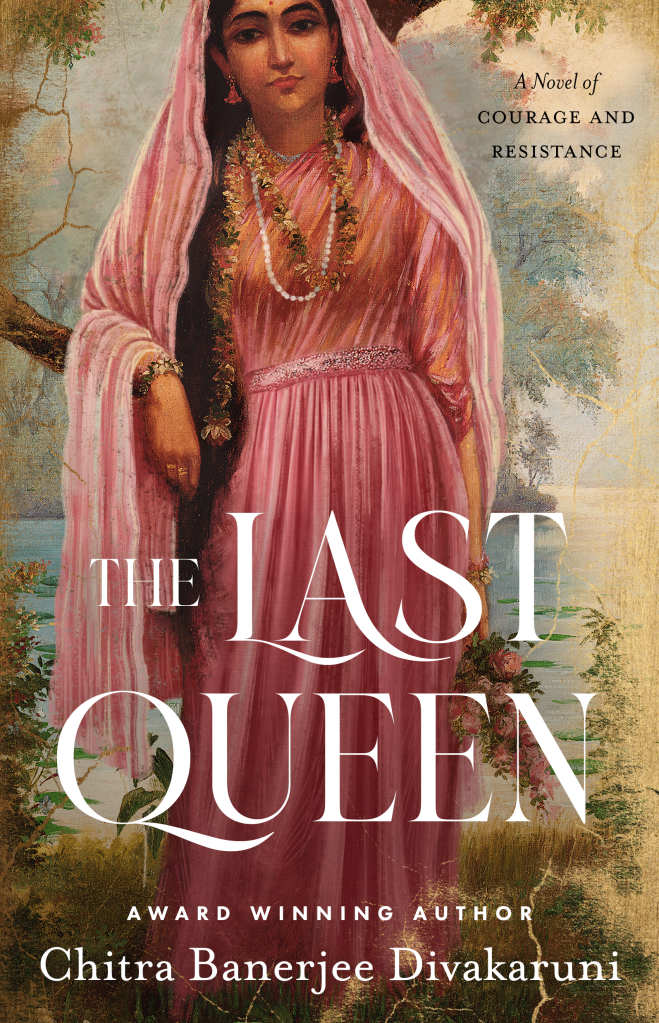
Meet Rani Jindan from Chitra Divakaruni’s novel The Last Queen

Tell us something about where you live.

I live in the kingdom of Punjab in India, in the capital city of Lahore, where my husband Maharaja Ranjit Singh has his royal court. Lahore is a fascinating city, filled with the most amazing markets, fortresses and places of worship, as well as the beautiful Shalimar gardens filled with thousands of roses. My favorite place is the Sheesh Mahal, the palace of mirrors, where the king and I live.

Do you have an occupation? What do you like or dislike about your work? 

You can’t really call it an occupation, though I am certainly very busy. As a queen, I feel it is my duty to pray for the good of the nation and give alms to the poor. I do this on all our holy days. I also spend a lot of time learning statecraft from my husband—he says I am sharper than most of his courtiers.

Who are the special people in your life?  

My husband the Maharajah is very important to me. I fell in love with him when I was sixteen, and he married me soon after, although I was the daughter of the palace’s dog trainer. Equally important to me is my infant son Dalip Singh. I would do anything to protect him. And oh yes, my maid Mangla. She is my confidante and also an excellent advisor. I trust her with my life.

What is your heart’s deepest desire?   

To live a quiet life with my husband and son. There are so many intrigues in the palace—I wish I could get away from them. Courtiers are always vying for the Maharajah’s favors. The other queens are always plotting against me. And of course, the British are waiting for a chance to attack our kingdom. I just want some peace and quiet.

What are you most afraid of? 

That my husband will die all of a sudden. He has not been in good health, and he drives himself too hard, trying to keep his kingdom safe. 

If he dies, I don’t know what will become of Dalip and me. 

Do you have a cherished possession? 

I don’t know if you can call her a possession, but I do love my horse, Laila. She is the most expensive horse in the entire land, the most beautiful, and the fastest. She does not like most people—she tends to bite them if they get too close! But somehow we became friends from the moment we met. 

What do you expect the future will hold for you?  

Who can tell? It is a turbulent time I live in. The British grow stronger each day. Punjab is the only large kingdom left in India that dares to resist them. But I know this much: if a day comes when the British attack us, I will resist them even with my last breath. 

What have you learned about yourself in the course of your story?  

I confess that I am very stubborn. And sometimes I make sudden, hotheaded decisions. I’m loyal to those who are loyal to me. But if someone turns against me, I will not forget. Nor will I forgive. 

Thanks for allowing us to get know you a little better!


WINNER of the 2022 INTERNATIONAL ASSOCIATION OF WORKING WOMEN AWARD for BEST FICTION OF THE YEAR!

LONGLISTED for 2022 DUBLIN LITERARY AWARD!

She rose from commoner to become the last reigning queen of India’s Sikh Empire. In this dazzling novel, based on true-life events, bestselling author Chitra Banerjee Divakaruni presents the unforgettable story of Jindan, who transformed herself from daughter of the royal kennel keeper to powerful monarch. 

Sharp-eyed, stubborn, and passionate, Jindan was known for her beauty. When she caught the eye of Maharaja Ranjit Singh, she was elevated to royalty, becoming his youngest and last queen—and his favorite. And when her son, barely six years old, unexpectedly inherited the throne, Jindan assumed the regency. She transformed herself from pampered wife to warrior ruler, determined to protect her people and her son’s birthright from the encroaching British Empire.

Defying tradition, she stepped out of the zenana, cast aside the veil, and conducted state business in public, inspiring her subjects in two wars. Her power and influence were so formidable that the British, fearing an uprising, robbed the rebel queen of everything she had, but nothing crushed her indomitable will.

An exquisite love story of a king and a commoner, a cautionary tale about loyalty and betrayal, a powerful parable of the indestructible bond between mother and child, and an inspiration for our times, Chitra Banerjee Divakaruni’s novel brings alive one of the most fearless women of the nineteenth century, one whose story cries out to be told. 


Chitra Divakaruni is an award-winning writer, activist and teacher, and the author of 20 books such as Mistress of Spices, Sister of My Heart, Before We Visit the Goddess, Palace of IllusionsThe Forest of Enchantments, and most recently, The Last Queen. 

Her work has been published in over 100 magazines and anthologies and translated into 30 languages, including Dutch, Hebrew, Bengali, Hungarian, Turkish, Hindi and Japanese. 

Her awards include an American Book Award, a PEN Josephine Miles award, a Premio Scanno,  a Light of India award, and a Times of India Award for Best Fiction. In 2015 The Economic Times included her in their List of 20 Most Influential Global Indian Women. She is the McDavid professor of Creative Writing in the internationally acclaimed Creative Writing Program at the University of Houston. 

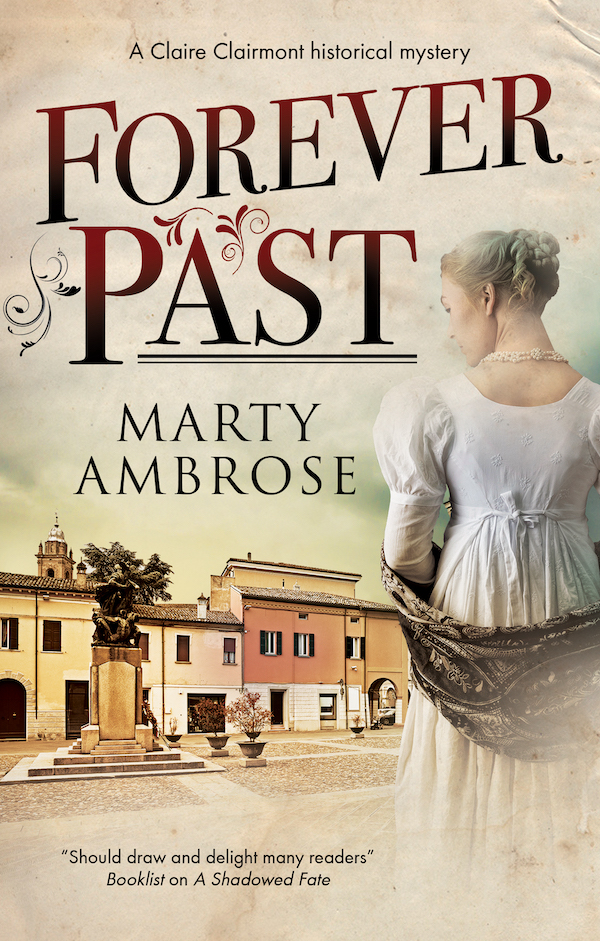
An Interview with Edward John Trelawny from Forever Past by Marty Ambrose

We are going to talk today with Edward John Trelawny at the Palazzo Marciano in Livorno, Italy.  An adventurer, writer, and raconteur, he is known mostly as the most dashing member of the Byron/Shelley circle in historic Pisa; but, he is a complicated and brilliant man in his own right, whom Lord Byron referred to as the “personification of my Corsair.”  Welcome, Trelawny!

Amazon Affiliate Link Used
  • Firstly, I want to ask you about Byron’s reference to you as the “personification of his Corsair”—a poem he wrote about a pirate.  Do you think that’s true?

Edward Trelawny:  [laughing]  Not exactly.  I was never a pirate but, as a boy, I did read about the French corsair, Robert Surcouf, and I went to sea because I was a rebellious sort of boy.  I ran away at the age of thirteen to join the Royal Navy as a volunteer (I was too young to actually take on a commission) and traveled on ships from Bombay to the Cape of Good Hope.  The rough lifestyle aboard a sailing vessel made a man of me.  But . . . I did not like the discipline of the Navy and was often sent to the masthead as punishment for some kind of minor infraction.  Perhaps I would have been better off becoming a pirate after all.

  • Before we talk about your relationship with Claire Clairmont, maybe you could tell us a little more about yourself.  I’m sure our readers would find your own history quite interesting.

Edward Trelawny:  Certainly.  As you can tell from my surname, I am Cornish.  My family had modest means but an extensive ancestral lineage and my father, though a baronet, had a fiery temper.  A tyrant really.  Hence, the reason I left home at such a young age.  And, of course, I always had a wanderlust to see the world.  After I left the Navy in my twenties, I lived in Switzerland, Italy, Greece, and then back to England.  I even visited America and thought about starting a Utopian community there, but something always drew me back to Europe.

  • Was that “something” Claire Clairmont?

Edward Trelawny:  Well, she has been at the center of my life for over fifty years.  My dearest friend.  My closest ally.  My one and only true love.  I will not deny that I have known other women and even married three times.  But my heart always, always belonged to Claire from the moment I met her in Pisa in 1822.   She was breathtaking with her exotic beauty and sparkling personality.  And, while she has grown more advanced in years (as I have), she has lost none of her spirted nature.  We have been separated by great distance at times during our lives, yet we never lost contact—and her witty letters have been such a comfort to me.  To be sure, I asked her to marry me more than once, but she preferred her independence, much to my dismay and disappointment . . . At least now I have the opportunity to be with her again on the quest to find Allegra.

  • Do you think other people have come between the two of you?

Edward Trelawny:  I assume you mean Lord Byron.  I will not deny that Claire has been haunted by his ghost, and I cannot blame her.  We all were caught up in his orbit.  He was like a comet in our lives, lighting up the world and then plunging it into darkness again when he died. There has been no one like him—before or afterward.  And it is difficult to describe what it was like to know him:  there was the famous poet, brilliant and erratic; the revolutionary who inspired us to follow him to fight for the Greek Independence; and there was the man whom I came to call my friend—amusing, loyal, and generous.  He had many different sides—a chameleon, as he called himself.  Certainly, he could be outrageous, even petty, at times, but who is perfect?  As Claire said, he was an easy man to love and admire but not an easy one to know, even though we all tried.

  • After Byron perished in Greece in 1824, you stayed in Greece and continued to fight for their cause.  How did that turn out?

Edward Trelawny:  Well, Greece declared its independence when the Treaty of Edirne was signed in 1829, so you may judge for yourself.  After Byron died in Missolonghi, I stayed and fought side-by-side with Odysseus, a warlord leader who was almost like a brother and, at one point, we commanded five thousand troops.  It was a long and arduous war, but it had a glorious conclusion.  Sadly, as is often the case, the men who risked their lives in battle are no longer needed when peace is declared.  Odysseus was executed, and I was a victim of an attempted assassination; the bullet is still lodged in my back.

  • Did you not marry Odysseus’s sister?

Edward Trelawny:  That is another story [he clears his throat].  But enough of an old soldier’s reminiscences.  I grow tedious . . .

  • Not at all.  Actually, I was going to ask if there was one incident that stood out as the most horrific for you?

Edward Trelawny:  Yes, though it did not occur during battle.  It happened when Shelley drowned in Italy during the summer of 1822.  I still recall it as if it were only yesterday.  He had gone out sailing with his friend, Edward Williams, and they ran into a squall near the Bay of Spezia which caused the boat to go down, killing the two of them.  We did not know for days what had happened, even though I met constantly with the Italian Coast Guard.  Eventually, their bodies washed ashore near Livorno, and I had to oversee their cremation on the beach.  Never will I forget that awful scene of seeing my dear friend consumed by fire into ashes.  Byron was there, but could not stand it and began to swim off shore, but I remained until the task was finished.  

  • What a tragic story.  

Edward Trelawny:  Indeed.  One of my greatest regrets is that I introduced Shelley to sailing.  If I had not done so, perhaps he would not have perished at sea.  Who can say for certain?  Life is full of these twists and turns.

  • Do you have any other regrets?

Edward Trelawny:  I will never stop reproaching myself for not telling Claire that her daughter, Allegra, might still be alive.  Byron swore me to secrecy, and I know that revealing the truth might have placed Allegra at risk, yet it was still a deception.  I am only grateful that Claire has forgiven me.

  • Do you think she might also reconsider sharing her life with you?

Edward Trelawny:  We shall see.

  • I can only hope!  Any final comments?

Edward Trelawny:  In spite of being friends with Byron and Shelley, I never wanted to be a great poet, but I wanted to have a great life.  And I did.

Thank you for speaking with us today.


Marty Ambrose is the author of a historical mystery trilogy: Claire’s Last SecretA Shadowed Fate, and Forever Past, all set around the Byron/Shelley circle in nineteenth-century ItalyHer novels have been published by Severn House (U.K. and U.S.) and Thomas Schluck (Germany), earning starred reviews in Publisher’s Weekly, as well as finalist status in the Florida Writers Association’s Literary Palm Award. Her work has been featured internationally in blogs, journals, and websites.

Marty teaches English at Florida Southwestern State College and has been a faculty member in the SNHU Creative Writing MFA program; she was a NISOD winner for faculty excellence, grant award recipient, and Master Teacher. She completed her M.Phil. at the University of York (England) and teaches nineteenth-century British literature, composition, and fiction writing. She has also given numerous workshops in the U.S. and abroad on all aspects of creating/publishing a novel.

She has edited the FSW literary journal, served on student scholarship boards, and is a member of The Byron Society, Historical Novel Society, and Women’s Fiction Writers Association.

Meet Manny and Abby from Paula Peckham’s Story in the Anthology Christmas Love Through the Ages

Welcome to you both. Please introduce yourselves.

MANNY: Hello. My name is Manuel Blair, but folks call me Manny. 

ABBY: Hi, I’m Abby. This handsome example of manhood is my husband.

I overheard you both talking about babies a moment ago. May I assume you have children of your own now?

ABBY: Yes. Thank God we made it through that period. Being “in the family way” was horrible for me. I think I was sick every single day for six solid months. It was a rough time, but Manny was my rock.

MANNY: I tried to help as much as I could. I felt so helpless watching her suffer so. Didn’t seem like there was much I could do for her except make her tea to soothe her stomach.

ABBY: Blech. If I never drink another mug of ginger tea again in my life, it’ll be too soon. 

I can understand how scared you must have both been. Bearing children is not an easy task in the year of 1868.

MANNY: Besides Abby’s sickness, I was dealing with some old feelings of insecurity that showed back up once fatherhood loomed. I lost my dad when I was five, so I didn’t have an example to follow. No mentor to show me the ropes. I was pretty nervous about the whole thing. Lucky for us, Gabe showed up one day when I was chopping wood and offered to help. He stuck around and helped me complete the construction of the extra room on the house. I don’t know if I could’ve done it all on my own.

ABBY: You didn’t need to build that room. We would’ve managed without it.

MANNY: I wanted the best for you. And being able to bathe in a tub instead of a small bucket certainly made things easier for you. Plus, you didn’t have to tramp outside in the freezing sleet of February to use an outhouse. Admit it, Abby. The extra room was a good idea.

ABBY: You’re right. It was a good idea. And I’m glad Gabe was there to help us both. He turned out to have some hidden skills.

Sounds like Gabe has a story of his own. I can’t wait to hear more. So, Christmas ended up being a good time for your new family?

ABBY: Very good. We are so blessed. Christmas this year turned out to have more surprise gifts than ever in my life. And all of them were perfect. God showed us once again that he always has his eye on us and will never leave us.

MANNY: Right. A gift doesn’t necessarily come in a box. Sometimes, the best gifts of all are relationships.

What an awesome concept. I think we would all be happier if we focused more on the intangible gifts in our lives.


A fifth-generation Texan, Paula Peckham graduated from the University of Texas in Arlington and taught math at Burleson High School for 19 years. She and her husband, John, divide their time between their home in Burleson and their casita in Rio Bravo, Mexico. Her debut novel, Protected, was an ACFW Genesis semi-finalist in 2020. She also writes short stories, novellas, and poems. 

She has contributions in the 2021 release Christmas Love Through the Ages, and Texas Heirloom Ornament.

She will take on the job of president of ACFW DFW in January, 2022, leaving the job of treasurer, and is a member of Unleashing the Next Chapter. 

She has spoken at ACFW, Unleashing the Next Chapter, and the Carrollton League of Writers. For more about Paula and her books, follow her at paulapeckham.com.

Twitter: https://twitter.com/PaulaPeckham

Instagram: https://www.instagram.com/paulajopeckham/

TikTok: https://www.tiktok.com/@paulapeckham?lang=en

Pinterest: https://www.pinterest.com/ppeckham/books/

A Chat With Coraline Baxter from Regina Scott’s A View Most Glorious

Welcome to Novel PASTimes, Coraline Baxter! We are pleased you stopped by today.

A View Most Glorious by Regina Scott

Cora: I’m delighted to be here.R Thank you for the invitation.

Of course. It’s not often we have a guest who plans to climb a mountain. What gave you the idea to summit Mt. Rainier?

Cora: I’m a member of the Tacoma Women’s Suffrage Association. We hope to restore the vote for women. Washington State’s had it twice now, but the courts keep overturning the laws. We intend to prove that a woman can climb a mountain. And if women can climb mountains, why shouldn’t they vote?

Do you have any experience climbing?

Cora: Regrettably, no. I’ve been attending college and becoming one of the first women accountants in Tacoma, the City of Destiny, as we like to call it. And with the Panic of 1893, the bank where I work has been very busy trying to help those who lost everything. But I’ve hired a guide, Mr. Nathan Hardee, who comes highly recommended, for all he seems a bit unreasonable.

Unreasonable how?

Cora: He says to reach the summit I must have stamina, determination, and a willingness to obey his direction, without question. I told him he’ll learn I have plenty of stamina and determination, but I’ve never been good at obeying. He’ll simply have to accustom himself to the fact.

And you feel comfortable this fellow can get you safely to the top and back, through the wilderness?

Cora: I do. I can’t really explain it. There’s something about him. He’s tall as a fir, with eyes as green. He carries himself with a confidence few men manage. And there’s a stillness about him, as if he’s discovered his own worth and is satisfied with that. My stepfather told me Nathan was once a member of high society, like me, but I find that hard to credit. Why would he leave wealth and prestige behind to live in a cabin in the woods?

Well, if you don’t reach the top, you’ll still have position and family to return to.

Cora: That’s the problem. I won’t. My mother and I have never seen eye to eye, but she’s put her foot down this time. If I don’t reach the summit, I must return home and marry the man she’s picked out for me. She finds local industrialist Cash Kincaid perfect, but I know the truth. He’s cunning and cruel, and he’s made it clear he will stop at nothing to make me his bride. So I will reach the summit, whatever it costs.

I can see what you mean about determination. We wish you the best of luck. Thanks for allowing us to get know you a little better!


Regina Scott

Regina Scott is the author of more than 50 works of warm, witty historical romance,
including A Distance Too Grand and Nothing Short of Wondrous. Her writing has
won praise from Booklist and Library Journal, and she was twice awarded the
prestigious RT Book Reviews best book of the year in her category. A devotee of
history, she has learned to fence, driven four-in-hand, and sailed on a tall ship, all in
the name of research. She and her husband of 30 years live south of Tacoma,
Washington, on the way to Mt. Rainier. Learn more at www.reginascott.com.

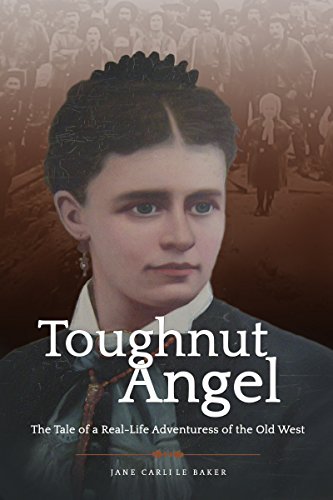
Author Jane Carlile Baker introduces you to Nellie from her book Toughnut Angel

Jane:  What was it like for you, Mum, and Fannie to flee Ireland in a coffin ship bound for Boston in 1850?

Nellie: And our Irish cottage in Midleton was full of love, the land every shade of green, even with the sick potatoes. But my Papa died. The English landlord tore our cottage apart, forced us out into the lane. Made up my mind that day never to owe a rich person, and if I ever got rich, to help others. Mum accepted the landlord’s tickets and we walked the miles to Cobh to sail for America. 

Fleeing people packed the coffin ship, its wood old, its sails dirty, its hold stinking. The English only allowed us to climb out of the hold when we emptied slop buckets, so I volunteered, often, for a breath of fresh air. Even as a small girl, I knew when one-by-one the passengers got sick, that we might not live to see America. But we did, thank the good Lord, we did. Mum, Fannie, and me. 

Jane:  What drew you to mining?

Nellie: A man on my elevator in Boston, did I say I ran an elevator during the Civil War when all the men were gone? And this passenger, who some say looked a lot like General Grant, listened to my dreams and said, “Young lady, you should go west. The land is ripe for settling and you won’t find as many restrictions on your activities, as a woman, there.” So we went, Mum, Fannie and I. 

Making boots in my brother-in-law’s boot factory in San Francisco, I heard a miner from Virginia City, Nevada talking about the wealth they dug out of the ground there. Fannie was married, Mum was living with her and her husband, Thomas Cunningham, so I was free to go. While I worked as a waitress, I learned everything I could about mining in Virginia City. First realized miners were just overgrown boys there, and developed a heart for them. Called them my “boys” for the rest of my life.

Jane: How did you get the title Queen of the Camps?

Nellie: About five hundred of the boys and I mined gold up at Dease Lake, in British Columbia. Ran a little boarding tent where they could get a hot meal. In the fall of 1875, we began to get low on supplies. I headed down to Vancouver Island to resupply us, my plan being to visit the Sisters of St. Ann and return with supplies in the spring. 

In the midst of the worst winter in years, the man who carried the mail for the camps came to tell me the boys at Dease Lake had scurvy. ‘Tis a beast of a disease caused by Vitamin C deficiency that makes gums blister, teeth fall out, and eventually death. That news changed my plan. Hired six men to go with me. We loaded all the lime juice we could haul on six dog sleds and headed for Ft. Wrangell where we would head in from the coast. Commander there told us not to go, but we went. They would have come for us. 

And the dang blizzards never ended. The dogs could not get through the snow, and we necked the sleds. That means we cut leather bands, tied them to the leads on the dog sleds and pulled them ourselves. Took us three months, including digging myself out of a wee avalanche. When we got to the lake, only seventy-five miners still lived. Drained that lime juice into their bleeding mouths and saved every one of them. Do not know that I was ever an angel, but the boys thought so. Had a rough time keeping them seated whenever I entered a mining camp building after that. But made it easy to collect funds to build hospitals and churches. They always opened their pockets to me.

Jane: Tell us about your time in Tombstone, Arizona.

Nellie: Came to Tombstone about the same time Wyatt Earp, Doc Holliday and their clan showed up. Knew the fellow who got the town named Tombstone, Ed Schieffelin; as well as John Clum, the mayor and publisher of the Tombstone Epitaph. Knew the other element of Tombstone, too. The girls who worked down at the other end of Allen Street and the cowboys donated to building the church and the hospital, same as everyone else. 

Bought several mines and worked them, owned a general store, boarding house and a restaurant. Thomas got consumption and passed while I mined there. Mum stayed in San Francisco, but Fannie and their five children came to Tombstone and helped me run my businesses. Those kids kept us busier than a one-armed miner. We all saw the results of the Gunfight at the O.K. Corral. Then Fannie got the consumption and died. And I raised all her children to become good citizens. Her son, Mike, lived around that area his whole life. Just before the silver played out, I moved on, as was my custom. 

Jane: You mined at Dawson in the Klondike. Can you recreate that experience for us?

Nellie: A lot of ice and snow in the winter and mud the rest of the time. Two-stepped up and down that Golden Staircase cut from the ice on the Chilkoot Pass at fifty-three years old, if I do say so myself. Got a kick out of blarneying the Mounties into letting me come in with half the supplies they required of the boys, since I was half their size. Shot the Whitehorse rapids in a canoe me and a couple of the boys threw together and got to Dawson ahead of quite a few others. Never rode in an airplane, but that was close enough for me.

 Met more mighty fine people in Dawson, Father Judge and Belinda Mulrooney, to name a couple. Lost Mum while the Yukon was froze up, and could not get to San Francisco for her funeral. She made it to a hundred years old, though.

Jane: You finished the last twenty-five years of your life above the Arctic Circle. Tell us about Wiseman, Alaska.

Nellie: Some would call it a desolate land up there. But my Alaska has wild beauty. You just gotta’ know when to look. The thunder of a caribou herd coming up a rise or the Northern Lights dancing in the dark kept me there. The boys and I mined for gold a little different where the ground was frozen most the time. They named me champion female musher of Alaska when I was seventy-seven. Mike and his kids would beg me to come back to Arizona and get warm, but Alaska was my home. Only left when I could not shake a dang cold I caught on a visit to Arizona. Went back to my Sisters of St. Ann in Seattle, to their hospital I helped build. Walked in on my own steam and walked out on Jesus’ arm.


janecarlilebaker.com

facebook.com/JaneCarlileBaker/
“The joy of the Lord is my strength”

Book Review: The Irish Healer by Nancy Herriman

Paperback, 320 pages
Published April 3rd 2012 by Worthy Books, Audio by Oasis Audio

An affiliate link is used in this post. If you choose to sign up for Chirp, please use this link as Novel PASTimes will get a small kickback. Thank you.

I’ve been meaning to read this book ever since I met the author several years ago at the Ohioana Book Festival in Columbus, OH. But you know, so many books, so little time. When it showed up on Chirp, I grabbed the opportunity. I’m so glad I did. I really enjoyed this story. As a bonus, there was an interview with the author at the end of the audiobook!

Irish Rachel Dunne is a wounded character who flees Ireland for London after someone she cared for dies. She tries to deny her skills as a healer but that is difficult when she ends up working for a doctor (referred by her cousin who lives in London) who also wants to flee from his profession because of guilt over his wife’s death and all the suffering he sees daily. Rachel and the doctor develop feelings for each other but their painful pasts makes them both want to run away from that attraction. However, when the Cholera epidemic affects the doctor’s young daughter, they both must reexamine their callings.

The strength of this novel is in the historical descriptions (something I love!) and the way the author weaves together the characters’ journeys. It’s a story of redemption and of following God’s calling on your life. If this is a book you also put off reading, I urge you to bring it to the top of your pile. The audio narration was very good (some aren’t so much) and I can highly recommend that edition.

Visit Nancy online

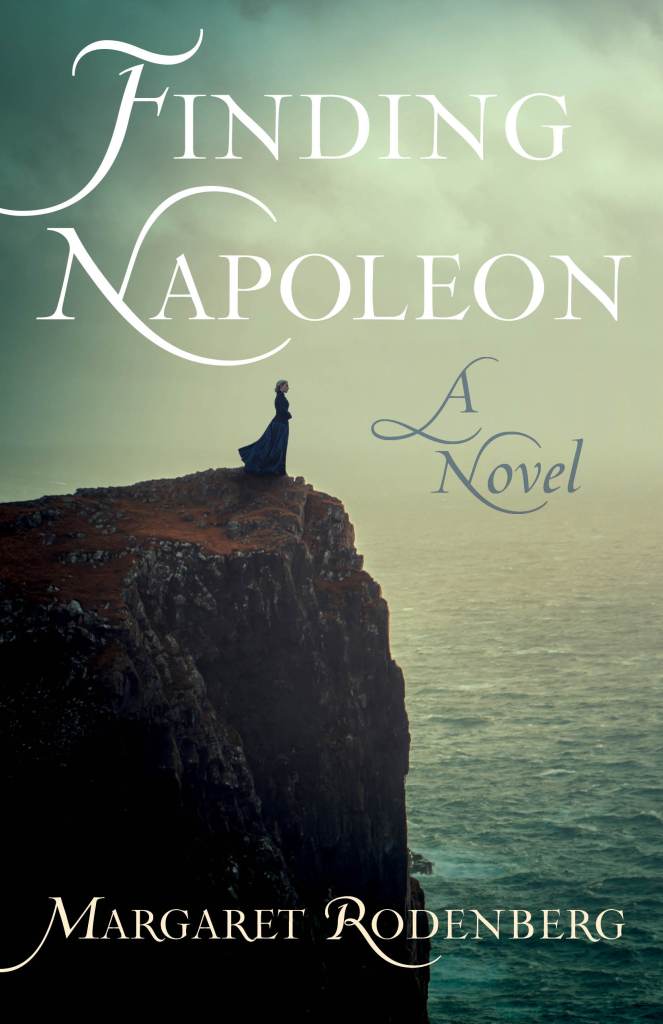
Interview with Albine de Montholon from Margaret Rodenberg’s Finding Napoleon: A Novel

Welcome! Tell us something about where you live.

Well, that’s half my story, isn’t it? I’m stranded 5,000 miles from Paris on the miserable British island of St. Helena in the South Atlantic Ocean. Charles de Montholon—my (third) husband, a marquis and general, but poor as a beggar’s brat—and I followed Napoleon Bonaparte here into exile after his loss at Waterloo. 

Are you envisioning white sand beaches? Think again, dear friend. This desolate volcanic island’s all hills and valleys, except for the rain-soaked, windswept plateau at its top. There, the British confine us in dilapidated Longwood House. Napoleon, naturally, has the best chambers, but between the dust and rats, those hardly befit an ex-emperor. Charles and I bunk on cots in the paltry library room. Oh, I shouldn’t complain. I pleaded to accompany Napoleon here.

Is there anything special about your name? Why do you think you were given that name?

Merci for asking. No one ever does. Albine means “white,” which is amusing when you consider the—shall we say?—enterprising life I’ve led. No, do not judge me. During the French Revolution, an aristocrat’s daughter couldn’t afford morals, not if she wanted to survive. Yet for all my sins, now that I’ve turned forty, a part of me yearns for the purity my name implies.

Do you have an occupation? 

An occupation? Goodness, no. It’s 1818, and I’m married to a marquis, however impoverished. That’s not to say that I don’t pick up some coin here and there. Plus, I admit to a bit of harmless spying for the British. Payment for that comes as letters from my beloved son who’s in school in Switzerland. Can you blame a mother? Wouldn’t you do the same?

And then there’s my relationship with my long-time hero Napoleon. Don’t be shocked: Charles and I have a practical marriage. He encourages me to “keep company” with Napoleon. For Charles, it’s about ambition and greed. Maybe that’s how it started out for me, but now I love the lonely emperor for himself.

To pass the time, I help Napoleon with the romantic novel he’s writing. (Yes, Napoleon writing fiction!) It’s an old manuscript he started when he was young and idealistic. Now he wants to finish it. You see, Napoleon, like me, has a son, one who was taken from him. The book’s a gift for his “Eaglet,” a way to teach the boy about love, betrayal, and ambition. Perhaps you could call me a writing coach?

Who are the special people in your life?

My son Tristan comes first, of course, but due to our separation, he’s more in my heart than my life.

For years, Napoleon was my idol. I thought if I could get close to him that his glory, power, and wealth would rub off on me. I never knew him—understood him—until now. By hearing my story, you, too, have a chance to know him as I wager you do not.

To complicate matters, I have a new admirer: an almost-handsome British lieutenant, Basil Jackson, who would like to make an honest middle-class woman of me. Can you imagine? And yet . . .


On a different level, there’s Napoleon’s page, little Tobyson. He’s the only person on this island who notices when I’m sad. His father’s an enslaved man whom Napoleon befriended and tried to free. Some scheme’s going on between those two.

What is your heart’s deepest desire?

I want to see my son Tristan again. Even more important, I want to know that he is happy. With 5,000 miles separating us, a mother can only pray.

Beyond that, I crave love. I’d settle for stability. But what’s the best way to achieve either? Should I attach my star to Napoleon? Go to England with almost-handsome Basil? Reconcile with my husband Charles? I had almost decided when suddenly everything changed. I have a child growing inside of me. 

What are you most afraid of?

Hunger. Prison. Have you known them? Did you, too, survive the French Revolution? No? Have pity on those of us who cannot forget our terror. Here, slip your hand into the secret pocket in my skirt. Touch the bread crusts I can never be without. Feel my fear.

Do you have a cherished possession?

I wear a necklace with my son Tristan’s portrait inside.

What do you expect the future will hold for you?

Now that I am pregnant, the British may let me return to Europe. I am torn between conflicting loyalties as Napoleon, Charles, and Basil each urge me to turn on the others, while I only wish to protect my baby.

What have you learned about yourself in the course of your story?

I learned that when you touch greatness, you don’t change it as much as it changes you. I hope finally to be able to temper my ambition and seek a contented life. Most of all, I have learned to live with grief and to find joy in the love that preceded it.

Is there anything else you’d like people to know about you?

I am a survivor. History may forget me, but I am woven in its fabric. I was the last woman Napoleon Bonaparte loved.


About the Author:

Margaret Rodenberg’s passion for French history began when she lived in France as a young teen with her US Navy family. An avid traveler who has visited over sixty countries, she has journeyed more than 30,000 miles to conduct Napoleonic research, including to St. Helena Island in the remote South Atlantic. She’s a former businesswoman, an award-winning writer, and a director of the Napoleonic Historical Society, a non-profit that promotes knowledge of the Napoleonic era. New York Times best-selling author Allison Pataki called her debut novel, Finding Napoleon, “beautiful and poignant.”

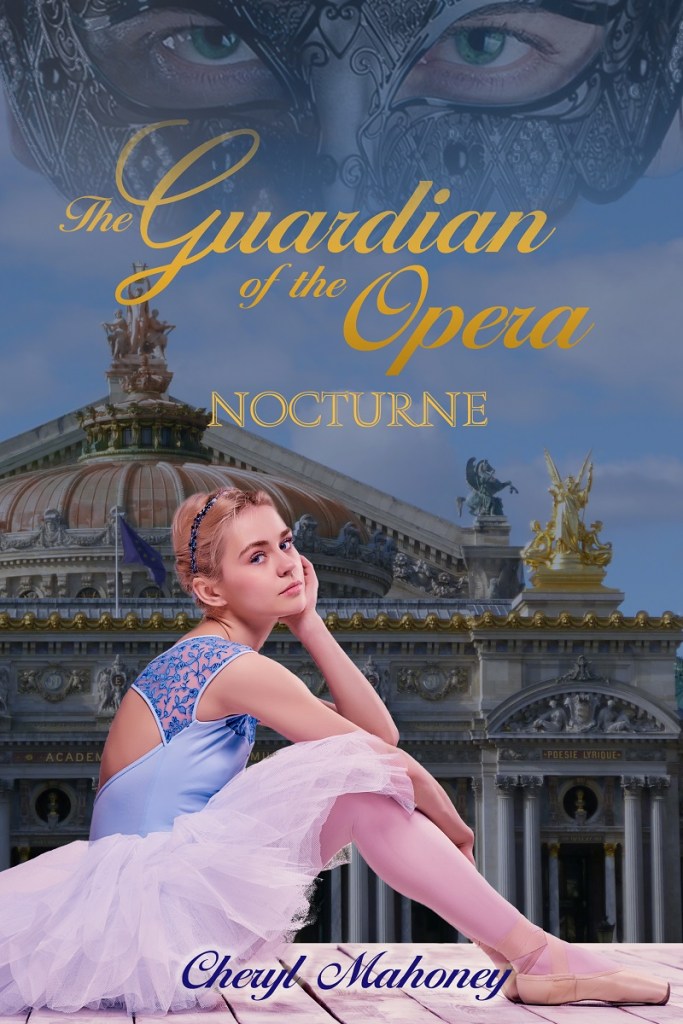
A Chat with Erik and Meg from Cheryl Mahoney’s Nocturne (The Guardian of the Opera, Book One)

Welcome to Novel PASTimes. Please tell us a little about yourselves as an introduction.

Meg: I’m so happy to be here talking with you!  My name’s Meg Giry, and I live in Paris with my mother.  We came to Paris six years ago when I was twelve. The city was confusing at first, but I love it now.  I’m a dancer in the corps de ballet at the Opera Garnier.

Erik: I don’t like talking to strangers.  Or anyone, actually.  So I’m not that happy about being here, but…I don’t know, sometimes I think maybe I need people.  Mostly, though, I’m certain they’re not going to be friendly to a man in a mask.  This may be why I live alone under an opera house and make people believe I’m a phantom.  Maybe that’s why.  I’m admitting nothing.

I’m hearing a connection with the opera house.  How do you two know each other?

Meg: We don’t, actually—not yet, at least, but I keep hoping we will.  We met once by chance when I first arrived at the Opera Garnier, and he was kinder than all the spooky stories about the Phantom of the Opera claimed.  I haven’t believed those stories ever since, and I’ve been looking out for a chance to bump into him again.

Erik: I don’t exactly remember meeting, but if she says so, I guess it’s true.  Mostly I just know she’s the daughter of my boxkeeper, Madame Giry.

Meg: Oh, we have a mutual friend too!  Christine Daaé is my closest friend, and lately she’s claimed an Angel of Music is teaching her to sing.  I’m fairly sure I know who’s behind that.

Erik: I’m still admitting nothing.

You both seem to be involved with the arts.  Meg, you mentioned the ballet, and that your friend is a singer. Erik, are you a singer?

Erik: I sing, yes.  Not for anyone to hear but yes, I can sing.  I identify more as a composer, possibly the greatest there’s ever been.

You think well of yourself.

Erik: I really don’t.

So what other interests do you each have?

Meg: I love the ballet, but it’s not my only focus in life, like many of the women I dance with.  I’m so interested in everything else going on at the Opera Garnier – the singing, the productions, and everything happening in the lives of the people there.  I also like exploring Paris, walking by the Seine or attending Easter mass at Notre Dame Cathedral.  I’d love to be able to travel and visit more of the world, but that’s not easy to do in the 1880s!

Erik: I never leave the Opera.  Almost never.  Sometimes I have to buy food, but then I go out in the twilight when there are plenty of shadows.  Haunting the opera house keeps me very busy anyway: spreading frightening stories, giving advice on the productions, dripping fake blood down the walls.  I spend much of my time composing music too. Sometimes I enjoy a good book; two of my favorites are The Hunchback of Notre Dame and Frankenstein. It’s possible I identify too closely with certain characters in those books.

Are there things you’d like to change in your lives?

Erik: Most things.  But I doubt very much that’s possible.  I have my music and my opera house and that should be enough.  If I’m tangled up with Christine Daaé—and I’m still not confirming whether I am—I’m sure it can only end badly.

Meg: I’d like people to stop thinking of me as just my mother’s daughter or Christine’s friend.  I want to have a role that matters in something important.  I want to be the heroine of my own life, because I often don’t feel that way.

Erik: I’d like to stop feeling like the villain in my life.

I hope the story will bring you each what you’re looking for.  Thanks so much for sharing with us!

Cheryl Mahoney lives in California and dreams of other worlds. She is the author of the Guardian of the Opera trilogy, exploring the Phantom of the Opera story from a new perspective.  The first book, Nocturne, was published June 5, 2020, and can be found on Amazon and Goodreads.  Cheryl also wrote the Beyond the Tales quartet, retelling familiar fairy tales, but subverting expectations with new twists to the tales. She loves exploring new worlds in the past, the future or fairyland, and builds her stories around characters finding their way through those worlds – especially characters overlooked or underestimated by the people around them.  Cheryl has been blogging since 2010 at Tales of the Marvelous (http://marveloustales.com).

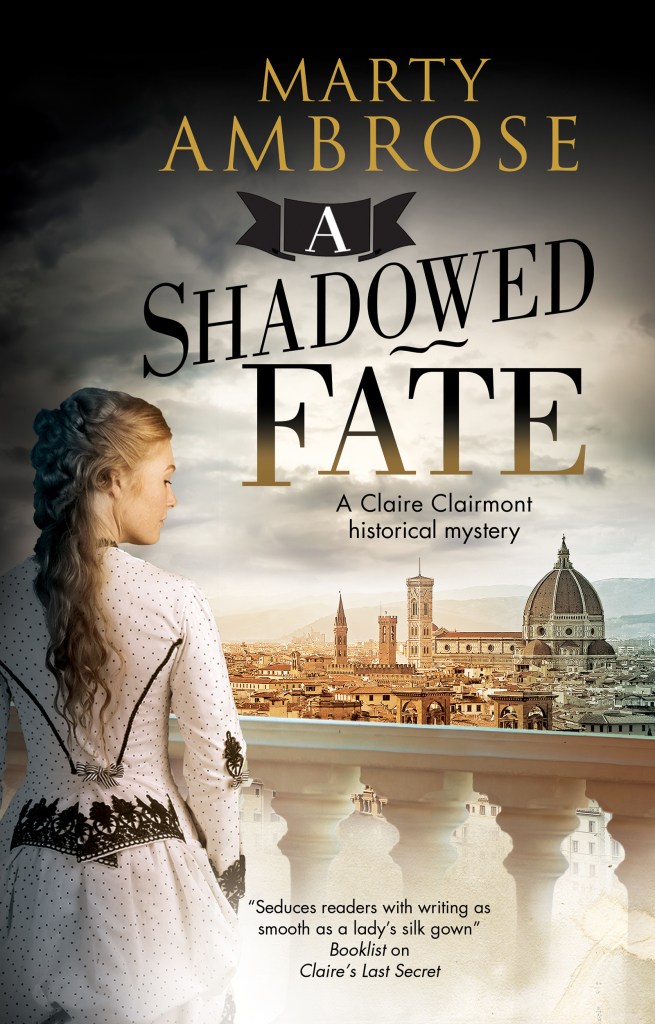
An Interview with Lord Byron from A Shadowed Fate by Marty Ambrose

We are going to speak today with British poet, Lord Byron, at the Palazzo Guiccioli in Ravenna, Italy.  He is handsome, brilliant, pop-star famous and, most interestingly, a member of an Italian revolutionary movement.  Welcome, Lord Byron!

Q:  First of all, I want to ask you about your connection to Claire Clairmont.  Was she one of the great loves of your life?

Lord Byron:  That is a complicated question since I am not the type of man who talks about his lovers.  All I can say is I connected with Claire in Geneva, Switzerland, in 1816, during a dark period of my life.  I had left England under a scandalous cloud—bruised and battered, without hope of gaining any sense of redemption.  She was seventeen and like a balm on my soul.  And she introduced me to my fellow poet, Percy Bysshe Shelley and his wife, Mary Shelley—who became great friends.  I confess that I have had more than one great love in my life, but Claire was like no other woman:  passionate, stubborn, maddening.  Sadly, there were forces that drove us apart . . . I must keep that part secret since it involves our daughter, Allegra. 

Q:  Do you mind telling us about Allegra?

Lord Byron:  I named her Allegra, meaning “cheerful and brisk”—she is all of that and more.  Pretty. Intelligent.  And a devil of a spirit, like both of her parents.  I must admit that she wants her own way in everything, and I indulge her.  My love child.  Claire wanted her to live with me, so I could raise her with all the advantages of wealth and rank, but I also wanted my child to know the true affection of her own father.  Unfortunately, I did not realize how tenuous the situation would become in Ravenna and that I would need all of my resources to protect her.  My most trusted bodyguard, Tita, watches over her in the day, and I keep her close in the evenings, reading poetry to her in both English and Italian. But things are deteriorating quickly, and I may have to make other arrangements for my Allegrina—much as I cannot bear to part from her.   

Q:  Speaking of Ravenna, Italy, could you tell us why you chose to live in such a small town?

Lord Byron:  Ah, Ravenna.  I wrote about it in my poem, Don Juan:

                  SWEET hour of twilight! in the solitude

                  Of the pine forest, and the silent shore

                  Which bounds Ravenna’s immemorial wood, . . . 

I settled here in 1820, because my Italian inamorata, Teresa Guiccioli, lives in the city with her husband, Count Guiccioli.  It sounds shocking I know, but I became her cavaliere servant—a professed lover with her husband’s permission, of course.  The whole arrangement is accepted in Italy.  And I am not the type of man who wishes to live without love.  Claire and I can never be together again so, when I met Teresa in Venice, I knew love had come into my life once more.  And I bonded with her father and brother, becoming part of a family—something I never had when I was a boy.  They not only accepted me, but introduced me to the Carbonari, a secret society that is plotting against the Austrian oppressors. I cannot give too many details on this development, except that my interests have expanded beyond poetry to include rebellion.  It might be a lost cause, but I am committed to it.

Q:  Are you still writing poetry?

Lord Byron:  Oh, yes . . . “The Prophecy of Dante” in honor of the great Italian poet and in support of a free Italy.

Q:  Can you at least explain what the Carbonariare trying to accomplish?

Lord Byron:  Not at this time, except to say that it is a loosely-organized secret society based on the Freemasons, and the clusters are organized all around Italy.  I was inducted into the Ravenna lodge shortly after I became acquainted with Teresa’s brother, Pietro.  We believe in revolutionary idealism and will do anything to see a free and united Italy. I cannot reveal any more . . .

Q:  I’m intrigued, especially because of your fame and status.  Did you find being a well-known poet created a sense of respect for you among the Carbonari?

Lord Bryon:  Well, I have access to certain diplomatic channels that the Italians do not, and they know I would share any intelligence that I acquire.  I am not sure being a poet garners me respect more than my singular belief in the cause of liberty.  At least, I hope so.

Q:  You document everything in your memoir.  Did you ever think of publishing it?

Lord Byron:  Memoirs are a tricky thing.  They can be a recording of daily activities like my Ravenna Journal, but they can also contain a certain amount of detail which  could destroy reputations, maybe even end lives.  I would never want to see that happen.  There are events in my memoir that few people are aware of and a wider audience does not need to know, so I intend to keep the memoir hidden among only two of my closest friends:  Angelo Mengaldo and Edward Trelawny.  I trust them with my life.

Q:  Back to your fame:  Did it make it possible for you to “bend the rules” as an exile living in Italy?

Lord Byron:  I can bend the rules because I am known mostly as the “mad English lord,” which I use to my advantage.  I can come and go without being watched too closely—and my “fame” provides me cover as a man of words, not action.  I keep a large, chaotic household and travel with an entourage—but that is all pretense for my role in the Italian rebellion.  Nevertheless, I know not to “bend” the rules too far since flyers have circulated around Ravenna with my picture and a single word: Traditore!  Traitor.  So,  I am being more careful about my movements not only to protect myself but also Allegra.  She must not be harmed because of my allegiances in Ravenna.

Q:  You do everything in your power to shield your daughter, Allegra.  Can you tell us about her fate?  

Lord Byron:  I would sacrifice my life to keep her safe from harm, and I may have to remove her from Ravenna to a place where she can be sheltered from the insanity that has descended on the city.  A man was actually shot in front of my palazzo; he died in my study. After that I would not allow Allegra to outside these walls without Tita—and now I seek to shelter her far from this place.  It seems to be the only way, but my heart breaks at sending her away.  As her Papa,  I must think of her wellbeing first.  And I know Claire will not like it.

Q:  So you still think about Claire?

Lord Byron:  Every day.

Thank you for speaking to us today.

About the author:

Marty Ambrose has been a writer most of her life, consumed with the world of literature whether teaching English at Florida Southwestern State College, Southern New Hampshire University or creating her own fiction.  Her writing career has spanned almost fifteen years, with eight published novels for Avalon Books, Kensington Books, Thomas & Mercer—and, now, Severn House. 

A few years ago, Marty had the opportunity to take a new creative direction that builds on her interest in the Romantic poets: historical fiction.  Her first book in a trilogy, Claire’s Last Secret, combines memoir and mystery in a genre-bending narrative of the Byron/Shelley “haunted summer,” with Claire Clairmont, as the protagonist/sleuth—the “almost famous” member of the group.  Her second novel, A Shadowed Fate, begins where the first novel ends with Claire on an “odyssey” through Italy to find the fate of her daughter, Allegra, whom she now believes might have survived; her narrative plays out with Byron’s memoir from 1821, and Allegra’s own story.   It will be published by Severn House on 3/3/2020 in the U.S.

Marty lives on an island in Southwest Florida with her husband, former news-anchor, Jim McLaughlin, where they tend their mango grove.  They are planning a two-week trip to Italy to research the third book, Forever Past.  Luckily, Jim is fluent in Italian and shares her love of history, literature, and travel.