Published October 2017 by William Morrow Paperbacks
Affiliate link used. If you purchase through the link, I will receive a small kickback but it won’t cost you any more.
This story, told mostly as an epistolary novel, was so well done and so touching that I was completely engrossed by the characters of Evie and Thomas as they corresponded throughout the war. The letters are filled with humor and fun banter between childhood friends and as the war progresses they turn more serious at times and deep with soul-searching thoughts and ideas and finally with desperation. Sprinkled throughout we see the elderly Thomas in 1968, obviously without Evie but it isn’t until the end we understand why he’s come back to Paris to read all the letters they had exchanged plus a new one he doesn’t open until he finishes the wartime letters. The description of the agonies the characters endured plus their hopes and dreams feels so real as I imagine they were, although not usually spoken, for those who lived through those times.
I can imagine these two authors, quite successful as solo novelists, took on particular characters as the voices are as distinct as they would be with real people, and that is the strength of this novel, in my opinion. It’s a love story, but not just a love story. It’s filled with history, as we who love to read historical fiction look forward to when we open a book.
Welcome to Novel PASTimes! We are pleased you stopped by today.
Thank you for having me. It is a pleasure to be here.
Tell us something about where you live:
I live in Gwynedd Wales in Great Britain in the 13th century. It is cold, and wet. Wales has the most rain for all of Britain. I live in a castle with servants, where the source of heat is a fireplace in every room which the servants keep going all the time to make sure none of us freeze. Beyond the castle there is a small town and beyond that a village that supplies everyone with food. To keep the castle safe from people breaking in there are a number of guards that patrol the grounds dressed in armour and carrying pikes and swords.
Is there anything special about your name? Why do you think you were given that name?
I don’t know if there is anything particularly special about my name. I was named after my grandfather, Llywelyn the Great who was ruler here until he died at a ripe old age. Maybe my parents named me after him because they thought I shared some similar characteristics with the old man. I have never asked my parents about it though so I don’t know for sure.
Do you have an occupation? What do you like or dislike about your work?
I am a warrior and I am the ruler of Gwynedd Wales. My job is to help keep the people of the land safe from invaders. I love being able to help my people, but having to deal with the small day to day problems of the people can feel a little tedious sometimes.
Who are the special people in your life?
I am very close to my family. I always looked up to my grandfather and my father is very like him. My mother is kind and noble and she has always taught me to trust my instincts. I love my younger brothers, Dafydd and Rhodri. Dafydd is very witty and is very mature for his age and Rhodri is sweet. My older brother, Owain, is an interesting person. He is very hot headed and often speaks when it would be better to keep quiet. It is probably because he is so passionate. He has never had any trouble making himself heard. Now my uncle on the other hand, well I wouldn’t say I am close to him. My uncle, Dafydd, is a strange man. I never really know where I stand with him and so I have never been able to trust him. Oh, and I can’t forget my man-servant, Olan. My father found him at an orphanage when he was a child and brought him back to the castle to be my servant and companion. He is my only true friend and I can talk to him about anything and everything. Even things I can’t talk to my family about.
What is your heart’s deepest desire?
My heart’s deepest desire is to do the best I can for my family and my people.
What are you most afraid of?
I think what I am most afraid of is letting people down.
Do you have a cherished possession?
The one possession I cherish above all is my horse, Arling. I found her wondering in the woods when she was no more than a few months old and I took her back to the castle and trained her myself. She has carried me through many battles over the years and is my closest companion next to Olan.
What do you expect the future will hold for you?
I don’t know if that is a question I can answer. I am sure i will still be a warrior. I never expected to become the ruler of Gwynedd. Being a warrior has its elements of danger, but being a ruler has even more. The future of any ruler is unknowable. All I can do is do my best to keep from falling into trouble so I can continue to take care of my people to the best of my abilities.
Thanks for telling us a bit about yourself!
In the year, 1240 Ad, the land of Gwynedd Wales found themselves without a leader when their king, Llywelyn The Great, died at a ripe old age. The natural successor to the king was his son Dafydd, who took on the job of ruler after his death. Soon after taking on the job he was forced to sign a treaty with the king of England and send his brother Gruffudd and his nephew Owain to England to be imprisoned in The Tower of London in exchange for keeping his land and his title. His other nephew, Llywelyn, became the new head warrior after his father’s imprisonment, traveling the country and patrolling the borders to the north and the south.
After four years imprisonment in The Tower of London, Gruffudd died while attempting to escape his tower cell, and his son Owain was released by the king himself. He wanted Owain to help him start a civil war in Gwynedd. Meanwhile after finding out about his brother’s death from a letter sent by his nephew Owain, Dafydd declared war on England. Prompting Owain to escape Winchester Castle where he had been recovering from his time in prison to find his brother Llywelyn and help him in the war between England and Gwynedd.
During the course of the war, Dafydd was killed in battle, leaving the Welsh army without a leader. Being the brave and noble man that he was, Llywelyn called the men to him and with his leadership they managed to send the English packing. With the new weight of responsibility thrust upon his shoulders Llywelyn, rode home at the head of the army to find that his world had changed. Now not only was his father gone, but his mother as well and the land of Gwynedd was once again without a leader. It became clear that the best man for the job was Llywelyn himself and he decided that there was nothing else to do but to become the new ruler. He would do anything to keep his people safe, even if that meant taking on a responsibility that he felt he was to young for. He would never abandon his people for anything and let the English take everything from him.
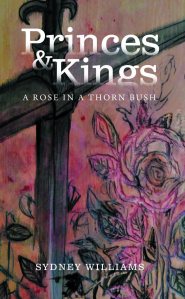
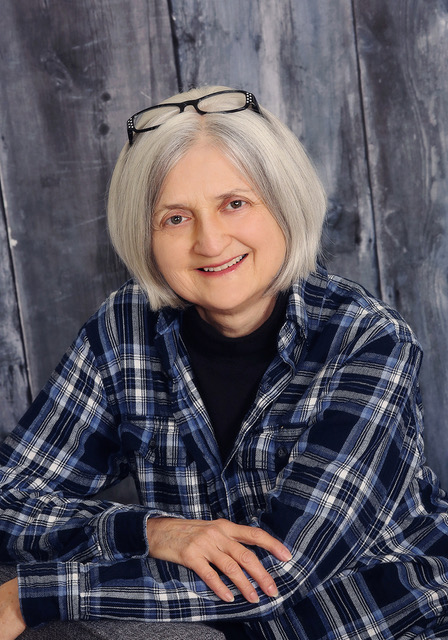
Sydney has a big imagination and has been writing and performing from a young age. After going blind from Leukemia at the age of three, she found release from the medical part of her life through her music and her writing. In high school she excelled in English and history and after she left school she continued to write and to create her music. She formed her band, The Undercurrents with her best friend and drummer, Alex Nacci at the age of 22 and has been playing music with the band ever since.
Her book, Princes and Kings, is her first professional novel and it is book one of the historical fiction series she is writing titled, A Rose in A Thorn Bush about the last king of Wales. She was introduced to her main character in high school and with the encouragement of her Business Abilities coach she finely decided to write his story. Splitting the story into three books. Sydney has always enjoyed reading historical fiction and has found it an interesting genre to write in. After her series is finished she plans to continue writing about different historical British characters for as long as she can. Being Welsh on her father’s side and Scottish and English on her mother’s Britain is a place that interests her greatly and she has enjoyed writing about one of its characters. Giving her a chance to explore her heritage in a fun and exciting way and she looks forward to sharing her passion for the genre and the history of the British Isles with the world.
Hello, Mr. Parker. Albert Fritz of the Fredericksburg Standard—so good of you to take the time for an interview with me today. I hear you are new to our area, straight from Nottinghamshire, England. Welcome to our isolated corner of Texas!
How do you do? Pray do not let my accent put you off—one might think me a bit standoffish at first. Being a butler in the 1920’s and 30’s for an important figure in our city required a rather formal exterior.
Hmm…did this cause you problems here in the United States?
Since I traveled with my employer’s grandson, the way was paved for us in New York city. Our time there and the long train ride provided a taste of the many dialects and personalities in this large country. But when we arrived in Texas Hill Country, people surely saw us as an oddity.
Still, they welcomed us with great kindness—greenhorns like us needed a lot of help. For one thing, it was nearly winter, and we had no harvest to rely on.
The area’s isolation surprised us somewhat. We knew we were bound for an agricultural locale, but Loyal Valley is…ahem…quite distant from any major city. Our first visit to a church three miles away made all the difference.
From one member, we might purchase a regular supply of milk and cheese. Another had an ample egg supply, and a third just butchered, so we purchased enough hams and beef to last the winter. Having reliable food sources close at hand, we entered our first cold season.
Is that cows mooing—you must have developed your own herd?
Oh yes, as soon as possible. You see, I come from a long line of cheesemakers. Soon, we acquired laying hens, too. Let me show you our barn. See here—even a small horse for Donnie, Everett’s son, plus geese and ducks galore.
And out there, behold the orchard Everett cares for. The trees produce plenty of fruit and nuts. He makes jams and butters to sell and has developed a good business. To the South, you will note . . .
You have a garden—why, it’s enormous!
Yes, with its produce and good pastureland for the herd, we have everything we need. If only our people back in Nottingham could say the same.
Ah yes . . . what a terrible time in England right now, with the Luftwaffe bombing many cities. So much danger and destruction. I imagine you listen to the war report on the radio nightly?
Indeed. That plus newspapers and letters from friends back home keep us informed. Who would ever have thought this war would last so long?
Certainly not your American neighbors. Why, it’s been three years since the Pearl Harbor attack, and our boys still face such obstacles.
Indeed they do. I daresay, did you hear that? I believe t’was my new prize bull, so I had best go and check on him. A right testy old fellow. He bears watching.
Thank you for your time. So glad to see how well you’re adjusting to your new homeland.
Perhaps some did, but most accepted us immediately. We provided an interesting diversion, I suppose, but this area is so isolated, they soon came around. Since we arrived just before winter and had no vehicle, everyone realized our need.
After missionary work in North Africa, Gail taught English as a Second Language and college expository writing. She and her retired Army Chaplain husband of forty-four years live in North Iowa where they enjoy grandchildren, gardening, and historical research.
Dare To Bloom, Gail’s website, comes by its name honestly—it took time to acquire the courage to put her writing “out there.” Eventually, her memoir developed, which led to writing World War II fiction.
Her Women of the Heartland brand honors the era’s make-do women and men, and includes eight novels, two novellas, and three non-fiction books. Despite daunting trials, her heroines and heroes embrace their strengths, contribute to the war effort and reveal the determination, loyalty, faith and tenacity so needful in our society today.
Gail hosts other authors on her Author Visits page and enjoys encouraging writers through facilitating workshops and retreats.
MANNY: Hello. My name is Manuel Blair, but folks call me Manny.
ABBY: Hi, I’m Abby. This handsome example of manhood is my husband.
I overheard you both talking about babies a moment ago. May I assume you have children of your own now?
ABBY: Yes. Thank God we made it through that period. Being “in the family way” was horrible for me. I think I was sick every single day for six solid months. It was a rough time, but Manny was my rock.
MANNY: I tried to help as much as I could. I felt so helpless watching her suffer so. Didn’t seem like there was much I could do for her except make her tea to soothe her stomach.
ABBY: Blech. If I never drink another mug of ginger tea again in my life, it’ll be too soon.
I can understand how scared you must have both been. Bearing children is not an easy task in the year of 1868.
MANNY: Besides Abby’s sickness, I was dealing with some old feelings of insecurity that showed back up once fatherhood loomed. I lost my dad when I was five, so I didn’t have an example to follow. No mentor to show me the ropes. I was pretty nervous about the whole thing. Lucky for us, Gabe showed up one day when I was chopping wood and offered to help. He stuck around and helped me complete the construction of the extra room on the house. I don’t know if I could’ve done it all on my own.
ABBY: You didn’t need to build that room. We would’ve managed without it.
MANNY: I wanted the best for you. And being able to bathe in a tub instead of a small bucket certainly made things easier for you. Plus, you didn’t have to tramp outside in the freezing sleet of February to use an outhouse. Admit it, Abby. The extra room was a good idea.
ABBY: You’re right. It was a good idea. And I’m glad Gabe was there to help us both. He turned out to have some hidden skills.
Sounds like Gabe has a story of his own. I can’t wait to hear more. So, Christmas ended up being a good time for your new family?
ABBY: Very good. We are so blessed. Christmas this year turned out to have more surprise gifts than ever in my life. And all of them were perfect. God showed us once again that he always has his eye on us and will never leave us.
MANNY: Right. A gift doesn’t necessarily come in a box. Sometimes, the best gifts of all are relationships.
What an awesome concept. I think we would all be happier if we focused more on the intangible gifts in our lives.
A fifth-generation Texan, Paula Peckham graduated from the University of Texas in Arlington and taught math at Burleson High School for 19 years. She and her husband, John, divide their time between their home in Burleson and their casita in Rio Bravo, Mexico. Her debut novel, Protected, was an ACFW Genesis semi-finalist in 2020. She also writes short stories, novellas, and poems.
She has contributions in the 2021 release Christmas Love Through the Ages, and Texas Heirloom Ornament.
She will take on the job of president of ACFW DFW in January, 2022, leaving the job of treasurer, and is a member of Unleashing the Next Chapter.
She has spoken at ACFW, Unleashing the Next Chapter, and the Carrollton League of Writers. For more about Paula and her books, follow her at paulapeckham.com.
Welcome, Colleen, we’re so happy to have you here at Novel PASTimes today. How did you come to work on Comfort Island? And where is that?
My aunt Gertie is the cook for the Clarks on Comfort Island and secured a position for me. I grew up in an orphanage, but just before I aged out, they found Aunt Gertie and contacted her, so Auntie had the Clarks hire me.
That was very kind of her.
Comfort Island is in the Thousand Islands in upstate New York in the St. Lawrence River. It’s a small island the Clark family owns, and there’s a beautiful cottage on the island that’s almost as big as the orphanage I grew up in.
Wow! I’ve heard the Thousand Islands area is very picturesque. Tell us about your job.
I’ve been doing laundry at the orphanage for nearly a decade, so that’s what I continue to do. I hate it.
Laundry isn’t my favorite thing to do either. Do you like your employers, the Clarks?
The Clark family are wonderful people. Mr. Clark is deceased, and Mrs. Clark is very nice. So is her son, Alson Skinner Clark, who is a famous Impressionist artist. He painted murals all over the cottage. I love to draw, so he helped me develop my skills.
To have mentorship from a famous artist is very fortunate for you!
I heard you were engaged. What became of your fiancé?
Goodness…poor Peter Byrne perished on his way to meet me when The Empress of Ireland sunk in the St. Lawrence. Aunt Gertie arranged a marriage between him and me with his mother, but I never met the man.
I’m sorry for your loss.
What or whom do you like least on Comfort Island?
That’s easy. The Ogre. Oh, I mean, Mrs. Marshall, my supervisor, who is a cruel taskmaster.
Yikes, Colleen! She must be pretty awful to nickname her the Ogre!
I heard about a handsome groundskeeper from Austria. What can you tell us about him?
Jack Weiss is more than handsome. He’s become a trusted friend and confidant. Maybe more.
Do you think you and he have a future together?
With World War I looming, Jack keeps talking about going back to Austria and fighting in the war. I hope he doesn’t. He’s the only friend I’ve ever known. To be honest, he’s more than that…
He sounds like a good man. I hope he won’t have to leave.
I’ve heard you’re artistically talented. Tell us what and how you like to draw.
Awww…I love to sketch and draw anything and everything. It’s my way of sharing and experiencing the world more fully. Jack says I’m gifted. Mr. Alson does too. But I have so much to learn.
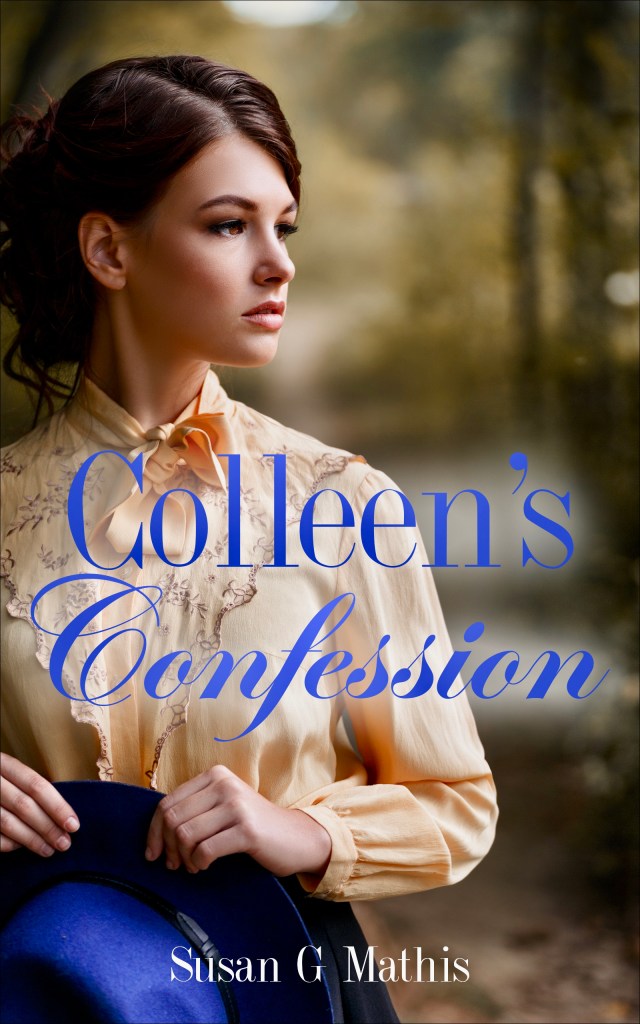
Want to know the whole story? Susan G Mathis has put it all down in her book, Colleen’s Confession. Here’s a glimpse:
Summer 1914
Colleen Sullivan has secrets as she joins her aunt on Comfort Island to work in the laundry and await the arrival of her betrothed. She loves to draw and dreams of growing in the craft. But tragedy strikes when her fiancé perishes in the sinking of the ocean liner RMS Empress of Ireland on his way to meet her. With her orphan dreams of finally belonging and becoming a wife and an artist gone, what will her future hold?
Austrian immigrant, Jack Weiss, enjoys being the island’s groundskeeper and is smitten by the lovely Irish lass. But Colleen dismisses him at every turn, no matter how much he fancies her art, tries to keep her safe, and waters the blossoms of love. When Jack introduces her to the famous impressionist, Alson Skinner Clark, Colleen seems to find hope.
But rumors of war in Europe prod Jack to choose between joining his family’s Austrian army and staying safe in the Thousand Islands to make a life with Colleen. Will she finally embrace his love for her, or will Jack lose the battle and join the war? With the Thousand Islands’ summer ending, he hopes she will.
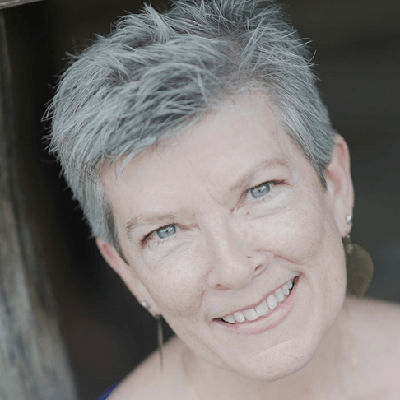
Susan G Mathis is an international award-winning, multi-published author of stories set in the beautiful Thousand Islands, her childhood stomping ground in upstate NY. Susan has been published more than twenty times in full-length novels, novellas, and non-fiction books.
Her first two books of The Thousand Islands Gilded Age series, Devyn’s Dilemma, and Katelyn’s Choice have each won multiple awards, and book three, Peyton’s Promise, comes out May 2022. Colleen’s Confession is her newest title, andRachel’s Reunion is coming soon. The Fabric of Hope: An Irish Family Legacy, Christmas Charity, Sara’s Surprise, andReagan’s Rewardare also award winners. Susan’s book awards include two Illumination Book Awards, three American Fiction Awards, two Indie Excellence Book Awards, and two Literary Titan Book Awards. Reagan’s Reward is also a finalist in the Selah Awards.
Susan is also a published author of two premarital books, two children’s picture books, stories in a dozen compilations, and hundreds of published articles. Susan makes her home in Colorado Springs and enjoys traveling around the world but returns each summer to the islands she loves. Visit www.SusanGMathis.com/fiction for more.
Best friends Audrey Barrett and Eve Dawson are looking forward to celebrating Christmas in postwar America, thrilled at the prospect of starting new traditions with their five-year-old sons. But when the 1951 Sears Christmas Wish Book arrives and the boys start obsessing over every toy in it, Audrey and Eve realize they must first teach them the true significance of the holiday. They begin by helping Bobby and Harry plan gifts of encouragement and service for those in their community, starting by walking an elderly neighbor’s yellow Lab—since a dog topped the boys’ wish list for Santa. In the charming tale that follows, Audrey and Eve are surprised to find their own hearts healing from the tragedies of war and opening to the possibility of forgiveness and new love.
If you’ve read Lynn Austin’s If I Were You (reviewed here) you’ll recognize the characters Audrey and Eve. You might even have wondered what happened to them. While this novella helps to answer that question, it’s also a wonderful nostalgic story. Who doesn’t remember looking at toy catalogs at Christmas time and circling the things you most wanted? Parents often struggle with how to balance their children’s wishes with what is most important about the season, and Audrey and Eve are no different. Having struggled through WWII in England, these characters now have children who have no experience to compare, and little understanding of what it’s like to go without. The lessons learned in this story, however, are not just for the kids. Audrey and Eve learn something as well.
Grab some hot cocoa and a Christmas cookie and snuggle down for this delightful read!
About the Author:
Lynn Austin has sold more than one and a half million copies of her books worldwide. A former teacher who now writes and speaks full- time, she has won eight Christy Awards for her historical fiction and was one of the first inductees into the Christy Award Hall of Fame. One of her novels, Hidden Places, was made into a Hallmark Channel Original Movie. Lynn and her husband have three grown children and make their home in western Michigan. Visit her online at lynnaustin.org.
Welcome, ladies. Please tell us a little about yourselves.
Eve: I’ll go first. My name is Eve Dawson, I’m single, and I have a five-year-old son named Harry. We share a little bungalow with my best friend Audrey, who is a widow, and her son, Bobby. As you can probably tell from the way I talk, I’m originally from England. Audrey and I are fairly new to America. We both came over after the war, but we lived very different lives growing up. Mum and I were servants at Wellingford Hall, which is Audrey’s family’s manor house.
Audrey: That’s true—we are very different, but we’ve been friends since we were girls. And during the war, we enlisted in the women’s army together and learned how to drive ambulances. My husband Robert died in a car accident when Bobby was still a baby. He just started kindergarten this past fall.
What about your Christmas celebrations in the past? What were they like for you?
Eve: Mum and I never had much, so I was grateful for a few simple gifts. I would hang my stocking on the bedpost for Father Christmas to fill, and I would find a doll or a toy or maybe an orange inside in the morning. The orange and maybe some candy were always real treats. I didn’t know it, but Mum saved for months to buy me those things. My granny Maud would always knit something for me, a new hat or maybe mittens. Mum had to work at Wellingford Hall on Christmas, but we always spent Boxing Day together.
Audrey: Our gardener would cut greens and holly branches from the estate grounds to make Wellingford Hall look and smell splendid. My brother, Alfie, and I would awaken on Christmas morning to see a huge tree in the main hall, beautifully decorated. He would be home from boarding school, and we would unwrap our presents together. Our governess likely chose them, not our parents.
Eve: During the war, we were grateful just to get through Christmas without being interrupted by air-raid sirens, right, Audrey?
Audrey: Right!
What are your thoughts about celebrating the season as Christmas approaches?
Eve: To be honest, I’ve a lot on my mind lately, and I haven’t felt much like celebrating. I have a full-time job as a typist and I’m pretty tired by the time I get home from work. I have a really huge debt that I’m trying to pay off, so money is always tight. I want Christmas to be lovely for Harry, but I’m worried that Santa Claus won’t be able to bring him much.
Audrey: I haven’t had time to think about the holiday, either. I’ve been taking a few courses with the hope of becoming a nurse, and my exams are coming up soon. Before my husband died, we talked about living a simple life and raising our son to value hard work, even though Robert and I both grew up in wealthy families. He would want me to keep Christmas simple and not spoil Bobby with mountains of expensive toys.
What do you think of the Sears Wish Book?
Eve: I wish Audrey had tossed it into the rubbish bin the day it arrived! Harry has been circling every toy in the book and pinning his hopes on Santa bringing him everything he wants. I can’t afford even half of the toys on his list.
Audrey: I agree with Eve. The Wish Book is stirring up Bobby’s greed. He knows that Grandma and Grandpa Barrett can afford to buy every toy in the book, and they have been very good to us these past few years. But I wish Bobby wasn’t so obsessed with getting new things.
Eve: To make matters worse, the boys are also asking Santa to bring them a dog for Christmas!
Audrey: Yes, and fathers! All the other children in kindergarten have fathers, so they’ve decided they each want one, too.
Eve: Neither dogs nor fathers are for sale in the Wish Book.
Do either of you have someone special in your life?
Eve: No.
Audrey: What about Tom? I can tell that he cares for you, and I thought—
Eve: I can’t think about Tom or anyone else until my debts are paid.
Audrey: But that makes no sense—
Eve: Why don’t you answer the question, Audrey? Why isn’t there anyone special in your life?
Audrey: Let’s go on to the next question, please.
All right. What are your hopes for your family and for yourself this Christmas season?
Eve: I want Harry to have happy memories of Christmas, but most of all, I want him to understand the real meaning of Christmas
Audrey: I want that for my son, too. And I wish my in-laws would help in this regard. They don’t understand why I don’t want a life of wealth and privilege. Or why I want to become a nurse and work to support Bobby and myself.
Eve: We need to put our heads together, Audrey, and come up with a plan. We need to teach the boys that there’s more to Christmas than choosing every toy in the Wish Book.
Audrey: I agree. We need to show them that Christmas is about giving, not getting. Let’s give it some thought, Eve, and start doing something about it. Before it’s too late.
Come back tomorrow for Cindy Thomson’s review of The Christmas Wish Book!
From the bestselling author of If I Were You comes a nostalgic and endearing holiday story that reminds us that sometimes the most meaningful gifts are the ones we least expect and don’t deserve.
Best friends Audrey Barrett and Eve Dawson are looking forward to celebrating Christmas in postwar America, thrilled at the prospect of starting new traditions with their five-year-old sons. But when the 1951 Sears Christmas Wish Book arrives and the boys start obsessing over every toy in it, Audrey and Eve realize they must first teach them the true significance of the holiday. They begin by helping Bobby and Harry plan gifts of encouragement and service for those in their community, starting by walking an elderly neighbor’s yellow Lab—since a dog topped the boys’ wish list for Santa. In the charming tale that follows, Audrey and Eve are surprised to find their own hearts healing from the tragedies of war and opening to the possibility of forgiveness and new love.
Lynn Austin has sold more than one and a half million copies of her books worldwide. A former teacher who now writes and speaks full-time, she has won eight Christy Awards for her historical fiction and was one of the first inductees into the Christy Award Hall of Fame. One of her novels, Hidden Places, was made into a Hallmark Channel Original Movie. Lynn and her husband have three grown children and make their home in western Michigan. Visit her online at lynnaustin.org.
In AD 316, the Roman empire is rapidly transforming under the rule of Constantine. Where Christians once feared for their very lives, a prominent ally now presides—but evil still prowls in dark corners of the empire.
Bishop Sylvester commissions Flavia, a senator’s daughter, to take a covert petition to Constantine to erect grand basilicas in Rome and determine the canon of scripture. But he knows this is a dangerous request. Even as paganism is dying, the church has powerful enemies and they’re on the move.
Once separated by fate, Flavia and hardened warrior Rex are reunited for their perilous quest on behalf of the catholic church. Traveling by land and sea, the pair are thrown into mortal danger as they strive to free the Roman people from the tyranny of wicked rulers and forge a tenuous future for Christianity.
Welcome to Novel PASTimes! We are pleased you stopped by today.
Tell us something about where you live.
The city of my birth is the capital of the world—eternal Rome. Have you ever seen it? There is no place like it on earth! Never have so many people been gathered in one place. Everything you can imagine can be found in Rome: theaters, music halls, chariot racing, bath houses, temples, and of course, the amphitheater for gladiators. Great beauty can be found in Rome—and also great evil.
At the moment, though, I am not living in Rome. I have taken up residence in a remote place: the island of Sicilia. I live with other devoted sisters in a convent. It is a simple life, a peaceful one. My mother is with me. I have much time for contemplation. Everything about my life is happy, except that I long for . . . well, let us not speak of what is not yet.
Is there anything special about your name? Why do you think you were given that name?
Mine is an ancient family name, going back to the founding of Rome. Like every girl of noble birth, I am named for my father. He is Senator Neratius Junius Flavianus, so I am Lady Junia Flavia. But no longer am I called “lady.” Now I am just a humble sister like all the others. My former world of wealth and politics is in the past. Everyone just calls me Flavia.
Do you have an occupation, Flavia? What do you like or dislike about your work?
My days consist of simple chores. We tend a garden. We sweep the floors. We prepare meals of bread and vegetables. We gather for prayers and readings from the holy books that some are starting to call “the bible.” Though I am happy, I also have the sense that God is about to do something more in my life.
Who are the special people in your life?
My mother dwells with me in the convent, Lady Sabina Sophronia. And my best friend among the sisters is Cassiopeia, from Aethiopia. Cassi does not yet speak Latin with fluency, so I am teaching her that tongue. And she teaches me about her home in Africa, where the Nilus River has its beginnings.
Is there anyone else who is special to you?
Not at this time. My father is a scoundrel, and he is gone from us. There is no one else.
Are you sure?
Well, perhaps there is another. I had a . . . a good friend once. His given name is Brandulf, for he was born of the Germani. But within the borders of our empire, everyone calls him Rex. We were very close friends, and we shared many dangers and adventures together. Now, though, he is in exile far away with the Roman navy.
What is your heart’s deepest desire?
I will admit that I long to see Rex once more. His presence in my life gave me strength. Often, I scan the eastern sea, hoping to spy the sail that will bring him to me again. And yet, in truth, to be reunited with Rex is not my deepest desire. Even deeper is my desire to be faithful. And this means accepting the will of the Lord, even when it is hard.
Do you have a cherished possession?
The sisters share all property in common. Yet here in my room, I keep this little book and read from it often. Do you see its title? Ah, perhaps you do not read Greek. It says, in our Latin tongue, The Letters of Paul. These are some of the sacred passages that belong within the canon.
What do you expect the future will hold for you?
I am a young woman, just twenty-two. It may be that I shall live out my life here in Sicilia. Or perhaps the Lord has more adventures for me. Who can know the future?
What have you learned about yourself in the course of your story?
When I was a girl, wealth and privilege were part of my life. I thought I was in control. Now I am like a twig on a stream, carried where the currents take me. It is a humbling place to be. Yet I know that my God is good. I will await what he has in store for me. Look here at what it says in my book, in the Letter to the Philippians. “At the name of Jesus, every knee shall bow.” I am trying to learn to do this day by day.
Thanks for allowing us to get know you a little better!
About the Author
Bryan Litfin is the author of The Conqueror, Every Knee Shall Bow, and the Chiveis Trilogy, as well as several works of nonfiction, including Early Christian Martyr Stories, After Acts, and Getting to Know the Church Fathers. A former professor of theology at the Moody Bible Institute, Litfin earned his PhD in religious studies from the University of Virginia and his ThM in historical theology from Dallas Theological Seminary. Bryan is head of strategy and advancement at Clapham School, a classical Christian school in Wheaton, Illinois. He and his wife have two adult children and live in Wheaton, Illinois. Learn more at www.BryanLitfin.com.
Tell us about yourself, Annalee Spain. Who are you? How would you describe yourself?
Thank you for asking—because that’s my biggest mystery. I was raised alone by my dad, and Joe Spain was a little rough around the edges. The neighbor ladies taught me “girl things” and how to be a “nice young lady.” But who am I? How do I answer that question? I’m on a journey to figure that out.
But you’ve accomplished a lot. You’re “the Colored Professor.” Doesn’t that say “you’ve made it” in the world?
I suppose it should. But the world doesn’t look kindly on folks like me. So I find myself asking God, Why not? His answer is to trust in Him—and that He loves me. For all of us, that’s a pretty good place to start.
What do you want most in life?
To make the world better—for everybody. Sounds crazy. But I want people to see each other with God’s eyes, reflecting on the real person who’s on the inside. Yesterday someone yelled a bad name at me from his Model T automobile. The word stung. Still, I wondered, who is that person—on the inside? Why is he trying to hurt me? As long as I’m asking that question, for me, I haven’t lost hope.
Are you a detective?
I’m learning how to be. I’m not Sherlock Holmes, even though I read and love all his adventures. Instead, I’m a daughter who misses her murdered daddy. The Bible says, “You shall not murder.” But Jesus says if you’re even angry with someone, to reconcile with that person.
So I’m trying to solve a murder but not hate the person who did it. To look for clues but not think the worst of suspects. Am I a detective? God knows I’m trying to be. But at the same time, I’m searching for my real self, too, and to feel okay with what I find. I suspect we all are.
What’s your most treasured possession?
My friends. They’re gold. They’re like gifts that I didn’t earn and don’t deserve. My landlady, Mrs. Stallworth, tests me at every turn and argues with me—even about how much milk to put in the corn bread. But she would lie down and die for me. So would young Eddie—a ragamuffin of a street kid, an orphan who also is white but could be my little brother or even my son. He would move mountains for me.
What have your friends taught you?
To look for the unexpected. Sometimes life sends us people or friends who don’t look as if they belong in our lives. But as I’ve learned, don’t be so quick to turn them away. They could be the gold you’ve been digging for and trying to find.
Have you ever been in love?
Do you know something that I don’t? In fact, I have met a young man and to know him feels like being in love. But I’m learning what that means, too. Can I leave it at that?
In the world, where would you most like to live?
Some place where the sun shines every day. But that’s where I live now. In Colorado, we get sunshine perpetually. Even when it snows, by the next morning—or sometimes the afternoon on the same day—the sun bursts through and the sky is a blinding blue.
Have you ever been to a place where it’s ice-cold, but your body and face are so warm in the sun that you’re pulling off your coat? That’s Colorado on a beautiful winter day. I love it here.
What’s your greatest fear?
Disappointing God. He has given me so much—an education, loving friends, important work, even the prospect of romance. But do I measure up? Do any of us? As a theologian, I know God doesn’t judge us in that way. He sees our hearts—and He loves us anyway. Still, I desire to live up to my potential in Him. Or maybe that’s not a fear but my greatest hope.
What’s your favorite thing to wear?
I don’t have many clothes—and the stores don’t let colored people try on clothes, even if I had enough money (and I don’t). I know women who are seamstresses, but I can’t pay them either. So perhaps my favorite thing to wear is my late daddy’s Stetson hat. It’s a bit worn and too big. But when I put it on, I recall his love and presence. That makes it a pretty good favorite, right?
What’s one fanciful thing you’d love to do?
To ride a bicycle! I love watching people riding them. I want to balance on two wheels and ride with confidence and joy. While wearing a new dress! Does God answer prayers like that? I actually believe He does.
Thank you for interviewing me!
Patricia Raybon is an award-winning author and essayist whose books include My First White Friend, a Christopher Award–winning memoir about racial forgiveness, and I Told the Mountain to Move, a prayer memoir that was a Christianity Today Book of the Year finalist. Patricia’s other books include The One Year God’s Great Blessings Devotional and Undivided: A Muslim Daughter, Her Christian Mother, Their Path to Peace, coauthored with her younger daughter, Alana Raybon. Patricia’s essays on faith, race, and grace have been published in the New York Times, Newsweek, USA Today, Guideposts, Christianity Today, andother national publications and blogs. She lives with her husband, Dan, in her beloved home state of Colorado. Her latest book, All That Is Secret, releases from Tyndale in October.
Welcome to Novel PASTimes, Coraline Baxter! We are pleased you stopped by today.
Cora: I’m delighted to be here.R Thank you for the invitation.
Of course. It’s not often we have a guest who plans to climb a mountain. What gave you the idea to summit Mt. Rainier?
Cora: I’m a member of the Tacoma Women’s Suffrage Association. We hope to restore the vote for women. Washington State’s had it twice now, but the courts keep overturning the laws. We intend to prove that a woman can climb a mountain. And if women can climb mountains, why shouldn’t they vote?
Do you have any experience climbing?
Cora: Regrettably, no. I’ve been attending college and becoming one of the first women accountants in Tacoma, the City of Destiny, as we like to call it. And with the Panic of 1893, the bank where I work has been very busy trying to help those who lost everything. But I’ve hired a guide, Mr. Nathan Hardee, who comes highly recommended, for all he seems a bit unreasonable.
Unreasonable how?
Cora: He says to reach the summit I must have stamina, determination, and a willingness to obey his direction, without question. I told him he’ll learn I have plenty of stamina and determination, but I’ve never been good at obeying. He’ll simply have to accustom himself to the fact.
And you feel comfortable this fellow can get you safely to the top and back, through the wilderness?
Cora: I do. I can’t really explain it. There’s something about him. He’s tall as a fir, with eyes as green. He carries himself with a confidence few men manage. And there’s a stillness about him, as if he’s discovered his own worth and is satisfied with that. My stepfather told me Nathan was once a member of high society, like me, but I find that hard to credit. Why would he leave wealth and prestige behind to live in a cabin in the woods?
Well, if you don’t reach the top, you’ll still have position and family to return to.
Cora: That’s the problem. I won’t. My mother and I have never seen eye to eye, but she’s put her foot down this time. If I don’t reach the summit, I must return home and marry the man she’s picked out for me. She finds local industrialist Cash Kincaid perfect, but I know the truth. He’s cunning and cruel, and he’s made it clear he will stop at nothing to make me his bride. So I will reach the summit, whatever it costs.
I can see what you mean about determination. We wish you the best of luck. Thanks for allowing us to get know you a little better!
Regina Scott is the author of more than 50 works of warm, witty historical romance, including A Distance Too Grand and Nothing Short of Wondrous. Her writing has won praise from Booklist and Library Journal, and she was twice awarded the prestigious RT Book Reviews best book of the year in her category. A devotee of history, she has learned to fence, driven four-in-hand, and sailed on a tall ship, all in the name of research. She and her husband of 30 years live south of Tacoma, Washington, on the way to Mt. Rainier. Learn more at www.reginascott.com.