Best friends Audrey Barrett and Eve Dawson are looking forward to celebrating Christmas in postwar America, thrilled at the prospect of starting new traditions with their five-year-old sons. But when the 1951 Sears Christmas Wish Book arrives and the boys start obsessing over every toy in it, Audrey and Eve realize they must first teach them the true significance of the holiday. They begin by helping Bobby and Harry plan gifts of encouragement and service for those in their community, starting by walking an elderly neighbor’s yellow Lab—since a dog topped the boys’ wish list for Santa. In the charming tale that follows, Audrey and Eve are surprised to find their own hearts healing from the tragedies of war and opening to the possibility of forgiveness and new love.
If you’ve read Lynn Austin’s If I Were You (reviewed here) you’ll recognize the characters Audrey and Eve. You might even have wondered what happened to them. While this novella helps to answer that question, it’s also a wonderful nostalgic story. Who doesn’t remember looking at toy catalogs at Christmas time and circling the things you most wanted? Parents often struggle with how to balance their children’s wishes with what is most important about the season, and Audrey and Eve are no different. Having struggled through WWII in England, these characters now have children who have no experience to compare, and little understanding of what it’s like to go without. The lessons learned in this story, however, are not just for the kids. Audrey and Eve learn something as well.
Grab some hot cocoa and a Christmas cookie and snuggle down for this delightful read!
About the Author:
Lynn Austin has sold more than one and a half million copies of her books worldwide. A former teacher who now writes and speaks full- time, she has won eight Christy Awards for her historical fiction and was one of the first inductees into the Christy Award Hall of Fame. One of her novels, Hidden Places, was made into a Hallmark Channel Original Movie. Lynn and her husband have three grown children and make their home in western Michigan. Visit her online at lynnaustin.org.
Welcome, ladies. Please tell us a little about yourselves.
Eve: I’ll go first. My name is Eve Dawson, I’m single, and I have a five-year-old son named Harry. We share a little bungalow with my best friend Audrey, who is a widow, and her son, Bobby. As you can probably tell from the way I talk, I’m originally from England. Audrey and I are fairly new to America. We both came over after the war, but we lived very different lives growing up. Mum and I were servants at Wellingford Hall, which is Audrey’s family’s manor house.
Audrey: That’s true—we are very different, but we’ve been friends since we were girls. And during the war, we enlisted in the women’s army together and learned how to drive ambulances. My husband Robert died in a car accident when Bobby was still a baby. He just started kindergarten this past fall.
What about your Christmas celebrations in the past? What were they like for you?
Eve: Mum and I never had much, so I was grateful for a few simple gifts. I would hang my stocking on the bedpost for Father Christmas to fill, and I would find a doll or a toy or maybe an orange inside in the morning. The orange and maybe some candy were always real treats. I didn’t know it, but Mum saved for months to buy me those things. My granny Maud would always knit something for me, a new hat or maybe mittens. Mum had to work at Wellingford Hall on Christmas, but we always spent Boxing Day together.
Audrey: Our gardener would cut greens and holly branches from the estate grounds to make Wellingford Hall look and smell splendid. My brother, Alfie, and I would awaken on Christmas morning to see a huge tree in the main hall, beautifully decorated. He would be home from boarding school, and we would unwrap our presents together. Our governess likely chose them, not our parents.
Eve: During the war, we were grateful just to get through Christmas without being interrupted by air-raid sirens, right, Audrey?
Audrey: Right!
What are your thoughts about celebrating the season as Christmas approaches?
Eve: To be honest, I’ve a lot on my mind lately, and I haven’t felt much like celebrating. I have a full-time job as a typist and I’m pretty tired by the time I get home from work. I have a really huge debt that I’m trying to pay off, so money is always tight. I want Christmas to be lovely for Harry, but I’m worried that Santa Claus won’t be able to bring him much.
Audrey: I haven’t had time to think about the holiday, either. I’ve been taking a few courses with the hope of becoming a nurse, and my exams are coming up soon. Before my husband died, we talked about living a simple life and raising our son to value hard work, even though Robert and I both grew up in wealthy families. He would want me to keep Christmas simple and not spoil Bobby with mountains of expensive toys.
What do you think of the Sears Wish Book?
Eve: I wish Audrey had tossed it into the rubbish bin the day it arrived! Harry has been circling every toy in the book and pinning his hopes on Santa bringing him everything he wants. I can’t afford even half of the toys on his list.
Audrey: I agree with Eve. The Wish Book is stirring up Bobby’s greed. He knows that Grandma and Grandpa Barrett can afford to buy every toy in the book, and they have been very good to us these past few years. But I wish Bobby wasn’t so obsessed with getting new things.
Eve: To make matters worse, the boys are also asking Santa to bring them a dog for Christmas!
Audrey: Yes, and fathers! All the other children in kindergarten have fathers, so they’ve decided they each want one, too.
Eve: Neither dogs nor fathers are for sale in the Wish Book.
Do either of you have someone special in your life?
Eve: No.
Audrey: What about Tom? I can tell that he cares for you, and I thought—
Eve: I can’t think about Tom or anyone else until my debts are paid.
Audrey: But that makes no sense—
Eve: Why don’t you answer the question, Audrey? Why isn’t there anyone special in your life?
Audrey: Let’s go on to the next question, please.
All right. What are your hopes for your family and for yourself this Christmas season?
Eve: I want Harry to have happy memories of Christmas, but most of all, I want him to understand the real meaning of Christmas
Audrey: I want that for my son, too. And I wish my in-laws would help in this regard. They don’t understand why I don’t want a life of wealth and privilege. Or why I want to become a nurse and work to support Bobby and myself.
Eve: We need to put our heads together, Audrey, and come up with a plan. We need to teach the boys that there’s more to Christmas than choosing every toy in the Wish Book.
Audrey: I agree. We need to show them that Christmas is about giving, not getting. Let’s give it some thought, Eve, and start doing something about it. Before it’s too late.
Come back tomorrow for Cindy Thomson’s review of The Christmas Wish Book!
From the bestselling author of If I Were You comes a nostalgic and endearing holiday story that reminds us that sometimes the most meaningful gifts are the ones we least expect and don’t deserve.
Best friends Audrey Barrett and Eve Dawson are looking forward to celebrating Christmas in postwar America, thrilled at the prospect of starting new traditions with their five-year-old sons. But when the 1951 Sears Christmas Wish Book arrives and the boys start obsessing over every toy in it, Audrey and Eve realize they must first teach them the true significance of the holiday. They begin by helping Bobby and Harry plan gifts of encouragement and service for those in their community, starting by walking an elderly neighbor’s yellow Lab—since a dog topped the boys’ wish list for Santa. In the charming tale that follows, Audrey and Eve are surprised to find their own hearts healing from the tragedies of war and opening to the possibility of forgiveness and new love.
Lynn Austin has sold more than one and a half million copies of her books worldwide. A former teacher who now writes and speaks full-time, she has won eight Christy Awards for her historical fiction and was one of the first inductees into the Christy Award Hall of Fame. One of her novels, Hidden Places, was made into a Hallmark Channel Original Movie. Lynn and her husband have three grown children and make their home in western Michigan. Visit her online at lynnaustin.org.
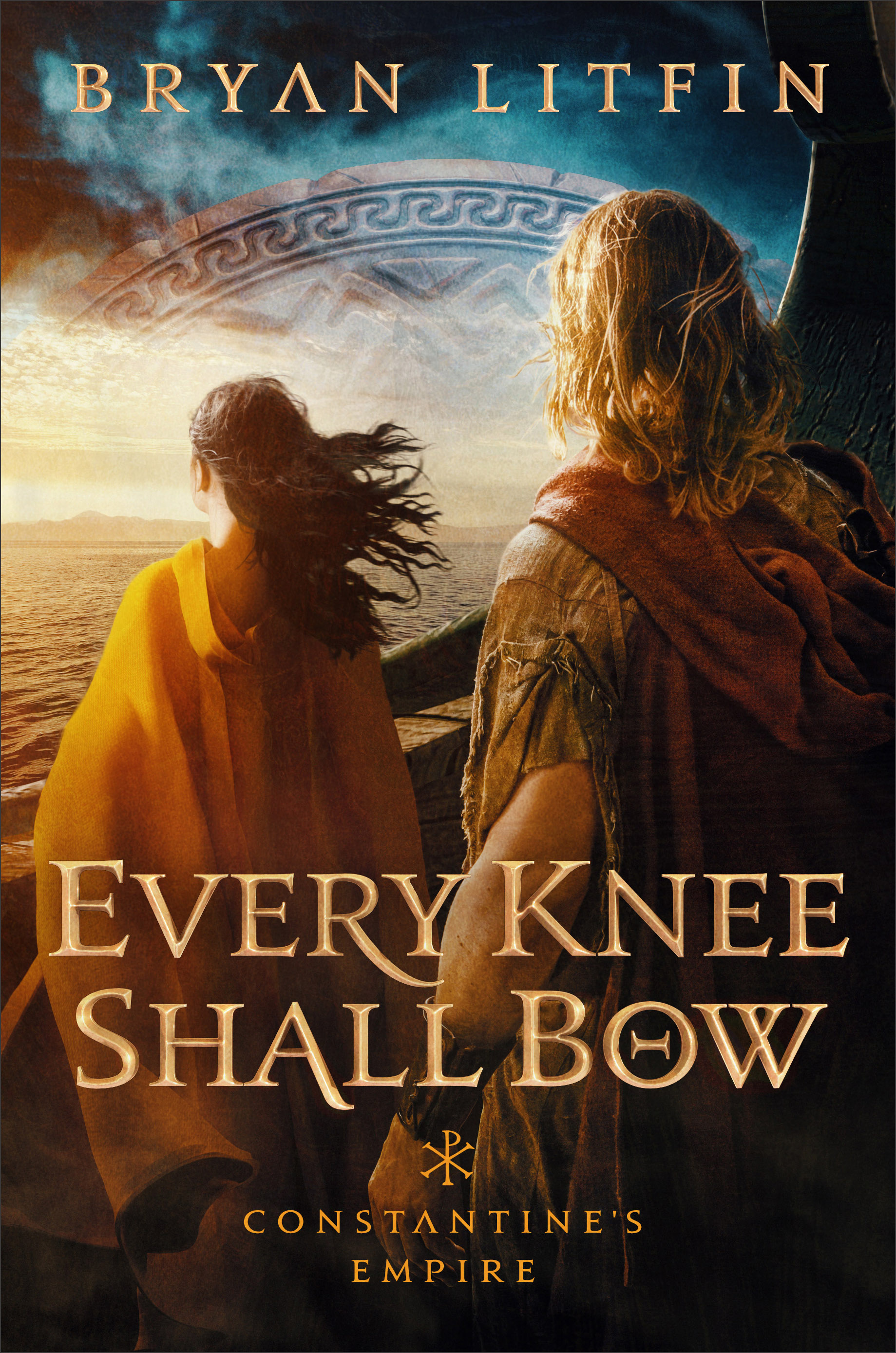
In AD 316, the Roman empire is rapidly transforming under the rule of Constantine. Where Christians once feared for their very lives, a prominent ally now presides—but evil still prowls in dark corners of the empire.
Bishop Sylvester commissions Flavia, a senator’s daughter, to take a covert petition to Constantine to erect grand basilicas in Rome and determine the canon of scripture. But he knows this is a dangerous request. Even as paganism is dying, the church has powerful enemies and they’re on the move.
Once separated by fate, Flavia and hardened warrior Rex are reunited for their perilous quest on behalf of the catholic church. Traveling by land and sea, the pair are thrown into mortal danger as they strive to free the Roman people from the tyranny of wicked rulers and forge a tenuous future for Christianity.
Welcome to Novel PASTimes! We are pleased you stopped by today.
Tell us something about where you live.
The city of my birth is the capital of the world—eternal Rome. Have you ever seen it? There is no place like it on earth! Never have so many people been gathered in one place. Everything you can imagine can be found in Rome: theaters, music halls, chariot racing, bath houses, temples, and of course, the amphitheater for gladiators. Great beauty can be found in Rome—and also great evil.
At the moment, though, I am not living in Rome. I have taken up residence in a remote place: the island of Sicilia. I live with other devoted sisters in a convent. It is a simple life, a peaceful one. My mother is with me. I have much time for contemplation. Everything about my life is happy, except that I long for . . . well, let us not speak of what is not yet.
Is there anything special about your name? Why do you think you were given that name?
Mine is an ancient family name, going back to the founding of Rome. Like every girl of noble birth, I am named for my father. He is Senator Neratius Junius Flavianus, so I am Lady Junia Flavia. But no longer am I called “lady.” Now I am just a humble sister like all the others. My former world of wealth and politics is in the past. Everyone just calls me Flavia.
Do you have an occupation, Flavia? What do you like or dislike about your work?
My days consist of simple chores. We tend a garden. We sweep the floors. We prepare meals of bread and vegetables. We gather for prayers and readings from the holy books that some are starting to call “the bible.” Though I am happy, I also have the sense that God is about to do something more in my life.
Who are the special people in your life?
My mother dwells with me in the convent, Lady Sabina Sophronia. And my best friend among the sisters is Cassiopeia, from Aethiopia. Cassi does not yet speak Latin with fluency, so I am teaching her that tongue. And she teaches me about her home in Africa, where the Nilus River has its beginnings.
Is there anyone else who is special to you?
Not at this time. My father is a scoundrel, and he is gone from us. There is no one else.
Are you sure?
Well, perhaps there is another. I had a . . . a good friend once. His given name is Brandulf, for he was born of the Germani. But within the borders of our empire, everyone calls him Rex. We were very close friends, and we shared many dangers and adventures together. Now, though, he is in exile far away with the Roman navy.
What is your heart’s deepest desire?
I will admit that I long to see Rex once more. His presence in my life gave me strength. Often, I scan the eastern sea, hoping to spy the sail that will bring him to me again. And yet, in truth, to be reunited with Rex is not my deepest desire. Even deeper is my desire to be faithful. And this means accepting the will of the Lord, even when it is hard.
Do you have a cherished possession?
The sisters share all property in common. Yet here in my room, I keep this little book and read from it often. Do you see its title? Ah, perhaps you do not read Greek. It says, in our Latin tongue, The Letters of Paul. These are some of the sacred passages that belong within the canon.
What do you expect the future will hold for you?
I am a young woman, just twenty-two. It may be that I shall live out my life here in Sicilia. Or perhaps the Lord has more adventures for me. Who can know the future?
What have you learned about yourself in the course of your story?
When I was a girl, wealth and privilege were part of my life. I thought I was in control. Now I am like a twig on a stream, carried where the currents take me. It is a humbling place to be. Yet I know that my God is good. I will await what he has in store for me. Look here at what it says in my book, in the Letter to the Philippians. “At the name of Jesus, every knee shall bow.” I am trying to learn to do this day by day.
Thanks for allowing us to get know you a little better!
About the Author
Bryan Litfin is the author of The Conqueror, Every Knee Shall Bow, and the Chiveis Trilogy, as well as several works of nonfiction, including Early Christian Martyr Stories, After Acts, and Getting to Know the Church Fathers. A former professor of theology at the Moody Bible Institute, Litfin earned his PhD in religious studies from the University of Virginia and his ThM in historical theology from Dallas Theological Seminary. Bryan is head of strategy and advancement at Clapham School, a classical Christian school in Wheaton, Illinois. He and his wife have two adult children and live in Wheaton, Illinois. Learn more at www.BryanLitfin.com.
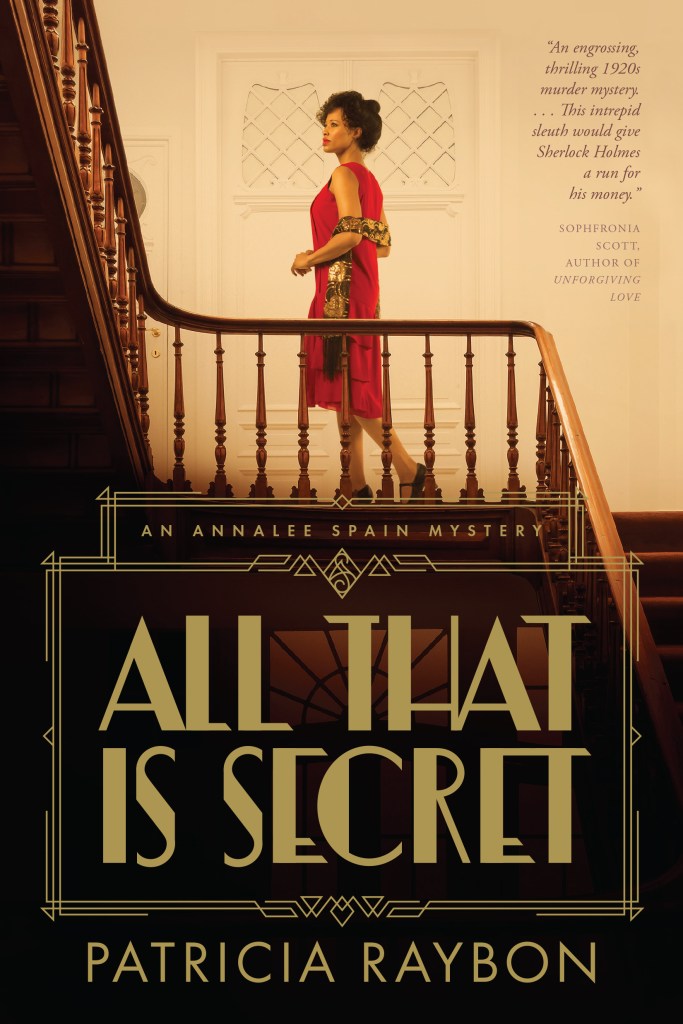
Tell us about yourself, Annalee Spain. Who are you? How would you describe yourself?
Thank you for asking—because that’s my biggest mystery. I was raised alone by my dad, and Joe Spain was a little rough around the edges. The neighbor ladies taught me “girl things” and how to be a “nice young lady.” But who am I? How do I answer that question? I’m on a journey to figure that out.
But you’ve accomplished a lot. You’re “the Colored Professor.” Doesn’t that say “you’ve made it” in the world?
I suppose it should. But the world doesn’t look kindly on folks like me. So I find myself asking God, Why not? His answer is to trust in Him—and that He loves me. For all of us, that’s a pretty good place to start.
What do you want most in life?
To make the world better—for everybody. Sounds crazy. But I want people to see each other with God’s eyes, reflecting on the real person who’s on the inside. Yesterday someone yelled a bad name at me from his Model T automobile. The word stung. Still, I wondered, who is that person—on the inside? Why is he trying to hurt me? As long as I’m asking that question, for me, I haven’t lost hope.
Are you a detective?
I’m learning how to be. I’m not Sherlock Holmes, even though I read and love all his adventures. Instead, I’m a daughter who misses her murdered daddy. The Bible says, “You shall not murder.” But Jesus says if you’re even angry with someone, to reconcile with that person.
So I’m trying to solve a murder but not hate the person who did it. To look for clues but not think the worst of suspects. Am I a detective? God knows I’m trying to be. But at the same time, I’m searching for my real self, too, and to feel okay with what I find. I suspect we all are.
What’s your most treasured possession?
My friends. They’re gold. They’re like gifts that I didn’t earn and don’t deserve. My landlady, Mrs. Stallworth, tests me at every turn and argues with me—even about how much milk to put in the corn bread. But she would lie down and die for me. So would young Eddie—a ragamuffin of a street kid, an orphan who also is white but could be my little brother or even my son. He would move mountains for me.
What have your friends taught you?
To look for the unexpected. Sometimes life sends us people or friends who don’t look as if they belong in our lives. But as I’ve learned, don’t be so quick to turn them away. They could be the gold you’ve been digging for and trying to find.
Have you ever been in love?
Do you know something that I don’t? In fact, I have met a young man and to know him feels like being in love. But I’m learning what that means, too. Can I leave it at that?
In the world, where would you most like to live?
Some place where the sun shines every day. But that’s where I live now. In Colorado, we get sunshine perpetually. Even when it snows, by the next morning—or sometimes the afternoon on the same day—the sun bursts through and the sky is a blinding blue.
Have you ever been to a place where it’s ice-cold, but your body and face are so warm in the sun that you’re pulling off your coat? That’s Colorado on a beautiful winter day. I love it here.
What’s your greatest fear?
Disappointing God. He has given me so much—an education, loving friends, important work, even the prospect of romance. But do I measure up? Do any of us? As a theologian, I know God doesn’t judge us in that way. He sees our hearts—and He loves us anyway. Still, I desire to live up to my potential in Him. Or maybe that’s not a fear but my greatest hope.
What’s your favorite thing to wear?
I don’t have many clothes—and the stores don’t let colored people try on clothes, even if I had enough money (and I don’t). I know women who are seamstresses, but I can’t pay them either. So perhaps my favorite thing to wear is my late daddy’s Stetson hat. It’s a bit worn and too big. But when I put it on, I recall his love and presence. That makes it a pretty good favorite, right?
What’s one fanciful thing you’d love to do?
To ride a bicycle! I love watching people riding them. I want to balance on two wheels and ride with confidence and joy. While wearing a new dress! Does God answer prayers like that? I actually believe He does.
Thank you for interviewing me!
Patricia Raybon is an award-winning author and essayist whose books include My First White Friend, a Christopher Award–winning memoir about racial forgiveness, and I Told the Mountain to Move, a prayer memoir that was a Christianity Today Book of the Year finalist. Patricia’s other books include The One Year God’s Great Blessings Devotional and Undivided: A Muslim Daughter, Her Christian Mother, Their Path to Peace, coauthored with her younger daughter, Alana Raybon. Patricia’s essays on faith, race, and grace have been published in the New York Times, Newsweek, USA Today, Guideposts, Christianity Today, andother national publications and blogs. She lives with her husband, Dan, in her beloved home state of Colorado. Her latest book, All That Is Secret, releases from Tyndale in October.
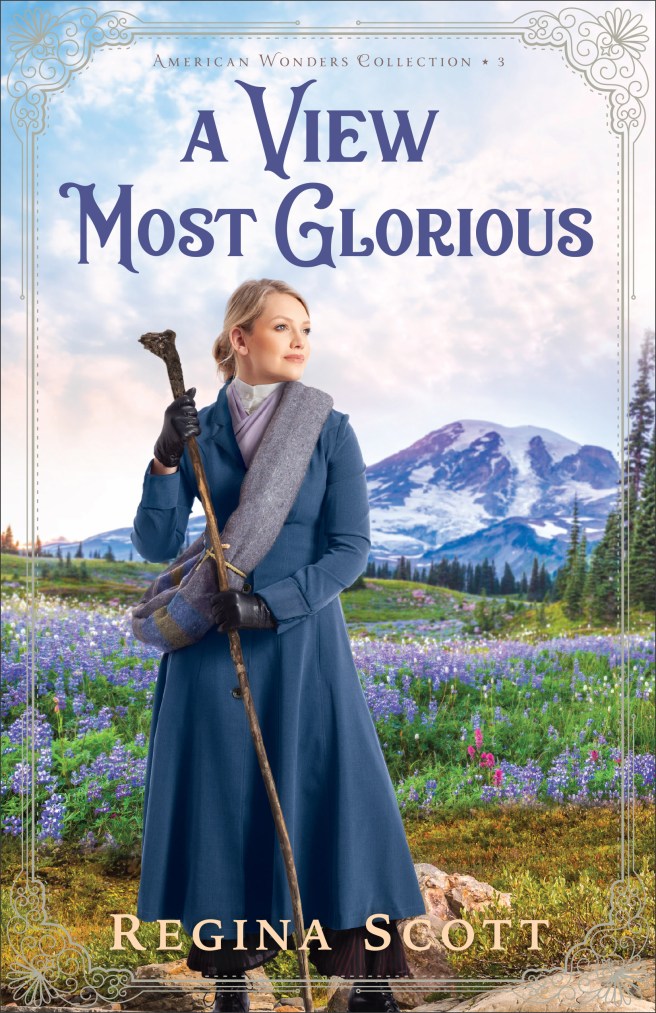
Welcome to Novel PASTimes, Coraline Baxter! We are pleased you stopped by today.
Cora: I’m delighted to be here.R Thank you for the invitation.
Of course. It’s not often we have a guest who plans to climb a mountain. What gave you the idea to summit Mt. Rainier?
Cora: I’m a member of the Tacoma Women’s Suffrage Association. We hope to restore the vote for women. Washington State’s had it twice now, but the courts keep overturning the laws. We intend to prove that a woman can climb a mountain. And if women can climb mountains, why shouldn’t they vote?
Do you have any experience climbing?
Cora: Regrettably, no. I’ve been attending college and becoming one of the first women accountants in Tacoma, the City of Destiny, as we like to call it. And with the Panic of 1893, the bank where I work has been very busy trying to help those who lost everything. But I’ve hired a guide, Mr. Nathan Hardee, who comes highly recommended, for all he seems a bit unreasonable.
Unreasonable how?
Cora: He says to reach the summit I must have stamina, determination, and a willingness to obey his direction, without question. I told him he’ll learn I have plenty of stamina and determination, but I’ve never been good at obeying. He’ll simply have to accustom himself to the fact.
And you feel comfortable this fellow can get you safely to the top and back, through the wilderness?
Cora: I do. I can’t really explain it. There’s something about him. He’s tall as a fir, with eyes as green. He carries himself with a confidence few men manage. And there’s a stillness about him, as if he’s discovered his own worth and is satisfied with that. My stepfather told me Nathan was once a member of high society, like me, but I find that hard to credit. Why would he leave wealth and prestige behind to live in a cabin in the woods?
Well, if you don’t reach the top, you’ll still have position and family to return to.
Cora: That’s the problem. I won’t. My mother and I have never seen eye to eye, but she’s put her foot down this time. If I don’t reach the summit, I must return home and marry the man she’s picked out for me. She finds local industrialist Cash Kincaid perfect, but I know the truth. He’s cunning and cruel, and he’s made it clear he will stop at nothing to make me his bride. So I will reach the summit, whatever it costs.
I can see what you mean about determination. We wish you the best of luck. Thanks for allowing us to get know you a little better!
Regina Scott is the author of more than 50 works of warm, witty historical romance, including A Distance Too Grand and Nothing Short of Wondrous. Her writing has won praise from Booklist and Library Journal, and she was twice awarded the prestigious RT Book Reviews best book of the year in her category. A devotee of history, she has learned to fence, driven four-in-hand, and sailed on a tall ship, all in the name of research. She and her husband of 30 years live south of Tacoma, Washington, on the way to Mt. Rainier. Learn more at www.reginascott.com.
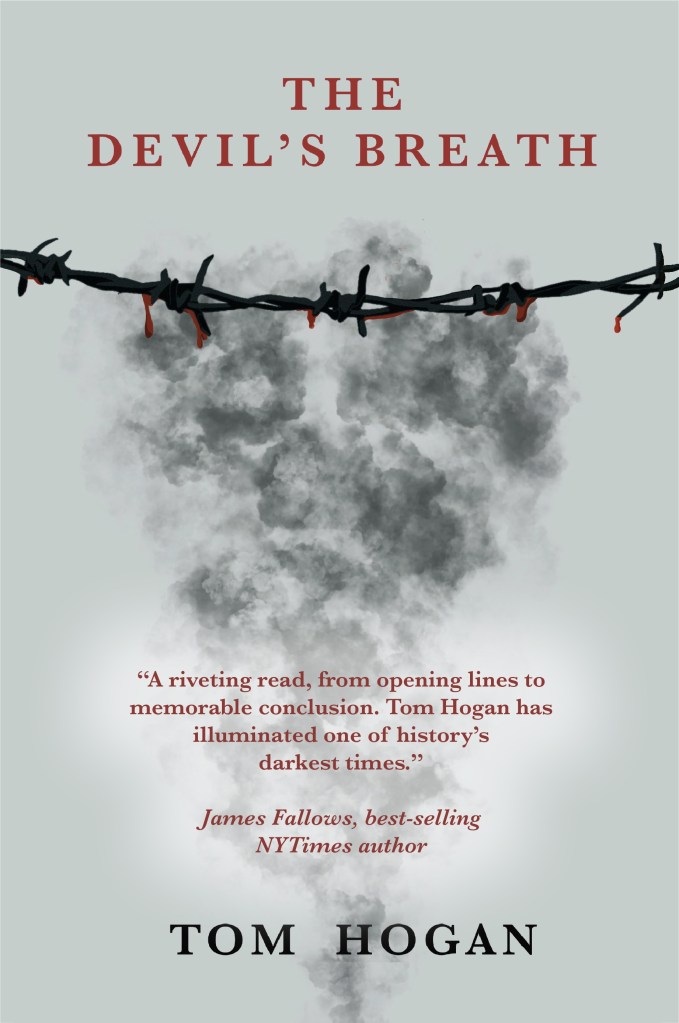
Perla Divko, along with her husband Shimon, is an Auschwitz prisoner forced by Kommandant Rudolf Höss to solve a murder (of Höss’s accountant) and the theft of millions in gold extracted from the teeth of gas chamber victims. The Divkos are a formidable team: Shimon was Chief Detective in Warsaw, while Perla was an investigative reporter. In The Devil’s Breath, the pair approaches their assignment with two goals: to solve the murder and theft, and thus stay alive; and to get word and evidence about Auschwitz and its industrial murder to the outside world.
Q: You and your husband are forced to help your captors and torturers. How difficult was that for you?
A: The Kommandant tortured my husband, but he didn’t break. Then they told us that they would execute 100 of each of our barracks-mate if we wouldn’t help. I believe we were still willing to die for our beliefs, but then Divko suggested that we had a unique opportunity to get inside the workings of Auschwitz and document the mass murder happening there. That was what made working with the Nazis palatable.
Q: You and your husband are a team of equals, a rare commodity in Europe, especially Poland.
A: We were fortunate in that we both had established ourselves in our professions before we met. And when we first met, I had more sources and inside information than Shimon. So we met as equals, became partners, and only then got married.
Q: Your alliance with your Nazi overseer, Graf, is again something unique in the stories we hear about the Holocaust, especially the camps. How did that come about?
A: It began as an adversarial relationship, with Herr Graf charged with overseeing every phase of the investigation and reporting it back to his Nazi overlords. But Graf was also a human being, and once he saw the workings of Auschwitz up close, his human side trumped his Nazi loyalties. And that opened the doors to each of us being to talk to the other as equals, rather than prisoner/captor.
Q: You had a fiery relationship with Gisela Brandt, the female SS officer in charge of camp labor. Were you ever worried that she might send you to the gas chambers for what she called your ‘insubordination’?
A: Not really, but only because I was far more useful to her alive than dead. And while she pretended that we were allies, she was a Nazi through and through, and I knew that the moment my value to her and the Kommandant lessened, I’d be in the next transport to the gas chambers.
About the Book:
The Devil’s Breath is a fascinating new suspense novel set in Auschwitz. This murder/theft mystery takes a unique approach to Holocaust literature. Instead of the events of camp and ghetto life being the primary narrative, The Devil’s Breath uses the Holocaust as the setting for a gripping murder and heist mystery, educating the reader as it entertains. Auschwitz prisoners Perla and Shimon Divko—she an investigative reporter, he a former lead detective in the Warsaw ghetto—are forced by Kommandant Rudolf Höss to solve the murder of his chief accountant and find millions in missing gold taken from the bodies of Jewish corpses. With Reichsführer Himmler due for his annual audit, they have a week to solve the crime or watch hundreds of their peers executed as the penalty for their failure. The investigators dive deep inside Auschwitz—the Kanada harvesting operation, the killing process and the perils of daily life, hindered at every step by multiple red herrings, the murder of prime suspects and witnesses, and the complicated relationship between Höss and his mistress, Gisela Brandt, an SS officer. The Divkos have two agendas in accepting the case: 1) to solve the crime and keep themselves and the hostage prisoners alive; and 2) find a way to alert the world about the scope and purpose of Auschwitz. In a thrilling conclusion, they solve the crime but are sentenced to death in the gas chamber for their efforts, where in a triumphant but heartbreaking finale, they pull off one act of resistance.
About the Author Tom Hogan grew up in post-war Germany, living in a German village with his US military family. When Tom was 8, the family visited Dachau, the original Nazi concentration camp, which prompted Tom to wonder how many of his neighbors had known about or participated in the campaign against the Jews and the resulting Holocaust. It was a question that would stay with Tom his entire life. After graduating from Harvard with an MA in Biblical Archaeology, Tom was recruited by a human rights agency to bring Holocaust Studies into high school and college curricula. For four years he taught at Santa Clara University and traveled with Holocaust survivors to school districts and universities, bringing the lessons of the Holocaust home to new audiences. In the late 80s, Tom left teaching to join a growing company, Oracle, as its first creative director. Leveraging his success at Oracle, he joined the VC (Venture Capital) world, where his agency, Crowded Ocean, positioned and launched over 50 startups, many of them market leaders today. He is the co-author of The Ultimate Startup Guide, which is used in graduate and MBA programs. He recently left the tech world to return to teaching. For five years he taught Holocaust and Genocide Studies at UC Santa Cruz. He then retired to Austin, where he now writes full-time. His first novel, Left for Alive, was described by Kirkus as “gritty and observant, particularly his descriptions of the various outlaws who populate his pages… an impressive tale about criminals that will hold readers hostage.” The Devil’s Breath is his second novel. In addition to his fiction, Hogan is a screenwriter and has written for Newsweek as well as numerous political and travel publications.
Novel Pastimes: Good morning, Mrs. Hathaway. Three different people told me this was the best bakery in Cheyenne, and my nose says they were right.
Esther: You’re probably smelling my cinnamon rolls. They’re such a favorite with customers that even when I make an extra batch, I sell every one. Fortunately, I have two left today. Would you like one? You’re welcome to eat it here. That’s why I have those tables. Some people don’t want to wait until they get home to have a bite of something sweet.
Novel Pastimes: I can see why people recommend the Mitchell-Hathaway Bakery. Good food, good service, a friendly owner. Does your daughter help with the baking? I heard she works here too.
Esther: Susan has been a great help. To be very honest, I don’t know what I’ll do after she’s married and living at the fort, but of course I can’t tell her that. I know she and Michael will be as happy together as Susan’s parents were.
Novel Pastimes: Then she’s not your daughter?
Esther: No. I couldn’t love her more if she were, but Susan’s my niece. I’ve never been married.
Novel Pastimes: Oh, I’m so sorry. I just assumed …
Esther: You’re not the first to make that mistake. Now, would you like a cup of coffee to go with that cinnamon roll?
Novel Pastimes: Only if you agree to join me. I’d like to get to know you better, Miss Hathaway.
Esther: Please call me Esther.
Novel Pastimes: Thank you, Esther. I’m a newcomer to Cheyenne, so I hope you’ll tell me a bit about it. It’s so different from the cities in the East.
Esther: That it is, but I love it. You probably know Cheyenne’s the capital of the territory and a major stop on the Union Pacific, but that’s just the beginning. The city has so much to offer its residents. There’s the opera house – the only one west of the Mississippi – and the InterOcean hotel is reputed to have the best food in the city. And then there are the millionaires’ mansions. I haven’t been inside any of them, but I enjoy walking down Ferguson Street and admiring the cattle barons’ homes. I shouldn’t neglect to mention the parks. If you haven’t strolled through City Park yet, you should. It’s beautiful.
Novel Pastimes: You’re making me glad I’ve come. It sounds as if the city has everything to make me feel welcome, but there must be something lacking if an attractive woman like you isn’t married. Surely there are eligible bachelors, maybe even one of the cattle barons you mentioned.
Esther: I don’t need a husband. What I need is an artist.
Novel Pastimes: An artist?
Esther: It’s a family tradition to have the bride and groom’s portraits on a special Christmas ornament. I want Susan and Michael to have their Christmas star, but so far, I haven’t found anyone who can do that.
Novel Pastimes: There must be someone who can help you. Even though I’ve just moved here, I feel confident of that.
Esther: I hope you’re right.
Novel Pastimes: I am. I’m also sure of one other thing besides the fact that you bake the best cinnamon rolls I’ve ever tasted. I hope you don’t think I’m being forward in saying this, but I’m certain there’s also a husband for you here in Cheyenne.
Esther: At my age? That might require a miracle.
Novel Pastimes: Christmas is the season of miracles, isn’t it?
Four unlikely couples.
Four unexpected chances at happiness.
Four unforgettable stories of love and faith in the Old West.
The Christmas Star Bride
Can a bakery owner who lost her one true love at Gettysburg twenty years ago and an itinerant artist who lost more than love during the war find a second chance at happiness, or is love only for the young?
The Fourth of July Bride
She needs money to pay for her mother’s desperately needed eye surgery. He needs a way to stop his meddling mother from choosing his bride. Can the answer be a temporary courtship?
The Depot Bride
Can a cattle baron’s daughter who’s practically betrothed to another man and a struggling writer who fears he has nothing to offer her find happiness as they create a commemorative book to celebrate the creation of the new Union Pacific depot in Cheyenne?
The Unmatched Bride
When a confirmed spinster matchmaker accepts an unusual assignment and helps a wealthy widower choose the right mate for his daughter, can more than one couple have a chance at true love?
Amanda Cabot is the bestselling author of more than forty books and a variety of novellas. Her books have been honored with a starred review from Publishers Weekly and have been finalists for the ACFW Carol Award, the HOLT Medallion, and the Booksellers’ Best.
Hello, Sarah. Tell us a little bit about yourself.
Um. Okay. I’m not sure what to say. My name is Sarah. But you already know that. I live in a suburb just outside of Chicago. For now. But, I’m going to sell the house. I can’t live in this huge empty house now that I live alone. But don’t tell my mom, Rosemary. She’ll flip out if she finds out this trip I am taking back to my hometown of Brighton, TN is permanent. This is my chance to go back and get life right this time. Wipe the slate clean.
Sounds complicated. So tell us more about that. What is it that you really want out of life?
Sigh. You know, I don’t know if I’ve ever admitted this out loud. Well, at least not since elementary school. Most people from my little hometown would never understand, but all I want is to move home and work my family’s store, Old Depot Grocery, alongside my mother and grandmother. Brighton is your classic rural Tennessee town. The kind of place that the teenagers dream of escaping for the chance at better opportunities. But I’ve had those big opportunities. Went to college. Married into a wealthy family. Owned the big house. Saw the world. But now that the life I’ve built has crumbled in my hands, I see the truth. Brighton and that little store are all I ever wanted. Mom would say I was hiding by coming back. But Nan, she’ll understand. She always seems to understand my love for Old Depot. Maybe together we can convince Mom that me coming home to help run the store is the right thing to do.
It seems like your mother would be thrilled you were moving home. Don’t you think she’ll enjoy seeing you more often? Having someone to take on the family business?
You’d think that, wouldn’t you? It’s not that my mom doesn’t love it when I come to visit. But me living in Brighton? I can’t tell you how many times she’s told me about how she worked at that store her whole life to make sure I was never stuck there like she was. She was so proud of my college degree, of my marriage to Aaron. The travels I took. It really did look beautiful on the outside. She’d be so disappointed if she found out how miserable that life left me.
Why do you think your mom feels stuck?
That’s one thing I’ve never understood. Her sister, Jessie, is in her fifties. She lives on the other side of the country, runs her own company, and even took up surfing last year. If mom didn’t love her life here in Brighton, I don’t understand why she stayed. Aunt Jessie is proof that Mom could have had any life she wanted.
I don’t think she regrets settling down with Dad. They seem really happy. Her pushing me out of Old Depot has something to do with the store. There’s something she’s not telling me. Maybe I’ll finally be able to squeeze the truth out of her. Then again, maybe it’s better to respect the doors that people keep locked tight. I’ve got my own secrets to keep.
Like what?
Nice try, but that wound is a little too fresh to talk about. With anyone. Don’t you think there are some things better left unsaid? I don’t see how it would help anyone for me to voice these dark thoughts I’ve had. Mom would never understand what I almost did. Neither would Nan for that matter. The two of them with their happy marriages.
I’m really sorry. It sounds like you’ve been through some tough times.
Yikes. That got a little heavy, didn’t it? Sorry about that! These past few weeks have been really intense. I didn’t mean to go into all that.
Don’t you worry about me. This girl will be just fine. My bags are packed and tomorrow I’ll step through the front doors of Old Depot Grocery. I know it probably sounds crazy, but even just the memory of the sound of the floorboards beneath my feet makes me feel lighter. Nan will know how to get me on my way to this fresh start I’m craving. And mom…I know I get frustrated with her pushing me toward this life she thinks I need, but she’s not the enemy. She’ll be there for me too. It will definitely be interesting, easing her into the idea of me staying in Brighton. But I know with the two of them by my side, I’ll figure out how I lost my way all those years ago. I finally have the chance to make up for the time I lost chasing a life that was never meant to be mine in the first place. I am so thankful for the chance to start again.
It sounds like you’re a woman on a mission. Best wishes on your new, or should I say old, endeavors. Thanks for allowing us to get know you a little better!
Amanda Cox is the author of The Edge of Belonging. A blogger and a curriculum developer for a national nonprofit youth leadership organization, she holds a bachelor’s degree in Bible and theology and a master’s degree in professional counseling, but her first love is communicating through story. Her studies and her interactions with hurting families over a decade have allowed her to create multidimensional characters that connect emotionally with readers. She lives in Chattanooga, Tennessee, with her husband and their three children. Learn more at
We at the London Illustrated have a rare interview today with the elusive Ella Blythe, rising ballet star of the Craven Street Theater who seems to have appeared from nowhere this season, and with a most astonishing style. Let’s see if we can figure out where on earth this mysterious little sylph came from—and why she keeps her secrets so close to the chest.
LI: Miss Blythe, all of London is curious—won’t you tell us the secret to your most unique, breathtaking style of dance? Who is behind your training?
Ella: The style is my own, discovered when I manage to forget myself and my audience. As for my background, I’ve always danced, always trained and prepared. More than I walked, I’m afraid. There’s something about the pure symmetry and order, the perfect elegance of ballet that resonates with my beauty-loving heart. Officially, I was trained by Monsieur Coulon for two years in France, although he would cringe to see the way I dance now—the man is a staunch classicist. I credit him for very little of the style I now use.
LI: The Coulon, of the Paris Opera House? One might wonder how an unknown young woman of no means managed such an appointment. Might I ask where you trained before that, or perhaps who sponsored you?
Ella: From the time I could walk, I was trained by one of the most magnificent dancers ever to grace a European stage. One couldn’t help but fall in love with ballet simply watching her. Crossing the street, for her, could convey more than the finest speech, and with even more eloquence.
LI: Are we to assume she’s an unknown dancer, then, since you’ve not mentioned her name? Perhaps one injured before her prime?
Ella: No, the very problem is that you surely would know her name, and I mustn’t speak it aloud. Not ever.
LI: You sound as if you’re speaking of Craven’s very own ghost dancer—the one who wears the scarlet shoes. It’s been said you once auditioned with those very same shoes. Perhaps there is some connection there?
Ella: Perhaps this interview should end here. I’m rather tired.
LI: I beg your pardon, Miss Blythe. Please, sit back down, and I shall promise to take a new direction. Very well then—there is one other matter burning in the minds of our readers. Have you an understanding with one of the gentleman in the theater? We’ve heard such romantic tales from every direction this season.
Ella: An understanding—horsefeathers! Jack Dorian has been hanging about merely because of a bet—one he’ll never win. He’s the known charmer of the theater, what with that golden hair and almost divine appearance the other dancers find so hard to resist. Unfortunately, he seems to share their opinion, and I cannot abide an arrogant man.
LI: What of the principal? Philippe Rousseau is your equal in many ways, and people are claiming they see something thick and weighty between you—even off the stage.
Ella: (silence.) Philippe is a dark horse. Carries as much mystery as the unnamed dancer who trained me, and very few manage to get close to him, either. He often escorts me home when it’s late, but there’s much he won’t share, and he walks about with the weight of ten thousand unwritten poems behind his eyes. All I can tell you is he’s the truest gentleman I’ve ever met this side of the theater curtain.
LI: This hedging has me quite intrigued. Perhaps I should speak to some of your fellow dancers for their take on the matter…
Ella: You’re bound to get a fairytale. Well then… If you promise to keep the specifics out of your article, I shall tell you one secret concerning Philippe. He doesn’t remember it, but years ago, when I was quite scrawny and innocent, he happened upon me in a forgotten part of the theater and swept me up in the most unexpected dance. He put these enchanted shoes on my feet and we danced—it was my first pas de deux with a real partner, and I believe I fell in love that night—with ballet, that is. That encounter is what brought me back to Craven, too. You see, he promised me that one day we’d dance together on this very stage—he was that certain I’d make something of myself. I suppose his confidence convinced me too, and it became my driving ambition—to prove him right. To dance opposite him once again at Craven. And one day… to thank him for taking the time to pas de deux with a little nobody.
LI: And has it happened? Have you danced with Philippe Rousseau?
Ella: (pause.) Not yet. But the hope of it still fuels my dance. Come back for another season, and perhaps you shall witness it. You may sit in the audience and appreciate what is occurring, even though no one—not even Philippe himself—realizes the significance. Just one more reason to purchase a box for the season and see for yourself what comes of his vow.
Joanna Davidson Politano is the award-winning author of Lady Jayne Disappears, A Rumored Fortune, Finding Lady Enderly, and The Love Note. She loves tales that capture the colorful, exquisite details in ordinary lives and is eager to hear anyone’s story. She lives with her husband and their children in a house in the woods near Lake Michigan. You can find her at www.jdpstories.com.
Tell us something about where you live. That’s not an easy question to answer. I grew up in New York but I’ve spent the last years of my life traveling all over the Southwest and West. I lived in Old Orabi, a Hopi village in Arizona. And I stayed in Yuma, Arizona for a time. Then my work – well my passion really – took my brother and me and our horse drawn wagon all across the country with my Edison machine making recordings of Indian music I feared would be lost due to a law that forbid Indian people to sing or perform or speak their language. The West is my home. But I guess you could say now that my heart is in New Mexico. Santa Fe to be exact.
Do you have an occupation? What do you like or dislike about your work? Oddly, I guess you could say I formed a new occupation called “ethnomusicologist,” someone who studies the origin of music especially that of another culture. I love this work! Recording and writing down the notes of complex music of Indigenous people has consumed my life. I guess you could also say that I’m a writer since I worked on the book, which was published even though it was 575 pages long! It’s called The Indians’ Book. I don’t really feel like I “wrote” it. I was “but a pencil in the Indians’ hands.” The only thing I disliked was having to edit out anything!
Who are the special people in your life? First of all, my brother George. I have five siblings but George is the one who helped save me. I had a breakdown when I was in my early twenties and it was George who lured me west to find healing. He thought my healing would come from the sunshine and desert air, but it came through the music of the Indian people I met like Mina, a Hopi child who stole my heart. There were others, my parents, of course, who encouraged my passion for preserving Indian music and Charlotte Mason, one of my benefactors. (I needed money to travel throughout the west). And then there’s President Theodore Roosevelt who I enlisted in my efforts. He might not think he was special in my life but I sure think he is!
What is your heart’s deepest desire? To see Native Americans free to celebrate their music without fear of repercussions as they experienced in the late 1800s.
What are you most afraid of? Living a life without purpose and for me that means falling back into letting my parents take care of me in our lovely New York home. The West, with its beauty and its demands, gave me courage to try new things even as I walked into uncertainty. Also, I don’t like snakes.
Do you have a cherished possession? I do! It’s an Acoma Pueblo pot, beautifully crafted and painted with an aloe stem. It was a gift and part of what I love about it is the story the Acoma people tell about their pottery. Once the pots were shaped and fired, they were so fragile that they often broke. The shards would be taken to the desert and discarded but also offered as a gift back to the earth that had first given up the clay. One day, an old woman pounded the fired shards back into powder that was added to new clay. When those pots with the broken pieces and the new pieces were fired, the pots were not only beautiful but strong. I always liked that image of who we are: broken by tragedy and trial, fired by the challenges of life. But when we allow newness to come into our life, we become not only beautiful but strong. I’ve kept that metaphor all along my journey toward my personal healing.
What have you learned about yourself in the course of your story? Many things. I used to be very disciplined with my music, practicing for hours. I thought it would be my future. But when I had my breakdown, music no longer held its sway with me and I languished until my brother invited me West. Part of what I learned is that a passion can burn a person up. Guilt can take a person down but both purpose and regret can also fire new desires. I learned that I was stronger than I thought and that when I took on another’s cause, I had even more energy than when I was only thinking of myself. Giving myself to others, that’s what really brought on the healing.
Is there anything else you’d like people to know about you? As I’ve gotten older, I’ve kept learning and exploring. I have traveled by horseback to outlying Indian villages, where I recorded Morning Songs and lullabies. But, I’ve also been exploring how people treat each other. The Code of Offenses was a law passed in 1883 to force Indian people to give up their music, language and customs. I spent my life finding ways to break this code and learned that one small woman, when motivated by love, can make a difference in the lives of others. It’s a good lesson!
Thanks for allowing us to get know you a little better!
Jane Kirkpatrick is the New York Times and CBA bestselling and award-winning author of forty books, including Something Worth Doing, One More River to Cross, Everything She Didn’t Say, All Together in One Place, A Light in the Wilderness, The Memory Weaver, This Road We Traveled, and A Sweetness to the Soul, which won the prestigious Wrangler Award from the Western Heritage Center. Her works have won the WILLA Literary Award, the Carol Award for Historical Fiction, and the 2016 Will Rogers Gold Medallion Award. Jane divides her time between Central Oregon and California with her husband, Jerry, and Cavalier King Charles Spaniel, Caesar.