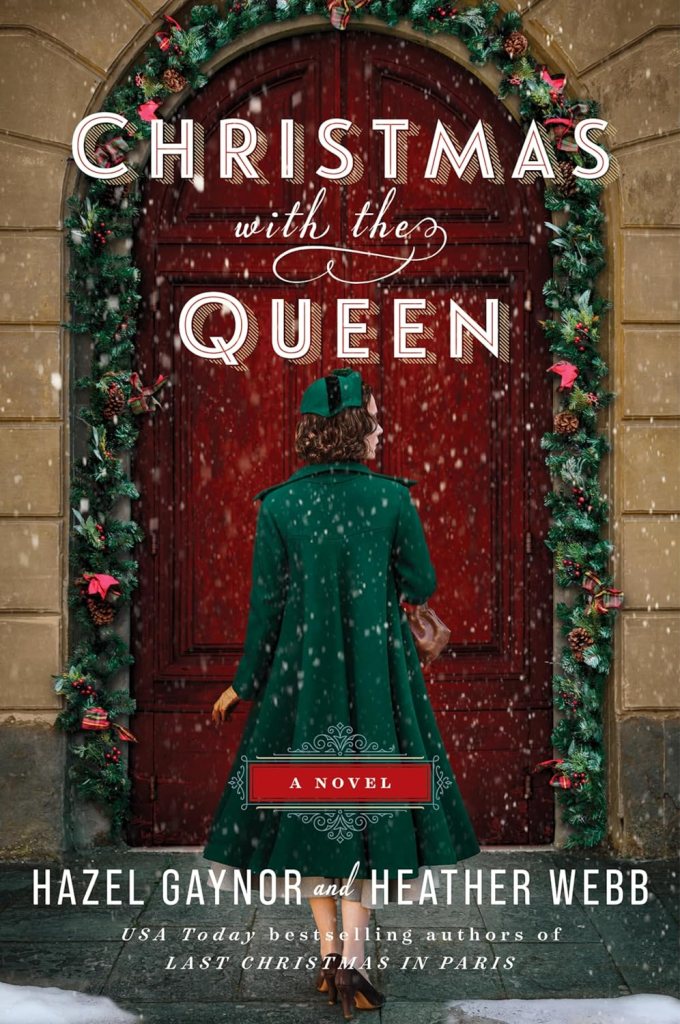
December 1952. While the young Queen Elizabeth II finds her feet as the new monarch, she must also find the right words to continue the tradition of her late father’s Christmas Day radio broadcast. But even traditions must evolve with the times, and the queen faces a postwar Britain hungry for change.
Amazon Affiliate link used helps to support this blog
I enjoyed this novel about two lovers, Jack and Olive, who are separated by circumstances, including Jack’s marriage to another woman, Andrea, he loved. As the story opens Andrea is killed in a car accident. She leaves behind the dream she and Jack had for Jack to open his own restaurant. Olive harbors a secret, and these two things keep them apart for most of the book. It’s the classic romance formula.
What made this book intriguing for me was the glimpse into the royal family and the Queen’s preparations for her annual Christmas address. (However, readers should understand, despite the title and setting, the book is about Jack and Olive who both have jobs that take them into the lives of Queen Elizabeth and Prince Phillip). Another intriguing aspect for he was Jack’s character. He enjoys cooking the recipes that his grandfather, from New Orleans, taught him. The way he puts his dishes together and the way he introduces them to the British people was interesting. I also loved how he wooed Olive by figuring out what she liked and setting up one-on-one cooking lessons.
The only drawback for me was the prolonged period of time (years!) that it took for Jack and Olive to reunite as a couple. I found it a little annoying. I also didn’t like that we weren’t able to witness a proposal or a wedding. After all that back and forth, this part deserved a place in the story, I thought. Even so, this didn’t spoil my enjoyment of this story by two very talented authors. I’ve read several of their books and I love how they take ordinary people and show readers how they endured and prospered during the times they lived in.
This is a fun Christmasy read with a gorgeous cover that I think readers will enjoy.
Merry Christmas, everyone!
I received a free review copy from the publisher via NetGalley and was not required to leave a review. These are my own opinions.
Welcome to Novel PASTimes! We are pleased you stopped by today.
Thank you for having me! It’s a pleasure to be here.
Tell us something about where you live?
It’s a delicate situation. My family’s home in Lincolnshire, England, was requisitioned by the Air Ministry to function as a mapmaking facility. I had to clear out all our family’s possessions and watch while the Air Ministry converted the whole thing into offices. (They were absolute thugs when it came to the soft furnishings!) They even changed the name of the place from ‘Broughton Hall’ to ‘Bartondale’. I loved my job working in the map room at RAF Bottesford, but I wanted to keep an eye on my family’s home. So I ask for a transfer to the library at Bartondale. Now I work in what used to be my home, and live in what used to be our caretaker’s cottage with my companion Sarah and a child evacuee called Olive.
Do you have an occupation?
I have to be careful what I say about it. Official secrets, you understand. But I can tell you that I work in the library, managing all the documents required to make the maps. I like putting everything in order.
What do you like about your work?
There is a new American, Jack Marsden, who has started working with us. The girls and I call him O.A.F … Our American Friend. It was my job to show him around on his first day. He’s quiet, almost tongue-tied, with me even though he seems chatty with everyone else. He looks in pain every time he has to speak to me!
Who are the special people in your life?
The special people in my life are my parents and my two brothers, Peter and Teddy. Peter is my twin. Teddy is the baby of the family and has just joined Bomber Command as a navigator. I don’t think he is enjoying it very much. Then there’s my dear friend Maggie. We met when we worked together at RAF Bottesford and she’s been like a sister to me ever since. We tell each other all our secrets. Well, almost all of them. There are some things that I won’t tell anyone. Ever.
What are you most afraid of?
It feels odd confessing this to you but I am most afraid of people discovering the very foolish thing I did at university. I am ashamed of who I was then, and for people to know about … I’m sorry I don’t want to say anything more about it. It’s too upsetting.
What do you expect the future will hold for you?
It’s war, so there’s no telling what will happen! But if I’m honest, I’d love to get to know Jack a little more. He might be quiet but I sense he has a lot going on under the surface.
What have you learned about yourself in the course of your story?
I’ve learnt that I truly am a new creation in Christ and that I can do all things in His strength. And I’ve learnt to forgive. Trust me when I tell you that both are very hard lessons to learn.
The Mapmaker’s Secret by Jennifer Mistmorgan is a historical romance set during WWII. It is available in both paperback and ebook.
Australian author Jennifer Mistmorgan sometimes feels like she was born in the wrong era. So she writes romantic historical fiction set in the 1940s, against the backdrop of WWII and its aftermath. She infuses her sweet romances with wartime drama and a dash of intrigue. She lives in Canberra with her family and a wonky-eared West Highland terrier.
Welcome to Novel PASTimes! We are pleased you stopped by today.
Tell us something about where you live.
I live and work in the beautiful St. Anne’s Well Gardens of Bristol. This pleasure garden, once a healing springs, is a small haven in the midst of a bustling seashore town that actually contains—hidden away—an entire film production outlay. The old pump house has become the workshop of a brilliant producer, where he tints and cuts and splices film strips to create an illusion grander than his magic shows. Then, ifhttps://amzn.to/3Qc8xPJ one is brave enough to venture through the woods and up the hill, he would happen upon the most unexpected house made entirely of glass. That is where the films are set, on a rotating foundation, so that he might capture natural light from any angle, any time of the day.
I spend my days in that glass house, which grows quite warm in summer, pretending to be a fairy or a fair maiden. Then I spend my spare time buried in that pump room, splicing and tinting films with Smith and his wife. It’s a beautiful place to create, and I love it here.
I shouldn’t be telling you this part, but I have a history in this place. When I was a girl, this place was my haven. I came here for the stories from an old rose gardener, and for escape. I did not like my real life in those days, so I lived in a fantasy one at St. Anne’s.
Is there anything special about your name?
I chose the name Lily simply because the flower reminded me of what I’d like to become. Elegant, pure, and lovely. It’s the simplest name I’ve chosen so far, and it has stuck with me the longest. The name I was given, which I cannot divulge, was bestowed in honor of my grandmother. I rather like that, and I hope I can use that name again one day.
Who are the special people in your life?
I haven’t had anyone special in my life since Gordon Makepiece told me stories as a child. I suppose Gypsy Lee has been a boon to me and Mr. Smith, the illusionist, but that’s mostly because he needs me. And there’s something lovely about being needed.
However—and you’ll have to keep this quiet—there’s a man. He appeared in the gardens one night for a show, and I all but kidnapped him. I pulled him into a waltz and had him spinning and twirling toward the woods, then running up an unseen path. And ever since then, I have felt as though he’s done the same to me. Twirling and spinning until I can’t see straight, then darting up a dark path to an unknown destination. And I’ve wondered ever since if it was I who roped him into a dance that first night… or if it was all his doing.
What are you most afraid of?
Leaking my real name. I’m terrified I’ll give it out without thinking, though it’s been years since I’ve used it. Or perhaps someone who knows it will happen upon me. That wouldn’t happen though, I don’t think. I’ve been ever so careful to cover my tracks.
Do you have a cherished possession?
There’s a large, inviting, leather-bound book of fairytales that I would pay handsomely to have back. The illustrations are mine, and the stories belong to the dearest person in the entire world. What I wouldn’t give to hear his voice again. Better yet, to hear the stories told in his voice, rather than on the page. Every time I turn those pages, I hear his voice in my memories and my heart absorbs everything he’d meant to tell me in those fairytales. But the guilt overwhelms me so much that I haven’t opened that book in years. Whatever became of the writer, I do not know.
What do you expect the future will hold for you?
I feel I could succeed in any position, with my history. I’m an actress now, but I’ve been a milkmaid, a governess, a boy in the army, and even a lady’s companion. Next, I could be a pirate—that does sound amusing. Perhaps an illusionist.
Thanks for allowing us to get know you a little better!
Joanna Davidson Politano is the award-winning author of Lady Jayne Disappears, A Rumored Fortune, Finding Lady Enderly, The Love Note, A Midnight Dance, and The Lost Melody. She loves tales that capture the colorful, exquisite details in ordinary lives and is eager to hear anyone’s story. She lives with her husband and their children in a house in the woods near Lake Michigan.
Get Connected: Joanna Davidson Politano www.JDPStories.com Facebook /joannadavidsonpolitano Twitter @politano_joanna
Having run away from home in the summer of 1914 to join the Great War for Civilization, 16-year-old Evan Sinclair managed to cross the country by train, the Atlantic by steamer, and having crossed through France into occupied Belgium, he found himself with the Flemish resistance in the dangerous mission of flooding the lowlands—a singular act that stopped the Germans from reaching the northern ports and turned the tide of the war. Having played a key role in that critical mission, Evan was badly wounded and spent some weeks in a field hospital in northern France. Discharged from hospital, he and other recovering wounded soldiers are being sent back to England by hospital ship.
Ten minutes out of Calais and bound for Dover, the HMHS Austrium pitched on the Chanel swells on a cold morning in late November. Sixteen-year-old Evan Sinclair stowed his gear on the upper berth of a cramped cabin, and grasping the worn handrail, headed up the narrow steel stairwell to the ship’s deck. He stepped to the side as a deckhand descended the stairs and asked, “Y’know where I might find Evan Sinclair?”
“Right here. That’s me.”
The man handed him a piece of paper. “This just arrived for you.”
In the half-light he could make out the words.
NOVEL PASTIMES WISHES TO INTERVIEW EVAN SINCLAIR PLEASE RESPOND
Evan frowned and thought, “What the hell does that mean? Then he called out to the deckhand who had begun climbing back up the steps. “Hey! They want me to respond. How am I supposed to do that?”
“At the wireless office. Come with me.”
Evan followed the deck hand up the stairs and soon found himself on the bridge. There the deckhand nodded at a closed door.
Pushing it open, Evan saw a young man reading as he reclined, feet up on a low desk between a typewriter and a burnished brass telegraphy set. Looking up from his copy of Argosy All-Story Magazine, he asked,“Are you Evan Sinclair?”
“Yes.” He held up the paper. “I believe this came from you. What do you make of it?”
The young man shrugged. “They want to interview you.”
“About what?”
“If you’d like, we can find out right now.” The telegraph operator sat forward and readied his hand over the key-type transmitter. “Shall we?”
“Do you have time for that?”
“For now, I do. There’s nothing in the queue, and they’re waiting for your response at the destination station in London—”
“London? Isn’t that too far away?”
“Not at all—we can transmit wireless over twice that distance.”
“How?”
“Morse code by radio waves. Do you want to do this or not?”
“Sure,” he said and watched as the operator began tapping the brass key. Once he stopped, Evan asked, “What did you transmit?”
“I told them that Evan Sinclair is standing by for the interview with Novel PASTimes.” The operator moved his headphones up from his neck to his ears and reached out to bring the typewriter forward. “They’ll get back to us soon enough and I’ll type out the responses for you—”
Before he finished speaking, Evan could hear the shrill staccato of the Morse code from the operator’s earphones. As he began typing, Evan leaned down and read the message.
WELCOME HOME HOW DOES IT FEEL TO BE A HERO
A hero? he thought. Are they referring to what I did to help flood the polders? Evan said nothing for a few seconds while the images flashed through his head—the bright moon over the lowlands, the partisans exposed by the sluice gate, the German machinegun from within the protecting nest of sandbags, firing and firing, smoke from the gun rising in the air, desperate and failed attempts by the partisans to silence it, with pistol, with grenade. He remembered crawling over smooth stones in the mud, trying to reach the dark shelter of the poplars, there the foliage blocked out the moonlight and he was able to stand and hurl smooth stones with his sling into the machinegun nest, again and again, drawing their attention away from the partisans at the sluice gate. And, finally, moonlight shining on rising water as the polders flooded—
The telegraph operator cleared his throat. “Do you want to reply?”
Evan nodded. “Tell them – I’m not sure what they mean.”
The operator tapped out the message, and the reply came quickly, and the young man typed it out.
FLOODING POLDERS KEPT GERMANS FROM TAKING NORTHERN PORTS AND WINNING THE WAR NOW THEY WONT NOT NOW NOT EVER
He knew that was true. The key to a quick German victory was to seize the port cities of northern France and Belgium. But slowed and stopped with the flooding of the lowlands, their progress had ground to a halt. And everyone knew that without a quick victory, Germany would have none. And though the subsequent trench warfare was horrific and grinding, it contained Germany and drew out the war, and a longer war would end in Germany’s defeat.
Which is why I left home to join the Great War for Civilization, he thought. To make a difference. And I did.
He spoke a shortened version of those thoughts to the operator who tapped them out into the wireless radio waves bound for London. After a few minutes the next question came.
THERES TALK OF YOU RECEIVING THE VC
The Victoria Cross? Evan shook his head in disbelief. Britain’s most prestigious decoration? They’d give it to me for throwing rocks at Germans? The ones who really deserve a medal are the Flemish partisans who died at the sluice gate, the ones who actually flooded the polders—Emile Peeters and Hendrik Geeraert.
Evan proceeded to dictate these thoughts to the operator who tapped them out. Evan made sure that he got the spelling of their names right.
After a few minutes the next question came, the shrillness of the code less jarring as Evan was getting used to it. He read the typed transcription.
WHAT DO YOU PLAN TO DO ONCE YOU GET BACK TO ENGLAND
Before speaking, Evan considered how to reply. I’m pretty sure my dad left Utah to look for me in England. He’s probably back now—at our old house in Oxford. I definitely want to spend some time with him—to mend fences after the way I ran off. And once I’m fit for service I want to get back to the fight, that is, if the war is still going on. But not on the Western Front—I’ll ask for them to send me to Cairo.
Dictating these thoughts to the operator, Evan hoped that his father might hear the news before he arrived at the front door in Oxford. As he waited for the tapping to stop, his thoughts turned to a beautiful young nurse he had met while hospitalized in France. I’d really like to get back there for a quick visit—to see her again—
“Uh-oh!” the operator cut into his thoughts. “I’ve got someone in the queue now. I’ve got to sign out with NOVEL PASTimes, and take this.”
“No problem. I’m glad we’re done,” Evan said as he watched the operator hunch over listening as he typed out the incoming message.
GERMAN U BOATS SIGHTED IN CHANNEL BEGIN EVASIVE MANEUVERS
Evan’s breath caught as the operator grabbed the message and ran out to the bridge, yelling for the captain.
Wireless Telegraphy Communication between ship and shore was by Morse code, as it was for conventional telegraphy. The equipment only transmitted messages for about 300 miles in daylight, although that figure doubled or tripled after dark thanks to the refraction of long-wave radiation in the ionosphere. The wireless operators sending these messages were independent young men of the modern age who had been recruited with the promise of escaping “blind alley careers”. They chatted to wireless operators in other ships in a jaunty, mock public school slang, calling each other “old man”.
Photo of the HMHS Austrium
Michael J. Cooper emigrated to Israel in 1966 and lived in Jerusalem during the last year the city was divided between Israel and Jordan. He graduated from Tel Aviv University Medical School, and after a 40-year career as a pediatric cardiologist in Northern California, he continues to do volunteer missions serving Palestinian children who lack access to care. His historical fiction novels include “Foxes in the Vineyard,” set in 1948 Jerusalem, which won the 2011 Indie Publishing Contest grand prize, and “The Rabbi’s Knight,” set in the Holy Land in 1290. “Wages of Empire” won the 2022 CIBA Rossetti Award for YA fiction along with first- place honors for the 2022 CIBA Hemingway award for wartime historical fiction. He lives in Northern California with his wife and a spoiled-rotten cat. Three adult children occasionally drop by. Learn more at michaeljcooper.net.
This article originally appeared in the Morning News in Haxford, England on Thursday, June 30, 1910.
An Interview with Pignon ScorbionBy Billy Arthurson
PIGNON SCORBION & THE BARBERSHOP DETECTIVES [Blackstone Publishing; February 8, 2022; hardcover]
Our Chief Police Inspector, Pignon Scorbion, has been in town for just under two fortnights, yet in that short amount of time he has solved three baffling mysteries and apprehended the criminals responsible for those misdeeds. He has achieved near instantaneous recognition and celebrity with Haxford’s residents for both his prowess in solving difficult crimes and for his bespoke colorful linen suits and unique custom-made black and white shoes. I met with him recently to learn more about his background, his methods, and his unconventionality.
Chief Inspector, you cut quite the arresting figure around town. I wonder if you’d tell me about your attire.
I find that the clothing worn in England in this day and age by the male members of our population is rather tedious and dull, with the hues of the garments they sport being drab and generally uninspired. It is not surprising to me that it is so, as the coloration of mammalian animals in general lack bright colors thereby allowing them to blend into their environment and be less prone to being observed and attacked. I, on the other hand, have no issue at all standing apart from the masses. I welcome being distinguished from the commonplace and the rabble as I find it to be beneficial that the good citizens whose existences that I safeguard can easily detect my presence.
My suits are fashioned by one of the finest couturiers in our fair land who has precisely followed my instructions to a fault in using only the finest linens and wools, tailoring them to fit me in a manner that leaves little gap between the fabric and my skin, and utilizing colorations that do set me apart when I am out and about. Each pair of the black and white shoes that I have now been sporting for well over two decades are crafted by an exceptional souter in Liverpool whose singular abilities, I am certain, will one day be recognized throughout the land and doubtless beyond the Continent.
I have at times been referred to as a fashion plate, and I vastly prefer that designation over being described as one who sports dowdy or uninspired clothing. Most fortunately, because of the athletics that I regularly participated in until quite recently, my frame can still support a close-fitting style of a wardrobe without it appearing to be inappropriate for a gentleman of my years.
Where did your tendency to be unconventional stem from?
That trait that was handed down to me by both my mater and my pater, although more so from the latter. Father did not conform to the norms of his times, and never allowed the scorn or derision of others to influence his decisions or actions. While he was initially ridiculed for the venture that that he initiated in which he hired out dromedaries to those wishing to traverse Egypt’s desert sands, he persevered in his belief that such an enterprise would be profitable and was proven correct. The same can be said for his excursions into the selling of chocolates and sailing from his native country to the lands at the far shores across the Atlantic Ocean. He never embraced the ordinary, nor shirked from taking risks. He was an individualist and through and through.
Mother was not quite as bold as he, but for all the years that I spent domiciled in their abode, she stressed upon me the importance of one thinking for themselves and espoused the belief that an individual need not conform to the commonplace to succeed in their life. She, like Thelma Smith, attired herself in costumes unlike those that the vast majority of her female contemporaries had clothed themselves in. She implanted in me the beauty of individuality and the richness of expressing the distinctiveness of one’s persona.
You are obviously quite skilled at detecting and solving complex enigmas. Have you ever been contacted to do so for Scotland Yard, especially now that they are in their new quarters and have expanded their force?
Rather than residing in our capital city, I much prefer the essence of the English countryside where the air is fresher, the people less jaded, and where I can devote greater attention to fewer crimes. It is in this environment that I am able to have more of an impact on, and truly better safeguard, the residents who I am sworn to protect. Additionally, as you have already observed, I am an individualist, and that is not a trait that sits well with, or is encouraged by, the Met.
I have been asked to assist, and lend my singular talents in observation and deduction, to investigations that were conducted by the Yard, both when I was but a constable in Chamfield and in my last chief inspector position prior to locating in Haxford, and I did so with productive results in both instances. However, my interest lies in serving the citizens of lesser-populated hamlets and towns than the major metropolises of our country.
Additionally, having now been reunited with Calvin Brown and greatly enjoying the company of the enchanting Miss Thelma Smith, I am rather pleased with my current situation in this locale, and envision myself remaining here for quite an extended period. After all, where else would I find such an interesting and capable group of associates as assist me in the barbershop? And, lastly, I would be remiss if I did not also comment on the pleasure I derive from your presence and the support and benefits I receive from your excellent chronicling, Billy Arthurson.
You have mentioned to me in a prior conversation that you regularly travel to London to attend the theatre. What type of performances do you most prefer?
I have a penchant for ones that contain music, first and foremost. That was fostered on me by my parents, as it was a passion of theirs, and I was initially captivated by that style of theatre by their gift to me on the occasion of my twelfth birthday. They brought me to an early performance of the marvelous HMS Pinafore by W.S. Gilbert and Arthur Sullivan. The music, the scenery, the environment, and the staging were unlike anything I had witnessed up to that point in my life, and it left me with a hunger to have that experience on a more regular basis.
Since that time, I have attended every major production of the works of Gilbert & Sullivan, with The Mikado, being the one I treasure the most. Others that I cherish are Clarke and Slaughter’s Alice in Wonderland, Monckton and Talbot’s The Arcadians, and The Proflgate, which I attended at the very opening of the Garrick Theatre. I do also attend and enjoy – albeit to a lesser degree – those plays that are bereft of a score, with my singular favorite being The Importance of Being Ernest by that great dramatist, Oscar Wilde.
Do you keep any animals as pets?
While I would enjoy the companionship of a foxhound, beagle, or a paisley or bull terrier, the hours I keep, and the daily routine of my position are not conducive to maintaining a tail-wagger. Felines have never truly appealed to me as I possess more than enough independence for one household, and other manner of fish, amphibians or warm-blooded creatures do not inspire me to possess one as an accompaniment to my life. Possibly at such time as I no longer am active on the force, I might consider augmenting my existence and quarters with a four-legged, obedient friend.
When you are not engaged in enforcing our laws, what diversions do you enjoy?
I do rather enjoy a fine brandy, as does Calvin Brown I might add, and I engage in a game of chess whenever Arnold Hill and I have schedules with matching periods of inactivity – which is much too infrequently. My former spouse, Katherine, provided me with an appreciation of art, especially paintings done in oils, and as a younger lad I was an accomplished hooker in the sport of rugby. I consume as many books as I am able on as many varied subjects as I can find – and in that regard, Miss Smith’s bookshop is a treasure trove – and lastly, I do particularly relish a well-cooked repast, especially a succulent Yorkshire Pudding and hearty Sunday Roast.
Rick Bleiweiss started his career in music as a rock performer, producer of over fifty records, songwriter, and record company senior executive, and worked with Clive Davis, Melissa Etheridge, the Backstreet Boys, Kiss, U2, Whitney Houston, the BeeGees, and other industry legends.
Since 2006 as a publishing company executive, he has acquired works by bestselling and award-winning authors including James Clavell, Gabriel García Márquez, Rex Pickett, Leon Uris, and Nicholas Sansbury Smith, among others.
In his latest creative endeavor, Rick has crafted the Pignon Scorbion historical mystery series—blending his love of the past with the twisty deliciousness of a whodunit.
Welcome to Novel PASTimes! We are pleased you stopped by today.
Tell us something about where you live.
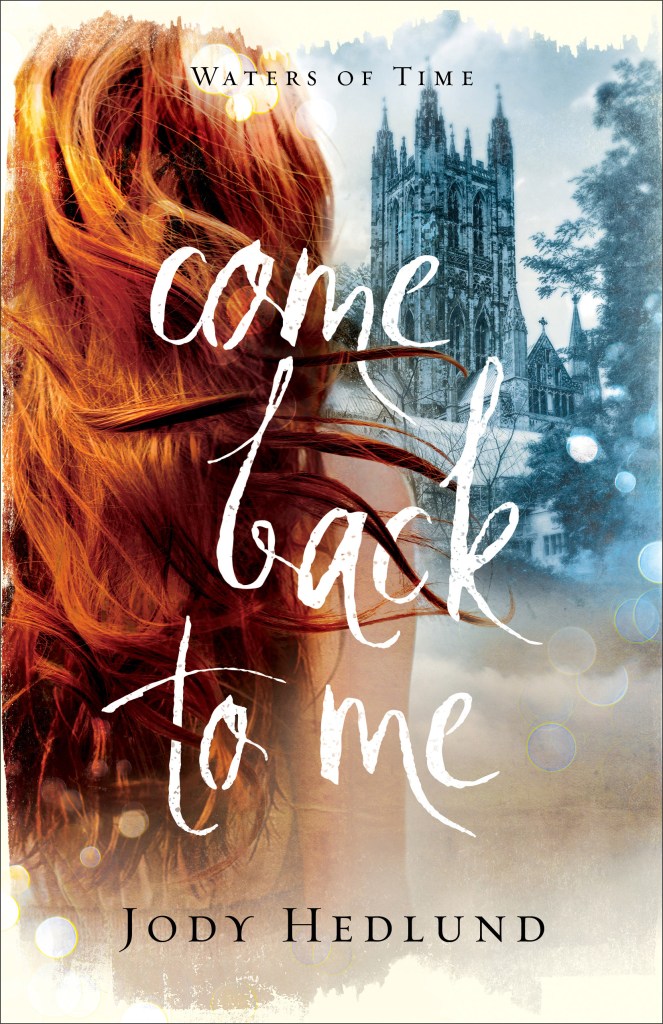
My name is Marian Creighton. I work in Connecticut, but since my dad unexpectedly fell into a coma, I’m visiting Canterbury England to be with him. He’s left me a mess of a mystery to solve. Not only that, but he seems to be in some kind of danger, and it’s putting me in danger now too.
Do you have an occupation? What do you like or dislike about your work?
I’m a research scientist who works in the pharmacokinetics department of Mercer Pharmaceutical’s research. I’m completely devoted to finding a cure for the rare genetic disease VHL, Von Hippel-Lindau syndrome, which killed my mother and is now slowly killing my younger sister. My dad has also been searching for a cure. But he’s also been obsessed with his research into what he calls “the ultimate cure” which he believes is related to the original Tree of Life and is found in ancient holy water.
Who are the special people in your life?
As I arrive in Canterbury to be with my dad, I know I have the support and help from one of my dad’s colleagues, Harrison Burlington. I also have a good friend in Jasper Boyle, one of my co-workers in Connecticut. And finally, my sister Ellen is one of my closest friends.
Interestingly enough, since ingesting a slight amount of residue of ancient holy water, I’ve been seeing a fiercely handsome man who lives in the past. Our paths seem to overlap, and I have a real connection with him.
What is your heart’s deepest desire?
My heart’s deepest desire is to find a remedy that can help cure my sister Ellen. However, I’m skeptical of my dad’s methods. I feel his long-time fixation with ancient holy water and its healing properties are both crazy and a waste of time, especially when I learn that he believes the holy water can make people cross time.
After having visions of the man from the past, I can’t deny that my dad’s theories have some merit and my determination grows to test his theories further. However, I soon realize I’m not the only one interested in his research. A break-in and a kidnapping convince me that I must take the plunge and follow my dad back to the Middle Ages in order to save both him and my sister.
What are you most afraid of?
As I prepare to leave for the past, I’m afraid I might not succeed in finding the holy water that might be able to heal my sister Ellen. I don’t want her to die, and need to take over my dad’s mission and locate more holy water for her in the past.
On the other hand, I’m interested in learning more about the man I’ve been seeing in my brief overlaps to the past. I’d like to learn more about him and the pain that haunts him.
Do you have a cherished possession?
My mother’s teardrop pearl necklace is very special to me. I put it on with me as I prepare to go into the past.
What do you expect the future will hold for you?
My “future” is really what will happen to me as I travel into the year 1381. I pray that I’ll be able to complete my mission to save my dad and sister. But I know I’ll face many challenges as I awaken in a new era that is unfamiliar to me. I can only hope that as I experience the past, I’ll be safe and be able to complete my mission quickly.
Thanks for allowing us to get know you a little better!
Jody Hedlund is the bestselling author of over 30 historical novels for both adults and teens and is the winner of numerous awards, including the Christy, Carol, and Christian Book Awards. Jody lives in Michigan with her husband, busy family, and five spoiled cats. She loves to imagine that she really can visit the past, although she’s yet to accomplish the feat, except via the many books she reads. Visit her at jodyhedlund.com.
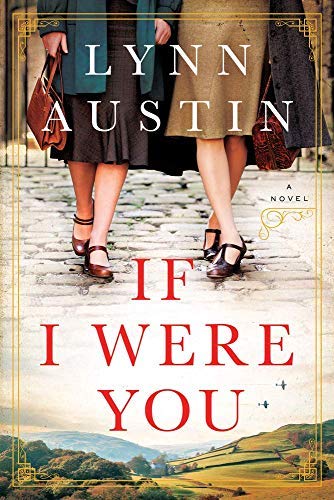
War changes people. We may be more aware of that today than in the past when many people tried to act as though it didn’t. WWII was one of the times when Americans returned home and vowed to leave it all in the past. However, as Lynn Austin says in her author’s note, that was not so easy for those living in England after WWII where war and devastation had landed on their doorstep. Reminders remained for years due to so many bombed areas.
This story is about the lives of two women who met as girls and became friends. It was a friendship that could not be in those days because they came from very different social classes. Eve Dawson’s mother was a lady’s maid and Audrey Clarkson was that lady’s daughter. But WWII changed British society, not to mention individual lives. Eve and Audrey became friends again during the war through the various ways they served their country and the losses and hardships they endured. No one was spared no matter how wealthy they might have been. In the process they learned just how strong they were. And then after the war events altered their lives once again and threatened to destroy their newfound faith in God.
I really liked how this novel was structured. It opens in 1950 with Audrey discovering Eve had impersonated her and taken over her life with the family of her deceased American husband. The mystery of how that could have happened and what they will do about it now that they are together again drives the story because going back in time we see Eve and Audrey as very tight friends.
I also loved the historical background and events, which is something you can always count on Lynn Austin to provide. If you liked the television series Land Girls, you will love this book. And I will say the book is better because it’s inspirational. We get to follow each girl on her spiritual journey during a time when no doubt everyone involved had his/her faith tested. Eve and Audrey are flawed characters, as we all are. They make mistakes, huge ones that affect not only themselves but many others. We can see how a web of lies can entrap someone, and what’s more compelling, when it seems as though the scenario cannot end well we learn with the character that there is always a new beginning for those who repent.
Historical novels that slip back and forth in time can be tricky to read. I’ve struggled with several. Sometimes the cast of characters is difficult to keep track of. Sometimes the motivations are confusing. Sometimes how the character changes because of the challenges he/she faces in each time period becomes disjointed due to flipping back and forth. Not so in this novel. It flowed so well and kept me turning pages.
I highly recommend this novel to those who enjoy historical fiction, and that’s everyone who reads Novel PASTimes.
I received an advanced copy free of charge from the publisher with no requirements for a review. All opinions are mine alone.
Known for the inspirational Celtic theme employed in most of her books, Cindy Thomson is the author of six novels and four non-fiction books, including her newest, Finding Your Irish Roots. A genealogy enthusiast, she writes from her home in Ohio where she lives with her husband Tom near their three grown sons and their families. Visit her online at CindysWriting.com, on Facebook: Facebook.com/Cindyswriting, Twitter: @cindyswriting, Pinterest: @cindyswriting and Book Bub: @cindyswriting.
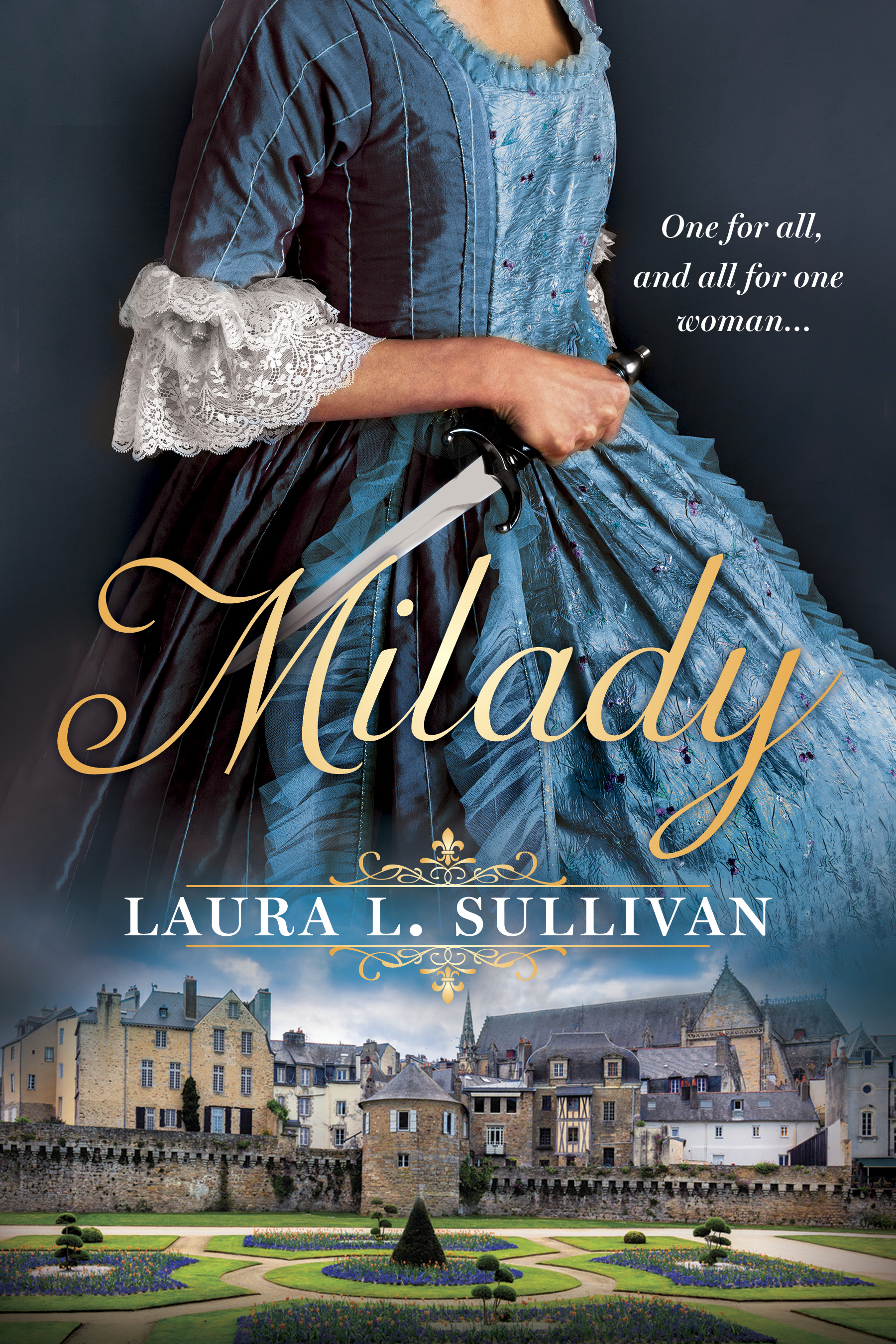
Milady thank you for sitting down and doing this interview. You are no longer a teenager, but now a woman who has seen and been through so very much. Some claim you are a devil, but others see you as a heroine fighting for justice. You have overcome life’s challenges against incredible odds, especially by those who call themselves The Three Musketeers. Hopefully anyone reading this they can see the true you.
Elise Cooper: How would you describe yourself?
Milady De Winter: I think I’m a pragmatist who hides a tender heart. I think I see the world for what it is even as I hope for better. In my person I am in the later stages of my prime. (At least, in this age, where a woman is ripe at 16 and stale merchandise by 29.)
EC: Describe Milady versus Clarice.
MDW: When you read my tale, you will meet me both as an ingenue and as a mature spy and assassin. Clarice – my younger self – knew a great deal about everything except herself. That kind of knowledge can only come from years of hard experience. As Milady I have learned bitter lessons, but I am a more complete person for that. The world sees me as hard and impenetrable, but in truth I’m like a porcupine, my devilish spikes protecting a soft belly. Young Clarice had yet to grow her spikes.
EC: Do you consider yourself a non-conformist?
MDW: In many ways I conformed perfectly to what was expected of me. It’s only that the expectations were much different than they are for most girls. I freely conformed to Maman’s expectations that I grow wise and strong. I did my best to conform to my father’s expectations that I become his beautiful tool and weapon. And when I served Cardinal Richelieu, I conformed to his idea of a perfect spy. But conformation is a mask, and when at last I ripped it off I discovered the woman beneath.
EC: Do you resent the laws that do not give any power to women?
MDW: How could one not resent such inequality? I will tell you how: rote and survival. Although I’ve seen great goodness and great evil in humanity, I’m left with one overwhelming impression of human nature: it is lazy. We tend to stick unquestioningly on the path our ancestors and circumstance set us on. We accept. Women are told to marry, to serve, to bear, and most do. Peasants are told to labor and obey, and they do. A rut is a comfortable place to be – the going is easy. That’s why the rut is there. Then too, most of the population is too concerned with surviving to concern themselves much with changing the system. Bellies cry louder than brains.
EC: You seem almost philosophical?
MDW: Well, you need only give a cake to the eldest of four children and see what portion the younger ones ever get. What a rare thing for a noble to say “I will share my money” or a magistrate to say “I will dole out justice equally to rich and poor” or a priest to say honestly “my every action is God’s will and not my own.”
EC: Have you ever regretted anything you have done?
MDW: No one who has even a modicum of happiness in their present lives should ever suffer with regret. I would not change a moment of my life even if I could. Any alteration and I might not have the threefold happiness I have now – my lover, my son, and my darling friend. I have done great wrongs and I have suffered great sorrows, but I would not undo them. Each moment in a life, good or bad, leads to the present moment. If I changed my past I would be another person.
EC: Did you ever truly love someone?
MDW: I love Denys deeply and truly, as a friend, an equal, and a constant in my life. His love is like rawhide, only growing stronger and tighter when battered by the elements. But I think you are really asking whether I loved George, or Olivier. The man falling off a cliff may truly believe he is flying… for a time. But oh, how glorious it feels before the laws of nature reassert themselves and the imminent ground proves one a fool! Of course I loved them. My love was a currency ill-spent, and it did not buy me what I hoped it would. But much as I would like with the cleverness of hindsight to say I never loved either of those two flawed men, it would be a lie.
EC: Describe Denys versus George versus Olivier
MDW: Despite any good characteristics, George and Olivier are fundamentally selfish. They lack the imagination or compassion or humanity or desire to envision anything beyond the compass of their own selves. Denys, however, sees himself as part of a greater whole, and is the better man for it.
EC: What happened in your youth-has it influenced you?
MDW: When a bone is broken, it is weak and useless for a while, no? But properly tended, when it heals it knits together more strongly than ever. The trauma of my youth crushed and rendered me. I lost the ability to trust. I lost the ability to love. But I found that when at last I healed enough to regain those precious gifts, I felt them that much more strongly for the people who were actually worthy of them. I could not love Denys half so well had my heart not first been twice shattered. Only when something has been broken do you understand its value.
EC: You were overheard saying that you have faced a life of “betrayal and vengeance, of hate and murder, of darkest peril.” Please explain.
MDW: The first two men I trusted not only let me down but turned on me completely. One ruined my life, the other tried to take it. But I’ve learned (though it took a very long time) that I don’t want to be defined by the wrongs done to me. I’m not saint enough to forgive the most serious slights, so I got revenge on both of those men. Now, they are behind me, and I hope all of those things are merely the story of my past, not the story of my life.
EC: Having been beaten in the convent-did it turn you off to religion?
MDW: I don’t think I know my own mind on the subject well enough to speak with any conviction on religion as a whole, but of one thing I am absolutely convinced: men are men and not god. The Church can be a bastion of charity and kindness. Or it can be a place of abuse and cupidity. Humans are flawed and faulty, and if the church is plagued with cruelty or greed, well, then, so too is every profession. I would not cease eating carrots because a farmer struck me.
EC: And you gave a “carrot” to those women in need?
MDW: As soon as I had the means I established my own convent as an example of what faith, hope, and charity can do for a woman. There, women of all classes work and enjoy the fruits of their labors. They learn, they help each other. For now, this freedom and equality are only possible in the cloister, guarded, as it were, by God. Perhaps one day women can live like this everywhere.
EC: If you could make a wish what would it be?
MDW: Once one is a mother one never gets personal wishes anymore! Every wish is for my son, that he grow up happy and strong and safe, that he find or create a world where no one need fear, and where those who stumble are lifted up. There is a tender place in my heart that holds out the most ludicrous hopes for myself and all of humanity.
EC: Anything else you would like to add that I have not asked?
MDW: At that rate the world would never change for the better. I can bear slander, but what example does that set for other women who read my tale as told by the Musketeers? They’ll feel hopeless and helpless. They’ll feel like no one will ever believe them when they tell their own stories. It is for them that I tell my true tale. So that they can tell theirs in turn.
If my tale accomplishes anything, I hope it gives readers the courage to find their own voices and tell their own stories – no matter how much time has passed. Don’t allow the story of YOU to be told by anyone else!
THANK YOU!!
Laura L. Sullivan is the author of five books for middle grade and young adult audiences. Milady is her adult debut. She lives in Florida with her son.
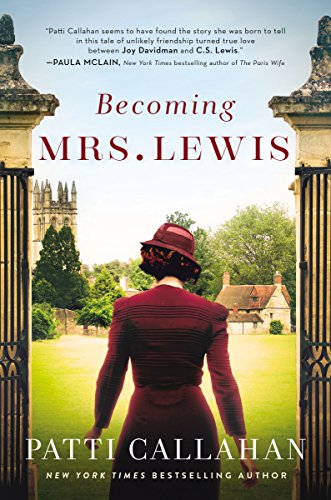
Historical fiction based on real historical people can be a tricky genre to pull off. I admire Callahan for taking on C. S. Lewis’s wife, Joy Davidman. I knew little about her, and I expect that is the case for many fans of C. S. Lewis. She brought Joy to life while exploring her complicated relationships and her chronic health issues. I loved the way Lewis is shown as well, the way he depended on Joy emotionally and enjoyed their philosophical and theological discussions. From what I can tell, Callahan treated these historical people fairly. In the author’s note she explains how she did her research.
That alone is enough to give this book a high rating, but the writing is seller, captivating, and caused me to read this book quickly. I love a novel that pulls me in like that. If this was made into a movie, I think it would be better than the new one on Tolkien.
Places lived: I was born and raised in Salina, Kansas, but now I’m living on a US air base in Leiston, England. Quite a change for this homebody.
Jobs: I’m the director of the Red Cross Aeroclub at Leiston Army Airfield, home of the US 357th Fighter Group. I organize refreshments and activities for the men, and make sure the club is a homey refuge from the war.
Friends: My best friend is Kitty Kelly, my fellow Red Cross worker. I love her perkiness and high spirits. I’m trying to make friends with pilot Adler Paxton—I find him so intriguing, and I think he needs a friend.
Enemies: I can’t think of any, but Rufus Tate, my Red Cross field director, is making my life rather miserable.
Dating, marriage: I haven’t dated much since Dennis Reeves broke his promise to me and I broke our engagement. I’d love to marry someday. Adler Paxton certainly appeals to me—he’s so chivalrous and mysterious—but he keeps himself at a distance.
Children: Someday! I adore children. My favorite part of my job is arranging activities for our American airmen and the local British children—parties and crafts and baseball.
What person do you most admire? Without a doubt, my great-aunt Violet, my namesake. She’s a missionary in Kenya, and I long to follow in her footsteps.
What, if anything, would you like to change about your life? With World War II raging, I can’t become a missionary overseas as I’ve always planned. In the meantime, I’m doing the best I can and serving overseas with the Red Cross.
How are you viewed by others? I hope others see me as compassionate and hardworking. Some see me as a goody-goody, but I don’t mind.
Physical appearance: The first thing people notice about me is my height—I’m six feet tall.
Eyes: Blue
Hair: Blonde
Voice: Awful—we Lindstroms all sing off-key.
Right- or left-handed? Right
Strongest/weakest character traits: My greatest strengths are compassion, diligence, and loyalty. My weakest traits—I’m beginning to see I can be self-righteous and judgmental. I’m praying the Lord will help me with that.
How much self-control do you have? Very good.
Fears: My greatest fear is that I’ll fail the Lord. Deep down, I also fear I won’t like being a missionary. Being away from my family here in England has made me so homesick. How will I adjust to living overseas for life?
Collections, talents: I’m very athletic—I run fast and I’m good at baseball, but I’ve never pursued sports.
What people like best about you: They like my enthusiasm and dedication.
Food, drink: I’ve never been a fussy eater, but I do miss my mother’s cooking.
Books: I don’t tell many people, but I love Western novels, especially Zane Grey. One of my favorite parts of this job is running the library in the Aeroclub.
Best way to spend a weekend: Working on an air base in the middle of a war means no weekends. The flyboys work almost every day, and so do I. But I don’t mind. I’ve come to enjoy my work.
What would a great gift for you be? Adler Paxton gave me the best gift ever—he introduced me to a movie star from my favorite Westerns.
When are you happy? When I’m with my family and friends. When I’m doing good work that benefits people and serves the Lord.
What makes you angry? When people show disdain for what is good and right, and when they hurt others.
What makes you sad? When children are lonely or suffering.
What makes you laugh? Children, my family, my friends. The airmen can be very funny, and I’m learning to enjoy their company.
Hopes and dreams: I dream of becoming a missionary overseas, although I’m beginning to wonder if that’s the best choice for me—and even if it’s what the Lord actually wants. I do know I want to serve him somehow.
What’s the worst thing you have ever done to someone and why? I’m afraid it happens in this story. I hurt the man I love and see a horrible sin festering in my soul.
Greatest success: I’m so pleased with how the Aeroclub turned out. Kitty and I were in over our heads when we arrived, but we’ve managed to create a club that’s welcoming and fun.
Biggest trauma: When Dennis Reeves broke his promise to me and I had to end our engagement. The mission board refused to send me overseas as a single woman. It’s painful to find your lifelong dream destroyed.
What do you care about most in the world? Children. I loved my time teaching third grade, even though I was reeling from my lost dream. I love how children are so open-hearted, and I love helping them understand a new concept.
Do you have a secret? I’m so homesick in England, away from my family. For someone who’s always wanted to live overseas, this is quite unsettling.
What do you like best about the other main characters in your book? Adler Paxton intrigues me. He’s so chivalrous and energetic and bright, and we share a love of Westerns. His Texas accent certainly helps! He’s also so mysterious—I sense deep hurt in him that draws me. If only I could help him.
What do you like least about the other main characters in your book? Adler’s mysteriousness also means he pushes me away, as if he’s protecting that wound.
Most embarrassing thing that ever happened to you: I was horrified when that awful Willard Riggs grabbed me and kissed me on the pier in New York when we were boarding the Queen Elizabethto sail to England. Thank goodness Adler, my cowboy hero, saved the day!
Burdened by his past, Lt. Adler Paxton ships to England with the US 357th Fighter Group. Determined to become an ace pilot, Adler battles the German Luftwaffe as the Allies struggle for control of the air before D-day. Violet Lindstrom wants to be a missionary, but for now she serves in the American Red Cross, where she arranges entertainment and refreshments for the men of the 357thin the Aeroclub. Drawn to the mysterious Adler, she enlists his help with her programs for local children. Adler finds his defenses crumbling. But D-day draws near. And secrets can’t stay buried forever.
Sarah Sundin is a bestselling and award-winning author of historical novels, including The Sky Above Usand The Sea Before Us. Her novels When Tides Turnand Through Waters Deepwere named to Booklist’s “101 Best Romance Novels of the Last 10 Years.” A mother of three, Sarah lives in California, works on-call as a hospital pharmacist, and teaches Sunday school. Please visit her at www.sarahsundin.com.





 Name: Violet Lindstrom
 Novel PASTimes