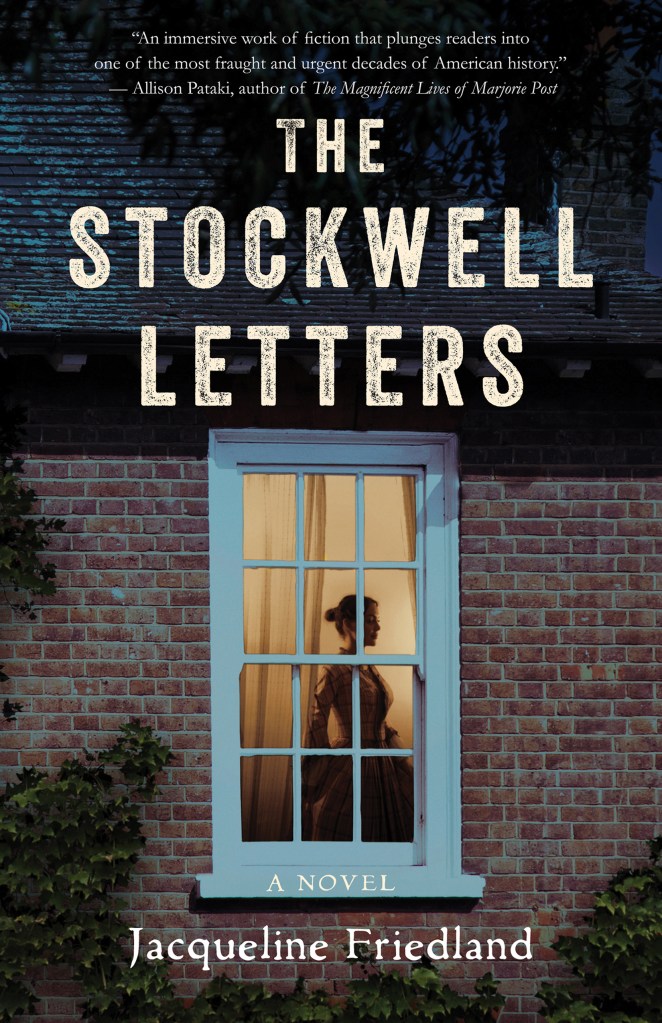
Meet Ann Terry Greene Phillips from Jacqueline Friedland’s The Stockwell Letters

Welcome to Novel PASTimes! We are pleased you stopped by today.

Our readers might not be familiar with you. Can you tell us a little something about yourself to get us started?

Certainly. My name is Ann Terry Greene Phillips. I was born in 1813 and lived all my life in Boston, Massachusetts. I was raised by my aunt and uncle on Chauncy Place after the untimely death of my parents. I lived with them until my late husband, Wendell Phillips, and I were married and moved together to a modest home on Essex Street. My life has been dominated by twin passions: my abhorrence for the institution of American slavery and my love for Wendell.

What do you think you learned from being raised by your aunt and uncle instead of your own parents?

I am lucky to have been born into a large family, such that in living with my aunt Maria and Uncle Benjamin, I was surrounded constantly by other family members as well. While I missed my own parents terribly, I never suffered for love or attention. Aunt Maria and Uncle Ben were staunch abolitionists, and growing up in their home, I was treated to many opportunities to become involved myself. For example, even as a young girl, I helped my aunt organize and sponsor abolitionist bazaars, where volunteers would donate crafted items to sell, and all monies earned would then be used to support the abolitionist agenda. Similarly, my aunt would bring me with her to meetings of the Boston Female Anti-Slavery Society, where I learned a great deal about the Cause and how to best use my own skills to help eradicate the horrid system of slavery that continued in the southern states. As soon as I was of age, I joined the BFAS as an official member and remained active in the organization throughout my life.

When did you know that Wendell Phillips was the person you wanted to marry?

I will never forget the day I met my Wendell. I had been tasked with accompanying my cousin Mary on a long ride back to her family’s home many miles from Boston. Mary was very much in love with her beau, William, at the time, and she convinced me that he and his friend, Wendell, should join us on our ride. I suppose I was there mainly as chaperone. William brought Wendell perhaps to distract me so that he and Mary could whisper to themselves for the duration of the ride. When Wendell arrived, I remembered that I’d seen him before, at an abolitionist rally that had turned violent. Though I could hardly have focused on the handsome bystander that day, while my friends were being threatened with arrest, I confess I had thought about him several times since. Once we were settled in the carriage and had the opportunity to converse, he began asking me questions about that rally and the Cause in general. I’m embarrassed to admit that I grew quite passionate in my answers, speaking at such length that I eventually had to apologize for droning on so long. Well. Wendell assured me that he’d never been more interested in anything than what I’d been saying. I knew in that moment, that I had found my match.

We were sorry to hear that you’ve had some health challenges. How has that been going?

Yes, a few months after I met Wendell, I began to display signs of a mysterious illness. I had no outward signs of illness, no fever, or cough, or even rashes. Instead, I had headaches of such magnitude that I could not rise from my bed. Similarly, my muscles ached and I experienced shooting pains throughout my body at random. There were weeks when the symptoms were so bad that I could not rise from my bed. Other times, I might experience bursts of energy and hope that I was cured. Over time, I began to understand that the symptoms would simply come and go throughout my life and that I must always take care with myself, or those symptoms would return with vengeance. It has been conjectured since my death that the condition from which I suffered was a severe case of Rheumatoid Arthritis. Sadly, this was not something for which there was any treatment in my time. We did, of course, try the remedies suggested, such as water cures, various herbs, and seaside retreats. Eventually, I simply learned to live with my condition and do everything I was able in spite of it.

Living in the mid-1800s, there have been many restrictions placed on you because of your sex. In some ways, it seems that being female may actually have helped you do the abolitionist work that has been so important to you. Can you talk about that?

I suppose we can all acknowledge now that women are conspicuously absent from much of the historical record. It’s not because we were not involved in the major historical events of our day. We simply had to restrict our participation so that it was behind closed doors. As you probably know, my husband, Wendell, became an active abolitionist and gave speeches throughout the country. He was often called “The Golden Trumpet of Abolition” for his unparalleled oratory skills, and his speeches have been memorialized in many published books. As his wife, let us just say I had great “influence” over the content of his speeches. Similarly, because people were so often focused on the men in the room, female activists such as myself were often able to complete certain tasks related to the Cause without being detected. Though we often had to force ourselves to be creative in our actions, in some ways, being female may have allowed us to be more effective than our male counterparts. 

I’ve heard a rumor that you don’t eat sugar. Can you expand on that?

The rumor is true, and the reason is quite simple. I refuse to sweeten my comestibles with the spoils of slavery. Cane sugar is one of the many crops that my brothers and sisters in the South have been forced to harvest, and until such time that sugar is collected by free people who are paid for their labor and treated fairly, I want no part of it.

I understand that you were one of the wealthiest young women in Boston at the time of your marriage, yet your home is quite modest. Can you tell us why that is?

Similar to my last answer. Yes, at the time that Wendell and I married, I may have been the single wealthiest young woman in the entire city, thanks to an outsize inheritance from my deceased parents. I saw no reason, however, to live in luxury while slavery persisted in this country, not when I could use my funds to help others. Wendell and I lived on what we needed, and the rest, we donated to help the enslaved, the marginalized, the downtrodden, with whatever they required.

Is there anything else you’d like people to know about you? 

I’ve said it before, and I’ll say it again. The efforts that I went to in order to advance the abolitionist cause and help the enslaved were never intended as a way to bring attention to myself. I simply wanted to ensure that our nation, which promised freedom and equality for all, was living up to its ideals. I hope that my work and achievements moved us closer to that goal, even if there is still quite a way to go. I also hope that people will read my story and decide for themselves.

Thanks for allowing us to get know you a little better!


Jacqueline Friedland is the USA Today bestselling author of four novels, including He Gets That From Me and That’s Not a Thing. A graduate of the University of Pennsylvania and NYU Law School, she practiced as a commercial litigator at the New York law firms of Debevoise & Plimpton, LLP and Boies, Schiller & Flexner, LLP. After determining that office life did not suit her, Jackie began teaching Legal Writing and Lawyering Skills at the Benjamin Cardozo School of Law in Manhattan and working on her first book during her off hours. Finally deciding to embrace her passion and pursue writing full time, she returned to school to earn her Masters of Fine Arts from Sarah Lawrence College, graduating from the program in 2016. Since then, she has published four novels and has been hard at work on new projects. Her books have received multiple awards, including the gold medal for fiction from Reader’s Favorite, and first place in both the NextGen Indie Awards and the American Fiction Awards. 

When not writing, Jackie is an avid reader of all things fiction. She loves to exercise, watch movies with her family, listen to music, make lists, and dream about exotic vacations. She lives in Westchester, New York with her husband, four children and two dogs who shed more than she ever imagined was possible.


An Interview with Thomas Bartlett from Sean Crose’s Novel Lexington

Question: It must be difficult to be a citizen of Boston in 1775.

Thomas: Everyone knows war is coming. The British government has shut down our port, troops are everywhere, and the Patriots essentially control the entire Massachusetts colony outside the city. 

Question: And who are these Patriots?

Thomas: They’re colonists who feel the government in Britain is treating its subjects here across the Atlantic unfairly. For instance, colonists can’t be represented by one of their own in Parliament. Why is that? Is it because the British government feels the colonists are second class citizens? I would argue it is.

Question:  Are you a Patriot yourself?

Thomas: No. My new wife, Mary – who I adore – is from a family loyal to the crown. She went against their wishes by marrying me, so to save her from further discomfort, I’ve promised I won’t take part in these dangerous events plaguing our time.

Question: That seems rather honorable, but you look uncomfortable discussing the matter.

Thomas: My brother, James, is a member of the Patriots. He lives outside of Boston, in the town of Lexington, where Patriots engage in military drills quite regularly. 

Question: And naturally you’re worried about him and feel somewhat disloyal.

Thomas: Very much so.

Question: What does James feel about you’re not joining his cause?

Thomas: He’d love for me to become a Patriot myself, of course, but James and I see the world differently.

Question: Could you explain?

Thomas: James is an angry man. Indeed, he’s long had a deep anger in him, why I don’t know. Perhaps it has something to do with our mother passing on at an early age from consumption. At any rate, I fear James sees these troubles before us as an outlet through which he can vent his rage through.

 Question: Have you addressed this matter with him?

Thomas: Most certainly…though I broach the subject gently and in offhanded ways. James must be dealt with delicately most times. For instance, if he finds himself angry at one of his sons – something he often does – I attempt to calm him down. He can be quite ferocious, James.

Question: Is he violent with his children?

Thomas: He’s not violent with anyone. At least not yet. What I mean by this is I suspect James will become physically cruel once war breaks out, that he’ll feel he has an acceptable outlet for his range. 

Question: That’s understandable. Some with anti-British settlements have been known to act in a violent and atrocious manner.

Thomas: Most certainly. And I fear James will soon engage in a violent and atrocious manner himself. There is honorable combat and there is wanton brutality. What will become of James if he acts brutally once war breaks out? What if he harms a prisoner, or worse, kills one? What will that say of his character? What will it say of his soul?

Question: You worry about his soul, then.

Thomas: I do.

Question: You’re a religious man?

Thomas:  A lifelong Congregationalist. 

Question: But not James?

Thomas: He feels he has no use for faith. In truth, it’s one of the reasons I keep nudging him to try to alter his ways, to not let his anger continue to consume him. I worry he’ll die in combat with his soul in an unclean state.

Question: That’s quite a heavy burden to carry around. 

Thomas: To be sure! My new wife, Mary, says that I’m now more concerned with James’ soul than I have any obligation to be.

Question: And why is that?

Thomas: Although my bookstore on Cornhill is, like all businesses in Boston, doing meagre business, Mary feels my place is there. She supports my going to see James, but feels I take such trips too frequently, and with no productive results to show for them. Plus, the colony is dangerous outside of Boston. Lastly, Mary simply feels like too much of my time and effort is focused on James rather than on matters at home. 

Question: Is she right?

Thomas: I shall be blunt. If James should die in the war without having changed his ways, I shall personally feel responsible.

Question: Does Mary know this?

Thomas: She seems to suspect. 

Question:  You say you’re a Congregationalist, yet your thinking concerning James doesn’t adhere to any Christian doctrine. James has free will, after all.

Thomas: As do I…and I’m willfully dedicating myself to saving James.

Question: Even at the expense of something as valuable to you as your new marriage? 

Thomas: …

Question: Do you feel that’s a righteous way to go about things, Thomas? 

Thomas: …

Question: Thomas?

Thomas: 


Sean Crose is the Writing/ESL Specialist for Post University, where he also teaches such subjects as literature, poetry, creative writing, and composition. On top of that, Crose is a Senior Writer for “Boxing Insider,” and a contributor to “The Berkshire Edge.” He lives in Connecticut with his wife, Jen, and Charlie the Cat.

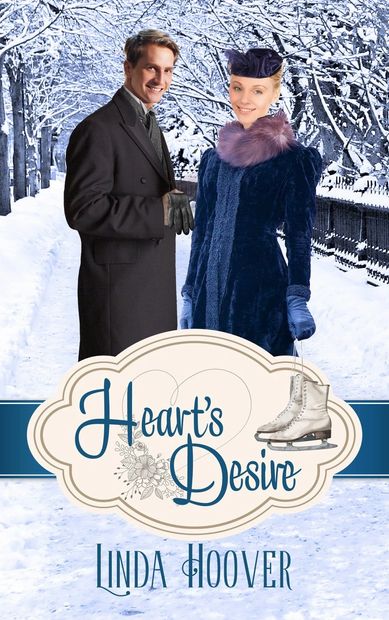
Meet Julia Phillips from Heart’s Desire, book one in the Heart’s Desire series by Linda Hoover

~Julia, I understand you’re a member of one of Boston’s old families. Will you tell me what that means for a single young woman?

Certainly. Girls and young women are taught how to organize and manage a household and the ins and outs of entertaining. Marriage is one of the few options for women, so parents do their best to see their daughters well settled. When they reach a certain age, daughters accompany their mothers to call on friends for tea and help with charity events. And of course, we attend dinners and balls.

~Are marriages arranged or do you get to have a say in who you marry?

I’m the youngest of four and Momma’s advice to all of us was, “Family and finance are the most important considerations when finding a husband.” Many times, it goes that way, but up until recently I was given more freedom. Because of that, I was shocked when I came home from shopping one day to find out Papa had made an agreement on my behalf.

~It sounds like you’re not happy about it.

I’m not. I would never consider marrying the man Papa betrothed me to and it just so happened I met someone that very same day who could be the one I’ve waited for. He’s not in our social class so I thought my biggest problem would be how to get my parents to see beyond that. Now I have a bigger challenge.

~Can you change your father’s mind? You can’t go against his wishes, can you?

I’ve tried to talk him out of it. He tells me I have no choice. I don’t want to cause a scandal for my parents, but I can’t marry that man. Somehow, I’ll have to change his mind. 

Three months later:

~Thank you for speaking with me again. I’m interested to know what your progress is.

With the help of friends and two of my sisters, I’ve gotten to know the young man I met in February. My heart was right about him. We’ve fallen in love, but my fiancée informed me that because of a blackmail threat, I have to marry him to save my family from being ruined. I’ve been praying every day. I know God has a plan and if I have to marry Lucien, God will be with me. 

~I’ll pray too, Julia. I look forward to seeing how it all works out.


Heart’s Desire Kindle edition is available now on Amazon.

The print format is coming soon.

ABOUT THE AUTHOR

Linda lives in west central Ohio with her husband, daughters, grandson, two cats and a dog. She earned a degree in psychology from Anderson University where she learned the voices in her head were actually characters from stories waiting to be told. 

Linda recently retired from the county’s public library system. It was the perfect place to indulge her love of young adult and Christian fiction. It was also a good place to build a long “To Read” list. These days she enjoys being a fulltime author in her home office, despite interruptions from family members and pets. Linda is a member of American Christian Fiction Writers. 

To learn more about Linda and the books she writes visit her website:

http://www.LindaHooverBooks.com

While you’re there, subscribe to her newsletter to keep informed about new books, author activities and giveaways. Or stop by her Facebook author page: www.facebook.com/LindaHooverAuthor

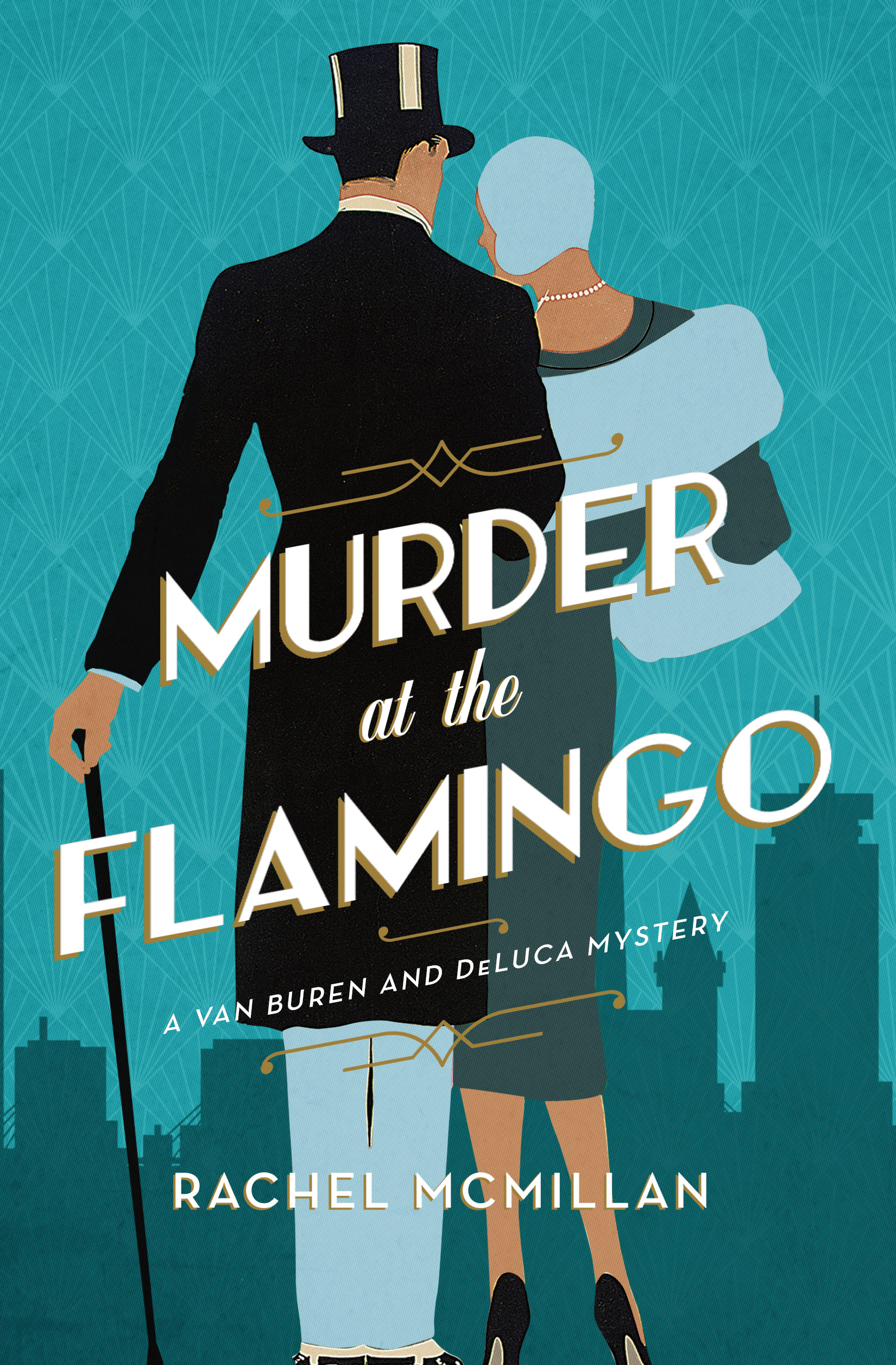
All About Reggie from Rachel McMillian’s Murder at the Flamingo

Flamingo9_8_1Name: Regina Van Buren (but I only get Regina from my mother’s bridge club. I go by Reggie).

Parents: William Van Buren and Patricia Van Buren

Siblings: an older brother who is a stock broker in New York, Richard.

Places lived: New Haven Connecticut, Charlestown/Boston

Jobs: debutante (is this a job? No wonder I ran away), secretary to Luca Valari

Friends: Hamish DeLuca, Nate Reis, Vaughan Vanderlaan ( though I currently would like to throw a glass of chardonnay in his face, we are still friends).

Enemies: every other socialite at my parents’ tea socials who wish Vaughan Vanderlaan was on their arm instead of hers.

Dating, marriage: Vaughan proposed out of nowhere, in front of an entire garden party.  Obviously, I slapped him across the face and then hopped the first milk train run to Boston. Haven’t heard from him since so unsure if we’re still dating.

Children: none

What person do you most admire?  I’d love to have the panache and guts of Myrna Loy. She and William Powell just run headfirst into mystery and mayhem and adventure—and she does it with such style.  But speaking to people of my personal acquaintance, I would have to say Hamish DeLuca.  He has these episodes of nerves, see. Sometimes I think he is even having a heart attack. They can stutter his voice and cause his hand to shake but he is still determined to overcome and to see us to the end of our first amateur sleuthing opportunity. I admire his loyalty to his cousin Luca, too. Even if Luca doesn’t deserve it.

Overall outlook on life: I want adventure! And romance! And dancing! Life is exceptional, isn’t it? All the interesting people you meet and the corners to be turned … and the friends to be had.  Why, just the past Summer I met two new friends—Nate and Hamish.  Hamish of course looks at me in a way Nate never would… but he’s a dear, dear friend. Something in the tingles I feel down to my toes when we dance at the Flamingo make me wonder just how dear a friend…

Do you like yourself? I would rather be inimitable me than anyone else in the world! I mean look at the adventures I am having!  Cannoli every day, an office in the North End, a glistening world of night clubs and enough mystery to keep me jogging in my oxfords around the cobblestoned streets of Boston’s North End during the day.

What, if anything, would you like to change about your life? I wish that I didn’t feel guilty about the amount of wealth I had while so many have had nothing. Of course, Roosevelt’s New Deals are going a long way and I mean to start volunteering at Mildred Rue’s Temporary Employment Agency: but I have never known loss or suffering. I wish there wasn’t such a great divide between those who have and those who have not.  I am seeing it more and more as I work in the office for Luca Valari while he gets his Flamingo Club up and running.

How are you viewed by others?  I suppose as another New Haven debutante.  As someone who ought to be more graceful than she is. I feel like a dandelion at the end of a long line of roses.  But I am trying. I know that Hamish thinks me trustworthy and Nate thinks I am smart and Luca thinks I have the taste and class to help him manage before his club’s opening.

Physical appearance:

Eyes: brown

Hair: brown. I try to set it in finger waves carefully but the Boston humidity can wreak havoc on all my efforts. And unlike home when there was always someone to do it for me, it’s gotten harder.

Voice: Hamish says I have a bit of the Brahmin about me. Crisp glass like Clara Bow or Katharine Hepburn.  Alto.

Right- or left-handed? Right.

Characteristics: I have freckles.

When are you happy?  The first bite of Mrs. Leoni’s cannoli, ripping up the dance floor with Hamish.

What do you like best about the other main characters in your book? I like Luca’s suave sophistication and the way he can Clark Gable a room, I like that Hamish has a good heart and a need to see everything right. Not to mention his loyalty to Luca.  I like Nate’s sense of humour.

What do you like least about the other main characters in your book? I don’t trust Luca Valari as far as I can throw him.

Thanks for visiting with us today on PASTimes, Reggie!

Rachel McMillan is a history enthusiast, lifelong bibliophile, and author of the Herringford and Watts series. When not reading (or writing), Rachel can be found at the theater, traveling near and far, and watching far too many British miniseries. Rachel lives in Toronto where she works in educational publishing and is always planning her next trip to Boston. Facebook: RachKMc1; Twitter: @RachKMc; Instagram: RachKMc.

Snip20180703_285

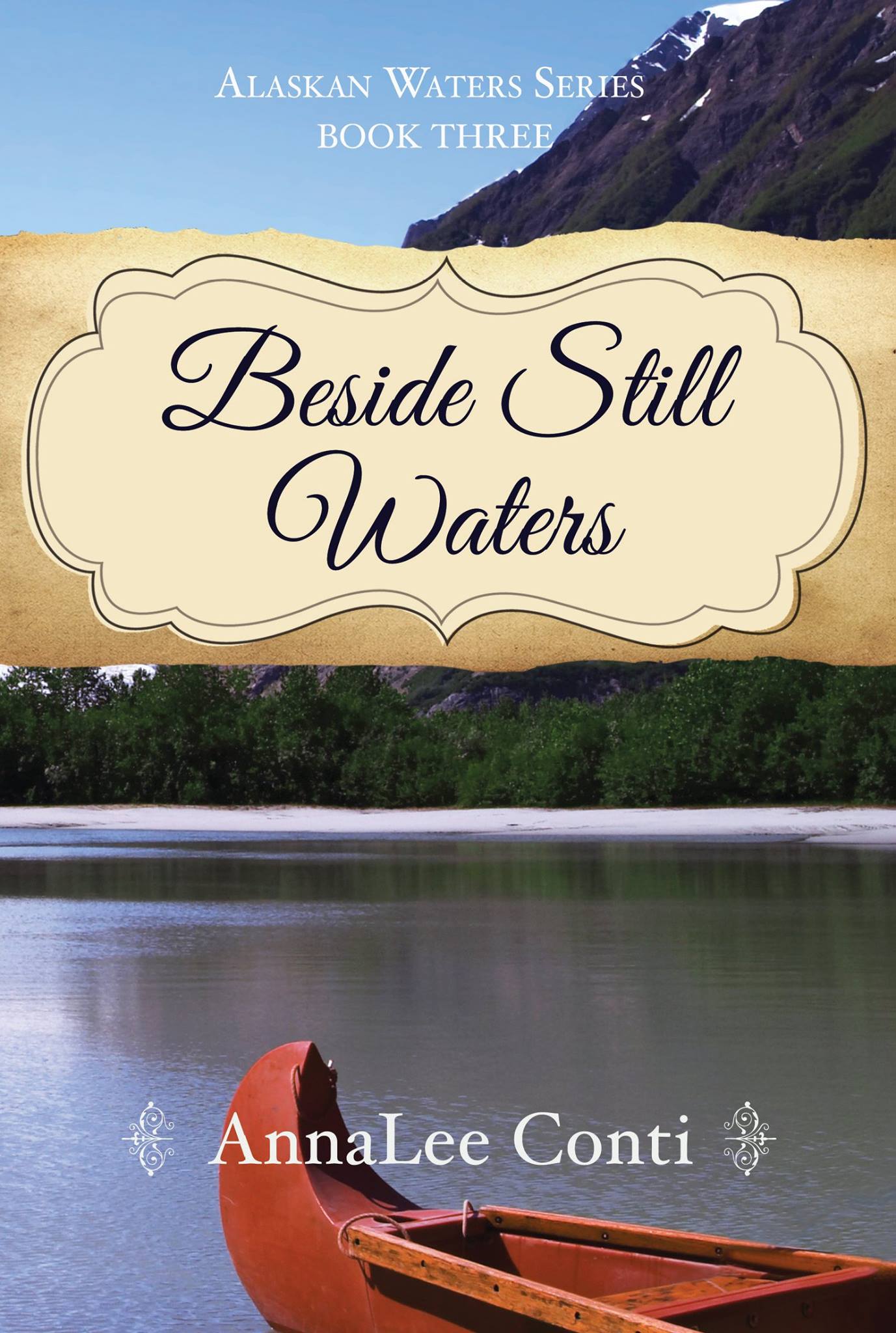
Meet Violet Channing from Beside Still Waters by AnnaLee Conti

19390578_1363467877068622_3142695911782601619_oMy name is Violet Channing.  Orphaned at a young age, I found myself tossed about by life’s turbulent waters when my Aunt Mabel who raised me died.
I always wanted to be a teacher, but my education was cut short by the untimely death of my Uncle Chester. He made poor business decisions, and as a result, my aunt lost their large Victorian house in a wealthy neighborhood to the creditors at his death.

In order to support us, I had to quit normal school at the age of 18 and take the only job I could find for an unskilled woman in 1915 Boston as a seamstress in a ramshackle wooden garment factory. With its accumulated dust and lint, it was a tinderbox. Fire was my greatest fear.

My wages only afforded Aunt Mabel and me a cold-water flat in a dirty tenement with stark chimneys that belched soot-ladened air. When Aunt Mabel got sick, we couldn’t afford a doctor.

“It’s just a cold,” she said.

But when she began to cough up blood, I quit taking a lunch to work so we could pay his fee. “Consumption,” he told Aunt Mabel. “Keep warm and rest.”

Then, he called me aside. “There’s nothing I can do for her. Her lungs are too far gone. She probably only has a few weeks.”

Heartsick, I quit my job to take care of her.

Now, she’s gone, and I have to figure out what to do with my future. I can’t bear to go back to that firetrap of a factory. At the corner grocery, I buy a few necessities and a copy of the Boston Globe with the last of my money. In the corner of the Classifieds, an ad catches my eye: “WANTED: a young lady to be a companion and tutor to a sick child.”

I read the fine print. No teaching credentials required. Room and board provided. Can this be the answer?

Before I grow fainthearted, I pen an application and mail it off to the address.

A week later, I receive a cream-colored envelope addressed to me in a feminine hand. Excitement pulses through me as I withdraw the note which requests that I come for an interview on Saturday at one o’clock in the afternoon.

Laying aside my mourning clothes, I dress carefully in my best, though slightly out of fashion, outfit. At the address, a three-story brick house in Cambridge, a gracious lady invites me in. Over tea and snickerdoodles, a treat I hadn’t enjoyed since my uncle died, Mrs. Henderson describes the job.

Her granddaughter, Jenny, was recovering from rheumatic fever. Her mother had died, and the girl’s father needs a nanny and tutor for her as he has to be away frequently on his job as a railroad engineer.

The job offer sounds too good to be true until she tells me where they live—in Whitehorse, Yukon Territory!

Uncle Chester had regaled Aunt Mabel and me with his reading of Robert Service’s “The Cremation of Sam McGee.” All I know about the Yukon is that it is wild and frigid. Do I have the courage to go there?

I think of my shabby apartment. I have nothing to keep me here, but will I be jumping from a city firetrap into frozen wilderness icebox?

I decide to take the leap. Sailing up the Inside Passage of Alaska on my way to Whitehorse, I fall in love with a dashing Yukon riverboat captain. But do we live happily ever after? That’s a secret revealed only in Beside Still Waters.


DSC00225Edit3ANNALEE CONTI’s experiences growing up in a missionary family in Alaska in the fifties and sixties provide inspiration for her writing. She has published numerous short stories, devotionals, articles, and church school curriculum on assignment for Gospel Publishing House, as well as four books. Beside Still Waters is the third novel in her Alaskan Waters Trilogy that tells the life and death saga of a Norwegian immigrant family who battles the beautiful but often treacherous waters of early twentieth century Southeast Alaska to find love and happiness in the midst of tragedies.

AnnaLee is also a teacher and ordained minister, who resides with her husband in the Mid-Hudson River Valley. Together, they have pastored churches in New York State for more than 35 years and are now retired. Learn more about AnnaLee and her books at www.annaleeconti.com and sign up for her blog at http://annaleeconti.blogspot.com/.