Meet Miriam from Jarm Del Boccio’s The Heart Changer

Welcome to Novel PASTimes! We are pleased you stopped by today.

Is there anything special about your name? Why do you think you were given that name? 

My parents gave me the name Miriam or Maryam in Hebrew. It means “beloved, but also rebellious and bitter.” I was the beloved first child, and although I was a girl, I was cherished. Maybe a bit too much? I was independent and selfish, and, to be honest, proud at times. But when Abba Father took ahold of my heart and squeezed it, well, bitterness came out. It had to happen before He could change my heart.

What does a day in Shunemtown look like for you? What do you like or dislike about your life?  

Ima gave me many jobs each day to keep me out of trouble. I liked sweeping the dirt floors in our humble home that served also as a stable for one donkey, a goat, sheep and four chickens. I didn’t like the chickens—they were messy and and stunk awfully! I brought them food and cleaned their pens. Ugh!

I also helped Ima prepare our simple meals of bread, dates, goat’s cheese and occasional lamb during the holy festivals. I loved our marketplace in the center of town, so when Ima asked me to buy some fruit and vegetables, I immediately obeyed!

Who are the special people in your life?  

My Ima and Abba —and of course, my baby brother Zacheus. Oh, and my friend Jonas, the widow’s son, whom Elisha the prophet brought back to life.

What is your heart’s deepest desire?   

I know I can be selfish and hard-hearted at times, especially when it comes to chores. Obedience isn’t easy, especially when I have to put aside MY wants and do the things my Ima has assigned to me. Although I love my baby brother, taking care of him is a full-time job. I can’t go out and play on the hills with Jonas and my other friends when I’m responsible for him. 

I wished—no—I prayed I’d learn to be unselfish, not always wanting my own way. But that meant Jehovah God had to discipline me because He loves me. But I wasn’t ready for what the future held—how it came about. I wanted my light to shine for Jehovah, no matter where I was, so when I was captured and sold to Naaman, the captain of the Syrian army, I learned the hard way. But, in the end, I made a difference in my master’s household. They now believe in the one true God!

What are you most afraid of? 

Losing my family and my home has been my greatest fear. They meant more to me than anything —well, except for our Abba Father in Heaven! But I held onto hope in those dark days of captivity. I discovered if you have hope, you have everything you need!

Do you have a cherished possession? 

Well yes, I have three. 

The leather collar from my pet lamb, who was taken for a sacrifice during our Day of Atonement. I wept bitterly, especially knowing he died for my sins. Just thinking about it now, years later, still makes me cry. 

Then, there was a simple blue cloth my ima wove that was used to swaddle me at birth. The blood stain brought to mind the pain my dear Ima bore to give me life. 

Lastly, a dried pomegranate flower that reminded me of our garden back home, which I miss dreadfully!

All three were lost when the soldiers destroyed our village years ago.

I’m sorry to hear that. What do you expect the future will hold for you?  

Although I’m not quite sure, but I think Commander Naaman is grateful for my part in his healing. Possibly, he will give me my freedom? I’ve enjoyed serving his wife, Adara, and would not want to leave her household if she still needs me. We’ve created quite a bond. Maybe someday I will marry my childhood friend, Jonas and have children of our own!

What have you learned about yourself in the course of your story?  

I can make plans, but God writes my story! He knows what is best for me—what will draw my heart to Him. I would choose an easy life, but I know myself—I would forget my God and go my own way if life was trouble-free.

Is there anything else you’d like people to know about you? 

Yes. I thought being separated from my family and taken captive to Syria would have been the worst thing that could happen to me, but I was wrong! Having a hard and unforgiving heart displeases God my Father and makes me miserable, knowing I have not let my light shine as I should. 

Thanks for allowing us to get know you a little better!

  • As a former educator and librarian, Jarm Del Boccio gives young readers a fresh perspective of history, offering them a real-life hero in her award-winning middle-grade novel, The Heart Changer.

Now, in her silver years, Jarm looks forward—not backward. With transparency, resourcefulness, and passion, Jarm helps maturing women flourish for God’s glory. www.jarmdelboccio.com

You can find a teacher’s guide and book trailer here: https://www.jarmdelboccio.com/my-books.html
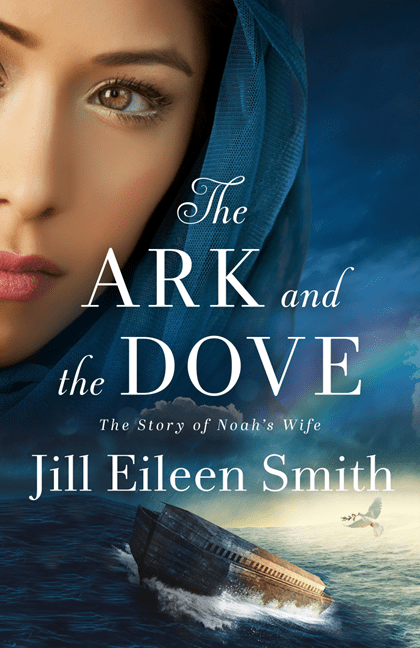
Meet Emzara from Jill Eileen Smith’s The Ark and the Dove

Amazon affiliate link used to benefit the blog.

Only Noah and his family know that God’s judgment is coming soon. He and his wife Emzara dedicate themselves to God’s command to build an ark. After years of preparing for the end of life as they know it, can they survive what lies ahead or will they simply relive the past they are trying to escape?

Thank you for speaking with us today. Would you tell us the meaning behind your name?

Thank you for the invitation to meet with me.

My name is Emzara. It means “mother of a princess” though I never had a daughter who became a princess. I am the mother of three sons.

What is your role amongst your tribe?

I am the granddaughter of Methuselah of the tribe of Seth, son of Adam. I am also the wife of Noah, grandson of Methuselah, though we have different parents. As Noah’s wife, I have found myself put into the role of mentoring my three daughters-in-law as we prepare for life aboard an ark that God told my husband to build. With all of the opposition to what we are doing, I find my faith in the Creator stretched, and I often seek Him in prayer. I know I could not survive the evil in this world or the unknown we are about to face without His help. Though sometimes I wonder if He hears me because I do not hear from Him as Noah does.

If you could choose, what role would you rather have?

I would rather not be living in such times as these. I am not a young woman. I did not bear my sons until Noah was 500 years old. (I’m a little younger than he is!) When I was a girl, the world was a kinder, simpler place. My friends believed in the Creator and we all worshiped Him. But as time has gone on, I’ve watched my best friend walk away from Him to create her own god, her own image. I never thought I would see so much evil.

What would you say is your best talent or skill?

Oh, I don’t know. I enjoy working with the plants, weaving, reading, but I suppose what I love to do best is listen to and enjoy my family. I’m not sure it is a skill, but I try to keep peace when our sons or daughters-in-law have conflict between them. Unfortunately, we often have conflict with Keziah, Ham’s wife. She is insecure, and I have a hard time understanding her, but I’m working on that!

We are sharing a meal together. Please tell our readers what is on the table.

Every meal has some form of bread, normally flatbread with sauces to dip it in. We eat dried fruits and nuts, and sometimes make porridge or stews of one kind or another. With all of the animals to feed, we often end up grabbing food to take with us. I do love those times when we gather around the table and eat something new one of the girls has created, and we all talk about the day. Life on the ark can grow monotonous, and even during the years we were building it carried much sameness. Food takes much time to prepare, but I think all of us would agree that we love bread and the cucumber sauces or fig and date spreads we can put on it.

Do you have a personal confidant? Someone to share your deepest thoughts and fears with?

I did. My mother was my confidant before the flood, peace be upon her. She did not live long enough to join us, but she believed in the Creator. She helped me when I struggled with the family squabbles we faced, especially with the girls. I was used to raising sons, not daughters, so having three so different women suddenly in my life was an adjustment. I love them dearly, but they do have their moments!

Has there been a moment in your life that challenged you beyond what you thought you were capable of enduring? If so, how did you meet that challenge?

Years after the flood when Keziah introduced idols into her family and Ham disrespected Noah…I’m sorry…it’s hard for me even now to think on it. To watch our youngest son and his entire clan walk away, never to return…I could barely breathe for the pain of it. Worse, when God confused the languages of our descendants, including Japheth’s family and we had only Shem and Sedeq and their descendants left who could understand us, I knew real despair. It was only when I could look into the future and know that God would send a Redeemer to save us from the sin inside of us that we couldn’t escape that I could hope again. I might not live to see that Redeemer, but He will come. And that is comfort.

What or whom do you love more than anything else?

That is a tough question. I know from the writings of Enoch that the Creator loves us, and in turn, He longs for our love. I suppose I do love Him, but I can’t see Him, so my love seems so inadequate. Noah has always been my dearest friend, and I’m very glad we have each other. I love our children, of course. What mother doesn’t? Though…there were those in the pre-flood world who did not love their children. Even sacrificed them to the Watchers. I never understood that. Even Keziah, hardest of all to love, is one I always tried to love when she let me. Sigh. Love is complicated, yes?

What or whom do you despise most?

The Watchers, without question. I wish the evil ones of the unseen realm had been destroyed in the flood for good. But they cannot die as humans can. They are liars, enemies of the Creator, and if I despise anyone, it is them.

What does the future hold for your family or tribe?

Only God knows. I am old now. Our people, those who came from our sons, Shem, Ham, and Japheth, are now living in remote places throughout the earth. Noah and I live with Shem’s family, and I suspect that God has blessings in store for them, though I don’t know what they are. My part in their story will end soon, but perhaps the Redeemer will come from one of Shem’s great-great grandchildren. It is my greatest hope.

What one thing would you like the people reading this to learn about your story?

Learn from us. Learn from the people of earth whom God judged for the evil in their hearts. Worship the Creator and no other. Repent of sin and don’t let relationships with people you love fall apart. Life is short, even for one who has lived as long as I have. People matter more than petty disagreements. Forgive. I think with these things the Creator is pleased.

Thank you for talking with us.

Thank you for asking me.

Jill Eileen Smith is the bestselling and award-winning author of the biblical fiction series The Wives of King David, Wives of the Patriarchs, and Daughters of the Promised Land, as well as The Heart of a King, Star of Persia: Esther’s Story, Miriam’s Song, The Prince and the Prodigal, and Daughter of Eden. She is also the author of the
nonfiction books When Life Doesn’t Match Your Dreams and She Walked Before Us. Her research has taken her from the Bible to Israel, and she particularly enjoys learning how women lived in biblical times. Jill lives with her family in Michigan.

Get Connected:
Jill Eileen Smith
www.JillEileenSmith.com
Facebook
JillEileenSmith
Twitter
@JillEileenSmith

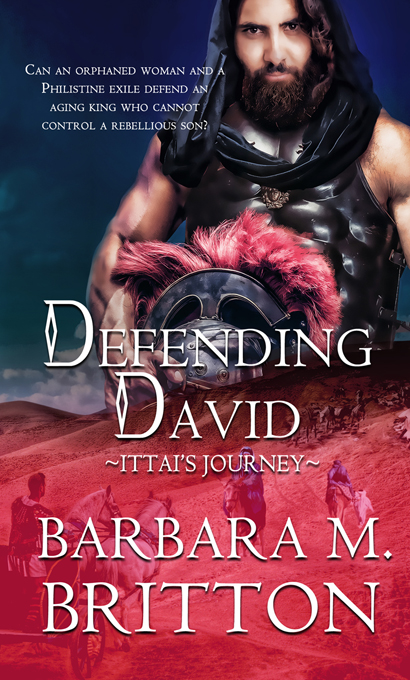
Meet Ittai the Gittite from Barbara M. Britton’s Defending David: Ittai’s Journey

Affiliate links have been used. As an Amazon affiliate the blog earns from purchases made through these links.

Ittai, why are you traveling so fast, I can barely keep up?

We have no time to waste on our trek to Jerusalem. My warriors and I must seek King David and receive a grant of exile in Israel. We cannot return to Philistia, or King Achish will end our lives. We would not bow down to his idols.

You know that they only serve one God in Israel, right?

The One True God. I know of Him because of King David’s teachings. I was a boy when King David found refuge in Ziklag. I heard hhttps://amzn.to/3AkE8GKim speak about his God. That is why I wouldn’t bow down to the King of Philistia or an idol. I was ready to face death, but God spared the lives of me and my men. It would have been an epic battle had the king of Philistia tried to take our lives. Exile was the easiest option.

Life should be easier in Israel for you?

Hah! I saw Prince Absalom in his chariot as I was traveling to Jerusalem. He set my skin to prickling. Why does a son of David need to honor a vow in Hebron when Jerusalem is a fine city with a tabernacle and priests? I think the prince has other things on his mind besides a vow.

I did not like the way the prince looked at Rimona. She is an orphaned young woman, and the prince has a wife. I feel something is brewing.

Brewing, like a stew of camel meat and squash?

No, like a rebellion. King David is not a brash, virile warrior anymore. He has aged as have I. But in my thirties, I am still able to fight a battle. The king, not as much. Time has slowed his steps. The king is sixty years old, maybe older. Can he unsheathe a sword in seconds? I think not. I will lay down my life for David. He took pity on me as a boy and gave me food. My mother and I would have perished without David’s generosity.

It sounds like you are ready to fight for King David?

The six-hundred warriors that I have with me will follow me into battle for David. If Absalom is seeking his father’s throne, then he will not take it by foul means. The Lord has given us safe passage through Israel, and he watches over us even now. Excuse me. I must go straightaway to the king.

Where can you find Ittai the Gittite in Scripture?

His arrival and allegiance to David can be found in II Samuel 15:15-22

Ittai is placed over one-third of the Israelite army. This is a BIG deal. II Samuel 18:2.

The story covers II Samuel, chapters 15-19:8.


“Defending David” book blurb:

When a quiet journey to Jerusalem turns tragic, newly orphaned Rimona must flee a kinsman set on selling her as a slave. Racing into the rocky hills outside of Hebron, Rimona is rescued by a Philistine commander journeying to Jerusalem with six-hundred warriors.

Exiled commander, Ittai the Gittite, is seeking refuge in the City of David. Protecting a frantic Hebrew woman is not in his leadership plan. Although, having a nobleman’s niece in his caravan might prove useful for finding shelter in a foreign land.

Rimona and Ittai arrive in Jerusalem on the eve of a rebellion. In the chaos of an heir’s betrayal, will they be separated forever, or can they defend King David and help the aging monarch control his rebellious son?


Barbara M. Britton lives in Southeast, Wisconsin and loves the snow—when it accumulates under three inches. She writes Christian Fiction from Bible Times to present day USA. Her Tribes of Israel series brings little-known Bible characters to light. Her novel “Christmas at Whispering Creek,” is a compelling, yet fun story, shining a light on breast cancer. Barbara has a nutrition degree from Baylor University but loves to dip healthy strawberries in chocolate. You can find out more about Barbara and her books on her website www.barbarambritton.com.

You can find “Defending David” wherever books are sold. Libraries can order the book, too.

Amazon and B&N Links.

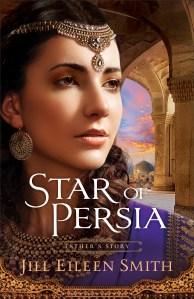
Meet Esther from Jill Eileen Smith’s Star of Persia

Tell us something about where you live.

I was born in Persia, though my family is of Jewish heritage. My people have been enslaved in Persia for over 70 years, though before I was born, the Persian king allowed us to return to Jerusalem to rebuild the walls of the city. My parents did not return, nor did my cousin Mordecai, who ended up becoming my adoptive father after my parents died.

Is there anything special about your name? Why do you think you were given that name?

I was born Hadassah, a common Jewish name. But when the king required all virgins brought to him at the palace, my adoptive father, Mordecai told me to use the name Esther, which means Persian Star. It was a wise decision for it allowed me to keep my Jewish heritage a secret.

Do you have an occupation? What do you like or dislike about your work?

I am the queen of Persia – a position that I never sought or expected. I am beginning to like the king, though he is a difficult man. I do not like that the only work I am called on to do is to entertain dignitaries’ wives’ at the king’s request, or simply be willing to allow him to show my beauty to others. I have no real work or value apart from that.

Who are the special people in your life?

My adoptive family, Mordecai and Levia were my life, along with their sons, my cousins. I also have a dear friend Jola. We were supposed to marry and live near each other and be friends for life, but she ended up betrothed to a boy I favored, while I ended up in the palace of the Persian king. 

What is your heart’s deepest desire?

I would like my freedom. I wish I could see my family whenever I liked, but my life is now at the mercy of the king. I am not able to go or do whatever I please. I would like fewer restrictions, as I used to have.

What are you most afraid of?

Displeasing my father. Displeasing my king. I supposed mostly I don’t want to dishonor God, though I do not know Him as my ancestors once did.

Do you have a cherished possession?

My adoptive mother’s ring. It is the only jewelry I brought with me to the palace. It is the only thing I wear unless I am called on to dress royally.

What do you expect the future will hold for you?

There is much intrigue in a palace, and while I might hope that I could be like other women who bear children and are the wife of one man who loves only them, that is not the lot that has fallen to me. I only hope that if I outlive the king, that my family and I will be safe to live out our days away from this place. I do not expect to hold any power if I become widowed.

What have you learned about yourself in the course of your story?

With God’s help, I can do more than I thought I could. I did not think myself capable of doing anything great, but God has given me courage beyond what I could have imagined. When called upon to act in a frightening situation, God’s grace gave me strength.

Is there anything else you’d like people to know about you?

I am no different than any other woman or any other Jewess. Who I am inside is a simple young woman who dreams things as everyone dreams them. I never sought glory or acclaim for myself or thought to do anything great with my life. But one thing I know. If God puts a person in the place where they can do much good, they must call on His help to do just that. To remain silent when by speaking we can save others, then our silence is wrong. We must draw on courage and grace to do what we can. What I thought impossible for me to do on my own, I found very possible to do by God’s grace.

Thanks for allowing us to get know you a little better!

Jill Eileen Smithis the bestselling and award-winning author of the biblical fiction series The Wives of King David, Wives of the Patriarchs, and Daughters of the Promised Land, as well as The Heart of a Kingand the nonfiction book When Life Doesn’t Match Your Dreams. Her research into the lives of biblical women has taken her from the Bible to Israel, and she particularly enjoys learning how women lived in Old Testament times. Jill lives with her family in southeast Michigan. Learn more at www.jilleileensmith.com.

Coffee Chat with Ariadne from Tessa Afshar’s Thief of Corinth

978-1-4964-2865-3We are sitting down this morning for a latte and chocolate cake with Ariadne of Corinth, who is the main character from the book Thief of Corinth. Ariadne has never tasted coffee or chocolate. How do you like your first taste?


Ariadne (swallowing a large mouthful): I am sorry. I am too distracted to conduct an interview. How did we survive in the first century without these delicacies?


Interviewer: I feel for you. So you are from the first century. Can you tell us a little about yourself?


Ariadne: I was born in Corinth, but when I was eight, my mother divorced my father and took my brothers and me to Athens to live with our grandfather. Like my grandfather, Athens was strict and conservative. Life became intolerable when my grandfather threatened to marry me to a cruel man. So I ran away to join my father in Corinth.


Interviewer: We are told you won an award. Could you tell us a little about that?


Ariadne: I ran the short race in the Isthmian Games and was declared a champion. The Isthmian Games were similar to the Olympic Games, though they were slightly smaller. In the footraces, men and women competed against one another. (Washes down an enormous mouthful of chocolate cake with a gulp of latte.) I fear I might not have managed that feat if we had this ravishing pastry in my time.


Interviewer: Was it common for women to participate in national games?


Ariadne: In Corinth where the Isthmian Games were held, there was more tolerance toward female athletes, though it was unusual for women of good families to participate.


Interviewer: Speaking of unusual, you open your story by mentioning that you are a thief. Surely that is not a common occupation for women of good family either.


Ariadne: That is true. I convinced myself it was the only way I could help my family. It is not a chapter of my life I am proud of. But I admit it was an exciting time.


Interviewer: You fell in love in the midst of difficult circumstances.


Ariadne: Didn’t one of your famous poets say that “the course of true love never did run smooth?”


Interviewer: His name was William Shakespeare.


Ariadne: He was a wise man. There were many obstacles in our path that had to be overcome. I confess, some of those obstacles were of my own making.


Interviewer: Speaking of wise men, what did you think of the Apostle Paul when you met him?


Ariadne: I did not like him. He annoyed me with all his talk of love being patient and kind. My brother Dionysius was very fond of him, which only annoyed me further. (The physician Luke wrote the story of how Paul met my brother in Athens in his famous tome called Acts.) In time, I came to realize that Paul was a brilliant man. I finally understood that I needed the unfailing love of his God more than anything.


Interviewer: What did you think of Tessa Afshar, the scribe who wrote down your story?


Ariadne (polishing off the cake): She can’t run to save her life, poor thing.


Interviewer: Why did you want her to tell your story?


Ariadne: I wanted the scribe to talk about the lingering wounds of divorce. My parents’ divorce left a mark in my life that affected me for many years. Because of the divorce, my father was absent from our lives, and my mother grew hard and distant. I tried to fill that void in my life by trying to win affirmation, affection, and admiration.  In spite of all my efforts, I found that love fails; it is imperfect and broken. Paul and my brother Dionysius taught me that the sole solution to all my struggles was God Himself.


To read Ariadne’s full story, look for Thief of Corinth by Tessa Afshar.

TESSA_A_FULL-235-3109650834-OTessa Afshar is the award-winning author of historical and biblical fiction whose work has received the prestigious Christy and Inspy Awards. Her novel, Land of Silence was chosen by Library Journal as one of top five Christian Fiction titles of 2016, and nominated for the 2016 RT Reviewer’s Choice Award for best Inspirational Romance. Her book, Harvest of Rubies was a finalist for the 2013 ECPA Book Award in fiction, and chosen by World Magazine as one of four notable books of the year. Tessa was born in the Middle East to a nominally Muslim family, and lived there for the first fourteen years of her life before moving to England and eventually settling in the United States. Her conversion to Christianity in her twenties changed the course of her life forever. Tessa holds an MDiv from Yale University where she served as co-chair of the Evangelical Fellowship at the Divinity School.


Meet Hannah from Jill Eileen Smith’s A Passionate Hope

Today we have the pleasure of meeting a character from the Bible, Hannah, as told in Jill Eileen Smith’s novel A Passionate Hope.

A Passionate Hope-Book CoverName:

My name is Hannah, which means “favor or grace”. Looking back on my life, I can say now that God has shown me both.

Parents:

My father is Hyam. My mother is Adva. I am their only daughter, though I have many brothers and sisters-in-law.

Siblings:

My brothers are Barukh, Chaim, Dan, and Gilad.

Places lived:

I have lived all of my life in the hills of Ephraim.


Jobs:

Job?

I do not understand this foreign word.

Work then:

Ah, work. My work is to do the daily tasks of womanhood—to care for our home, keep us clothed and fed and to meet my husband’s needs. My husband, Elkanah, is a Levite and I do what I can to help him carry out his duties in that role. I also sell some of my weaving in the marketplace. This helps my husband and makes me feel useful.

Friends:

My husband’s sister Meira used to be my closest friend, but once she married, we rarely saw each other. My sister-in-law Dana has become my only friend and confidant in our large and often contentious household.

Enemies:

I wish I had no enemies, but my sister-wife Peninnah has done her best to not live at peace with me. I find her presence trying.

Children:

I have no children—at least I did not in the early years. That is why Elkanah married Peninnah. But God blessed us later with Samuel and many more sons and daughters.

What person do you most admire?

I have always loved and admired my husband. To think that Elkanah loves me as he does…I never dreamed he would care for me.

Overall outlook on life:

Life…we are here such a short time and then we rest in Sheol. But I have always believed that one day I would see God. He is the one I long for, and when life has been at its worst, He has carried me through each struggle. What would I do without Him?

Do you like yourself?

I find this question confusing. We do not spend time thinking about liking ourselves. This sounds like someone who is focused too much on the wrong things. When I think of Adonai or Elkanah, I do not think of Hannah, though I will admit, sometimes I feel sorry for myself when Peninnah is near.

What, if anything, would you like to change about your life?

I would have chosen a path that kept our marriage between Elkanah and me alone. Sharing a husband is not God’s best and it has made life miserable for everyone at times.

How do others view you?

I have no idea what people think of me.

Fears:

I fear, rather I used to fear never bearing a son, never outliving my shame. But as I said, God has shown me favor and grace. I praise Him for His goodness to me.

When are you happy?

When I am alone with Adonai. I love to walk in the hills and pray. They say we should pray at the Tabernacle, and I try…but I feel more of God’s presence in the creation that surrounds me. I do love to sing in worship with the serving women in Shiloh though.

What makes you angry?

I grow angry at the corruption of the priests in Shiloh—sometimes to the point of despair. When will God answer? When will He restore worship to what it is meant to be? Yet there is nothing to be done but wait and pray.

What makes you sad?

I will admit, every time Peninnah birthed another child, I wanted to run far from home. The joy over her success reminded me all over again of my failures.

What makes you laugh?

Elkanah. We manage to find humor in the strangest places. Sometimes you have to laugh at yourself or you will see life as too difficult.

Hopes and dreams:

I hope my children grow up to follow Adonai all of their days.

Biggest trauma:

Facing the fact that I had to release Elkanah to marry another woman. I couldn’t let him know how hard that was for me, but a piece of my heart broke away that day and I never felt the same again.

What do you care about most in the world?

Adonai. Pleasing Him. And then…having children consumed me until it no longer did.

Do you have a secret?

Yes, but I can’t share it, lest it stop being a secret.

Thank you, Hannah, for giving us this glimpse into your life.

Smith_JillEileen_Jill Eileen Smith is the bestselling and award-winning author of the Wives of King David, the Wives of the Patriarchs, the Loves of King Solomon, and the Daughters of the Promised Land series. Her research into the lives of biblical women has taken her from the Bible to Israel, and she particularly enjoys learning how women lived in Old Testament times. Jill lives with her family in southeast Michigan. Learn more at www.jilleileensmith.com.

Meet Jochebed, Mother of Moses

9781634099608-2

Novel PASTimes: Thank you for joining us today.  Would you begin by telling us how to pronounce your name?

JOCHEBED:  My people pronounce it yo-KEHV-edh although many people say jok-uh-bed.

Novel PASTimes: Do you have a preference?

JOCHEBED: Not as long as it is said with kindness.

Novel PASTimes: Tell me about yourself.

JOCHEBED: I’m an ordinary Hebrew slave. Why are we doing this interview? Am I in trouble with the overseers? Are you a spy? Will my words be reported to Pharaoh? My back is already scarred from the times I haven’t made my weaving quota.

Novel PASTimes: You are in no danger, but you are not ‘ordinary’. You are considered a remarkable woman.

JOCHEBED: I can’t imagine why. I’m just a basket weaver although my mother taught me the secrets to perfect waterproofing.

Novel PASTimes: And…

JOCHEBED: And I’m a mother—three children though only two know me. My youngest boy, Moses, has lived at Pharaoh’s palace since he was weaned. I-I never see him except from afar but I’m grateful he lives. When he was still with me, I’d whisper the stories and songs of our G-d into his little ears and pray he’d remember them someday.

Miriam, my oldest, gives me grey hair with her daring ways, but have you heard her sing? Her voice brightens even the days of misery and my boy Aaron could persuade the Nile to flow backwards. He has such a way with words!

Novel PASTimes: Who is your role model?

JOCHEBED: My mother. Always my mother. Still—though she lies buried beneath the sands.  Her words and her faith taught me how to trust G-d and how to listen for His voice. I try to teach that to my children.

Novel PASTimes: The story of your life—would you call it a tragedy or a mystery or what?

JOCHEBED: Sometimes it was a comedy, like when the goat ate my quota and sometimes it was a tragedy, but I think overall I’d call it a story of victory.

Novel PASTimes: Really? How?

JOCHEBED: Victory against fear. Victory over prejudice. Victory in spite of doubt.

Does that sound like I’m taunting Pharaoh?

Novel PASTimes: Not at all. I assure you the pharaoh will never know what you share here.  Jochebed—did I say that correctly? What do you think about when you’re alone?

JOCHEBED:  In a slave village, that doesn’t often happen. Hmmm. I think of seasons—how the seasons of the year change what we do and eat and fear. The seasons of life change people—who and what’s important to them and how they treat others.

Novel PASTimes: Change. What would you change about your life?

JOCHEBED: Everything. Nothing.

Novel PASTimes: Excuse me?

JOCHEBED: Like I tell my children, if you change one thing, everything else changes. Life would have been easier if I was not a slave, my husband not sent away, and my son’s life not endangered. But! I would not trade the knowledge that the Almighty, the G-d of my fathers heard me, a simple slave! He heard my prayer and saved Moses’ life. I am blessed among women.

Novel PASTimes: The book’s title is Slender Reeds: Jochebed’s Hope. What is your hope?

JOCHEBED: I’m in a book? Is that like a scroll?

Novel PASTimes: Please, Jochebed?

JOCHEBED: My hope is that my prayers as a mother and the stories of our people’s faith will be woven like slender reeds—strong reeds—through the lives of my children—even Moses—and bind them to the Almighty.

About Author Texie Susan Gregory:

5Q3A9527

Studying why people act and respond the way they do fascinates me. I hold a master’s degree in School Counseling and a Master of Religious Education.

North Carolina born and bred, I currently live in Maryland with my husband, a PTSD therapist. Our two adult children live on opposite coasts—one near Boston and one near Los Angeles. I’m thankful they are on the same continent!

Jochebed and I would love to hear from you.

www.texiesusangregory.com

Facebook Texie Susan Gregory

If you’d like to read more of Jochebed’s story, please visit your local bookstore or

Slender Reeds: Jochebed’s Hope Amazon Books

Slender Reeds: Jochebed’s Hope Barnes & Noble Books

Fictional Character Interview: Helena, Her Encounter with Jesus Terrified Her

Today we will meet Helena, a 1st century biracial character from Regarding Tiberius by Bartholomew Boge.
51uaF0lNwdL._AC_US218_
Novel Pastimes: Thank you for taking time to be with us today, Helena. First off, what language would you prefer we conduct this interview in?
Helena: I am perfectly fluent in Greek, Latin, and Persian and have a basic conversational fluency in Aramaic and Armenian. I know a few basics in a handful of others. Will Greek work for you?
Novel Pastimes: Certainly.  (the rest of the interview is translated from Koine Greek). Let’s begin with your name: Helena Mithridates Kleopatra.
Helena: My first name is, of course, an homage to the great character of Greek legend and history, Helena of Sparta. It is said that she was so beautiful that hers was “the face that launched a thousand ships,” which, of course, refers to the siege of Troy by the forces of Menelaus when Helena was stolen from him. Now I do not claim to have such beauty, as scarred and lean as I am, but I do share Helena’s experience with the arts of war, as it is supposed that she trained with the men as a Spartan warrior in her youth.
Novel Pastimes: And the middle name, “Mithridates”?
Helena: That is my family name. I am from the line of Mithradates VI, the last great Pontic king to defy Roman rule in Asia Minor. After his demise, all of his descendants were to have been executed by Roman law. An exception was made in my case, obviously. In fact, rather than rebel against Roman rule as my ancestors have, I have logged years of service in Rome’s Third Gallic Legion as a translator and transcriptionist of Persian documents, mostly receipts for goods purchased by the legion.
Novel Pastimes: “Kleopatra”?
Helena: That was just a pet name given me by my father, Nikophoros, King of Eupatoria, which means “Glory of Her Father.” I am of Ethiopian and Persian descent, and have no relation to the Ptolemaic Queen Cleopatra who ruled Egypt.
Novel Pastimes:  So you are of royal descent?  That explains your high level of education.
Helena: Indeed. My parents bore no male heirs, so I was thoroughly trained in law, rhetoric, history, geography, and the arts of war—all critical fields of study for a would-be monarch.
Novel Pastimes: And languages?
Helena: That was more a family tradition than preparation for rule, although being a polyglot holds many advantages for a queen. In fact, my ancestor, Mithradates VI, was said to have been fluent in all 26 languages of his realm.
Novel Pastimes: Where were you born?
Helena: A small principality called Eupatoria, a city-state under Roman jurisdiction in the province of Pontus (editor’s note: modern north central Turkey). The Romans sacked it in 20 AD, smashing every structure to rubble and killing the entire population. Today only ruins remain.
Novel Pastimes: The Romans destroyed your homeland, yet you served in their legions?
Helena: Not by choice, initially. I was the only member of the royal family spared, and one of only a handful of citizens left alive after the slaughter. A centurion, Tiberius, orchestrated my clemency and took me as his slave.
Novel Pastimes: This is the same Tiberius you wrote your account about?
Helena: Yes. We had met once, prior to the sacking of Eupatoria, when I was a princess and heir-apparent to the crown. He took me as a war captive, but generally treated me more like a colleague than a slave. He was a brilliant tactician, Tiberius. He made a way for the governor of Bithynia, Pontus Pilate, to negate my slave status and restore my Roman citizenship.
Novel Pastimes: Wait—THE Pontus Pilate? The one who had Christ crucified?
Helena: The same. Before he became governor of Judaea, he was first given command of a lesser province in Asia Minor, Bithynia, just west of Pontus. I’ve had several run-ins with him over the years.
Novel Pastimes: Did you ever meet Jesus of Nazareth?
Helena: Twice. Once before his crucifixion, once after.
Novel Pastimes: What were your impressions?
Helena: I was never more terrified of another human being in all my life.
Novel Pastimes: Terrified? Why?
Helena: I’m a strategist at heart. Being a woman, I am usually underestimated as such, and I typically benefit from mistakes made by adversaries who don’t take me seriously. Jesus of Nazareth was different: he knew me to the core of my being, even my every thought and feeling. How can one ever hope to best a foe who knows your every whim?
Novel Pastimes: You were adversaries?
Helena: Not in a military sense, but in an emotional and spiritual one. He cut through my every defense and exposed my deepest, darkest longings for vengeance. It was unsettling. I avoided him after our first meeting as best I could, but was confronted by him once again, after his resurrection.
Novel Pastimes: And how did that go?
Helena: Better. (smiles)
Novel Pastimes: You are from a royal family in Asia Minor, yet you have a very dark complexion.
Helena: My family line comes from Ethiopia and Persia. I bear more a resemblance to my African ancestors.
Novel Pastimes: You mentioned scars earlier.  What from?
Helena: Some are from minor hand-to-hand combat wounds, simple scratches. The worst are on my stomach, where I bear disfiguring scars from being mauled by a Caspian tiger in my youth.
Novel Pastimes: You survived a tiger attack?
Helena: I was wearing leather armor at the time, which is the only reason I’m still here to engage in this interview. My private security detail managed to dispatch it before it could finish me off, but I am fortunate to be alive. As are my men—my father was quite displeased that none of them got so much as a scratch while his only daughter was bloody and torn open like a sack of grain!
Novel Pastimes: Well, Helena, thank you very much for your time.  One final question; what would you say is your best quality, aptitude, or gift?
Helena: The ability to think rationally under pressure. That may sound like an incredible gift, to think with perfect logic and clarity under stress, but rest assured that it’s often as much a curse as a blessing. On more than one occasion it has been a horrible quality to possess—particularly when the stakes are life and death.
Thank you, Helena, for this fascinating look at the life of a woman in Biblical times.
image3Originally known for applying his creative vision to the composition of Christian art-rock epics, Bartholomew Boge has found a new niche writing historical fiction. Whether it be through music or literature, Bartholomew challenges his audience to examine the depravity of man and the redeeming grace of God, bought with the shed blood of Christ.

In his debut novel, Regarding Tiberius, Bartholomew explores questions of justice, mercy, unconditional love, and forgiveness. Set during the time of Christ, this fast-paced story moves through several locations within the Roman Empire, including Italy, Turkey, Egypt, Syria, and Judea. Confronted with the brutal death of her parents and the destruction of her kingdom, Bartholomew’s female protagonist, Helena Mithridates Kleopatra, undertakes a clandestine mission to avenge the slaughter of her people by assassinating the Roman commander who ordered their pitiless liquidation. Success would mean death for herself, her lover, Tiberius, and her only son, Marcellus. Will she do it? Should she? Which is more righteous–justice or mercy? How can one forgive an unforgivable crime, or receive forgiveness for one? Helena must answer these timeless questions along the way to fulfilling her bloody destiny.

Bartholomew Boge lives with his family in northcentral Wisconsin.

Read Reviews of REGARDING TIBERIUS:

https://www.amazon.com/Regarding-Tiberius-Helena-Mithridates-Kleopatra/dp/0692590684

https://historicalnovelsociety.org/reviews/regarding-tiberius/