Amazon Affiliate Link Used Helps Support this Blog
Welcome to Novel PASTimes! We haven’t seen you around Cooper’s Inn before. Where are you from?
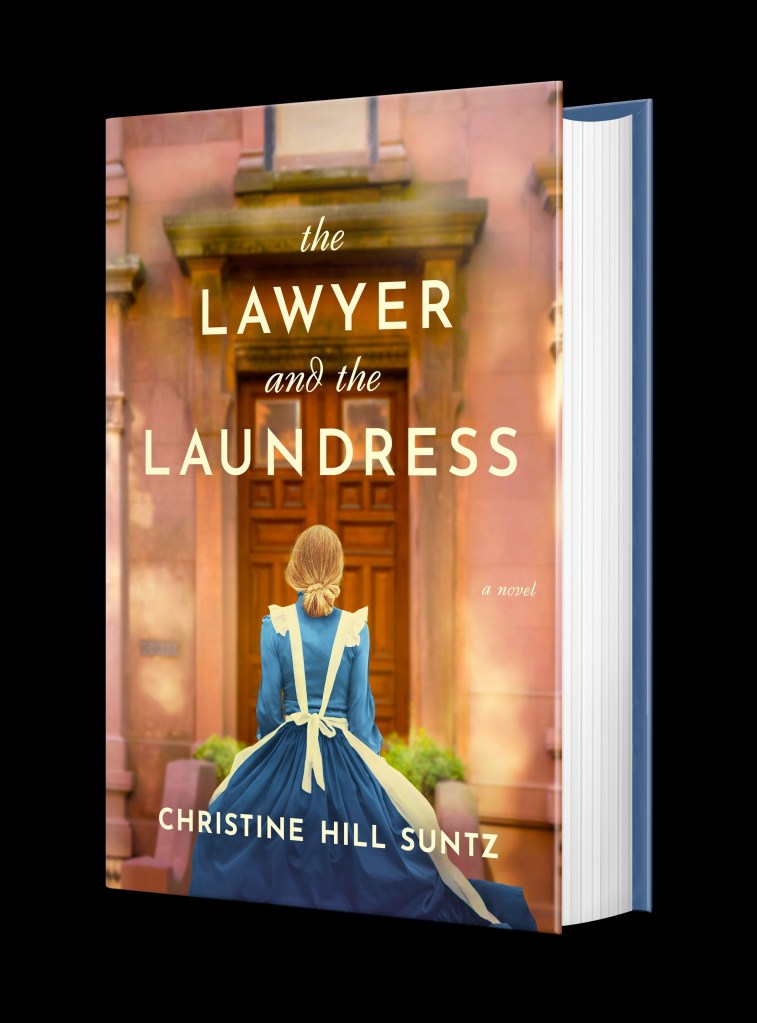
I’m Sara O’Connor, the new laundress. I’ve always lived here in Toronto, but this town has changed so much. When I was a child, people called it “muddy York”. The buildings were rough and the streets nearly impassable after a rain.
It’s 1837 now, and Toronto is a city. New settlers come through every day. Farms are springing up in the wilderness that used to surround the city. Cooper’s Inn is a busy place. I suppose that’s why Mrs. Cooper hired me.
I thought I saw a little girl here a moment ago. Is she your daughter?
Oh, heavens, no. That was Evie. She takes lessons with the Cooper girls, but they exclude her every chance they get. She visits me instead, and I’m happy to see a friendly face. We have to be careful, though. Mrs. Cooper saw me talking to her and gave me a warning. Doesn’t want a girl from a fine family mixing with the riffraff from Irishtown like me, I suppose.
Evie’s father has it out for me, too. He’s forbidden her from speaking to me. Can you imagine? What does he think I’ll do, force her to do my work? I’m the one friend she has here, and he wants to take that away.
He’s a lawyer, so I shouldn’t be surprised. He lives by the rules and doesn’t understand a young girl’s heart. I’d like to go right up to him and make him open his eyes, but I can’t risk losing my position.
Still, I won’t push Evie away. I guess I see in her the little girl I once was. We neither of us knew our mothers. We even love the same books. Have you read Ivanhoe?
No, I can’t say that I have. I don’t mean to offend, but how does a laundress come to read Ivanhoe? You don’t sound like you’re from Irishtown, either.
Well, the truth is, I didn’t always live in Irishtown. In fact, I might have more in common with Evie than anyone realizes.
I could earn more money as a lady’s maid or even a governess, but I have my reasons for working as a laundress. There are people I’d rather not see again, people who let me down when I needed them. I wouldn’t go back to that world, even if I could.
That’s why I keep to myself here at Cooper’s Inn. Or, at least, I did until Evie came along. Now I’m not sure what to do. Someone has to make her father understand her, but it can’t be me. I have too much at stake.
You see, I need to money to take care of Granny. She was a laundress, too. She taught me the trade and gave me a home when I had nothing. Now, it’s my turn to take care of her. She’s all I have left.
Thanks for taking the time to chat with us today. Before we go, any idea what’s happening in the common room? It’s full to the brim, and those men sound angry.
Meetings like this are happening all over the colony. No surprise, I say. Hundreds of newcomers arrive here, hoping for a better life, but the same systems that held them back in Britain exist here. A few wealthy families hold all the power and run our colonial government. The elected assembly can do very little to sway the Queen’s appointed governor. They’re frustrated.
So you’re a rebel, then?
No! I’m just a laundress who lives among the poor. I see how they struggle. You won’t repeat anything I’ve said, will you?
Your secret is safe with us, Sara. It sounds like you have some big decisions ahead of you. Good luck!
Christine Hill Suntz knew she wanted to write novels the day she finished Anne of Green Gables, and she’s been lost in her imagination ever since. Her love of language led her to study French and German and pursue a graduate degree in Comparative Literature before finding a home teaching high school French. Her work has won numerous prizes, including the 2022 ACFW Genesis competition.
Christine lives in Ontario on a hobby farm with her family, a flock of chickens, one attack rooster, and a herd of entitled goats. When she’s not writing or teaching, she enjoys trying out historical recipes on her (mostly) willing family.
Instagram: @christinehillsuntz Facebook: Christine Hill Suntz Author
Amazon Affiliate link used helps support this blog.
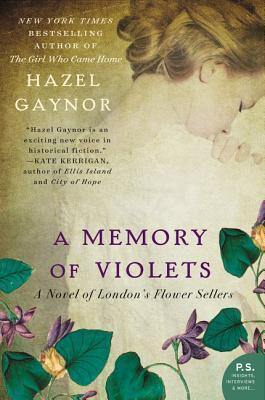
This book was first published 10 years ago, and I missed it. When the audiobook came up for sale recently on Chirp, I grabbed it. As the subtitle says, it’s a novel of London’s flower sellers. Two poor orphan sisters who sell flowers on the streets are separated due to the dangers 19th century children faced being homeless.. They grow up in very different circumstances. It’s a story that is both heart breaking and heart warming.
Tilly, who also grew up enduring family tragedy, goes to work as a type of house mother for girls who work making fabric flowers. She finds letters in her room written by one of the orphan sisters who had lived there and never gave up hope of finding her sister. The way these stories come together was not what I expected but satisfying all the same. Hazel Gaynor is a wonderful storyteller. I have loved all the books written by her that I’ve read. I think you’ll like this one too if you haven’t read it yet.
How did a failed belligerent Dutch painter become one of the greatest artists of our time?
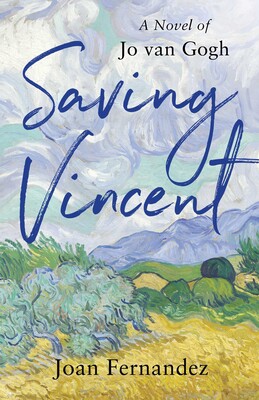
In 1891, timid Jo van Gogh Bonger lives safely in the background of her art dealer husband Theo’s passion for selling the work of unknown artists, especially his ill-fated dead brother, Vincent. When Theo dies unexpectedly, Jo’s brief happiness is shattered. Her inheritance—hundreds of unsold paintings by Vincent—is worthless. Pressured to move to her parents’ home, Jo defies tradition, instead choosing to open a boarding house, raise her infant son alone, and promote Vincent’s art herself. Her ingenuity and persistence draw the powerful opposition of a Parisian art dealer who vows to prevent her success, and so sink Vincent into obscurity. How will Jo overcome the forces working against her, and save herself along with Vincent?
In the spring of 1894, a young Parisian—an aspiring newspaperman —pauses at the doorstep of the Dutch widow’s guesthouse. By chance, he’d become stranded in the town, for he’d miscalculated the amount of time the train would stop in the Bussum station and gotten off to stretch his legs, only to find himself running behind the disappearing caboose not fifteen minutes later. Now stuck in this backwater village, he’d asked the stationmaster for a place to lodge. “Try the widow Johanna van Gogh,” he’d said, pointing down a dirt road adding, “The art dealer.” A woman art dealer!What luck! It was just the type of curiosity he could sell. He bounds up the steps and raps sharply on her door.
But thirty minutes later, he’s sitting on Mevrouw van Gogh’s sofa more bewildered than ever. This is not the grey-haired widow he’d imagined. She hands him a steaming cup of hot tea and takes a seat in a large stuffed chair opposite him.
Jo: All right then. I have just a few minutes before supper preparation. Tell me what you want to know.
Newsman: Well, for starters, the artwork you have hanging all over your house is stunning. Gauguin, Degas, Lautrec and of course, your brother-in-law Van Gogh. . .It’s like a museum! But tell me, why here? Bussum is such an out-of-the-way little Dutch town. Surely cities like Rotterdam or The Hague would be better?
Jo: I don’t think so. I know cities. I grew up in Amsterdam and lived in Paris for nearly two years when my husband Theo was alive. Art dealing is like a street fight there. There are so many dealers and hundreds, if not thousands, of aspiring artists. Competition is cutthroat.
Newsman: You have art collectors in Bussum?
Jo: Not many.
Newsman: Then how can you make money as an art dealer here?
Jo: Well, first of all, my guesthouse earnings literally keep a roof over me and my son’s head. I need independent income. After Theo died, my father assumed I’d move back home, but I couldn’t. I’m no longer a frightened little rabbit. Marriage to Theo changed me. He listened to my ideas. We shared both our dreams and worries. I never dreamed that a marriage could be like that. A partnership. My father doesn’t understand.
Newsman: Did Theo train you to become an art dealer?
Jo: Not. . . intentionally. He was sick but it never occurred to either of us he would die. When I found out that the inheritance my son and I share was all of Vincent’s artwork—we’re talking hundreds of paintings and drawings—I needed to see if it could all amount to something.
Newsman: What do you mean?
Jo: Theo was only ever able to sell a handful of Vincent’s paintings. Most art critics panned Vincent. His paintings were nearly worthless.
Newsman: But what made you think you could sell the paintings when your husband couldn’t?
Jo: I would never compare myself to Theo!
Newsman: If anything, I think it would be more difficult. Art dealing is a man’s occupation. You said yourself that it’s cutthroat.
Jo: I’m persistent. I write letters to Dutch galleries asking them to display Vincent’s work. I’ve given art to influential friends who then loan them back to me for exhibits. When I add a little note in the catalog that the work is owned by a private collector, patrons tend to give the art a second look. It’s gotten to the point that dealers are starting to contact me to see if they can sell Vincent’s work. Paintings are being crated and shipped every week. I have so many lists! It’s a lot to keep track of.
Newsman: Is that why I smelt wood shavings when I came in?
Jo: Oh dear (laughter). When the weather’s bad we hammer the crates here in the salon. The broom can’t seem to get all the wood slivers.
Newsman: Are your efforts working?
Jo: Do you mean am I persuasive? I actually sold more paintings in my first year than Theo did in the ten years he supported Vincent.
Newsman: I wouldn’t expect that from a woman!
Jo: (smiling) Most people don’t. Let me tell you what I think my best idea’s been so far to attract interest to Vincent’s work. In 1893 Theo and Vincent’s good friend, Émile Bernard, approached the editor of Le Mercurede France to do an article about Vincent.
Newsman: Mercure the Parisian art journal?
Jo: That’s the one. When the editor agreed, I sent him not only drawings, but translated excerpts from letters Vincent wrote to Theo. They’re a treasure trove! Witty, angry, frustrated and most of all, so passionate about trying to produce art his own way. I came to know Vincent myself through those letters, for I only met him three times in person. Theo was a packrat. He kept all of their correspondence. It wasn’t until a year after his death that I began to read the letters he’d crammed into the nooks and crannies of his writing desk. So, for Mercure, I chose excerpts that would spark the public’s curiosity—and they did. Instead of one article, the editor increased the plan to six.
Newsman: I’m astounded at your pride! Women are meant to be mothers, not to be in commerce.
Jo: Come now! I am a mother. I’ve been raising my son on my own since he was a baby. He’s four years old now. I want him to know his father left him a legacy of value and that neither his uncle nor his father worked in vain. I didn’t realize it until a friend pointed it out to me, but I’m what they call a “New Woman.” A woman capable of many things outside of traditional female occupations. I’ve changed a lot from that frightened rabbit. I think that’s progress, and it’s the perfect role model for my son.
Newsman: I beg your pardon, but it’s not quite adding up. You’ve been at this for nearly three years. Vincent van Gogh’s art is too controversial to ever catch on. Why haven’t you given up?
Jo: Vincent. I think I understand him.
Newsman: What do you mean?
Jo: (looking down at the clasped hands in her lap) When I came to Holland—completely sure in myself about the great—the indescribable height of that solitary artist life—what I felt then, faced with the indifference that met me on all sides where Vincent and his work was concerned—the burning sense of the whole world against him—I felt so abandoned—that I understood for the first time what he must have felt—in those times where everyone turned against him and it was as if there was no place for him on earth. I wish you could feel what Vincent’s influence on my life has been. I’m grateful to him. . . (Looking up she smiles and quickly swipes at a tear). Now, do you have enough? My guest Mevrouw van Dijk becomes quite grumpy if supper is late!
“Lovers of Van Gogh will find this story intense, vibrant and deeply moving.” Based on a true story, Jo van Gogh, a timid widow, takes on the male-dominated art elite to save her brother-in-law Vincent’s art from obscurity. She must prove that the hundreds of worthless paintings she inherited are world-class to ensure her young son will have an inheritance.
In 2018, Joan Fernandez retired from a 30+ year career as a senior marketing executive to be a full-time writer. Her short story, “A Parisian Daughter,” is published in the anthology, Feisty Deeds: Historical Fictions of Daring Women. Her debut novel, Saving Vincent, A Novel of Jo van Gogh, will be published in April 2025 by She Writes Press. Joan is a sought-after public speaker, reviewer and blogger. She calls both St. Louis and Sedona, Arizona, home, and enjoys foodie meals with her Cuban husband and antics with grandkids. Subscribe to her free newsletter at joanfernandez.substack.com Follow her at @joanfernandezauthor and see her website at www.joanfernandezauthor.com
When two visitors arrive to the boarding house in India where an American boy is coming of age during the British Raj, truths unravel, disrupting his life and challenging the family’s sense of home. A unique historical angle ideal for fans of The Poisonwood Bible and The Inheritance of Loss.
In the last years of the British Raj, an American missionary family stays on in Midnapore, India. Though the Hintons enjoy white privileges, they have never been accepted by British society and instead run a boarding house on the outskirts of town where wayward native Indians come to find relief.
Young Gene Hinton can’t get out from under the thumb of his three older brothers, and the only person he can really relate to is Arthur, his family’s Indian servant. But when Uncle Ellis, a high-ranking British judge, suddenly arrives and announces he’ll be staying indefinitely in their humble house, far from his prestigious post in Himalayan foothills, life as Gene knows it is interrupted. While his brothers are excited at the judge’s arrival, he is skeptical as to why this important man is hiding out with them in the backwaters of Bengal.
Also skeptical is Arthur. Then an Indian woman appears on their doorstep—and, after growing close to her, he learns the sinister truth about the judge. Torn between a family that has provided him shelter, work, and purpose his whole life and the escalating outrage of his countrymen, Arthur must decide where his loyalties lie—and the Hintons must decide if they can still call India home.
So, Arthur. Please introduce yourself. What is your role in the Hinton household?
I am the family’s servant. The only one, actually. Which is unusual for such a large house and a family of four young boys, but…they manage with just me. Mrs. Hinton expects me to do the shopping in the bazaar, to tend to garden, to cook meals and serve them…oh, and to feed Minnie, the monkey they keep in the shed.
Is that so? Do many animals take up residence at the house?
Oh no, just Minnie. The house is a boarding house for humans, though. As part of the mission, the Hintons take in anyone who needs a momentary place to stay. It’s nice. The house is a bit far from town and I have so much to do, I don’t get many chances to meet other folk.
What do you do for yourself?
I shouldn’t say, but I like to get a quiet moment away and enjoy a bidi. Mr. Hinton doesn’t like it, smoking is a sin and all, but I think he must know and doesn’t say anything. Or a pariah dog recently started showing up, and she likes to play with me. She’s quite sweet, and I’ve grown fond of her. Almost thinking of her as my own. I’ve never really had anyone of my own…
I’ve heard this is a somewhat turbulent time in India. Have you seen or experienced any political unrest?
The country is always changing. There’s a serious anti-Raj movement that’s gaining momentum, when just a few decades ago, such sentiment would have been dangerous. But Calcutta and Bengal have always been on the more progressive side of things. Perhaps you have heard of the Bengal Renaissance? I don’t have much time to read, but I know there were works about independence and individualism, that sort of thing. Sounds very American, now that I think about it. But yes: I’ve seen some rallies get out of hand in the bazaar. Some people say the Raj will fall soon. But I have too much to do to pay attention to that. The Hintons depend on me to keep everything running.
Many people want the British out of India. Would that also mean the Hintons have to go? What would life be like for you with them gone?
I…don’t know. I suppose I’d be sad. I’ve known them ever since Mr. and Mrs. Hinton came here to Midnapore, when their oldest was just a baby. But maybe they could stay on? The work that they do as missionaries is with the native Indian tribes here, and I don’t see how they couldn’t go on doing that if the British weren’t in charge. They’re American, after all. Doesn’t that make them exempt?
Does it?
[Pauses.] It does. Of course it does. Because if it doesn’t…then they’re just the same as the British, in the end. And that would mean I’ve been serving the Raj in some way. Which I never intended. I know some Indians don’t have any choice, and the British employ so many people, but I tried not to. The Hintons are just an American missionary family, they don’t have the same kind of power as the British.
How is life different for this American family compared to a typical British family?
They wouldn’t ever admit it, but of course they have less money and are not so concerned with fitting in with the rest of British society. Like I said, they’d never admit it, but I think they’re quite proud of it, not fitting in, really. It seems…American of them.
Joanne Howard is an Asian American writer from California. She holds an MFA in writing from Pacific University. Her poetry received an honorable mention from Stanford University’s 2019 Paul Kalanithi Writing Award. Her fiction has been published in The Catalyst by UC Santa Barbara, The Metaworker Literary Magazine and the Marin Independent Journal and her nonfiction has been published in Another New Calligraphy and The Santa Barbara Independent. She lives in Santa Rosa, CA. Find out more at her website.
Amazon Affiliate Link used to benefit blog. Purchasing through this link will not cost you more. Thank you!
Name’s Harl Adams. I was born, raised and live in Harrisville, Kentucky in the southeastern part of the state. It’s pretty with rolling hills and mountains. I own and work the family apple orchard on our land. I enjoy the work. It keeps me occupied and helps keep my mind from thinking over things that happened and that I done in the war of the states. I’m not proud of what I done—killing men for the cause, but it’s what orders made me do. My father and me was on our way to sign up to enlist for the north when some renegade southern sympathizers cut him down. He took a bullet to the heart and dropped right there beside me. He was dead before he hit the dirt. I still have nightmares about it and headaches. I take each day as it comes and I don’t want to talk about that part of my life anymore.
I live on the old homestead with my mother. She keeps an eye on me and me on her. She’s a sweet woman. She keeps hoping that when I marry I’ll settle down on the place with her. Marriage is the furthest thing on my mind. I haven’t been lucky in that way. Every time I find me a girl, she up and marries someone else. I’ve been in love twice in my life. One time to a girl I went to school with and one time to the new school teacher. Maybe the Lord don’t have marriage in the books for me. Then again I hope that ain’t the case.
The other day I met a woman come down from Michigan to marry up with that town scoundrel, Cletus Tooth. She didn’t know what a scoundrel he was or she wouldn’t a come all this way. He took one look at her size and left her and her trunk standing on the train platform. Cletus threw her picture in the dirt at my feet as I was loading sacks of grain for the animals on the farm. He told me he left her there and didn’t want no part of her. So, I went over to the train depot and found her. Since she had come down on the last train for the day, I offered to buy her a room over at the hotel. She accepted. That night, we had us an ice storm to beat all ice storms. In the morning, she went out to check when the next train would be due, but fell and sprained her ankle. The doctor thought it would be best if she could recuperate with a family in the area is how mama and me got her to come stay with us. On the ride over to our place, she told me she doesn’t believe in God. I don’t know what to say about that.
My deepest desire is to be married, but I think I need to keep on looking. This woman, Rose Henderson, ain’t no match for me lessen she turns her heart over to the Lord. I think the Lord’s got His job cut out for Him in that area. She’s a good woman and all once you get past all her lying and such, but being good don’t mean you’re saved.
Author Greta Picklesimer is Michigan born and raised by Kentucky transplanted parents. Besides writing, Greta spends time working on her scrapbook/art journal, reading audiobooks and dreaming up her next novel. She is owned by one rescue cat by the name of Pearlie Blue who was named after one of her father’s favorite Bluegrass songs. Greta spent many happy summer vacations with her family visiting relatives in the hills of Kentucky. She was so impressed by those visits, that her books are set in Kentucky. By day, Greta works as an office assistant. At night, she writes.
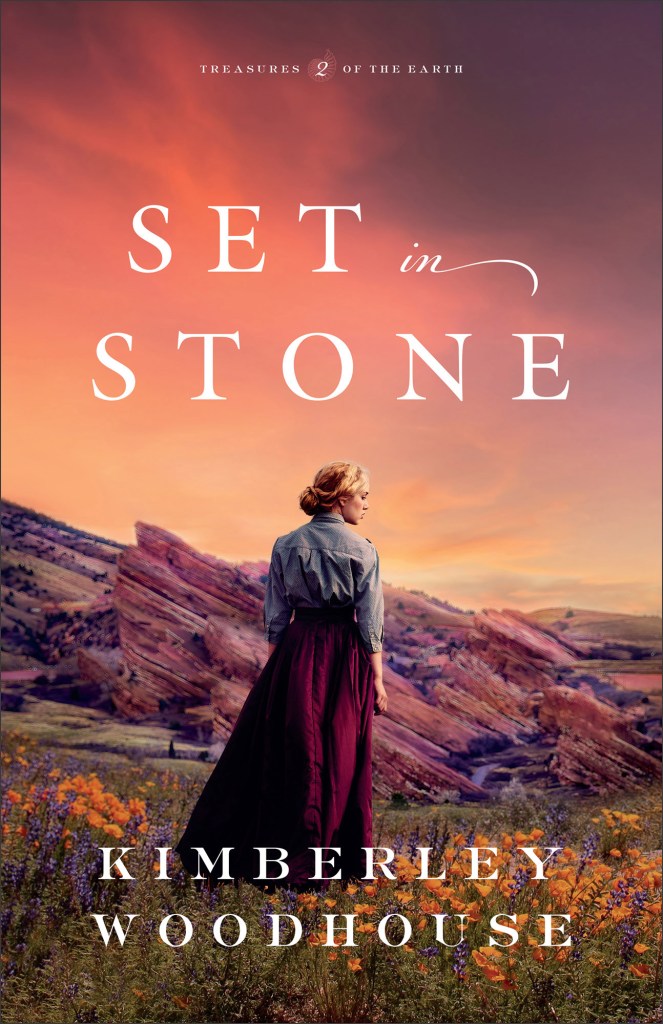
When paleontologist Martha Jankowski discovers an intact dinosaur skeleton, she has the opportunity to make a name for herself, but only if she can uncover the full skeleton before another competing dig.
Welcome to Novel PASTimes! We are pleased you stopped by today.
Amazon Affiliate Link used to benefit the blog does not cost you more.
Tell us something about where you live.
I recently moved to Colorado in hopes to work on a dig for dinosaur bones. This area is nothing like where I grew up in Illinois. The Rocky Mountains are incredibly high. Unlike the rolling hills back home, their steep, craggy faces are covered in snow the majority of the year. The rock formations here in Colorado are what brought me here. Within those rock layers, I hope to find many dinosaur skeletons.
So are you a paleontologist?
That’s what I hope to be eventually. I’ve been studying toward that goal for some time but have had to put my studies on hold. I usually need to earn money between each semester to pay for the next. I have found that the hands-on experience in the field has helped me more than just the book studies.
What inspired you to go into that field of science?
I’ve always been fascinated with history and digging up fossils became a fun hobby when I was younger. A wonderful pastor and mentor in my life, Pastor Moody, encouraged me to follow where the Lord led. As long I kept pointing people to the Truth. There is still so much to discover and so many unknowns to explore. I’m excited to simply have the opportunity to keep learning and growing. My biggest dream is to work on a team digging up a complete dinosaur skeleton. Thankfully, I’ve been given that chance here.
What are your thoughts on the Bone Wars? Do you think they’ve given your chosen field of science the proverbial black eye?
That is quite the question. While I agree with others in paleontology that do not condone Cope and Marsh and their dishonorable practices in trying to gain acclaim, I will say that the Bone Wars have brought attention to what we do. Many people don’t understand what it is we are trying to accomplish by digging up these fossils from the past. My hope and prayer is to bring people of faith and science together.
What’s something new you have learned since arriving in Colorado?
It took a good bit of time for me to adjust to the air. Dryer, thinner, and the landscape is much higher than living near sea level. But now that I’m here, I never want to leave. What an amazing place to be!
Thanks for allowing us to get know you a little better!
Kimberly Woodhouse is an award-winning, bestselling author of more than 30 fiction and nonfiction books. Kim and her incredible husband of 30-plus years live in Colorado, where they play golf together, spend time with their kids and grandbaby, and research all the history around them.
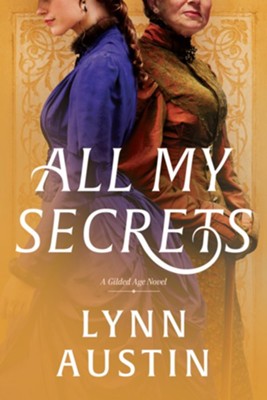
Good afternoon, Miss Stanhope. Thank you for allowing me to interview you in your beautiful mansion.
Adelaide: You’re welcome. Please, help yourself to a scone while the maid pours your tea. Do you take sugar or lemon?
Just one sugar. Thank you. From what I’ve seen of your mansion—the soaring entrance foyer and now this lush sitting room—I must say your home is magnificent! May I ask how many rooms it has?
Adelaide: I’m not entirely certain. Around 75, I believe. My grandmother, Junietta Stanhope, might know. She has lived here ever since my great-grandfather—her father-in-law—built it right after the Civil War.
Are all the rooms this enormous?
Adelaide: No, the ballroom is the largest room, then the formal dining room, which can seat 100 guests. There’s an art gallery, a conservatory, and a library as well.
That seems like a lot of space for . . . how many people?
Adelaide: Three. My mother, Sylvia Stanhope; my grandmother; and me. And the servants, of course.
Yes, of course. My condolences on the recent death of your father, Miss Stanhope. He was a giant in the business world, and will be greatly missed.
Adelaide: Thank you. His death was quite sudden, and a terrible shock to all three of us. That’s why Mother asked to be excused today. She is still in mourning, as I’m sure you’ll understand.
Certainly. Now, a wealthy young woman such as yourself must have many suitors lining up for your hand. Will there will be an engagement announcement in your near future?
Adelaide: I haven’t entertained any serious suitors yet. I’m only nineteen years old. The courtship process hadn’t really begun when Father passed away, and now I must observe the customary period of mourning, as is only proper.
Aren’t you afraid your peers will snatch up all the eligible gentlemen in the meantime?
Adelaide: That’s a very impertinent question! But no, I’m certain there are enough high-society gentlemen here in New York City to go around.
Mm. These scones are delicious. So, will your grandmother be joining us for tea today?
Adelaide: I’m afraid not. As chairman of the Stanhope Charitable Foundation, she has a very busy schedule.
I’m sure she does. She has never been very active in high-society’s social circles, has she?
Adelaide: Only when soliciting donations from other wealthy patrons. The charities she oversees are much more important to her than socializing.
Do you share her passion for the poor and downtrodden, or have you inherited your mother’s love of entertaining with lavish parties and balls?
Adelaide: Neither, at this point in my life. I’m not certain where the future will find me. Forgive me, but I must take my leave now. But please, finish your tea and help yourself to another scone. The maid will show you out.
Lynn Austin is the bestselling author of nearly thirty novels and was one of the first inductees into the Christy Award Hall of Fame. Her novel Hidden Places was made into a Hallmark Channel movie starring actress Shirley Jones. She and her husband have three grown children and make their home in western Michigan.
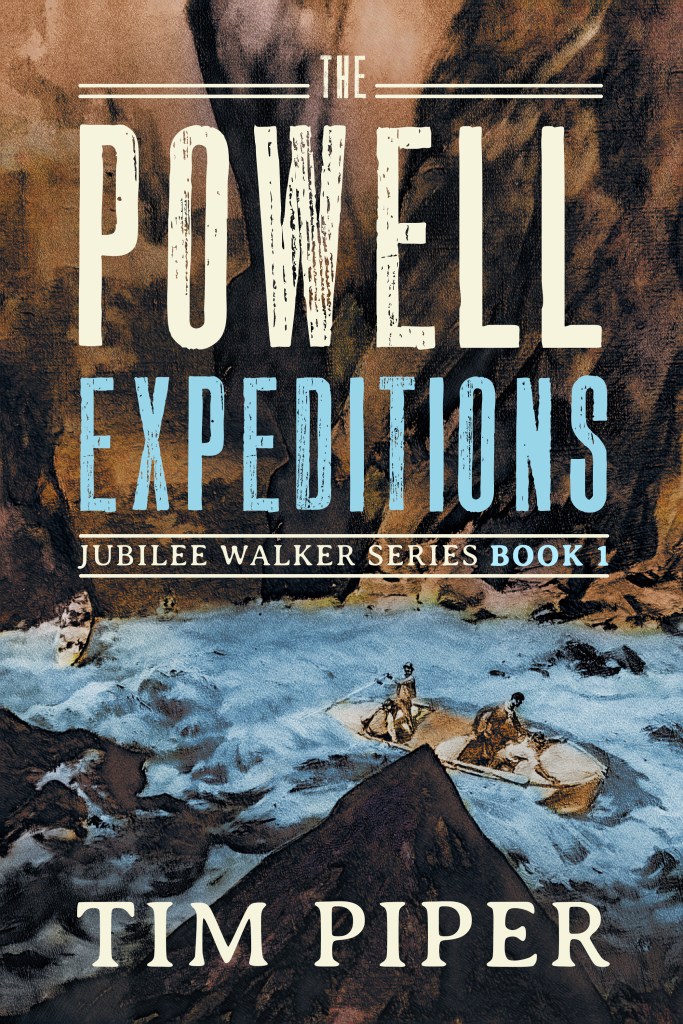
I was born and raised on a 160-acre farm in central Illinois, about fifteen miles north of Bloomington. My parents built a modest farmhouse, where I grew up reading dime novels in my loft bedroom and dreaming of a life of adventure. When I was ten years old, my father died, and my uncle came to live on the farm. I helped him build a cabin and furnishings from timber off the farm. After he died at Shiloh, I used his cabin as my private retreat, where I continued reading adventure stories and imagining having my own adventures one day. When I was seventeen, my mother died, and I set off to see some of the West. While I was away, the farmhouse and barn burned down, but my uncle’s cabin survived. Today, the farm lies fallow, and I live in the cabin, when I’m not off somewhere on an adventure.
Is there anything special about your name? Why do you think you were given that name?
Jubilee is not a common name, but it is not one I’m ashamed of. I don’t mind being called Jubilee, but most people call me Jubil. I’ve seen a similar name spelled Jubal, but I’ve never known anyone else named Jubilee. My parents named me with the intent of the word in mind—an event for celebration. My mother had a very difficult time while she carried me and a difficult delivery that meant I would be their only child. They named me Jubilee to celebrate my successful birth and my mother’s survival.
Do you have an occupation? What do you like or dislike about your work?
I am in the outfitting business. On my first trip West, I made travel money by working part-time at Warner and Company Outfitters in Council Bluffs, Iowa. I struck up a good relationship with the Warners and agreed to open a new store in my hometown with Mr. Warner’s son, Luke. The Council Bluffs store caters to overland travelers and army posts, but Luke and I cater to travelers in the age of the railroad. My passion for adventure and my acquaintance Major John Wesley Powell, a family friend, has brought expedition outfitting into our business. I very much enjoy testing out our products by using them in the field and helping my partner create improved versions. I don’t mind helping customers select products or the general labor of operating the store, but the recordkeeping and money-handling aspects I leave in Luke’s more capable hands.
Who are the special people in your life?
My parents and my uncle will always be in my heart. As my best friend, Nelly Boswell, and I have grown up together, our relationship has become more complicated. I am hopeful that our relationship will continue to deepen, but my desire for a life of adventure and Nelly’s independent nature make our future together unclear. Nelly’s family has treated me like one of their own for as long as I can remember. Her twin brothers, as troublesome as they may be sometimes, help Luke and me with our store. I owe the Warner family a great deal, for having such confidence in me and encouraging me to live my dreams. And Luke Warner has become for me the brother I never had. I also befriended a Pawnee scout named White Dog during a wagon-train trek across the plains. I hope that friendship grows.
What is your heart’s deepest desire?
To marry Nelly and have a family. But the world is full of adventure and beauty, and I want to experience all of it. I hope to somehow have both a life of adventure and be happily married to Nelly, even though I recognize these desires might not seem complementary. I’d also like to expand my reputation as an adventurer and make my business with the Warners more successful. And of course, I want to make all the people close to me proud.
What are you most afraid of?
Living a lonely, tedious life. Growing up, I honored my father and mother and never complained about life on the farm, but I knew the life of a farmer was not for me. The routine of the chores, the dependence on the weather for success, and the solitary existence all go against my nature. But a man who is too restless to stay at home and be a good husband and father may be destined to spend his time alone. This is not what I want for myself, but I have to be true to my nature.
Do you have a cherished possession?
My parents’ farm is my only remaining link to them, and although I have no interest in farming the land, I have no interest in selling it either. My saddle horse, Star, who I do not think of as a possession so much as a family member, was my father’s until he died. I can’t recall a time when she was not with me. I treasure my father’s Henry rifle, one of the first models made. It is as true and reliable as he was. My mother’s ruby ring is one of the few luxuries she owned and one I hope to someday place on Nelly’s finger. White Dog’s medicine bag is also a treasured keepsake. He gave it to me for saving his life, and it holds spirit tokens that supposedly wield the power to protect me from danger.
What do you expect the future will hold for you?
I hope that Nelly will continue to tolerate my restless spirit and even love me as more than a friend, in the way that a wife loves a husband. The outfitting business suits me well, but I hope to contribute to America’s settlement by being involved in the exploration of the last remaining wilderness areas in our great West.
What have you learned about yourself in the course of your story?
As I grew up daydreaming about a life of adventure, I was concerned that my nature was too meek and commonplace to withstand the demands of a life of danger. But I have learned that being honest, hardworking, pleasant with people, and calm in the face of danger are traits that make me valuable to bolder men who need reliable helpers to succeed where most men can’t.
Is there anything else you’d like people to know about you?
I am unlikely to ever be a problem drinker. While I enjoy an occasional glass of wine, my time with Major Powell in the Grand Canyon cured me of ever developing a taste for whiskey.
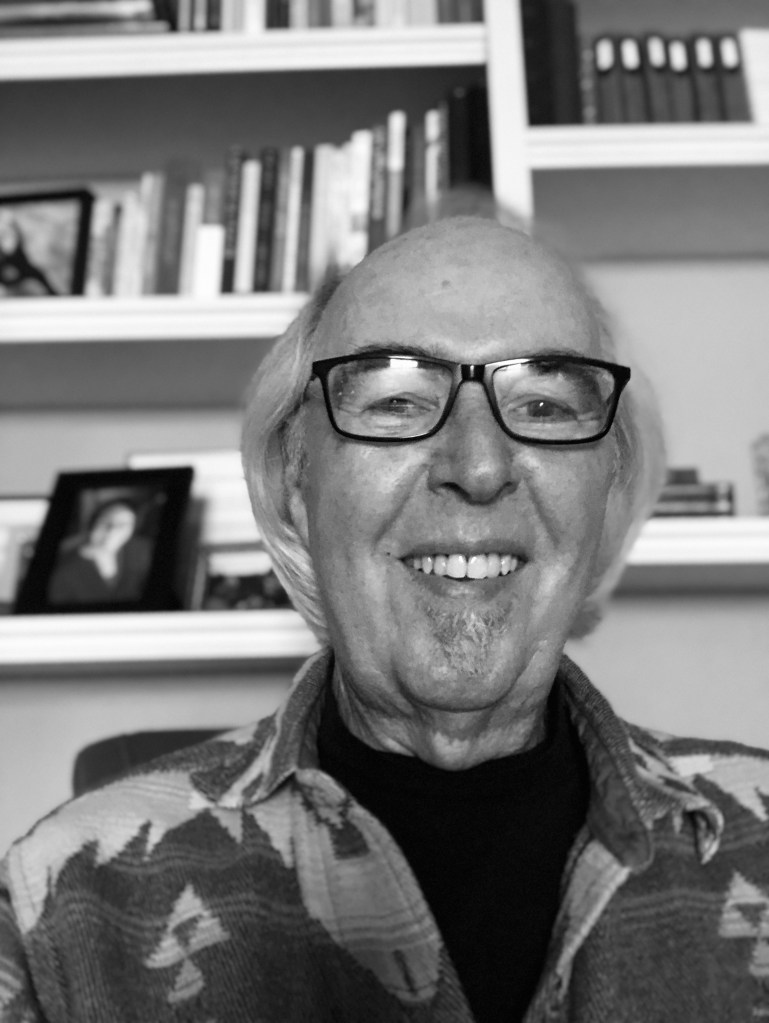
Tim Piper is retired from a long career in Information Technology and has been a lifelong hobbyist musician. In his earlier days he was an avid hiker and backcountry camper, but his adventures these days are less strenuous and more comfortable. He lives in Bloomington, Illinois, with his cat, Maggie, who is no help with his writing, but is a stellar companion. He began his education at Illinois State University as an English major, but life circumstances put him on a more pragmatic path, and he graduated with a BS in Business Admin, a degree he finds appropriately named. You can stay in touch with him at www.timpiper-author.com
Welcome to Novel PASTimes! We are pleased you stopped by today.
Tell us something about where yourself:
My name is Daniel Hawkins. My wife’s name is Maggie, and we have a wee one on the way. We make our home in a modest cabin in Loudoun County, Virginia.
Ah! You have a wife. I enjoy love stories. How did you meet, and how long have you been married?
It seems I’ve always loved Maggie. We grew up as neighbors and attended the same church services as children. When Maggie blossomed into a young woman, I found countless reasons to stop by her home for a visit. She welcomed my company, and soon we became inseparable. Sadly, we were married but a few months when I joined the militia to fight against the British in the spring of 1814.
So you are a soldier? Is that your profession?
I was a farmer by trade before joining the militia. My stint in the army ended prematurely due to a devastating injury that changed the direction of my life entirely.
I’m sorry to hear that. How was your life altered by your injury?
I returned home a broken man, having lost my will to try or even live. Farming was no longer an option, so I withdrew from everyone, including Maggie. I saw no purpose in living and basically gave up for a time.
Sounds miserable. What brought you out of such a slump?
I credit my dear wife’s earnest prayers, along with my brother-in-law, Jonathan’s, tenacious attempts to pry me from my self-pity. On a trip into town, the Lord began to stir my heart to renewed purpose. I noticed a wooden cradle in the store that would have been perfect for our coming child. As Christmas neared, I wished to surprise Maggie with it. But money was scarce, so I gave up the notion and decided instead to try my hand at fashioning one myself.
Wow! But you said you were a farmer. Did you have any sort of carpentry skills?
I come from a family of whittlers and carvers. As a boy, I watched my father carve and build, but never really caught interest in trying the craft myself. But I had inherited my father’s carving tools which had been passed down to him from his uncle Silas. When I mentioned the idea of building a cradle to Jonathan, he was all for it and agreed to supply the wood.
That’s great. And did your cradle turn out well? Did you carve anything else?
I shall leave that for readers to assess and discover as they delve into my story, A Lasting Legacy.
Sounds good. What have you learned about yourself in the course of your story?
That on my own strength, I am nothing. The Lord is the Master Craftsman of my soul. He alone brings strength, purpose, and healing to our lives. We only need look to Him in our time of need, and He will supply what we need. Instead of giving up, we must look up to our Heavenly Father.
Wonderful insights for us all. Thanks for allowing us to get know you a little better, Daniel!
About: A Lasting Legacy is one of four novellas included in Chiseled on the Heart Christmas Novella Collection: A Christmas Legacy Novella Collection
The Gift of a Lamb by Elaine Cooper
In 1776, 14-year-old Charlotte Hawkins and her brother, 10-year-old Elias, are still grieving the death of their parents. Their parents left instructions to be sent from their home state of Virginia to live with relatives they barely know, in Connecticut. The trip was dangerous, as war raged between the Redcoats and the Americans. To make matters worse, the churches in Connecticut don’t celebrate Christmas at all. Will this be the orphans’ worst Christmas ever?
A Lasting Legacy by Cynthia Roemer
Loudoun County, Virginia, 1814. After a disabling injury sends Daniel Hawkins home from war, he struggles how to provide for his young wife, Maggie and the child she’s carrying. As Christmas approaches, he finds a sheep his grandfather carved and attempts to carve a nativity set for Maggie. When she goes into labor during a Christmas Eve blizzard, Daniel is forced to face his feelings of inadequacy. And perhaps learn that God has a plan for his life after all.
Healing within the Pieces by Candace West
Prison shackles haunt Nathaniel Hawkins upon his return home only to discover it occupied by a woman in hiding. Bad men are no strangers to Delia Evans, but the intruder who barged into the farmhouse shrinks from her. With no other refuge, they must endure each other. But have they misjudged? When the past shadows their doorstep, is a grudge worth the price of a man’s life?
The Christmas Carving by Kelly Goshorn
Wyatt Hawkins dreads Christmas. Memories from the fatal shooting of his childhood friend on Christmas Eve, 1864, has left a bitter taste in Wyatt’s mouth toward God, the holiday season, and his former fiancée, Madelyn Cunningham. As Christmas draws near, can the star he’s carving for his family’s heirloom nativity point Wyatt back to the woman he’s never forgotten and the faith he’s left behind?
Author Bio:
Cynthia Roemer is an inspirational, award-winning author who enjoys planting seeds of hope into the hearts of readers. Raised in the cornfields of rural Illinois, she enjoys spinning tales set in the backdrop of the mid-1800’s prairie and Civil War era. Cynthia feels blessed the Lord has fulfilled her life-long dream of being a published novelist. It’s her prayer that her stories will encourage readers in their faith. She and her husband reside on the family farm and will soon celebrate their 30th Anniversary. They have two grown sons, a daughter-in-love, and a spoiled cat named, Chad. Visit Cynthia online at: http://www.cynthiaroemer.com
I live in the kingdom of Punjab in India, in the capital city of Lahore, where my husband Maharaja Ranjit Singh has his royal court. Lahore is a fascinating city, filled with the most amazing markets, fortresses and places of worship, as well as the beautiful Shalimar gardens filled with thousands of roses. My favorite place is the Sheesh Mahal, the palace of mirrors, where the king and I live.
Do you have an occupation? What do you like or dislike about your work?
You can’t really call it an occupation, though I am certainly very busy. As a queen, I feel it is my duty to pray for the good of the nation and give alms to the poor. I do this on all our holy days. I also spend a lot of time learning statecraft from my husband—he says I am sharper than most of his courtiers.
Who are the special people in your life?
My husband the Maharajah is very important to me. I fell in love with him when I was sixteen, and he married me soon after, although I was the daughter of the palace’s dog trainer. Equally important to me is my infant son Dalip Singh. I would do anything to protect him. And oh yes, my maid Mangla. She is my confidante and also an excellent advisor. I trust her with my life.
What is your heart’s deepest desire?
To live a quiet life with my husband and son. There are so many intrigues in the palace—I wish I could get away from them. Courtiers are always vying for the Maharajah’s favors. The other queens are always plotting against me. And of course, the British are waiting for a chance to attack our kingdom. I just want some peace and quiet.
What are you most afraid of?
That my husband will die all of a sudden. He has not been in good health, and he drives himself too hard, trying to keep his kingdom safe.
If he dies, I don’t know what will become of Dalip and me.
Do you have a cherished possession?
Idon’t know if you can call her a possession, but I do love my horse, Laila. She is the most expensive horse in the entire land, the most beautiful, and the fastest. She does not like most people—she tends to bite them if they get too close! But somehow we became friends from the moment we met.
What do you expect the future will hold for you?
Who can tell? It is a turbulent time I live in. The British grow stronger each day. Punjab is the only large kingdom left in India that dares to resist them. But I know this much: if a day comes when the British attack us, I will resist them even with my last breath.
What have you learned about yourself in the course of your story?
I confess that I am very stubborn. And sometimes I make sudden, hotheaded decisions. I’m loyal to those who are loyal to me. But if someone turns against me, I will not forget. Nor will I forgive.
Thanks for allowing us to get know you a little better!
WINNER of the 2022 INTERNATIONAL ASSOCIATION OF WORKING WOMEN AWARD for BEST FICTION OF THE YEAR!
LONGLISTED for 2022 DUBLIN LITERARY AWARD!
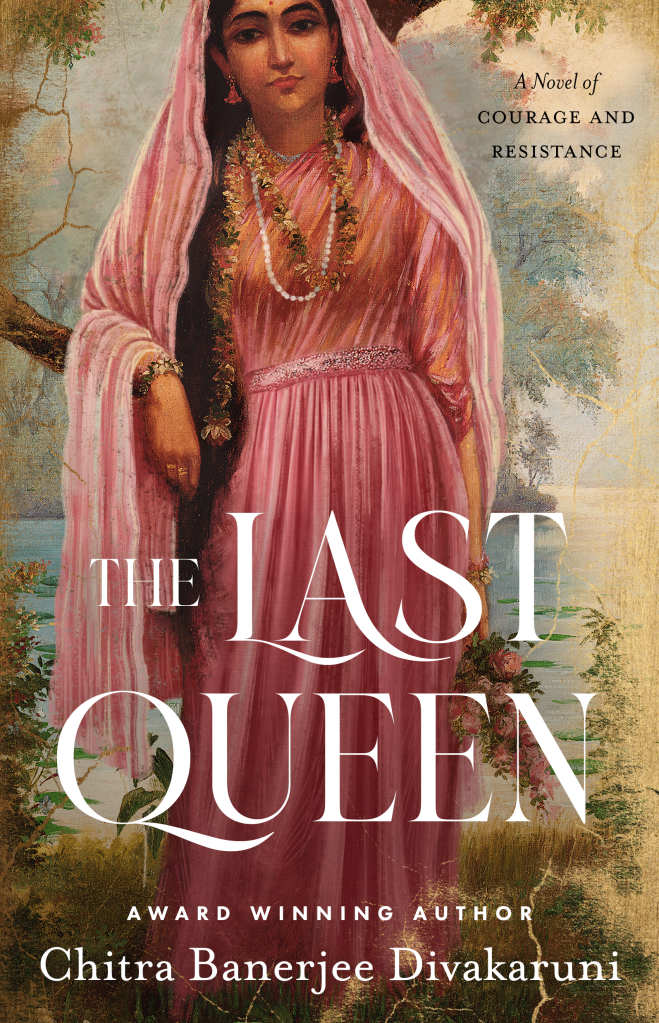
She rose from commoner to become the last reigning queen of India’s Sikh Empire. In this dazzling novel, based on true-life events, bestselling author Chitra Banerjee Divakaruni presents the unforgettable story of Jindan, who transformed herself from daughter of the royal kennel keeper to powerful monarch.
Sharp-eyed, stubborn, and passionate, Jindan was known for her beauty. When she caught the eye of Maharaja Ranjit Singh, she was elevated to royalty, becoming his youngest and last queen—and his favorite. And when her son, barely six years old, unexpectedly inherited the throne, Jindan assumed the regency. She transformed herself from pampered wife to warrior ruler, determined to protect her people and her son’s birthright from the encroaching British Empire.
Defying tradition, she stepped out of the zenana, cast aside the veil, and conducted state business in public, inspiring her subjects in two wars. Her power and influence were so formidable that the British, fearing an uprising, robbed the rebel queen of everything she had, but nothing crushed her indomitable will.
An exquisite love story of a king and a commoner, a cautionary tale about loyalty and betrayal, a powerful parable of the indestructible bond between mother and child, and an inspiration for our times, Chitra Banerjee Divakaruni’s novel brings alive one of the most fearless women of the nineteenth century, one whose story cries out to be told.
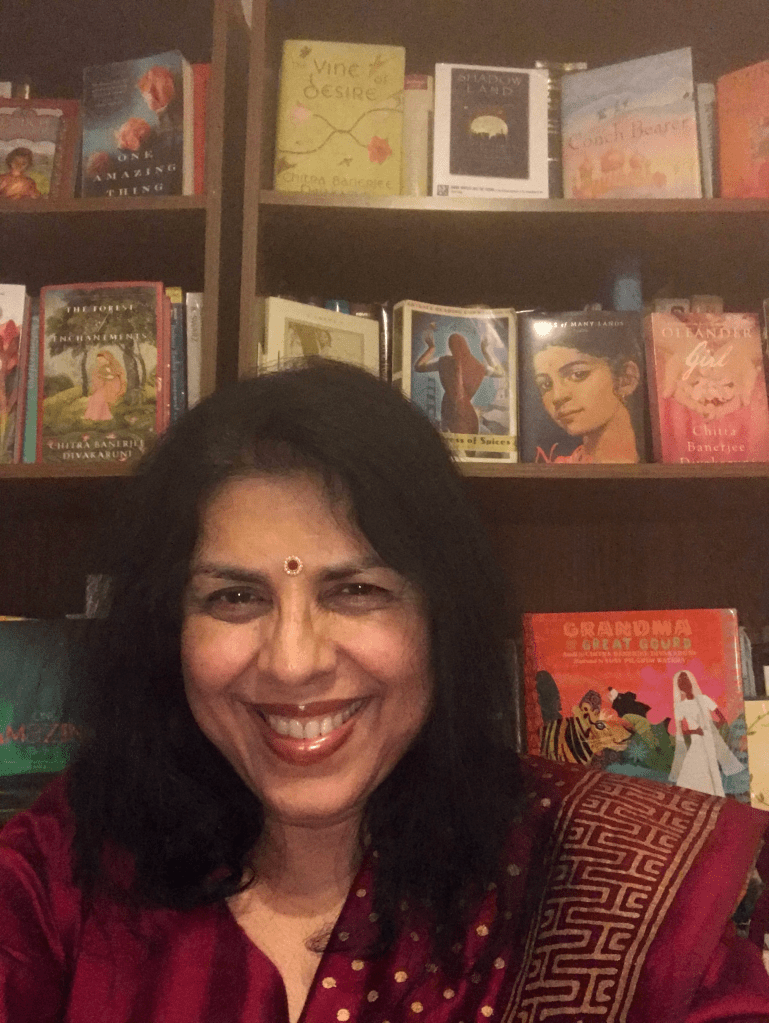
Chitra Divakaruni is an award-winning writer, activist and teacher, and the author of 20 books such as Mistress of Spices, Sister of My Heart, Before We Visit the Goddess,Palace of Illusions, The Forest of Enchantments, and most recently, The Last Queen.
Her work has been published in over 100 magazines and anthologies and translated into 30 languages, including Dutch, Hebrew, Bengali, Hungarian, Turkish, Hindi and Japanese.
Her awards include an American Book Award, a PEN Josephine Miles award, a Premio Scanno, a Light of India award, and a Times of India Award for Best Fiction. In 2015 The Economic Times included her in their List of 20 Most Influential Global Indian Women. She is the McDavid professor of Creative Writing in the internationally acclaimed Creative Writing Program at the University of Houston.








 Novel PASTimes