
An interview with Bertha “Birdie” Stauffer from Whistling Women and Crowing Hens by Melora Fern

Amazon Affiliate Link Used Benefits this blog

THE EVENING TIMES
Salisbury, Maryland Wednesday, August 20, 1924
Archie Drake, reporter


PACKED HOUSE AT OPENING OF WESTDALE CHAUTAUQUA
Program of Entertainment Is a Most Varied One And Appeals To All Classes of
People—

Last Night’s Opening Concert Featuring The Versatile Quintet Was Greeted With Much Applause
The Chautauqua Season opened last night to a standing-room-only crowd. The ladies of the renowned Versatile Quintet entertained the audience with a varied program starting with a rousing patriotic medley, followed by equally brilliant piano, then trombone solos and a knee-slapping duet of the banjo and violin. Several other varied numbers including a musical saw solo, a hilarious monologue
along with an outstanding a cappella rendition of “Where the Lilies Bloom” finished the fine evening of entertainment. Yet, it was the two whistling numbers
that had the audience on their feet. First, the unusual harp and whistling duo of Mendelssohn’s “Spring Song” and then the finale, a mesmerizing arrangement of
Rimsky-Korsakov’s “The Flight of the Bumblebee.” This reporter was able to catch a few moments with Miss Bertha Stauffer, the whistling sensation who
dazzled tonight’s crowd, as she was leaving the Chautauqua tents.


AD: I’m Archie Drake (AD), reporter for The Evening Times of Salisbury, Maryland and all of Wicomico county. So, Miss Stauffer (MS), please tell me how a woman like you learned to whistle.


MS: I practiced whistling bird calls with my older brother, Edwin. We’d stroll around our apple orchard mimicking different birds starting when I was about five or six years old. He’s the one who told me I had perfect pitch. Then my mother taught me to whistle hymns and such while she accompanied me on the piano.

AD: Your folks approved of your whistling?


MS: Ab-so-lute-ly. My mother encouraged it. I was eleven when I whistled with the West Chester United Methodist Church choir for the first time. AD: Is that so? I don’t think I’ve ever heard a woman whistle in perfect pitch.

MS: It’s a gift, isn’t it? My older sister still doesn’t approve of my whistling; she thinks it’s not proper. But whistling is what got me this job with Westdale Chautauqua. It’s our duty to bring education and enlightenment to all of America
and that includes whistling women!


AD: I’ll say! How many bird calls can you imitate?


MS: Over forty and counting. I hear new songs as we travel across North America so I’m adding more bird calls to my repertoire daily. I just learned the Black- Throated Blue Warbler. Do you know it?


AD: Let’s hear it.


Note: Miss Stauffer proceeded to whistle the five-count buzzy, slurred call that sounded like “please, please, please, and squeeze” in a sweet high pitch to this reporter.


AD: Who arranges your music? I’ve never heard whistling with a harp accompaniment. And the way each instrument was brought in at such fast tempos for the finale number definitely captured my attention.


MS: Both arrangements were written by our brilliant pianist, Miss Helen Wilcox. She composes all the musical pieces for the Versatile Quintet and is a student at the Curtis Music Institute out of Philly. And our harpist is Miss Florence
Armstrong—she’s pos-i-tive-ly the bees knees, isn’t she?


AD: A woman composer? That makes my head spin. I wouldn’t use that particular phrase, Miss Stauffer, however you have an impressive harpist in your troupe.


MS: Please, call me Birdie, all my friends do. And don’t forget to mention Mary and Adelle in your article. I mean, Miss Mary Brewer on violin and Miss Adelle Rowley on banjo. Goodness sakes, their duet was glorious as well, wasn’t it?


AD: Ah, how is it that five women travel to so many towns unaccompanied?

MS: Oh! We’re not unaccompanied. Our assistant circuit manager, Mr. Teddy Zimmerman is with us on every train. The Westdale Chautauqua circuit takes care of their talent. They schedule our train travel, purchase our tickets, and arrange for our lodging. Tonight, we’re staying at the Whitehaven Hotel. I hear that’s a fine establishment.


AD: Why yes, it is. And what musical arrangements are you delighting us with tomorrow?


MS: You’d have to travel to Staunton, Virginia to hear the Versatile Quintet tomorrow. We’re the opening act of opening night for every Westdale Chautauqua circuit A. I know it sounds crazy but we travel to a different town every day. As a
matter of fact, I must skedaddle. I’m to meet the other girls at the hotel’s restaurant for a late-night dinner. It was nice to meet you, Mr. Drake.


And with a tip of her cloche, Miss Stauffer dashed away. The Versatile Quintet was followed by a rousing reading of “The Charge of the Light Brigade” by Miss Mable Walker Willebrand. The crowd had been expecting Mr. Walter Grantham as
the lecturer however, the esteemed Miss Willebrand was substituted at the last minute and was quite a success.
Tomorrow’s program is as follows: Morning: Junior Chautauqua for the children; Afternoon lecture “Our Crowned Kings” by Arthur W. Evans, concert by the Durieux-Carley Company; Evening: Artistic recital by Louise Stallings, lecture
“World Building” by Honorable Frank B. Pearson. Based on tonight’s sensational program, this reporter is looking forward to all that Westdale Chautauqua has to offer Salisbury and all of Wicomico county.


Growing up as the perpetual “new kid” Melora Fern persevered by making up stories and recently has learned how to hone that skill into writing fiction. As a recovering CPA, she now counts seashells, colorful stones, or words discovered on her walks. She loves a good local gin, hiking, feeding songbirds, moonrises and joyfully sharing bites of your dinner. After eight years of perfecting her craft with writing classes, workshops, retreats, and an awe-inspiring critique group, Melora’s months of querying agents and small presses has paid off. Her novel, “Whistling Women and Crowing Hens” (Sybilline Press) is out now. Learn more at: https://www.melorafern.com/

Additional buy links:

Bookshop:

Barnes & Noble:

From Maggie Parker in High Cotton by Ane Mulligan

MY STORY BEFORE THE STORY

My good friend Sadie always says Southern women may look as delicate as flowers, but there’s iron in our veins. And we need it. While the rest of the world has been roaring through the 1920s, times are hardscrabble here in rural South Georgia. You see, I’m a widow. I guess I should tell you I’m Maggie Parker, and I’m barely surviving while raising my little boy, Barry, alone. Now, the banks are failing, and my father-in-law threatens to take my boy and sell off our livelihood—the grocery store my late husband left me.

I haven’t always lived here in Rivers End. My sister, Duchess, and I were born on a farm in South Georgia, but we are as different as chalk and cheese. Duchess was the princess Mama and Meemaw wanted. She drank in their stories of the old family plantation and the parties, before the war of Northern Aggression. Our great-grandparents owned a flourishing cotton plantation before that terrible time. But when the Yankees came through, they turned the family out and those carpetbaggers took over. Great-granddaddy was forced to become a sharecropper. 

The work and humility unhinged our great-grandmother and grandmother, who was nine years old at the time—old enough to remember life before. She raised our mama on stories of those times. When Mama married Daddy, Meemaw moved in with them. And then they raised Duchess on the stories. Meemaw was so sure those times would return, and they’d get their plantation back. Like I said, her mind was unhinged. But she and Mama told Duchess she was a Southern princess. I never paid heed to the stories. I was more practical than Sister. I preferred to help Daddy with the farm animals. I even helped with the crops at least at harvest time. 

When my sister was sixteen, a train wrecked near our farm. The passengers needed housing, and a nice man named Mr. Alden stayed with us. He was a rich businessman from Atlanta. Wouldn’t you know, he fell in love with our Duchess. He courted her and married her, then took her off to Atlanta. Their marriage eased life for us with the money they sent. 

A few years later, I met Jimmy Parker at a farmers’ market. He was buying for his grocery store. I was smitten from the first moment I saw him. When we married, he brought me to Rivers End, where he and his daddy owned Parker’s Grocery. When his daddy decided to retire, he turned full ownership over to my Jimmy. I was so proud of him. But my Jimmy died almost eight years ago, not knowing I was pregnant with our first child. My son, Barry, is what keeps me going. 


In High Cotton can be purchased in print or as an eBook. 

For the e-book: https://www.amazon.com/dp/B087V636BH   

for the print book: https://amzn.to/2WOLShX or https://shoplpc.com/in-high-cotton/

To read the first chapter free, go to https://anemulligan.com/georgia-magnolias-series and scroll to the DOWNLOADS.

Ane Mulligan has been a voracious reader ever since her mom instilled within her a love of reading at age three, escaping into worlds otherwise unknown. But when Ane saw PETER PAN on stage, she was struck with a fever from which she never recovered—stage fever. She submerged herself in drama through high school and college. One day, her two loves collided, and a bestselling, award-winning novelist emerged. She lives in Sugar Hill, GA, with her artist husband and a rascally Rottweiler. 

Find Ane on her websiteAmazon Author pageFacebookTwitterInstagramPinterest and The Write Conversation.  

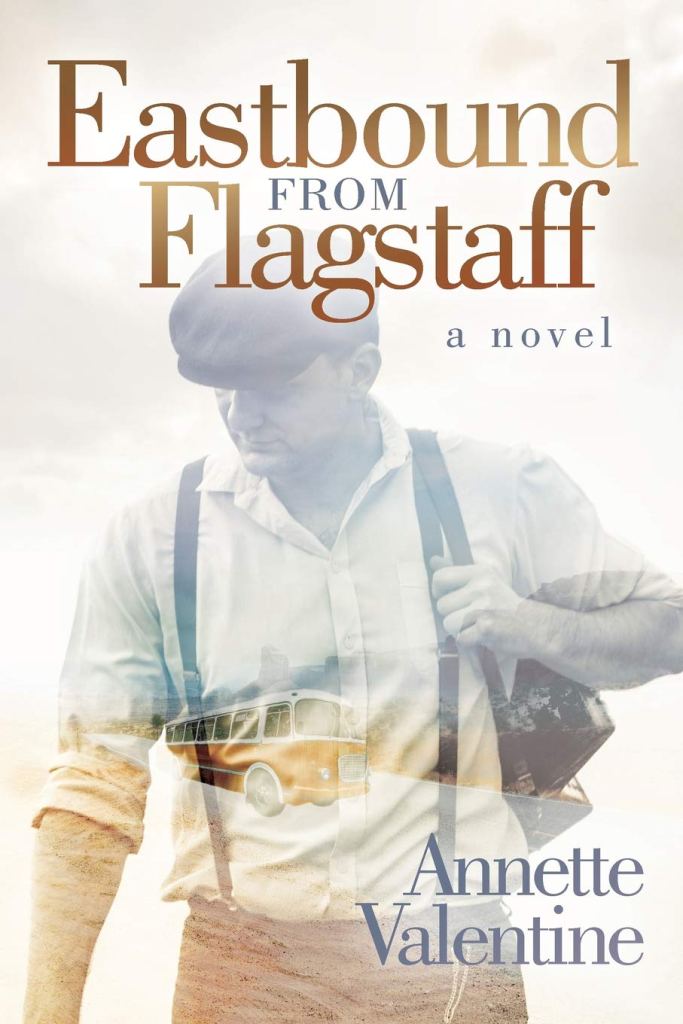
A Behind The Scenes Chat With Geoffrey Hagan of Eastbound from Flagstaff by Annette Valentine

Mr. Hagan, those of here at Novel Pastimes are curious to know how a farmer in the 1920s survived the farm crisis that began in that decade and how the Great Depression later on affected your everyday life.

Well, truth is, the Depression had already hit folks like myself whose livelihood depended on crops. You see, an economic downturn happened in the rural south long before the Stock Market Crash in ’29, and it stemmed from the military’s need for high production during World War l. Those demands drove the market supply up, and that in turn caused prices to go up. But I have to say this: a lot of factors in addition to the economic depression tended to trigger rural communities to pull us together when we suffered. Take for instance the fire that broke out on my farm: neighbors came from all around to help. We connected as a community in the same way we did during the crisis that began in the 1920s. Families helped each other, and during harvest: the same thing. We’d give each other food. We helped each other with repair work. It’s the American way. I hope that will always be the case, that we pull together for each other, stand united. We have ourselves a mighty fine country, worth fighting for—dying for if it comes to that.

You have the one son, Simon, that we’re particularly interested in. He must have been a big help during those difficult times.

Ah, yes, you’re speaking of my eldest, but just for the record: I have eight sons and three daughters. I’m mighty proud of Simon, though, for following his dream as he did. Makes me smile to talk about him—flamboyant young man, tall, good looking. Yessiree, and a hard worker, too, but he wasn’t a farmer. Simon was a dreamer. He experienced an awful tragedy when he was seventeen, and circumstances turned him in a new direction. Odd as it seems, he might not otherwise have gone after his dream.

Sometimes it takes hard times to turn us around. And sometimes it takes a higher power.

That new direction must have taken Simon to Flagstaff. Tell us about the significance of his going out there. Did he have something specific to do, someplace that called him? 

Oh, indeed, he did have something that called him, but not so fast, my friend. When Simon left Elkton, he was bent on going to the big city of Detroit to find meaning for himself—struck out on his own at eighteen years old. He possessed foundational strength when he left here. Turns out, he needed it to survive.

Detroit offered a high life, alright, but life can throw us curveballs, can’t it? He started with a factory job at the Ford Motor Company and went from there to combatting the Mafia at the height of the Roaring Twenties, to falling in love with an unlikely soul. Prejudice, prohibition—all of that pretty well defines the Era of the Roaring Twenties, and it’s a far cry from the quiet life he knew here in Elkton. He experienced it all until Albuquerque, New Mexico became another chapter in his life. Not too far from there is Flagstaff, and Flagstaff held some very real dreams for Simon.

Was there someone who influenced his choice to go to Detroit?

You bet there was! Senator Maxwell. He’s a decent sort of fella—puffed a lot of hot air—but Simon sure looked up to him. I’d be safe in saying it was Senator Robert Maxwell alone who dangled the big city in front of my son’s eyes.

Simon wasn’t the only son of mine to leave Elkton, though. Alan—my spunky redhead with all the spitfire to go with it—that one sure looked up to his big brother. Alan made some bad decisions. California bound, he was, with an obsession, and obsessions have a cruel way of looking good before they suck you in. Nothing wrong with ambition as long as you don’t exchange ambitions for obsessions.

Might just add that Simon took on the world when he went up there to Detroit. If you want the whole story, you’ll see where Flagstaff and Albuquerque had very different reasons for calling two of my sons to the southwest. I gave ‘em roots, but I gave ’em the freedom to find their own way, too.

It’s been a pleasure, Mr. Hagan. Sounds like you’ve handed down quite a legacy.


Annette Valentine is an inspirational storyteller with a flair for the unexpected. By age eleven, she knew that writing was an integral part of her creative nature. Annette graduated with distinction from Purdue and founded an interior design firm which spanned a 34-year career in Lafayette, Indiana and Brentwood, Tennessee. Annette has used her 18-year affiliation with Toastmasters International to prepare her for her position with the Speakers’ Bureau for End Slavery Tennessee and is an advocate for victims and survivors of human trafficking and is the volunteer group leader for Brentwood, Tennessee. Annette writes through the varied lens of colorful personal experience and the absorbing reality of humanity’s search for meaning. Mother to one son and daughter, and a grandparent of six amazing kids, Annette now lives in Brentwood, a suburb of Nashville, Tennessee, with her husband and their 5-year-old Boxer. To learn more about Annette’s life and work, please visit https://annettehvalentine.com

Book Review: Songs of Willow Frost by Jamie Ford

41gFoKVfgBL._SX319_BO1,204,203,200_In this book we meet William Eng, a young Chinese boy living in a Catholic orphanage in Seattle. He remembers his mother and is sure the singer who is performing in town by the name of Willow Frost is his mother Liu Song. He escapes along with his blind friend Charlotte and they search for her. The reunion is not as joyful as he was expecting, however, and we are taken back to the 1920s and learn Liu Song’s sorrowful story of abuse and a love lost. William experiences his own loss and eventually returns to the orphanage.


I’m pleased that this book, so full of heartbreak, has a happy ending. I learned a lot about the time period and American-Chinese culture. I have been a Jamie Ford fan ever since reading The Hotel on the Corner of Bitter and Sweet, and I recommend all his books. So touching, and so well written. Worthy to have been New York Times Bestsellers.

Cindy Thomson, owner of Novel PASTimes, is the author of eight books, including her newest novel, Enya’s Son, based on 6th-century legends. Researching her Scots-Irish roots launched a writing journey that has lasted nearly two decades. Being a genealogy enthusiast, she has also published articles in Internet Genealogyand Your Genealogy Todaymagazines. Most everything she writes reflects her belief that history has stories to teach. Cindy and her husband Tom live in central Ohio near their three grown sons and their families. Visit her at www.cindyswriting.comauthorphoto4cindy-thomson-LR-3