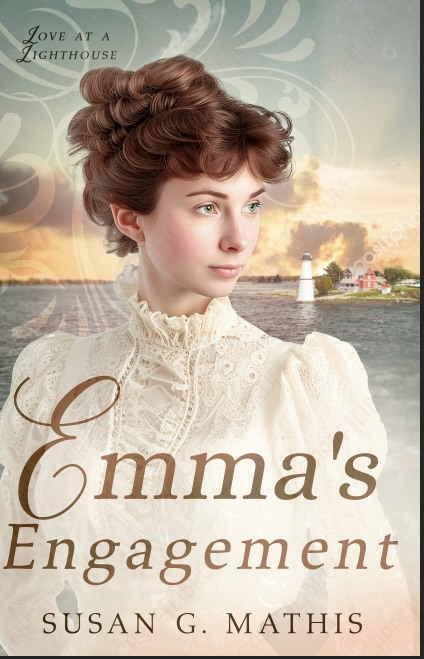
A Chat with Emma Diepolder from Emma’s Engagement by Susan G. Mathis

Welcome Emma Roe Diepolder. Why don’t you tell us a little about yourself.

I grew up in Brockville, Canada, but have lived in 1000 Island Park for the past several years. Now that I’m married to the Rock Island lightkeeper, I live on that tiny island and am a stepmother to Ada. The isolation can be challenging, but being a wife and stepmother and helping to keep people safe is very rewarding.

Tell me something about you that readers may find surprising?

I love the Thousand Islands and live along the St. Lawrence River’s main shipping channel. The 1,864 islands are shared almost equally between New York state and Ontario, Canada. It’s magical. Huge freighters pass by us and the tiny islands along the main channel and share the waterway with all kinds of boats including ships, kayaks, and canoes.

Tell us more about the Rock Island Lighthouse. 

Rock Island Lighthouse, located on Rock Island in the St. Lawrence River within New York’s Thousand Islands region, is a maritime landmark established in 1847 to guide ships through the bustling trade routes of the river. The stone lighthouse, built in 1882 to replace the original wooden structure, stands 50 feet tall and features a classic lantern room. Climbing the lighthouse’s spiral staircase offers stunning panoramic views of the river and surrounding islands. This picturesque site, steeped in maritime heritage and natural beauty, is my home.

Who is this Michael I keep hearing about? 

My husband, Michael Diepolder, serves as the keeper of the Rock Island Lighthouse. Known for his dedication and meticulous care, Michael ensures that the lighthouse remains operational, guiding ships safely through the St. Lawrence River’s treacherous channels. Together we endure the isolation and challenges of lighthouse life, including harsh winters and long nights tending the light and fog bell. Michael’s commitment to his duties exemplifies the perseverance and resilience required of lighthouse keepers during this era. And I love him dearly.

And his daughter? Do you like her?

Ada is Michael’s 11-year-old daughter who lost her mother when she was seven. She attends boarding school in Rochester during the year but is with us during the summer and sometimes on holidays. At first, it was difficult. But now we are dear friends, and I miss her while she’s away. 

If you could leave readers with one message, what would it be? 

Trust in God and His plans for you. Hope for a better future. Hope for love. Hope for healing. God can heal a broken heart and help you forgive those who hurt you. He did that for me.

Here are a few fun, quick questions:  

What is your favorite hobby? Since I was a Millner, I love making hats and other accessories and find great joy in it. I was also a librarian, so I love to read.

Please describe yourself with three words. Creative, questioning, faithful.

What’s your most precious possession? My trunk of Millner goods and our substantial library.

Are you a glass-half-full or glass-half-empty kind of person?

Half full. I try to see the bright side of things, but sometimes it’s a challenge.

What is your biggest pet peeve?

People misunderstand me. They see me as a bookworm, but I’m much more than that.

What is your biggest secret?

I wasn’t sure I would make a good wife and even less sure that I would succeed as a stepmother.

What is your heart’s deepest desire? 

That’s easy. To love and be loved. 

What have you learned about yourself in the course of your story?  

I’ve learned to trust in God and His plans for me. God can heal a broken heart and has helped me forgive those who hurt me. 


About Susan:

Susan G Mathis is an international award-winning, multi-published author of stories set in the beautiful Thousand Islands, her childhood stomping ground in upstate NY. Susan has been published more than thirty times in full-length novels, novellas, and non-fiction books. She has thirteen in her fiction line including, The Fabric of Hope: An Irish Family Legacy, Christmas Charity, Katelyn’s Choice, Devyn’s Dilemma, Sara’s Surprise, Reagan’s Reward, Colleen’s Confession, Peyton’s Promise, Rachel’s ReunionMary’s Moment, A Summer at Thousand Island House, Libby’s Lighthouse, and Julia’s Joy, the second in her three-book lighthouse series. Her book awards include three Illumination Book Awards, four American Fiction Awards, three Indie Excellence Book Awards, five Literary Titan Book Awards, two Golden Scroll Awards, and a Selah Award. Susan is also a published author of two premarital books, two children’s picture books, stories in a dozen compilations, and hundreds of published articles. Susan makes her home in Northern Virginia and enjoys traveling around the world but returns each summer to enjoy the Thousand Islands. Visitwww.SusanGMathis.com/fiction for more. 

Where can people find you online?

Susan’s website: https://www.susangmathis.com/fiction-books

Buy links: Amazon | Barnes&Nobles | Wild Heart Books

Social media links: Website |Author Central |  Facebook | Twitter | Blog | InstagramGoodreads l Book BubPinterest | 

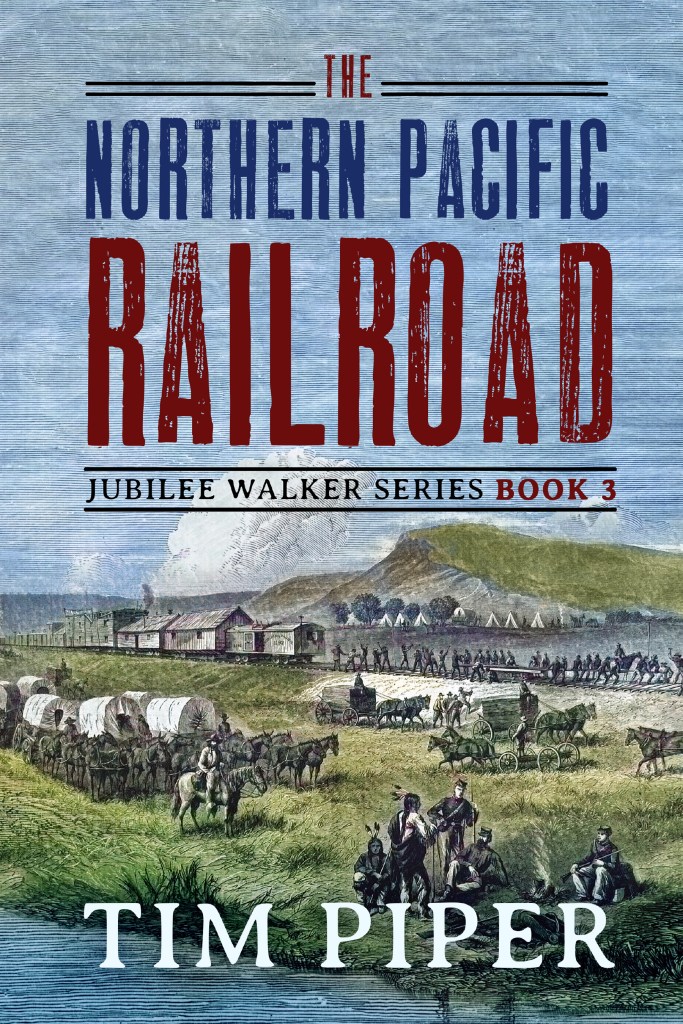
Meet Jay Cooke from Tim Piper’s The Northern Pacific Railroad

Welcome to Novel PASTimes! We are pleased you stopped by today.

Tell us a bit about yourself.

Thank you for inviting me. My name is Jay Cooke, and I was born in 1821, in Sandusky, Ohio, the son of a lawyer who served in Congress. As a young man, I entered the banking business as a clerk and found I had a talent for it. Shortly before the Civil War, I opened my own investment firm, and I was instrumental in selling Treasury notes to the public to finance the Union war effort. Currently, I am heavily committed—personally and through my investment firm—to financing and constructing the Northern Pacific Railroad, a second transcontinental railroad which will connect the Great Lakes at Duluth, Minnesota, with the Pacific Ocean at Puget Sound.

How did you become acquainted with Jubilee Walker?

Nathaniel Langford, a banker and businessman from Helena, Montana Territory, approached me about sponsoring an expedition to explore the uncharted area of the Yellowstone River during the summer of 1870. He believed, and rightly so, that if the expedition proved that the folktales about the region’s unique geography were true, many tourists would be attracted to the area, and they would be anxious to see my railroad completed to carry them there. One of the members of that Yellowstone expedition was Jubilee Walker. Mr. Langford spoke highly of his service and expertise.

When that expedition proved that the rumors about Yellowstone were, indeed, true, an official government survey was launched in the summer of 1871. Jubilee Walker was hired by General Sherman to guide the army engineering contingent sent on that survey.

Then in 1872, a bill was placed before Congress proposing that the Yellowstone region be designated as the nation’s first national park. Jubilee Walker came to Washington, DC, to help lobby for the passage of that bill. I heard great things about young Mr. Walker’s performance on these expeditions, and I thought he might be of further assistance to me. While he was in Washington, I arranged a meeting with my personal secretary, who invited him to come meet me at my home in Philadelphia. 

Mr. Walker graciously accepted my invitation, and, soon after the passage of the park bill, he came to Ogantz, my estate in Philadelphia, for our first meeting.

What is the nature of your business agreement with Mr. Walker?

There are many challenges we face in the construction of the railroad, primary among them funding the effort through to completion. The expense is too great for any single investor, so the project must be financed through the sale of bonds to the public. The public’s willingness to buy those bonds is heavily dependent on the faith they have that our efforts to build the railroad will succeed, and that their investment will bring the returns promised.

The faith those investors have in our success is based on information they read in the news and the credibility of those delivering the message. Though I enjoy a generally favorable public reputation, it is natural for people to look for recommendations from those with less personal interest in the railroad than myself.

This is the role that Jubilee Walker can fulfill for me—offering his personal opinion of the soundness of the idea to build the Northern Pacific Railroad and expressing his confidence that the project can be completed successfully.

I have agreed to make a substantial investment in Mr. Walker’s adventure tourism business upon successful completion of a railroad survey to finalize the railroad’s route. In return, Mr. Walker has agreed to join the survey as my personal representative. As such, he will publicly promote and support the railroad.

What is the greatest obstacle to the completion of the railroad?

The railroad’s exact route has yet to be established across the six hundred miles between Bismarck, Dakota Territory, and Bozeman, Montana Territory. Two surveys are planned for the summer of 1872: One crew will start in Bismarck and proceed west. The other will start in Bozeman and work their way east to meet the westbound crew. Mr. Walker will join the eastbound crew departing from Bozeman.

Unfortunately, the railroad’s route must pass through the traditional hunting grounds of the Sioux tribes. Their leaders have expressed their displeasure with this plan and threatened to retaliate. The army will protect the survey crews, and hopefully no serious incidents will occur. A long-term resolution must be reached, but negotiating with the tribes is the government’s business, not mine.

My concern is that public opinion may turn negative regarding the safety of traveling on a railroad which runs through hostile territory. If the public loses faith that the route can be made safe, they will no longer invest in the railroad’s completion, and the whole enterprise will fail. I am confident that, with Jubilee Walker championing our cause, we will enjoy widespread public support for the project through its completion.

What consequences do you foresee if the railroad survey fails?

America will lose the opportunity to have a critical lifeline tying her coasts together, and our Canadian neighbors will likely capitalize on our failure.

A substantial portion of my personal wealth and the wealth of my investment house are committed to this effort. If the railroad cannot be built to generate the revenue to retire the bonds and pay the investors’ returns, that will severely challenge my ability to meet my debt obligations.

Mr. Walker also has placed his reputation and a significant portion of his personal assets at risk, to ensure that he is committed to a positive outcome on our mutual behalf. And he will be putting his personal safety at risk by facing whatever dangers the survey crew may encounter.


TIM PIPER is retired from a long career in Information Technology and has been a lifelong hobbyist musician. In his earlier days he was an avid hiker and backcountry camper, but his adventures these days are less strenuous and more comfortable. He began his education at Illinois State University as an English major, but life circumstances put him on a more pragmatic path, and he graduated with a BS in Business Admin, a degree he finds appropriately named. He lives in Bloomington, Illinois. 
Learn more at www.timpiper-author.com or follow him on Facebook.

https://timpiper-author.com/

https://www.facebook.com/people/Tim-Piper-Author/61550582340267/?sk=about

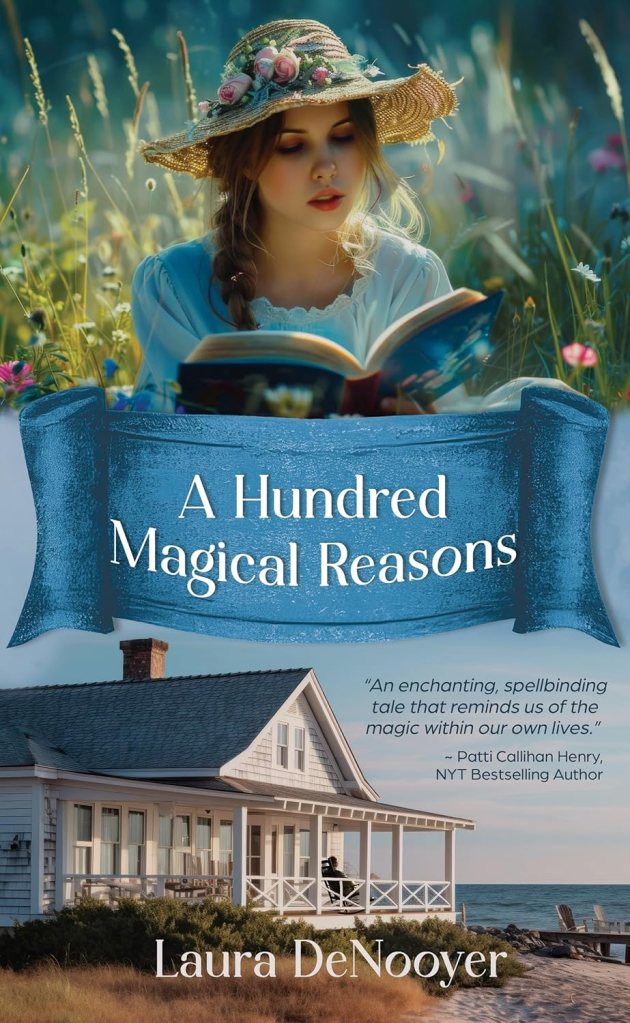
Meet Mrs. Charlotte Rose Gordon from A Hundred Magical Reasons by Laura DeNooyer

Most fairy tales have happy endings, but is it too late for this one? After all, Mrs. Charlotte Rose Gordon is eighty-eight. 

This disgruntled town recluse has grown weary of fighting the dragons of her past—including the desire to clear her husband’s name of a 1918 crime.

Dragons of a different kind pursue Carrie Kruisselbrink.

In 1980, in the summer of her private rebellion, Carrie defies parental expectations and pursues her café dream. While waiting for funding, she takes a job with Mrs. Gordon.

As Mrs. Gordon unfolds the story of her oppressive childhood and delightful friendship with The Wonderful Wizard of Oz author, L. Frank Baum, Carrie never expects to encounter her own fears and soul-searching.

In this modern-day fairy tale that weaves between 1980 and the early 1900s, Mr. Baum’s influence impacts each woman’s personal quests on a hero’s journey neither anticipates. Can Carrie and Mrs. Gordon find common ground in battling their respective dragons?

Welcome, Mrs. Gordon! I appreciate you letting me stop by your front porch  today for an interview. What a lovely garden you have!

Thank you. The dahlias are my favorites. My employee Carrie helps me with the watering. It’s part of her penance, you might say. 

Penance? For what?

At age eleven, she kicked her ball into my flower bed and smashed my tulips, then wrote up a contract vowing to never step foot in my yard again or she’d make it up to me as I deemed fit. Now it’s ten years later, and she broke that vow a month ago when she dropped by. I’m holding her to the contract, since I could use some help around here.

Wow, you drive a hard bargain. What do you need help with?

I hired her to be my scribe. I have to settle the record on—well, never mind. She’s recording my memoirs, for one thing. In return, I’m saving her from a summer of working in fast food.

No wonder. I heard you used to own and manage the Broderick Inn and Tearoom on the lake. 

For thirty-nine years. My mother established it in the late 1800s, so I grew up learning the business of food preparation and hospitality. I took over in 1916. 

Did you have any specialty menu items? 

In the 1950s and ’60s we served Munchkin Delights, Scraps’ Peach Bread Pudding, and Polychrome’s Dewdrop Mist Trifle. 

Munchkin Delights . . . is that connected to The Wizard of Oz? And what about the other two you mentioned?

All three are inspired by Oz books. Mr. L. Frank Baum wrote fourteen of them. Most folks know about The Wonderful Wizard of Oz, but It’s a shame the average person has no clue about the others he wrote. 

Not to mention the bakers at the Broderick Tearoom passing off their own version of blueberry muffins as Munchkin Delights. They don’t even have my original recipe.

Why do you know more than the average person about L. Frank Baum?

Because I met him when I was eight. He, his wife Maud, and their four sons visited our tearoom. Turns out they spent summers at Macatawa Resort near Holland, Michigan, not far from us. That’s eighty years ago, in the early 1900s. He even invited me to their cottage.

Really? What an amazing opportunity! What did you do there?

We had a grand time. His son Kenneth was just a year older than me. We all went boating, fishing, and swimming—all the regular lake activities. But Mr. Baum also planned wonderfully imaginative adventures for us right on his porch. 

He showed me how to run a printing press. We made dioramas. And he told stories, of course. Marvelous stories. Being with him was like indulging in chocolate fudge after months of cold porridge. 

But we did everything on the sly. My parents had no use for fiction, fantasy, or fairy tales. I was only allowed to read The New England PrimerThe Pilgrim’s Progress, and the Bible. They’d never approve of my spending time with someone like Mr. Baum. But thank goodness, my dear Aunt Sophie believed otherwise. She took me to the Baums’ place every year behind my parents’ backs.

Sounds like Mr. Baum was a huge influence on your life.

Yes, in so many ways. He gave me inspiration and courage to try many things I might not have done otherwise. I’m sharing all these memories with Carrie. 

By the way, she has restaurant plans of her own. She hopes to run a literary-themed cafe. But her parents expect her to use her college degree and teach elementary school. It’s such a quandary for her, living under their demands, criticism, and expectations when she has dreams of her own. 

She and I have a lot in common that way. I once had dreams myself until they were destroyed like a house in cyclone. I don’t want the same thing happening to Carrie.

I’m sure you have plenty of expertise and empathy to offer. So . . . you were married to Walter Gordon, the pharmacist. Wasn’t there some kind of . . . secret scandal at Gordon Apothecary? 

If you’ve heard about it, it’s no secret. The whole town knows. In fact, that’s part of why I hired Carrie. In 1918, my dear Walter was falsely accused of a crime, and I have to set the record straight. Once and for all. Folks wag their tongues even now, sixty years later. It’s a cloud that still hangs over my head. 

So go along now. I need to go water my dahlias. And watch where you step in my garden lest you find yourself indebted to me.


Laura DeNooyer thrives on creativity and encouraging it in others. A Calvin College graduate, she is a teacher, wife, parent of four adult children, and an award-winning author of heart-warming historical and contemporary fiction. Her novels are perfect for fans of Patti Callahan Henry, Erin Bartels, or Heidi Chiavaroli. When she’s not writing, you’ll find her reading, walking, drinking tea with friends, or taking a road trip.


For free recipes, tips, anecdotes, and updates, join Laura’s monthly newsletter: 

A-Taste-Of-Oz-Cookbook-Sampler.com

Purchase link for Amazon: 

https://scrivenings.link/ahundredmagicalreasons

Website & Book Trailer: https://lauradenooyer-author.com/a-hundred-magical-reasons/

Bookbub

https://www.bookbub.com/profile/laura-denooyer-moore

Goodreads

https://www.goodreads.com/author/show/5859120.Laura_DeNooyer_Moore

Facebook author page:

https://www.facebook.com/LauraDeNooyerAuthor/

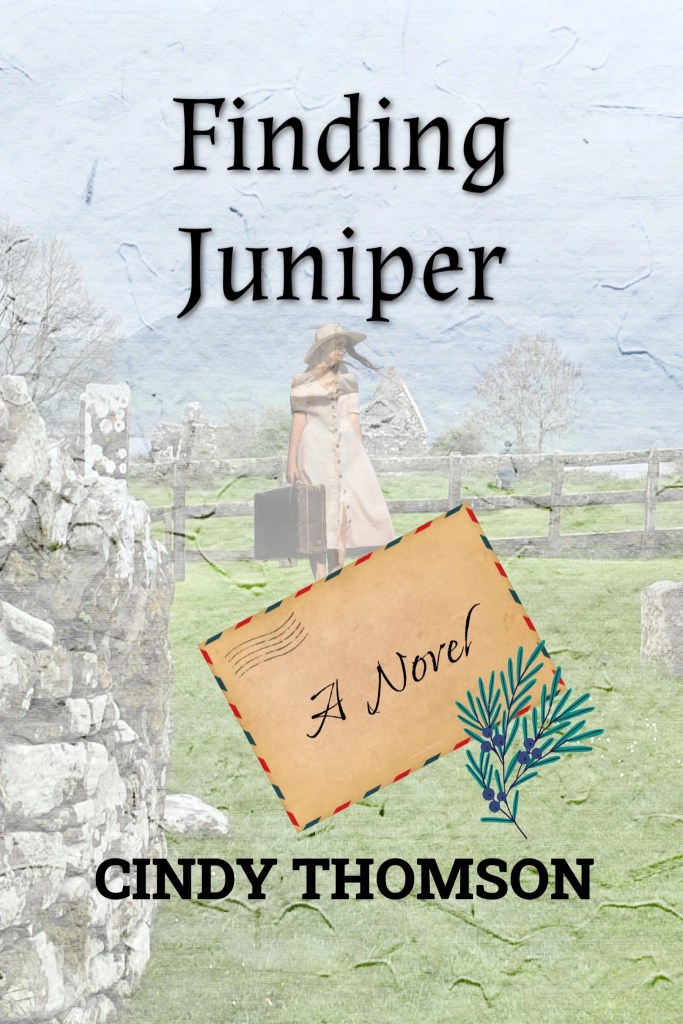
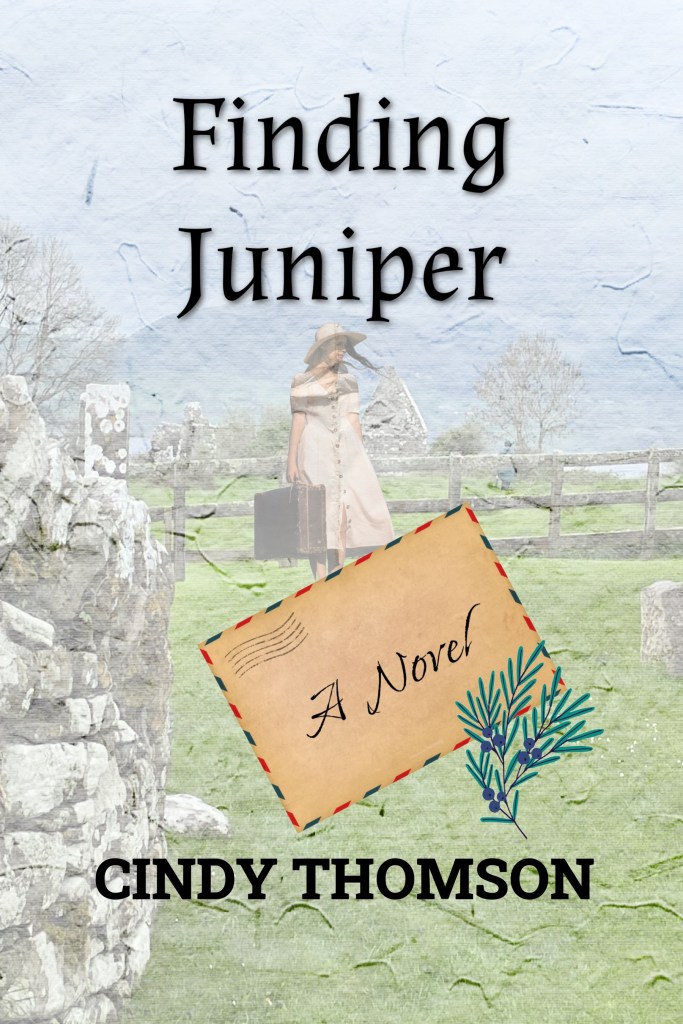
Meet Juniper from Cindy Thomson’s New Novel, Finding Juniper

For Patrick Doyle, the claim that time heals all wounds is a cruel lie.

In 1920, returning from WWI, Paddy finds Ireland creeping toward civil war. Invisible borders separate people, including Paddy and his pregnant girlfriend. With few prospects, Paddy sails to America. However, America is far from the land of opportunity he’d hoped for. And worse, his girl refuses to follow him because of her political involvement.

Thirty years later, Patrick has moved on with his life, building a new family. A letter arrives, suggesting the child he’d assumed died may be alive. Patrick’s American daughter Mardell pushes him to find out what happened to her sister, named Juniper. Patrick anxiously sails to Ireland.

Juniper endured a childhood in institutions, and when she’s released, she moves on without the parents who left her. Operating an apothecary out of an inherited cottage where villagers are slow to trust outsiders, Juniper finally finds a home when her grandmother arrives. Just as she feels comfortable and content, her father shows up at her door, bringing shocking news about her mother.

Finding Juniper invites readers on a journey of confronting the past, healing from old traumas, and redefining what family truly means.


Welcome to the blog, Juniper. Because of the time period of the novel, you might not know what that is.

Juniper: You said this was an interview. Is that what you mean?

Ah, yes, an interview. Readers would like to know about you, especially if they haven’t read the book.

Juniper: [Gasp!] They haven’t read the book? They must or I will cease to exist.

Don’t worry. You’re real to those who have. Tell us something about your childhood. When were you born?

Juniper: Now you sound like those doctors at St. Giles. I was born on the second of June, 1920, in Dublin, Ireland. My childhood was not happy, but you don’t want to hear about that.

Oh, we do! Happy or not, your story will help us get to know you.

Juniper: [Sigh] It won’t really because I’m a new woman, now. But I’ll tell you a wee bit. I grew up without parents, but I wasn’t an orphan. Ireland in those days, well, things were all upside down. My mother got involved in politics. Long story, but she wasn’t in a right state to raise a child. Things are better in Ireland now, in 1950, and I’m doing quite well. When I was young my mother sent me to live with the nuns for a time. I rebelled a bit as a child, so they moved me to St. Giles.

That’s a hospital?

Juniper: Of sorts. So they called it. It was really a place where they put folks, mostly girls, whose families don’t want them or maybe just couldn’t deal with them. They let me go when I was older.

Your parents didn’t want you? I heard a different story.

Juniper: I heard it too. Call it what you will, but in my mind I was abandoned. I’m still trying to adapt.

Say no more. We don’t want to spoil the story.

Juniper: I was happy, though, when I got to work in the gardens. I learned a lot about plants from the gardner at St. Giles. And also from letters my granny sent me. She made herbal cures as well. I am what you might call an herbalist or a natural healer. I think that’s the term from your time.

How fascinating. I bet folks appreciate the things you make.

Juniper: Most do. There was a wee bit of trouble once, a bit of a mix up with one of my cures.

Wait! Don’t tell us.

Juniper: Happy not to talk about that.

So, your father, Patrick, went to America?

Juniper: He did. My mother called him Paddy. I was told he’d died over there.

I heard something different. Life was difficult for him in America. At least in the beginning.

Juniper: Now you wait. Don’t be spoiling things, as you said.

Sorry. Isn’t there a handsome new rector in your village now?

Juniper: Yes, Donal. He’s the kindest person I have ever met. My experience with the church has been less than pleasant, but meeting him has made me look at things differently.

Will something develop between you two?

Juniper: You sound like Granny. We shall see.

Why don’t you tell us about your name?

Juniper: Ah, my name. Granny always called me Juniper, but my birth name was Anna. St. Giles would only call me Anna, so I got used to that. I like Juniper, though, named as I was for a lovely green plant. There is such beauty in the world out of doors. Much healing in plants.

Do you find healing by working in the garden? And in the novel as well?

Juniper: I do feel calmer when I toil in my fields, but healing for my whole self? You’ll have to read to find out.

Thanks for chatting with us, Juniper.


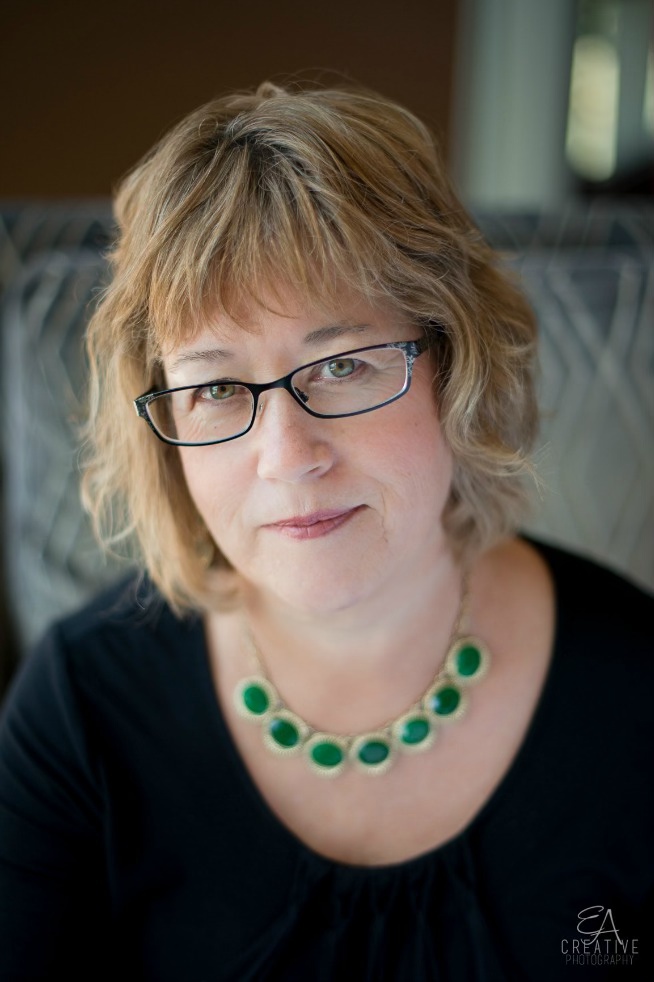
Known for the inspirational Celtic theme employed in most of her books, Cindy Thomson is the author of both fiction and nonfiction. A genealogy enthusiast, she writes from her home in Ohio where she lives with her husband Tom near their three grown sons and their families. Visit her online at CindysWriting.com

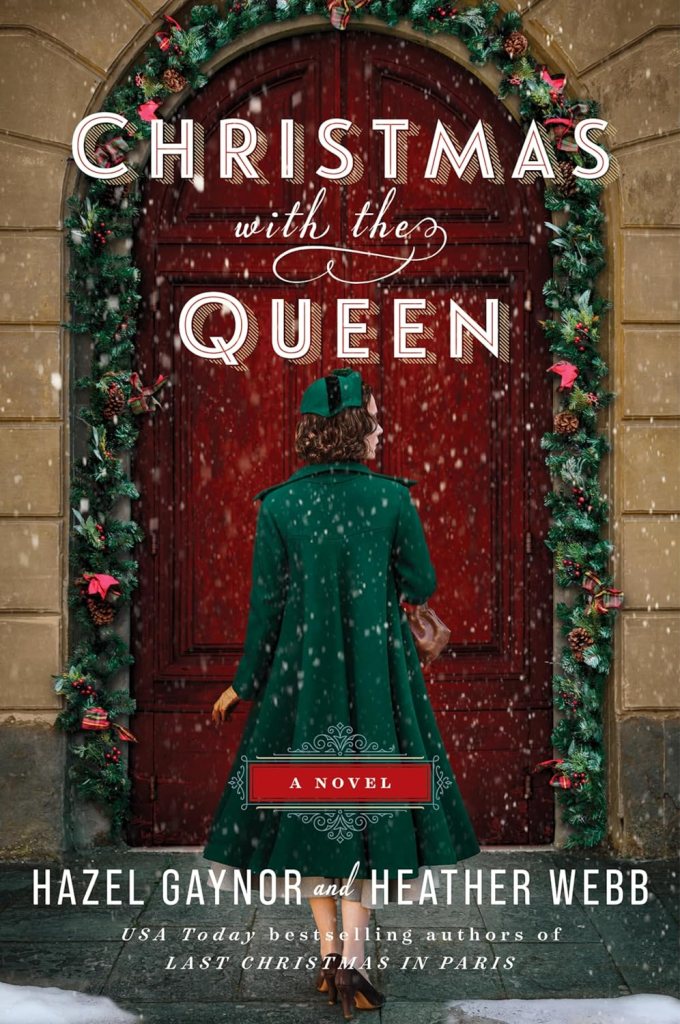
Book Review: Christmas with the Queen by Hazel Gaynor and Heather Webb

December 1952. While the young Queen Elizabeth II finds her feet as the new monarch, she must also find the right words to continue the tradition of her late father’s Christmas Day radio broadcast. But even traditions must evolve with the times, and the queen faces a postwar Britain hungry for change. 

Amazon Affiliate link used helps to support this blog

I enjoyed this novel about two lovers, Jack and Olive, who are separated by circumstances, including Jack’s marriage to another woman, Andrea, he loved. As the story opens Andrea is killed in a car accident. She leaves behind the dream she and Jack had for Jack to open his own restaurant. Olive harbors a secret, and these two things keep them apart for most of the book. It’s the classic romance formula.

What made this book intriguing for me was the glimpse into the royal family and the Queen’s preparations for her annual Christmas address. (However, readers should understand, despite the title and setting, the book is about Jack and Olive who both have jobs that take them into the lives of Queen Elizabeth and Prince Phillip). Another intriguing aspect for he was Jack’s character. He enjoys cooking the recipes that his grandfather, from New Orleans, taught him. The way he puts his dishes together and the way he introduces them to the British people was interesting. I also loved how he wooed Olive by figuring out what she liked and setting up one-on-one cooking lessons.

The only drawback for me was the prolonged period of time (years!) that it took for Jack and Olive to reunite as a couple. I found it a little annoying. I also didn’t like that we weren’t able to witness a proposal or a wedding. After all that back and forth, this part deserved a place in the story, I thought. Even so, this didn’t spoil my enjoyment of this story by two very talented authors. I’ve read several of their books and I love how they take ordinary people and show readers how they endured and prospered during the times they lived in.

This is a fun Christmasy read with a gorgeous cover that I think readers will enjoy.

Merry Christmas, everyone!

I received a free review copy from the publisher via NetGalley and was not required to leave a review. These are my own opinions.

Reviewed by Cindy Thomson, www.cindyswriting.com

A Chat With Daviana Spalding from Seeking Simon by Susan Pope Sloan (Book #4 in Rescued Hearts of the Civil War)

In the summer of 1865, Southern families are struggling to pick up their lives after the war. . . .

Novel PASTimes: Tell us about yourself, Daviana.

Daviana: My full name is Athdara Daviana Spalding, which is a mouthful, so my family and friends just call me Dottie. I’m twenty, and I live on a farm near Gainesville, Georgia. That’s in Hall County, the northeastern part of Georgia, not far from the South Carolina line. Right now, it’s just Papa and me living here. Mama died when I was thirteen, and my only brother, Lionel, came home after the war ended only to leave again. He took my sweet nephew, Albert, with him, and I sure do miss that little boy.


Novel PASTimes: Why did Lionel leave?

Daviana: Seeing the South in its broken condition was hard on him, and being home reminded him of all he’d lost—his wife and Mama. I think he was afraid we’d lose the farm, too, because he’d fought with the Confederate army. Then he had a big argument with a neighbor, so that gave him an excuse to head west. Mail service is unreliable, so I don’t know where he is now.


Novel PASTimes: Were you in danger of losing the farm?

Daviana: We didn’t know for sure, so when the Federal men came by asking about it, Simon McNeil spoke up and said he and I was going to marry me soon. I’m not sure why he said that when we had no such understanding. Heavens, we’d only met him a week ago.

Novel PASTimes: How did you meet Simon?

Daviana: He stopped at our house on his way home from Virginia to Alabama. We gave him a good meal and a bed for the night, then he took sick. Malaria, he said, which he’d contracted during the war. It took him a few days to regain his health enough to be able to travel again.

Novel PASTImes: How would his being engaged to you make a difference to whether the Federals let you stay on the farm?

Daviana: Papa and I didn’t know it till later, but Simon had been a Union officer, so adding his name to the deed made sure it was safe. He’d also earned a law degree, so he knew how to arrange everything to secure it. There’s also the matter of Jasper Dunaway, a neighbor who wants our farm and me with it. We figured announcing our betrothal ought to keep him away.

Novel PASTImes: But if the engagement is fake, won’t everyone soon find out?

Daviana: Well, Simon convinced me he wanted to make it real right from the start. I was already half-gone over him anyway, so I agreed to let it stand and see if we’re both still agreeable to marry when he returns from visiting his folks in Alabama.


Novel PASTImes: From your smiles and blushing, I guess that wedding is still in your future.

Daviana: I hope so. I’m dreading Simon’s departure, but spending some time apart ought to help us be sure whether getting married is what we both want.

Novel PASTImes: Tell me a little more about Simon.

Daviana: Oh, Simon McNeil is a charmer for sure. He always displays good manners, and his blue eyes sparkle when he teases me about my proper Scottish name. He tends to be impulsive, but he’s trying to curb his impulsive tendencies, and I’m of a more cautious nature, so I suppose we balance each other out.


Novel PASTImes: You don’t plan to go with him to visit his family?

Daviana: No, with harvest coming up, I need to stay here with Papa. Besides, I think Simon has some restoration to do with his family, especially since he’s been gone such a long time. He needs to concentrate on that and not worry about entertaining me while he’s there. After he takes care of that, I’ll be here, waiting for him.


About Susan: Retired from a career in technicalwriting, Susan now combines her love of history and language in the world of Christian fiction. She and her husband live in Georgia where she is active in Toastmasters, Word Weavers, and musical groups. She also has authored three non-fiction books and several non fiction articles.

You can find Susan here:

Her website.

BookBub.

Facebook.

Instagram.

Find her book on Amazon and Barnes and Noble.

A Conversation with Tabitha Gage from A Calculated Betrothal by Denise Weimer

Today we’re sitting down with Tabitha Gage, the heroine of A Calculated Betrothal, in her cabin just south of Georgia’s Altamaha River. It’s 1776. Tabitha, more than a decade has passed since we met you in your twin sister’s story, Temperance Scott, of A Conflicted Betrothal. Your sister got into some trouble as a fledgling Daughter of Liberty during the Stamp Act Protests in Savannah.

Back then, you were a Loyalist being courted by Henry Gage, Lord Riley. Some readers found you a bit…spirited. You almost stole the ending of that book from your shy little sister—so much so that Denise Weimer felt she had to write your own story to resolve what happened to you. You took the blame for writing the Townsend Letters that accused prominent Loyalists of harboring the stamps or being the stamp master. Then you eloped with Lord Riley and sailed off in his schooner for his estate on the Altamaha River. So tell us, Tabitha, has life been all you dreamed of in the past decade?

*long silence*

Tabitha?

Yes, I’m just thinking how to answer that. The answer is no. I gave up everything for my sister…and to please my father. Not that he gave us many choices in life. He expected me to marry Lord Riley. Temperance got Ansel—a handsome, young officer—and I got a man my father’s age who lost what little regard he had for me when I did not produce an heir. An heir to what, I ask you? Henry sent everything he made to his wastrel brother in England, to prop up the family estate.

I’m so sorry to hear that your grand gesture—ahem, sacrifice led to such bitter disappointment. But now that Lord Riley has passed away, surely, your future looks brighter?

Brighter? Have you looked around? Henry sold River’s Bend to his greedy neighbor, Hugh Jackson. All he left me was this log cabin where his drover lived on the timberland for his free-range cattle. And the Loyalist East Florida Rangers keep stealing them.

Loyalist? Does that mean you are no longer of that persuasion?

Well, that remains to be seen. Now that I’ve had a cruel master myself, I’m much less fond of King George.

Might your change of heart also have something to do with a certain Patriot ranger who helped you round up your cattle?

Certainly, Sergeant Lassiter helped me—after he almost got me killed in a siege at Fort McIntosh down in the swamp. And he’s strangely bent on helping me make something of my land, if only to ensure the Jacksons don’t get their hands on it. He says it’s because Hugh Jackson did his father dirty in business. But when Edmond found out that Julian Jackson wanted to marry me… I tell you, there’s more to this story than Edmond is telling me.

How is Sergeant Lassiter proposing to help you?

He’s suggested I build a store for the settlers living on this side of the Altamaha, and that he approach the Scottish timbermen who live in Darien about logging my land. Then he would act as my manager.

Do you trust him that much? You said you fear he’s hiding something.

I don’t know. I’ve got to trust someone. Everything I try on my own is not working, and I refuse to go back to my father, only to be married off to one of his cronies again. Edmond is kind…humble. And he actually seems to admire my spirit—what little I’ve got left after being married to Henry. But one thing I vow—this is a business partnership only. Never again will I be shackled to a man I don’t love.

More About the Book:

South Georgia, 1776

The deathof her husband, Lord Riley,means that not only is Tabitha Gage no longer a lady—she’s abandoned on an isolated plantation on South Georgia’s Altamaha River on the eve of revolution. With the fine house and fields sold to a neighbor, she’s left with a log cabin on unsettled timber land. Rather than marry the neighbor’s son, Tabitha determines to make her own way—and never again be shackled to a man she doesn’t love.

Sergeant Edmond Lassiter is one assignment away from promotion when he comes to the aid of a red-haired beauty fending off Loyalist cattle rustlers. Thrown together during an attack at a nearby fort, the Patriot scout and Loyalist widow are surprised by the values they share. When Edmond learns the same man who ruined his family is after the little Tabitha has left, he convinces her they should work together to make her land profitable—all while fighting off the British from East Florida and her greedy neighbor, who sabotages their every effort to succeed. A business arrangement, nothing more. But as a British invasion threatens, Edmond finds he’s risking far more than his heart.


Denise Weimer writes historical and contemporary romance from her home in North Georgia and also serves as a freelance editor and the Acquisitions & Editorial Liaison for Wild Heart Books. A mother of two wonderful young adult daughters, she always pauses for coffee, chocolate, and old houses.

Connect with Denise here:

Monthly Newsletter Sign-up

Website

Facebook

Twitter

A Chat With Julia Collins from Julia’s Joy by Susan G. Mathis

Welcome Julia Collins. Why don’t you tell us a little about yourself.

I grew up in Brockville, Canada. My father was a businessman from a wealthy family. My mother, Myrtle, was from a middle-class family. They died when I was fourteen, and my grandmother recently died, too. Now my life is very scary and uncertain. 

Tell me something about you that readers may find surprising?

I have come to love the Thousand Islands along the St. Lawrence River’s main shipping channel. The 1,864 islands are shared almost equally between New York state and Ontario, Canada. It’s magical. Huge freighters pass by us and the tiny islands along the main channel and share the waterway with all kinds of boats including ships, kayaks, and canoes.

Tell us more about the Sister Island Lighthouse where you are staying for the summer. 

Sister Island are a string of three tiny islets linked together by concrete breakwalls and walkways, that run parallel to and just south of the international boundary line separating the United States and Canada. It marks a precarious spot along the channel, and the beautiful lighthouse was built of dark gray limestone and embellished beautifully. A fixed white light of the sixth-order, illuminating an arc of 360°, keeps everyone safe.

Who is this William I keep hearing about? 

William Dodge, Jr., became Sister Island Lightkeeper last year after his father passed away from dropsy of the heart, and he suffers from chronic pleurisy. His mother still lives on the island with him. He’s quiet, godly, reflective, and loves the river and life on the island. His faith is strong, and he finds peace in relationship with God. And shhh…I really like him.

And his mother? Do you like her?

Mrs. Dodge was Granny’s friend. She’s a gentle, kind, godly woman who has become like a mother to me. I understand why Granny wanted me to come here, and I never want to be without her wisdom and love.

If you could leave readers with one message, what would it be? 

Trust in God and His plans for you. Hope for a better future. Hope for love. Hope for healing. God can heal a broken heart and help you forgive those who hurt you. He did that for me.

Here are a few fun, quick questions:  

What is your favorite hobby? Painting. I find great joy in it.

Please describe yourself with three words. Creative, questioning, lonely. 

What’s your most precious possession? My art set.

Are you a glass-half-full or glass-half-empty kind of person?

I’m not sure. I try to see the bright side of things, but after all my losses, I’m not sure.

What is your biggest pet peeve?

People misunderstand me. Though I try, folks often judge me wrongly.

What is your biggest secret?

I’d love to be part of the Dodge family. Shhh….don’t tell them, please.

What is your heart’s deepest desire? 

That’s easy. To love and be loved. After losing my parents and grandmother, aloneness is a terrible place to be.

What have you learned about yourself in the course of your story?  

I’ve learned to trust in God and His plans for me. God can heal a broken heart and has helped me forgive those who hurt me. 

About Julia’s Joy:

She came to claim her inheritance, but the mysterious scarred lighthouse keeper makes her question all her plans.

When Julia Collins reluctantly sets foot on Sister Island, compelled by her wealthy grandmother’s will, she is intent on claiming her inheritance and moving on. But when she experiences the peaceful, faith-filled island life, and connects with the handsome lightkeeper, William, Julia finds herself confronting her open wounds from her parents’ deaths.

William Dodge, lightkeeper of Sister Island, harbors a heart hardened by a past betrayal. Between that and his chronic pleurisy, he wants nothing to do with love. But when Julia arrives on the island bursting with vitality and unconventional notions, William’s world is turned upside down. As she chips away at the walls William has built for himself, he finds his reluctance waning.But just as love begins to blossom between them, Julia is faced with a tempting proposal from a prominent Brockville family. Will she succumb to societal expectations or choose the richness of her island life and the love of the steadfast lightkeeper?


About Susan:

Susan G Mathis is an international award-winning, multi-published author of stories set in the beautiful Thousand Islands, her childhood stomping ground in upstate NY. Susan has been published more than thirty times in full-length novels, novellas, and non-fiction books. She has thirteen in her fiction line including, The Fabric of Hope: An Irish Family Legacy, Christmas Charity, Katelyn’s Choice, Devyn’s Dilemma, Sara’s Surprise, Reagan’s Reward, Colleen’s Confession, Peyton’s Promise, Rachel’s ReunionMary’s Moment, A Summer at Thousand Island House, Libby’s Lighthouse, and Julia’s Joy, the second in her three-book lighthouse series. Her book awards include three Illumination Book Awards, four American Fiction Awards, three Indie Excellence Book Awards, five Literary Titan Book Awards, two Golden Scroll Awards, and a Selah Award. Susan is also a published author of two premarital books, two children’s picture books, stories in a dozen compilations, and hundreds of published articles. Susan makes her home in Northern Virginia and enjoys traveling around the world but returns each summer to enjoy the Thousand Islands. Visit www.SusanGMathis.com/fiction for more. 

Where can people find you online?

Susan’s website: https://www.susangmathis.com/fiction-books

Buy links: Amazon | Barnes&Nobles | Wild Heart Books

Social media links: Website |Author Central |  Facebook | Twitter | Blog | InstagramGoodreads l Book BubPinterest | 

Julia’s Joy book trailer: https://www.youtube.com/watch?v=Rq7XLUohjrA

A Chat with Arthur from Sleeping in the Sun by Joanne Howard

Amazon Affiliate Link Helps to Support the Blog

When two visitors arrive to the boarding house in India where an American boy is coming of age during the British Raj, truths unravel, disrupting his life and challenging the family’s sense of home. A unique historical angle ideal for fans of The Poisonwood Bible and The Inheritance of Loss.

In the last years of the British Raj, an American missionary family stays on in Midnapore, India. Though the Hintons enjoy white privileges, they have never been accepted by British society and instead run a boarding house on the outskirts of town where wayward native Indians come to find relief.

Young Gene Hinton can’t get out from under the thumb of his three older brothers, and the only person he can really relate to is Arthur, his family’s Indian servant. But when Uncle Ellis, a high-ranking British judge, suddenly arrives and announces he’ll be staying indefinitely in their humble house, far from his prestigious post in Himalayan foothills, life as Gene knows it is interrupted. While his brothers are excited at the judge’s arrival, he is skeptical as to why this important man is hiding out with them in the backwaters of Bengal.

Also skeptical is Arthur. Then an Indian woman appears on their doorstep—and, after growing close to her, he learns the sinister truth about the judge. Torn between a family that has provided him shelter, work, and purpose his whole life and the escalating outrage of his countrymen, Arthur must decide where his loyalties lie—and the Hintons must decide if they can still call India home.

So, Arthur. Please introduce yourself. What is your role in the Hinton household?

I am the family’s servant. The only one, actually. Which is unusual for such a large house and a family of four young boys, but…they manage with just me. Mrs. Hinton expects me to do the shopping in the bazaar, to tend to garden, to cook meals and serve them…oh, and to feed Minnie, the monkey they keep in the shed.

Is that so? Do many animals take up residence at the house?

Oh no, just Minnie. The house is a boarding house for humans, though. As part of the mission, the Hintons take in anyone who needs a momentary place to stay. It’s nice. The house is a bit far from town and I have so much to do, I don’t get many chances to meet other folk.

What do you do for yourself? 

I shouldn’t say, but I like to get a quiet moment away and enjoy a bidi. Mr. Hinton doesn’t like it, smoking is a sin and all, but I think he must know and doesn’t say anything. Or a pariah dog recently started showing up, and she likes to play with me. She’s quite sweet, and I’ve grown fond of her. Almost thinking of her as my own. I’ve never really had anyone of my own…

I’ve heard this is a somewhat turbulent time in India. Have you seen or experienced any political unrest?

The country is always changing. There’s a serious anti-Raj movement that’s gaining momentum, when just a few decades ago, such sentiment would have been dangerous. But Calcutta and Bengal have always been on the more progressive side of things. Perhaps you have heard of the Bengal Renaissance? I don’t have much time to read, but I know there were works about independence and individualism, that sort of thing. Sounds very American, now that I think about it. But yes: I’ve seen some rallies get out of hand in the bazaar. Some people say the Raj will fall soon. But I have too much to do to pay attention to that. The Hintons depend on me to keep everything running.

Many people want the British out of India. Would that also mean the Hintons have to go? What would life be like for you with them gone?

I…don’t know. I suppose I’d be sad. I’ve known them ever since Mr. and Mrs. Hinton came here to Midnapore, when their oldest was just a baby. But maybe they could stay on? The work that they do as missionaries is with the native Indian tribes here, and I don’t see how they couldn’t go on doing that if the British weren’t in charge. They’re American, after all. Doesn’t that make them exempt?

Does it?

[Pauses.] It does. Of course it does. Because if it doesn’t…then they’re just the same as the British, in the end. And that would mean I’ve been serving the Raj in some way. Which I never intended. I know some Indians don’t have any choice, and the British employ so many people, but I tried not to. The Hintons are just an American missionary family, they don’t have the same kind of power as the British. 

How is life different for this American family compared to a typical British family?

They wouldn’t ever admit it, but of course they have less money and are not so concerned with fitting in with the rest of British society. Like I said, they’d never admit it, but I think they’re quite proud of it, not fitting in, really. It seems…American of them.


Joanne Howard is an Asian American writer from California. She holds an MFA in writing from Pacific University. Her poetry received an honorable mention from Stanford University’s 2019 Paul Kalanithi Writing Award. Her fiction has been published in The Catalyst by UC Santa BarbaraThe Metaworker Literary Magazine and the Marin Independent Journal and her nonfiction has been published in Another New Calligraphy and The Santa Barbara Independent. She lives in Santa Rosa, CA. Find out more at her website.

Instagram: @joannesbooks

Meet Lydia Gallagher of Beyond Shattered Dreams by Cynthia Roemer

After months in a Confederate prison camp, Private Will Everett boards the Sultana eager to return home and leave behind the horrors of war. One day into the voyage, the overcrowded steamboat explodes, rendering Will injured and unable to recall his identity. With only a pocket watch and the name Will E. etched inside to guide him, Will begins a relentless quest to find his forgotten past. Scarred by her father’s untimely death, Lydia Gallagher struggles to trust God with unwanted changes in her family after the war. The arrival of an elusive, but handsome, stranger only adds to her angst. Until the intricacies of his true nature and the mysteries of his past come to light. As they work to thwart a ruthless man’s efforts to sabotage the farm, their admiration for each other deepens. But when Lydia becomes privy to information that could forever alter their lives, she must choose between losing the man she’s come to love or denying him the one thing he longs for most. 

Welcome to Novel PASTimes! We’re pleased you stopped by today.

Thank you. It’s wonderful to be here.

Share a bit about yourself—your name, where you’re from, what occupies your time.

I’m Lydia Gallagher. I live on a farm four miles west of Elmira, New York. I’ll soon turn eighteen and have two older brothers, Drew and Luke, both of which recently returned from fighting in the War Between the States.

Oh, my. I’m so glad they survived to return home. Such a terrible war. Which side did they fight on?

They fought for the Union. Yes. Truly, the war was a terrible hardship on everyone. I was not yet eleven years old when the war began. Sadly, it stole much of my youth. I still remember waving goodbye to my father as he left to fight. It would be the last time I would ever see him.

I’m so sorry. How about your mother. Is she living?

Yes. She and I grew quite close after my father’s death and my brothers left to fight. We prayed day and night for my brothers’ safe return.

With only the two of you there, how did you manage the farm?

We had Luke’s help until he left for the war in 1863. Mama and I were able to maintain a sizeable garden and our neighbor, Hal Perkins, helped put in some of our crop, but much of the land remained fallow until Drew and Luke returned.

So, with the war over, have your brothers remained on the farm or married and followed other pursuits?

Surprisingly both brothers met and fell in love with Southern women during the war. Drew married Caroline and Luke eventually married Adelaide. While I dearly loved my new sisters-in-law, I disliked the unwanted changes that came about in our family after they wed. I had such great hopes of us all remaining together. But they and God had other plans.

Hmm. Sounds serious. So, were all the changes you experienced bad ones? Or did God have anything good in store?

Grin. Well, there was one positive change that came about. A stranger happened by our place and informed us Luke had hired him to help manage the farm. I was suspicious at first. He seemed quite vague about himself and wouldn’t give any straight answers. But once I learned the reason behind his ambiguity, I understood.

Ah, and was this stranger handsome?

I’ll admit he immediately caught my eye. He was ruddy and well-muscled with sandy hair and amazing hazel eyes. Up until now, no young man had sparked my interest. I’d had a few callers, but honestly, until I met Will, not a one of them struck my fancy. Will definitely changed that. But I had a hard time discerning if he felt the same about me.

So, have things turned out as you hoped for you and Will?

Smile. That’s something you and your fellow readers will have to learn when you read my story in Beyond Shattered Dreams.


Cynthia Roemer is an inspirational, award-winning author who enjoys planting seeds of hope into the hearts of readers. Raised in the cornfields of rural Illinois, she enjoys spinning tales set in the backdrop of the mid-1800’s prairie and Civil War era. Cynthia feels blessed the Lord has fulfilled her life-long dream of being a published novelist. It’s her prayer that her stories will encourage readers in their faith. She and her husband reside on the family farm. Visit Cynthia online at: www.cynthiaroemer.com