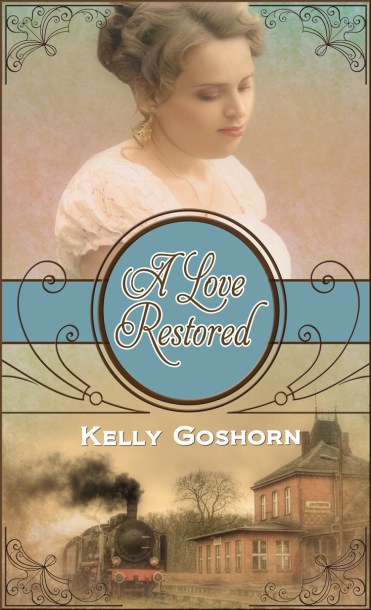
Meet Ruth Ann Sutton from Kelly Goshorn’s A Love Restored

ALoveRestored_prc5391_750

Thank you for inviting me to Novel Pastimes to share with you a little of my story. I am pleased to make your acquaintance. I’m Ruth Ann Sutton from Catoctin Creek, Virginia. I’m twenty years old and the youngest of two daughters born to my parents, Charles and Hannah Sutton. My father died suddenly when I was thirteen and I miss him terribly. I can usually be found wearing the locket he gave me. My older sister, Sarah, was married by my age. She is beautiful and petite—just like mama. I’m quite the opposite. With broad shoulders, round hips and a head full of unruly curls, I haven’t had many suitors.

Sometimes that is for the best, too much heartache. But I understand you are engaged. Would you like to tell us about your fiancé?


Oh, my heavens! Where did you hear that? From Tilly Hirst I imagine. That woman is always gossiping. The truth of the matter is I am not engaged—yet. James has not proposed, nor have I indicated that I will agree to such an arrangement. There is an understanding between our families, however, and mama is hoping we will be married within the year.


What are your reservations about marrying James? Is he unkind to you?


My, you are direct, aren’t you? I think we would get along splendidly if I lived in your century. When I marry, I will be expected “to take my place in society,” which is a fancy way of saying I have to join stodgy organizations like the Women’s Benevolent Aid Society and terminate my teaching position at the Freedman’s School. Married women are not allowed to hold such positions.


If you don’t mind me being frank, which I am prone to be, the real reason I’m hesitant is that I believe he’s more interested in my familial connections than me, as a woman. James is the son of a prominent Virginia politician. Although we get along just fine, I find him a bit dull. Mama says I should be grateful for his attention. I’m not sure how long I can postpone our nuptials, but what I want more than anything is for a man to love and accept me as I am—fuller figure and strong opinions included. But I’m not sure such a man exists. Look at me prattling on and I barely know you. If mama were here, she’d remind me that “young ladies should be seen and not heard.”


Is there perhaps another man who has caught your eye? If so, was it love at first sight or did he have to grow on you?


I did have this chance encounter with Benjamin Coulter at the creek the other day. Although I thought his eyes were a delightful shade of amber, like honey drizzling on a warm biscuit, there was hardly an immediate attraction. His dirty, disheveled appearance startled me (I can’t abide a man with whiskers). He was one of those railroad men mama had warned me about. Concerned he had nefarious intentions, I grabbed a rather large stick and threatened to pummel him if he didn’t keep his distance. One thing led to another and I fell into the creek. It truly was a disastrous first impression.


I think I sense a growing interest in this gentleman as opposed to James?


You are very perceptive. But mama disapproves because he does not come from a family of means and has “nothing to offer me.” I disagree. He likes to read Jules Verne and he supports my teaching the Negro children. Although he thinks I’m stubborn, he seems to like my feisty personality. Something just comes alive inside when I’m around him.


You mentioned you teach at a Freedman’s School. Do your family and friends support you?


Although my family has always taken a more liberal view toward Negroes, my pending nuptials are placing a great burden on me to sever myself from the position early. My hesitancy to do so is straining the arrangement mama has made with James and his family.


That sounds like a dangerous occupation for a woman in post-Civil War Virginia. Have you had much opposition?


At first the community was very supportive of the school and its mission. When the Freedman’s Bureau was unable to find a qualified male teacher I was asked to take the position temporarily.That’s really when the trouble began.I’ve received threatening messages and the school has been vandalized on several occasions. Once I was even accosted outside the mercantile in broad daylight. When Benjamin learned that Silas Hench put his hands on me I thought he would insist I resign. Instead, he organized security patrols to guard the school whenever classes were in session.


You sound like a strong woman! Are you happy with yourself?


At times, yes. Although mama says my opinionated nature is my biggest fault, I like that I express my thoughts and stand up for what I believe. My fuller-figure, however, has been the source of significant self-doubt and heartache, especially when it comes to suitors. Many unkind things have been spoken to me regarding my appearance. I repeated things to myself over and over again until I no longer saw much of anything to esteem. A Love Restored chronicles my journey to self-acceptance and how I learned to see myself as our heavenly Father does—fuller figure and all.


What can the reader learn from your struggle to overcome self-doubt?


A Love Restored is not only a story of love, romance, heartache and restoration, but also a story about the power of words over our lives. It is a story about the struggle each of us faces to take our thoughts captive to the truth of Scripture so we may experience the fullness of God’s unequivocal love for us. As Benjamin and I discover, it is only then that we are truly able to give and receive love, unconditionally. Our prayer for you and your lovely readers is that you will not allow the enemy to steal the joy that is rightfully yours as a child of God. Speak the truth of the gospel over yourself every day and ask God to give you His eyes to see yourself as He does. (1 Samuel 16:7b)

Author Bio Pic1_smallKelly Goshorn weaves her affinity for history and her passion for God into uplifting stories of love, faith and family set in nineteenth century America. She is a member of American Christian Fiction Writers and Romance Writers of America. Kelly has been enjoying her own happily-ever-after with her husband and best friend, Mike, for 28 years. Together they have raised three children, four cats, two dogs, a turtle, a guinea pig, a gecko, and countless hamsters. Thankfully, not all at the same time. When she is not writing, Kelly enjoys spending time with her young adult children, scrapbooking with friends, board gaming with her husband, and spoiling her Welsh corgi, Levi. Her debut novel, A Love Restored, releases June 29thfrom Pelican Book Group.
Purchase on Amazon

Barnes and Noble Barnes & Noble

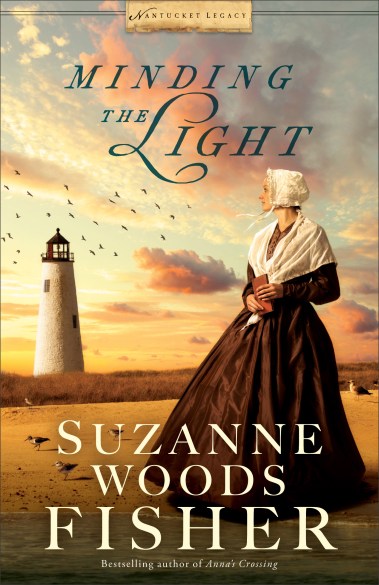
Interview with Mary Coffin Starbuck from Suzanne Woods Fisher’s Minding the Light

Minding the Light-Book Cover


Novel Pastimes:

Today we have a very special guest. In her day, this woman was likened to Nantucket’s Deborah, the Judge of the Old Testament. Today’s guest is Mary Coffin Starbuck of Nantucket Island. Mary, like Deborah the Judge, lived during a time when women were not given much respect, yet she managed to rise above and stand apart. Welcome, Mary.


Mary: ‘Tis a pleasure to be here.


NP: Your last name is quite famous. Are you related to the Starbuck coffee company?


Mary: Nay. Tea is my preference, strong tea, like most of my countrymen.


NP: Ah, but of course! We’re jumping back in American history quite a few centuries. Mary, would you remind readers what year this is?


Mary: The year is 1663, and I live on Nantucket Island. My father draggedmoved us to the island a few years ago, with several other families from the mainland. It was rather a barren place, filled only with Wampanoag Indians who ignored us and generally kept to their side of the island.


NP: Why did your father choose to move to Nantucket?


Mary: ‘Tis a long and involved story. Suffice to say that my father, Tristram Coffin, left England to seek a better life the colonies. That worked for a while, until the Puritans’ invasive grasp drove him to seek a place where no one could tell him how to live. Hence, we now live on a cold and foggy island thirty miles off the coast, far, far away from the reach of the Puritans. Father seeks Utopia. Oddly enough, in his search, I have found my own version of Utopia.


NP: Don’t stop now. Tell us about your Utopia.


Mary (blushing): A young man named Nathaniel Starbuck also came to the island with his family. We married not many months ago. Currently, we are living with his family, but I have a hope that we might soon construct a home of our own, closer to my trading store. I do believe his mother has a hope for that, as well.


NP: How do you enjoy living with your in-laws?


Mary: My father-in-law, Edward Starbuck, is a dear man, though not often at home. He spends much time Christianizing the Wampanoags on the other side of the island. Nathaniel is frequently with the Wampanoags as well, but for different reasons. They are teaching him to capture whales. That leaves much time together with Catherine, my mother-in-law, and Esther, Nathaniel’s youngest sister. Esther is a thorn in my side.


We have very different views, Catherine and I. She would prefer that I not continue working at my trading store. Happily, Nathaniel disagrees. ‘Tis not often that he contradicts his mother, but in this case, he has supported my desire.


NP: It’s known that your husband was illiterate, yet you are a learned woman.


Mary (visibly stiffening her spine): There are many kinds of intelligence. ‘Tis in my husband’s blood to be a seaman. The ocean is his book. He reads it as well I can read any book.


NP: Tell us about your trading store.


Mary: ‘Tis my greatest joy. Apart from my husband, of course. With the store, I am able to interact with nearly everyone on the island. Everyone is in need of something. My brothers sail back and forth to Cape Cod quite often, so I send along with them items to trade and a long list of things to procure. It is has been quite a successful venture. I have no intention of giving it up, even after this babe is born.


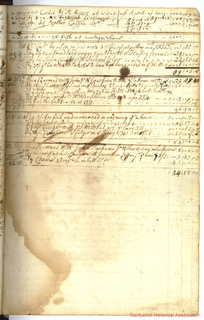
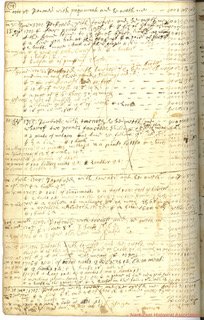
NP: We’ve seen pictures of your accounting book. You certainly have a head for math.


Mary: Aye, I do!‘Tis nothing. Though I will say that keeping track of trade accounts takes a careful attention to detail. More importantly, the trading store has become the heart and hub of our community. As people come in and warm themselves by the fire, there is time for important conversation. Many tell me their troubles, and I do my best to help them.


NP: So what’s this about your journal? And tell us about the secret buried under the oak tree.


Mary (smile quickly fades until she is stone-faced): How did you happen upon that knowledge? Did Eleazer Foulger speak to you of this? I feared this very thing!


NP: No, no. We read about it in Phoebe’s Light, and more of it in Minding the Light. Can you tell us the end of the story? How do things wrap up in The Light Before Day?


Mary (indignant): Nay. Not a word will you get from me. A secret ‘tis a secret. And now, if you’ll excuse me, I must be off and tend to my customers.


Suzanne Woods FisherSuzanne Woods Fisheris an award-winning, bestselling author of more than two dozen novels, including Phoebe’s Light,the Amish Beginnings series, The Bishop’s Family series, and The Inn at Eagle Hill series, as well as nonfiction books about the Amish, including Amish Peaceand The Heart of the Amish. She lives in California. Learn more at http://www.suzannewoodsfisher.com and follow Suzanne on Facebook @SuzanneWoodsFisherAuthor and Twitter @suzannewfisher.

Bonus pictures:

Mary Coffin Starbuck’s Accounting book…credited to Nantucket Historical Association.

All other pix…take by Suzanne


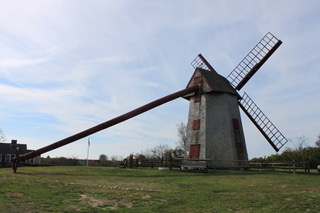
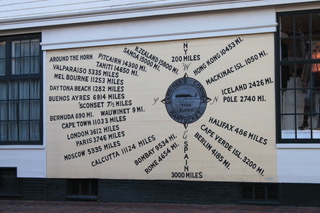
IMG_1305.jpegIMG_1311.jpegIMG_1444.jpegIMG_5668.jpegIMG_5669.jpeg

MaryCoffinStarbuckAccountingBook4.jpeg.MaryCoffinStarbuckAccountingBook.jpeg

Interview with Adria Starr of River to Redemption by Ann H. Gabhart 

River to Redemption-Book CoverHello, Adria. What a pretty name! Do you know why your parents named you that?

No, I’m sorry I don’t. My parents both died in the 1833 cholera epidemic. Since I was only seven at the time, I didn’t realize my name was a bit unusual. I never asked my mother about it. Her name was Ava and my father Edward. No clues there. My mother wrote some names of her family and my father’s family down in her Bible, but no Adrias. It’s not a Bible name either. Perhaps my mother found it in a book and liked it because it has a melodic sound. I do remember that my mother liked to sing.

That must have been really hard to lose your parents when you were so young. I don’t mean to ask hard questions, but can you tell me what it was like living through a cholera epidemic?

Just the word cholera strikes terror in my heart and it did for the people in our town in 1833. Cholera was an epidemic that year all over the country. Thousands died, but of course, you always hope the disease won’t come to your town. We weren’t that fortunate in Springfield, Kentucky. I was young so I really didn’t know that much about cholera, but I saw the fear on my parents’ faces when they found out someone in town had cholera. They say it’s caused by bad air because of rotting vegetables in the summertime. So everybody tries to get away from the bad air. My mother was packing to escape to the country but then my father was too sick to leave. Before the day was over my little brother became ill and then so did Mama. They all died. I don’t know why I didn’t die too, but Louis said it must be because the Lord had more for me to do here on earth. He found me in my house and took me to the hotel where he and Aunt Tildy took care of me. They were both slaves, but they were so kind to me. I don’t know what would have become of me if not for them. They helped me find a new home with my Aunt Ruth.

You lived with your adopted aunt for many years. What was Ruth like? She must have been strong to take you in without a husband to help her. Women didn’t have many opportunities or rights in 1833.

Women still don’t have many rights here in 1845. We can’t vote. We can’t even stand up in public and express our opinions about how things need to be changed in our country. If we try, we get shouted down. And not only by men but by other women too who think a woman should keep to her place. I say what place is that. I certainly don’t believe allowing a woman to be educated the same as men will make a woman go insane the way some people say. More likely the other way around.

I’m sorry. You have to forgive me. I didn’t intend to get on my soapbox. Aunt Ruth says I have a problem with that. She is every bit a lady. Her husband, who died in the cholera epidemic, was the school teacher. Aunt Ruth took over that job and has taught many Springfield children. She also learned to bake to supplement our income since teaching doesn’t pay that well. When I came of age I took a job at a general store much to my friend, Carlton’s distress. But having a job and drawing a wage does give a woman some freedom of choice. I can only hope that someday women will have the same freedoms to express their opinions and work at various jobs as men do today.

I may get you back on that soapbox, but we want to know how and why you became an abolitionist in a Southern town where slavery is legal and accepted by most people as how things are meant to be.        

Surely you don’t think it is right for a person to own another person. To be able to sell that person like he or she is no more than property. Anybody who examines with an open mind the institution of slavery has to see that everything about it is wrong. Everything. And it is not the way things are meant to be. Aunt Tildy helped me understand that when I was just a child. She deserved freedom. Louis deserves freedom. We all deserve freedom.

Tell us about Louis. I hear he became something of a hero in your town of Spriugfield during the cholera epidemic.

Louis is a wonderful man. Gentle and strong. Committed to the Lord. He found me after my parents died and he and Aunt Tildy took care of me. From the very beginning, I knew he meant nothing but good for me. During the cholera epidemic, he did what no one else could or would do. Even though he was a slave who might have taken advantage of the cholera epidemic to escape to the north and find freedom, instead he stayed to help those who were sick and to bury all those who died. Over fifty people died in 1833 in our little town of Springfield. He dug graves to give each of them a proper burial. He is just a genuinely good man. The safest I have ever felt was when I was a little girl with my hand in his.

He must be quite a man to have been able to do all that. How do you think he did it?

Louis has ever depended on the Lord to help him handle whatever comes his way. He has a deep faith. He taught me the value of praying with the belief the Lord will answer. The Bible does tell us that is true. Ask, and it shall be given to you, seek, and ye shall find. That’s in Matthew 7. Louis says we should listen to the Lord and put our faith in his plan for our lives.

What are your goals in life?

I have such conflicted thoughts at times. I would love to be married to a good man and have a houseful of children. At the same time, I would like to have the freedom to write and speak my opinions the same as men can do. I suppose my goal is to somehow combine those two desires and be a wife and mother while also being an independent woman. Do you think that is even possible?

I do hope so, Adria. For you. On a lighter note, have you ever had any pets?

Yes, I once wanted my own horse. Doesn’t every girl want her own horse? But we had no place or money for a horse. Aunt Ruth was right when she said we could walk everywhere we needed to go. So Aunt Tildy brought me a kitten. He was so sweet. All black except for a spot of white on his neck and a little touch of white on the tip of his tail. I named him Gulliver because Travels into Several Remote Nations of the World was one of the first books Aunt Ruth read to me. I loved those stories. Actually Gulliver turned out to be aptly named because once the cat got older, he took off for travels just like Gulliver in the stories. He did come home on occasion to let me pet him and to catch a few mice out in the shed.

So books helped you and your Aunt Ruth connect. I can almost see the two of you sitting on the couch reading by the light of the oil lamp. Why do you think reading together was so important to the two of you?

We did enjoy our reading times. Aunt Ruth loves books and the poetry of words. She opened up the world beyond our little town to me by sharing her love of reading. Those stories helped get me through the sad times early on when I missed my family so much. I do believe our many hours of reading together cemented the loving relationship Aunt Ruth and I eventually had.

After I learned to read, Aunt Ruth and I would take turns reading to one another. We still do sometimes. It’s wonderful how you can string words together to make a picture in someone’s head. Reading is good any way you do it, but when you read aloud, you can put feeling and music to the words of the writer and make those imagined pictures even better. I can’t imagine my life without books. Or without Aunt Ruth.

Thank you for answering our questions, Adria. We wish you the best as you seek love and independence. 

Ann H. GabhartAnn H. Gabhart is the bestselling and award-winning author of several Shaker novels—The Outsider, The Believer, The Seeker, The Blessed, The Gifted, and The Innocent—as well as These Healing Hills, Angel Sister, Small Town Girl, Love Comes Home, Words Spoken True, and The Heart of Hollyhill series. She is also the author of the popular Hidden Springs Mysteries series, as A. H. Gabhart. She has been a finalist for the ECPA Book of the Year and the Carol Awards, and has won two Selah Awards for Love Comes Home. Ann and her husband enjoy country life on a farm a mile from where she was born in rural Kentucky. Learn more at www.annhgabhart.com.

Meet Selah Daughtry from A Rebel Heart by Beth White

A Rebel Heart-Book CoverToday we welcome Selah Daughtry from Beth White’s A Rebel Heart

NPT: Selah, tell us a little about your family.

SELAH: I’m the eldest of three sisters. My middle sister, Joelle, lives with me and our second cousin ThomasAnne in the manager’s house of our family plantation home in Tupelo, Mississippi. Our youngest sister, Aurora, has lived with our grandparents in Memphis since the onset of the War Between the States.

NPT: The manager’s house? Why not the main house?

SELAH: Unfortunately, the big house isn’t fit to live in. During the war, Yankees came through and all but destroyed it. With my mother dead and my father gone, there’s nobody to see to repairs, and we can’t afford them anyway. It makes me so sad and angry. I’ve tried and tried to figure out a way to bring Ithaca back to life. We’re almost to the point of giving in to our grandparents and moving to Memphis.

NPT: Perhaps if you married money—

SELAH: I’ve got more pride than to sell myself, even for Ithaca! Besides, no man is going to be interested in an old maid of twenty-seven like me. Joelle might…but even she…see, we’ve developed a reputation as liberal eccentrics. It’s a little hard to explain to people who don’t live in the South—besides, it’s not good manners to talk about one’s finances with a stranger.

NPT: Ahem. All right then. Perhaps you wouldn’t mind talking about your family a little more. Condolences on your mother’s passing. I imagine you miss her very much.

SELAH: I do, but it’s been a long time, nearly seven years now. I’m beginning to get used to the ache. Mama taught me to manage a home, she taught me to be a lady, and she taught me how to trust God, no matter what. Joelle and Aurora and I—we’re going to survive somehow.

NPT: You said your father is “gone.” He’s passed away as well?

SELAH: Well. Early in the war he was involved in the controversial execution of a bunch of pro-Union civilians who’d raided a Confederate general’s home. The Yankees caught Papa and put him in a horrible prison, but he was shot in an attempted escape.

NPT: And…?

SELAH: That’s all I have to say about it.

NPT: You’re a bit of a tough nut to crack, Selah.

SELAH: People tell me that. Which is probably why I haven’t married. But you know…Never mind.

NPT: What were you going to say?

SELAH: Oh, all right. There is one man who somehow gets me to talk about the most personal things. From the minute I met him—which was under pretty traumatic circumstances, you know—there was something about Levi Riggins that drew me in.

NPT: Now that’s interesting. How did you and Levi meet?

SELAH: He saved my life during a train wreck. And he rescued a lot of other people, too—most of us Southerners. Which is amazing, considering he was a Union cavalry officer during the War. I don’t know exactly what Levi is doing here in Mississippi—odd, now that I think about it, he never got around to telling me. He asked for my direction, but no doubt he was just being polite. He has very good manners for a Yankee boy. And like I said, he’s a very sympathetic person.

NPT: Selah, something tells me you just might be surprised by Levi’s motives.

SELAH: Oh, I assure you this cynical girl is a very good judge of character.

NPT: Something about the way you said that makes me laugh. I suppose we’ll have to wait and see. Thank you very much for allowing these prying questions. I believe you may have an interesting story ahead of you.

Beth Head Shot – CroppedBeth White’s day job is teaching music at an inner-city high school in historic Mobile, Alabama. A native Mississippian, she writes historical romance with a Southern drawl and is the author of The Pelican Bride, The Creole Princess, and The Magnolia Duchess. Her novels have won the American Christian Fiction Writers Carol Award, the RT Book Club Reviewers’ Choice Award, and the Inspirational Reader’s Choice Award. Learn more at www.bethwhite.net.
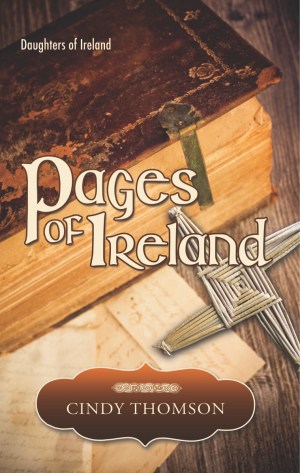
Interview with Aine from Cindy Thomson’s Pages of Ireland

Pages of Ireland by Cindy Thomson

Today we welcome Aine from Ireland in the 6thcentury.

Welcome, Aine. Since most of our readers are English speakers, please tell us how to pronounce your name.

My name is not unusual, but very well. ’Tis AWN-ya.


Thank you. In the beginning of the story you steal a book. Since books are so widely available in the 21stcentury, tell us why you did that, if you don’t mind.


I had to. Well, at the time I thought I had to. You see, the book was believed to have great power and it belonged to my betrothed’s clan. I believed my mother’s clan needed it more since the owners were wealthy and my mother’s people were very poor. There were many who believed the book could bring about a better harvest and make the cattle more fertile and healthy.


That sounds a little odd to us here in our time.


Is that so? But you do believe that prayers to our God are powerful, aye?


Of course.


Well, then you understand, I’d say. Although I did not at first. Thus my journey with the book to find Brigid.


Brigid? Tell us about her.


Well, in her book, BRIGID OF IRELAND, she saved me when I was a little girl. I lived with an abusive father. I had a skin disease, leprosy. Have you heard of it?


Oh my, yes. Although I’ve never seen it. You are looking at me funny. Remember we live in different times.


And leprosy isn’t common? That’s wonderful. Well, as you can see, my skin is perfectly flawless now. That’s because after my mother sent me off with Brigid to protect me from my father, Brigid prayed over me and I was healed! I knew she had abundant power, so because I was feeling trapped inside the clan I was to marry into, and I wished to do something for my mother and her clan to help them, I thought if I took that book to Brigid I would be safe and could do some good.


But you were wrong?


I was wrong and I was right. That book had power all right, but it was not what I had thought. The words in the book were what was powerful, and Brigid? She had some challenges to overcome as well and I seemed to set them in motion. Who would have thought the ruler of the clan who owned the book would go to such lengths to get it back?


Overall, were you glad you went to Brigid?


Indeed. What a wondrous place Cill Dara is. (That means Church of the Oak) There was a bit of trouble there—sure, a lot of trouble—but nothing God and Brigid could not eventually overcome. You see, her old nemeses came back for her, plotting revenge, but also a mysterious poet she had known long ago came to visit. And what happens to them is not what I expected. I’ll say no more about that so I don’t get into trouble with the author.


Was there anything else you were wrong about?


I wasn’t going to mention it but since you asked, aye there was. My betrothed. Again, I cannot say too much.


So, about that book. I’ve heard that it chose who needed to hear its words. Did you know that when you stole it?


I did not. I will tell you the truth: it scared me.


I understand. You can’t spoil the plot. Thanks so much for dropping in on Novel PASTimes, Aine.


My pleasure. If this is what books are like in the future, I’d say they are just as mysterious. One thing I do understand is if people don’t read PAGES OF IRELAND, my story won’t be told so I hope you all will go read it. The words in that book may very well be meant for you!


authorphoto4cindy-thomson-LR-3Cindy Thomson is the author of eight books, including her newest novel, Enya’s Son, based on 6th-century legends (releasing this summer.) Researching her Scots-Irish roots launched a writing journey that has lasted nearly two decades. Being a genealogy enthusiast, she has also published articles in Internet Genealogyand Your Genealogy Todaymagazines. Most everything she writes reflects her belief that history has stories to teach. Cindy and her husband Tom live in central Ohio near their three grown sons and their families.

Visit her online:

www.CindysWriting.com

www.facebook.com/cindyswriting

www.twitter.com/cindyswriting


SaveSave

Interview with Nathan Hale’s Fiancé (from The Hidden Side)

The Hidden Side CoverToday we welcome Mercy from Heidi Chiavaroli’s The Hidden Side.

Novel PASTimes: I’ve always been inspired by the late Revolutionary Spy Nathan Hale, but I never realized he planned to marry! Please, tell me your name and how you met the late Mr. Hale.

Mercy: My name is Mercy Howard. I met my beloved Nathan through a mutual friend of ours, Benjamin Tallmadge. He and Nathan attended Yale together and when Nathan visited Ben on Long Island…well, I am not certain I believe in love at first sight, but ’twasn’t long before we were sending letters across the Sound and planning a future together.

Novel PASTimes: How sweet! You mentioned Benjamin Tallmadge. Wasn’t he the head of the Revolutionary CIA?

Mercy: CI—forgive me, I’m not familiar with that.

Novel PASTimes: The Central Intelligence Agency…you know, spies?

Mercy: Oh my! One does not openly talk of such things where I come from. Spying is a business best suited for blackguards and scoundrels. Cheats and cowards. Are you certain ’tis safe to mention here?

Novel PASTimes: I assure you it is.

Mercy: Very well, then. If you insist. I’ve been wanting to unburden myself with my secret for some time.

Novel PASTimes: Secret?

 Mercy: I suppose it all began with Nathan…nay, perhaps before that. My uncle, William Howard, betrayed the Patriots when he led General Howe through Jamaica Pass. If not for his disloyalty, General Washington may have stood a chance at the Battle of Brooklyn, and New York wouldn’t be occupied by the King’s Army as it is now. 

Novel PASTimes: Ouch. I can see why that would bother you. And what about Nathan? Did you know of his espionage activities?

Mercy: My, you are bold! What must people in the 21st century be like to speak so openly of such things! Do you promise you won’t think less of him?

Novel PASTimes: Dear Mercy, I think you would be happy to know that many look on your Nathan as a hero.

Mercy: Truly? That does lighten my heart! Very well, then. Though ’tis rather intimate, I will share some…. Nathan did not impart his mission to me, though I wish he had. I saw him two nights b-before he met his demise. He acted oddly, but I thought him only nervous. My poor Nathan. He should have never been behind enemy lines. He was too open, too honest to excel in a profession that requires dishonesty.

Novel PASTimes: And what about you, Miss Howard? How did you become involved in the Culper Spy Ring—General Washington’s intelligence circle, that is?

Mercy (lowering her voice): You see, when my childhood friend, Abraham Woodhull—

Novel PASTimes: Abraham Woodhull? I love watching him on AMC’s TURN: Washington’s Spies!

Mercy: I’m afraid I haven’t an inkling of what you speak. Nevertheless, when Abraham first asked me to be a part of his…endeavors, I refused. ’Twas only after my sister suffered at the hands of a soldier quartering in our house that I decided I simply must do something. First Uncle William’s betrayal, then Nathan’s death, then my sister’s suffering. ’Twas more than I could stand to watch! Beneath Abraham’s urging, I decided to pay my Aunt Beatrice an extended visit in York City.

Novel PASTimes: She is a loyalist, isn’t she?

Mercy: Aye. ’Tis…complicated. Yet Aunt Beatrice is in a position that is beneficial for my—uh, activities.

Novel PASTimes: And while in Manhattan, you met a certain Major in the King’s Army, is that right? 

Mercy: John Andre…yes. I do wish he was not quite so charming. In many ways, he reminds me of my Nathan. Yet I have business to do. General Washington depends upon me, as does my family, burdened by the presence of those redcoats. Why, even Nathan’s memory bids me to hasten forth for the sake of the Patriot cause. I absolutely refuse to disappoint them.

Thank you, Mercy, for sharing so openingly here on PASTimes. We do hope you aren’t fearing too much for the survival of the Revolution. (Yes, that’s a hint.)

Heidi's Author PhotoHeidi Chiavaroli is a writer, runner and grace-clinger. She loves exploring places that whisper of historical secrets. Heidi’s debut novel, Freedom’s Ring, was a Romantic Times Top Pick and a Booklist Top Ten Romance Debut. She makes her home in Massachusetts with her husband, two sons, and Howie, her standard poodle. Visit her online at heidichiavaroli.com


Meet Second Officer Dorothy Fairfax from Sarah Sundin’s The Sea Before Us

Today on PASTimes we welcome a character from the latest book by Sarah Sundin!

The Sea Before Us-Book CoverName: Second Officer Dorothy Fairfax

Parents: Reginald and Margaret Fairfax, but my mother was killed in the London Blitz in 1940.

Siblings: My older brothers, Arthur and Gilbert, both served in the Royal Navy and they both died serving the crown.

Places lived: I’ve lived in London all my life.

Jobs: I’m proud to serve as an officer in the Women’s Royal Naval Service. As a “Wren,” I work in Allied Naval Headquarters in London, where I use civilian snapshots and reconnaissance photos to help create maps and diagrams for the upcoming Allied invasion of Nazi-occupied France.

Friends: I simply adore my friends! Gwen Hamilton and Muriel Shaw serve in the Wrens with me, and my dear friend Johanna Katin works for my father.

Enemies: She isn’t quite an enemy, but I’m not fond of my commander, First Officer Julia Bliss-Baldwin. And she certainly isn’t fond of me.

Dating, marriage: The man I’ve adored since I was a schoolgirl is serving in my command, Lt. Cdr. Lawrence Eaton. I’m finally turning his head. However, a certain American naval officer, Lt. Wyatt Paxton, is making me reconsider my lifelong dream.

Do you like yourself? Not particularly. I’m too loud and enthusiastic and boisterous, and I’m cursed with freckles.

What, if anything, would you like to change about your life? I dearly long to be suave and sophisticated, the kind of woman Lawrence Eaton could love. But most of all, I wish I could change my father’s life. He is so melancholy that he barely eats or goes to his office. And he never looks at me if he can help it.

Strongest/weakest character traits: My friends say I’m very loyal and caring, and they enjoy my daredevil spirit. However, I’m also too dramatic and boisterous, simply not proper for an English lady.

How much self-control do you have? Practically none. I’m far too impulsive.

Fears: Heights and flying.

Collections, talents: I do enjoy drawing and painting. I’m quite an amateur, but it relaxes me. Also, my artistic skill helps me create maps and diagrams for the Allies.

Food, drink: All my life I’ve had a horrid sweet-tooth. Wartime rationing has allowed me to have a trim figure for the first time.

Best way to spend a weekend: Going out with my friends, dancing, seeing the sights in London, and walking Bonnie Prince Charlie, my Scottish terrier.

What would a great gift for you be? More oil paints! They can’t be found with the war on, and I’ve had to resort to watercolors, which are too wispy and ethereal for my taste now.

When are you happy? When I’m with my friends.

What makes you angry? Very little.

What makes you sad? When others are sad, especially my father. The only person who can lift his spirits now is Wyatt.

What makes you laugh? So much. I laugh far too often for a proper lady.

Hopes and dreams: I’ve always dreamed that Lawrence would fall in love with me. Wyatt is becoming a dear friend, but how could I fall in love with an American and leave my father?

Biggest trauma: The deaths of my mother and brothers, all within one year.

What do you care about most in the world? Doing my part to bring this beastly war to an end.

Do you have a secret? That my father doesn’t love me. He can’t bear the sight of me, because I only remind him that he’s lost all the people he did love. However, I’m all he has left and I love him, so I’ll fight for him.

What do you like best about the other main characters in your book? Wyatt has become a dear friend. He’s kind and honest, and he does the right thing even when it hurt. He’s humble enough to admit his sins and dedicated enough to make amends. And I enjoy his company immensely.

What do you like least about the other main characters in your book? Wyatt is always present, and my father prefers him over Lawrence. At first I barely noticed Wyatt, but the more I do notice him, the more attractive he becomes. That simply won’t do. I need to marry an exciting man, and Wyatt is the quiet sort.

Most embarrassing thing that ever happened to you: It happens in this story, when my desire to win Lawrence’s heart clashes with my fear of flying. Simply dreadful.


About the book:

In 1944, American naval officer Lt. Wyatt Paxton arrives in London to prepare for the Allied invasion of France. He works closely with Dorothy Fairfax, a “Wren” in the Women’s Royal Naval Service, who pieces together reconnaissance photographs with thousands of holiday snapshots of France—including those of her family’s summer home—in order to create accurate maps of Normandy. Maps that Wyatt turns into naval bombardment plans for D-day.

As the two spend concentrated time together in the pressure cooker of war, their deepening friendship threatens to turn into something more. But both of them have too much to lose to give in to love . . .


Sundin_SarahSarah Sundin is the best-selling author of ten historical novels, including The Sea Before Us. Her novels When Tides Turnand Through Waters Deepwere named to Booklist’s “101 Best Romance Novels of the Last 10 Years,” and Through Waters Deepwas a finalist for the 2016 Carol Awardand won the INSPY Award.A mother of three, Sarah lives in California, works on-call as a hospital pharmacist, and teaches Sunday school. She also enjoys speaking for church, community, and writers’ groups.Please visit her at http://www.sarahsundin.com.

Meet Violet Channing from Beside Still Waters by AnnaLee Conti

19390578_1363467877068622_3142695911782601619_oMy name is Violet Channing.  Orphaned at a young age, I found myself tossed about by life’s turbulent waters when my Aunt Mabel who raised me died.

I always wanted to be a teacher, but my education was cut short by the untimely death of my Uncle Chester. He made poor business decisions, and as a result, my aunt lost their large Victorian house in a wealthy neighborhood to the creditors at his death.

In order to support us, I had to quit normal school at the age of 18 and take the only job I could find for an unskilled woman in 1915 Boston as a seamstress in a ramshackle wooden garment factory. With its accumulated dust and lint, it was a tinderbox. Fire was my greatest fear.

My wages only afforded Aunt Mabel and me a cold-water flat in a dirty tenement with stark chimneys that belched soot-ladened air. When Aunt Mabel got sick, we couldn’t afford a doctor.

“It’s just a cold,” she said.

But when she began to cough up blood, I quit taking a lunch to work so we could pay his fee. “Consumption,” he told Aunt Mabel. “Keep warm and rest.”

Then, he called me aside. “There’s nothing I can do for her. Her lungs are too far gone. She probably only has a few weeks.”

Heartsick, I quit my job to take care of her.

Now, she’s gone, and I have to figure out what to do with my future. I can’t bear to go back to that firetrap of a factory. At the corner grocery, I buy a few necessities and a copy of the Boston Globe with the last of my money. In the corner of the Classifieds, an ad catches my eye: “WANTED: a young lady to be a companion and tutor to a sick child.”

I read the fine print. No teaching credentials required. Room and board provided. Can this be the answer?

Before I grow fainthearted, I pen an application and mail it off to the address.

A week later, I receive a cream-colored envelope addressed to me in a feminine hand. Excitement pulses through me as I withdraw the note which requests that I come for an interview on Saturday at one o’clock in the afternoon.

Laying aside my mourning clothes, I dress carefully in my best, though slightly out of fashion, outfit. At the address, a three-story brick house in Cambridge, a gracious lady invites me in. Over tea and snickerdoodles, a treat I hadn’t enjoyed since my uncle died, Mrs. Henderson describes the job.

Her granddaughter, Jenny, was recovering from rheumatic fever. Her mother had died, and the girl’s father needs a nanny and tutor for her as he has to be away frequently on his job as a railroad engineer.

The job offer sounds too good to be true until she tells me where they live—in Whitehorse, Yukon Territory!

Uncle Chester had regaled Aunt Mabel and me with his reading of Robert Service’s “The Cremation of Sam McGee.” All I know about the Yukon is that it is wild and frigid. Do I have the courage to go there?

I think of my shabby apartment. I have nothing to keep me here, but will I be jumping from a city firetrap into frozen wilderness icebox?

I decide to take the leap. Sailing up the Inside Passage of Alaska on my way to Whitehorse, I fall in love with a dashing Yukon riverboat captain. But do we live happily ever after? That’s a secret revealed only in Beside Still Waters.


DSC00225Edit3ANNALEE CONTI’s experiences growing up in a missionary family in Alaska in the fifties and sixties provide inspiration for her writing. She has published numerous short stories, devotionals, articles, and church school curriculum on assignment for Gospel Publishing House, as well as four books. Beside Still Waters is the third novel in her Alaskan Waters Trilogy that tells the life and death saga of a Norwegian immigrant family who battles the beautiful but often treacherous waters of early twentieth century Southeast Alaska to find love and happiness in the midst of tragedies.

AnnaLee is also a teacher and ordained minister, who resides with her husband in the Mid-Hudson River Valley. Together, they have pastored churches in New York State for more than 35 years and are now retired. Learn more about AnnaLee and her books at www.annaleeconti.com and sign up for her blog at http://annaleeconti.blogspot.com/.

A Conversation with Austin Goddard from A Borrowed Dream by Amanda Cabot

A Borrowed Dream-Book CoverIt’s our pleasure to welcome Austin Goddard to PASTimes today!
 

NOVEL PASTIMES: It’s a pleasure to meet you, Austin.  Perhaps I shouldn’t presume, but since your name is Austin, I assume you’re a native Texan.


AUSTIN: No, ma’am.  I’m afraid I can’t claim that honor, but I will say that I’m grateful the Lord led me to Cimarron Creek.  The Texas Hill Country is one of the most beautiful places I’ve seen.


NOVEL PASTIMES: That sounds as if you’ve lived in a lot of places.  Where else have you called home?


AUSTIN: Well …


NOVEL PASTIMES: I can see that I’ve made you uncomfortable.  That wasn’t my intention, but I am curious about where you’ve lived.


AUSTIN: You won’t repeat what I’m going to tell you, will you?


NOVEL PASTIMES: Of course not.  This is just between us.


AUSTIN: All right.  I’ll trust you.  I was born in Oklahoma, but I’ve lived in Philadelphia and Paris.


NOVEL PASTIMES: Paris, France?  The city with the Louvre, Notre Dame cathedral, and the river Seine?


AUSTIN: That’s the one.


NOVEL PASTIMES: Is it as beautiful as I’ve heard?


AUSTIN: I don’t know what you’ve heard, but it is indeed a beautiful city.


NOVEL PASTIMES: And yet you left it.


AUSTIN: It was time to bring my daughter home.  I wanted her raised in America.


NOVEL PASTIMES: The ladies at church are all talking about her and how quiet she is.  I can’t help but wondering whether she’s always been that way.


AUSTIN: Not always, but it was difficult for Hannah to leave Philadelphia.


NOVEL PASTIMES: Then why didn’t you stay?


AUSTIN: There was no choice.  I had to keep her safe.  And, please, don’t ask me to explain.  There are some things I can’t talk about, and that’s one.


NOVEL PASTIMES: I’m sorry.  Once again, I’ve made you uncomfortable, and that wasn’t what I had intended.  I just wanted to get to know you.  Before today, all I knew was that you were a widower and the most eligible bachelor in Cimarron Creek.


AUSTIN: Eligible bachelor, bah!  When you talk to the other ladies, do me a favor and tell them that I’m not looking to remarry.


NOVEL PASTIMES: But surely Hannah needs a mother.


AUSTIN: Maybe so, but I don’t need a wife.  Especially not one of the young ladies that have been paraded before me.  If I wanted a wife, I’d pick someone like …


NOVEL PASTIMES: Don’t stop there. Like who?


AUSTIN: Like … nobody.


NOVEL PASTIMES: Not even Catherine Whitfield?


AUSTIN: Catherine’s different from the simpering misses.  I’ll grant you that.  She’s a wonderful teacher, and Hannah loves her, but the simple fact is, I’m not planning to marry her or anyone.


NOVEL PASTIMES: So you say.  So you say.


Cabot_AmandaAmanda Cabot is the bestselling author of A Stolen Heart, as well as the Texas Crossroads series, the Texas Dreams series, the Westward Winds series, and Christmas Roses. Her books have been finalists for the ACFW Carol Awards and the Booksellers’ Best Awards. She lives in Wyoming. Learn more at www.amandacabot.com.
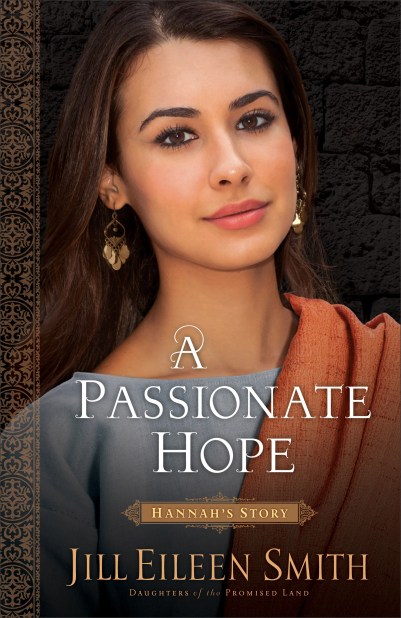
Meet Hannah from Jill Eileen Smith’s A Passionate Hope

Today we have the pleasure of meeting a character from the Bible, Hannah, as told in Jill Eileen Smith’s novel A Passionate Hope.

A Passionate Hope-Book CoverName:

My name is Hannah, which means “favor or grace”. Looking back on my life, I can say now that God has shown me both.

Parents:

My father is Hyam. My mother is Adva. I am their only daughter, though I have many brothers and sisters-in-law.

Siblings:

My brothers are Barukh, Chaim, Dan, and Gilad.

Places lived:

I have lived all of my life in the hills of Ephraim.


Jobs:

Job?

I do not understand this foreign word.

Work then:

Ah, work. My work is to do the daily tasks of womanhood—to care for our home, keep us clothed and fed and to meet my husband’s needs. My husband, Elkanah, is a Levite and I do what I can to help him carry out his duties in that role. I also sell some of my weaving in the marketplace. This helps my husband and makes me feel useful.

Friends:

My husband’s sister Meira used to be my closest friend, but once she married, we rarely saw each other. My sister-in-law Dana has become my only friend and confidant in our large and often contentious household.

Enemies:

I wish I had no enemies, but my sister-wife Peninnah has done her best to not live at peace with me. I find her presence trying.

Children:

I have no children—at least I did not in the early years. That is why Elkanah married Peninnah. But God blessed us later with Samuel and many more sons and daughters.

What person do you most admire?

I have always loved and admired my husband. To think that Elkanah loves me as he does…I never dreamed he would care for me.

Overall outlook on life:

Life…we are here such a short time and then we rest in Sheol. But I have always believed that one day I would see God. He is the one I long for, and when life has been at its worst, He has carried me through each struggle. What would I do without Him?

Do you like yourself?

I find this question confusing. We do not spend time thinking about liking ourselves. This sounds like someone who is focused too much on the wrong things. When I think of Adonai or Elkanah, I do not think of Hannah, though I will admit, sometimes I feel sorry for myself when Peninnah is near.

What, if anything, would you like to change about your life?

I would have chosen a path that kept our marriage between Elkanah and me alone. Sharing a husband is not God’s best and it has made life miserable for everyone at times.

How do others view you?

I have no idea what people think of me.

Fears:

I fear, rather I used to fear never bearing a son, never outliving my shame. But as I said, God has shown me favor and grace. I praise Him for His goodness to me.

When are you happy?

When I am alone with Adonai. I love to walk in the hills and pray. They say we should pray at the Tabernacle, and I try…but I feel more of God’s presence in the creation that surrounds me. I do love to sing in worship with the serving women in Shiloh though.

What makes you angry?

I grow angry at the corruption of the priests in Shiloh—sometimes to the point of despair. When will God answer? When will He restore worship to what it is meant to be? Yet there is nothing to be done but wait and pray.

What makes you sad?

I will admit, every time Peninnah birthed another child, I wanted to run far from home. The joy over her success reminded me all over again of my failures.

What makes you laugh?

Elkanah. We manage to find humor in the strangest places. Sometimes you have to laugh at yourself or you will see life as too difficult.

Hopes and dreams:

I hope my children grow up to follow Adonai all of their days.

Biggest trauma:

Facing the fact that I had to release Elkanah to marry another woman. I couldn’t let him know how hard that was for me, but a piece of my heart broke away that day and I never felt the same again.

What do you care about most in the world?

Adonai. Pleasing Him. And then…having children consumed me until it no longer did.

Do you have a secret?

Yes, but I can’t share it, lest it stop being a secret.

Thank you, Hannah, for giving us this glimpse into your life.

Smith_JillEileen_Jill Eileen Smith is the bestselling and award-winning author of the Wives of King David, the Wives of the Patriarchs, the Loves of King Solomon, and the Daughters of the Promised Land series. Her research into the lives of biblical women has taken her from the Bible to Israel, and she particularly enjoys learning how women lived in Old Testament times. Jill lives with her family in southeast Michigan. Learn more at www.jilleileensmith.com.