Meet Gunther Schneider from Michelle Shocklee’s All We Thought We Knew

During the turbulent days of World War II, thousands of foreigners were interned in the United States. Men, women, and even children with ties to Japan, Italy, and Germany were sent to detention camps all across the country. In Michelle Shocklee’s new novel All We Thought We Knew, readers meet Gunther Schneider, a German medical student who finds himself caught up in a frightening and seemingly hopeless situation. 
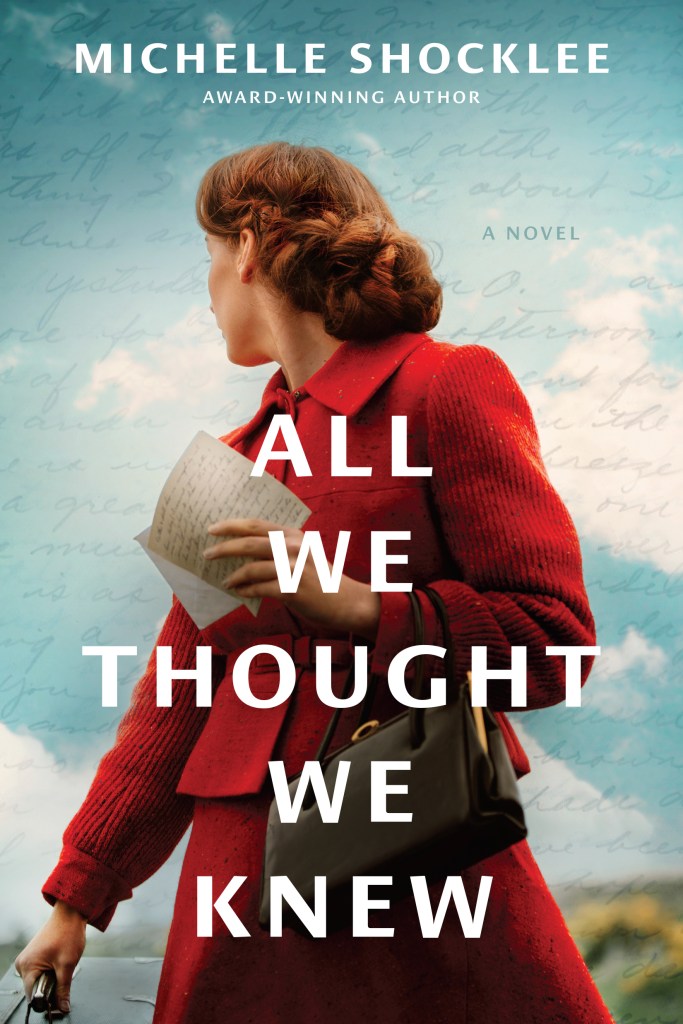
Amazon Affiliate Link Used Helps Support This Blog

NP: Hello, Gunther. It’s a pleasure to meet you. Thank you for stopping by Novel PASTimes to chat with us. 

Gunther: Danke. I’m happy to be here.

NP: Tell us about where you’re from and how you ended up in the United States. 

Gunther: I was born in Krefeld, Germany. It is very beautiful, close to the Rhine River. My parents were Gott-fearing people who believed in the truths taught in the Bible. When Hitler came into power, Mutter feared what would become of Germany. By then Vater had passed away and my older brother had joined the Nazis. Mutter thought it best for me to leave Germany and go to medical school in the United States. She believed I would be safe there.

NP: It must have been hard to leave your homeland and family. 

Gunther: Ja, it was, but I wanted to come to America and study to become a doctor. Although things did not turn out the way I’d hoped, I do not regret leaving Germany. 

NP: You were eventually arrested and detained in a camp for enemy aliens. Can you tell us about that?

Gunther: I was a student at Columbia medical school in New York City when Pearl Harbor was attacked. It may sound naïve, but I didn’t believe the US government would consider me a threat to society, being that it was Japan who’d attacked Hawaii, not Germany. I was quite shocked when I was arrested.

NP: Were your friends arrested too? 

Gunther: Ja, all of them. I’m not certain where some of them ended up, but I was sent to Camp Forrest in Tullahoma, Tennessee. 

NP: I’m not familiar with Camp Forrest. Was that a military installation?

Gunther: It was. I’m told it was one of the largest in the United States. While I was there, I saw thousands of young American men training for war. I felt sad knowing that many of them would die. Had I stayed in Germany, I would have been forced to join Hitler’s army. I’ve often wondered if I would have had to fight against some of the same soldiers I saw at Camp Forrest. 

NP: I’m sure it was hard being held as a prisoner. Was there anything about your time at Camp Forrest that brought you happiness?

Gunther: I met a special friend while I was in Tullahoma. Ava Delaney worked at the camp. She did not treat me like the enemy, which was refreshing. Unfortunately, as a German, I wasn’t always treated kindly by Americans. It was nice to have someone to talk to who didn’t judge me for where I was born. 

NP: It sounds as though you’ve been through many challenges in your life. Can you tell us where your find the strength to face them?

Gunther: My parents taught me to trust in the truths found in the Bible. When I left for America, my mother gave me my father’s Bible. Reading it reminds me that I’m not alone, even if it feels like it sometimes. The stories also remind me that people have always faced difficult challenges, but they also reveal hope. With Gott, there is always hope. 

NP: That’s very true. Thank you for sharing your story with us, Gunther.  
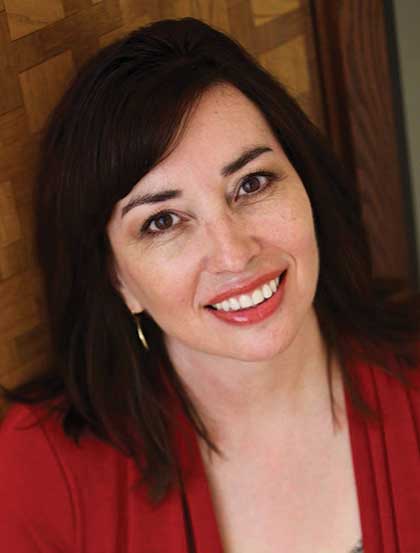

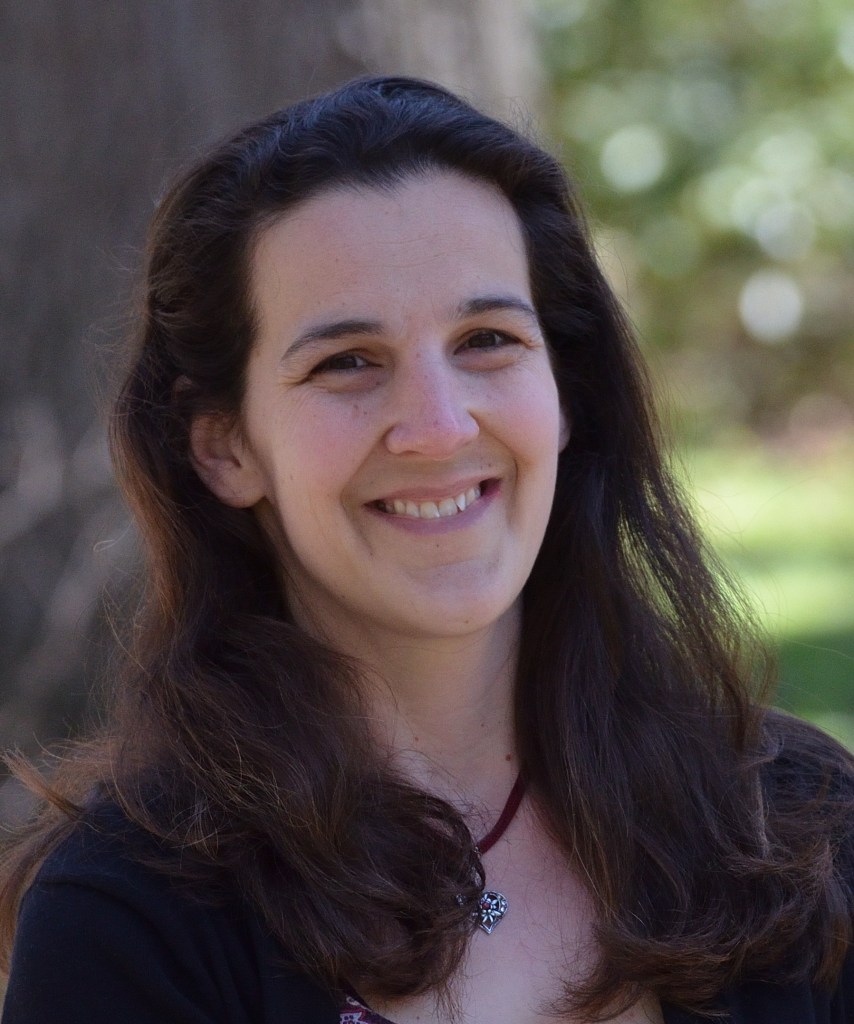
Michelle Shocklee is the author of several historical novels, including Appalachian Song, a Christy Award finalist, Count the Nights by Stars, a Christianity Today fiction book award winner, and Under the Tulip Tree, a Christy and Selah Awards finalist. Her work has been featured in numerous Chicken Soup for the Soul books, magazines, and blogs. Married to her college sweetheart and the mother of two grown sons, she makes her home in Tennessee, not far from the historical sites she writes about. Visit her at MichelleShocklee.com.

A Chat with Adia Kensington from Nicole M. Miller’s Until Our Time Comes

Until Our Time Comes by Nicole M. Miller
July 2, 2024; ISBN 9780800744700; Ebook ISBN 9781493445578; $18.99; Paper

The German invasion of Poland derails Adia Kensington’s plans to learn from the greatest breeders of Arabian horses in the world, but brings a British spy to her aid. Amidst the Blitzkrieg and a tense occupation, the two clash over everything—except their efforts to save the horses. Based on true events.

Welcome to Novel PASTimes! We are pleased you stopped by today.

Tell us something about where you live. 

I live and work at a Arabian horse breeding farm in Eastern Poland called Janów Podlaski—it is a beautiful farm steeped in history and splendor. It had been my life’s goal to work here and the Polish Arabian horse is a unique breed with its own history of war, sport, and excellence. 

Is there anything special about your name? Why do you think you were given that name?

Adia means “Gift from God” and as my parents were spies in the Great War, I believe they viewed me as such. They died before I could ever ask more about this. 

Do you have an occupation? What do you like or dislike about your work?

I am a horse trainer, which I know is rare for a woman. For most of my life I was underestimated and ignored, but I work hard and have risen to gain the respect of my colleagues here in Poland. I enjoy being around the horses all day—I understand them far more than people. 

Who are the special people in your life?

The director of Janów Podlaski, Filip, and the orphan who adopted me, Ewan, are two of the most special people in my life. They are my constant companions and supporters, and both of them I trust with my life. 

What is your heart’s deepest desire?

My deepest desire is to import the best of the Polish Arabian horses to my own fledgling farm in America. I’ve learned so much in my time in Poland, but I would love to share this special breed with the broader world and especially with American audiences. But these are some of the best horses in the world, and the cost is so far out of my reach. 

What are you most afraid of?

I’m most afraid of failure—I’ve always been told that I don’t know what I’m doing, and that my place isn’t inside the barn. But I don’t really care what others think. I care about what I can do, and I know I’m stubborn enough to make just about anything happen. With the rising tensions between Germany and Poland, though—I’m also afraid that time simply won’t be on my side. 

Do you have a cherished possession?

No, I care far more about animals than things, so as long as I have what I need to do my job (which isn’t much,) I’m happy. 

What do you expect the future will hold for you?

I’m not sure when so many things are outside my control—but I know that the one thing that is within my control is that I’ll always be looking after horses and the helpless. Nothing can keep me from that. 

What have you learned about yourself in the course of your story?

I’d always believed that I could handle anything that comes at me, on my own. But in the course of my story, I learn how deeply I must rely on others and that it’s not a weakness to do so. I also thought that things were so simple, before the war. And after war falls on our doorstep, I realize that things aren’t quite so black and white. 

Is there anything else you’d like people to know about you?

I don’t like having the attention on me—I’d much rather talk about horses. I’d always much rather be behind the scenes, cleaning stalls and tending to the horses, but I’ll say that I’m glad for being able to share my story and the incredible efforts of those around me to save the Polish Arabian breed from annihilation. My role is just a small part of this bigger story. 

Thanks for allowing us to get know you a little better!


Nicole M. Miller lives in Washington State with her husband and
two sons, along with her Arabian horses, chickens, ducks, dogs,
cats, and guinea pigs. As a longtime horse owner, she’s been
involved in many horse organizations, including serving on the
Clark County Fair Court and as Miss Teen Rodeo Washington.
She’s received national and regional awards for her nonfiction from
American Horse Publications and the Society of Professional
Journalists. See her stories in The Horse of My Heart, The Horse of
My Dreams, The Dog Who Came to Christmas, and Second-Chance
Horses. Learn more at NicoleMillerWriter.com.

Meet Grace Deroy from The Mapmaker’s Secret by Jennifer Mistmorgan

Welcome to Novel PASTimes! We are pleased you stopped by today.

Thank you for having me! It’s a pleasure to be here.

Tell us something about where you live?

It’s a delicate situation. My family’s home in Lincolnshire, England, was requisitioned by the Air Ministry to function as a mapmaking facility. I had to clear out all our family’s possessions and watch while the Air Ministry converted the whole thing into offices. (They were absolute thugs when it came to the soft furnishings!) They even changed the name of the place from ‘Broughton Hall’ to ‘Bartondale’. I loved my job working in the map room at RAF Bottesford, but I wanted to keep an eye on my family’s home. So I ask for a transfer to the library at Bartondale. Now I work in what used to be my home, and live in what used to be our caretaker’s cottage with my companion Sarah and a child evacuee called Olive.

Do you have an occupation? 

I have to be careful what I say about it. Official secrets, you understand. But I can tell you that I work in the library, managing all the documents required to make the maps. I like putting everything in order.

What do you like about your work? 

There is a new American, Jack Marsden, who has started working with us. The girls and I call him O.A.F … Our American Friend. It was my job to show him around on his first day. He’s quiet, almost tongue-tied, with me even though he seems chatty with everyone else. He looks in pain every time he has to speak to me!

Who are the special people in your life?

The special people in my life are my parents and my two brothers, Peter and Teddy. Peter is my twin. Teddy is the baby of the family and has just joined Bomber Command as a navigator. I don’t think he is enjoying it very much. Then there’s my dear friend Maggie. We met when we worked together at RAF Bottesford and she’s been like a sister to me ever since. We tell each other all our secrets. Well, almost all of them. There are some things that I won’t tell anyone. Ever.

What are you most afraid of? 

It feels odd confessing this to you but I am most afraid of people discovering the very foolish thing I did at university. I am ashamed of who I was then, and for people to know about … I’m sorry I don’t want to say anything more about it. It’s too upsetting.

What do you expect the future will hold for you? 

It’s war, so there’s no telling what will happen! But if I’m honest, I’d love to get to know Jack a little more. He might be quiet but I sense he has a lot going on under the surface. 

What have you learned about yourself in the course of your story?  

I’ve learnt that I truly am a new creation in Christ and that I can do all things in His strength. And I’ve learnt to forgive. Trust me when I tell you that both are very hard lessons to learn.

The Mapmaker’s Secret by Jennifer Mistmorgan is a historical romance set during WWII. It is available in both paperback and ebook. 


Australian author Jennifer Mistmorgan sometimes feels like she was born in the wrong era. So she writes romantic historical fiction set in the 1940s, against the backdrop of WWII and its aftermath. She infuses her sweet romances with wartime drama and a dash of intrigue. She lives in Canberra with her family and a wonky-eared West Highland terrier.

Meet Isabel Neumann from Seashells in my Pocket by Terri Vanguard

Welcome to Novel PASTimes! We are pleased you stopped by today.

Tell us about where you live in Brazil.

I grew up in Florianópolis, a German community in Brazil’s south. It had been like living in Germany, my father says. Hundreds of thousands of Germans settled there. My brother and I attended German schools and everyone spoke German.

When another war with Germany came, the Brazilian government prohibited the German language. German pilots lost their jobs with German or Italian airlines. My father operates his own air cargo business with three planes, so he remains independent. We moved to Recife to avoid the German enclave.

My parents live in a beachfront house where I could collect seashells for my art projects, but I never felt at home there. Recife is a like a foreign country. Like going from a German town to an old Portuguese city near the equator. The people are an ethnic mix, but I felt out of place. People stared at me, or my blonde hair.

Now you work at an American air base in Natal. Did your father’s occupation as a pilot have anything to do with that? 

Oh, goodness. I never thought of that. I suppose it did. I understand flying terminology. I enjoy flying. It’s a familiar environment.

The air base is a lot different from the airport where Papa flies. All these young men away from home and wanting women’s company. Most are nice, but some are awfully bold and rude. I made the mistake of telling my parents about one incident where a fellow was convinced he was my dream come true. Now they worry.

Tell us about your job.

I calculate load distribution on the cargo planes. If too much weight is placed forward, the plane could nosedive. Too much weight in the rear causes the nose to pull up, the airplane stalls, and falls to earth. If the cargo shifts in-flight, same results. Or if the cargo isn’t shifted as the fuel load burns off, the plane would unbalance.

Correctly loading an aircraft doesn’t require a genius, just a bit of mathematical ability. It’s like putting together a jigsaw puzzle (which I enjoy doing).  My boss likes to say that I swallowed a calculator. I don’t understand what the big deal is. Cargo distribution is all about simple math.

Easy for some people. What do you enjoy doing when you’re not on duty?  

Go to the beach! I love the seashore, I love the ocean. I can stand in the surf and watch the waves roll in endlessly. The Bible says when the first heaven and the first earth have passed away, there will no longer be a sea. I can’t imagine. Heaven is supposed to be perfect, but no sea?

While I’m at the shore, I collect seashells. I had jars and boxes full of them, and my twin brother said, “Do something with them.” So I started making pictures using shells as flower petals. Now I make all kinds of shell creations and people buy them!

Have you visited Germany?

No. My dad grew up in Germany. He flew biplanes in the Great War. He moved to Brazil because of the chaos in Germany after that war, and pilots and flying were restricted by the Allies. He’s always told us stories about growing up in Heidelberg. He brought his books of photographs. Germany looks beautiful. I would love to have visited, but Papa was leery of the political situation.

My aunt invited my brother and me to attend school in Heidelberg. Marcos went, and the Germans tried to put him in their army. We were fortunate he got away. Maybe someday I’ll visit, but I feel no urgency to go. 

What is this fascination with Cypress Gardens I’ve heard about?  

My cousin sent postcards from Cypress Gardens and it’s beautiful. Imagine being in a flower garden all day. It must be a feast of color and beauty. It’s not like being at the seashore, of course, but it’s a close second. I haven’t been to America yet, and I know the whole country isn’t like Cypress Gardens, but they represent America to me. Daniel visited the Gardens when he had a day off while in Miami, and he brought me a book. He said they’re beautiful and I’ll like them.

Tell us about Daniel.

Oh, goodness. He’s gorgeous and smart and funny and kind. Did I say handsome? He’s nice to dogs and children. He has a strong faith. He’s an excellent pilot. My dad met him and thinks well of him. And he loves me. Me!

What do you expect the future will hold for you?  

Milwaukee. That’s where Daniel lives. Far from Brazil and my family. But my dad left home and came to Brazil where he didn’t know anyone, and he thrived. I hope Daniel’s family likes me. I hope I like Milwaukee’s winters. No seashore, but Lake Michigan is there. Best of all, Daniel will be there and I’m sure God will bless us.

Thanks for allowing us to get know you a little better!


Terri Wangard grew up in Green Bay, Wisconsin, during the Lombardi Glory Years. Her first Girl Scout badge was the Writer. Holder of a bachelor’s degree in history and a master’s degree in library science, she lives in Wisconsin. Her WWII research included going for a ride in a B-17 Flying Fortress bomber. Classic Boating Magazine, a family business since 1984, keeps her busy as an associate editor. She also serves on the Genesis and First Impressions contest teams and as secretary of the Wisconsin Southeast chapter.

Meet Aleida van der Zee Martens from Embers in the London Sky by Sarah Sundin

Welcome to Novel PASTimes! We are pleased you stopped by today.

Tell us something about where you live.

Recently, I came to London from the Netherlands. With German bombs raining down on London, this isn’t a safe place, but it’s the only place for me.

Living in London during the Blitz sounds very dangerous indeed! What brought you there?

When the Nazis invaded the Netherlands, my husband & I fled with our three-year-old son, Theo. On the road, my husband cruelly ripped my son from my arms when I was sleeping and thrust him into the car of an English couple bound for London. My husband refused to tell me their names or address, then he was killed by a German fighter plane.

Now I’m in London, searching for my son.

That’s horrible! What are doing to find him?

I keep a notebook listing every place I search. I’ve visited orphanages and refugee camps and hospitals. I’ve visited the Dutch Embassy and placed advertisements in the papers. When I was inquiring at the Ministry of Health, which coordinates the evacuation of children to the countryside, I ended up taking a job there. My original purpose was to search for Theo among the evacuees, but now I see the importance of our work—not only to encourage evacuation, but to support the children in the country, the foster families, and the billeting officers.

In my search for Theo, I hoped to make an appeal on the wireless after I met BBC correspondent Hugh Collingwood. He was unable to make the broadcast, but I’m still glad I met him.

How’s that? Do I see you blushing?

Please, no. Hugh is a good friend, but he’s charming. After being trapped with a man who used to charm to control people, I’m leery.

However, Hugh’s charm has attracted a circle of friends who have welcomed me. This group of reporters hails from England and America and France, and their conversations are lively and intelligent—if a bit heated when they disagree.

What are you most afraid of?

This is worse than the previous question. Hugh once told me to list my fears, to name the monsters so I could fight them. And the monsters howl inside my head, all day and all night, whether or not I list them.

I fear I’ll never find my son. That he’s dead or abandoned or wandering or living in an orphanage in Nazi-occupied Europe. That, even if he’s in an English home, he’s being neglected or abused or that he’s living in terror of bombs.

And I fear he’ll forget me. He’s only three years old, after all. Hugh said Theo will never forget my love. I cling to that hope and to the hope that one day I’ll find my little son.

Do you have a cherished possession?

Theo’s stuffed elephant, Oli. Oli is his best friend. We used to play a game where Theo would hide and Oli would search for him. I used to tell him that Oli would always find him because elephants never forget. I can still see Theo holding Oli to his cheek to comfort himself, and when I press my face to Oli I can still smell a hint of my little boy.

What have you learned about yourself in the course of your story?

For all my lists and routines and plans, I can’t control my life. My rituals have always given me a sense of comfort, but it’s a false comfort. Turning a knob twelve times doesn’t cause God to release the desires of my heart. The Lord isn’t an automaton to manipulate. I’m slowly learning to trust him.

Thanks for allowing us to get know you a little better!


As the German army invades the Netherlands in 1940, Aleida vander Zee Martens flees her homeland with her husband and her three-year-old son. But when her husband is killed and she is separatedfrom her son, she must escape to London alone to wait out the occupation. She finds work with an agency responsible for evacuating children to the countryside and is determined to use her connections to help her find her son. This includes enlisting the aid
of a handsome BBC correspondent. BBC radio correspondent Hugh Collingwood is caught in the middle
of the London Blitz. As German bombs set the city on fire, Hugh is determined to boost morale while walking the fine line between truth and censorship. But the Germans are not the only ones Londoners have to fear as a series of murders flame up amid the ashes. As Aleida and Hugh work together to find her missing son and also
uncover the culprit behind the murders, they continue to grow closer. But with bombs falling and continued killings, they may be running out of time


Sarah Sundin is the bestselling author of When Twilight Breaks,
Until Leaves Fall in Paris, The Sound of Light
, and the popular WWII
series Sunrise at Normandy, among others. She is a Christy Award
winner and a Carol Award winner, and her novels have received
starred reviews from Booklist, Library Journal, and Publishers
Weekly, and have appeared on Booklist’s “101 Best Romance Novels
of the Last 10 Years.” Sarah lives in California.

Sarah Sundin
www.SarahSundin.com

Facebook
SarahSundinAuthor
Twitter
@SarahSundin
Instagram
@SarahSundinAuthor

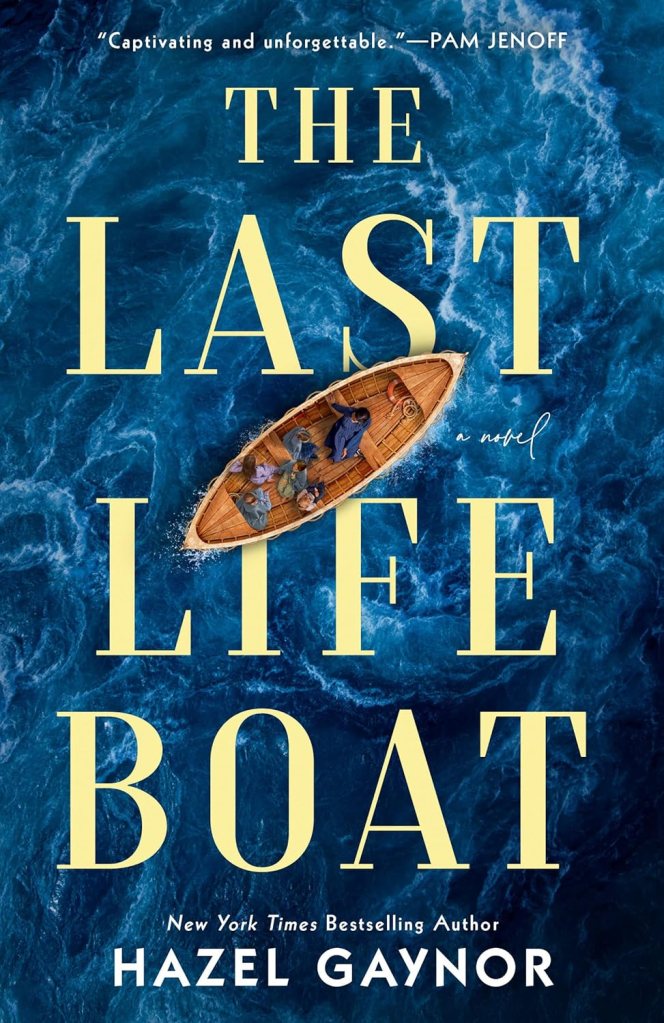
Book Review: The Last Lifeboat by Hazel Gaynor

Amazon Affiliate link used to benefit the blog. Please click on the image. It does not cost you more.

384 pages
Publisher
Berkley
Publication date
June 13, 2023

This novel was inspired by actual events using fictional characters. We’ve all heard of the evacuation of British children during WWII but I for one hadn’t heard about the attack and subsequent sinking of a ship carrying evacuees to Canada. The story begins with two women: Alice doing her part by volunteering to escort these children and Lily, a mother making the difficult decision to send her children away to where she’d thought they’d be safer. There was an escort convoy but the problem was the escort ships left before the children’s ship was safe. The parents hadn’t been told they wouldn’t be escorted all the way to Canada. Of course everyone knew it was dangerous but choices had to be made and the best hoped for. One article I read said 15,000 children were killed or seriously injured in Britain during the Blitz.

We see the Blitz on London, travel with the characters to shelters in the middle of the night, nearly every night for a time. It’s understandable that the British people thought their children needed to be sent to somewhere safer. They didn’t know if, like France, they might be invaded by the Nazis.

When the unthinkable happens, Alice and some of the children she is responsible for, along with some other adults, board the last lifeboat to leave the sinking ship. After they realize they wouldn’t be rescued (in real life it took until the next day for a ship to come to the site looking for survivors) they made a plan to sail to Ireland. They had drifted away from the search area and assumed to have not survived. There are storms, ill passengers, too little food and water. The author is so skilled with painting the story that the reader can imagine it all. It’s heart wrenching. There are moments of insanity brought on by too little nourishment and sleep. There is nothing they can do to help the sick. But there are wondrous moments too. Alice retelling the story of Moby Dick to the children to entertain them. A sometimes brunt but charming man named Owen who takes daily swims outside the lifeboat, incredibly beautiful sunrises and visits from curious whales. Alice learns more about herself than she ever would have without this experience and grows to believe in herself and her purpose in life. Lily, back at home, is a recent widow. She must deal with guilt, fear, and depression. Obviously the sinking of the ship with her children on it is devastating and life changing. So much happens in just eight days! There are times in the story where I couldn’t see how they could possibly find healing, but as with other Hazel Gaynor novels, there is hope and a satisfying ending.

Don’t miss the author’s note. This is a part of history that was a failure on the British government’s part but also something that was learned from. So many children (and adults) lost their lives in this attack (Only 13 of the 90 children onboard through the evacuation scheme survived.) and their memory deserves to be preserved. The authors does this with this well-written, intense, and stirring novel. Highly recommended.

Reviewed by Cindy Thomson

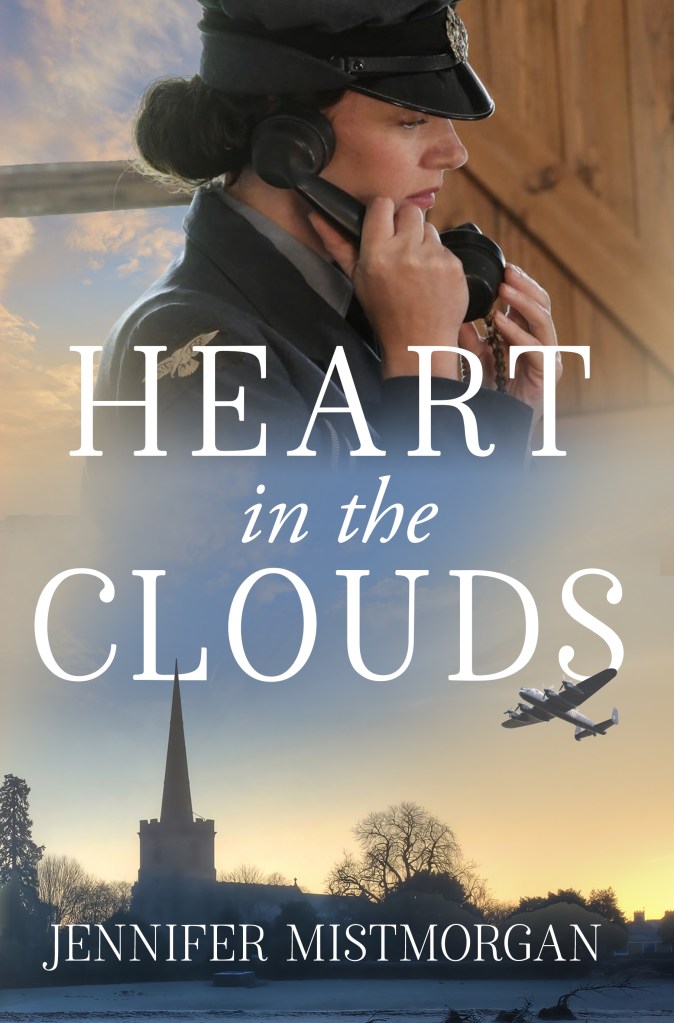
A Chat with Maggie Morrison from Heart in the Clouds by

Maggie Morrrison from Heart in the Clouds

Welcome to Novel PASTimes! We are pleased you stopped by today. How will you be spending Christmas in 1942?

There’s a war on, so things aren’t quite as exciting as they once were. I took a lot of leave from my job at RAF Bottesford earlier in the year when my mother died, so I can’t go home for the holiday. I do get to spend the evening with my best friend Grace. She has invited me and some of the men we work with to celebrate with her family. 

Any of those men special to you?

Absolutely not! The airmen I work with are dreadful! Don’t even get me started … Except Alec Thomas will be there. I’m trying so hard not to like him, because I’m worried he’s the same kind of man as my ex-boyfriend, who turned out to be a real scoundrel. Alec is incredibly good-looking. You know Clark Gable from Gone with the Wind? He looks just like him, except he’s Australian so when he speaks he sounds more like Errol Flynn might. Grace says I should give him a chance, but I don’t know that I can risk it. He is such a flirt! 

So you are in the Women’s Auxiliary Air Force?

Yes, but we just call it the WAAF. I joined up in ‘40, as soon as I turned 18. I wanted to do something to help the war effort and preferred air force blue to khaki and brown! Now I’m an officer. I have a little responsibility over the enlisted women, which is daunting when I’m not that much older than most of them.

And you work at RAF Bottesford? What can you tell us about your job?

RAF Bottesford is a heavy bomber station with Bomber Command, which means that our crews fly large aircraft on bombing raids over occupied Europe, mostly Avro Lancasters. It’s dangerous work, but it’s the only way we can take the fight to Hitler right now. We send the men out on night time operations in sub-zero skies, and many times they don’t return. In fact, many of them leave notes on their pillows to be sent to their families in case the worst happens. Despite having sworn off pilots romantically, I can’t deny that what they do is impossibly brave.

I work in the control tower, giving pilots permission to take off and land, and relaying messages from the ground. Mine is the last voice the pilots hear before they fly. I take that responsibility seriously because, in reality, mine might be the last voice they will ever hear. 

What will Christmas at RAF Bottesford look like?

Since the new Australian squadron arrived we’ve had terrible weather, but at least that means less flying and more socialising! They’ve held several dances in December already, some people are rehearsing a pantomime and I know the kitchen staff are planning a smashing Christmas dinner with ham and turkey, which is almost unheard of at the moment! I hope there will be seconds! On New Year’s Eve, we’ll go to the dance hall in Grantham. I can’t wait.

What about your family? Will you miss them?

Very much. I only have one sister, Rosie. She’s sixteen and currently at home with our father. I know it’s not really polite to speak about these things in public, but he is grieving my mother so very deeply right now and he has retreated into himself. Rosie only has our housekeeper Mrs. Bickham for company, and although Mrs. Bickham makes the best Christmas gingerbread in all of Warwickshire, she’s a poor substitute for our mother. At least, I’ll have Grace and her family, and all my chums from the WAAF this Christmas.

What about Alec Thomas?

We’ll see what Christmas brings, shall we?

Read about Maggie’s wartime Christmas in Heart in the Clouds, available at Amazon and other retailers

____________

About the author:

Australian author Jennifer Mistmorgan sometimes feels like she was born in the wrong era. So she writes romantic historical fiction set in the 1940s, against the backdrop of WWII and its aftermath. Her romances are always sweet but sometimes gritty, infused with hard-core historical research, gentle faith and foodish flair. She lives in Canberra with her family and a wonky-eared West Highland terrier. Find out more at jennifermistmorgan.com, or on Facebookor Instagram.

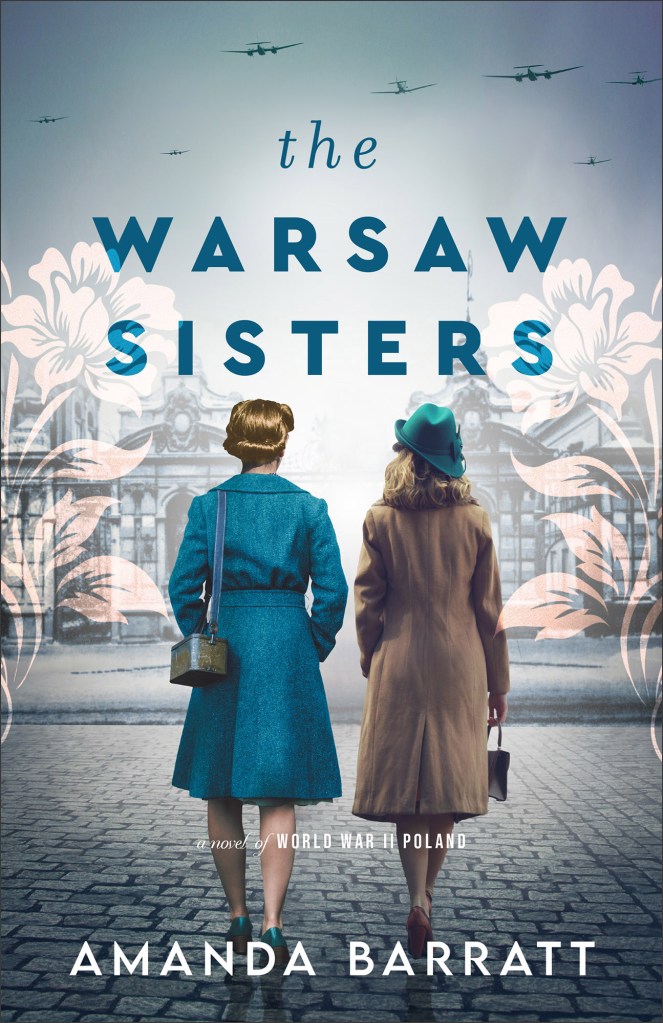
A Conversation with Helena Dabrowska from The Warsaw Sisters by Amanda Barrett


The Warsaw Sisters by Amanda Barratt

Amazon Affiliate Link Used, helping to support the blog.

November 7, 2023; ISBN 9780800741716; Ebook ISBN 9781493443420; $17.99; Paper

In WWII Poland, two sisters fight against the darkness engulfing their homeland, one by entering a daring network of women sheltering Jewish children and the other by joining the ranks of Poland’s secret army. As Warsaw buckles under German oppression, they must rely on the courage that calls the ordinary to resist.

Welcome to Novel PASTimes! We are pleased you stopped by today.

Tell us something about where you live. 

I live in Warsaw, Poland. When I was growing up, Warsaw was a vibrant city, full of beauty and life and freedom, but the German occupation has stripped so much away. When the first bombs fell in September 1939, it was only the beginning of the destruction that would descend upon our beloved capital. Life under occupation means endless restrictions and decrees. There is a curfew every evening. We can no longer own radios. We exist on a diet of black bread and potatoes, with the occasional bit of odorous meat. Civilians are rounded up in the streets and deported to forced labor in Germany while others are seized as hostages to be executed whenever anything happens that displeases the Germans. First our Jewish neighbors were forced to wear an armband marked with the Star of David, but in the autumn of 1940, all Jews in Warsaw were ordered to move to what the occupation authorities call a “Jewish residential district.” The ghetto is surrounded by a high brick wall crowned with barbed wire, and though I haven’t been inside, I’ve heard rumors about the overcrowding and starvation and disease. Warsaw is still the city of my heart, but she—like all of us—bears the cracks and scars of war. 

Do you have an occupation? What do you like or dislike about your work?

 I’m a secretary at a German office. I didn’t want to work for the occupiers, but my sister and I must both earn or we will soon starve. 

Who are the special people in your life? 

My tata and I share a cherished bond. He calls me his kwiatuszek—his little flower. He went off to fight just before the outbreak of war, but he was captured and sent to a prisoner of war camp. When he was with us, I always felt safe and protected, but now my sister and I are alone. Antonina and I used to be close, but she’s been so distant of late and I don’t know why. We used to talk, but we don’t anymore, not about things that truly matter. War leaves everything in shards, even the bonds that should be the most abiding. 

What is your heart’s deepest desire? 

For the war to end and for Poland to be free. But that’s what every citizen of Warsaw would say. Deep down, I suppose what I really mean is that I want the life we once had. When my tata was home and my sister and I still shared our secrets and hopes.  When everything was simple and certain. When we trusted the future instead of feared it. But that’s all gone now. Sometimes I doubt it will ever return. 

What are you most afraid of? 

I’m afraid of losing the ones I love. I’ve already lost so much. It leaves you feeling small and frightened and powerless. Such pain reaches far deeper than any physical wound. It breaks the heart and a heart doesn’t heal. It grows numb, but not whole. This is what I have learned.

Do you have a cherished possession? 

The letters my tata sent from the prisoner of war camp are very precious to me. I no longer need to fix my eyes upon them, for I carry every word in my heart already. But I never tire of reading them, of tracing his script with my fingertip. It’s been so long since we’ve had any word from him, and my heart aches with fear, even as I cling to hope.  

What do you expect the future will hold for you? 

Life is so uncertain. Fear is a daily reality, one we’ve become so accustomed to it’s as if we’ve forgotten what it is to live beyond its shadow. You asked about the future? I don’t know what it holds, but I wish I could fight back somehow. I’m not certain what resistance really means, but I want to believe I can be more than the frightened girl watching the ones I love dragged into a relentless undertow. I want to believe I can give something that matters. I want to believe there is hope in defiance. 

Thanks for allowing us to get know you a little better!


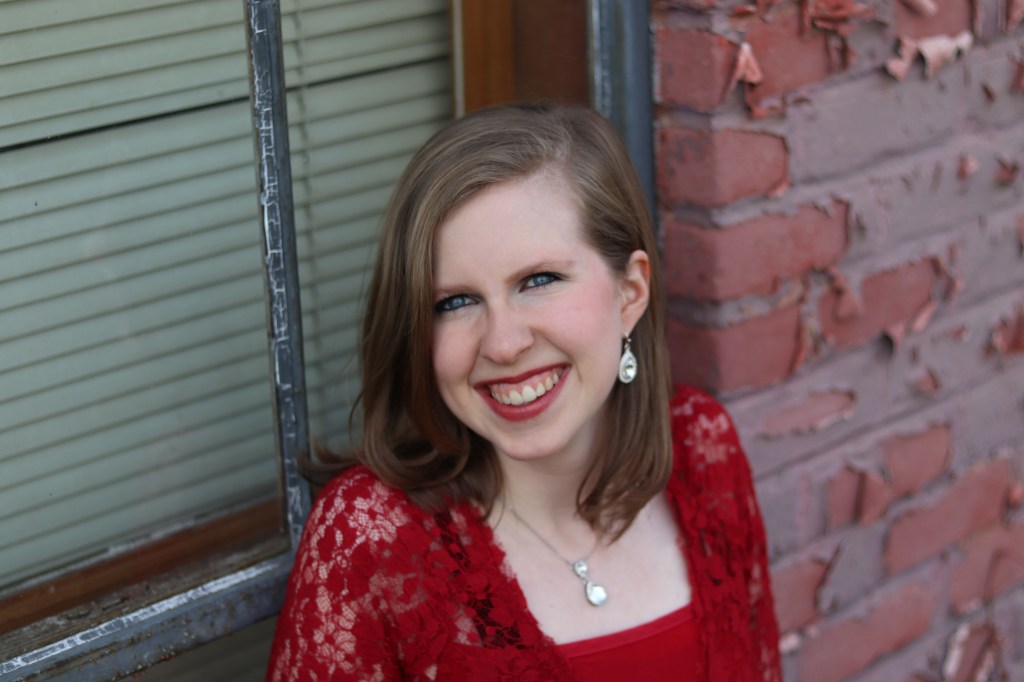
Bio: Amanda Barratt is the bestselling author of numerous historical novels and novellas, including The White Rose Resists (a 2021 Christy Award winner) and Within These Walls of Sorrow. She is passionate about illuminating oft-forgotten facets of history through a fictional narrative. Amanda lives in Michigan. Learn more at AmandaBarratt.net.

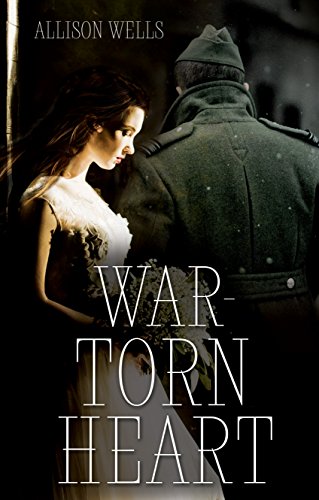
A Chat With Grace Walker from War-Torn Heart by Allison Wells

Tell us something about where you live: 

  • I live in a tiny South Caroline town you’ve never heard of, but we’ve right at the foothills of the Blue Ridge Mountains and we’re very close to Clemson College. 

Is there anything special about your name? Why do you think you were given that name? 

  • When I was born right before the turn of the century, my father named me Grace because he was certain I would be full of it, and because he thought I’d be full of the Lord’s abundant grace. I try to live up to my name.

Do you have an occupation? What do you like or dislike about your work? 

  • I’m a momma to several blessings. I love every minute. That doesn’t mean it’s not hard, it surely us, but our reward is in heaven.

Who are the special people in your life?  

  • My husband, Nathan, and our children – Peter, Abigail, Rebecca, Elizabeth, Jacob, and Gabriel. Oh, and Michael, God rest him. I’m also close to my sisters and our extended family.

What is your heart’s deepest desire?   

  • For my children to grow up knowing the Lord.

What are you most afraid of? 

  • Losing my children. After we lost Michael, I didn’t think I would recover, but God brought my heart through it.

Do you have a cherished possession? 

  • I have a music box that had been my own grandmother’s, brought over from Scotland. I’ll pass it along to Abby, and hopefully on and on. 

What do you expect the future will hold for you?  

  • I won’t even pretend to guess. It’s in God’s hands. But I do hope for grandchildren one day. 

What have you learned about yourself in the course of your story?  

  • My story is for the Father to write. He is the creator and perfector.

Is there anything else you’d like people to know about you? 

I have tried to raise my children to be strong, resilient, believing people. I think Nathan and I have done a good job. Abby’s a little headstrong, but then, what teenage girl isn’t. I’m sure Eliza and Jake will give me a run for my money, too. They run with the wind, those children.


Allison Wells is a wife, mother, and sweet tea addict. Allison writes in two genres – Christian Women’s FIction and Sweet Romance. She writes what she calls “gritty Christian fiction,” books that show the hard truths of life but ultimately are stories of redemption in the end. Her sweet romances are clean and fun with a dose of laughter (the best medicine). She loves to bring a word of hope to readers worldwide. Her motto is, “Life is short, eat the Oreos.” Visit her website at www.whatallisonwrote.com.

http://whatallisonwrote.com

http://Facebook.com/whatallisonwrote/

http://instagram.com/whatallisonwrote

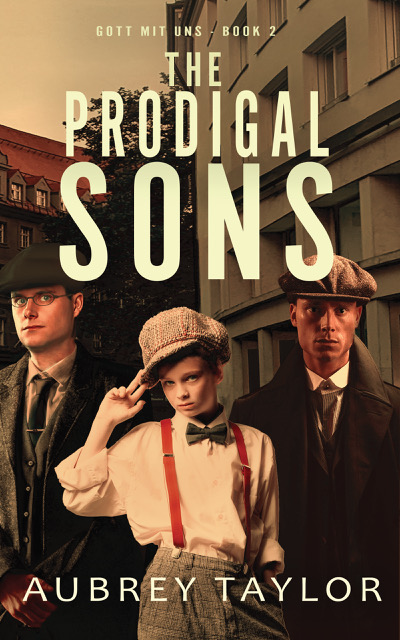
An interview with Jakob Schmidt from The Prodigal Sons by Aubrey Taylor

Welcome to Novel PASTimes! We are pleased you stopped by today.

Thank you for having me.

Tell me about your name, Jakob. 

I don’t actually like to be called Jakob. It was given to me at Christening, but my full name is Jakob Helmuth Wilhelm Schmidt, and these days my comrades all know me as Helmuth.

Why the change?

Well, Jakob is too religious. God’s never done much good for me. Besides, if you know anything about the times I’m living in, it’s just not a good name to have. On the other hand, Helmuth is a combination of two old German words. “Helm” is a covering or protection, and “muth” denotes spirit or courage. 

Sounds like that’s the image you want to portray.

Absolutely.

Fascinating. Well, Helmuth, tell us something about where you live.

I was born in Munich, Germany in 1916 and lived there until 1934 when I left for training in Berlin. I have been stationed at the Lichterfelde Barracks ever since. 

What goes on at Lichterfelde?

It’s just the base I’m stationed at. I’m sort of a bodyguard for the Führer. Not that I’m one of his closest bodyguards—not yet anyway. I do other functions like stand guard outside his residence, for parades, and so on. Sometimes I do have waiter duty. I have to put a white jacket over my uniform and serve his meals. I emphasize the word duty because it’s not my favorite part of the job.

Wow. Well, what did you do before all that?

[Chuckles] Oh, that’s an interesting topic. 

How so?

Well, I had to kind of reinvent myself over the years. I wasn’t much more than a church mouse when I was growing up. I played piano and led the music at church services. I wrote hymns but also a few cantatas, oratorios… you get the idea. 

You must be quite talented.

Yes, actually.

Why the change?

It didn’t suit me. I was quiet, bookish, and got beat up a lot when I was in my early teens. I finally decided I no longer wanted to be a victim. 

So the name change kind of went along with everything else.

Indeed. My wife doesn’t like it too well though. I’m still her Jakob.

Tell me about your wife. 

Ach, Emma. I haven’t seen her in months.

Uh oh. Are we treading into volatile territory here? 

Well, she doesn’t exactly… approve of my life choices, so she’s still down in Munich. 

Are you happy with the arrangement?

[Hesitates] Can we go off the record for a few minutes?

As in not printing this part of the conversation? I can’t make any guarantees…

Eh, whatever. For the sake of the readers I’ll do it. I love Emma, and of course I’d rather be with her. I used to go home to visit, but it just resulted in her berating me, my beliefs, and every decision I’ve made since I was 15. I still can’t figure out why she went through with marrying me except that she felt bound by a vow we had made.

Would you try to work things out if you could?

Absolutely. I’m not asking her to believe the same things I do, but I do wish she’d stop slamming the door in my face. Do you know she didn’t even congratulate me or come to the parade the day I was supposed to be sworn in? A man has his pride, you know.

Thank you for being so honest with us, Helmuth.

It felt good to get it off my chest, honestly.

Maybe she’ll read this and think about what you’ve said. 

Ja. I haven’t written to her or anything. I don’t think I can handle any more direct confrontation. It’s easier to just go about my business here. 


After creating stories prolifically as a child, Aubrey experienced a renewed interest in writing as she entered her 40s. She lives in Upstate New York with her husband and three children, and enjoys reading, playing music, crafting, sketching, exploring the outdoors, and traveling whenever possible. She is a lover of Jesus, the Bible, history, German culture, tea, and cats, and has a special heart for those who struggle with severe anxiety and depression. www.aubreytaylorbooks.com

Buy Links:

Amazon: https://www.amazon.com/dp/B0BCX7NF5Q

Google Books: https://play.google.com/store/books/details?id=eWOmEAAAQBAJ