
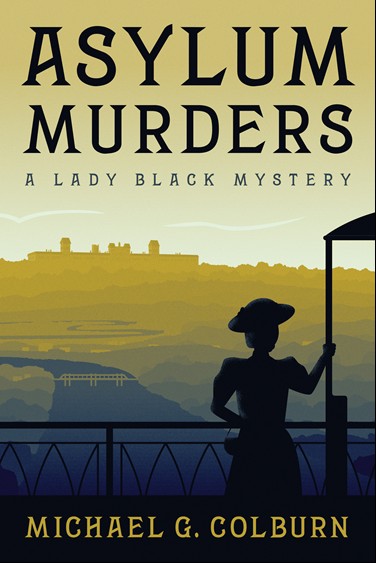
A Chat with Britina from Asylum Murders by Michael G. Colburn

Note: Amazon Affiliate link used helps support this blog.

Interview with Britina Myers, best friend of Lady Edith Black
Interviewer: Mr. Thomas Preston, Social Reform reporter, AGE Newspaper, Melbourne AU

T: May I call you Britina or do you prefer Sister Mary Britina?

B: Mr. Preston, I know you’ve done your research; I researched you. You know I gave up my religious life after the events I was involved in at Kew Lunatic Asylum. A term I’m fighting currently in the courts to have changed, but that was its name.

T: Sorry, I am aware and we’ll get to your current activities shortly. How would you like me to address you?

B: Please address me as Miss Myers.

T: Very well, Miss Myers. As you know I am doing a series of articles for the AGE Newspaper entitled The Women of Melbourne Leading Change. I originally requested an interview with Lady Edith Black who has acquired quite a reputation as a woman who solves crimes but also one who is mysterious and reclusive. She turned me down and suggested I interview you.

B: Edie is not reclusive, but she doesn’t give interviews; she is very protective of her past and of her current privacy.

T: Do you have her permission to talk about her past, and her present?

B: Are you interviewing me or using me to find out more about Lady Black, Mr. Preston?

T: Ha, guilty, but I think the fairest answer would be both. You both have a colorful story for our readers, I believe, but let’s start with Lady Black. You are Edith Black’s closest friend, aren’t you?

B: Her closest lady friend, yes. In addition to growing up together, she just saved my life and my sanity. I could easily be dead or confined to the asylum in a drugged stupor if it weren’t for her risking everything to save me.

T: I did read about that, quite a mess up there in Kew. Is it likely that I can get Lady Black to supplement this interview at least by review and comment?

B: Lady Black is traveling to America right now to attend the wedding of a friend, Jack Cramer, or she might have consented to giving you an interview. Your work is well respected. I have her permission to talk about her. 

T: Lady Black said you were sisters.


B: As close as you can be without being related. I’m brown skinned Jamaican, Edie is English and Scottish, but knows little of her family. She was orphaned at ten, or at least as close as you can come to orphaned. Her mother was beaten to death by her father and he disappeared.

We both owe our lives to Benji Diamond who saved us from the slums of East London, taught us to read and think for ourselves, gave us purpose and taught us that there are good caring people in life and we should help those that are less fortunate.

T: I don’t know of Benji Diamond, where is he from? How did he come to save you, as you put it?

B: He was a thief, but a decent thief. He was also a farmer, a successful one.

T: Cough! I’m afraid you caught me off guard there. I’m a little shocked, and you’re smiling like you intended to shock me.

B: I did. Now I’m enjoying the interview.

T: Where is he now, this Benji Diamond? Is he in jail?

B: He’s Lady Black’s husband, and a very wealthy member of society, although he also prefers to avoid publicity about his past as you can imagine.  

T: Miss Myers this interview has taken several directions already. Can I write that about Benji Diamond?

B: Mr. Preston, you signed an agreement that Lady Black could prohibit any information I’m providing from being printed, that will be one piece excluded.

T: I will honor my agreement but please understand I am not here to harm anyone’s reputation. I want the public to know about the important women who deserve recognition in Melbourne society.

B: You can call me Britina now, Mr. Preston.

T: Thank you, call me Tom. Can you tell me about Lady Black’s background after being orphaned? A terrible situation for any child.

B: She and I and a dozen or more women who Benji Diamond rescued from slum life lived in a warehouse in East End London near the infamous Aldgate pumping station. Benji ran a stall market for several years where we all worked, until it was destroyed by the city police.

T: What happened to you and Lady Black?

B: You can call her Edie now. Tom, I will tell you the story, and then we’ll talk about the future. I was convicted for selling stolen merchandise at the market. After I was convicted I was released to serve a term as a novice nun, due to the kindness of an aged nun, who took a liking to me. I had a sentence to serve in Australia for four years after becoming a novitiate.   

Benji Diamond gave himself up and went to jail for a while. Edie became a master thief and ran a division of the forty elephants gang of women thieves. After which she was part of a team that  stole a ship, smuggled guns and then was implemented in a major diamond heist. Then sailed to Australia.

T: I’m not going to be able to print any of this am I?

B: Afraid not, Mr. Preston, Tom, but we granted this interview, Edie and I, because we think we can form a friendship with you that could be valuable to Melbourne and all of Australia. We could use your help.


Michael G. Colburn has studied and written about the creative process for several decades. He started several businesses and one manufacturing company based on creation and invention. He has authored over twenty patents. His books include the bestselling Invent, Innovate & Prosper, and How Julia Found Happiness and Financial Success. He now devotes his time to writing The Lady Black Crime fiction series. He lives with his wife in Vermont. When he is not writing, they like to travel and take long-distance walking trips, exploring paths and cultures worldwide. Learn more at: www.michaelgcolburn.com
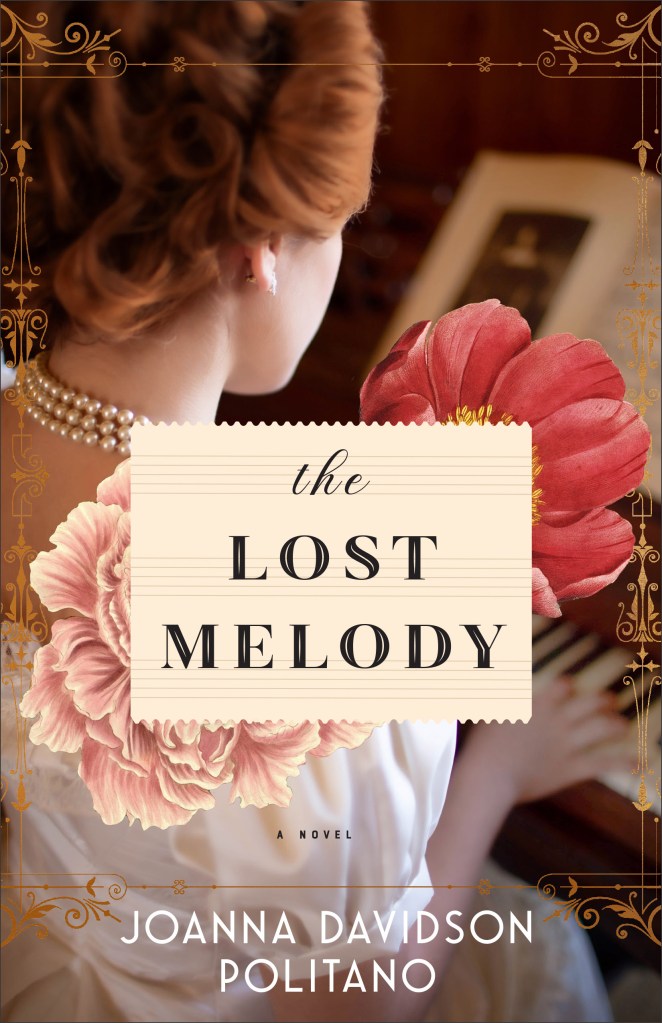
Meet Vivienne Mourdant from Joanna Davidson Politano’s The Lost Melody

As an Amazon affiliate we use links that if clicked will benefit our blog. Thanks for helping!

Welcome to Novel PASTimes, Miss Mourdant. Won’t you tell us a little about your performance background?

Of course. I’ve played classical pianoforte since I could stand, learning from my father. I wouldn’t know what it was like to have a day—an hour, even—without music. I rehearse and perform so much that when I lift my hands from the keys, I still hear music playing. I feel the tremble of a beat, I think in terms of measures and tempos. Of rising and falling melody lines.

So is it true that you hear music when none is playing?

Yes, I suppose I’d claim that. But it’s not so much a recognizable composition out of thin air, but a symphony of everyday sounds. My brain is so accustomed to measuring seconds by beats and making patterns out of notes that it naturally filters everything about me into an orderly rhythm that becomes a sort of song. The world sings, and I hear music.

But I suppose you’re talking about the song. The one I used to hear at night as a child. Quite a lovely piece, with the rhythmic calm of Mozart yet the more robust and textured style of Liszt as well. I’ve heard it off and on throughout the years, and even though no one else admits to it, I’d be willing to wager they’ve heard it too. There’s just something enchantingly spooky about the song. Its minor trills, the other-worldly cadence of it… Call it a dream. Call me crazy. I know I’ve heard it, and it has something to do with that woman.

We’ve heard you spent time at a local asylum, possibly as a patient. Is there truth to this?
Vivienne: Very true, but it wasn’t because of hearing that song. Well, not only that. I entered Hurstwell Pauper Lunatic Asylum voluntarily—as an aid. Between you and I, though, the aid position was merely a ruse. You see, I inherited the guardianship of a mysterious woman who, as it turns out, was a patient at Hurstwell. At least, I think so. No one would give me straight answers about her, so I had to see for myself. And I did find out the truth, and I managed to find a bit of music in that creepy old place.

So being a professionally trained classic musician, why did you take work as an aid in the asylum? What good is your profession there?

More than you could imagine, actually. There’s a natural rhythm at the very core of our created bodies—a steady beat in our chest that starts before we’re even born. And music offers an irresistible invitation to engage with it—despite melancholia tugging one down, madness wrapping itself around your mind or age eating away at your memories. No medicine or treatment can reach the places a familiar song can go, sneaking life back into dying bodies and broken hearts. It’s far more than a spa for the senses, though, believe me. There’s a science to it—the way our bodies, our minds, respond to music, almost against our wills, and imagine what might happen if we allowed ourselves to explore the possibilities. A therapy of music—just imagine.


Joanna Davidson Politano is the award-winning author of Lady
Jayne Disappears, A Rumored Fortune, Finding Lady Enderly, The
Love Note, and A Midnight Dance. She loves tales that capture the
colorful, exquisite details in ordinary lives and is eager to hear
anyone’s story. She lives with her husband and their children in a
house in the woods near Lake Michigan. You can find her online at
http://www.jdpstories.com.

INTERVIEW WITH ROBERT LANGFORD FROM THE GLASS OCEAN BY BEATRIZ WILLIAMS, LAUREN WILLIG, and KAREN WHITE

Glass_Ocean copyThank you for doing this. You have had some hard knocks in your life. As a British gentleman who lives during the Victorian years you had to conform to your father’s wishes.  Now you are heading back to England, after taking some time away in America, on the lavish ocean liner, Lusitania.  I am sure there are times on that ship where you tried to put the world behind you, but I am also sure you understand the inherit dangers considering the Germans warned all passengers that they are sailing at their own risk. 


Let’s start out by going back in time.


Elise Cooper: Do you think your childhood impacted who you are today?


Robert Langford:  You want me to talk about my childhood.  You Americans.  Always so familiar.  Next, you’ll be wanting to call everyone by their first names.  Doesn’t everyone’s childhood impact who they are?  It was a normal childhood: growing up at Langford Hall, barley water with Nanny, being brought down to the drawing room once a day to see Mother and Father, that is when he was down from London, listening to the sound of my mother’s piano playing through the closed doors of the music room.  Just like anyone’s childhood.  Well, at least I had my brother Jamie…


EC: Why did you trail off, you appear deep in thought?


RL:  You haven’t heard about the accident?  I thought everyone knew.  My father certainly made sure everyone knew.  Jamie, my older brother, and I were sailing.  My brother was fearless and brave and very clever.  The perfect brother.  The perfect son.  Just perfect, really.  They do say whom the gods love die young.  Or perhaps it’s just easier to blame the gods than blame myself.  I was the one who should have drowned that day. I was the one who went overboard. When Jamie went after me….


EC:  Do you need a few minutes?


RL:Ahem.  I beg your pardon.  My glass appears to be empty, a lamentable oversight.  I must remedy it.


EC: Let me rephrase the question, while growing up, did you feel like a stepchild regarding how your father interacted with you?


RL:  Ah, that’s better. Mmmm, a stepchild?  There was never any doubt I was a true-born Langford, but I was a second son.  I was meant to be superfluous.  I never begrudged Jamie his place and I was content to live in his shadow.  Once he died, it was clear to everyone that I could never fill his shoes, so I selected the squeakiest shoes I could find.


EC: Is one of your hobbies playing the piano?


RL:  Hobby—what a quaint way of putting it.  I’ve been known to dabble.  If you want to hear a true virtuoso, you should listen to Caroline…pardon me, Mrs. Hochstetter.


EC: Any other hobbies?


RL:  Espionage, alcohol, and bedeviling my father.


EC: Espionage, is that why you want to be a spy novelist?


RL:  Have I spoken of this?  I’m not aware.  Unless you’re referring to those little pieces I wrote for the New York TimesandThe Spectator.  Those aren’t meant to be fiction.  I do enjoy the odd novel, but I sometimes find their plots too fantastical to be true.


EC: Being an Englishman it appears you like to tease your American friends about their different habits and culture?


RL:  When the Americans manage to acquire a culture, I will make a note to tease them. I do find this side of the pond quite refreshing.  One is freed from the heavy gaze of one’s ancestors.


EC: You are heading back home to England on the RMS Lusitania. Why travel knowing it would be dangerous?


RL:  Langfords laugh in the face of danger.  Have I told you about my ancestor the Admiral?


EC: If you are from a military family don’t you have some guilt about not enlisting to fight in WWI?


RL:Isn’t the pen meant to be mightier than the sword? We all serve in our own way.


EC: For those of us who never went on a cruise ship can you please describe it?


RL:  What is a… cruise ship?  Are you referring to an ocean liner?  It is a floating conveyance meant to mimic the sort of hotel frequented by debutantes, dowagers, and dandies who prefer to travel with all the comforts of home– assuming your home is in Mayfair or on Fifth Avenue.  I understand there may also be a second class.


EC: You were seen breaking some rules of class by offering a lower-class traveler first class privileges?


RL:Only those who have no class are concerned by it. Americans, for instance.


EC: Rumor has it you are attracted to two women on the ship, an old flame, Caroline, and someone you just met, Tess?


RL:A gentleman never tells.


EC: Do you see similarities or differences in these two women?


RL:Would you have me compare orchids and daisies? Each has its own charms.


EC: Someone told me one of the Schuyler women said this, “Mrs. Hochstetter is an orchid, elegant and rare, while Tess is a common daisy.” Do you agree or disagree?


RL:I try not to listen to the Schulyer women.  One usually exits discreetly when they enter a room.


EC: Do you think all these worlds collided on the ship?


RL:  Ships are like Continental hotels; one can never tell whom one might meet.  The difference is the only means of egress would leave one quite damp.


EC: If you had a crystal ball what would your life be like in five years?


RL:  Does any man know what the future holds?  My family only looks at the past, not the future.


EC: What are your hopes and dreams?


RL:  To get off this blasted boat.  Oh, bother. The Schulyer women approach.  Is that whiskey in that decanter?


EC: Anything else you would like to say that has not been asked?


RL:  Rule Britannia.  God save the King.  And put on that bloody life vest.


Thanks again for doing this.  It is much appreciated. Please stay safe!

3 WsBeatriz Williams: A graduate of Stanford University with an MBA from Columbia, Beatriz Williams spent several years in New York and London hiding her early attempts at fiction, first on company laptops as a communications strategy consultant, and then as an at-home producer of small persons, before her career as a writer took off. 

 
LAUREN WILLIG:  is the author of several New York Times bestselling works of historical fiction,  She is a RITA Award-winner for Best Regency Historical for The Mischief of the Mistletoe. A graduate of Yale University, she has a graduate degree in history from Harvard and a J.D. from Harvard Law School.
 
Karen White is the New York Times bestselling author of twenty previous books, including The Night the Lights Went Out, Flight Patterns, The Sound of Glass, A Long Time Gone, and The Time Between