

Welcome to Novel PASTimes! We are pleased you stopped by today.
Tell us about where you live in Brazil.
I grew up in Florianópolis, a German community in Brazil’s south. It had been like living in Germany, my father says. Hundreds of thousands of Germans settled there. My brother and I attended German schools and everyone spoke German.
When another war with Germany came, the Brazilian government prohibited the German language. German pilots lost their jobs with German or Italian airlines. My father operates his own air cargo business with three planes, so he remains independent. We moved to Recife to avoid the German enclave.
My parents live in a beachfront house where I could collect seashells for my art projects, but I never felt at home there. Recife is a like a foreign country. Like going from a German town to an old Portuguese city near the equator. The people are an ethnic mix, but I felt out of place. People stared at me, or my blonde hair.
Now you work at an American air base in Natal. Did your father’s occupation as a pilot have anything to do with that?
Oh, goodness. I never thought of that. I suppose it did. I understand flying terminology. I enjoy flying. It’s a familiar environment.
The air base is a lot different from the airport where Papa flies. All these young men away from home and wanting women’s company. Most are nice, but some are awfully bold and rude. I made the mistake of telling my parents about one incident where a fellow was convinced he was my dream come true. Now they worry.
Tell us about your job.
I calculate load distribution on the cargo planes. If too much weight is placed forward, the plane could nosedive. Too much weight in the rear causes the nose to pull up, the airplane stalls, and falls to earth. If the cargo shifts in-flight, same results. Or if the cargo isn’t shifted as the fuel load burns off, the plane would unbalance.
Correctly loading an aircraft doesn’t require a genius, just a bit of mathematical ability. It’s like putting together a jigsaw puzzle (which I enjoy doing). My boss likes to say that I swallowed a calculator. I don’t understand what the big deal is. Cargo distribution is all about simple math.
Easy for some people. What do you enjoy doing when you’re not on duty?
Go to the beach! I love the seashore, I love the ocean. I can stand in the surf and watch the waves roll in endlessly. The Bible says when the first heaven and the first earth have passed away, there will no longer be a sea. I can’t imagine. Heaven is supposed to be perfect, but no sea?
While I’m at the shore, I collect seashells. I had jars and boxes full of them, and my twin brother said, “Do something with them.” So I started making pictures using shells as flower petals. Now I make all kinds of shell creations and people buy them!
Have you visited Germany?
No. My dad grew up in Germany. He flew biplanes in the Great War. He moved to Brazil because of the chaos in Germany after that war, and pilots and flying were restricted by the Allies. He’s always told us stories about growing up in Heidelberg. He brought his books of photographs. Germany looks beautiful. I would love to have visited, but Papa was leery of the political situation.
My aunt invited my brother and me to attend school in Heidelberg. Marcos went, and the Germans tried to put him in their army. We were fortunate he got away. Maybe someday I’ll visit, but I feel no urgency to go.
What is this fascination with Cypress Gardens I’ve heard about?
My cousin sent postcards from Cypress Gardens and it’s beautiful. Imagine being in a flower garden all day. It must be a feast of color and beauty. It’s not like being at the seashore, of course, but it’s a close second. I haven’t been to America yet, and I know the whole country isn’t like Cypress Gardens, but they represent America to me. Daniel visited the Gardens when he had a day off while in Miami, and he brought me a book. He said they’re beautiful and I’ll like them.
Tell us about Daniel.
Oh, goodness. He’s gorgeous and smart and funny and kind. Did I say handsome? He’s nice to dogs and children. He has a strong faith. He’s an excellent pilot. My dad met him and thinks well of him. And he loves me. Me!
What do you expect the future will hold for you?
Milwaukee. That’s where Daniel lives. Far from Brazil and my family. But my dad left home and came to Brazil where he didn’t know anyone, and he thrived. I hope Daniel’s family likes me. I hope I like Milwaukee’s winters. No seashore, but Lake Michigan is there. Best of all, Daniel will be there and I’m sure God will bless us.
Thanks for allowing us to get know you a little better!
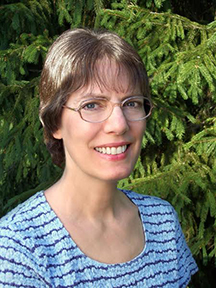
Terri Wangard grew up in Green Bay, Wisconsin, during the Lombardi Glory Years. Her first Girl Scout badge was the Writer. Holder of a bachelor’s degree in history and a master’s degree in library science, she lives in Wisconsin. Her WWII research included going for a ride in a B-17 Flying Fortress bomber. Classic Boating Magazine, a family business since 1984, keeps her busy as an associate editor. She also serves on the Genesis and First Impressions contest teams and as secretary of the Wisconsin Southeast chapter.
 Novel PASTimes