

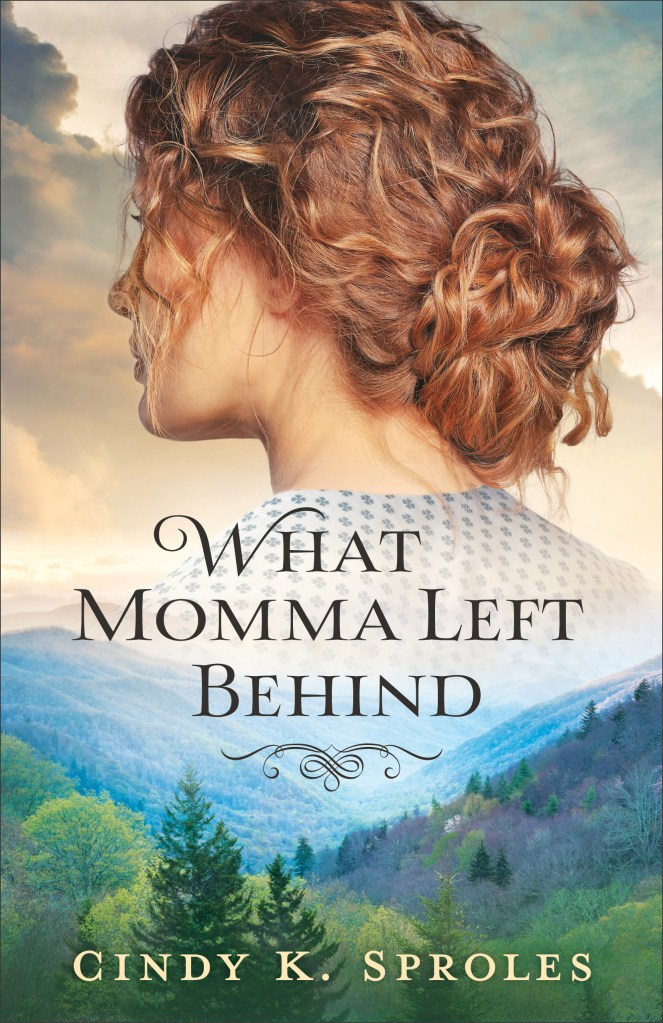
Today we’re talking to Alberta “Bertie” Jenkins. Bertie, you’ve lived your entire life in the mountains of Appalachia, is that right?
Yes, my Papa and Mam were born in these parts, as were their folks. The Jenkins roots run deep in these hills.
I’ve only been camping in the mountains, so I’m not sure what it would be like to live there permanently.
It’s wonderful. Every mornin’ you wake up to the sound of birds and breezes and critters rather than noise from the city. All of us who are home gather ’round the big kitchen table and eat a hearty breakfast. Jennie does most of the cookin’, and she’s as fine a cook as Mam. After the meal, we have Bible readin’. When Papa was alive, he chose the Scripture passage for the day, but since he’s gone on to heaven, Jennie reads to us now. Sometimes we’ll discuss the Word, sometimes not. Someone will say a prayer of blessin’ over the day, and then we’ll scatter like ants. Everyone has their own chores to tend and things to get done before the sun disappears behind the mountain. When the boys were home, they’d go off huntin’ or fishin’ after chores were done. Us girls would pick bunches of wildflowers and wade in the creek. We’d have contests to see who could find the prettiest rock or find a robin’s nest or climb the highest tree.
We went to school six months out of the year, mostly durin’ the fall and winter. Papa and some of the neighbors built a schoolhouse ’bout a mile down the mountain from our place. We children walked there or rode a mule, but soon as plantin’ season came, we were needed at home.
What is your favorite season in the mountains?
I’m partial to autumn. God takes his paintbrush and touches nearly every growin’ thing with shades of red, yellow, and orange. Even those plants whose leaves turn brown are pretty in their own way. Springtime, too, is my favorite. Everything is new and fresh and bright. Flowers, baby birds, new fawns. Yes, springtime is mighty fine too. Summertime is full of tendin’ the garden, shearin’ the sheep, plowin’ and growin’ crops and then cannin’ it all so we’ll have plenty of vittles come winter, my least favorite season.
Why is winter your least favorite?
Even though we don’t have the corn and wheat fields and the big garden to tend during the winter, the bitter weather and snow makes life hard here in the mountains. Don’t get me wrong, though. There’s beauty in every season, but winter brings hard work with it. The critters need extra feed since there’s no grass or bugs. Water freezes in buckets and troughs. Toes freeze when you’re outside too long. Firewood must be chopped several times a day. The house never really gets warm, even with Papa’s two fine fireplaces and the cookstove sendin’ out heat. But there are sweet times in the winter that we don’t usually get in the busy warmer months. Lots of sittin’ in the gatherin’ room, tellin’ stories and knittin’ or sewin’. I enjoy readin’ novels, although my elder sister says they’re silly and a waste of time.
Tell us about your family.
Papa and Mam had eleven children. I’m second to the youngest, with my sister Rubie bein’ the baby. Papa always said she was wise beyond her years, and I’d have to agree with him. Papa built our log cabin after he and Mam married. He’d been in the War Between the States—served in the Union Army like most East Tennesseans—and after he came home, they married and started their family.
It must have been fun growing up with so many siblings.
Since I don’t know any other way of growin’ up, I’d say so. There was always chores to be done—gardenin’, cookin’, cleanin’, piles of laundry—but we had good times too. My brothers liked to tease us young’un’s by catchin’ snakes and lizards and bugs, but I wasn’t ever afraid of ’em the way my other sisters were. There were seven of us girls and four boys. After the boys were grown, they bought farms of their own and moved away, but only our sister Catherine married and left home. The rest of us girls live on the family homestead.
That’s fascinating. This might be too personal, but may I ask why you and your other sisters never married?
It ain’t too personal. It’s my story. My elder sister, Jennie, was a young girl when she decided not to marry, but three of my other sisters wanted husbands. Catie found a good man to wed, and the other two girls, Bonnie and Amelie, found fellas soon after. But those boys met with a terrible accident and were killed. My sisters never got over it. I watched each of them and the choices they made and concluded I wasn’t interested in marryin’ a fella and movin’ away. We sisters stayed on the homestead together, helpin’ each other and livin’ a good life.
I’m sorry to hear about the tragedy. I suppose everyone suffers loss at one time or another.
That’s true. Jesus said in this world we’ll have trouble, but he also says he’s overcome any troubles we face, includin’ death. In all my years as a midwife, I saw many miracles, but I also saw sadness.
Tell me how you came to be a midwife.
Mam was trained as a midwife by her mama. And her mama by her mama. We mountain folk tend not to trust fancy doctors and hospitals. We’d rather have our own people care for us, if possible. I was just a young’un when I first saw a baby bein’ born. Whoo-wee, that was somethin’. I couldn’t imagine how that little fellow got inside his mama’s belly and came out lookin’ so perfect. From then on, I asked Mam to train me in midwifery too.
How many babies have you delivered?
Too many to count.
Do you have a favorite among them?
I sure do. One hot summer day back in 1943, a young gal showed up at our place. She was pregnant and alone, so my sisters and I took her in. When her time came, I tended the birth. I’ll never forget the moment I looked in that child’s eyes. I fell in love.
What happened to the baby?
Well, that’s a story for another day, I think.
Thank you for sharing your mountain life with us, Bertie. It sure makes me want to visit Appalachia soon.
You’re welcome in our beautiful part of the world anytime. There’s always somethin’ to do in the mountains. Hikin’, bikin’, picnickin’, or just sittin’ and enjoin’ God’s handiwork.
It sounds perfect.
It is
.

Michelle Shocklee is the author of several historical novels, including Count the Nights by Stars, a Christianity Today fiction book award winner, and Under the Tulip Tree, a Christy and Selah Awards finalist. Her work has been featured in numerous Chicken Soup for the Soul books, magazines, and blogs. Married to her college sweetheart and the mother of two grown sons, she makes her home in Tennessee, not far from the historical sites she writes about.
Helpful Links:



 Novel PASTimes