
NOVELPASTIMES: Tell me about you and your friends:
WILLIAM: As a young boy, I lived in Shehamniu, a village of the Chaushilha tribe. There were about 100 of us living there when I was a child, including my father and I, my aunt, uncle and their children, and the families of my friends Guyape and Sahale.
One day in 1851, a White man named Ralph Eastman set up a tent on the land just outside our village. I helped him plant his first wheat field that day. He then left it for several months, so our village helped ourselves to it, which made him angry. Even though he was angry, when he returned he allowed me, Guyape and Sahale to help him build corrals for his livestock. My father had forbidden me to contact White men, as he thought they were dangerous. When he found I had disobeyed his orders, he gave me a whipping so bad I could not join Guyape and Sahale when they went to help Ralph Eastman the next day. My father also convinced my friends’ fathers to discipline them, but their discipline was not as severe.
When Ralph ascertained from my friends what my father had done, he became even angrier. He left without finishing anything but the corral. When he came back, it was with two sheriff’s deputies and a legal order to remove all three of us from Shehamniu. The deputies threatened to kill everyone in the village if my people did not allow them to take the three of us. So, we went, and became the indentured servants of Mr. Eastman. He changed our names to William Redskin, Guy Redskin and Sam Redskin.
Redskin was a term he called all Indians. He never meant to insult us. It’s just what some people called us in those days. I didn’t really like that name as a boy, but I came to accept it and now it’s just who I am.
After several years, my friends ran away and let the people in Shehamniu know we were alive and doing well. My friends never returned to the Eastman Farm, but my father did. He spoke English well by then, to the amazement of Mr. and Mrs. Eastman. They quickly became friends with my father, who then introduced them to everyone else in the village. Meanwhile, I developed an even better friendship with Eliza, the Eastmans’ daughter. But if I told you more, that would spoil the ending.
NOVELPASTIMES: Do you have any enemies?
WILLIAM: You would think Mr. Eastman is my enemy for much of the book. But he came to be my good friend.
NOVELPASTIMES: Are you involved with anyone?
WILLIAM: Eliza eventually becomes more than a friend. That is all I can say.
NOVELPASTIMES: What person do you most admire?
WILLIAM: I would have to say my father, for being brave enough to venture over to the Eastman Farm after what had happened to me several years before. I also admire Ralph for his willingness to admit what he did was wrong, and for later becoming one of the biggest defenders of my people. Eliza is the one who understood the error of their ways first, and for that and other reasons, I greatly admire her.
NOVELPASTIMES: What’s your overall outlook on life?
WILLIAM: Looking back, I have learned even when bad things happen, good things can come from them. So, if faced with a challenge, you work hard to get through it, you advocate for what is right, and you take what blessings come with that challenge.
NOVELPASTIMES: Do you like yourself?
WILLIAM: I am not a perfect man, by any means. But I come from a proud people, and I am very proud of myself, and what I have accomplished. What’s not to like about me?
NOVELPASTIMES: What, if anything, would you change about yourself?
WILLIAM: At the end of The Red Hawk, my life seems perfect. But The Red Hawk is a sequel. In The Last Chief of the Chaushilha, and even more so in another sequel yet to be named, I come to see how I’ve let much of my knowledge of Chaushilha traditions and culture slip away from me. I can blame that on the kidnapping, somewhat. But I’ve also got to blame that on myself, and make sure I remember and pass on to my descendants what I still know.
NOVELPASTIMES: How are you viewed by others?
WILLIAM: Guyape and Sahale saw me as the ring leader of the adventures we found ourselves in, most of the time. To my father, my aunt and my uncle, I was a beloved son. The Eastmans saw me at first as a savage in need of civilization, but eventually came to value me as a wise young man and a friend.
NOVELPASTIMES: How much self-control do you have?
WILLIAM: I know in my childhood, and even as a young man, I sometimes got into trouble because of curiosity, because of passion, because of anger. But the Chaushilha do not take pride in impulsive behavior, nor do the Eastmans. So I have learned to be much more self-disciplined.
NOVELPASTIMES: What is your worst fear?
WILLIAM: I think I have already lived through that, which is losing my self-identity. Seeing how working through that adversity brought me great blessing, I am confident there isn’t anything out there I cannot handle, at least with the help of our Creator.
NOVELPASTIMES: What do you like to eat and drink?
WILLIAM: I enjoy some of the finest food a man can eat in the 19th century. I also still love my Aunt Macha’s acorn mush, there is none better. But, I deeply love what Aunt Macha has done with the flour from the wheat we grow on the Eastman Farm, the vegetable seeds Clara Eastman gave her, and the livestock we gave the village. She has infused all that with her own Chaushilha ways of cooking. You know, someday, 100 or more years from now, I bet people will still want to eat roasted beef the way she makes it.
NOVELPASTIMES: What is your favorite book?
WILLIAM: I am not much of a reader, although Mr. Eastman taught me how. Since most of his lessons were from the Bible, I guess you could say that is my favorite book. But the Chaushilha do not have a written language, so I never read anything until I was 12.
NOVELPASTIMES: What would be a great gift for you?
WILLIAM: Saddles and tack, guns, or other practical things a man can use. When my father and I reconciled, he brought me a bear rug for my wiki-up.
NOVELPASTIMES: When are you happy?
WILLIAM: When I am around family. Father, Aunt Macha and Uncle Achachak, and my cousins were originally the people I most loved to be with. But, as you will see in The Red Hawk, I have come to know the Eastmans as family too.
NOVELPASTIMES: What makes you angry?
WILLIAM: I still despise how some White men act, with the attitude their race is superior to all others. Some of them don’t even like Eye-Talian people! You read Last Chief of the Chaushilha when it is published, because in that book I’m going to have even more of a reason than in The Red Hawk to feel this anger towards racist White men. But in both books, you will learn men usually act the way they do from ignorance, and only sometimes from pure evil.
NOVELPASTIMES: What makes you laugh?
WILLIAM: When we were children, Sahale did some crazy as a loon things. After he and Guyape ran away, I didn’t see them again. But I did go back to Shehamniu after that, and got to know my cousin Gosheven better. Oh, my goodness! He was completely off his chump at times. All I could do was laugh. And then, just wait until Last Chief of the Chaushilha starts. He plays a big role in that book and his antics get even better.
NOVELPASTIMES: What is the worst thing you have ever done to someone and why?
WILLIAM: It would be hard for me to answer that without giving away too much of what happens in The Red Hawk. But I can say Ralph Eastman was the recipient of my “worst thing,” and it had to do with how he perceived me at the time.
NOVELPASTIMES: What was your biggest trauma?
WILLIAM: Being kidnapped and taken away from my village at the age of 12 was, by far, the worst thing that ever happened to me. But ultimately, it was also the best.
NOVELPASTIMES: Do you have any secrets?
WILLIAM: I learned a few customs pertaining to tribal ceremonies that have to be kept secret because of their sacred nature. Even the women of Shehamniu did not know these things. My father and Uncle Achachak passed these things on to me, and I have vague memories of the men engaging in these ceremonies before I was kidnapped. After I was kidnapped, the influence of White man was so pervasive, we stopped our sacred ceremonies lest we be persecuted for engaging in them.
NOVELPASTIMES: What do you like best about the other main characters in the book?
WILLIAM: As we discussed earlier, my father and Mr. Eastman are both admirable men. My father was a brave man to risk his life to reconcile with me, and Mr. Eastman for admitting he was wrong. These are the men who made me who I am today. As for Eliza, I like everything about her.
NOVELPASTIMES: What do you like least about the other main characters in the book?
WILLIAM: I had a lot to not like about Ralph Eastman at first, obviously. I am so thankful he admitted he was wrong for thinking about the people of Shehamniu as savages who can’t even take care of their own children properly. I also didn’t like how my father beat me that one day, but I completely understand his reasons now. I would not spare the rod with my own children in such a situation, but I cannot see beating a child so severely as I was that night.
NOVELPASTIMES: Most embarrassing thing that ever happened to you?
William blushes and lowers his head as he thinks about that time.
That one was a doozy. You really are going to have to read The Red Hawk to know. I’d get too poked up with embarrassment if I told you here.
Quick facts:
Eyes: Brown
Hair: Black, worn long as a child, collar length after Mr. Eastman started cutting it
Voice: I spoke with authority, even as a child. Even more so in the sequels.
Right or left handed? Right
Parents: Father, Tachi. My mother was Kaliska, but she died when I was only 3 years old, before the story begins. Aunt Macha, Kaliska’s sister, lived next door, and even at the end of Last Chief is still more like a mother than an aunt to me.
Siblings: None, but I have 10 cousins, all children of Achachak and Macha, by the end of The Red Hawk
Places lived: Shehamniu and the Eastman Farm
Job: Indentured servant and hired man for wheat farmer
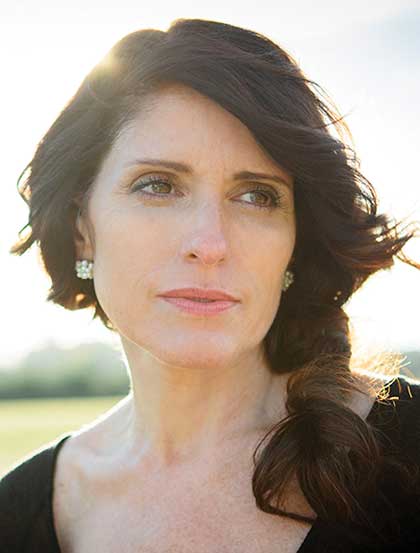
 Ellen Porter is a former journalist and the author of The Red Hawk, which is a fictionalized look at the historical events impacting the first settlers of her hometown, Chowchilla, California. The first settlers are some of the Native Americans whose tribe now shares a name with her hometown, but long ago used a different spelling, possibly Chaushilha as she spells it in her book. Ellen wrote this book as the first in a series to honor the memory of Reddy Redskin, a legendary character who served as Chowchilla High School’s mascot from 1916 when the school first opened until 2016, when the school was forced to abandon the mascot under 2015 legislation. Ellen began writing The Red Hawk a few days after the legislation was approved by the governor.
Ellen now lives in southern California in the state’s newest city, Jurupa Valley. Besides working on her next book, Ellen offers book editing and writing services (primarily business communications) through her company, Pen Porter. She also serves on the Jurupa Area Recreation and Park District governing board. In addition, she is the founder and leader of walking club Jurupa Valley Motion, and a member of running club Riverside Road Runners.



 Novel PASTimes