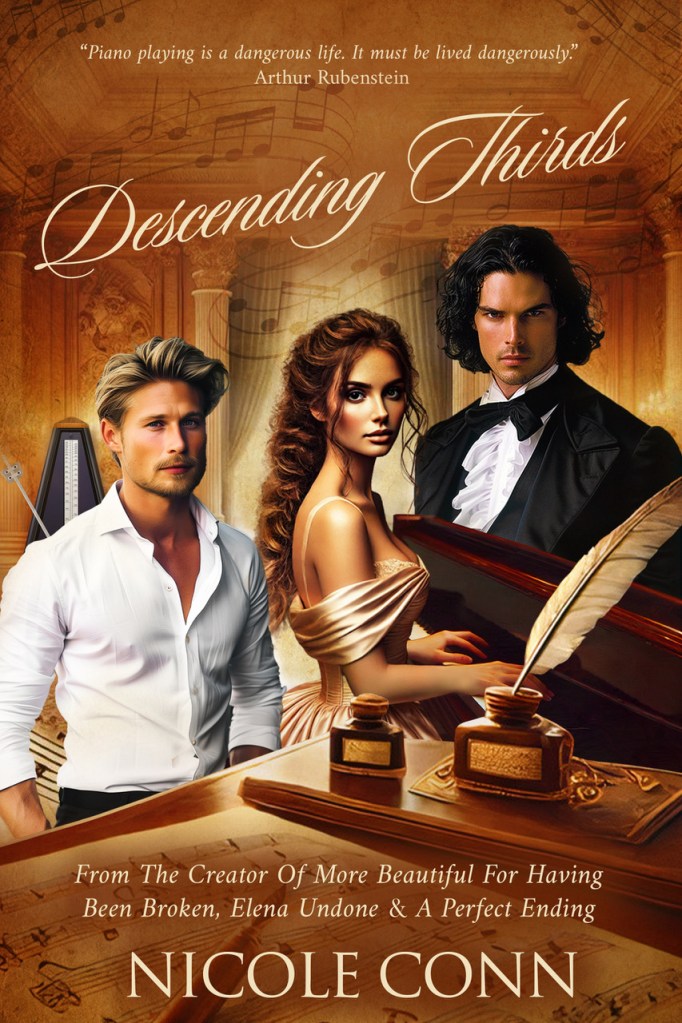
You once said, “Playing piano is a dangerous life.” What makes it dangerous?
Because you’re not just playing notes—you’re exposing yourself. Completely.
Every time I walk on stage, especially at something like the International Ketterling Competition, I feel as though I’m being asked to bleed in public… and then be judged on the quality of the wound. There are a thousand ways to fail that have nothing to do with your soul—sweaty fingers, a sluggish piano, a momentary lapse—and yet those are the very things that can define you. So yes… it’s dangerous. Not physically. But in every other way that matters.
You trained under very different teachers—Mrs. Hoven and Madame Kiretsky. How did they shape you?
Mrs. Hoven, my first teacher gave me permission to feel. She believed that your heartbeat is your metronome. She would say, “Don’t play for me. Play for you.” And for the first time, I understood that music wasn’t about correctness—it was about truth. My professors at the Royal Academy and especially Madame Kiretsky… stripped all of that away. They didn’t care about feeling. They cared about perfection. Madame Kiretsky would make me repeat a single passage seventy times until every note was exact. And if it wasn’t, she would stop me cold—“What is this I hear?”—as if I had committed a crime. Between the two of them, I learned something terrifying: That to survive, you must feel everything… and show nothing.
What is it actually like inside the International Ketterling Competition? Not the fantasy—the reality.
It’s war. It’s dressed in refinement—tailored suits, polite applause—but underneath, it’s survival at its brutal worst. Forty of the most gifted pianists in the world, reduced week by week until only a handful remain. You’re watched constantly. Measured. Compared. Reduced to numbers on a grid. And the worst part? You start to do it to yourself. Held but once every four years, the Ketterling, like the Olympics focuses on a single performance. The stress and pressure of that alone makes you look at the others—not as colleagues—but as obstacles. Even people you love. Even your closest friend. You
begin to understand the hunger to win… and it changes you.
What does it feel like to travel as a pianist—constantly moving, carrying your music with you?
You might think it would be lonely, but there is nothing more I enjoy than being with the eighty-odd orchestra musicians and you’re with the family that speaks the language of music. You travel with suitcases full of scores. Hotels blur together. Practice rooms change. Pianos betray you. Every instrument is different. Every hall demands something new. And yet… you’re expected to be consistent. It’s excruciating and divine!
You’ve said competition forces you to confront parts of yourself you’d rather not see. What do you mean by that?
I’m not a natural competitor. All I want is to disappear into the music—to play something so true that nothing else exists. But competition demands something else. It demands that you win. And to win, you have to accept things you don’t like—politics, comparison, judgment. So the question becomes…What are you willing to sacrifice to stay in the game?
Do you believe perfection is possible?
No. But that doesn’t stop us from destroying ourselves trying to reach it. When you sit down at the piano—after everything, all the pressure, all the noise—what are you really searching for? One moment. Just one… where everything aligns. Where the technique disappears. The fear disappears. The audience disappears. And it’s just… music. If I can find
that—even once—it makes all of it worth it.
On Sebastian and Conrad
There are two men who seem to alter the course of your life: Two very different brothers, Sebastian D’Antonio and Conrad. Without telling us everything… what happens when you meet them?
Sebastian is impossible not to notice. He walks into a room as if it already belongs to him—completely at ease in a world where the rest of us are quietly unraveling. He’s a charming lothario. Seriously handsome and untamed. As if the rules don’t quite apply. Conrad is different. You don’t feel him immediately. He doesn’t demand attention—he earns it. Slowly. There’s a steadiness to him, a kind of integrity that doesn’t need to announce itself. I didn’t understand, at first, how dangerous it was to be drawn to both.
What did Sebastian awaken in you as an artist?
Because his talent is to be a showman, he brought out the greatest of my insecurities: Feeling like an imposter.Being around him made me question whether I had been playing it too safe—mistaking control for truth.
And Conrad? What does he see in you that others don’t?
He sees past the performance. Not just on stage—but in life. He has a way of looking at you that makes it very difficult
to hide. As if he can see right into your soul. With Conrad… there’s nowhere to go but honesty. Whether you’re ready for that or not. He plays as if failure doesn’t exist, because for him it doesn’t. That kind of confidence… it’s intoxicating. And infuriating.
Is it possible to love two people at once?
I think it’s possible to be divided by what each person awakens in you. One can represent who you want to be…The other, who you already are. The conflict isn’t between them. It’s within you.
Do they represent different paths for your life?
Yes. But not in the obvious way. It’s not simply a choice between two men—it’s a choice between two versions of myself. And once you see that… you realize there’s no way to walk away unchanged.
Without giving anything away—what is the greatest risk in loving either of them?
That you don’t come out the same person on the other side. And that the music—the one thing you’ve built your entire life around—may not survive the collision. And it must, because in the end. That’s all you have. The music.
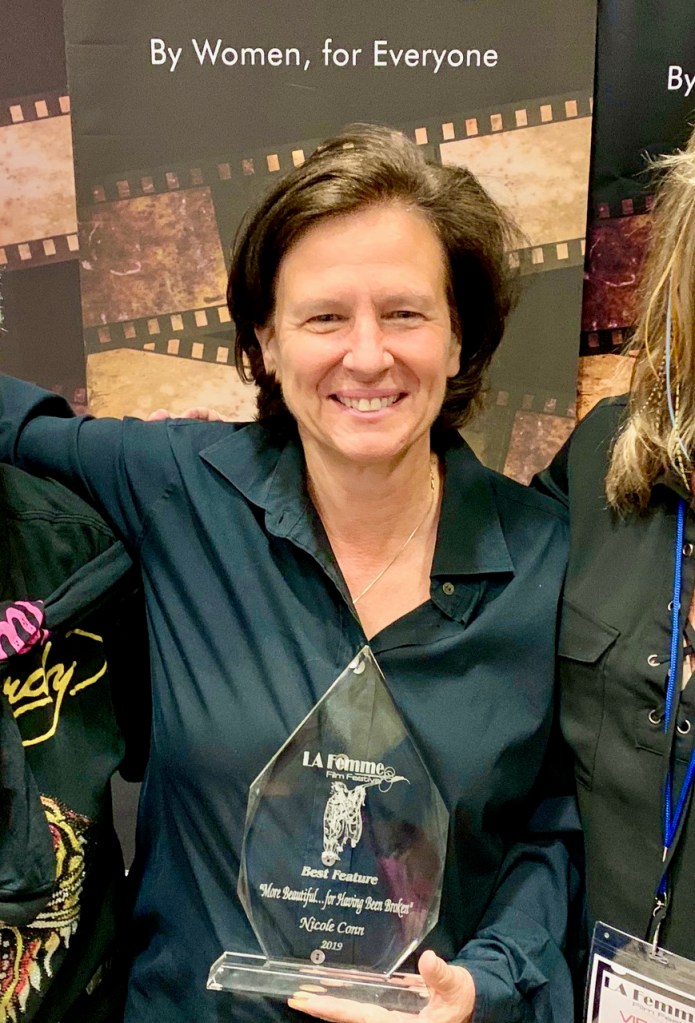
Nicole Conn is an award-winning writer and filmmaker known for crafting bold, emotionally intelligent stories centered on complex women navigating love, identity, and resilience. Conn is known for her signature, searing romances — the kind of films audiences watch over and over again.
https://www.audible.com/pd/Descending-Thirds-Audiobook/B0G1CQLKG7