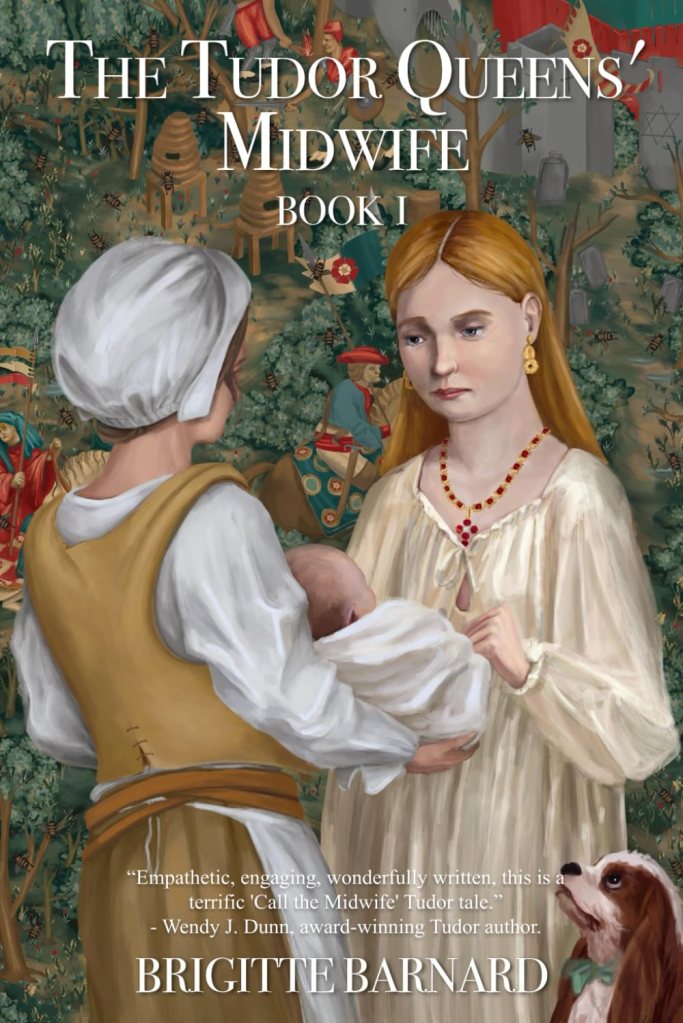
Interviewer: Mistress Sarah, you have served Queen Katherine for many years in the birthing
chamber. What have you observed about her strength as a mother?
Sarah: Her Majesty is a woman of unwavering fortitude. Though sorrow has visited her more
times than I dare count, she meets each trial with the resolve of a true queen. I have seen
her cradle a lifeless babe, pressing her lips to its cooling brow, and yet by dawn, she stands
before her ladies, her grief concealed beneath a mantle of dignity. She does not weep where
others may see—her sorrow is carried in her prayers, in the long hours she spends upon her
knees. If strength is measured by endurance, then there is no woman in England, nay, in https://amzn.to/41mTMQIChristendom, stronger than she.
Interviewer: Many whisper of the King’s desire for a son. How does the Queen bear the
weight of such expectations?
Sarah: A queen’s duty is to provide heirs, yet a woman’s body does not always yield to duty.
Her Majesty has done all that is required of her—she has fasted, she has sought the most learned physicians, she has entrusted herself to God’s mercy. I have known many women in my profession who crumble beneath such burdens, yet she does not. She holds to her faith,
to the conviction that she is the true and rightful wife of the King, and that in the end, justice
will prevail. But I would be lying if I said I do not see the toll it takes. The sleepless nights,
the silent prayers murmured when she believes herself alone… Such a burden is not easily
borne.
Interviewer: You are well-spoken for a midwife, Mistress Sarah. Where did you come by
such an education?
Sarah: I was fortunate in my youth. My father believed that a sharp mind was as valuable as
a skilled hand, and though many deem it unnecessary for a woman to read more than a
psalter, he insisted I be taught beyond such limits. I learned Latin, some Greek, and the art
of numbers, but it is in my profession that my knowledge has served me best. The study of
the body is a lifelong pursuit, and I take no greater pride than in aiding women in their hour
of need. Books, however, can only teach so much—true wisdom comes from years at the
birthing bed, from knowing when to act and when to pray.
(She avoids mentioning that her father was a Jewish scholar, that her first letters were not in
Latin but Hebrew. To reveal such a truth would be dangerous, and she is careful with her words.)
Interviewer: The Queen is deeply devout. Have you ever spoken with her about matters of
faith?
Sarah: Her Majesty’s faith is the foundation upon which she stands. It guides her every
thought, every action. She speaks of it often, and I listen with due reverence. A midwife hears many things—prayers whispered in labor, confessions spoken between cries of pain. Faith is a great comfort in the birthing chamber, for it is there that life and death stand side by side. I do not question the Queen’s devotion, nor do I question that faith gives strength where the body falters.
(She does not speak of her own faith. She does not tell the interviewer that when she prays,
it is not to the saints but to the Almighty, that when she fasts, it is not for Lent but for Yom Kippur. Such truths must remain hidden.)
Interviewer: The court is a place of intrigue. Have you ever feared for your safety?
Sarah: Fear is the shadow that walks beside all who serve the great and powerful. A midwife
is a keeper of secrets—she knows who has conceived, who has lost a child, who seeks
remedies best left unspoken. I tread carefully, as all must do. But it is not only courtly
whispers that give me pause. A misplaced word, a careless slip, and a life can be undone. I
take great care to be what I am expected to be—no more, no less. A woman in my position
must always remember that there are ears everywhere, and not all ears are kind

Brigitte Barnard is an amateur historian and home birth midwife whose deep passion for history and expertise in maternal care bring exceptional authenticity to her storytelling. A mother of four, she also breeds Cavalier King Charles Spaniels. Currently, she is working on her next book—a nonfiction exploration of dynastic childbirth in the Tudor court—for one of the UK’s leading publishers.

 Novel PASTimes