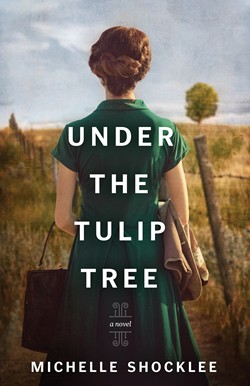
Meet Gunther Schneider from Michelle Shocklee’s All We Thought We Knew

During the turbulent days of World War II, thousands of foreigners were interned in the United States. Men, women, and even children with ties to Japan, Italy, and Germany were sent to detention camps all across the country. In Michelle Shocklee’s new novel All We Thought We Knew, readers meet Gunther Schneider, a German medical student who finds himself caught up in a frightening and seemingly hopeless situation. 
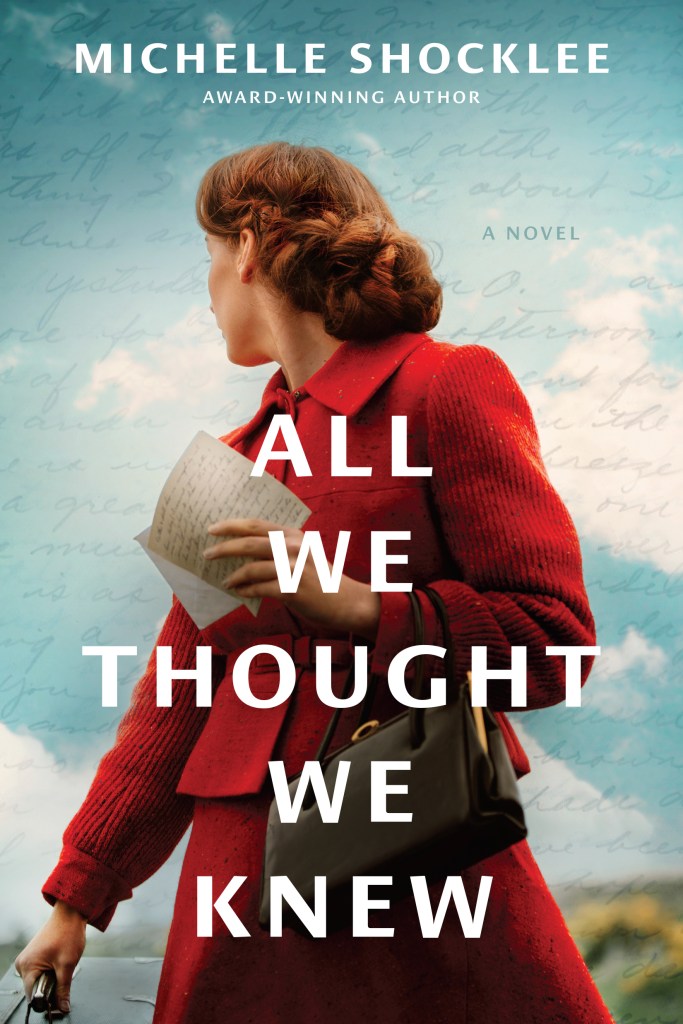
Amazon Affiliate Link Used Helps Support This Blog

NP: Hello, Gunther. It’s a pleasure to meet you. Thank you for stopping by Novel PASTimes to chat with us. 

Gunther: Danke. I’m happy to be here.

NP: Tell us about where you’re from and how you ended up in the United States. 

Gunther: I was born in Krefeld, Germany. It is very beautiful, close to the Rhine River. My parents were Gott-fearing people who believed in the truths taught in the Bible. When Hitler came into power, Mutter feared what would become of Germany. By then Vater had passed away and my older brother had joined the Nazis. Mutter thought it best for me to leave Germany and go to medical school in the United States. She believed I would be safe there.

NP: It must have been hard to leave your homeland and family. 

Gunther: Ja, it was, but I wanted to come to America and study to become a doctor. Although things did not turn out the way I’d hoped, I do not regret leaving Germany. 

NP: You were eventually arrested and detained in a camp for enemy aliens. Can you tell us about that?

Gunther: I was a student at Columbia medical school in New York City when Pearl Harbor was attacked. It may sound naïve, but I didn’t believe the US government would consider me a threat to society, being that it was Japan who’d attacked Hawaii, not Germany. I was quite shocked when I was arrested.

NP: Were your friends arrested too? 

Gunther: Ja, all of them. I’m not certain where some of them ended up, but I was sent to Camp Forrest in Tullahoma, Tennessee. 

NP: I’m not familiar with Camp Forrest. Was that a military installation?

Gunther: It was. I’m told it was one of the largest in the United States. While I was there, I saw thousands of young American men training for war. I felt sad knowing that many of them would die. Had I stayed in Germany, I would have been forced to join Hitler’s army. I’ve often wondered if I would have had to fight against some of the same soldiers I saw at Camp Forrest. 

NP: I’m sure it was hard being held as a prisoner. Was there anything about your time at Camp Forrest that brought you happiness?

Gunther: I met a special friend while I was in Tullahoma. Ava Delaney worked at the camp. She did not treat me like the enemy, which was refreshing. Unfortunately, as a German, I wasn’t always treated kindly by Americans. It was nice to have someone to talk to who didn’t judge me for where I was born. 

NP: It sounds as though you’ve been through many challenges in your life. Can you tell us where your find the strength to face them?

Gunther: My parents taught me to trust in the truths found in the Bible. When I left for America, my mother gave me my father’s Bible. Reading it reminds me that I’m not alone, even if it feels like it sometimes. The stories also remind me that people have always faced difficult challenges, but they also reveal hope. With Gott, there is always hope. 

NP: That’s very true. Thank you for sharing your story with us, Gunther.  
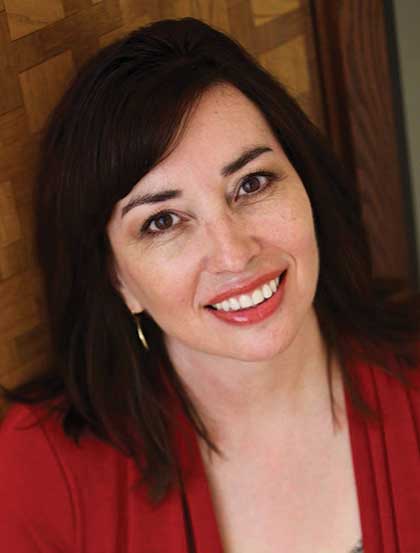

Michelle Shocklee is the author of several historical novels, including Appalachian Song, a Christy Award finalist, Count the Nights by Stars, a Christianity Today fiction book award winner, and Under the Tulip Tree, a Christy and Selah Awards finalist. Her work has been featured in numerous Chicken Soup for the Soul books, magazines, and blogs. Married to her college sweetheart and the mother of two grown sons, she makes her home in Tennessee, not far from the historical sites she writes about. Visit her at MichelleShocklee.com.


Meet Bertie Jenkins from Appalachian Song by Michelle Shocklee

Today we’re talking to Alberta “Bertie” Jenkins. Bertie, you’ve lived your entire life in the mountains of Appalachia, is that right?

Yes, my Papa and Mam were born in these parts, as were their folks. The Jenkins roots run deep in these hills. 

I’ve only been camping in the mountains, so I’m not sure what it would be like to live there permanently. 

It’s wonderful. Every mornin’ you wake up to the sound of birds and breezes and critters rather than noise from the city. All of us who are home gather ’round the big kitchen table and eat a hearty breakfast. Jennie does most of the cookin’, and she’s as fine a cook as Mam. After the meal, we have Bible readin’. When Papa was alive, he chose the Scripture passage for the day, but since he’s gone on to heaven, Jennie reads to us now. Sometimes we’ll discuss the Word, sometimes not. Someone will say a prayer of blessin’ over the day, and then we’ll scatter like ants. Everyone has their own chores to tend and things to get done before the sun disappears behind the mountain. When the boys were home, they’d go off huntin’ or fishin’ after chores were done. Us girls would pick bunches of wildflowers and wade in the creek. We’d have contests to see who could find the prettiest rock or find a robin’s nest or climb the highest tree. 

We went to school six months out of the year, mostly durin’ the fall and winter. Papa and some of the neighbors built a schoolhouse ’bout a mile down the mountain from our place. We children walked there or rode a mule, but soon as plantin’ season came, we were needed at home. 

What is your favorite season in the mountains?

I’m partial to autumn. God takes his paintbrush and touches nearly every growin’ thing with shades of red, yellow, and orange. Even those plants whose leaves turn brown are pretty in their own way. Springtime, too, is my favorite. Everything is new and fresh and bright. Flowers, baby birds, new fawns. Yes, springtime is mighty fine too. Summertime is full of tendin’ the garden, shearin’ the sheep, plowin’ and growin’ crops and then cannin’ it all so we’ll have plenty of vittles come winter, my least favorite season. 

Why is winter your least favorite?

Even though we don’t have the corn and wheat fields and the big garden to tend during the winter, the bitter weather and snow makes life hard here in the mountains. Don’t get me wrong, though. There’s beauty in every season, but winter brings hard work with it. The critters need extra feed since there’s no grass or bugs. Water freezes in buckets and troughs. Toes freeze when you’re outside too long. Firewood must be chopped several times a day. The house never really gets warm, even with Papa’s two fine fireplaces and the cookstove sendin’ out heat. But there are sweet times in the winter that we don’t usually get in the busy warmer months. Lots of sittin’ in the gatherin’ room, tellin’ stories and knittin’ or sewin’. I enjoy readin’ novels, although my elder sister says they’re silly and a waste of time.

Tell us about your family.

Papa and Mam had eleven children. I’m second to the youngest, with my sister Rubie bein’ the baby. Papa always said she was wise beyond her years, and I’d have to agree with him. Papa built our log cabin after he and Mam married. He’d been in the War Between the States—served in the Union Army like most East Tennesseans—and after he came home, they married and started their family. 

It must have been fun growing up with so many siblings.

Since I don’t know any other way of growin’ up, I’d say so. There was always chores to be done—gardenin’, cookin’, cleanin’, piles of laundry—but we had good times too. My brothers liked to tease us young’un’s by catchin’ snakes and lizards and bugs, but I wasn’t ever afraid of ’em the way my other sisters were. There were seven of us girls and four boys. After the boys were grown, they bought farms of their own and moved away, but only our sister Catherine married and left home. The rest of us girls live on the family homestead.

That’s fascinating. This might be too personal, but may I ask why you and your other sisters never married?

It ain’t too personal. It’s my story. My elder sister, Jennie, was a young girl when she decided not to marry, but three of my other sisters wanted husbands. Catie found a good man to wed, and the other two girls, Bonnie and Amelie, found fellas soon after. But those boys met with a terrible accident and were killed. My sisters never got over it. I watched each of them and the choices they made and concluded I wasn’t interested in marryin’ a fella and movin’ away. We sisters stayed on the homestead together, helpin’ each other and livin’ a good life. 

I’m sorry to hear about the tragedy. I suppose everyone suffers loss at one time or another. 

That’s true. Jesus said in this world we’ll have trouble, but he also says he’s overcome any troubles we face, includin’ death. In all my years as a midwife, I saw many miracles, but I also saw sadness. 

Tell me how you came to be a midwife. 

Mam was trained as a midwife by her mama. And her mama by her mama. We mountain folk tend not to trust fancy doctors and hospitals. We’d rather have our own people care for us, if possible. I was just a young’un when I first saw a baby bein’ born. Whoo-wee, that was somethin’. I couldn’t imagine how that little fellow got inside his mama’s belly and came out lookin’ so perfect. From then on, I asked Mam to train me in midwifery too. 

How many babies have you delivered?

Too many to count.

Do you have a favorite among them?

I sure do. One hot summer day back in 1943, a young gal showed up at our place. She was pregnant and alone, so my sisters and I took her in. When her time came, I tended the birth. I’ll never forget the moment I looked in that child’s eyes. I fell in love. 

What happened to the baby?

Well, that’s a story for another day, I think. 

Thank you for sharing your mountain life with us, Bertie. It sure makes me want to visit Appalachia soon. 

You’re welcome in our beautiful part of the world anytime. There’s always somethin’ to do in the mountains. Hikin’, bikin’, picnickin’, or just sittin’ and enjoin’ God’s handiwork. 

It sounds perfect.

It is

.


Michelle Shocklee is the author of several historical novels, including Count the Nights by Stars, a Christianity Today fiction book award winner, and Under the Tulip Tree, a Christy and Selah Awards finalist. Her work has been featured in numerous Chicken Soup for the Soul books, magazines, and blogs. Married to her college sweetheart and the mother of two grown sons, she makes her home in Tennessee, not far from the historical sites she writes about. 

Helpful Links:

Book Review: Count the Nights by Stars by Michelle Shocklee

Affiliate link used. If you purchase through this link we will receive a small commission to help support our blog.

Tyndale House Publishers

978-1-4964-5993-0

This is a very engaging dual-time period novel set in 1897 and 1961. I love historicals I can learn from and this one revealed a lot of Nashville’s history from both time periods. The story revolves around the Maxwell House Hotel. (Yes, like the coffee. I enjoyed this historical tidbit!) The earlier time period is set during the Tennessee Centennial Exposition, which is an interesting historical event to learn about. The later time period looks back to that event through the scrapbook of a resident of the hotel during the decline of the hotel. Both Priscilla from 1897 and Audrey from 1961 learn to step out of their comfort zones to help those in need. The plight of immigrants and the exploitation of young girls who are either desolate or too innocent is one of those needs. Civil rights and the education of special needs kids is another. These things could overwhelm a novel but instead Shocklee explores how her characters choose to respond to the people in peril. The title comes from a proverb one of the characters tells Priscilla.

I won’t share any spoilers but this is a book that I’m glad I read and highly recommend.

Read the first chapter here.

Reviewed by Cindy Thomson

I was given a digital copy (via NetGalley) from the publisher for the purpose of review, but no review was required. This is my honest opinion.

Meet Priscilla and Audrey from Michelle Shocklee’s Count the Nights by Stars

Hello, ladies! Please tell our readers a little about yourselves.

Priscilla: I was born in Chattanooga, Tennessee, seven years after the War between the States ended. My father is in the railroad industry and Mother keeps herself occupied with a full social schedule. They are ever hopeful I’ll marry well and settle down, but I know it will take a very special man to capture my heart. 

Audrey: My family and I live in the Maxwell House Hotel in downtown Nashville where my father is manager. It may sound strange, but I really enjoy living in the old hotel. Did you know it was built before the Civil War? Even though that was over one hundred years ago, it’s still a beautiful place. We’re getting ready for Christmas now, with decorations, cookies, and the Maxwell’s world-famous Christmas Day dinner.

You’ve both spent considerable time at the Maxwell House. If you had to choose one favorite thing about the hotel, what would it be?

Audrey: The lobby. My brother and I used to play hide-and-seek in it while Mom worked the guest services desk. From the lobby, you can also see the grand staircase, which leads to the beautiful mezzanine overlooking the main floor. I’ve often imagined belles in gorgeous ballgowns gliding up and down the marble stairs on their way to the ballroom or out on the town with a handsome escort. 

Priscilla (chuckles): I must admit my favorite thing about the Maxwell has nothing to do with its lovely architecture. My favorite place is the confectionary off the lobby. They have the most delicious peaches and cream. 

I understand the famous Maxwell House coffee is named after the hotel. How did that come about?

Audrey: With my father as manager of the historic hotel, I’ve heard the story dozens of times. Back in the late 1880s, two fellows—Joel Cheek and Roger Nolley Smith—developed a special blend of coffee beans. Cheek gave twenty pounds of the coffee to the food buyer at the Maxwell House Hotel, who agreed to serve it to the guests. When the coffee ran out, the hotel went back to serving their regular blend, but the guests complained. They wanted Cheek’s coffee. The coffee became so popular at the hotel that Cheek and Smith eventually gained permission to name it Maxwell House Coffee. An unverified rumor says President Theodore Roosevelt took a sip of the brew while visiting Nashville and declared it “good to the last drop.” I may be a little biased, but I think it is too.  

Priscilla, what brought you and your family to Nashville?

Priscilla: We came to attend the Tennessee Centennial Exposition. People from all over the world are here to celebrate the state’s 100th birthday. Papa is most proud of the Railway Exhibit, which he declares the best on the fairgrounds. I might have to argue that point, because there are so many fascinating buildings and exhibits. I’m especially fond of the wildly amusing sights of Vanity Fair.

Audrey: Did you ride the giant seesaw and the chute?

Priscilla: I did indeed ride the seesaw, which was thrilling. From the top, you can see well over two miles. But the chute is a water ride that tends to leave everyone rather damp. I decided to save my ten cents and spend it on an Italian gondola ride on Lake Watauga.

Audrey: I wish I could travel back in time to the exposition. I’ve recently visited the Parthenon in Centennial Park and found it utterly fascinating. It must have been quite the sight back in 1897. 

Priscilla: It truly is. The Parthenon and other buildings are so well built, you’d never guess they’re meant to be temporary—built to only last the duration of the exposition. My father says most of them will be torn down once the expo ends in October, so I’m glad to know the Parthenon still stands for visitors to enjoy. 

Audrey: Yes, they rebuilt it with permanent materials in the 1920s. There’s a museum inside. 

What is something each of you would like to accomplish?

Priscilla: I appreciate your question, because I’ve been pondering this very thing for some time now. Although I love my parents and the upbringing they’ve provided me, I want more out of life than dinner parties and keeping a well-appointed house. There are so many people beyond the scope of my sheltered corner of the world that need someone to care about them. I’m just now beginning to discover that we all play a role in offering a helping hand to those in need. To truly see someone for the unique human being they are, created by a loving Father. I’m not entirely certain how to go about fulfilling my part in this whole thing, but I’m eager to begin trying. 

Audrey: I love your answer. That’s exactly how I feel too. I’ve been far too self-centered in the past, and I truly want to become the woman God created me to be, using the gifts he’s given me to serve people. I would especially like to work with children like my brother. Emmett is a very special young man, but sometimes the world doesn’t see him and others like him the way my father and I do. I’d like to change that.

Thank you, ladies! We look forward to reading Count the Nights by Stars and seeing how your stories unfold.


About the book:

Count the Nights by Stars

Count your nights by stars, not shadows. Count your life with smiles, not tears.

1961. After a longtime resident at Nashville’s historic Maxwell House Hotel suffers a debilitating stroke, Audrey Whitfield is tasked with cleaning out the reclusive woman’s rooms. There, she discovers an elaborate scrapbook filled with memorabilia from the Tennessee Centennial Exposition. Love notes on the backs of unmailed postcards inside capture Audrey’s imagination with hints of a forbidden romance . . . and troubling revelations about the disappearance of young women at the exposition. Audrey enlists the help of a handsome hotel guest as she tracks down clues and information about the mysterious “Peaches” and her regrets over one fateful day, nearly sixty-five years earlier.

1897. Outspoken and forward-thinking, Priscilla Nichols isn’t willing to settle for just any man. She’s still holding out hope for love when she meets Luca Moretti on the eve of the Tennessee Centennial Exposition. Charmed by the Italian immigrant’s boldness, Priscilla spends time exploring the wonderous sights of the expo with Luca—until a darkness overshadows the monthslong event. Haunted by a terrible truth, Priscilla and Luca are sent down separate paths as the night’s stars fade into dawn.


Michelle Shocklee is the author of several historical novels including Under the Tulip Tree, a Christy Award finalist. Her work has been included in numerous Chicken Soup for the Soul books, magazines, and blogs. Married to her college sweetheart and the mother of two grown sons, she makes her home in Tennessee, not far from the historical sites she writes about. Visit her online at michelleshocklee.com.

A Candid Talk with Frankie Washington and Rena Leland from Michelle Shocklee’s Under the Tulip Tree

Welcome, ladies. Tell us how you became friends. 

Frankie: It began when I received a letter from the gov’ment wanting to hear my stories about being a slave. I thought they was fooling with ol’ Frankie. Why would anyone care about such things in 1936? But sure enough, one day this pretty gal arrived on my doorstep with a list of questions a mile long. 

Why was the government collecting stories about slavery seventy years after the Civil War ended?

Rena: I think there are two reasons. First, when the stock market crashed in 1929—on my sixteenth birthday, no less—a terrible depression hit the economy. Millions of people lost their jobs, including my dad. President Roosevelt hoped to help people get back to work by creating jobs through the government, and one of those organizations was the Federal Writers’ Project. Because I’d worked for a newspaper, I was hired by the FWP to interview former slaves for a project they called the Slave Narratives. People like Frankie were getting older—sorry, Frankie, I don’t mean to say you’re old.

Frankie: Child, I’ve seen 101 birthdays. If that ain’t old, I don’t know what is. {chuckles}

So, the government wanted to preserve the stories of former slaves? Why are they called narratives?

Rena: Yes. Like Frankie said, when I arrived at her house, I had a list of questions I’d been given by the FWP director in Nashville. My instructions were to ask the questions and then record the interviewee’s answers word-for-word. That’s what makes the narratives so special, in my opinion. They are the words of the person who actually lived them out. 

Was it difficult to revisit the dark days of slavery, Frankie?

Frankie: It was, but the Lord helped me. I know it’s important that our stories aren’t forgotten. Slavery might not be legal nowadays, but there’s still a lot of problems left over from slavery times. I have hope that people like Rena and her young man, Alden, will be the ones to bring about change. 

Rena, did you know much about slavery before you met Frankie?

Rena: I’m ashamed to say I didn’t. Even though I’d grown up in Nashville and had studied about the Civil War in school, I don’t remember learning much about the evils of slavery. When I heard Frankie’s story, I knew there were thousands of others like it that needed to be told. People of my generation and the generations to come shouldn’t forget about slavery. I’m thankful it isn’t legal to own a fellow human being anymore, but, like Frankie said, there is still a lot of work that needs to be done in order for everyone to have equal rights.

Frankie, you’ve shared that you’re 101 years old. You’ve seen a lot in your lifetime. What are some of the most memorable events you recall?

Frankie: Gracious, there’s so many. I remember hearing the news that President Lincoln had been killed. Sam and I cried our eyes out, ’cuz he was a good man. I remember when the first black senator was elected—Hiram Revels of Mississippi—five years after the war ended. I didn’t think I’d live to see such a thing. I believe it’s good to have different kinds of folks running the gov’ment. Kinda give them a more complete perspective on things. I remember seeing a car for the first time and hearing a man’s voice coming from a wooden box called a radio. Those are some mighty amazing inventions, and I ’spect there will be more to come long after I’m gone home to heaven. 

If you could go back in time and change something about your life, what would it be?

Rena: I wish I could stop the stock market from crashing, because it caused so much pain for so many people. But, admittedly, I wouldn’t have met Frankie if I hadn’t taken the job with the FWP, and I took the job because my family needed the money. I also wouldn’t have met Alden.

Is he someone special?

Rena: Yes, he’s become quite special to me. He also works for the FWP.

Frankie: This might come as a surprise to you all, but I wouldn’t change anything about my life, not even being a slave. God didn’t make me a slave, but he was with me as I lived as one. Back in the Old Testament, his chosen people were slaves in Egypt for four hundred years. That doesn’t make slavery right, but it tells me God has bigger plans than what I can see in my present circumstances. Like Rena said, if I hadn’t lived the life I lived, I wouldn’t have met my Sam or her. 

What do you hope your friendship with one another will inspire in others when they read about it?

Rena: I hope it will inspire people like me and my family to get to know people like Frankie and her family. I’d always been warned to stay away from the neighborhood of Hell’s Half Acre because it was dangerous, so you can imagine how surprised I was to find this dear woman had lived there most of her life. Too often we make judgments about people and places without knowing the full story. I can’t imagine my life without Frankie in it. 

Frankie: I agree. Unfortunately, the same can be said for folks down in the Acres. We make judgments about people who are different from us, just like anyone else. My hope and prayer is one day we’ll all simply love one another as Jesus commanded in Matthew 22:39. Wouldn’t that be something?  

Thank you, ladies, for sharing your hearts with us.


Michelle Shocklee is the author of several historical novels. Her work has been included in numerous Chicken Soup for the Soul books, magazines, and blogs. Married to her college sweetheart and the mother of two grown sons, she makes her home in Tennessee, not far from the historical sites she writes about. Visit her online at michelleshocklee.com.  

Photo credit: Author photo taken by Jodie Westfall, copyright © 2012. All rights reserved.

Book Review: Under the Tulip Tree by Michelle Shocklee

Come back tomorrow for the character interview of Rena and Frankie!

Tyndale House Publishers, September 8, 2020, Pages:400, ISBN:978-1-4964-4607-7

The story begins with the stock market crash of 1929 when Rena Leland is about to celebrate her sixteen birthday. Because her father is a banker who mismanaged his assets, their lifestyle takes a dramatic turn for the worse.

For me, this beginning was slow. The real story gets going when we leap forward seven years as Rena, out of work at a newspaper office, takes a job with the WPA interviewing former slaves. (If you find the beginning slow, stick with it. You’ll be glad you did.) I knew about these slave narratives and have read a few of them. With all the stories and movies out there on slavery and the Civil War, readers might be tempted to think it’s all been done before. However, the author drew me in as Rena is engrossed in hearing the story of Frankie Washington, a woman who said God told her she couldn’t die until she told Rena her story. I was engrossed too. It kept me turning pages as the book is partly told in Frankie’s point of view from the past.

Uncomfortable at times (how can it not be?), readers are taken back to the horrors, the heartbreak, and the incredible endurance of those who lived through it. Frankie’s story takes place in Nashville before and during the Civil War. Frankie and other slaves are held in a contraband camp when the Union Army takes control of the city. She is allowed to work and be paid for washing officer’s clothing. During a battle she cares for injured soldiers. And then she is asked to do the same for the Confederate soldiers, something she struggles against, blaming them for all the pain and suffering she endured as a slave. How she deals with this and what she learns will also teach Rena some incredible lessons.

Rena feels regret for her family having owned slaves in the past, but she thinks all that is in the past. Then she realizes that between her mother objecting to the neighborhood she must visit for the interviews and her own anxious feelings when she travels there without a companion and is stared at, there is still a vast difference in the white/black culture and much mistrust on both sides. With the supporting characters of her grandmother and a handsome co-WPA worker, Rena learns things about the past that she never learned in school. More importantly, she learns about the life-long spiritual journey of the former slave, and this changes Rena’s outlook on her own life and on her family she previously had trouble tolerating, and also on the man who has been transporting her to Hell’s Half Acre to conduct the interviews. This transformation flows perfectly. It’s not rushed for the sake of the story or preachy at all. The ending held a surprising twist that will cause this story to stay in readers’ minds for a long time.

I really enjoyed this book, and having recently read Lisa Wingate’s The Book of Lost Friends, I found Under the Tulip Tree a fitting companion. Highly recommended.

Cindy Thomson, Novel PASTimes

I received a free advanced reader copy from the publisher with no obligation to review.