
Meet Gitel from Gitel’s Freedom by Iris Mitlin Lav

book cover
Amazon Affiliate Link Used Helps Support this blog

Interviewer: We are here today with Gitel, the main character in Gitel’s Freedom by Iris Mitlin Lav. Gitel has graciously agreed to come back briefly from the afterlife to allow me to interview her.

Hello Gitel. Thank you for granting me this interview. If you were still alive today, how old would you be.

Gitel: Let me see. I was born in February, 1907, so I would be around 118 years old now. 

I: You seemed unhappy a lot of the time you were growing up. What made you so unhappy?

G: I felt stuck between being an old-world girl and being an American girl, although I wanted to be the latter. I was five years old when we came to the United States, to South Bend, Indiana. My mother Rayzel never adjusted to life in the U.S. She never even learned to speak English. She tried to impose on me all the restrictions that would have applied if I had been raised as an Orthodox Jewish girl back in Belorussia. I couldn’t go to the houses of my school friends, I couldn’t play sports, I couldn’t wear pants, I couldn’t go away to college, and lots of other restraints. I defied her to the extent I could by playing on a non-Jewish softball team, for example, but that was not until I was in high school.

I: How did you meet Shmuel? What made you want to marry him?

G: I was already 25 years old and working at Studebaker. My mother was pushing me hard to get married, but I had no use for any of the local men the matchmaker or my mother proposed. They were so provincial and boring. I had just about decided that I didn’t want to marry at all. But when I heard Shmuel speak at a Workmen’s Circle meeting in Chicago, he seemed so different from any men I knew. He was concerned about the welfare of people who didn’t have the money to afford their necessities. And he also had good ideas about what politicians and the government could do to help workers and those without jobs. I fell in love with him and his ideas.

I: What is your conception of happiness and freedom? 

G: When Shmuel died, after having been an invalid for much of the preceding 11 years, I was 60 years old and exhausted from taking care of him, being the breadwinner, and holding the family together. But I soon shook off my exhaustion and realized that for the first time since our first daughter was born a year after we married, I was free from responsibilities and could be my own person. Both daughters were married and on their own. I set about finding a job and a small studio apartment in the city, which my bookkeeping skills allowed me to readily find and afford.  And with no other responsibilities, I could visit with friends or relatives or do volunteer work in my free time. It was wonderful. I worked at that job until I was 72, and then I retired. 

I: Why does so little make you feel happy and free? 

G: My life had been so difficult. Shmuel and I had just been married a couple of years when we lost our business in the Great Depression, when our bank that hcld our working capital and personal funds closed and didn’t reopen. Then Shmuel kept getting sick or injured. Most of the time we didn’t have enough money to live; we were always pinching pennies. And Shmuel insisted that I didn’t work outside the house to supplement his meager income. I never was able to realize my dream of becoming a teacher. After all that, a job with a decent salary, a nice place to live, and free time that I could spend as I pleased seemed to me like a huge reward or recompence for all that I had suffered.

I: If you could go back and change anything in your life, what would you change?

G: There is so much I would want to change. To start with, there were warning signs before we were married that Shmuel’s health might be problematic. But I was too much in love to pay attention to those signs. And above all, I wish I had insisted that Shmuel pay more attention to the warning signs of what might happen during the Depression, rather than my going along with his optimism. We could have waited a few years before opening our drug store, rather than do so in 1932 when the economy was crashing. And I wanted to take our working capital out of the bank. I should have insisted rather than let Shmuel’s reluctance prevail. 

I: Thank you so much for your willingness to be interviewed and for your honest answers. One more question. Is there really life after death? What is it like?

G: Ah. We are forbidden to talk about that. 
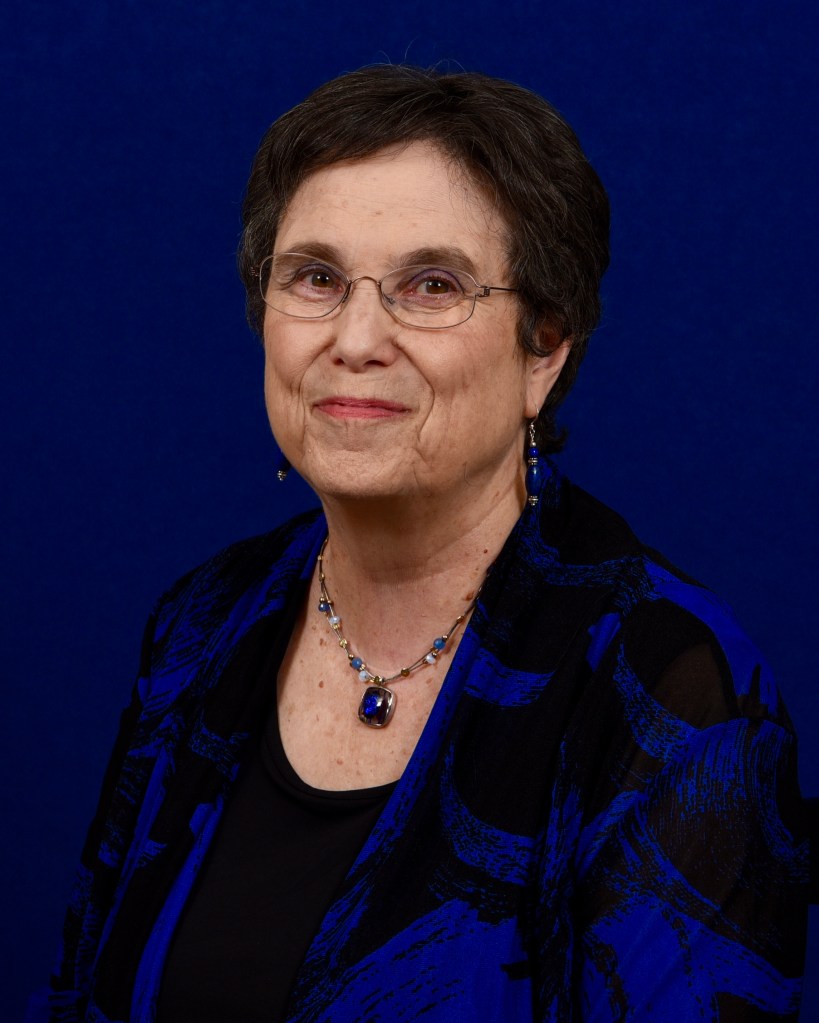

Iris Mitlin Lav grew up in the liberal Hyde Park neighborhood of Chicago, Illinois. She went on to earn an MBA from George Washington University and an AB from the University of Chicago, and to enjoy a long career of public policy analysis and management, with an emphasis on improving policies for low- and moderate-income families. She also taught public finance at Johns Hopkins University and George Mason University, and in 1999 received the Steven D. Gold award for contributions to state and local fiscal policy. Her first novel, “A Wife in Bangkok,” was published in 2020 by She Writes Press. “Gitel’s Freedom” is her second novel. Learn more at: www.irismitlinlav.com
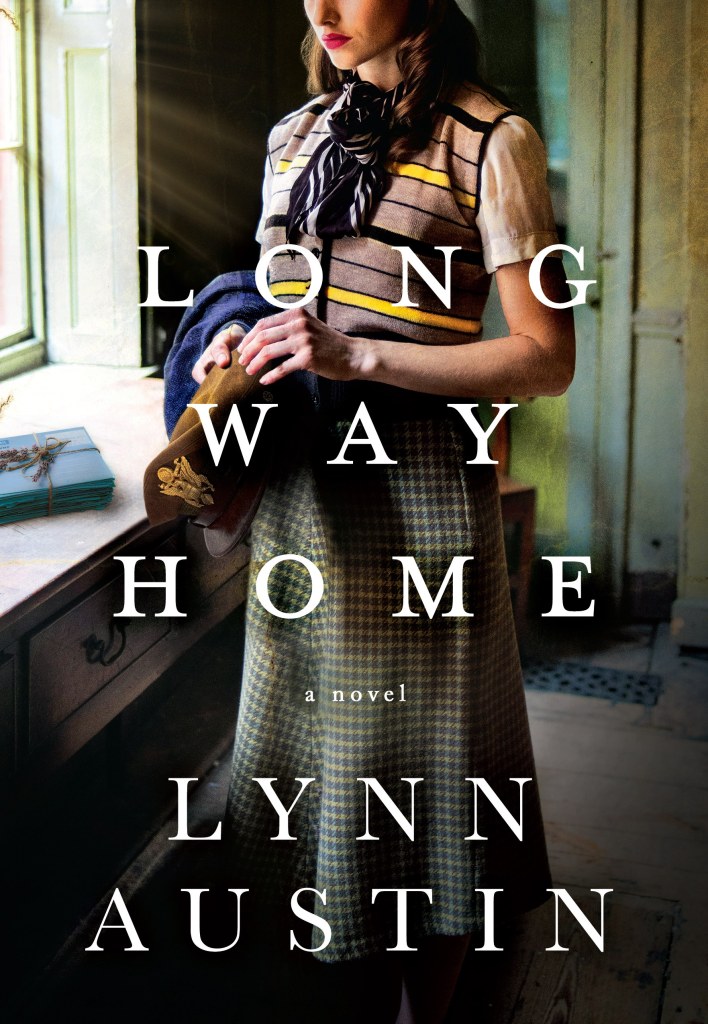
A Candid Talk with Gisela Wolff and Peggy Serrano from Lynn Austin’s Novel Long Way Home

About the book:

Peggy Serrano couldn’t wait for her best friend to come home from the war. But the Jimmy Barnett who returns is much different from the Jimmy who left, changed so drastically by his experience as a medic in Europe that he can barely function. When he attempts the unthinkable, his parents check him into the VA hospital. Peggy determines to help the Barnetts unravel what might have happened to send their son over the edge. She starts by contacting Jimmy’s war buddies, trying to identify the mysterious woman in the photo they find in Jimmy’s belongings.

Seven years earlier, sensing the rising tide against their people, Gisela Wolff and her family flee Germany aboard the passenger ship St. Louis, bound for Havana, Cuba. Gisela meets Sam Shapiro on board and the two fall quickly in love. But the ship is denied safe harbor and sent back to Europe. Thus begins Gisela’s perilous journey of exile and survival, made possible only by the kindness and courage of a series of strangers she meets along the way, including one man who will change the course of her life.


Gisela, tell us a little about your life before the events of the story begin.

Gisela: I lived in Berlin with Mutti and Vati (my parents) and my younger sister, Ruthie. We’re Jewish, and we had a happy life in our Jewish neighborhood with our large extended family. Then Hitler came to power and Vati was forbidden to practice law. Ruthie and I were no longer allowed to attend our school. As the persecution grew worse and worse, we knew we had to get out of Germany. Vati began the difficult task of applying for visas and landing permits, searching for a country that would allow us in as refugees.

Your story begins in November 1938 on Kristallnacht. Tell us how that night changed your life.

Gisela: Kristallnacht was a night of widespread Nazi persecution, violence, and terror. Synagogues were set on fire; Jewish businesses and even hospitals were ransacked and demolished. When Vati rushed over to our synagogue to save the Torah scrolls, the Nazis arrested him and sent him to Buchenwald prison camp. Mutti was so overwhelmed with fear and grief that it was up to me to finish Vati’s work and try to get us all out of Germany.

Did you manage to escape?

Gisela: Yes! Miraculously, we were able to get landing permits for Havana, Cuba, where my uncle was waiting for us. We booked passage on a ship called the SS St. Louis and set sail from Hamburg, Germany.

It must have been a huge relief for you. Were you able to relax and enjoy the voyage?

Gisela: Not at first. Nearly all of the passengers were Jewish, like us, but the ship flew the Nazi flag and most of the sailors were Nazis. The portrait of Hitler that hung in the dining hall reminded us that we weren’t free yet. But I met Sam Shapiro on board and we soon became inseparable.

I don’t want to spoil the story for readers, but the voyage of the St. Louis was only the beginning of your long, wartime journey, wasn’t it?

Gisela: That’s true. I’m glad I didn’t know at the time how very far I would end up traveling and what my family and I were about endure as we tried to survive.

Thank you, Gisela. It will be interesting to read about those journeys. Peggy, it’s your turn now. Tell us a little about your life before the events of the story.

Peggy: My mother died when I was eleven years old, so I was raised by my father in our apartment above his auto repair shop. I was different from all of the other kids at school, and they bullied me mercilessly. My only friends were my dog, Buster, and Jimmy Barnett, who lived across the street from me. Jimmy is four years older than I am and he watched out for me like a big brother.

Your story begins after World War II ends and Jimmy Barnett and the other soldiers have just returned home. Tell us about that.

Peggy: The Jimmy who came home isn’t the same man who went away to war. He is sad all the time and barely speaks to anyone, even to me and his parents. Then the unthinkable happened, and he tried to kill himself. He’s in a veterans’ hospital now, and the doctors say he’s suffering from battle fatigue. Their treatments aren’t helping, so I came up with the idea of writing letters to all of his buddies from the war so we can try to figure out what happened that made him want to die. I’m desperate to find a way to help my best friend.

Are there any other changes for you now that the war is over?

Peggy: Oh, there are plenty! I worked in a factory during the war, building aircraft cannons, but that job came to an end when the war did. Then my father’s girlfriend, Donna, decided to take over the office work that I’ve always done for my father’s garage. She says I need to find another job and another place for my dog and me to live. And all of this while I’m trying to help Jimmy!

It sounds like a difficult time for you.

Peggy: It is. The only bright spot for me is working with Jimmy’s father in his veterinary clinic. I love animals and I’ve worked for Mr. Barnett part-time after school since I was eleven years old. But now I’ll need to find a full-time job and someplace else to live.

Thank you, Peggy. I’m sure readers will want to read the rest of your story to see how things turn out for you and Jimmy.


Lynn Austin has sold more than one and a half million copies of her books worldwide. A former teacher who now writes and speaks full-time, she has won eight Christy Awards for her historical fiction and was one of the first inductees into the Christy Award Hall of Fame. One of her novels, Hidden Places, was made into a Hallmark Channel Original Movie. Lynn and her husband have three grown children and make their home in western Michigan. Visit her online at lynnaustin.org.