Welcome to Novel PASTimes! We are pleased you stopped by today.
Our readers might not be familiar with you. Can you tell us a little something about yourself to get us started?
Certainly. My name is Ann Terry Greene Phillips. I was born in 1813 and lived all my life in Boston, Massachusetts. I was raised by my aunt and uncle on Chauncy Place after the untimely death of my parents. I lived with them until my late husband, Wendell Phillips, and I were married and moved together to a modest home on Essex Street. My life has been dominated by twin passions: my abhorrence for the institution of American slavery and my love for Wendell.
What do you think you learned from being raised by your aunt and uncle instead of your own parents?
I am lucky to have been born into a large family, such that in living with my aunt Maria and Uncle Benjamin, I was surrounded constantly by other family members as well. While I missed my own parents terribly, I never suffered for love or attention. Aunt Maria and Uncle Ben were staunch abolitionists, and growing up in their home, I was treated to many opportunities to become involved myself. For example, even as a young girl, I helped my aunt organize and sponsor abolitionist bazaars, where volunteers would donate crafted items to sell, and all monies earned would then be used to support the abolitionist agenda. Similarly, my aunt would bring me with her to meetings of the Boston Female Anti-Slavery Society, where I learned a great deal about the Cause and how to best use my own skills to help eradicate the horrid system of slavery that continued in the southern states. As soon as I was of age, I joined the BFAS as an official member and remained active in the organization throughout my life.
When did you know that Wendell Phillips was the person you wanted to marry?
I will never forget the day I met my Wendell. I had been tasked with accompanying my cousin Mary on a long ride back to her family’s home many miles from Boston. Mary was very much in love with her beau, William, at the time, and she convinced me that he and his friend, Wendell, should join us on our ride. I suppose I was there mainly as chaperone. William brought Wendell perhaps to distract me so that he and Mary could whisper to themselves for the duration of the ride. When Wendell arrived, I remembered that I’d seen him before, at an abolitionist rally that had turned violent. Though I could hardly have focused on the handsome bystander that day, while my friends were being threatened with arrest, I confess I had thought about him several times since. Once we were settled in the carriage and had the opportunity to converse, he began asking me questions about that rally and the Cause in general. I’m embarrassed to admit that I grew quite passionate in my answers, speaking at such length that I eventually had to apologize for droning on so long. Well. Wendell assured me that he’d never been more interested in anything than what I’d been saying. I knew in that moment, that I had found my match.
We were sorry to hear that you’ve had some health challenges. How has that been going?
Yes, a few months after I met Wendell, I began to display signs of a mysterious illness. I had no outward signs of illness, no fever, or cough, or even rashes. Instead, I had headaches of such magnitude that I could not rise from my bed. Similarly, my muscles ached and I experienced shooting pains throughout my body at random. There were weeks when the symptoms were so bad that I could not rise from my bed. Other times, I might experience bursts of energy and hope that I was cured. Over time, I began to understand that the symptoms would simply come and go throughout my life and that I must always take care with myself, or those symptoms would return with vengeance. It has been conjectured since my death that the condition from which I suffered was a severe case of Rheumatoid Arthritis. Sadly, this was not something for which there was any treatment in my time. We did, of course, try the remedies suggested, such as water cures, various herbs, and seaside retreats. Eventually, I simply learned to live with my condition and do everything I was able in spite of it.
Living in the mid-1800s, there have been many restrictions placed on you because of your sex. In some ways, it seems that being female may actually have helped you do the abolitionist work that has been so important to you. Can you talk about that?
I suppose we can all acknowledge now that women are conspicuously absent from much of the historical record. It’s not because we were not involved in the major historical events of our day. We simply had to restrict our participation so that it was behind closed doors. As you probably know, my husband, Wendell, became an active abolitionist and gave speeches throughout the country. He was often called “The Golden Trumpet of Abolition” for his unparalleled oratory skills, and his speeches have been memorialized in many published books. As his wife, let us just say I had great “influence” over the content of his speeches. Similarly, because people were so often focused on the men in the room, female activists such as myself were often able to complete certain tasks related to the Cause without being detected. Though we often had to force ourselves to be creative in our actions, in some ways, being female may have allowed us to be more effective than our male counterparts.
I’ve heard a rumor that you don’t eat sugar. Can you expand on that?
The rumor is true, and the reason is quite simple. I refuse to sweeten my comestibles with the spoils of slavery. Cane sugar is one of the many crops that my brothers and sisters in the South have been forced to harvest, and until such time that sugar is collected by free people who are paid for their labor and treated fairly, I want no part of it.
I understand that you were one of the wealthiest young women in Boston at the time of your marriage, yet your home is quite modest. Can you tell us why that is?
Similar to my last answer. Yes, at the time that Wendell and I married, I may have been the single wealthiest young woman in the entire city, thanks to an outsize inheritance from my deceased parents. I saw no reason, however, to live in luxury while slavery persisted in this country, not when I could use my funds to help others. Wendell and I lived on what we needed, and the rest, we donated to help the enslaved, the marginalized, the downtrodden, with whatever they required.
Is there anything else you’d like people to know about you?
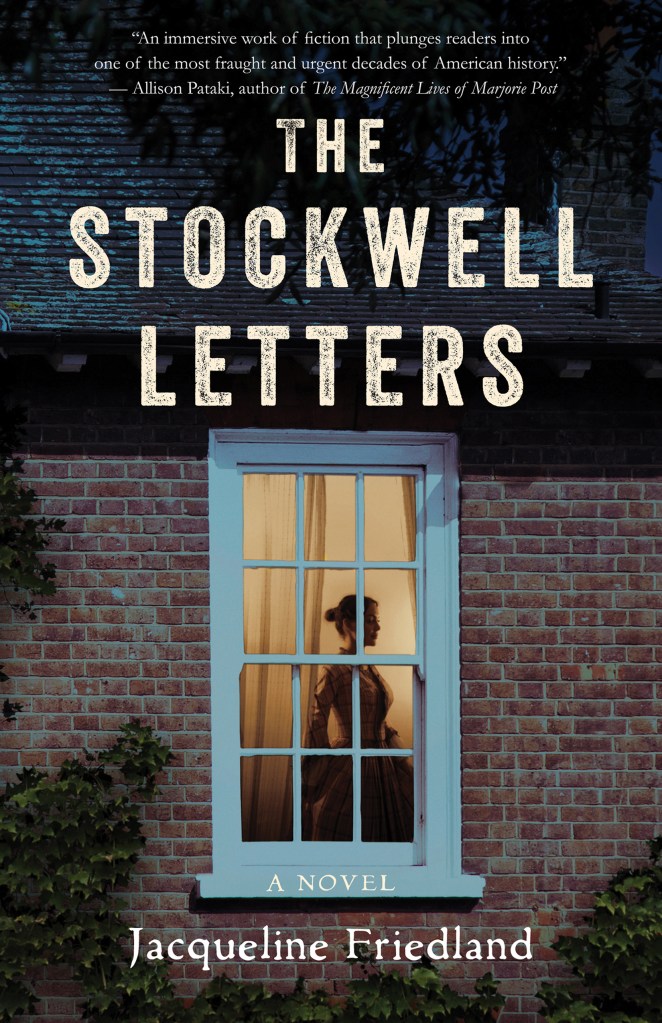
I’ve said it before, and I’ll say it again. The efforts that I went to in order to advance the abolitionist cause and help the enslaved were never intended as a way to bring attention to myself. I simply wanted to ensure that our nation, which promised freedom and equality for all, was living up to its ideals. I hope that my work and achievements moved us closer to that goal, even if there is still quite a way to go. I also hope that people will read my story and decide for themselves.
Thanks for allowing us to get know you a little better!
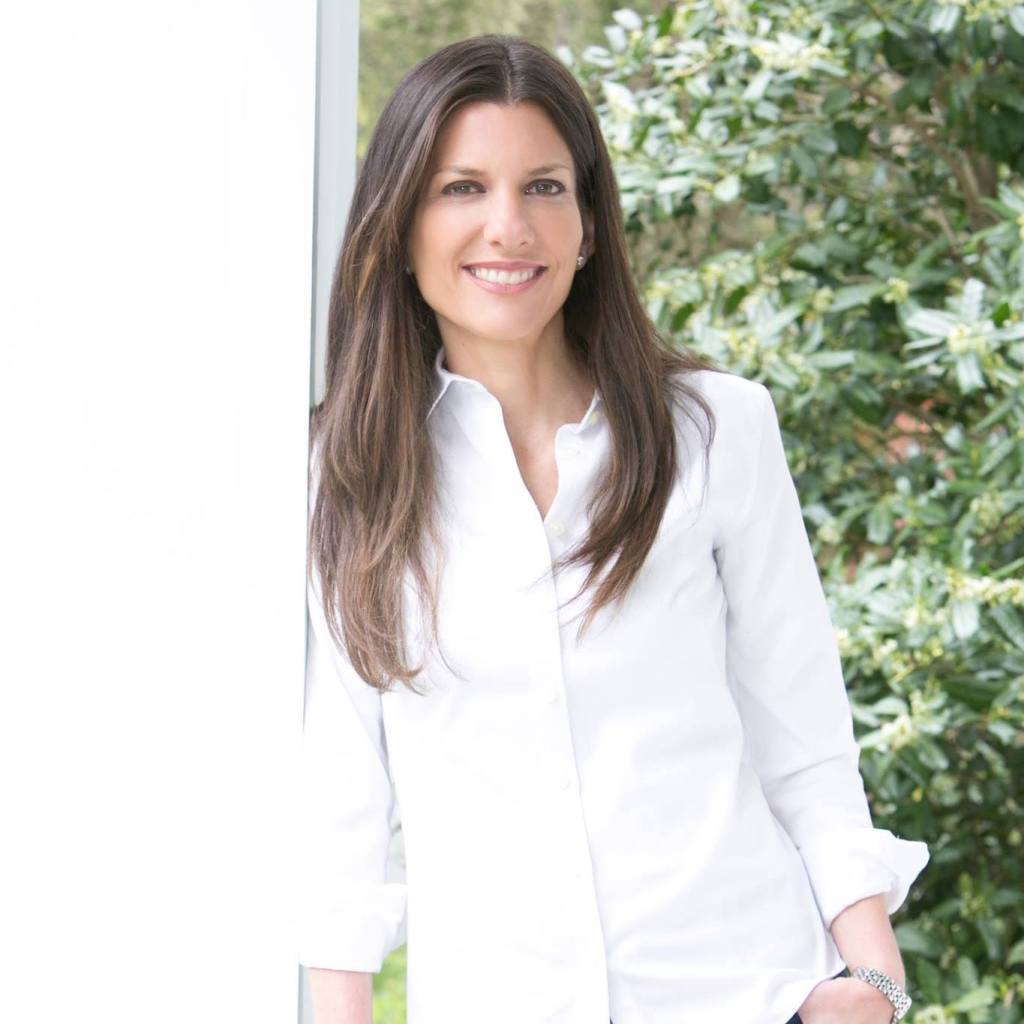
Jacqueline Friedland is the USA Today bestselling author of four novels, including He Gets That From Me and That’s Not a Thing. A graduate of the University of Pennsylvania and NYU Law School, she practiced as a commercial litigator at the New York law firms of Debevoise & Plimpton, LLP and Boies, Schiller & Flexner, LLP. After determining that office life did not suit her, Jackie began teaching Legal Writing and Lawyering Skills at the Benjamin Cardozo School of Law in Manhattan and working on her first book during her off hours. Finally deciding to embrace her passion and pursue writing full time, she returned to school to earn her Masters of Fine Arts from Sarah Lawrence College, graduating from the program in 2016. Since then, she has published four novels and has been hard at work on new projects. Her books have received multiple awards, including the gold medal for fiction from Reader’s Favorite, and first place in both the NextGen Indie Awards and the American Fiction Awards.
When not writing, Jackie is an avid reader of all things fiction. She loves to exercise, watch movies with her family, listen to music, make lists, and dream about exotic vacations. She lives in Westchester, New York with her husband, four children and two dogs who shed more than she ever imagined was possible.
 Novel PASTimes