Rainey’s grandmother Evie fled Ireland many years ago. Neither Rainey nor her mother know why or anything about her life there. But while recovering from an illness she asks her granddaughter to take her back to the home she grew up in, which is now a bed and breakfast. She wants to retrieve some letters and read them again.
I love Irish stories so I was eager to read this one.
I never understood why Evie did not want her daughter, Rainey’s mother to go with them to Ireland. I thought it would be explained but it really wasn’t. That aside, I really enjoyed this book and the wonderful descriptions. The budding romance was understated, which I personally like. The ending was sweet but I felt like it didn’t tie up all the loose ends especially that budding romance I mentioned. They decided they would figure it out (living in different countries.). Even so, I appreciate that it was slow developing rather than a commitment or a physical affair after only meeting a week ago.
Well-written, easy to read, and a glimpse into the history of the times, which I always like. I gave it four stars.
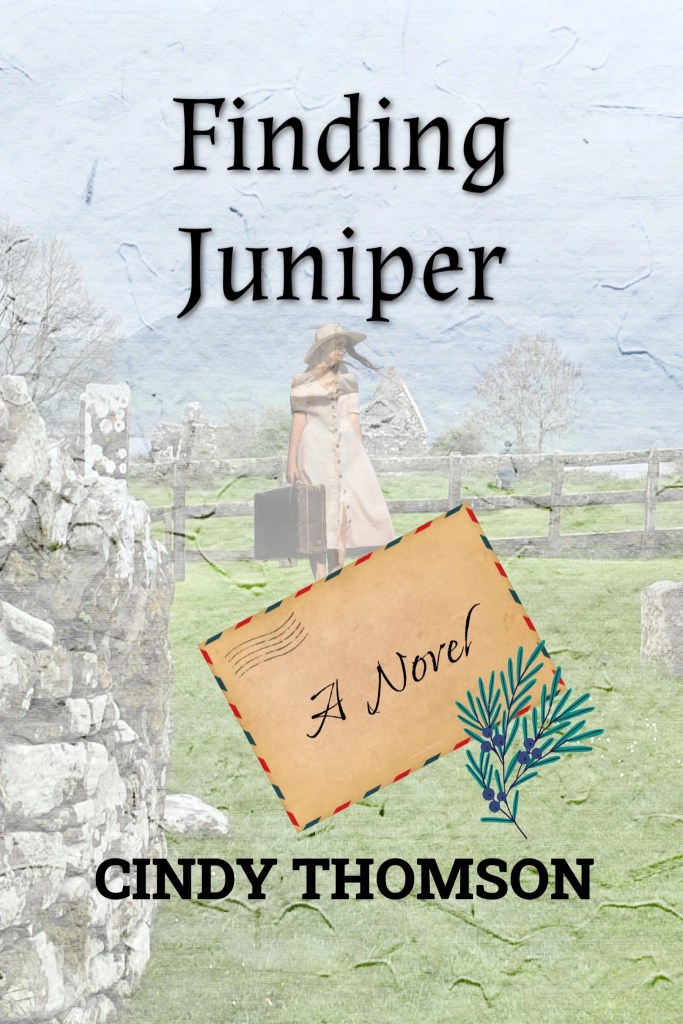
It’s been a long time since a book brought me to tears, evoking a depth of emotion I rarely experience from reading a novel. Finding Juniper contains that kind of depth.
With the burden of PTSD from WWI and his friend’s rosary in his pocket, Patrick Doyle is summoned to once again confront his past by a cryptic letter that appears to have been written by a child—the long-lost child he’d never known and assumed dead—his daughter, Juniper.
Caught between two sides of a civil war, Patrick had emigrated to the United States and after much trial, began to rebuild his world with a new family. Shortly after experiencing the loss of his wife, his American daughter, Mardell, beseeches him to travel to his homeland with her and find out what happened to her half-sister, Juniper. Patrick reluctantly embarks on a journey across the pond which stirs up both good and bad memories.
Author Thomson skillfully weaves Patrick’s reminiscences from the war and life in Ireland alongside Juniper’s journey from life in institutions to that of an independent young woman with questions about the father she never knew and the mother she believes is dead. Following a timeline from 1920 to post WWII, readers will hope and cheer for the characters’ paths to finally meet and may even shed a tear along the way.
With a balance of Irish melancholy and humor, the author paints a lovely picture of the countryside in Northern Ireland. She shows the culture of superstitious villagers and the kindness of a few towards Juniper and other outsiders through the struggles of post WWII deprivation.
Finding Juniper is a story of healing family rifts and truth overcoming lies. The truth of the past is brought to light for both Patrick and Juniper in unexpected ways, but just as in real life, the journey there is complicated.
Fans of historical Christian fiction with a non-preachy message of hope and forgiveness will love this story. Five stars! Highly recommend!
I received a free copy of this book from the author in exchange for an honest review. All opinions are my own.
For Patrick Doyle, the claim that time heals all wounds is a cruel lie.
In 1920, returning from WWI, Paddy finds Ireland creeping toward civil war. Invisible borders separate people, including Paddy and his pregnant girlfriend. With few prospects, Paddy sails to America. However, America is far from the land of opportunity he’d hoped for. And worse, his girl refuses to follow him because of her political involvement.
Thirty years later, Patrick has moved on with his life, building a new family. A letter arrives, suggesting the child he’d assumed died may be alive. Patrick’s American daughter Mardell pushes him to find out what happened to her sister, named Juniper. Patrick anxiously sails to Ireland.
Juniper endured a childhood in institutions, and when she’s released, she moves on without the parents who left her. Operating an apothecary out of an inherited cottage where villagers are slow to trust outsiders, Juniper finally finds a home when her grandmother arrives. Just as she feels comfortable and content, her father shows up at her door, bringing shocking news about her mother.
Finding Juniper invites readers on a journey of confronting the past, healing from old traumas, and redefining what family truly means.
Welcome to the blog, Juniper. Because of the time period of the novel, you might not know what that is.
Juniper: You said this was an interview. Is that what you mean?
Ah, yes, an interview. Readers would like to know about you, especially if they haven’t read the book.
Juniper: [Gasp!] They haven’t read the book? They must or I will cease to exist.
Don’t worry. You’re real to those who have. Tell us something about your childhood. When were you born?
Juniper: Now you sound like those doctors at St. Giles. I was born on the second of June, 1920, in Dublin, Ireland. My childhood was not happy, but you don’t want to hear about that.
Oh, we do! Happy or not, your story will help us get to know you.
Juniper: [Sigh] It won’t really because I’m a new woman, now. But I’ll tell you a wee bit. I grew up without parents, but I wasn’t an orphan. Ireland in those days, well, things were all upside down. My mother got involved in politics. Long story, but she wasn’t in a right state to raise a child. Things are better in Ireland now, in 1950, and I’m doing quite well. When I was young my mother sent me to live with the nuns for a time. I rebelled a bit as a child, so they moved me to St. Giles.
That’s a hospital?
Juniper: Of sorts. So they called it. It was really a place where they put folks, mostly girls, whose families don’t want them or maybe just couldn’t deal with them. They let me go when I was older.
Your parents didn’t want you? I heard a different story.
Juniper: I heard it too. Call it what you will, but in my mind I was abandoned. I’m still trying to adapt.
Say no more. We don’t want to spoil the story.
Juniper: I was happy, though, when I got to work in the gardens. I learned a lot about plants from the gardner at St. Giles. And also from letters my granny sent me. She made herbal cures as well. I am what you might call an herbalist or a natural healer. I think that’s the term from your time.
How fascinating. I bet folks appreciate the things you make.
Juniper: Most do. There was a wee bit of trouble once, a bit of a mix up with one of my cures.
Wait! Don’t tell us.
Juniper: Happy not to talk about that.
So, your father, Patrick, went to America?
Juniper: He did. My mother called him Paddy. I was told he’d died over there.
I heard something different. Life was difficult for him in America. At least in the beginning.
Juniper: Now you wait. Don’t be spoiling things, as you said.
Sorry. Isn’t there a handsome new rector in your village now?
Juniper: Yes, Donal. He’s the kindest person I have ever met. My experience with the church has been less than pleasant, but meeting him has made me look at things differently.
Will something develop between you two?
Juniper: You sound like Granny. We shall see.
Why don’t you tell us about your name?
Juniper: Ah, my name. Granny always called me Juniper, but my birth name was Anna. St. Giles would only call me Anna, so I got used to that. I like Juniper, though, named as I was for a lovely green plant. There is such beauty in the world out of doors. Much healing in plants.
Do you find healing by working in the garden? And in the novel as well?
Juniper: I do feel calmer when I toil in my fields, but healing for my whole self? You’ll have to read to find out.
Thanks for chatting with us, Juniper.
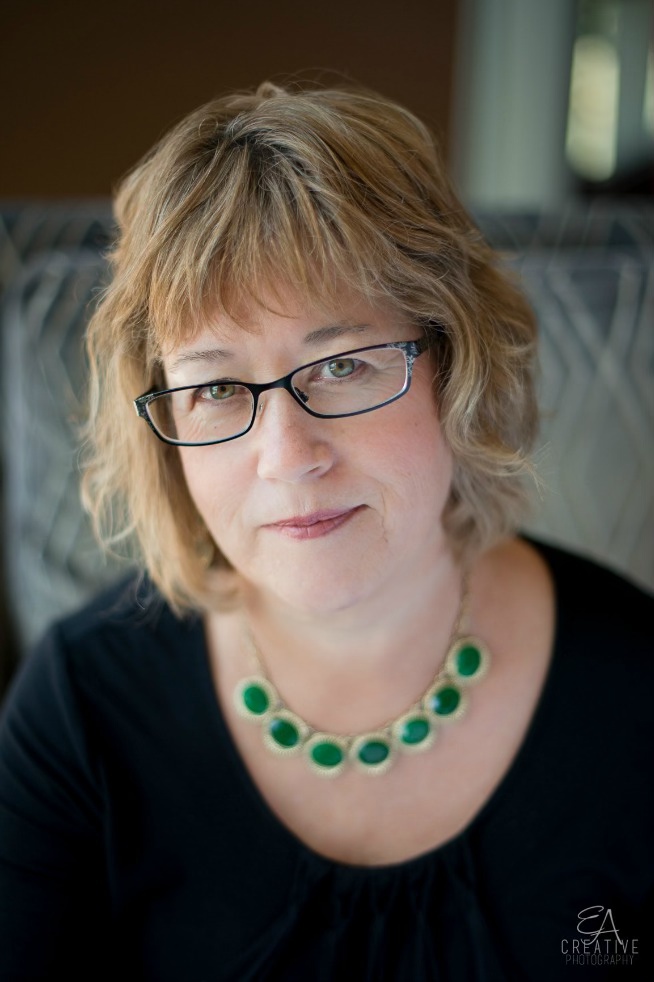
Known for the inspirational Celtic theme employed in most of her books, Cindy Thomson is the author of both fiction and nonfiction. A genealogy enthusiast, she writes from her home in Ohio where she lives with her husband Tom near their three grown sons and their families. Visit her online at CindysWriting.com
Welcome to Novel PASTimes! We are pleased you stopped by today.
Why don’t you introduce yourself.
Hi there. I’m Catríona. Catríona Daly.
Tell us something about where you live.
Oh, there’s not much to tell, really. I live in a small village in the west of County Clare in Ireland, called Lisdoonvarna. It’s a sleepy little place that only comes alive once a year. And that’s for the annual Matchmaking Festival. It’s been going on since 1847 and my family has been part of it from the beginning.
Big wigs from around Ireland and beyond come to try and make prosperous matches for their kids, and local farmers come hoping to find a wife to help around the farm now that the harvest is in.
Some might call it a quaint little place. And, in truth, it’s not bad. But I’m ready to see the world and live amongst the bright lights of a big city.
Do you have an occupation? What do you like or dislike about your work?
I’m a third-generation matchmaker by trade. My father was one, and his father before him. The trade has been around as long as Ireland has been, but since the Festival started, it’s become a sort of specialty for my family and a few others around the county.
There’s nothing quite like the feeling that comes when a match works out even better than I’d figured. I take my job very seriously—as if a couple gets matched, they’re together for life. But, when they get on far better than I anticipated, it gives me great satisfaction.
The hard part, however, is watching hundreds of people a week fall in love, while I’m still waiting for m’own match.
Who are the special people in your life?
Well, my Da, of course. It’s been just the two of us since I was a girl. My Ma decided she’d had enough of poor rural life and ran off to find adventure elsewhere. While Dad drives me crazy, I love him to death and am fiercely protective of him.
Also, in recent weeks, a wee girl named Sara has come into my life and captured my heart. She’s the daughter of one of my matchmaking clients. Her birthday wish was that her dad come to the festival. Anyway, Sara and I have gotten to spend some time together and she’s just a hoot. Very precocious and fiery. Reminds me a lot of me.
And what about her father? Is he special, too?
I’m sorry, what was the question again?
You said Sara’s getting to be a special person to you. How about her father?
…Eh….I prefer not to answer that one. *clears throat*
What is your heart’s deepest desire?
To find love, and get out of Lisdoonvarna. I feel there’s nothing else left for me here.
I see. And what do you expect the future will hold for you?
Well…I hope it involves falling in love with a wealthy man who can whisk me away to far off, exotic places. Places where we don’t have to smear dung on the walls to keep warm in the winter.
And what if that doesn’t happen?
*Sigh* Then, I suppose I’ll stay here, make as many good matches as I can, and take care of my father.
What have you learned about yourself in the course of your story?
I end up having to confront my biggest fears, and I learn that God’s plans are so much better than our own. And I learn that I wasn’t really afraid of living in Lisdoonvarna. I was afraid of being abandoned again—just like I was by my mom.
Is there anything else you’d like people to know about you?
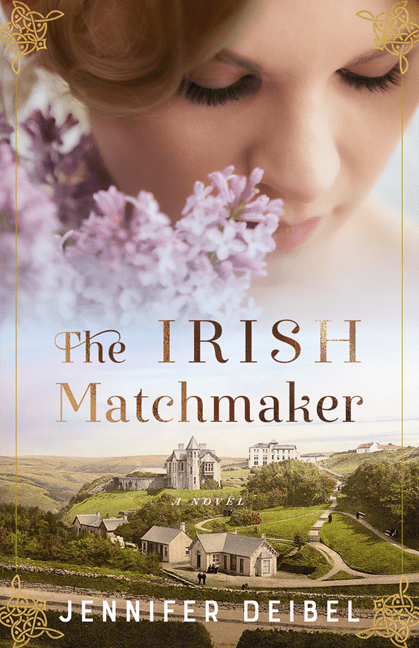
I’m great craic, and I have a big heart. I may sound a little rough and tumble, but I really think you’ll enjoy coming along and spending time with me in The Irish Matchmaker.
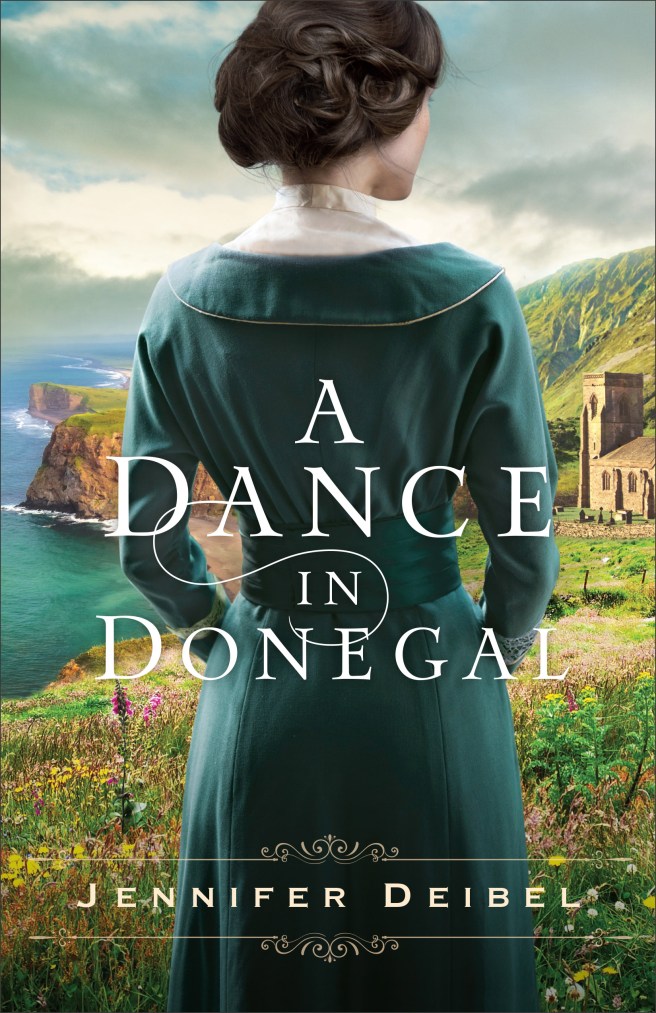
Jennifer Deibel is the author of A Dance in Donegal (winner of the Kipp Award for Historical Romance), The Lady of Galway Manor, and The Maid of Ballymacool. Her work has appeared on (in)courage, on The Better Mom, in Missions Mosaic magazine, and in other publications. With firsthand immersive experience abroad, Jennifer writes stories that help redefine home through the lens of culture, history, and family. After nearly a decade of living in Ireland and Austria, she now lives in Arizona with her husband and their three children. You can find her online at JenniferDeibel.com.
First of all, can we just agree that this is a gorgeous cover! This historical romance takes place in 1921 when Moira Doherty moves from Boston to her deceased mother’s hometown in County Donegal to take the job of village teacher. There is a secret about her mother that Moira doesn’t figure out until the end. The story explores the theme of trusting God in the face of adversity even when you’d rather run the other way. A strong concept worth exploring.
I liked this book. What I loved most was the depiction of Ireland. The author lived there for several years and described the dialect, the people, the landscape so much more accurately and vividly than many other books set in Ireland I’ve read.
I thought the romance between Moira and Sean was sweet and genuine and the ending satisfying. Midway through the story slowed down a bit for me and there were some plot aspects that either didn’t make sense to me or seemed somewhat forced. That being said, read A Dance in Donegal if you’re eager for a pleasant trip to Ireland, a sweet romance, and an inspiring and satisfying ending.
A note if you don’t normally read Christian fiction: This story has a lot of scripture, characters reading the Bible, and inter dialogue about trusting God. I’m fine with that, but if you’re sensitive to it you should understand that it’s meant for readers of Christian fiction.
Novel PASTimes received an Advanced Copy from the publisher for the purpose of an honest, unbiased review with no obligation.
Welcome to Novel PASTimes! We are pleased you stopped by today.
Moira, you recently moved to Ireland after your mother passed away. Why did you move there?
Thanks for having me! I had always dreamed of seeing my mother’s home country of Ireland. She used to tell me all about the céilí dances they would have in the town hall. I loved to hear about all the crazy people from her village, and the antics they would get into. But, I never expected to go live there.
However, when Mother died, I started to sense God leading me there. Mother, in fact, had implored me to go just before she passed. I didn’t want to go so far away all by myself, but the more I fought it, the clearer it became that I was meant to go there.
There seems to be a theme of dance running through your story. Why is that?
I’ve always loved to dance. My favorites were the old style céilí dances our community used to do a few times a year back home in Boston. I used to imagine I was back in the halla of Mother’s village in Ireland as I swirled around the dance floor, and dream of one day visiting there. I had no idea just how much of her hometown I would end up getting to experience.
But, also, I find that a life of faith is much like a dance—with a rhythm and flow all its own. And we can fight the music so we can lead our own way…or we can listen to the One who created the dance—steps, music, and all—and let Him lead us in something more beautiful and joy-filled than we could ever do on our own.
Your mother put your name forward to replace the old school teacher. Why did you decide to go into teaching?
Oh, I just adore children. And I’m highly curious by nature, so education was a natural fit for me. Now that I think of it, Mother used to speak so highly of her childhood teacher in Ireland, Mrs. McGinley, I’m sure that influenced me as well.
You see, there’s truly nothing like that moment when everything falls into place for a student who has been struggling with a certain concept. When they’ve worked so hard, and fought for understanding, to see it all finally make sense is the most wonderful feeling in the world. There’s nothing like it!
So, you moved almost halfway around the world to a new country, a new job, a new culture. How did you combat the loneliness of being so far from home?
Oh goodness, that was one of the most difficult things I’ve ever done! In truth, it was so painfully lonely at times that it almost brought physical pain! But, God, in His kindness, brought me good friends.
Bríd, who runs the Guest House where I stayed my first days in town, became one of my closest friends. Her companionship, cultural insight, and—let’s be honest, her tea—was a balm to my grieving, homesick heart. She understood the loss of my mother, and seemed to understand my cultural struggles before I did.
Then, you look at Colm and Peg, and…well…of course, Sean. With a group of friends around you like that, anyone would be hard-pressed to fail.
Yes, it seems Colm and Peg, you played a big role in the adventures Moira ends up taking. How did you meet Moira, and what possessed you to take her in the way you did?
Ah now, ‘tis easy to see Moira’s a lovely lass, so ‘twasn’t difficult to “take her in,” as ye say.
We met through Sean here, my apprentice. Our wee village was hit by a rather nasty gale, and poor Moira’s chalet took some damage. Sean brought me over to help him with the repairs. Moira had a spread o’ tea and cakes set when we arrived, and that was it. I was smitten.
To be fair, though, once the missus and me got to know Moira, we could see she was special. The Laird gave her some mighty tricky tasks, and we wanted to be there to help and support her in any way we could.
Well, she seems very lucky to have friends like you. Sean, you introduced the Colm and Peg to Moira. How did the two of you meet?
Me and Moira? Ah, well…we, ah, bumped into each other a few times afore we were properly introduced. But, I used to help auld Mrs. McGinley at the school, so I wanted to make sure the new teacher was up to the task.
The moment I clapped eyes on Moira in that schoolroom, I could tell she was where she was meant to be. She looked at that space as if ‘twas her own sanctuary. I was drawn to her respect for the profession, and her compassion for the wee ones. But that doesna mean I wasn’t goin’ to give her a bit o’ jest along the way.
Well, thank you all very much for joining us today! Moira, is there anything else you’d like us to know?
Just that Donegal is truly an enchanting place, boasting some of the most rugged and beautiful terrain in all of Ireland—and home to the most boisterous, beautiful, artistic, warm and loving people on earth.
There truly is nothing and no place like Donegal.
Thanks for allowing us to get know you a little better!
Jennifer Deibel is a middle school teacher whose work has appeared on (in)courage, on The Better Mom, in Missions Mosaic magazine, and others. With firsthand immersive experience abroad, Jennifer writes stories that help redefine home through the lens of culture, history, and family. After nearly a decade of living in Ireland and Austria, she now lives in Arizona with her husband and their three children. You can find her online at www.thisgalsjourney.com.
Aileen Doherty is a young Irish girl who accompanies her father and brothers on a trip to work in Scotland picking tatties. She meets Jimmy Walsh who is there doing the same, and they fall in love. But a tragic accident pulls them apart. Stung by grief and abandoned by her mother, Aileen begins working on an abandoned garden. At the same time, disfigured by burns he suffered in the accident, Jimmy falls deeply into the underworld of London. Both have to work through their grief and find their way back home.
I enjoyed this book very much. The story was about healing and continuing on by creating beauty and love in the pieces of the characters’ lives they had left and also in new adventures they found. The author writes from the west of Ireland, and although the story is set just post WWII, the setting comes alive, as do the quirky characters. The style is different from what I usually read. The author writes from an omniscient point of view, so the reader gets to know what each character is thinking and feeling in every scene. She does this well, and once I got to used to it, I was totally emerged in the story. It felt like pure Irish storytelling.
For those of you who read strictly Christian fiction, this is not that genre. However, even the harsh world of prostitution and drug use was handled with care, and for me it was not at all offensive. There were several allegorical images, such as the ashes from the fire where loved ones perished growing a never-before species of flower. This gave the book an overall literary feel that reminded me of novels by Susanna Kearsley, a Canadian author. If you enjoy her novels, I think you’ll also like Kate Kerrigan’s. Visit her website here.
Thanks to the author from providing a free electronic copy of this book for review. I have given my honest opinion.



 The Lost Garden by
 Novel PASTimes