
During the turbulent days of World War II, thousands of foreigners were interned in the United States. Men, women, and even children with ties to Japan, Italy, and Germany were sent to detention camps all across the country. In Michelle Shocklee’s new novel All We Thought We Knew, readers meet Gunther Schneider, a German medical student who finds himself caught up in a frightening and seemingly hopeless situation.
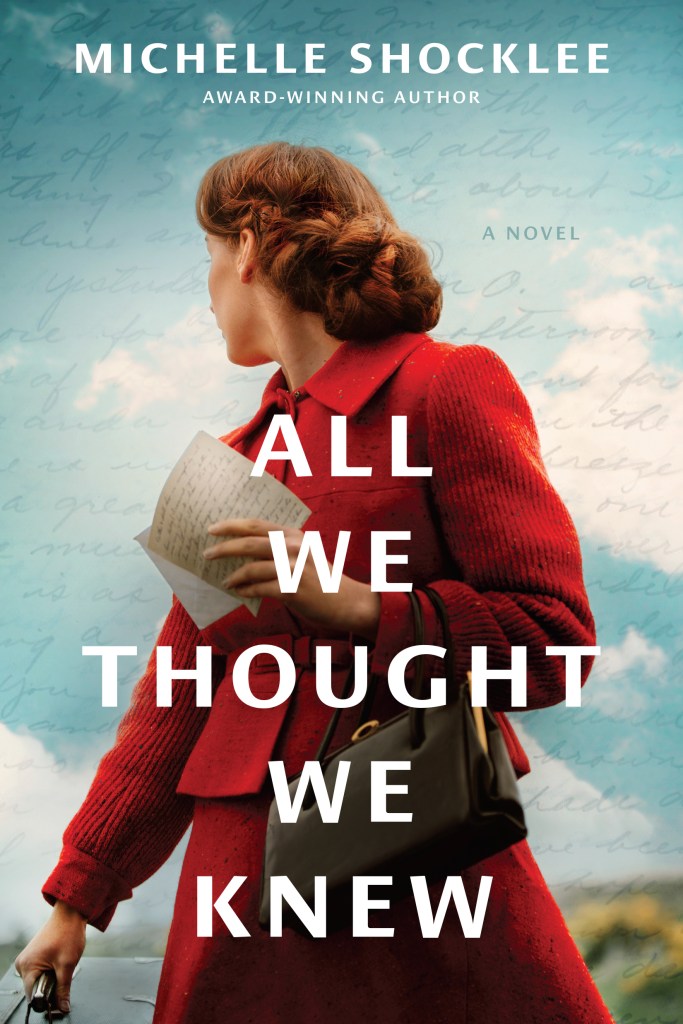
NP: Hello, Gunther. It’s a pleasure to meet you. Thank you for stopping by Novel PASTimes to chat with us.
Gunther: Danke. I’m happy to be here.
NP: Tell us about where you’re from and how you ended up in the United States.
Gunther: I was born in Krefeld, Germany. It is very beautiful, close to the Rhine River. My parents were Gott-fearing people who believed in the truths taught in the Bible. When Hitler came into power, Mutter feared what would become of Germany. By then Vater had passed away and my older brother had joined the Nazis. Mutter thought it best for me to leave Germany and go to medical school in the United States. She believed I would be safe there.
NP: It must have been hard to leave your homeland and family.
Gunther: Ja, it was, but I wanted to come to America and study to become a doctor. Although things did not turn out the way I’d hoped, I do not regret leaving Germany.
NP: You were eventually arrested and detained in a camp for enemy aliens. Can you tell us about that?
Gunther: I was a student at Columbia medical school in New York City when Pearl Harbor was attacked. It may sound naïve, but I didn’t believe the US government would consider me a threat to society, being that it was Japan who’d attacked Hawaii, not Germany. I was quite shocked when I was arrested.
NP: Were your friends arrested too?
Gunther: Ja, all of them. I’m not certain where some of them ended up, but I was sent to Camp Forrest in Tullahoma, Tennessee.
NP: I’m not familiar with Camp Forrest. Was that a military installation?
Gunther: It was. I’m told it was one of the largest in the United States. While I was there, I saw thousands of young American men training for war. I felt sad knowing that many of them would die. Had I stayed in Germany, I would have been forced to join Hitler’s army. I’ve often wondered if I would have had to fight against some of the same soldiers I saw at Camp Forrest.
NP: I’m sure it was hard being held as a prisoner. Was there anything about your time at Camp Forrest that brought you happiness?
Gunther: I met a special friend while I was in Tullahoma. Ava Delaney worked at the camp. She did not treat me like the enemy, which was refreshing. Unfortunately, as a German, I wasn’t always treated kindly by Americans. It was nice to have someone to talk to who didn’t judge me for where I was born.
NP: It sounds as though you’ve been through many challenges in your life. Can you tell us where your find the strength to face them?
Gunther: My parents taught me to trust in the truths found in the Bible. When I left for America, my mother gave me my father’s Bible. Reading it reminds me that I’m not alone, even if it feels like it sometimes. The stories also remind me that people have always faced difficult challenges, but they also reveal hope. With Gott, there is always hope.
NP: That’s very true. Thank you for sharing your story with us, Gunther.
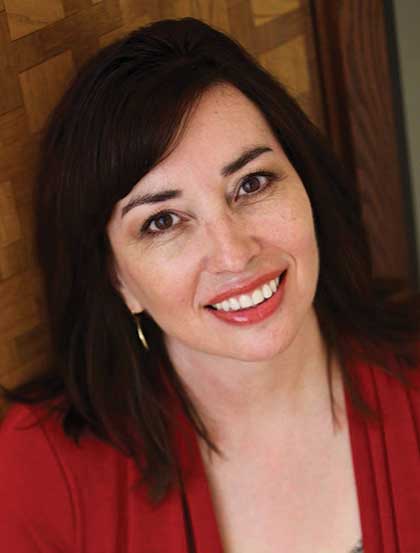
Michelle Shocklee is the author of several historical novels, including Appalachian Song, a Christy Award finalist, Count the Nights by Stars, a Christianity Today fiction book award winner, and Under the Tulip Tree, a Christy and Selah Awards finalist. Her work has been featured in numerous Chicken Soup for the Soul books, magazines, and blogs. Married to her college sweetheart and the mother of two grown sons, she makes her home in Tennessee, not far from the historical sites she writes about. Visit her at MichelleShocklee.com.

 Novel PASTimes