A Chat with Arthur from Sleeping in the Sun by Joanne Howard

Amazon Affiliate Link Helps to Support the Blog

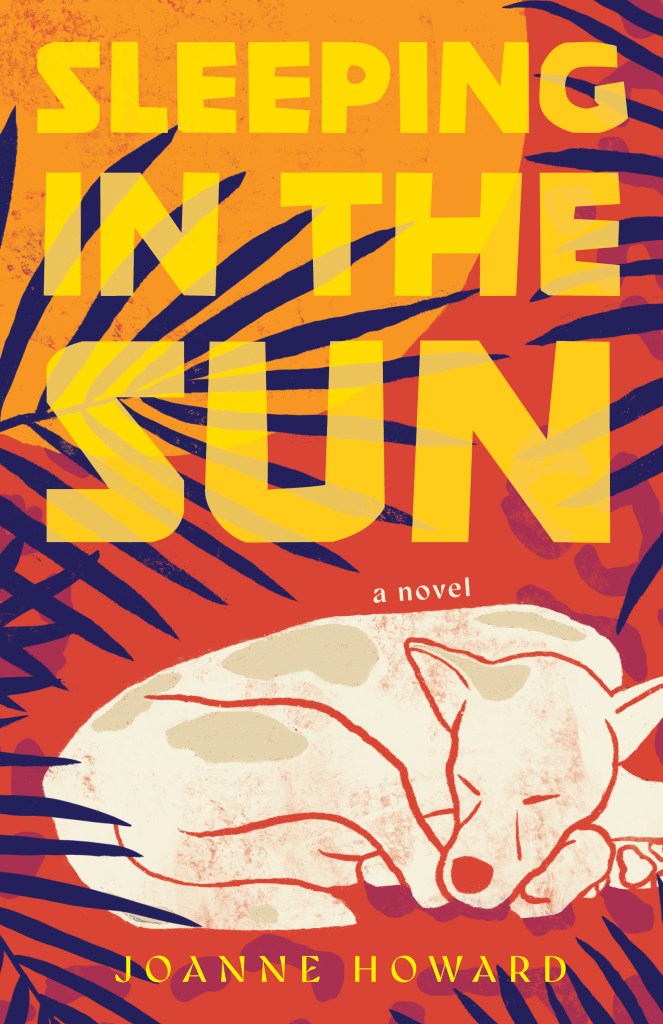
When two visitors arrive to the boarding house in India where an American boy is coming of age during the British Raj, truths unravel, disrupting his life and challenging the family’s sense of home. A unique historical angle ideal for fans of The Poisonwood Bible and The Inheritance of Loss.

In the last years of the British Raj, an American missionary family stays on in Midnapore, India. Though the Hintons enjoy white privileges, they have never been accepted by British society and instead run a boarding house on the outskirts of town where wayward native Indians come to find relief.

Young Gene Hinton can’t get out from under the thumb of his three older brothers, and the only person he can really relate to is Arthur, his family’s Indian servant. But when Uncle Ellis, a high-ranking British judge, suddenly arrives and announces he’ll be staying indefinitely in their humble house, far from his prestigious post in Himalayan foothills, life as Gene knows it is interrupted. While his brothers are excited at the judge’s arrival, he is skeptical as to why this important man is hiding out with them in the backwaters of Bengal.

Also skeptical is Arthur. Then an Indian woman appears on their doorstep—and, after growing close to her, he learns the sinister truth about the judge. Torn between a family that has provided him shelter, work, and purpose his whole life and the escalating outrage of his countrymen, Arthur must decide where his loyalties lie—and the Hintons must decide if they can still call India home.

So, Arthur. Please introduce yourself. What is your role in the Hinton household?

I am the family’s servant. The only one, actually. Which is unusual for such a large house and a family of four young boys, but…they manage with just me. Mrs. Hinton expects me to do the shopping in the bazaar, to tend to garden, to cook meals and serve them…oh, and to feed Minnie, the monkey they keep in the shed.

Is that so? Do many animals take up residence at the house?

Oh no, just Minnie. The house is a boarding house for humans, though. As part of the mission, the Hintons take in anyone who needs a momentary place to stay. It’s nice. The house is a bit far from town and I have so much to do, I don’t get many chances to meet other folk.

What do you do for yourself? 

I shouldn’t say, but I like to get a quiet moment away and enjoy a bidi. Mr. Hinton doesn’t like it, smoking is a sin and all, but I think he must know and doesn’t say anything. Or a pariah dog recently started showing up, and she likes to play with me. She’s quite sweet, and I’ve grown fond of her. Almost thinking of her as my own. I’ve never really had anyone of my own…

I’ve heard this is a somewhat turbulent time in India. Have you seen or experienced any political unrest?

The country is always changing. There’s a serious anti-Raj movement that’s gaining momentum, when just a few decades ago, such sentiment would have been dangerous. But Calcutta and Bengal have always been on the more progressive side of things. Perhaps you have heard of the Bengal Renaissance? I don’t have much time to read, but I know there were works about independence and individualism, that sort of thing. Sounds very American, now that I think about it. But yes: I’ve seen some rallies get out of hand in the bazaar. Some people say the Raj will fall soon. But I have too much to do to pay attention to that. The Hintons depend on me to keep everything running.

Many people want the British out of India. Would that also mean the Hintons have to go? What would life be like for you with them gone?

I…don’t know. I suppose I’d be sad. I’ve known them ever since Mr. and Mrs. Hinton came here to Midnapore, when their oldest was just a baby. But maybe they could stay on? The work that they do as missionaries is with the native Indian tribes here, and I don’t see how they couldn’t go on doing that if the British weren’t in charge. They’re American, after all. Doesn’t that make them exempt?

Does it?

[Pauses.] It does. Of course it does. Because if it doesn’t…then they’re just the same as the British, in the end. And that would mean I’ve been serving the Raj in some way. Which I never intended. I know some Indians don’t have any choice, and the British employ so many people, but I tried not to. The Hintons are just an American missionary family, they don’t have the same kind of power as the British. 

How is life different for this American family compared to a typical British family?

They wouldn’t ever admit it, but of course they have less money and are not so concerned with fitting in with the rest of British society. Like I said, they’d never admit it, but I think they’re quite proud of it, not fitting in, really. It seems…American of them.


Joanne Howard is an Asian American writer from California. She holds an MFA in writing from Pacific University. Her poetry received an honorable mention from Stanford University’s 2019 Paul Kalanithi Writing Award. Her fiction has been published in The Catalyst by UC Santa BarbaraThe Metaworker Literary Magazine and the Marin Independent Journal and her nonfiction has been published in Another New Calligraphy and The Santa Barbara Independent. She lives in Santa Rosa, CA. Find out more at her website.

Instagram: @joannesbooks
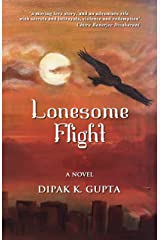
Meet Rolin Bose from Lonesome Flight by Dipak K. Gupta

Tell us something about where you live: 

As an Amazon Associate we earn from qualifying purchases.

Hello! My name is Rolin Bose, the son of a rich business executive. I go by the nickname “Kokil” and live in the most fashionable part of Calcutta. My story is set in the turbulent mid-1960s when the entire world was pulsating with riots, student protests, political assassinations, and an overarching fear of global annihilation resulting from a nuclear exchange between the Superpowers. The Vietnam War raged on adding fuel to the fire of discontent. Violence touched all major cities of the world, including my hometown, Calcutta (now Kolkata).

Is there anything special about your name? Why do you think you were given that name? 

I am glad you asked me that. Yes, I hated the name Kokil. 

It means a cuckoo in Bengali; an ugly black bird with a long-drawn forlorn call. There is something comical about the bird. It was a cruel gift from my father. I still recall him introducing me to my classmates on my first day at school. I fervently hoped that I would outgrow it someday, but no such luck. The name stuck like an ugly wart in front of my nose for everyone to see and make fun of.

I’m so sorry to hear that. Do you have an occupation? What do you like or dislike about your work?  

I am an undergraduate student of science at an elite college in Calcutta, run by the Jesuits. I love everything about my carefree life. What I don’t like is attending useless lectures, such as reading Shakespeare’s The Tempest in English literature class. Why do we have to study this medieval play, when there are so many exciting new authors from all over the world, talking about things that are relevant to the rapidly changing time? 

I don’t think I’ll try to answer that. Who are the special people in your life?  

I love my mother. She is my best friend. But I have fallen in love with Riza, a smart, beautiful, passionate, and a bit headstrong Muslim girl from an extremely wealthy family. Being a teenager, I was prone to falling in love with a different girl every other week. Most of the time, like a sniffle, it lasted only a few days, without my love interests even becoming aware of my affliction. But Riza causes my heart to palpitate whenever I am with her. I hope our love will endure.

What is your heart’s deepest desire?   

I love my life; my golf game, spending time with my friends and eating my favorite food prepared by my family cook. But my biggest desire is to spend alone time with Riza. May I tell you that I experienced my first kiss with her? It jolted every nerve ending in my body.

How wonderful! What are you most afraid of? 

I hate the fact that my father is so cruel to my mother and me. I am not sure how to handle it.  

I am also deeply concerned about the world around us; street protests are everywhere; burning and looting are becoming an everyday affair. I made a new friend in Ari, a brilliant boy from the “other side of the track.” He is so different from the affluent kids with whom I grew up. Ari took me inside the slums of Calcutta. There, I came to know people like Didi, a resolute woman who tries to earn money for her family, despite the torturous relationship with her abusive husband; a master pickpocket, who loves his son; an erudite call girl; a slum don; a street fighter. I am also worried that the new political movement, inspired by the Maoist communists, known as the Naxalites, would plunge my world into violence and mayhem. With Ari, I join the movement to organize the poor against the oppressive society. I go to a remote tribal village in the vast forest area of India to start a revolutionary base. As I come to know the members of my host family, the village money lender, the old shaman, and an alluring young woman, my confusion deepens. I want to change their society, but do they want to change? 

What do you expect the future will hold for you?  

I am deeply conflicted about my future. My mother wants me to go abroad for higher studies. I know I can start a new life with Riza. But I feel guilty about leaving my new friends to their miserable lives. Dispossessed and marginalized, their daily sufferings trouble me. How can I build my own fortune in the United States ignoring their plight? I want to join the Naxalite movement and help usher in a new just and verdant society. At the same time, I fear, if we are successful in bringing about a revolution, will we have the wisdom to create such a world? What if, like the story of the Animal Farm, I morph into Napoleon the pig and start cannibalizing the hapless multitude? 

What have you learned about yourself in the course of your story?  

Throughout my privileged life, I felt like a boat without a radar, floating aimlessly down the river of time, pushed by the vagaries of wind and tide. However, at the end of my story, when I lose everything – faith in politics, love, and even my own identity – on my lonesome flight to a new world, in an epiphany I find a strange feeling of inner strength. Like the German philosopher Nietzsche’s “Super Man,” I want to write my own story, shape my own destiny, and create my own identity on a clean slate.  

Why should I care about your story?

You would be right to ask, why should you read a story about a teenager getting involved in an obscure rebellion, in a faraway place, more than half a century ago? Since the dawn of humanity, men and women have sacrificed everything to recreate their societies according to their own belief in a perfect order. While we have come a long way in terms of technological progress, we still fight along our sectarian, racial, religious, and ideological divides. From this perspective, my story is never ending and remains as relevant today as it was when I was a young man.


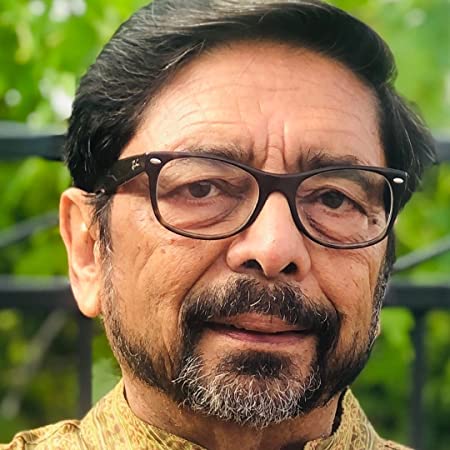
Dipak K. Gupta is a Distinguished Professor Emeritus in the Department of Political Science at San Diego State University. He served as the Founding Director of the undergraduate program in International Security and Conflict Resolution (ISCOR). In 1997, he was awarded Albert W. Johnson Distinguished Lecturer, the highest research award for the university, and was the “Professor of the Year” in 1994. His primary research interest involves the causes of terrorism, ethnic conflict, and the impact of political instability on national economic development. For 11 years, Gupta served as the Fred J. Hansen Professor of World Peace at SDSU.

Born in India, Gupta received master’s degrees in Economics from Visva Bharati University, Santiniketan, India, and the University of Pittsburgh. He earned his Ph.D. in the area of Economic and Social Development from the Graduate School of Public and International Affairs at the University of Pittsburgh. He has been a visiting scholar at St. Antony’s College, Oxford University, El Colegio de Mexico in Mexico City, Leiden University in the Netherlands, Fudan University in Shanghai, China, and the Terrorism Prevention Branch at the United Nations Office for Drug Control and Crime Prevention in Vienna, Austria. He was also awarded a summer fellowship in the International Studies Program at the Hoover Institution for War, Peace, and Revolution, at Stanford University. He received a post-doctoral fellowship at the Institute for International Politics and Economics in Belgrade, Yugoslavia. In 2010 Gupta received a Fulbright Expert Fellowship at Bilgi University, Istanbul, Turkey.

Professor Gupta has authored ten academic books and over 150 articles in scholarly journals, research monographs, chapters in edited volumes, and newspapers. Gupta is a regular contributor to San Diego Union Tribune’s Opinion section. He has been a frequent guest at the local National Public Radio station and contributed on foreign policy and terrorism matters in numerous newspapers and television stations.

Gupta has been invited to talk about the causes of terrorism from all over the world. In 2005, he was invited to a terrorism conference convened by the King of Spain in Madrid. He has also been invited by the Prime Minister of Norway, the foreign ministry of Sweden, and the Turkish Ministry of Interior. In 2021, he was a keynote speaker at the 32nd International Congress of Psychology in Prague.

Gupta is also an artist. He shows his art at San Dieguito Art Guild in Encinitas. 

Lonesome Flight is his debut novel.  Visit him online at: https://dipakgupta.com

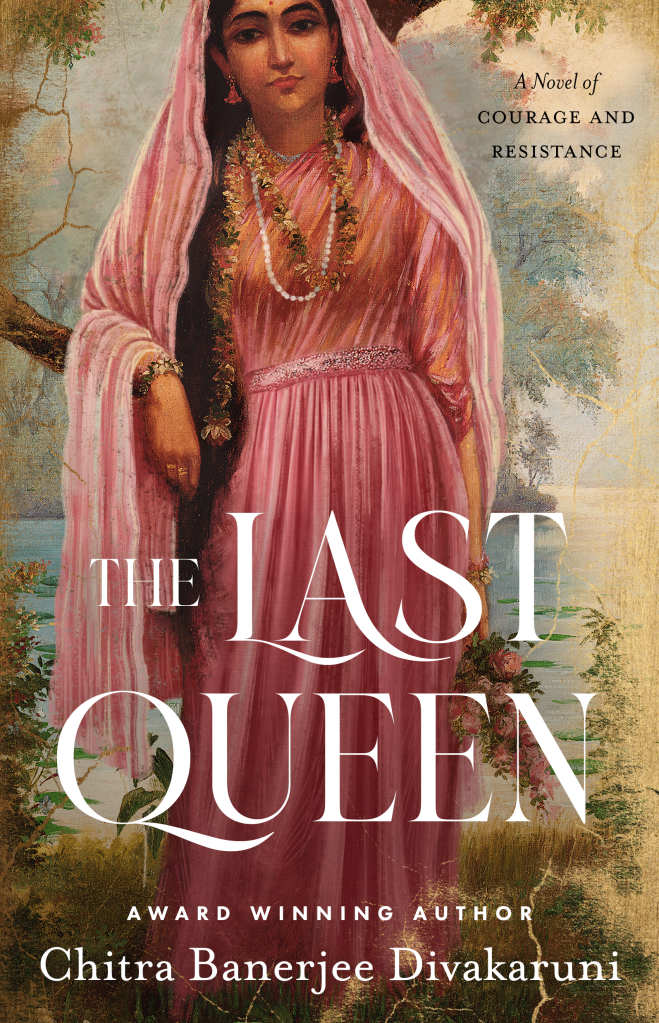
Meet Rani Jindan from Chitra Divakaruni’s novel The Last Queen

Tell us something about where you live.

I live in the kingdom of Punjab in India, in the capital city of Lahore, where my husband Maharaja Ranjit Singh has his royal court. Lahore is a fascinating city, filled with the most amazing markets, fortresses and places of worship, as well as the beautiful Shalimar gardens filled with thousands of roses. My favorite place is the Sheesh Mahal, the palace of mirrors, where the king and I live.

Do you have an occupation? What do you like or dislike about your work? 

You can’t really call it an occupation, though I am certainly very busy. As a queen, I feel it is my duty to pray for the good of the nation and give alms to the poor. I do this on all our holy days. I also spend a lot of time learning statecraft from my husband—he says I am sharper than most of his courtiers.

Who are the special people in your life?  

My husband the Maharajah is very important to me. I fell in love with him when I was sixteen, and he married me soon after, although I was the daughter of the palace’s dog trainer. Equally important to me is my infant son Dalip Singh. I would do anything to protect him. And oh yes, my maid Mangla. She is my confidante and also an excellent advisor. I trust her with my life.

What is your heart’s deepest desire?   

To live a quiet life with my husband and son. There are so many intrigues in the palace—I wish I could get away from them. Courtiers are always vying for the Maharajah’s favors. The other queens are always plotting against me. And of course, the British are waiting for a chance to attack our kingdom. I just want some peace and quiet.

What are you most afraid of? 

That my husband will die all of a sudden. He has not been in good health, and he drives himself too hard, trying to keep his kingdom safe. 

If he dies, I don’t know what will become of Dalip and me. 

Do you have a cherished possession? 

I don’t know if you can call her a possession, but I do love my horse, Laila. She is the most expensive horse in the entire land, the most beautiful, and the fastest. She does not like most people—she tends to bite them if they get too close! But somehow we became friends from the moment we met. 

What do you expect the future will hold for you?  

Who can tell? It is a turbulent time I live in. The British grow stronger each day. Punjab is the only large kingdom left in India that dares to resist them. But I know this much: if a day comes when the British attack us, I will resist them even with my last breath. 

What have you learned about yourself in the course of your story?  

I confess that I am very stubborn. And sometimes I make sudden, hotheaded decisions. I’m loyal to those who are loyal to me. But if someone turns against me, I will not forget. Nor will I forgive. 

Thanks for allowing us to get know you a little better!


WINNER of the 2022 INTERNATIONAL ASSOCIATION OF WORKING WOMEN AWARD for BEST FICTION OF THE YEAR!

LONGLISTED for 2022 DUBLIN LITERARY AWARD!

She rose from commoner to become the last reigning queen of India’s Sikh Empire. In this dazzling novel, based on true-life events, bestselling author Chitra Banerjee Divakaruni presents the unforgettable story of Jindan, who transformed herself from daughter of the royal kennel keeper to powerful monarch. 

Sharp-eyed, stubborn, and passionate, Jindan was known for her beauty. When she caught the eye of Maharaja Ranjit Singh, she was elevated to royalty, becoming his youngest and last queen—and his favorite. And when her son, barely six years old, unexpectedly inherited the throne, Jindan assumed the regency. She transformed herself from pampered wife to warrior ruler, determined to protect her people and her son’s birthright from the encroaching British Empire.

Defying tradition, she stepped out of the zenana, cast aside the veil, and conducted state business in public, inspiring her subjects in two wars. Her power and influence were so formidable that the British, fearing an uprising, robbed the rebel queen of everything she had, but nothing crushed her indomitable will.

An exquisite love story of a king and a commoner, a cautionary tale about loyalty and betrayal, a powerful parable of the indestructible bond between mother and child, and an inspiration for our times, Chitra Banerjee Divakaruni’s novel brings alive one of the most fearless women of the nineteenth century, one whose story cries out to be told. 


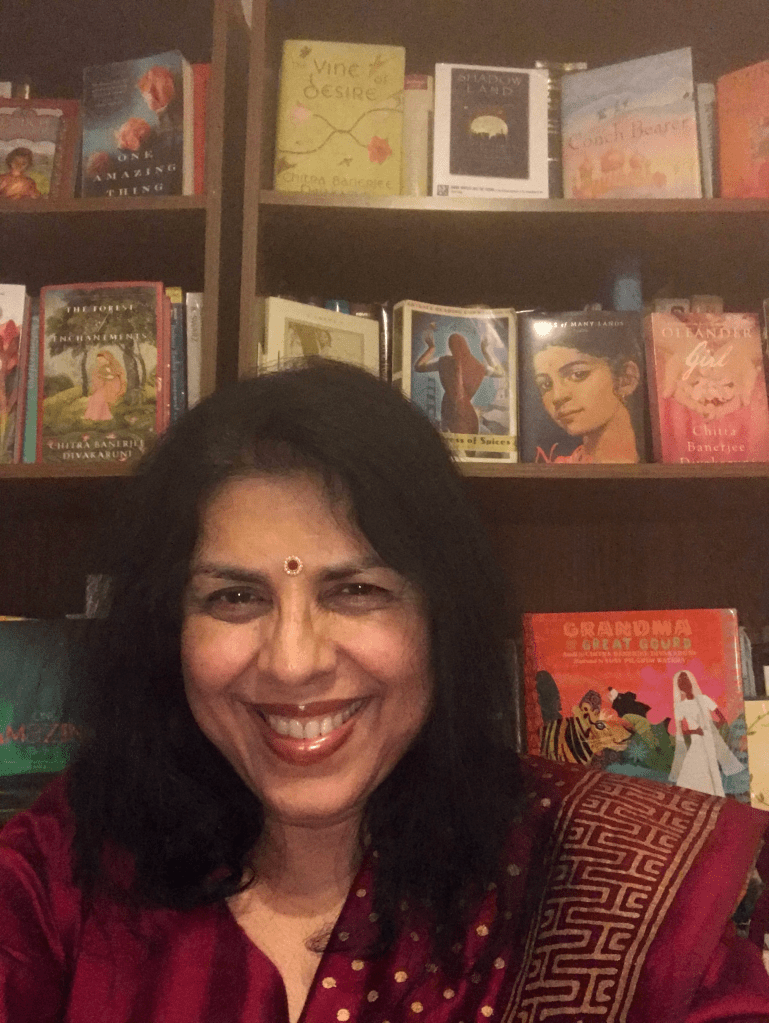
Chitra Divakaruni is an award-winning writer, activist and teacher, and the author of 20 books such as Mistress of Spices, Sister of My Heart, Before We Visit the Goddess, Palace of IllusionsThe Forest of Enchantments, and most recently, The Last Queen. 

Her work has been published in over 100 magazines and anthologies and translated into 30 languages, including Dutch, Hebrew, Bengali, Hungarian, Turkish, Hindi and Japanese. 

Her awards include an American Book Award, a PEN Josephine Miles award, a Premio Scanno,  a Light of India award, and a Times of India Award for Best Fiction. In 2015 The Economic Times included her in their List of 20 Most Influential Global Indian Women. She is the McDavid professor of Creative Writing in the internationally acclaimed Creative Writing Program at the University of Houston.