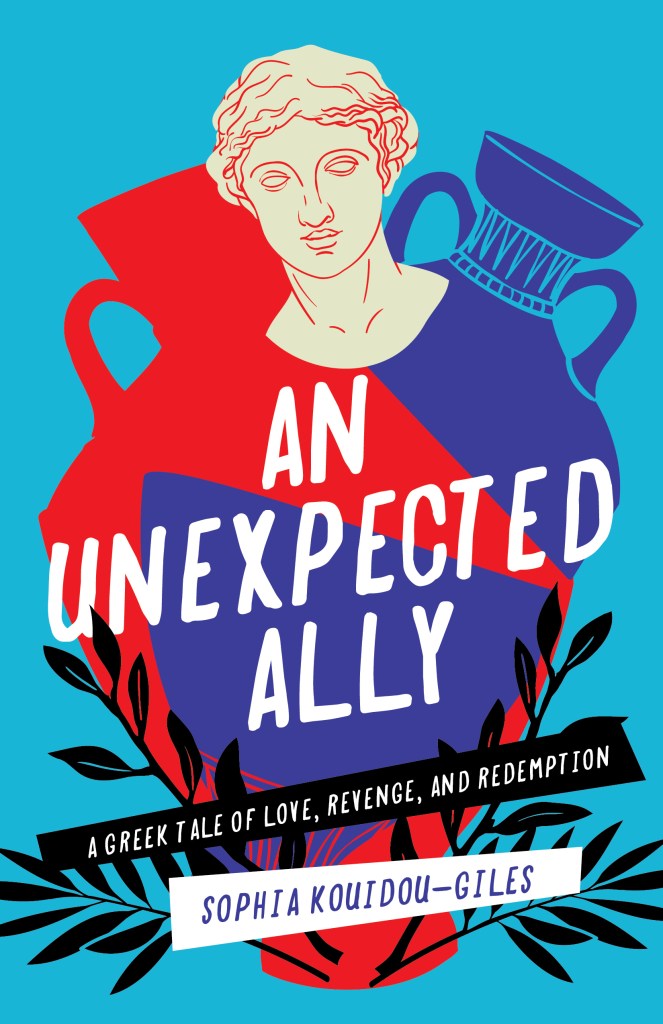
MEET CIRCE FROM AN UNEXPECTED ALLY: A GREEK TALE OF LOVE REVENGE AND REDEMPTION by Sophia Kouidou-Giles

In this retelling of ancient Greek myth, Circe seeks a new lover, amphibian Glaucus, after Odysseus’s departure from the island of Aeaea; but in a twist of fortune, mortal Skylla complicates her plans, leading to an adventure threaded with friendship, jealousy, revenge, and redemption . . . and filled with divine interventions, shapeshifting, and magic. Meet Circe, Glaucus and Skylla and prepare for an epic adventure in the Mediterranean Sea.
TELL ME ABOUT YOURSELF AND YOUR FAMILY

I am Circe, the enchantress of Aeaea. My powers are mighty, but I am not an evil witch. I am the daughter of Helios, the sun god, and Perse, his wife. My brother, Aeetes, rules the kingdom of Colchis, and I live on my own island. Though I have not seen my brother in eons, I miss him dearly. Recently Odysseus has been my companion, but he is about to leave me for his wife and his island, Ithaca. My life is filled with complexities, but I am more than the stories told about me. I embrace my true essence as Circe and weaving my own legacy through the ages.

CAN YOU TELL ME WHERE YOU LIVE AND WHAT YOU LIKE TO DO?

Of course! I live on the secluded island of Aeaea, surrounded by the vastness of the sparkling Aegean Sea. My palace is nestled amidst lush greenery, and I am surrounded by servants and my beloved tamed wild beasts. 

I am connected to trees, plants and herbs, a testament to my deep connection with nature. Herb medicine is my passion, and I spend a significant portion of my time exploring their secrets, unraveling their healing properties, creating potions and medicinal remedies. Creating beautiful tapestries through weaving and intricate designs gives me solace and reflects my environment. Unlike some gods, I delight in mingling with mortals. Observing their lives and experiences has been a source of inspiration and insight.

My island is a haven where magic and mystery intertwine. I relish exploring its beauty and uncovering its hidden treasures, always seeking to learn and grow as I navigate through this ever-changing world.

WHAT CAUSED YOU TO LEAVE YOUR ISLAND?

I heard from Odysseus’s men about an amphibian creature named Glaucus, who lives near the island of Delos. The crew spoke highly of him, mentioning his helpful guidance and extensive knowledge of herbs. Intrigued by the possibility of meeting a kind and unusual demigod as I was thinking about finding a potential companion, I decided to journey to Delos. The island’s fame, with its many temples and significance as the birthplace of Apollo, added to the allure of my adventure. I couldn’t resist the opportunity to explore Delos, learn more about who Glaucus was and meet Ariston, a fisherman and a local beauty, Skylla, among other locals.

GLAUCUS, WHAT IS YOUR STORY?

I am a sea creature, a mystical being with unique magical properties. My powers encompass prophecy, the deep knowledge of sea herbs, and a profound understanding of the sea. It has been revealed to me that someday, I will meet Circe. 

In my mortal life, I was once a humble fisherman, which granted me an innate connection to the sea and the plight of sailors. I became of demigod when I discovered the magic herb gods call moly, a black root with a milky white flower. When I found and ate it, it became my talisman to immortality. But I also lost my arms and feet, gaining fins and a tail, and turned into an amphibian creature. With my superhuman powers, I offer protection and guidance to those who traverse the treacherous waters, ensuring their safety and well-being. Through my abilities, I weave the threads of destiny and harness the forces of nature to bring aid to those in need. And I am in love!

SCYLLA OF DELOS, WHO ARE YOU AND HOW DO YOU KNOW CIRCE?

I met her on my beach where I swim every day. She was visiting our island, and she talked to me and honored me with her friendship. I am a young woman who lives with my father, Phorkys. My mother passed away when I was three years old, and we still grieve for my brother who was swallowed by the stormy seas. I am my father’s only child and I love him dearly. My uncle is the head priest for the temple of Poseidon and is well respected in Delos. 

I am an attractive young woman that has friends in my village, and I am a strong swimmer There are a couple of boys that are pursuing me, but I have not chosen who will be the one.

CIRCE, WHAT DID YOU LEARN THAT BROUGHT YOU TO DELOS A SECOND TIME?

Back on my island of Aeaea and upon consulting my scrying mirror, I learned that there is trouble in Delos that required my immediate action. Something must have happened to Skylla or Glaucus, and although it was not clear, I needed to find out what it is. In the turbulent world of gods mingling with mortals, I shifted shapes, flew to Delos and discovered the trouble. Come along with me for I should be able to reverse the course of evil. 

WILL LOOK FORWARD TO READING MORE ABOUT YOU, CIRCE, AND FOLLOW YOUR ADVENTURES WITH GLAUCUS AND SKYLLA.


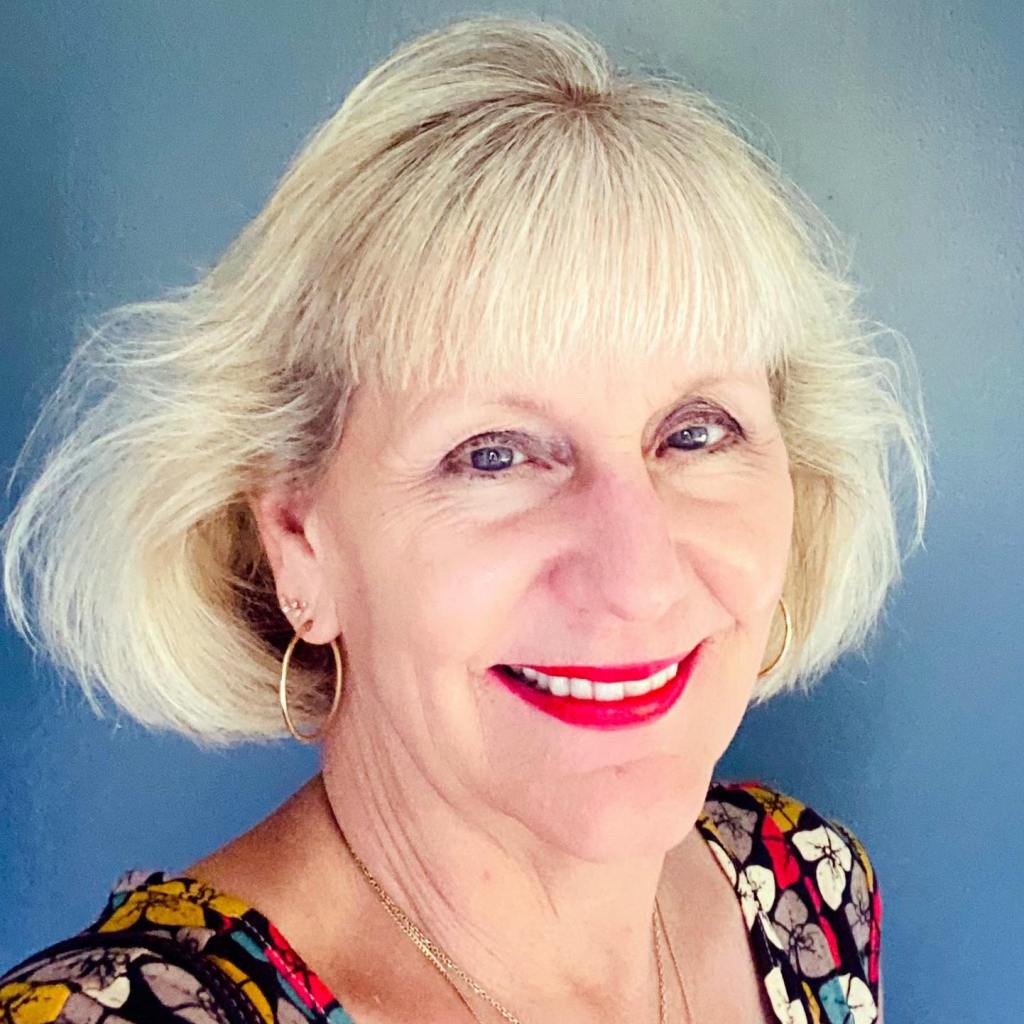
Sophia Kouidou-Giles was born in Thessaloniki, Greece, and university educated in the USA. She holds a bachelor’s degree in psychology and masters in social work. In her over-30-year child welfare career, she served as a practitioner, educator, researcher, and administrator and published articles in Greek and English professional journals. In recent years, her focus has shifted to writing nonfiction, fiction, poetry, and translation. She has published in Voices, Persimmon Tree, Assay, The Raven’s Perch, The Time Collection, and The Blue Nib. Her poetry chapbook is Transitions and Passages. Her work has appeared in anthologies, including The Time CollectionVisual Verse, and Art in the Time of Unbearable Crisis.
Her memoir, Επιστροφή Στη Θεσσαλονίκη/Return to Thessaloniki, was published in Greek by Tyfri Press. The book in English: Sophia’s Return: Uncovering My Mother’s Past, was published by She Writes Press. Sophia  lives in Seattle, Washington, near her son, her daughter-in-law, and two grandsons. Find out more about her at her websitePerse is a sequel to An Unexpected Ally. Look for it in November 2025. 
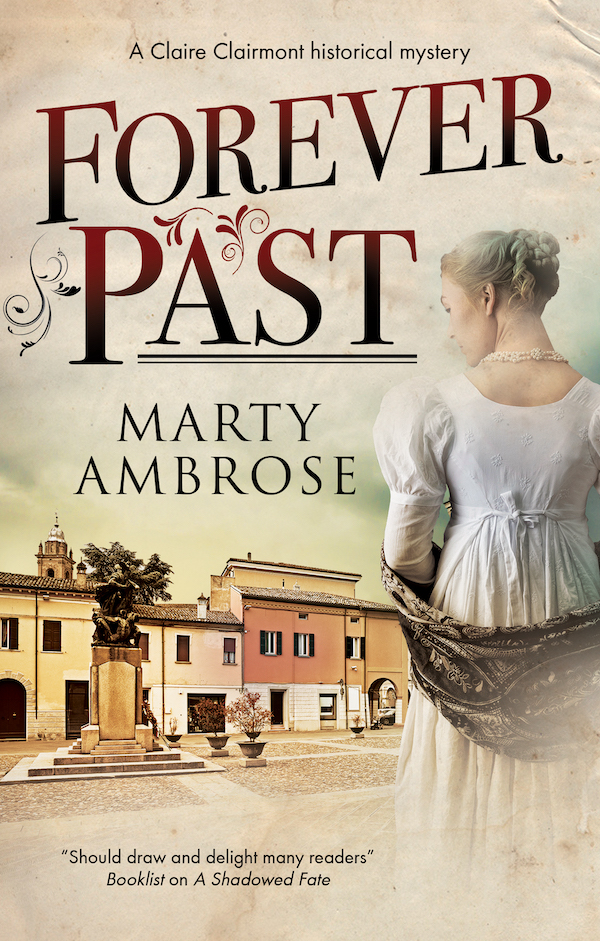
An Interview with Edward John Trelawny from Forever Past by Marty Ambrose

We are going to talk today with Edward John Trelawny at the Palazzo Marciano in Livorno, Italy.  An adventurer, writer, and raconteur, he is known mostly as the most dashing member of the Byron/Shelley circle in historic Pisa; but, he is a complicated and brilliant man in his own right, whom Lord Byron referred to as the “personification of my Corsair.”  Welcome, Trelawny!

Amazon Affiliate Link Used
  • Firstly, I want to ask you about Byron’s reference to you as the “personification of his Corsair”—a poem he wrote about a pirate.  Do you think that’s true?

Edward Trelawny:  [laughing]  Not exactly.  I was never a pirate but, as a boy, I did read about the French corsair, Robert Surcouf, and I went to sea because I was a rebellious sort of boy.  I ran away at the age of thirteen to join the Royal Navy as a volunteer (I was too young to actually take on a commission) and traveled on ships from Bombay to the Cape of Good Hope.  The rough lifestyle aboard a sailing vessel made a man of me.  But . . . I did not like the discipline of the Navy and was often sent to the masthead as punishment for some kind of minor infraction.  Perhaps I would have been better off becoming a pirate after all.

  • Before we talk about your relationship with Claire Clairmont, maybe you could tell us a little more about yourself.  I’m sure our readers would find your own history quite interesting.

Edward Trelawny:  Certainly.  As you can tell from my surname, I am Cornish.  My family had modest means but an extensive ancestral lineage and my father, though a baronet, had a fiery temper.  A tyrant really.  Hence, the reason I left home at such a young age.  And, of course, I always had a wanderlust to see the world.  After I left the Navy in my twenties, I lived in Switzerland, Italy, Greece, and then back to England.  I even visited America and thought about starting a Utopian community there, but something always drew me back to Europe.

  • Was that “something” Claire Clairmont?

Edward Trelawny:  Well, she has been at the center of my life for over fifty years.  My dearest friend.  My closest ally.  My one and only true love.  I will not deny that I have known other women and even married three times.  But my heart always, always belonged to Claire from the moment I met her in Pisa in 1822.   She was breathtaking with her exotic beauty and sparkling personality.  And, while she has grown more advanced in years (as I have), she has lost none of her spirted nature.  We have been separated by great distance at times during our lives, yet we never lost contact—and her witty letters have been such a comfort to me.  To be sure, I asked her to marry me more than once, but she preferred her independence, much to my dismay and disappointment . . . At least now I have the opportunity to be with her again on the quest to find Allegra.

  • Do you think other people have come between the two of you?

Edward Trelawny:  I assume you mean Lord Byron.  I will not deny that Claire has been haunted by his ghost, and I cannot blame her.  We all were caught up in his orbit.  He was like a comet in our lives, lighting up the world and then plunging it into darkness again when he died. There has been no one like him—before or afterward.  And it is difficult to describe what it was like to know him:  there was the famous poet, brilliant and erratic; the revolutionary who inspired us to follow him to fight for the Greek Independence; and there was the man whom I came to call my friend—amusing, loyal, and generous.  He had many different sides—a chameleon, as he called himself.  Certainly, he could be outrageous, even petty, at times, but who is perfect?  As Claire said, he was an easy man to love and admire but not an easy one to know, even though we all tried.

  • After Byron perished in Greece in 1824, you stayed in Greece and continued to fight for their cause.  How did that turn out?

Edward Trelawny:  Well, Greece declared its independence when the Treaty of Edirne was signed in 1829, so you may judge for yourself.  After Byron died in Missolonghi, I stayed and fought side-by-side with Odysseus, a warlord leader who was almost like a brother and, at one point, we commanded five thousand troops.  It was a long and arduous war, but it had a glorious conclusion.  Sadly, as is often the case, the men who risked their lives in battle are no longer needed when peace is declared.  Odysseus was executed, and I was a victim of an attempted assassination; the bullet is still lodged in my back.

  • Did you not marry Odysseus’s sister?

Edward Trelawny:  That is another story [he clears his throat].  But enough of an old soldier’s reminiscences.  I grow tedious . . .

  • Not at all.  Actually, I was going to ask if there was one incident that stood out as the most horrific for you?

Edward Trelawny:  Yes, though it did not occur during battle.  It happened when Shelley drowned in Italy during the summer of 1822.  I still recall it as if it were only yesterday.  He had gone out sailing with his friend, Edward Williams, and they ran into a squall near the Bay of Spezia which caused the boat to go down, killing the two of them.  We did not know for days what had happened, even though I met constantly with the Italian Coast Guard.  Eventually, their bodies washed ashore near Livorno, and I had to oversee their cremation on the beach.  Never will I forget that awful scene of seeing my dear friend consumed by fire into ashes.  Byron was there, but could not stand it and began to swim off shore, but I remained until the task was finished.  

  • What a tragic story.  

Edward Trelawny:  Indeed.  One of my greatest regrets is that I introduced Shelley to sailing.  If I had not done so, perhaps he would not have perished at sea.  Who can say for certain?  Life is full of these twists and turns.

  • Do you have any other regrets?

Edward Trelawny:  I will never stop reproaching myself for not telling Claire that her daughter, Allegra, might still be alive.  Byron swore me to secrecy, and I know that revealing the truth might have placed Allegra at risk, yet it was still a deception.  I am only grateful that Claire has forgiven me.

  • Do you think she might also reconsider sharing her life with you?

Edward Trelawny:  We shall see.

  • I can only hope!  Any final comments?

Edward Trelawny:  In spite of being friends with Byron and Shelley, I never wanted to be a great poet, but I wanted to have a great life.  And I did.

Thank you for speaking with us today.


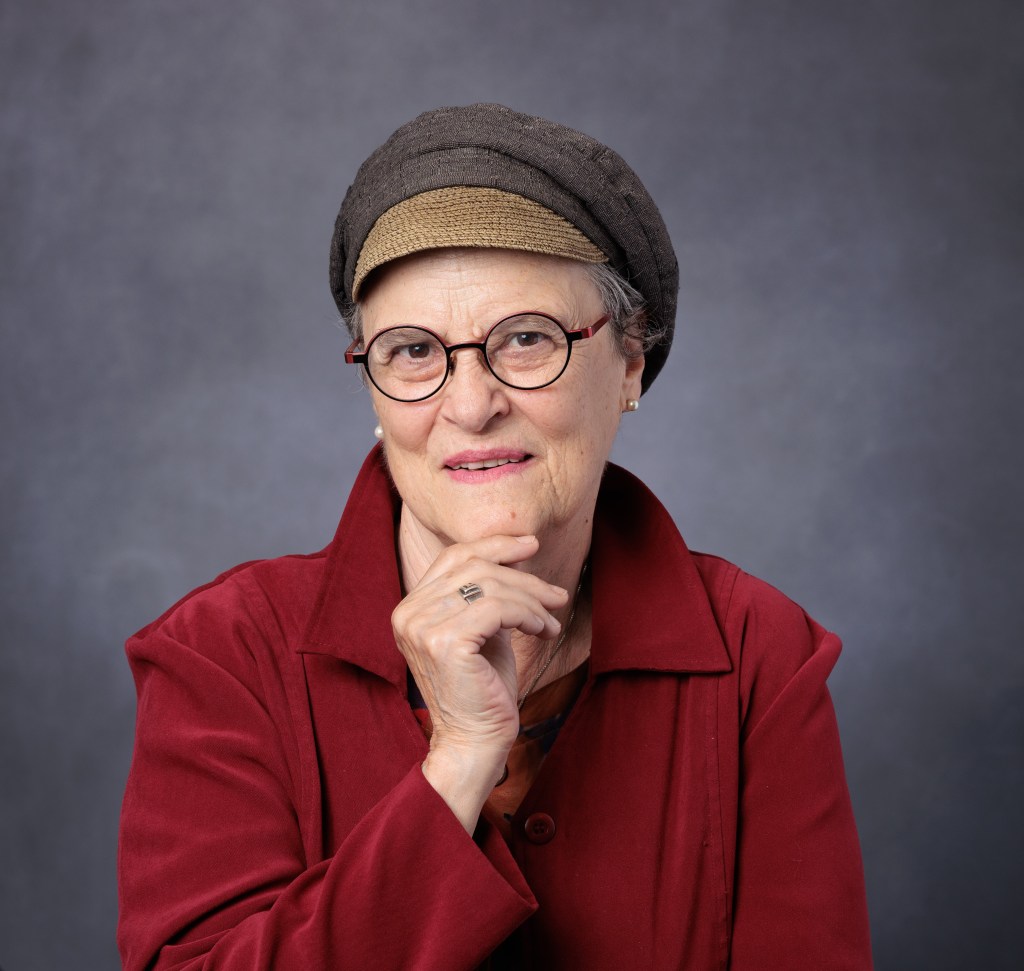
Marty Ambrose is the author of a historical mystery trilogy: Claire’s Last SecretA Shadowed Fate, and Forever Past, all set around the Byron/Shelley circle in nineteenth-century ItalyHer novels have been published by Severn House (U.K. and U.S.) and Thomas Schluck (Germany), earning starred reviews in Publisher’s Weekly, as well as finalist status in the Florida Writers Association’s Literary Palm Award. Her work has been featured internationally in blogs, journals, and websites.

Marty teaches English at Florida Southwestern State College and has been a faculty member in the SNHU Creative Writing MFA program; she was a NISOD winner for faculty excellence, grant award recipient, and Master Teacher. She completed her M.Phil. at the University of York (England) and teaches nineteenth-century British literature, composition, and fiction writing. She has also given numerous workshops in the U.S. and abroad on all aspects of creating/publishing a novel.

She has edited the FSW literary journal, served on student scholarship boards, and is a member of The Byron Society, Historical Novel Society, and Women’s Fiction Writers Association.