Geoffrey, thank you for sitting down to this interview. I am glad I could catch up with you as you travel with Prudence MacKenzie from New York City to the Georgia coast. You must have many mixed feelings since you are originally from the South and saw how the Civil War devastated the area. But, Prudence, your partner in the Investigative firm has tried to keep you on level ground. Unfortunately, once the murder took place feelings began to unravel, especially with the death of the bride to be.
Elise Cooper: How would you describe yourself?
Geoffrey Hunter: Physically I’m tall, dark-haired, dark-eyed. My brief career as a Pinkerton sent me into dangerous situations and I learned early that in order to extricate myself I needed to be in the best physical shape possible. I took up amateur boxing and I’m an expert rider, dating back to when I was put on horseback as a child. We were also taught how to move silently, how to hide in a crowd, and how to disguise ourselves. I’m a gentleman.
EC: How has your Southern background influenced who you are today?
GH: It’s both who I am and who I am not. I have found it difficult to condemn everything Southern, as some would like me do, because I cannot entirely renounce family ties. But at the same time, I condemn a way of life that depended on the enslavement of an entire people based solely on the color of their skin. Slavery was wrong, no matter how hard or how often our Southern preachers tried to justify it.
EC: Do you ever feel conflicted between loyalties to your family, your culture, and the wrongness of certain customs?
GH: All the time. The only way I can deal with these loyalties is to compartmentalize them. In my heart and in my thoughts, I separate my family from the culture in which most of my relatives still live. I have to see them as individuals, not as representatives of a way of life I have renounced. Distance makes that easier. I have no wish to spend time in the South and my family has no desire to travel north.
EC: How would you describe Prudence?
GH: She is the most intelligent woman I’ve ever met, and certainly among the most challenging. I think she tries to be as honest and open as her upbringing will allow. She has a warm, generous heart and a terrible addiction she has to battle every day of her life. She’s also very beautiful.
EC: How would you describe your relationship with Prudence?
GH: I don’t know the exact moment when I fell in love with her, but I do know that what I feel is deep, sincere, and will endure for the rest of our lives. But Prudence is like a skittish horse who has to be won over without breaking its spirit. I dare not make demands on her that she cannot meet or that frighten her with their intensity. I proceed as slowly as I can bear. I respect her immensely.
EC: Why did you choose Prudence as a partner in an investigative firm?
GH: I think we chose one another. Circumstance brought us together, chemistry binds us. On the practical side, having her as my partner means I have good excuses to be by her side for as many hours of the day as I can manage.
EC: Do you think the Bennetts who were the groom’s family, represent the best and the worst of the Southern culture?
GH: They may have some of the best and some of the worst characteristics, but taken all together I find them rather typical of their class. There was really almost nothing about them that surprised me.
EC: How would you describe them?
GH: Aurora Lee and Maggie Jane, the sisters of the unfortunate groom-to-be, represent a certain type of woman who was found everywhere in the South for as far back as I can remember. These women play games in order to fulfill the only destiny they deem worthy of them—to marry well. They have little or no interest in anything else and if they do not marry, they consider themselves failures. So does everyone else.
The father, Elijah Bennett lives in a world that doesn’t exist anymore. His entire life was defined by a war his side lost. He doesn’t accept defeat but he also doesn’t know how to live in a new era without slaves and inherited wealth.
The groom-to-be, Teddy, and his brother, Lawrence, are two sides of a coin, the one epitomizing acceptance of change and generosity of spirit, the other a younger version of their father.
EC: You were the second for a duel-don’t you think that is an archaic tradition?
GH: Archaic only because it is against the law to duel. But it was once the only way a gentleman could preserve his honor in a dispute or after an insult had been dealt him. When I was growing up, it was made clear to me that every gentleman had to be prepared to defend his good name and reputation. Even though dueling may not have been as common then as it once was, it was nevertheless held up as the ultimate test of courage. So when Teddy decided it was the only way to resolve the wrong of Eleanor’s death, it seemed utterly right and fitting that he should choose to do it through a duel. Perhaps that’s difficult for you to understand, but it was so ingrained in me that I never doubted it was the right thing to do.
EC: Did you ever know someone like Aunt Jessa or Queen Lula?
GH: Mama Flore was our home plantation’s voodoo woman. I grew up around her incantations and I believed in them. Nobody dared challenge her powers.
EC: How would you describe them?
GH: Aunt Jessa and Queen Lula were spirit sisters. Their main purpose in life was to link the world of the dead and the world of the living. They believed utterly that some people could cross back and forth between the two worlds, and that their curses, juju dolls, and spells were what made those passages possible.
EC: How would you describe Wildacre and did it bring back memories?
GH: Wildacre was very like my home plantation of Sandyhill in eastern North Carolina, in that it was the beating heart of a miniature society. Large, isolated, requiring the upkeep of at least a dozen house slaves. By the time Prudence and I went to Bradford Island, Wildacre was showing the effects of years of declining fortunes and neglect, but seeing it as it was then made it easy to imagine what it must have been like in its heyday. Whitewashed brick, tall pillars, acres of green grass, a long alleyway of soaring trees. And the screech of peacocks. I’ll always associate that noise with how we used to live in the South.
EC: How would you compare New York where you currently live to the South?
GH: There is no comparison. It’s a different world entirely. One in which I now feel completely comfortable. It’s only if I meet a fellow Southerner and slip accidentally into the accent of where I was born that I am momentarily jarred into nostalgia.
EC: If you could make a wish what would it be?
GH: To live the rest of my life with Prudence beside me as my wife.
EC: Do you still have hopes and dreams or do you consider yourself a cynic?
GH: Cynicism is just another word that tries to justify giving up. Not working for constructive change because you doubt it’s possible or lasting. I’m not a cynic. I’m not a pessimist. As a Pinkerton, I saw some of the worst in humankind. Choosing the life of a lawyer and private inquiry agent also brings me into close contact with the criminal element. I knew that when I chose it. I still have confidence that most men and women strive to be something better.
THANK YOU!!
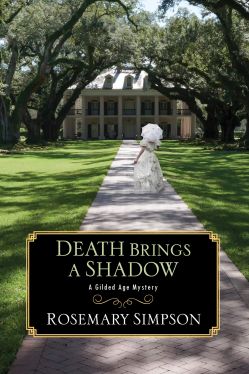
The fourth Gilded Age Mystery, “Death Brings a Shadow,” was published in November 2019, and the fifth book in the series will be out in late 2020. Rosemary is also the author of two stand-alone historical novels, “The Seven Hills of Paradise” and “Dreams and Shadows.”.”
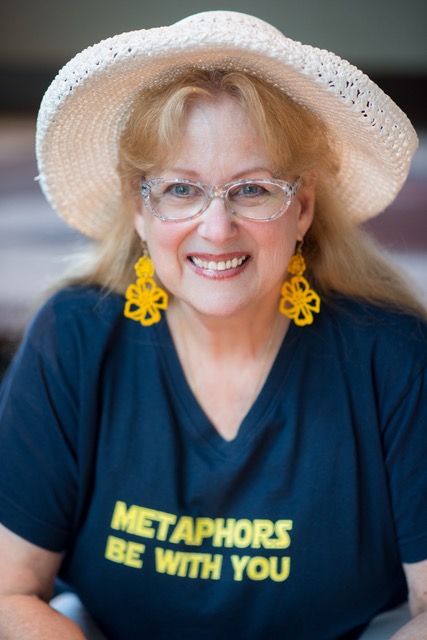
She is a member of Sisters in Crime, International Thriller Writers and the Historical Novel Society. Educated in France and the United States, she now lives near Tucson, Arizona.




 Novel PASTimes