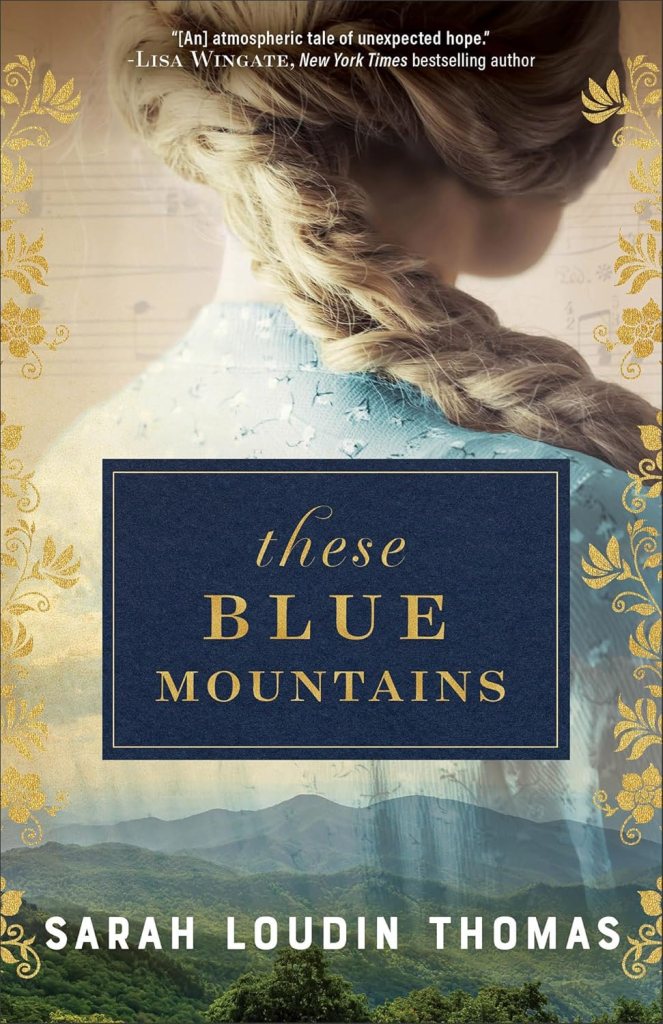
I enjoyed this story of German immigrant Hedda who comes to America (North Carolina) many years later looking for her fiancé, whom neither she nor his mother have heard from.. She is a talented pianist and soon finds a place at a newly opened collage with new friends and old ones who came to teach at the collage.. There are many twists in the story I won’t spoil.
I liked that the story takes place in a time period not often explored in historical fiction in connection with Germany,—the time between the wars. I also liked that while not really a mystery, readers are led through the tale in unexpected ways. The romance in the book develops slowly (something else I like because it’s so much more realistic that way).It can be difficult to convey hope in a story during a tragic time in history, but this novel does so well.
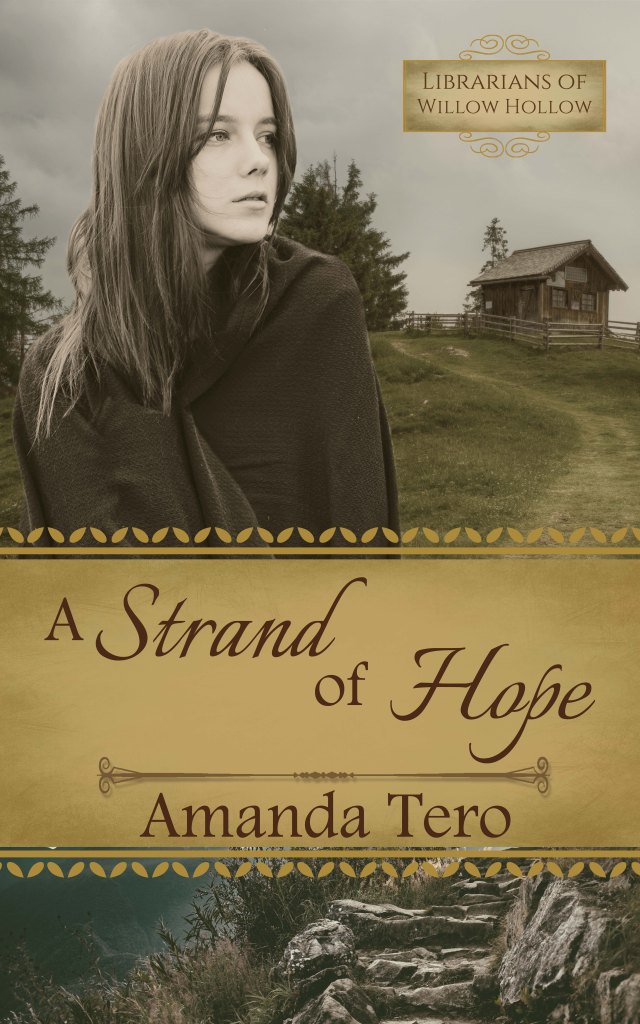
Can we talk about that cover? So beautiful! It conveys the theme of the novel so well: historical, longing, beauty.
Historical fiction fans will enjoy this novel.
Reviewed by Cindy Thomson. I received a complimentary audiobook of the novel from NetGalley and the publisher. This review is my honest opinion.
Mira Dean is reconciled to her life as a spinster schoolteacher until preacher Gordon Covington shows up in town with an audacious marriage proposal. Following him to the mountains takes courage, but Mira will see that doors she thought closed forever may be opening after all.
Welcome to Novel PASTimes! We are pleased you stopped by today, Mira.
Thank you so much for having me. I love to talk about The Song of Sourwood Mountain. It is so incredible to have people interested in my story.
Tell us something about this Sourwood Mountain.
You should come visit. It is the most beautiful place with the best people. There is a Sourwood Mountain, but most of the people live in the hollow. The people there would shake their heads at me saying hollow. They would definitely say they live in Sourwood Holler. I am what they call “brought in.” That is, not from that area. I went there from the big city of Louisville. That was quite a change for me. In Louisville I lived in some rented rooms in the upstairs of a brick house. In Sourwood I live in a log cabin like everyone else. We are surrounded by trees, and in the spring the rhododendron bushes cover the hillsides in blooms. Wildflowers pop up everywhere. Of course, the same as anywhere, everything isn’t all good there.
Wait. Maybe we should back up here and let you introduce yourself and let us know exactly why you went from Louisville to this Sourwood Mountain.
Oh dear, I should have told you that first off. You have to understand I’m a little nervous talking about myself. My name is Mira Dean Covington. I’m a schoolteacher. Most women schoolteachers have to be unmarried. The administrators for the city schools think that is best so a woman’s thoughts won’t be divided between her family and her student. Anyway, whether you think that is sensible or not, I was resigned to being a spinster after my fiancé died a few years ago.
But an old schoolmate came to my church to talk about his mission in the Eastern Kentucky Appalachian Mountains. He has established a church there and at the time, was hoping for contributions to help start a mission school as well. He needed a teacher, and before we had hardly said hello, he shocked me by saying the Lord had nudged him to ask me to be that teacher. I love teaching children, and when I thought about the poor children in those hills not having a way to learn to read, my heart was touched. Still, I might not have agreed to his outrageous plan – I hadn’t seen him for years – but I lost my teaching job and the rooms I was renting. It did feel as if the Lord was pushing me to be the Sourwood Mission schoolteacher.
You say the place is beautiful, but somehow sourwood makes one wonder about that. Sourwood sounds unpleasant.
I suppose it does, but the name actually comes from a tree called sourwood that grows in the hills there. When they bloom, the trees are beautiful and the flowers have the most amazing scent. I know you would love the trees if you were to come to Sourwood Mountain in June when they are in bloom.
What do you like or dislike about being a teacher in Sourwood?
The children are what I love best about teaching. It’s wonderful when I see a child’s face light up when he or she suddenly understands something I’m teaching. I don’t like it when a child acts up or tries to bully another child. I make sure that doesn’t happen in my school, or at least I try to. Children, the same as any of us, are not perfect. They must learn proper behavior and good attitudes as well as arithmetic and reading.
Who are the special people in your life?
There are two children I do love more than the others. I try my best not to favor them over the others in the school room, but Joseph and Ada June are in and out of my house all the time. Joseph loves to be of help there and at the church. Ada June is a special little girl who lost her mother at a young age and has so wanted to be a true part of a family since then. She has the sweetest heart, and she has found a place in mine.
What is your heart’s deepest desire?
Ever since I was a little girl, I wanted to have my own family. To marry and have children to love. And then the man I thought I would marry died of tuberculosis. I thought my dream was forever lost and that the children I taught would be the only children I would have to love. But sometimes the Lord opens a door you didn’t know was there and finds a way to give you the desires of your heart.
Do you have a cherished possession?
I do. My mother had a ceramic blue bird that she treasured. Before she died, she gave it to me and told me to remember how much she loved me whenever I looked at it. It is on the mantel in my cabin in Sourwood. When I hold it, I somehow get courage to face whatever challenges come my way. I have to admit that I’ve held it so much over the years, that some of the ceramic feathers have lost a little of their blue.
It’s so wonderful to see the blue birds in the mountains. One built a nest in a small hollow in the oak next to our school. Seeing them brings the happiness promised when you see a blue bird.
What do you expect the future will hold for you?
I hope to teach for many years and learn more about my Sourwood neighbors. And that dream of having my own family may be in my future too.
What have you learned about yourself in the course of your story?
Maybe what I have learned most about myself is that I should always trust the Lord and embrace the blessings He showers down on me and mine.
Is there anything else you’d like people to know about you?
Oh heavens, I think I have already told you more than anyone could ever want to know about me. I am simply so happy that the Lord opened the opportunity for me to teach the children in Sourwood. He aimed good for me and for that I am more than thankful.
Thanks for allowing us to get know you a little better!
Thank you for inviting me over to talk with you.
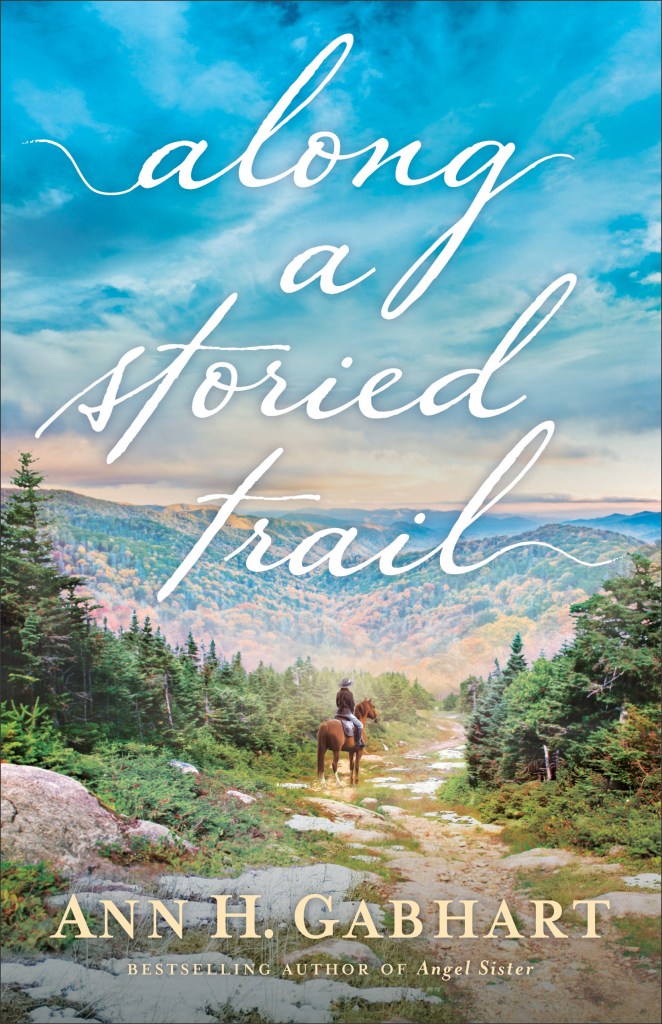
Ann H. Gabhart is the bestselling author of many novels, including In the Shadow of the River, When the Meadow Blooms, Along a Storied Trail, An Appalachian Summer, River to Redemption, These Healing Hills, and Angel Sister. She and her husband live on a farm a mile from where she was born in rural Kentucky. Ann enjoys discovering the everyday wonders of nature while hiking in her farm’s fields and woods with her grandchildren and her dogs, Frankie and Marley. Learn more at AnnHGabhart.com.
Today we’re talking to Alberta “Bertie” Jenkins. Bertie, you’ve lived your entire life in the mountains of Appalachia, is that right?
Yes, my Papa and Mam were born in these parts, as were their folks. The Jenkins roots run deep in these hills.
I’ve only been camping in the mountains, so I’m not sure what it would be like to live there permanently.
It’s wonderful. Every mornin’ you wake up to the sound of birds and breezes and critters rather than noise from the city. All of us who are home gather ’round the big kitchen table and eat a hearty breakfast. Jennie does most of the cookin’, and she’s as fine a cook as Mam. After the meal, we have Bible readin’. When Papa was alive, he chose the Scripture passage for the day, but since he’s gone on to heaven, Jennie reads to us now. Sometimes we’ll discuss the Word, sometimes not. Someone will say a prayer of blessin’ over the day, and then we’ll scatter like ants. Everyone has their own chores to tend and things to get done before the sun disappears behind the mountain. When the boys were home, they’d go off huntin’ or fishin’ after chores were done. Us girls would pick bunches of wildflowers and wade in the creek. We’d have contests to see who could find the prettiest rock or find a robin’s nest or climb the highest tree.
We went to school six months out of the year, mostly durin’ the fall and winter. Papa and some of the neighbors built a schoolhouse ’bout a mile down the mountain from our place. We children walked there or rode a mule, but soon as plantin’ season came, we were needed at home.
What is your favorite season in the mountains?
I’m partial to autumn. God takes his paintbrush and touches nearly every growin’ thing with shades of red, yellow, and orange. Even those plants whose leaves turn brown are pretty in their own way. Springtime, too, is my favorite. Everything is new and fresh and bright. Flowers, baby birds, new fawns. Yes, springtime is mighty fine too. Summertime is full of tendin’ the garden, shearin’ the sheep, plowin’ and growin’ crops and then cannin’ it all so we’ll have plenty of vittles come winter, my least favorite season.
Why is winter your least favorite?
Even though we don’t have the corn and wheat fields and the big garden to tend during the winter, the bitter weather and snow makes life hard here in the mountains. Don’t get me wrong, though. There’s beauty in every season, but winter brings hard work with it. The critters need extra feed since there’s no grass or bugs. Water freezes in buckets and troughs. Toes freeze when you’re outside too long. Firewood must be chopped several times a day. The house never really gets warm, even with Papa’s two fine fireplaces and the cookstove sendin’ out heat. But there are sweet times in the winter that we don’t usually get in the busy warmer months. Lots of sittin’ in the gatherin’ room, tellin’ stories and knittin’ or sewin’. I enjoy readin’ novels, although my elder sister says they’re silly and a waste of time.
Tell us about your family.
Papa and Mam had eleven children. I’m second to the youngest, with my sister Rubie bein’ the baby. Papa always said she was wise beyond her years, and I’d have to agree with him. Papa built our log cabin after he and Mam married. He’d been in the War Between the States—served in the Union Army like most East Tennesseans—and after he came home, they married and started their family.
It must have been fun growing up with so many siblings.
Since I don’t know any other way of growin’ up, I’d say so. There was always chores to be done—gardenin’, cookin’, cleanin’, piles of laundry—but we had good times too. My brothers liked to tease us young’un’s by catchin’ snakes and lizards and bugs, but I wasn’t ever afraid of ’em the way my other sisters were. There were seven of us girls and four boys. After the boys were grown, they bought farms of their own and moved away, but only our sister Catherine married and left home. The rest of us girls live on the family homestead.
That’s fascinating. This might be too personal, but may I ask why you and your other sisters never married?
It ain’t too personal. It’s my story. My elder sister, Jennie, was a young girl when she decided not to marry, but three of my other sisters wanted husbands. Catie found a good man to wed, and the other two girls, Bonnie and Amelie, found fellas soon after. But those boys met with a terrible accident and were killed. My sisters never got over it. I watched each of them and the choices they made and concluded I wasn’t interested in marryin’ a fella and movin’ away. We sisters stayed on the homestead together, helpin’ each other and livin’ a good life.
I’m sorry to hear about the tragedy. I suppose everyone suffers loss at one time or another.
That’s true. Jesus said in this world we’ll have trouble, but he also says he’s overcome any troubles we face, includin’ death. In all my years as a midwife, I saw many miracles, but I also saw sadness.
Tell me how you came to be a midwife.
Mam was trained as a midwife by her mama. And her mama by her mama. We mountain folk tend not to trust fancy doctors and hospitals. We’d rather have our own people care for us, if possible. I was just a young’un when I first saw a baby bein’ born. Whoo-wee, that was somethin’. I couldn’t imagine how that little fellow got inside his mama’s belly and came out lookin’ so perfect. From then on, I asked Mam to train me in midwifery too.
How many babies have you delivered?
Too many to count.
Do you have a favorite among them?
I sure do. One hot summer day back in 1943, a young gal showed up at our place. She was pregnant and alone, so my sisters and I took her in. When her time came, I tended the birth. I’ll never forget the moment I looked in that child’s eyes. I fell in love.
What happened to the baby?
Well, that’s a story for another day, I think.
Thank you for sharing your mountain life with us, Bertie. It sure makes me want to visit Appalachia soon.
You’re welcome in our beautiful part of the world anytime. There’s always somethin’ to do in the mountains. Hikin’, bikin’, picnickin’, or just sittin’ and enjoin’ God’s handiwork.
It sounds perfect.
It is
.
Michelle Shocklee is the author of several historical novels, including Count the Nights by Stars, a Christianity Today fiction book award winner, and Under the Tulip Tree, a Christy and Selah Awards finalist. Her work has been featured in numerous Chicken Soup for the Soul books, magazines, and blogs. Married to her college sweetheart and the mother of two grown sons, she makes her home in Tennessee, not far from the historical sites she writes about.
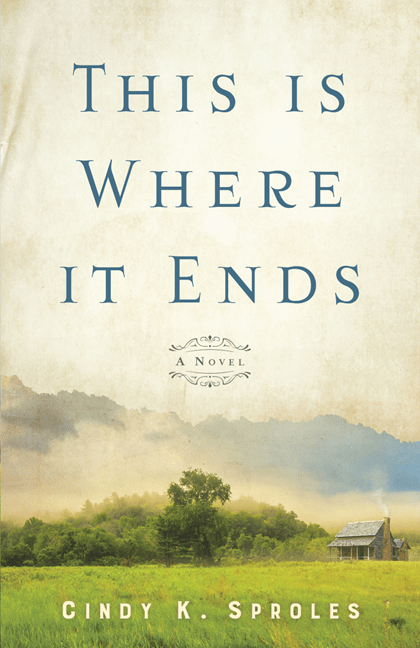
Widow Minerva Jenkins has lived alone in her small mountain home for 40 years where she has guarded her husband’s deathbed request. When a young reporter comes calling and inquires about a rumored box of gold on her property, an unlikely friendship forms. Will she go to her grave with her husband’s secret, or will the weight of it be the death of her?
My name is Minerva Jane Jenkins, and I reckon I’ve always been a force to be reckoned with. As we meet, in the spring of 1902, I have reached the ripe age of 94, and well, my days are numbered. I’ve lived on this mountain for the better part of my life. I can’t tell you why the good Lord opted to number my days to this length, and I sometimes spar that decision with Him. Still, the Lord knows what is best for us, and He’s seen fit to give me 94 years – even though they have been lonesome years, I’ve made do, and I’m happy.
About my family
Lordy, mercy, my family is long gone. Another reason I questioned the good Lord’s reasonin’ for leaving me here so long. I married Stately Jenkins when I was fifteen, and he was seventeen. He’d come from the war with a bummed-up leg and a sour attitude toward the north. But then, he was a true and faithful Confederate soldier. I lived in Lexington at the time, the daughter of a railroad laborer, so when I finished tenth grade, and they was no more school available, the timin’ was right for Stately to come into my life. We married, and he up and moved us to Shoal Mountain, six miles from the tiny town of Barbourville, Kentucky. I never saw my momma and daddy again, but that’s what happens when you marry and move away. I heard by way of a letter when daddy died and then by chance when momma passed. Lordy, I miss them to this day. Still, Stately built us a life on the side of a mountain overlooking the river, and though it was a beautiful place, I was never able to share it with children. I loved my husband, and I thought he loved me. After all, he married me and brought me to this mountain, not some floozy from Lexington.
What advice do you have to share about your 94 years?
Lawsy mercy, I suppose that would be the one thing that still nags me. The one question I’ve asked myself for years. How long does a body keep a promise, even if it’s detrimental? My momma told me once, don’t never make a promise you can’t keep. A promise is a person’s word, and your word is your integrity. She told me, don’t get loose-lipped and trust to tell when you’ve promised not to – and here I sit at 94 years old, holdin’ on to a promise, a secret I regretted making fifty years ago. See, Stately’s heart give out, and as I sat holding his dying body in my arms, he never said he loved me. Instead, he said, “Minerva, keep the secret. Promise me.” Before I had time to think it through like my momma told me, Stately grabbed my arm and shouted in his last breath, “Promise me!” And I did. It’s been a promise that has weighed me down for the remainder of my life. How long do you keep a promise? I’ve asked myself that question for over fifty years on this lonely mountain. Best I can determine is … you keep it to the grave. My advice – don’t make a promise you can’t keep. If you’re waiting for me to give out Stately’s secret, then it might just be until the death of you cause I’ll never utter a word.
What would you say you are most afraid of?
Can’t say I’m rightly afraid of much. I’ve stared down that ole bear that lives up the holler – managed to draw a line in the dirt for the old cuss when I aimed my rifle at his rear and filled it with buckshot. He quit crossin’ over my line after that. This old woman ain’t got much, but I got smarts. Stately taught me farmin’ so can shoot a squirrel or rabbit. I’ve fished, raised myself a good garden, and stored away taters and green beans. I’ve ground my flour, made butter, traded for my sugar and salt, and cut years’ worth of wood for my fires, but if I was honest. If I was truly honest, my fear ain’t in dying. It’s in dying alone. Wouldn’t nary a soul know I’d passed on up here on this mountain. I’ll just drop dead one day and lay to the bone where I fell ’cause they ain’t a soul up here to bury me.
Is there anyone who has made a difference in your life?
I don’t have to think long on that question, for they’ve only come along in the last year. Oddly, what brought them into my life was that blessed old promise I made – Stately’s secret. The one I was bound to hold quiet by a promise. A young reporter, Delano Rankin, come up from Lexington looking for answers to a story he’d got wind of, one that said my Stately had a stash of gold and that he’d even murdered for the stash. My lips was sealed tight about anything Stately might have said or done, but the man kept hangin’ around. He did something a soul ain’t be able to do in fifty years. Del wormed his way into my heart, and in the few months I had with him, he grew to be like the child I’d never had. It took time for me to believe his intentions was true, but once I come to know his heart, I could see the good Lord had answered the one prayer I’d prayed since Stately died. “Don’t let me die alone.” Del was there. Then there was Robert Jr. and Cherry Blessing. I can only say, Robert Jr. was the spittin’ image of his daddy Robert, Sr. who helped me bury Stately. Robert and Cherry was balm for my soul, the comfort and peace that a good man and his wife could be as an old woman lay dying. Yes, they was the peace my soul needed.
Is there anything else you’d like to share with us that has brought meaning to your life?
I’d have to steal a few words from Del about that. And that is that wealth ain’t always found in a would-be box of gold. It’s found in the relationships we build with others. It’s found deep in the hearts of them “old people” that city folks call “elderly.” There’s a lifetime of experience, insight, and wisdom. There’s a gift of the story in their lives, and the fulfillment of a life well-lived. I’d have to say, spend time with them old coggers that you might consider troublesome or wearin’ on you because when you don’t, you’re passin’ up a wealth that money can’t bring. The gold is in lives of them old folks. Seek it out. Find it. You might just be surprised how your life is changed by knowin’ them.
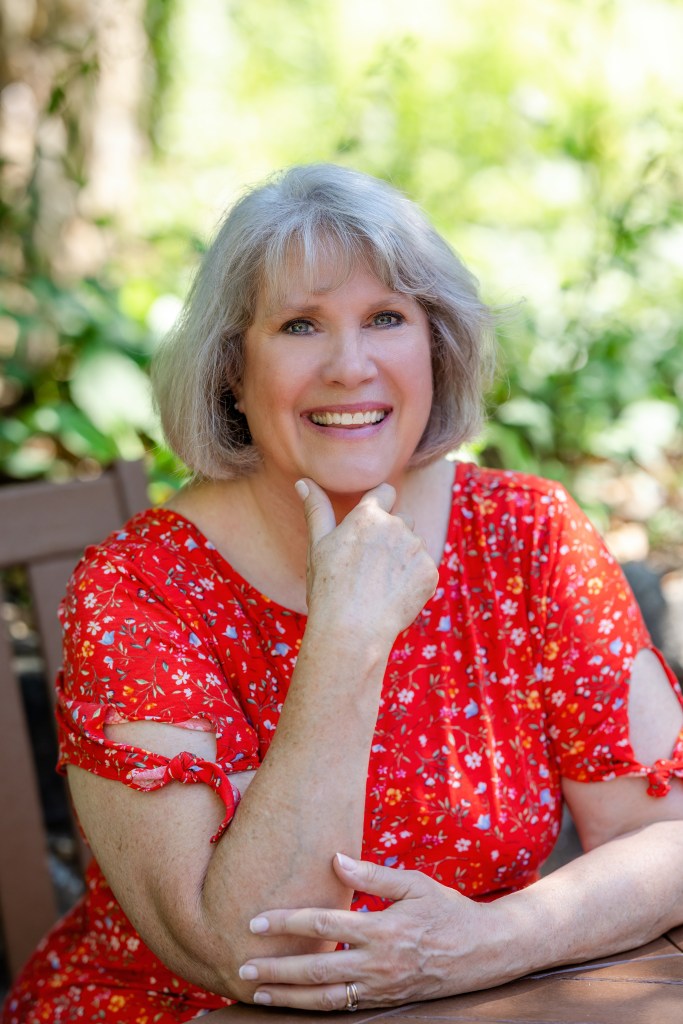
Cindy K. Sproles is an author, speaker, and conference teacher. Having served for several years as a managing editor for Lighthouse Publishing of the Carolinas and Ironstream Media. Cindy now works as a mentor, coach, and freelance editor. She co-founded Writing Right Author Mentoring Services with Lori Marett, and Cindy is the director of the Asheville Christian Writers Conference. Cindy is also the co-founder of Christian Devotions Ministries and www.christiandevotions.us, as well as www.inspireafire.com. Her devotions are in newspapers and magazines nationwide, and her novels have become award-winning best-selling works. She is a popular speaker at conferences and a natural encourager. Cindy is a mountain girl, born and raised in the Appalachian mountains, where she and her husband reside. She has raised four sons and now resorts to raising chickens where the pecking order is easier to manage. You can visit Cindy at www.cindysproles.com or www.wramsforwriters.com.
Welcome to Novel PASTimes! We are pleased you stopped by today.
I’m very glad to be here. Mrs. Weston, our head librarian, said you were interested in learning more about our packhorse library. So what would you like to know?
We do want to know more about the packhorse library, but first tell us something about yourself so we can get to know you.
All right. My name is Tansy Faith Calhoun. I live up in the hills in Owsley County, Kentucky. I’m one of six children. One sister is older than me and one sister, much younger. The others are boys, all younger than me. Sadly, one of my little brothers died of a fever a few years ago.
I’m already twenty years old with no suitors knocking on my door. Most of the people around think I might end up a crotchety old spinster like Aunt Perdie who lives a couple of hills over from us. Girls get married young up here in the hills, but I figure I still have a few years to go before I have to admit to being an old maid. Meanwhile, I can enjoy being a book woman.
Book woman? Is that what people call the packhorse librarians?
They do, and I love it. I’ve loved books forever, but books are a luxury for most families like mine up here in the Eastern Kentucky Appalachian Mountains. Of course, we have the Bible, but books just for reading pleasure were few and far between before the packhorse library project. I did read every book I could get my hands on, sometimes three or four times. Pa says reading those stories turned my head and has me thinking above myself. He might have a different opinion about my love of books if he could see me now as one of the book women.
Doesn’t your father know you’re a packhorse librarian?
No, I got the job after the mine where Pa worked closed down and he took off for the flatlands to find work. We haven’t heard from him since. Things got hard around our farm what with no money coming in and how last summer’s hot, dry months parched our cornfield and sass patch or garden. We didn’t have enough corn and beans to last through the winter. We thought we’d have to go on the dole but then I got hired on as a packhorse librarian. President Roosevelt–or some say it was Mrs. Roosevelt’s idea–came up with a way to put some of us women in the mountains to work and get books to folks up here that never had a way to have books before. I love my job of carrying books out to people on my book routes.
This program, the packhorse library, sounds fabulous. Tell us more about it.
I’m sure you already know about all President Roosevelt has been doing to put people back to work during this depression time in our country when so many can’t find jobs. The government came up with all sorts of programs. Men work at constructing schools, bridges, roads and more. Women do sewing projects. Young men joined up with the Civilian Conservation Corps. The government even started programs for out of work artists, writers and other creative people.
But one of the best ideas for us around here is the packhorse libraries. We’d never had a library like some of the bigger towns and even if we did, most of the people wouldn’t have much way of getting to it. That’s why the program came up with a way to take the books to the people instead of making them come get them. A truck to deliver the books might sound better than packhorses, but here in Eastern Kentucky our roads are often creek beds running up the side of a mountain. Most people go by horse, mule or shankmare. That’s mountain talk for on foot. So we take the library to the people by loading our saddlebags of books on our horses or mules and riding miles along some rough trails up into the hills. The government pays the packhorse librarians, but doesn’t supply any books. We had to come up with a central location and the books to circulate.
You can’t have a library without books. So how did you fill your shelves?
People in the community donated some books but most of our books come from a central location in London, Kentucky that oversees women’s work programs. Once the news got out that we needed books for our packhorse libraries, donations started coming in from all over the country. Those who head up the program divvy them up and send them out to the different packhorse libraries here in Eastern Kentucky. Some of the books and magazines we get are throwaways from city libraries. We don’t care if what they send is in bad shape. We work to piece them back together and tape up the binding. If the magazines are too tattered and torn to circulate, we cut out pictures from them to paste on thick paper. Then we print out something about the pictures or maybe poems to make books to loan out to our people. We even make book from recipes or quilt patterns our readers share with us. Those are popular loaners.
You sound very creative. Have you written any stories yourself?
I don’t know if a mountain girl like me could know enough to write a book, but it is an idea that pokes at me sometimes. I did come up with some stories for kids that I made into books to share with our young readers. And I wrote down a Jack story that Aunt Perdie told us. A Jack story is a story passed down through families here in the mountains. As Aunt Perdie says, there’s no right or wrong way to tell a Jack story.
That’s twice you’ve mentioned this Aunt Perdie. Is she your favorite aunt?
She’s not really my aunt, but she is a relative. My father’s second cousin. That’s still family and in the mountains we take care of family. So, when she needed help, we had to be the ones to give that help. But I can’t say she’s a favorite of any of us. Well, except Coralee, but that’s another whole story. Aunt Perdie is as contrary as sore-footed mule and seems especially prone to pointing out ways I could do better. Could be sometimes she’s right, but that doesn’t make her any easier to get along with.
What do you expect the future will hold for you?
More rough trails to ride as a book woman. More books to read myself. More family to love. More mountain air to breathe, and maybe someday, love to grab hold of.
That sounds good, Tansy. But before you have to go, tell us what you’ve learned while riding those rough trails as a packhorse librarian?
Oh, so many things. I’ve had the chance to have many more books in my hands and time to read more than a few of them. I’ve gotten to know my neighbors better and found out that even those who aren’t good at reading still like getting those magazines and books. Sometimes they simply enjoy the pictures in the magazines or they get their children or grandchildren to read to them. I do some reading aloud to people on my route when time permits. I never let weather stop me no matter how bad it is, because I know people are waiting to get those books to bring some light into their hard lives. But I’ve also learned books don’t hold all the answers. Some things you have to figure out on your own such as how the people nearest you can be the dearest. While books and stories are fine, the people you love are what make life blessed.
Thanks for allowing us to get know you a little better and about the packhorse libraries!
Thank you for inviting me over. Now I’d better go pack up my saddlebags and get ready to head out on the trial to share some stories. The people will be watching for their book woman to show up.
Ann H. Gabhart is the bestselling author of several Shaker novels—The Refuge, The Outsider, The Believer, The Seeker, The Blessed, and The Gifted—as well as other historical novels, including Angel Sister, These Healing Hills, River to Redemption, and An Appalachian Summer. She and her husband live on a farm a mile from where she was born in rural Kentucky. Ann enjoys discovering the everyday wonders of nature while hiking in her farm’s fields and woods with her grandchildren and her dogs, Frankie and Marley. Learn more at www.annhgabhart.com
Good morning. My name’s Celia Percy, eleven-year-old sister of Chester and daughter of Gladys and Fillmore Percy—who’s doing time down to the state penitentiary, caught red-handed running moonshine. That’s not much of an introduction, I’ll grant, but it’s the only one I got.
I aim to better myself, to become the world’s most famous female investigative reporter—like Nellie Bly—by the time I’m twenty-two. To that end I’ve started up a newspaper, The Permanent Press. That’s a good name. All the other newspapers I’ve started folded for one reason or another, but this one’s here to stay.
My first interview is with Granny Chree, the most ancient person I know—over a hundred and a granny woman, herb doctor, and midwife—that lives in an old cabin up the side of the mountain just a ways. I really wanted to interview the mysterious stranger dressed in dark tweed that stepped from the train without one piece of luggage in near the dead of night last March—well, at least dusk—but Mama said I’m not to pester Miz Hyacinth’s companion with personal questions. I don’t know how a person’s supposed to investigate without asking personal questions, do you?
CELIA: So I reckon I’ll start with you, Granny Chree. Is Granny your real first name? How could you be born with a name like Granny?
Granny laughed, the faint wrinkles on her brown face wreathing into a smile. “I was born Alma Tatum, but I ain’t heard that name in years. My married name is Chree.”
“I never knew you were married, Granny Chree.”
“Never did a better man walk this earth than my Shadrach, but he passed on too many years ago now. Since then I’m known as Granny Chree. Suits me fine.”
“You helped birth near every baby in No Creek, didn’t you?”
“Every colored baby, and quite a few white ones, though they might not admit it now. A woman in travail don’t much mind the color of a person’s skin long as they can get some relief.”
“Reckon not. Did you birth Miz Hyacinth? She’s near as old as you.”
“She’s old, that’s true, but not old as me. Yes, I did help God bring that baby girl into this world—prettiest baby ever born up to Belvidere Hall. I’d been a slave there in the years before the war and afterward I just kept on working in the Big House for wages, though Shadrach and I lived right here in this cabin, thanks to Miss Minnie.”
“Miss Minnie?”
“You never knew her, child, long before your time. But you know her niece, Hyacinth—Miz Hyacinth to you—took care of her from the time she was born, every minute her mama wasn’t with her.”
“That’s why you two are such good friends?”
“Like family, but you can’t say that in your paper, Celia. It wouldn’t be safe for Hyacinth or for me.”
“That don’t seem right, not if you near raised her, if you lived every day with her.”
“Lots of things in this world not right, but they be what they be—for now.” Granny sat back in her rocker.
“I been thinking about that.”
“Mmm-hmm, here it comes. What you spinning in that brain of yours, Celia Percy?”
“Well, I’m thinkin’ about Miz Hyacinth’s library—you know, all those books the Belvidere family’s collected over the years—way more than a hundred years and more than a thousand books in those bookcases she’s had us cleaning floor to ceiling. Can you imagine?”
Granny shook her head. “I can’t comprehend it, though I’ve seen that room with my own eyes.”
“Don’t you reckon they’d make a great public library? Open to everybody who wants to read? Ever since Miz Hyacinth had her stroke and retired from schoolteaching here in No Creek and they sent us on the bus over to the big school, we’ve been without a library. I miss the books Miz Hyacinth used to bring to school, the ones she read to us and the ones she let us borrow to tote home. I was always real careful with them—never tore a page or bent a corner and always brought them back directly I finished reading. Don’t you think a public library’s a good thing?”
“Sounds like a mighty good thing, sounds like somethin’ Hyacinth might cotton to.”
That was a relief. I wanted Granny’s approval. “You know, Granny, when I said everybody, I meant it—including the folks down to Saints Delight. I believe they’d like some good books, too. The colored school only ever gets the county’s castoffs. Think what it’ll mean to them to get new books!”
“You talk about bringing coloreds and whites together in the same room, you’d best get Miz Hyacinth’s approval on that. Belvidere Hall—I mean, Garden’s Gate—is her home. It’s a good idea, but I don’t know that No Creek is ready for it. You might just be ahead of your time, Celia Percy.”
“That’s another thing, Granny. Why did Miz Hyacinth change the name from Belvidere Hall to Garden’s Gate?”
“It was after her daddy passed on, but you got to ask her that if you want to know. And you need to think about Grace when you go speculatin’ about a public library there.”
“Miz Hyacinth’s new companion? What about her?”
“She’s the one would need to do the work. Hyacinth’s too old and blind since her stroke—you know that.”
I sighed. “I don’t know about Miss Grace. I don’t know what to think about her. Did you know she stepped off the train in near the dead of night without one speck of luggage? Did you know she had a faint line on her ring finger like she maybe just took off a wedding band? Why would she do that? You reckon she was running away from something—or somebody?”
“What I reckon most is that it’s none of your business.”
“That’s what Mama said, but I do love a good mystery. Investigatin’ that would make for a great story in my newspaper.”
“The truth will out when it’s God’s good time. You don’t need to go proddin’ and pokin’ where you don’t belong. I ’spect the good Lord can handle His business in human hearts just fine.”
“Maybe so, but—”
“You might hurt Miss Grace gossipin’ so, or Hyacinth herself. Hyacinth wants her here. No newspaper story’s worth hurtin’ the people we love . . . now, is it?”
Granny Chree looked at me with her one good eye and I knew squirming would do no good. I just didn’t know how the tables on this interview had gotten so turned around. “No ma’am. I reckon not.”
“Then I believe this interview’s come to an end, child. I look forward to seein’ your story in print by and by. I like the idea of havin’ my name in the paper.”
I felt my grin spread till it near split my face. “And I like the idea of my very first byline.”
From award-winning author Cathy Gohlke, whose novels have been called “haunting” (Library Journal on Saving Amelie) and “page-turning” (Francine Rivers on Secrets She Kept), comes a historical fiction story of courage and transformation set in rural Appalachia on the eve of WWII.
About the Author
Four-time Christy and two-time Carol and INSPY Award–winning author Cathy Gohlke writes novels steeped with inspirational lessons from history. Her stories reveal how people break the chains that bind them and triumph over adversity through faith. When not traveling to historic sites for research, she and her husband, Dan, divide their time between northern Virginia and the Jersey Shore, enjoying time with their grown children and grandchildren.
Visit her website at cathygohlke.com and find her on Facebook at CathyGohlkeBooks.
Well Lena, it’s nice to meet you at last! I just have to ask, what book is a comfort read for you? If I remember correctly you don’t have favorites. 😉
That’s true. Books are like flowers–they’re all wonderful in their own sense. But if I were to choose a comfort read, it would be A Little Princess. It was not only the first book I read; it also accompanied me during my time grieving Aunt Melba Lynn’s death.
Oh, that’s so sad and sweet at the same time…losing loved ones is a hard thing to go through. On a happier note, as a horseback librarian, you obviously ride a horse! Do you enjoy the company of Kirby?
I love spending time with Kirby! He’s a horse I can fully trust and rely on. And, he doesn’t ask me questions.
That’s something I like about animals…they just listen and don’t judge 😉 Pastor Stuart seems like a kind, caring minister. What do you think of him? Do you enjoy his preaching?
Pastor Stuart is very kind. Sometimes with his sermons, I wonder if he really does know all about everyone in his congregation. So often it’s just what I need to hear.
Pastors do seem to know all at times! Do you ever see your fellow librarians at church?
Yes; even though I don’t always speak to them, Lilian, Ivory, and Edna Sue all attend church (we only have one church in Willow Hollow).
That’s wonderful! Do you ever bump into them at the library? I know you don’t often talk to strangers, but Who do you think you would get along with the best?
I prefer to be on my own and leave for my route before the others, but there are library meetings and such when we are all together. I probably get along best with Lilian; she’s not as reclusive and opinionated as Edna Sue yet not as bubbly and energetic as Ivory.
They all sound intriguing in their own way! Okay, now a more serious question. Do you ever wish you knew your grandparents?
I sometimes wonder… I wonder if they’re at all like Mom, or if maybe she changed after she left them. But then I think, maybe they are kind of like her. After all, they didn’t want her after she became pregnant. So, maybe it’s just better that I don’t know them and have Homer and Nora as my surrogate grandparents.
Yeah, I can understand that. Homer and Nora! They are such a sweet couple! If you could put them in one of your many favorite books, 😉 which would you put them in?
I think I would put them in North and South by Elizabeth Gaskell. They seem like they’d fit well in Milton.
Oh, great choice! Now a fun question! What is one book you have heard of but never read?
There is a new publication out there: Nancy Drew. I’m very curious what her story is about.
Oh! I love Nancy Drew! I think you will enjoy them when you get the chance! Lena, thank you so much for chatting with me! I really enjoyed it and I hope you did too! Happy reading and horsebacking!
Thank you. Maybe I’ll see you along my route sometime.
About the Book
Lena Davis is the daughter her mom never wanted.
But she survived. Through stories. Because books didn’t judge. Books weren’t angry she was alive. Books never expected her to be anything but who she was.
As she grows up, her beloved library becomes her true home.
So when the library is designated part of President Roosevelt’s Packhorse Library Project, Lena is determined to get the job of bringing books to highlanders, believing she’ll finally be free of her mom forever.
But earning the trust of highlanders is harder than she imagined, and her passion for books might not be enough to free her from her chains. Readers can get a free short story prequel, “Finding Hope,” by signing up to Amanda’s newsletter: amandatero.com/newsletter
Amanda Tero grew up attending a one room school with her eleven siblings—and loved it! She also fell in love with reading to the point her mom withheld her books to get her to do her chores. That love of reading turned into a love of writing YA fiction. Amanda is a music teacher by day and a literary guide by night, creating stories that whisk readers off to new eras and introduce them to heroic but flawed characters that live out their faith in astonishing ways.






 Novel PASTimes