
For this character interview, you’ll hear from Verna Bontrager Ebersol, a minor character in Yesterday’s Gone with an important role in the story. She is the great-aunt to main characters Eliza and Ruth. Verna left the Amish in the 1950s after a devastating turn of events that caused serious issues in her marriage. Ruth hadn’t met her great-aunt until recently, but she hopes to write down Verna’s oral history.
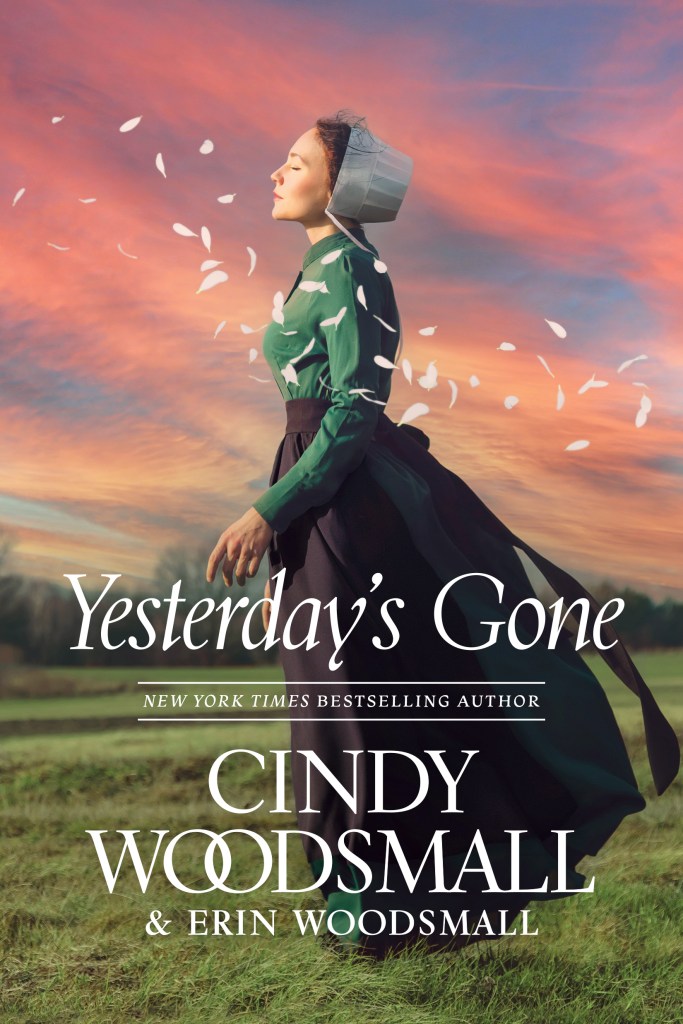
I steady my hands as I walk from the stove to my kitchen table and set a cup of hot tea in front of my great-niece. “You want to interview me?” Butterflies flutter in my chest, a clear reminder how comfortable I am staying in the shadows, even though I run the well-known Phoebe’s House.
Ruth nods while twirling an ink pen in her fingers. Oh, how I love when she comes for a visit. But an interview? Despite that I’m in my mid-eighties and she’s in her early twenties, we have a lot in common, and I find that a little scary. Ruth interviews Amish folks for her local Amish paper, but she could get in a lot of trouble if someone from her community found out about her coming to see me. Her rebellious streak is part of what we have in common. Still, since she learned of my existence a year ago, she’s hired a driver from time to time and traveled the three hours to come to my neck of the woods.
“Verna, written words hold the power to linger, long after we’re gone.”
I run my fingers over the edge of the hand-sewn cushion I’m sitting on as sunlight dances on the small table. I’ve made improvements to the kitchen during my years of living here, but it’s still simple. Part of me will always be Amish, even though I left so long ago. I’ll always be most comfortable with simple, even though I use colorful decorations now.
I sit in a chair across from her and take a sip of my tea. “Ruth . . . honey. Don’t get yourself in trouble on my account over some fervent desire to tell my side of the story.”
“Ach, I’m so sorry. It’s not that kind of an interview. I forget sometimes you don’t know me like my family and community does.”
Relief eases across my achy shoulders, and I take another sip of my tea. “What kind of interview it is?”
“For years, I’ve interviewed Amish, mostly family, and I write down their oral history as a way to archive important stories for our family. I mean, I could do an interview for the local Amish paper if—”
“No, dear. I’d rather not do that. I prefer to keep my life’s story a quiet one, at least until I pass away. Then you can do as you wish.”
I study Ruth. Such a smart, pretty young woman. She and her sister Eliza are Amish from deep within their core beliefs. Oh, they stand their ground and push back as needed, but they believe in the Amish way. As a young woman, I was much the same until I dabbled in what some call an answer to prayer and others call a curse. Now . . . and for what seems like a lifetime . . . I’m not Amish anymore, but if the interview were posted in a newspaper, even a small Amish one, it could stir a lot of questions and bring fresh pain to people I love—Amish and Englisch.
“What is your first question, Ruth?”
“In your own words, what is Phoebe’s House? How did you come up with its name?”
I chuckle. “I started Phoebe’s House over thirty years ago. It’s a welcoming place for people who are down on their luck. They can stay for weeks—longer if need be—at no charge. It’s a place to wash their clothes, get haircuts, and find leads on jobs. Years ago, as a young Amish woman, I found myself in need of such a place and couldn’t find one. But even though I’d been gone from the Amish a long time by then, I used a name no one would recognize. I came up with the name Phoebe. My initials are VB for Verna Bontrager, and that sounded like Phoebe to me.”
Ruth’s pen flits over the paper. “Let’s talk about something more personal to you. When was the first time you fell in love?”
I eye her. She blinks, looking innocent. Her question makes me feel nostalgic and grateful, although love seems to give as much pain as it does joy.
“Omar Ebersol. Omar and I were from two families in Calico Creek in the Appalachian Mountains where we grew up. You have to remember that back in my day, in the 1940s and 50s, some people in the Appalachians were very superstitious. There was a spoken and unspoken rule in Calico Creek: No one from the Ebersol and Bontrager families were to date, certainly never, ever to marry. Well, some with those who had those surnames could marry. The taboo was very specific: Any Ebersols or Bontragers who were direct descendants from the original families who crossed the ocean on the same ship and settled in the Appalachian Mountains in the 1740s . . . those were forbidden to marry.”
“Since I live in Calico Creek, I know some still believe strongly in that curse. For those who will read this journal later, can you elaborate on what curse means?”
“Hoo, boy. I’ve mulled that over a lot during my many years of life. I think when people hear the word curse, they often think of evil, scary things. But the Word makes it clearer. It means that a person or family isn’t under the full blessings of God. Looked at that way, I think a curse seems like a very common occurrence for mankind. Isn’t that what the Bible is all about—how to be under His blessings?” Was her great-niece trying to understand the curse as it was told to her coming down through the generations—the one Ruth had been told she and her sister Eliza were under? Verna had no desire to speak of that out loud.
“The community, your family, everyone wanted you and Omar to stay away from each other. What drew you to him despite what everyone warned?”
“His smile. His humor.” I think of my goofy husband, now bald as a cue ball. He still brings me flowers from the farmer’s market in town, hiding them behind his back until he gets through the door. He brings roses when he can get them, sunflowers, and daisies. After so much separation from him in life, I take no days with him for granted, not after all we went through to get back together.
“Ruth, how about your sister? She married a forbidden Ebersol too. What drew Eliza to Jesse?”
Ruth laughs. “I’m the one interviewing you! And Eliza’d be embarrassed. But, off the record, she was drawn to his imagination. Jesse and Eliza would sit by the river and dream of building their future cabin. His imagination is what led him to start his business—what brought money to our poor community and gave people jobs when they would’ve been working at that awful feed mill factory.”
I nod. That factory had ruined so many people’s health and lives.
“Back to you, Verna.” She winks. “Why did you leave the Amish?”
“Well, that answer is very sad. Omar and I had messed up everything, including our marriage. I divorced that wonderful, funny man.” It was simple enough, but I couldn’t allow it to be written anywhere. “While aiming to make things better, Omar and I used the quilt that had crossed the ocean in the 1700s to change time, and in using it, we broke our relationship apart, along with the rest of our lives. We both had so many regrets, and I’d hoped that no one else in my family would use the quilt, but I was wrong on that front. Eliza . . .”
“I can see that you’re getting tired. One last question: What are your hopes for the future?”
“Well, in my eyes, the future is now. Every day brings beauty, and I’m thankful for every single moment, even the trying ones. I have my Omar in my life again. We picked up the pieces of our brokenness and began anew. My hope would be that young people like you and Andrew and Jesse and Eliza can learn to live in the day and appreciate the moment and give back to others wherever you can.”
Thoughts of Eliza cling to me. Young people easily think the grass is greener, and they rip apart everything that matters to get to it, only to then realize the grass on the other side isn’t even green. I know that all too well. All too well.
Ruth reaches across the table and squeezes my hand. “Denki, Verna.”
My eyes well with tears over things I can’t voice. “God be with you and your sister, Ruth.”
CINDY WOODSMALL is a New York Times and CBA bestselling author of twenty-five works of fiction and one nonfiction book. Coverage of Cindy’s writing has been featured on ABC’s Nightline and the front page of the Wall Street Journal. She lives in the foothills of the north Georgia mountains with her husband, just a short distance from two of her three sons and her six grandchildren.
ERIN WOODSMALL is a writer, musician, wife, and mom of four. She has edited, brainstormed, and researched books with Cindy for almost a decade. More recently she and Cindy have coauthored five books, one of which was a winner of the prestigious Christy Award.

 Name: My name is Katie Stuckey.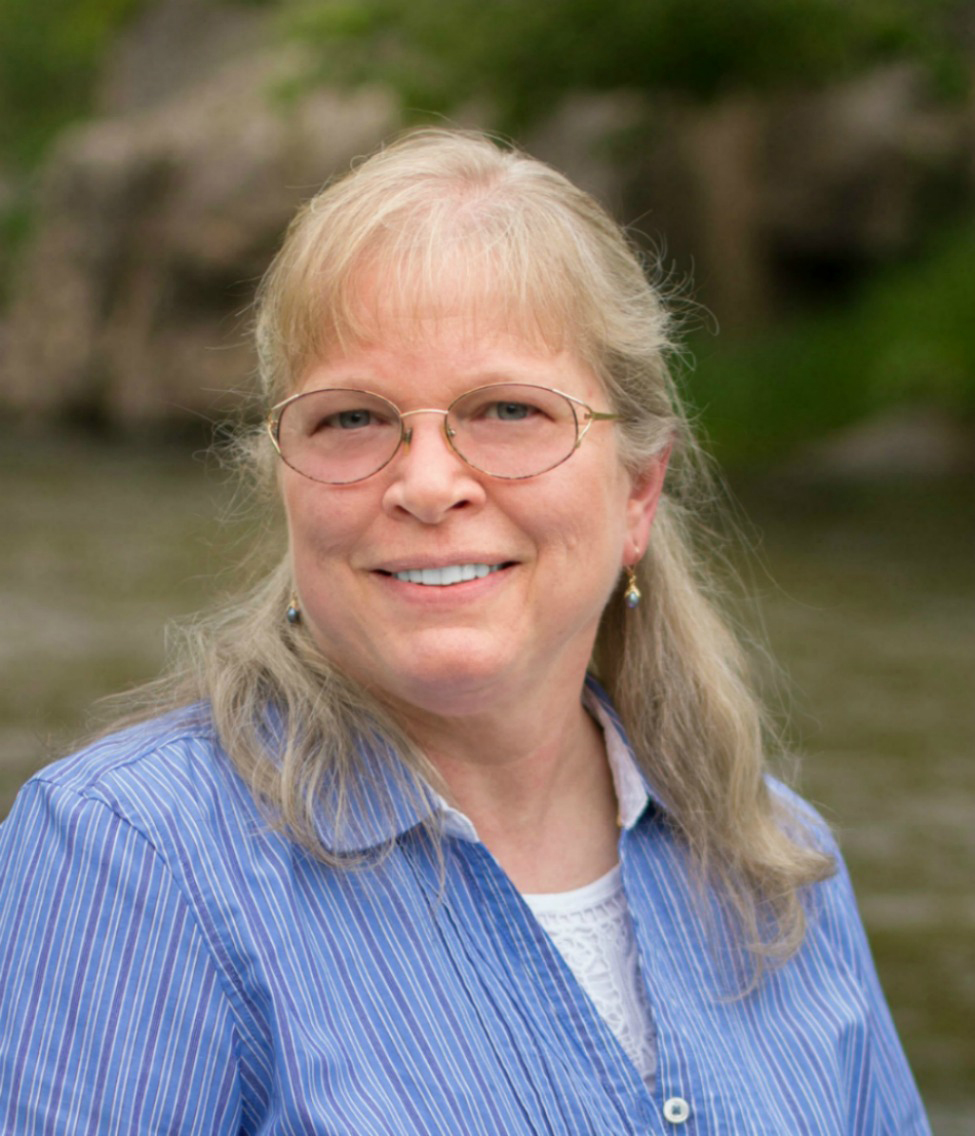


 Novel PASTimes