A Conversation with Helena Dabrowska from The Warsaw Sisters by Amanda Barrett


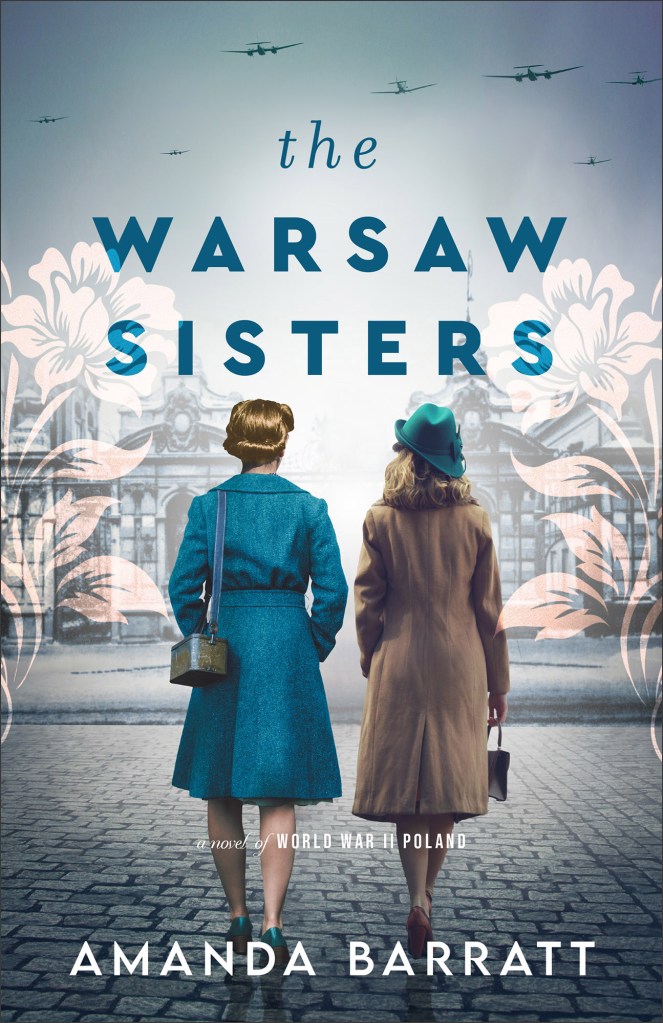
The Warsaw Sisters by Amanda Barratt
Amazon Affiliate Link Used, helping to support the blog.

November 7, 2023; ISBN 9780800741716; Ebook ISBN 9781493443420; $17.99; Paper

In WWII Poland, two sisters fight against the darkness engulfing their homeland, one by entering a daring network of women sheltering Jewish children and the other by joining the ranks of Poland’s secret army. As Warsaw buckles under German oppression, they must rely on the courage that calls the ordinary to resist.

Welcome to Novel PASTimes! We are pleased you stopped by today.

Tell us something about where you live. 

I live in Warsaw, Poland. When I was growing up, Warsaw was a vibrant city, full of beauty and life and freedom, but the German occupation has stripped so much away. When the first bombs fell in September 1939, it was only the beginning of the destruction that would descend upon our beloved capital. Life under occupation means endless restrictions and decrees. There is a curfew every evening. We can no longer own radios. We exist on a diet of black bread and potatoes, with the occasional bit of odorous meat. Civilians are rounded up in the streets and deported to forced labor in Germany while others are seized as hostages to be executed whenever anything happens that displeases the Germans. First our Jewish neighbors were forced to wear an armband marked with the Star of David, but in the autumn of 1940, all Jews in Warsaw were ordered to move to what the occupation authorities call a “Jewish residential district.” The ghetto is surrounded by a high brick wall crowned with barbed wire, and though I haven’t been inside, I’ve heard rumors about the overcrowding and starvation and disease. Warsaw is still the city of my heart, but she—like all of us—bears the cracks and scars of war. 

Do you have an occupation? What do you like or dislike about your work?

 I’m a secretary at a German office. I didn’t want to work for the occupiers, but my sister and I must both earn or we will soon starve. 

Who are the special people in your life? 

My tata and I share a cherished bond. He calls me his kwiatuszek—his little flower. He went off to fight just before the outbreak of war, but he was captured and sent to a prisoner of war camp. When he was with us, I always felt safe and protected, but now my sister and I are alone. Antonina and I used to be close, but she’s been so distant of late and I don’t know why. We used to talk, but we don’t anymore, not about things that truly matter. War leaves everything in shards, even the bonds that should be the most abiding. 

What is your heart’s deepest desire? 

For the war to end and for Poland to be free. But that’s what every citizen of Warsaw would say. Deep down, I suppose what I really mean is that I want the life we once had. When my tata was home and my sister and I still shared our secrets and hopes.  When everything was simple and certain. When we trusted the future instead of feared it. But that’s all gone now. Sometimes I doubt it will ever return. 

What are you most afraid of? 

I’m afraid of losing the ones I love. I’ve already lost so much. It leaves you feeling small and frightened and powerless. Such pain reaches far deeper than any physical wound. It breaks the heart and a heart doesn’t heal. It grows numb, but not whole. This is what I have learned.

Do you have a cherished possession? 

The letters my tata sent from the prisoner of war camp are very precious to me. I no longer need to fix my eyes upon them, for I carry every word in my heart already. But I never tire of reading them, of tracing his script with my fingertip. It’s been so long since we’ve had any word from him, and my heart aches with fear, even as I cling to hope.  

What do you expect the future will hold for you? 

Life is so uncertain. Fear is a daily reality, one we’ve become so accustomed to it’s as if we’ve forgotten what it is to live beyond its shadow. You asked about the future? I don’t know what it holds, but I wish I could fight back somehow. I’m not certain what resistance really means, but I want to believe I can be more than the frightened girl watching the ones I love dragged into a relentless undertow. I want to believe I can give something that matters. I want to believe there is hope in defiance. 

Thanks for allowing us to get know you a little better!
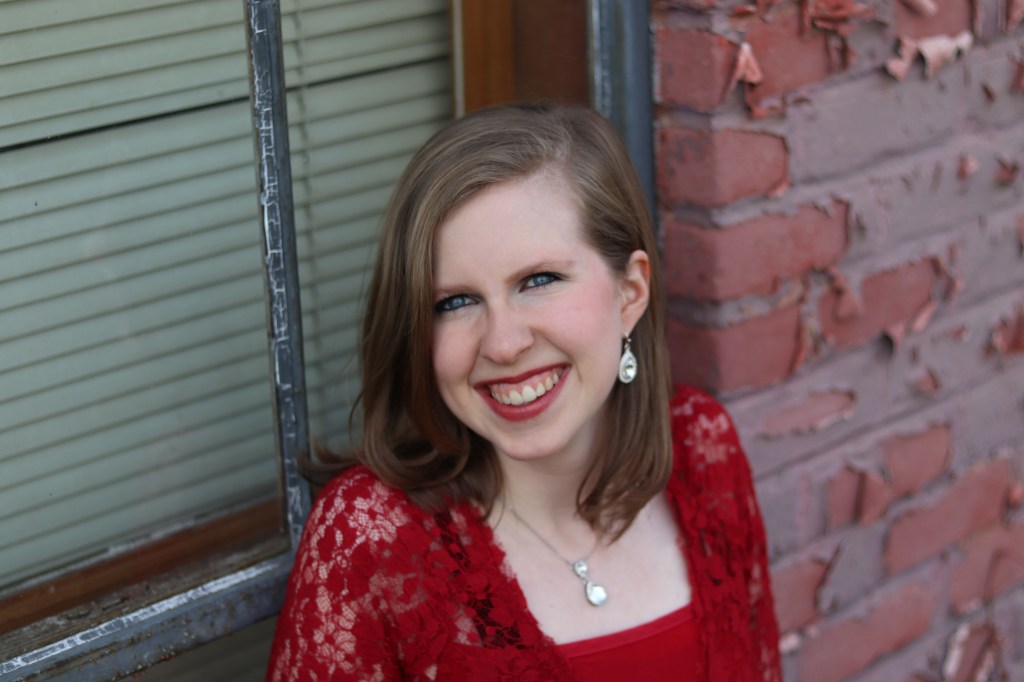

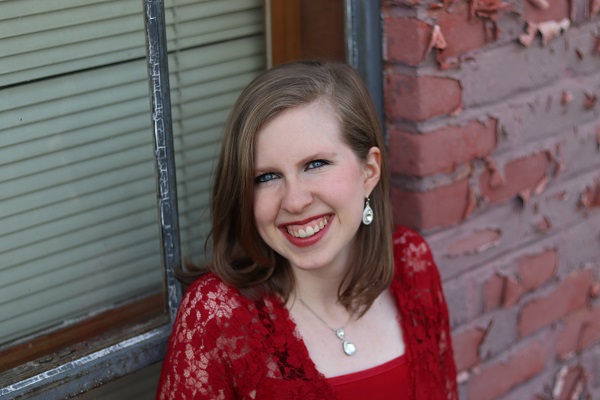
Bio: Amanda Barratt is the bestselling author of numerous historical novels and novellas, including The White Rose Resists (a 2021 Christy Award winner) and Within These Walls of Sorrow. She is passionate about illuminating oft-forgotten facets of history through a fictional narrative. Amanda lives in Michigan. Learn more at AmandaBarratt.net.

Meet Annalise Brandt from The White Rose Resists by Amanda Barratt

So glad you could join us on Novel PASTimes, Annalise. Thank you for giving us a few moments of your time. I know you’re busy with your studies at Munich’s Ludwig Maximilian University.

Annalise:  Yes. I have a lecture on art history in half an hour. 

Q: That sounds fascinating. Are you enjoying your first semester at the university?

Annalise:  I’m glad to be away from Berlin. As for my classes…the only art my professors discuss is that which is approved by the Führer. The artists whose work I love—Franz Marc and Wassily Kandinsky—the professors deem degenerate. But I think they paint boldly and with freedom of expression.

Q: You mentioned you were glad to be away from Berlin. Why is that?

Annalise: Why would you ask me that? Did my vater send you to spy on me?

Q: Your vater? SS-Standartenführer Brandt? The Standartenführer Brandt who, before the war, was known to spend weekends at the Führer’s home in Bavaria, the Berghof, and frequently dined with the Goebbels family?

Annalise: (nods)

Q: Are you and your vater close?

Annalise: Nein. Before Hitler’s rise to power, when I was a young girl, he was a different man. Though rarely affectionate, the hardness in him now was absent. Since he began rising in the ranks of the SS, he became cold. Driven. Demanding perfection of my three brothers and schooling them to become future soldiers. As for me, I’m still surprised he allowed me to attend university at all. It was only after our…bargain that he agreed.

Q: What bargain?

Annalise: I’m permitted to study for a year. But after that, I must return to Berlin and marry the man he chooses. Likely some rising SS colleague. I must give up all dreams of education and turn my attention to the duties of a good Aryan woman—being a wife and mother of a large family for the Reich. 

Q: You sound unhappy with this future course. Are you loyal to National Socialism?

Annalise: I…I don’t know. I don’t believe anyone should hold the kind of power Hitler does, nor be able to wield it over every aspect of our lives as he has. I sense an underlying evil beneath all the speeches and marching and shouts of Sieg Heil. I always have. My vater’s single-minded loyalty will never be mine. But being opposed to National Socialism has never seemed an option for me. Until now. Until I arrived at university, I never really thought about these things.

Q: What changed?

Annalise: Shortly after I came to Munich, I met a young woman. Her name is Sophie Scholl, and she’s a student at the university. When she caught me reading a book by Heinrich Heine—whose work is banned in Germany—during class, she didn’t turn me in. We’ve met several times since. Sophie is…different. When I told her about my vater’s plans to arrange a marriage for me, she was horrified. She asked me what price I was willing to pay for freedom. She made me want to be bold, to step into a different future than the one my vater plans for me. 

Q: What will you do?

Annalise: I’m not certain yet. But I’m growing more and more determined to not be trapped in a life I don’t want, even if it means alienating myself from my family. I hate the thought of hurting my mutter though. I’m her only daughter and she relies upon me. My vater’s overbearing personality has crushed her. I’m glad he’s on the eastern front, so she rarely sees him these days.

Q: Though you don’t want to marry the man your vater chooses for you, have you met anyone you might wish to form a relationship with?

Annalise: Nein. Before coming to university, the only young men I ever came in contact with were ones Vater brought to the house for dinner. They were attentive, obviously eager to court the daughter of a man like Vater. But they always seemed to look through me. Not a one of them looked at me as if they truly wished to know me as a person in my own right. Since arriving in Munich, I’ve found it difficult to reach out and make friends. But one afternoon I was on my way to class when I caught a glimpse of a young man walking across the grounds. Our gazes caught. He had a smile unlike any I’ve ever seen. Startling in its warmth and kindness. I would have liked to sketch his face…would have liked to get to know him. But enough of that. Those are foolish thoughts. And I’m afraid if I don’t head to my class now, I will be late.

Thank you for answering our questions, Annalise!

Inspired by the incredible true story of a group of ordinary men and women who dared to stand against evil 

The ideal of a new Germany swept up Sophie Scholl in a maelstrom of patriotic fervor–that is, until she realized the truth behind Hitler’s machinations for the fatherland. Now she and other students in Munich, the cradle of the Nazi government, have banded together to form a group to fight for the truth: the White Rose. Risking everything to print and distribute leaflets calling for Germans to rise up against the evil permeating their country, the White Rose treads a knife’s edge of discovery by the Gestapo.

Annalise Brandt came to the University of Munich to study art, not get involved with conspiracy. The daughter of an SS officer, she’s been brought up to believe in the Führer’s divinely appointed leadership. But the more she comes to know Sophie and her friends, the more she questions the Nazi propaganda.

Soon Annalise joins their double life–students by day, resisters by night. And as the stakes increase, they’re all forced to confront the deadly consequences meted out to any who dare to oppose the Reich.

A gripping testament to courage, The White Rose Resists illuminates the sacrifice and conviction of an unlikely group of revolutionaries who refused to remain silent-no matter the cost.

Author Bio

Amanda Barratt is the ECPA best-selling author of over a dozen novels and novellas, including The White Rose Resists: A Novel of the German Students Who Defied Hitlerand My Dearest Dietrich: A Novel of Dietrich Bonhoeffer’s Lost Love. She is a member of American Christian Fiction Writers and a two-time FHL Reader’s Choice Award finalist. She and her family live in northern Michigan. Connect with her at www.facebook.com/amandabarrattauthorand visit her at www.amandabarratt.net.

Facebook: www.facebook.com/amandabarrattauthor

Twitter: https://twitter.com/AmandaMBarratt

Amazon link: https://www.amazon.com/White-Rose-Resists-German-Students/dp/0825446481/ref=sr_1_1?keywords=the+white+rose+resists&qid=1585758487&sr=8-1

Christian Book Distributors link: https://www.christianbook.com/resists-novel-german-students-defied-hitler/amanda-barratt/9780825446481/pd/5446481?event=ESRCN

Baker Book House link: https://bakerbookhouse.com/products/the-white-rose-resists-a-novel-of-the-german-students-who-defied-hitler-9780825446481

Barnes and Noble link: https://www.barnesandnoble.com/w/the-white-rose-resists-amanda-barratt/1134878782?ean=9780825446481