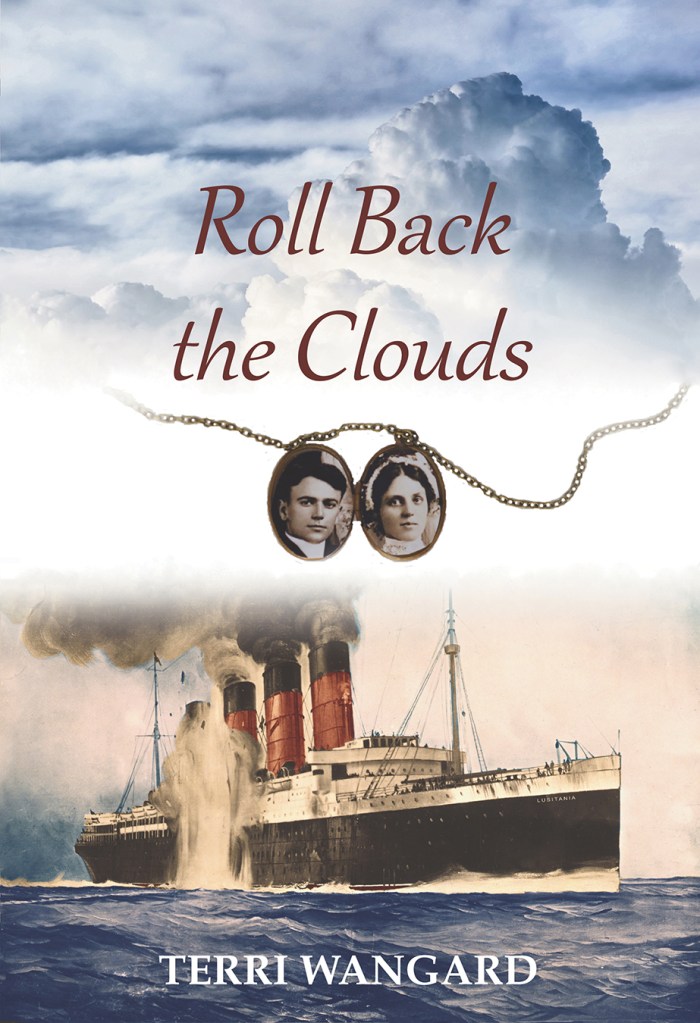
Our guest today is Rosaleen Bonnard, a survivor of the tragic sinking of the Lusitania last May. She was traveling with her husband, Geoff, who was badly injured in the disaster. Tell us, Mrs. Bonnard, how is he doing?
He is so much better, thank you. Every day we walk, sometimes for as long as an hour. We’re frequently interrupted though. Since Geoff collaborated with our neighbor Peter Bloch, a reporter for the Sentinel, he’s well recognized and folks seem to think that having touched the war, he’s now an expert on the fighting in Europe and they’re always asking for his insights.
How did you meet your husband?
We were classmates at school and he invited me to attend an ice cream social at church. When I told my mother he’d asked, she quizzed me about him. I told her it was just ice cream, and she said, “Yes, and your father and I met at a church ice cream social.” After that night, I knew I would marry him.
The Cunard Line upgraded you from second class to first, is that right? [Rosaleen nods.] What was that like for you?
At first, I was thrilled. We had a beautiful stateroom with a window. Oh, excuse me, a porthole. That was special. And we had access to the Saloon Writing Room and Library and the Saloon Lounge and Music Room. They were exquisite. The two-tiered first-class dining room was a gorgeous setting to eat in, but I must admit, I would have been more at ease in second class. I didn’t feel comfortable with the first-class passengers. Even the food was unfamiliar. I had two new dresses for the journey, all so pretty, but I definitely didn’t have the elegant wardrobe possessed by the other first-class ladies.
Did you go shopping specifically for your voyage?
Oh, yes. My oldest and youngest sisters went shopping with me at Gimbels. I found two beautiful gowns. My grandmother gave me $10, and that made it possible to buy both fancy dresses. Plus a traveling outfit, a couple of new skirts and blouses, shoes, hats. Had I known we’d be in first class, goodness, I don’t know what I would have done. The ladies in first class wear a different gown to dinner every night. I couldn’t have afforded so many gowns. And now my lovely new wardrobe is on the bottom of the ocean.
Did you note much panic after the ship was torpedoed?
At first, everyone was stunned. After hearing all week about the likelihood of being attacked, when it actually happened, it was hard to believe. The sudden listing to starboard was alarming. It made walking difficult, especially on the stairs. When the power failed and people were trapped in the fancy grillwork elevator, they started screaming. We knew they’d drown. The scene at the lifeboats was so chaotic, watching some spill out their passengers or drop down on other lifeboats. It was scary. The ship sank in eighteen minutes, less time than it takes to bake a cake. So many people were still aboard when it sank. I suspect they thought they’d have more time, or that help would come from Ireland. We could see Ireland; it was that close.
What was it like in the lifeboat?
Numbing. We sat on hard wooden benches. The emergency rations were inadequate and too old. We dearly wanted more water, fresh water. We pulled in as many survivors from the sea as possible, and they were so cold. This happened in May, you know. Here daffodils and tulips are blooming; the days are warming. But in Milwaukee, of course, it’s cooler by the lake. There, we were out on the ocean. It was cold. Many people, if they hadn’t drowned, died from hypothermia. We saw them lose their grip on whatever they clung to and slip under the water. And all this time, I didn’t know what had happened to Geoff.
You didn’t make it to England, but Ireland. With an Irish mother, wasn’t that a treat?
Definitely. Mum’s family lived not far from Queenstown. I traveled by train to meet them. My grandparents, aunts and uncles, cousins. I couldn’t keep all the names straight. I thought about Mum the whole time, how she would love to be there. Two cousins took me to see the Cliffs of Moher. And then, Granda decided he and Nana would come visit after the war. I couldn’t wait to tell Mum.
As 1916 dawns, what are you looking forward to?
The war continues in what seems like a stalemate. We hope it doesn’t pull in the United States. Geoff and I both have brothers who would be affected. In our own home, we’re busy decorating a nursery.
Congratulations! And thank you for joining us today.
As an Amazon Associate we earn from qualifying purchases.
Hello! My name is Rolin Bose, the son of a rich business executive. I go by the nickname “Kokil” and live in the most fashionable part of Calcutta. My story is set in the turbulent mid-1960s when the entire world was pulsating with riots, student protests, political assassinations, and an overarching fear of global annihilation resulting from a nuclear exchange between the Superpowers. The Vietnam War raged on adding fuel to the fire of discontent. Violence touched all major cities of the world, including my hometown, Calcutta (now Kolkata).
Is there anything special about your name? Why do you think you were given that name?
I am glad you asked me that. Yes, I hated the name Kokil.
It means a cuckoo in Bengali; an ugly black bird with a long-drawn forlorn call. There is something comical about the bird. It was a cruel gift from my father. I still recall him introducing me to my classmates on my first day at school. I fervently hoped that I would outgrow it someday, but no such luck. The name stuck like an ugly wart in front of my nose for everyone to see and make fun of.
I’m so sorry to hear that. Do you have an occupation? What do you like or dislike about your work?
I am an undergraduate student of science at an elite college in Calcutta, run by the Jesuits. I love everything about my carefree life. What I don’t like is attending useless lectures, such as reading Shakespeare’s The Tempest in English literature class. Why do we have to study this medieval play, when there are so many exciting new authors from all over the world, talking about things that are relevant to the rapidly changing time?
I don’t think I’ll try to answer that. Who are the special people in your life?
I love my mother. She is my best friend. But I have fallen in love with Riza, a smart, beautiful, passionate, and a bit headstrong Muslim girl from an extremely wealthy family. Being a teenager, I was prone to falling in love with a different girl every other week. Most of the time, like a sniffle, it lasted only a few days, without my love interests even becoming aware of my affliction. But Riza causes my heart to palpitate whenever I am with her. I hope our love will endure.
What is your heart’s deepest desire?
I love my life; my golf game, spending time with my friends and eating my favorite food prepared by my family cook. But my biggest desire is to spend alone time with Riza. May I tell you that I experienced my first kiss with her? It jolted every nerve ending in my body.
How wonderful! What are you most afraid of?
I hate the fact that my father is so cruel to my mother and me. I am not sure how to handle it.
I am also deeply concerned about the world around us; street protests are everywhere; burning and looting are becoming an everyday affair. I made a new friend in Ari, a brilliant boy from the “other side of the track.” He is so different from the affluent kids with whom I grew up. Ari took me inside the slums of Calcutta. There, I came to know people like Didi, a resolute woman who tries to earn money for her family, despite the torturous relationship with her abusive husband; a master pickpocket, who loves his son; an erudite call girl; a slum don; a street fighter. I am also worried that the new political movement, inspired by the Maoist communists, known as the Naxalites, would plunge my world into violence and mayhem. With Ari, I join the movement to organize the poor against the oppressive society. I go to a remote tribal village in the vast forest area of India to start a revolutionary base. As I come to know the members of my host family, the village money lender, the old shaman, and an alluring young woman, my confusion deepens. I want to change their society, but do they want to change?
What do you expect the future will hold for you?
I am deeply conflicted about my future. My mother wants me to go abroad for higher studies. I know I can start a new life with Riza. But I feel guilty about leaving my new friends to their miserable lives. Dispossessed and marginalized, their daily sufferings trouble me. How can I build my own fortune in the United States ignoring their plight? I want to join the Naxalite movement and help usher in a new just and verdant society. At the same time, I fear, if we are successful in bringing about a revolution, will we have the wisdom to create such a world? What if, like the story of the Animal Farm, I morph into Napoleon the pig and start cannibalizing the hapless multitude?
What have you learned about yourself in the course of your story?
Throughout my privileged life, I felt like a boat without a radar, floating aimlessly down the river of time, pushed by the vagaries of wind and tide. However, at the end of my story, when I lose everything – faith in politics, love, and even my own identity – on my lonesome flight to a new world, in an epiphany I find a strange feeling of inner strength. Like the German philosopher Nietzsche’s “Super Man,” I want to write my own story, shape my own destiny, and create my own identity on a clean slate.
Why should I care about your story?
You would be right to ask, why should you read a story about a teenager getting involved in an obscure rebellion, in a faraway place, more than half a century ago? Since the dawn of humanity, men and women have sacrificed everything to recreate their societies according to their own belief in a perfect order. While we have come a long way in terms of technological progress, we still fight along our sectarian, racial, religious, and ideological divides. From this perspective, my story is never ending and remains as relevant today as it was when I was a young man.
Dipak K. Gupta is a Distinguished Professor Emeritus in the Department of Political Science at San Diego State University. He served as the Founding Director of the undergraduate program in International Security and Conflict Resolution (ISCOR). In 1997, he was awarded Albert W. Johnson Distinguished Lecturer, the highest research award for the university, and was the “Professor of the Year” in 1994. His primary research interest involves the causes of terrorism, ethnic conflict, and the impact of political instability on national economic development. For 11 years, Gupta served as the Fred J. Hansen Professor of World Peace at SDSU.
Born in India, Gupta received master’s degrees in Economics from Visva Bharati University, Santiniketan, India, and the University of Pittsburgh. He earned his Ph.D. in the area of Economic and Social Development from the Graduate School of Public and International Affairs at the University of Pittsburgh. He has been a visiting scholar at St. Antony’s College, Oxford University, El Colegio de Mexico in Mexico City, Leiden University in the Netherlands, Fudan University in Shanghai, China, and the Terrorism Prevention Branch at the United Nations Office for Drug Control and Crime Prevention in Vienna, Austria. He was also awarded a summer fellowship in the International Studies Program at the Hoover Institution for War, Peace, and Revolution, at Stanford University. He received a post-doctoral fellowship at the Institute for International Politics and Economics in Belgrade, Yugoslavia. In 2010 Gupta received a Fulbright Expert Fellowship at Bilgi University, Istanbul, Turkey.
Professor Gupta has authored ten academic books and over 150 articles in scholarly journals, research monographs, chapters in edited volumes, and newspapers. Gupta is a regular contributor to San Diego Union Tribune’s Opinion section. He has been a frequent guest at the local National Public Radio station and contributed on foreign policy and terrorism matters in numerous newspapers and television stations.
Gupta has been invited to talk about the causes of terrorism from all over the world. In 2005, he was invited to a terrorism conference convened by the King of Spain in Madrid. He has also been invited by the Prime Minister of Norway, the foreign ministry of Sweden, and the Turkish Ministry of Interior. In 2021, he was a keynote speaker at the 32nd International Congress of Psychology in Prague.
Gupta is also an artist. He shows his art at San Dieguito Art Guild in Encinitas.
Welcome to Novel PASTimes! We are pleased you stopped by today.
Tell us something about where you live.
I live in the high desert area of the San Mateo Mountains south of Albuquerque, when I’m not sharing a home with my great aunt in California. That’s where I really want to be more than any other place. I grew up in California before my father forced us to move to New Mexico.
Is there anything special about your name? Why do you think you were given that name?
My author tells me that my name was given as a reward to one of her faithful readers whose name is Isabella Garcia Bailey.
Do you have an occupation? What do you like or dislike about your work?
Oh, dear no. I am the daughter of wealthy landowners. My family can be traced back to the old families of Spain, so I do not hold an occupation, but rather have learned to manage a rancho.
Who are the special people in your life?
Until recently my Aunt Josephina (my father’s sister) was the focus of my life, along with Diego Morales whom I plan to marry. However, that irritating Aaron Bailey won’t seem to let well enough alone. My mother and father are of course dear to me, but they do not understand my desires for life.
What is your heart’s deepest desire?
To live in California on the family’s rancho and throw wonderful parties as we did in the old days. I want to step back in time to have what we once had.
What are you most afraid of?
That my heart’s desire will never be available to me.
Do you have a cherished possession?
I once had a horse I cherished. However, I’ve learned over the years that things are temporal and the land is what remains.
What do you expect the future will hold for you?
I hope to be married to Diego Morales and have a family together in California. But again, that pesky Aaron Bailey doesn’t think Diego is an honest man. He thinks it’s his place to guard and protect me from Diego. Foolish man.
What have you learned about yourself in the course of your story?
That I’m quite opinionated and headstrong. I’m a woman of means and intelligence and I know that I can figure out all the answers if I’m given a chance. This makes some people believe me to be uncaring or harsh, but that isn’t the truth. I care very much about seeing the world set in a way that will make sense to me and bring happiness to those around me.
Is there anything else you’d like people to know about you?
Well, I don’t know that I want people to know that I’m also a very broken woman—girl really. There has been a lot of pain in my life, and now as I learn the secrets that have taken me beyond the desert sands, I realize that more heart break is headed my way. Aaron says that only God will get me through. My mother says the same. I wish I knew for sure that was true. I suppose in time I will.
Thanks for allowing us to get know you a little better!
Twenty-five-year-old Isabella Garcia has spent the last seven years living in opulence at her aunt’s California home. The last thing she wants to do is celebrate Christmas with her parents in the small silver-mining town of Silver Veil. Not only will she have to leave her handsome beau, Diego Morales, but she has to travel with her old rival, Aaron Bailey—a Santa Fe Railroad businessman who considers her both childish and selfish.
When Isabella finally arrives in Silver Veil, she is surprised by how much the town has grown in her absence. But she is also shocked to see how much her father’s health has declined. When Diego shows up unexpectedly with news of her aunt’s death, Isabella is faced with some-life changing decisions. But trouble is brewing. Isabella must determine who she can truly rely on as well as reconcile who she’s become with who she’s meant to be—even if it costs her everything.
Tracie Peterson is the award-winning author of over 100 novels, both historical and contemporary. Her avid research resonates in her many bestselling series. Tracie and her family make their home in Montana. Visit traciepeterson.com to learn more.
Magician of Light touches on the truth of Lalique’s illustrious life, the people most important to him, and the anguish of some of those personal relationships, creating a unique view of his real life and a compelling storybook love story.
In your formative years, what inspired you to become a jeweler?
I loved to draw and paint, winning competitions early on. Louis Aucoc, a goldsmith, adopted me at age sixteen after my father suddenly died. He gave me an apprenticeship in his jewelry business and taught me the tricks of the trade. This introduced me to professional life as a jeweler and encouraged my passion for the decorative arts. I wanted to take my art from drawings to miniature jewelry paintings, creating sculptural forms from stones, gems, enamel and precious metals.
It’s a rarity when someone becomes an international success in one genre, but an anomaly when it happens in two different fields. What drove you to redirect your focus on glass in the second half of your career?
I was interested in glass very early in my career, beginning with using enamel in my jewelry. My favorite enameling technique is called plique-à-jour. This is a style of enameling, where transparent enamels are fused into metal cells and then acid is used to remove the back of the cell, leaving just a metal filigree and the glass. This is an extremely difficult, time-consuming process, but it produces the most extraordinary effect suggestive of stained glass. One of my largest pieces ever created by employing this method was Femme Libellule, Dragonfly Woman, commissioned by mon bon ami, my good friend, Calouste Gulbenkian. Over time, I incorporated more glass into my jewelry designs before moving onto fabricating larger items, such as perfume bottles. Francois Coty, a perfumer, asked me to design flacons for his fragrances. These items were the impetus of my pursuit of strictly glassmaking. Everything grew from there: my production, the number of clients and employees, my factories and my works. At the end of my career, I focused a great deal on architectural glass projects.
Why has Lalique-designed art stood the test of time?
My art is my passion. Drawing inspiration from three of my favorite loves: flora, fauna, and women. Excellent craftsmanship is important to me and I strive to create distinguished works by using my imagination and my hands. Employing many methods, I sculpted extra dimension into my objets d’art. Utilizing the organic colors of nature, toying with unique materials and contemplating the interplay of light in transparency and opacity of atypical gemstones and glass, I attempted to create something never seen before.
What advice would you give a young entrepreneurial-designer today?
Study nature, and bygone styles for sources of inspiration. Instead of mimicking, use the ideas and techniques of other eras and people to create your own unique brand. Use experimentation and reinvent aspects, qualities but combine them into new configurations. Create novel constructions from your perspective. Most of all, use your imagination and be true to your artful self.
Who were the people most influential on your success?
So many people were integral to my success. Foremost, my mother. She inspired me with her love, creativity and work ethic, but she also helped me financially by paying for my schooling in France and at the Sydenham College in the Crystal Palace in England. Artistic friends, including my father-in-law, Auguste Ledru, sculptor, and, of course, Francois Coty, all contributed to my eminence. My most influential promoter and patron was Sarah Bernhardt. She introduced me to many clients, including Calouste Gulbenkian, one of my most important clients.
Did building your company in France and Paris impact the Lalique brand?
I love my city, my country and would live nowhere else. The Lalique brand is luxury and style. Paris has been the fashion capital of the Western world since the seventeenth century. As a Frenchman, of course, my company could only be based in France.
Do you have professional and personal regrets when looking back on your life?
I succumbed to my passions and sometimes got consumed by them. Perhaps I was a workaholic and should have spent more time with my loved ones.
You mentioned education at the Sydenham College. Why did you choose this institution?
I wanted to travel and explore unknown places. Sydenham College focused on aspects of art and business that I wanted to master. William Morris, Japonisme, the aesthetic movement, were a few of the influences that I wanted to absorb and it was an excellent school for draughtsman to improve my illustration. The school also provided knowledge of modern engineering, improved manufacturing techniques, innovative industrial methods and exposure to British design reforms regarding the decorative arts. Plus, I wanted to improve my English. I also met a young lady, Mademoiselle Haliburton. Elle était belle à croquer, a beautiful, desirous woman.
You met a pretty woman, Miss Haliburton, in England. Can you tell us more about her and your relationship?
Non. Please read my story, Magician of Light, to find out that information.
Photo by Marc Glassman
J. Fremont is an author and veterinarian. For more than twenty-five years, she practiced small animal veterinary medicine in addition to serving as an adjunct professor at a local university and community college. The mother of two adult sons, she lives in Southern California with her husband of thirty years. Retired from veterinary medicine, J now spends her time developing her artistic side. In addition to writing, she is a passionate practitioner of the decorative arts, including jewelry making, glass fusing, sewing, and creating mixed media for fun. She enjoys photography, gardening, and posting on Instagram, as well as building gorgeous Pinterest boards. You can find her on her website: https://drjfremont.com/ Facebook: @jfremont | Instagram: @insidetheegg
Welcome to Novel PASTimes, Calla! We are pleased you stopped by today.
I am so glad to be here to talk about what’s been happening in my life and that of my sister, Sienhttp://www.bakerpublishinggroup.com/books/when-the-meadow-blooms/399000/affiliatesna, and my mother, Rose. They said I should be the one to come talk to you since I’m the older sister at 15. Sienna is only nine. And too much talking sometimes is difficult for my mother, Rose, since she had tuberculosis.
So introduce yourself, dear. Is there anything special about your name? Why do you think you were given that name?
My name is Calla Rose Meadows, and yes, there is definitely something very special about my name. My second name is after my mother, Rose. Since her name is a flower, she wanted flower names for Sienna and me. She chose Calla for me because her mother loved calla lilies. She had some bulbs she dug up each fall and planted again in the spring. While I never saw them, Mama said the flowers were white and seemed to represent peace to her mother. When her mother died, Mama planted the bulbs on her grave. I like to imagine them still blooming there, but Mama says the bulbs wouldn’t have survived our cold Kentucky winters. But I can still imagine them there.
I’m so sorry to hear that your mother had tuberculosis. I’m sure that was a very difficult time for her and for you. Can you tell us about it?
Oh yes, it was terrible. Mama had to go to a sanitarium since the best treatment according to the doctors is fresh air, sunshine and good food. My father died during the flu epidemic in 1918 and we didn’t have any other family to take in Sienna and me while Mama was getting treatment there. I couldn’t take care of Sienna myself since I was only twelve when Mama got sick. So, Mama had to take us to an orphanage. She thought it would just be for a few weeks, maybe a couple of months, until she would be better and able to come back for us. But sadly, the treatment wasn’t that quick and we were at the Home for Girls for almost two years. That was very difficult for my sister.
You sound as if that was only difficult for her and not you. Why is that?
Sienna has always been a little different. Mama says she simply thinks about things in unique ways. Sienna loves anything to do with nature–flowers, birds, animals. She even loves spiders and snakes. I cannot understand that. Anyway, while I had no trouble following the many rules of behavior in the orphanage, Sienna’s mind would wander to those spiders and birds. She would forget about the rules and constantly get in trouble. I hated it when I knew she was going to be punished, but I could never seem to keep it from happening.
Poor child. I am so sorry.
Well, things are better now.
What made things better for you? Did your mother get well?
Mama says she will never be as healthy as she was before the tuberculosis. She did get well enough to leave the sanitarium but her doctor said she wouldn’t be well enough to work making hats as she did before. Without that income, we couldn’t rent a place to live. Something, perhaps the Lord’s nudging, made me remember that my father had a brother. While my uncle had long lived a reclusive life and I had never met him, I took a chance and wrote him. I begged him to let us come to his farm, Meadowland. I was that sure a farm with lots of fresh air and sunshine would be the perfect place for Mama and for Sienna too. Don’t you think a place called Meadowland would be like that?
It does make one think of blue skies and fields of flowers. So did you get to go and was it as nice as you imagined?
Yes, Uncle Dirk didn’t just send for us. He came to the orphanage himself. And Meadowland was even more beautiful than I had imagined. Wide fields. Butterflies and flowers. A river flowing past it. I could not have wished a better place for Sienna.
But weren’t you a little nervous going to live with an uncle you had never met? One who had been, as you said earlier, a reclusive person?
Maybe a little at first because of the way he looked. The scars on his face and all. But Sienna wasn’t bothered at all. At first sight, she surprised him with a hug as though she’d known him forever.
Scars? Oh my. I think you need to tell me more about your uncle.
When he was a young man he was badly burned in a barn fire. Mama said he would have probably died if my father, only fourteen at the time, hadn’t pulled him out of the fire. Uncle Dirk was trying to save his one true love, Anneliese. He believed she was in the barn. Mama says nobody thought he would survive except his mother who sent up many prayers for him while nursing him back to health. But Uncle Dirk has many scars from that battle.
Did he save Anneliese?
It turned out she wasn’t in the barn. It’s a long story and one better told by Uncle Dirk. While I’ve always been very curious about it, Mama forbade me to ask my uncle anything about Anneliese. Don’t you just love that name? Anyway, all I know is that she disappeared and Uncle Dirk could never find her. I think his broken heart even more than his scarred face is what caused him to hide away from people on his farm.
That does sound like a story worth hearing.
Perhaps you can get the full story from him someday. I do know she was beautiful and Uncle Dirk loved her very much.
All right. Let’s think about you and your sister again. Tell me about Sienna.
Oh, that’s much easier to answer. I would do anything for Sienna. She is such a special girl. Mama says she’s a pure soul. I’m not sure what that means exactly, but Sienna does have a loving heart for any and all living creatures. She wanted to make friends with a mouse while we were still at the Home for Girls and couldn’t wait to get to the farm to meet some farm mice. It turns out that mice are shyer than she thought. So, she made friends with some crows first. She even named them, and those crows were amazing. Almost as amazing as my little sister.
She does sound like someone we would all like to get to know better. While I’m intrigued by all your troubles and adventures, it’s time to wrap up our interview. What is something you have wanted more than anything?
A forever home. Even before Mama got sick and Sienna and I had to go to the Home for Girls, we continually had to move to cheaper rooms because Mama couldn’t make enough money making her hats. And then we had no home at all while we were separated from Mama. So we, all of us, dreamed of having a forever home together. We hoped Meadowland might be that, but then something happened to upset Uncle Dirk. Something I did and I thought I had ruined it all. And then there was a storm and… But I can’t tell it all. You’ll just have to read our story to find out what happened.
We certainly want to do that to find out more about your story. Thanks for coming to talk to us, Calla, and sharing about your family and Meadowland.
After a tragic fire and the loss of his one true love, Dirk Meadows has lived a reclusive life, but when his late brother’s family needs a place to stay, he opens up his home even as he intends to keep his heart closed. Rose has known much loss in her life, but the hardest thing she ever had to do was leave her daughters at an orphanage while she is treated at a tuberculosis sanatorium. So she is happy to accept Dirk’s offer of shelter once she is well enough to reclaim her children. Calla and Sienna have difficult experiences at the orphanage but feel rescued when they go to Meadowland, their uncle’s farm. Sienna, nine, has a special feel for animals and birds. Her friendship with a couple of crows, who bring her gifts, cause a crisis threatening the happiness Rose and her daughters have found at Meadowland. But then the crows’ gifts open a door to the past to help Dirk find healing as he faces the truth of what happened years before. His nieces’ love breaks through the shield around his heart and opens him up to love again.
Ann H. Gabhart is the bestselling author of Along a Storied Trail, An Appalachian Summer, River to Redemption, These Healing Hills, and Angel Sister, along with several Shaker novels—The Refuge, The Outsider, The Believer, The Seeker, The Blessed, and The Gifted. She and her husband live on a farm a mile from where she was born in rural Kentucky. Ann enjoys discovering the everyday wonders of nature while hiking in her farm’s fields and woods with her grandchildren and her dogs, Frankie and Marley. Learn more at www.annhgabhart.com.
Ann Leonard: Thank you for doing this. I know you don’t do many interviews. Your life has been iconic in so many ways. Will you look back with me and answer a few questions about William Randolph Hearst – or WR as you like to call him – and Norman Kerry and of course, Charlie Chaplin? And I hope we can talk about your daughter Patricia, and your sisters, and of course Orson Welles and Citizen Kane.
Marion Davies: Thank you for having me. It’s nice to be able to talk openly about subjects that were taboo when I lived them.
Ann Leonard: Well, then let’s dive in. When you think of WR now, what do you think of?
MD: Love. His uncompromising devotion and love for me. WR adored me and though he had his ideas about how to show me and how to protect me, his love was like a big bear hug, it sometimes smothered me.
AL: There were rumors about WR hiring private detectives to follow you so he could keep an eye on you. Is that true?
MD: It’s true. He started doing that while we were still in New York. He’d have to leave town for work or whatever he did when he wasn’t with me, and he wanted to know where I was every single minute. He was so jealous. It made me so mad but he would never stop it, no matter how much I begged.
AL: Later it must have been hard, after you moved to Hollywood, and he hosted Millicent and his four sons at San Simeon while the Castle was being built.
MD: Please don’t call it that. WR hated when people called it a Castle. Please call it the Ranch. Thank you. [She pauses and looks out the window.] Yes, it was hard to be hidden from sight when Millicent came to town. It broke my heart. I knew WR didn’t love her, but he had to be a father to his boys and they always travelled with her when they were young. Those were tough years after we moved west.
AL: But isn’t that when you and Charlie Chaplin began your affair?
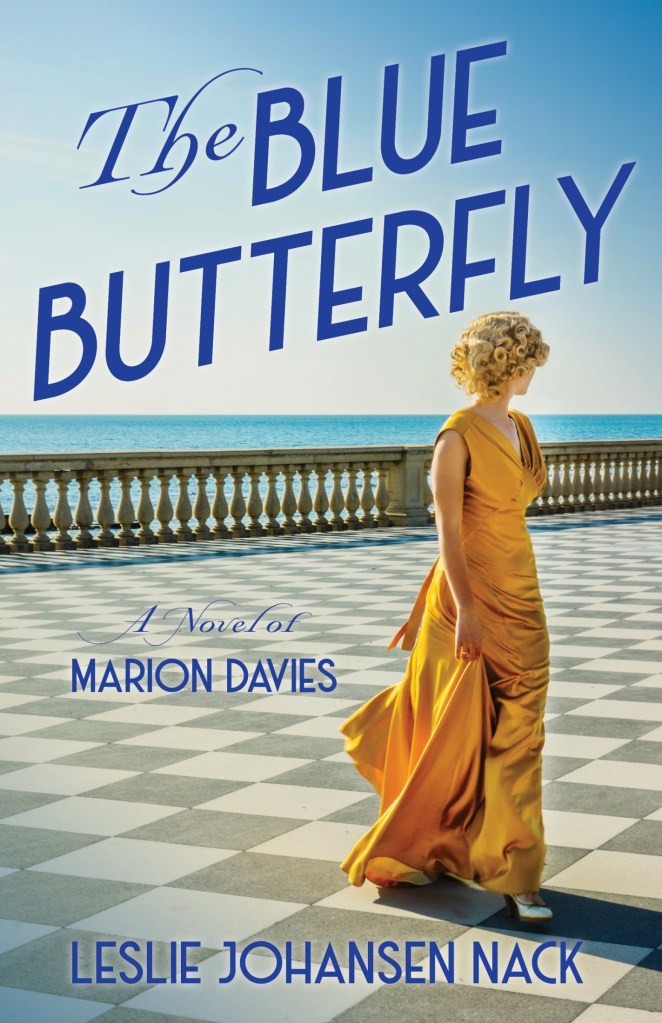
MD: Charlie was a sweetheart. I loved him dearly and the chemistry we had was undeniable and incomprehensible to me. The air crackled when we were together. We enjoyed ourselves immensely during those early years. I know you have details that I won’t go into here. Suffice it to say I’ve read parts of the book coming out – THE BLUE BUTTERFLY – and I don’t object to anything.
AL: That’s quite an endorsement Ms. Davies. I’m sure the world will love hearing that. Can we talk about your movies? Which one was your favorite?
MD: So many were my favorites. My first, Runaway Romany will always be my favorite even though it was a horrible little film. But I wrote the script, starred in it, and found financing myself at age 20. WR didn’t help me at all. Some of my other favorites are Buried Treasure, When Knighthood Was in Flower and Show People. It’s hard to pick favorites.
AL: Can we talk about Patricia? You and WR have denied that she’s your daughter for your entire life. Can you please answer once and for all, is Patricia Van Cleve Lake your daughter?
MD: [She stares at her hands and folds them together, placing them on her lap and then looks up.] Yes, Patricia is our daughter. Why is the world so obsessed with this fact? Why does it matter? Yes, Patricia is my lovely daughter, and I am so proud of her and my grandchildren and Arthur of course. He was such a good father. Now, let me ask YOU this: what will you do with this knowledge?
AL: Breaking the news of one of the best kept secrets in a hundred years will be wonderful. Finally we can lay it to rest. Can I ask about another rumor? Did WR kill Thomas Ince aboard his boat that fateful weekend?
MD: Let’s get all the dirty laundry out, shall we? No! WR couldn’t kill a fly. He was jealous of Charlie and me and yes, Thomas and his girlfriend Margaret were aboard that weekend, but Thomas had a bleeding ulcer that an infection caused his demise – not WR!
AL: Of all the theories about what happened that weekend, your explanation is the most boring of them all.
MD: That’s how you know it’s true. WR was a lover of animals and a tender soul who wouldn’t hurt anything. I loved WR more than anything even though he bugged me so much. He lectured me and everybody about history, and about artifacts, and about doing the right thing, and being a good citizen. It made us all crazy. It bored me to tears sometimes, but I loved him more than I can explain. We were meant to be together, him and I.
AL: Do you wish you had been able to marry?
MD: Of course I do. I wish we could have been like everybody else, instead of a circus show. But it wasn’t meant to be. Millicent refused to give WR a divorce, and when she did get close to agreeing to the divorce, she always had second thoughts and demanded some outrageous thing be added to the terms of the divorce. She was a greedy, small, and spiteful woman. And she won in the end.
AL: I hate to end on such a sour note, but thank you for the interview. You are most gracious and kind. I thank you for telling the truth.
MD: Of course, you are welcome.
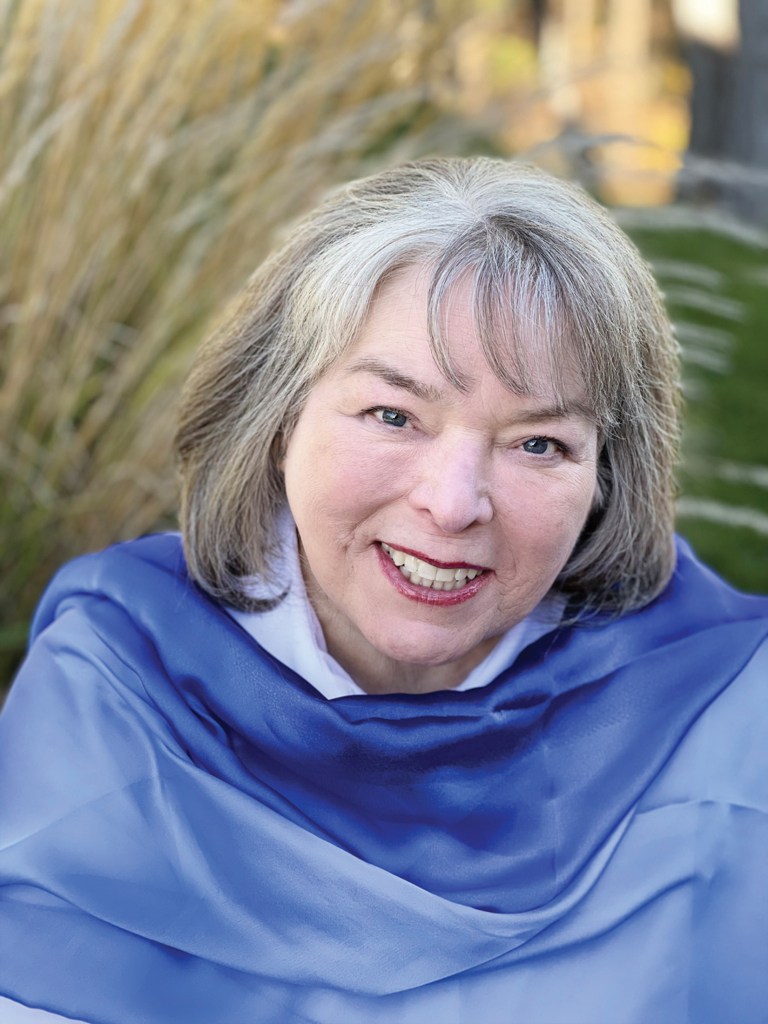
Leslie Johansen Nack’s debut, Fourteen, received five indie awards, including the 2016 Finalist in Memoir at the Next Generation Indie Book Awards. Before she started writing, she raised two children, ran a mechanical engineering business with her husband, took care of her aging mother, and dreamed of retirement when she could write full-time. She did everything late in life, including getting her degree in English Literature from UCLA at age thirty-one, only two years after she married for the second time. If you want to know when her next book is coming out, please visit her website www.lesliejohansennack.com and sign up to receive an email when she has her next release. She lives in sunny San Diego and enjoys sailing, hiking and reading.
Laila: Many readers have noticed that the time you lived in parallels current times because there was such an upheaval during World War 1, and the 1918 flu pandemic.
May: Oh, dear! Did you say World War 1? Does that mean there are more?
Laila: Oh my goodness! I’m so sorry to give away information about your future. Yes, there is another great war that impacts so much of the world; the second one included Asia, North Africa and what we now call Oceana and you called Australia.
Naomi: Will we never learn how to live as one people in peace and with justice?
Laila: My understanding is that fewer people die from warfare, hunger, and disease than ever before in human history. So in some ways we have learned to live with more peace and more justice. But we are far from a goal to have 100% peace and 100% justice.
May: Until this moment I thought I’d like to know about the future, to better prepare, but suddenly I see the disadvantage.
Naomi: If we are honest with ourselves we always know there will be difficult times ahead. Whether those challenges are personal or societal, to be human we must face change, loss and uncertainty.
Laila: Do either of you have any wisdom about adapting?
May: I can pass on the best wisdom from my grandmother. She said we humans are all more like the wizard behind the curtain in the Wizard of Oz, pretending we know what we are doing. She always told me to take the time to listen to my still small voice—she says it’s the spirit of God.
Naomi: Be kind. To yourself and to everyone around you. Kindness does not cost you anything. If you can’t be kind, take a nap.
Laila: Sometimes I fear that I come across as too serious or only focusing on the painful. What do you do to be in touch with the joy of life?
Naomi: Being with a baby or little one always raises my spirits. It’s hard to believe this life isn’t a blessing when you are around the wonder and joy of a small child.
May: Each day I look for something beautiful to be grateful for: a flower, my children, the delicious taste of a peach. This life really is a wonder.
Laila: Now you have given away the future…you have more than one child?
May: Yes I do. But I won’t share more than that. You might just have to write another book to find out what happens to us.
Laila: I think you are right about that.
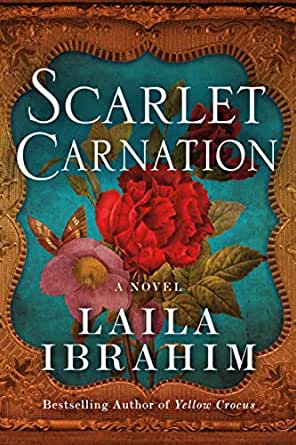
About the book:
In an early twentieth-century America roiling with racial injustice, class divides, and WWI, two women fight for their dreams in a galvanizing novel by the bestselling author of Golden Poppies.
May and Naomi are extended family, their grandmothers’ lives inseparably entwined on a Virginia plantation in the volatile time leading up to the Civil War. For both women, the twentieth century promises social transformation and equal opportunity.
May, a young white woman, is on the brink of achieving the independent life she’s dreamed of since childhood. Naomi, a nurse, mother, and leader of the NAACP, has fulfilled her own dearest desire: buying a home for her family. But they both are about to learn that dreams can be destroyed in an instant. May’s future is upended, and she is forced to rely once again on her mother. Meanwhile, the white-majority neighborhood into which Naomi has moved is organizing against her while her sons are away fighting for their country.
In the tumult of a changing nation, these two women―whose grandmothers survived the Civil War―support each other’s quest for liberation and dignity. Both find the strength to confront injustice and the faith to thrive on their chosen paths.
Author information:
Laila Ibrahim is the bestselling author of Golden Poppies, Paper Wife, Mustard Seed, and Yellow Crocus. She spent much of her career as a preschool director, a birth doula, and a religious educator. That work, coupled with her education in developmental psychology and attachment theory, provided ample fodder for her novels.
She’s a devout Unitarian Universalist, determined to do her part to add a little more love and justice to our beautiful and painful world. She lives with her wonderful wife, Rinda, and two other families in a small cohousing community in Berkeley, California. Her young adult children are her pride and joy.
Laila is blessed to be working full-time as a novelist. When she isn’t writing, she likes to take walks with friends, do jigsaw puzzles, play games, work in the garden, travel, cook, and eat all kinds of delicious food. Visit the author at www.lailaibrahim.com.
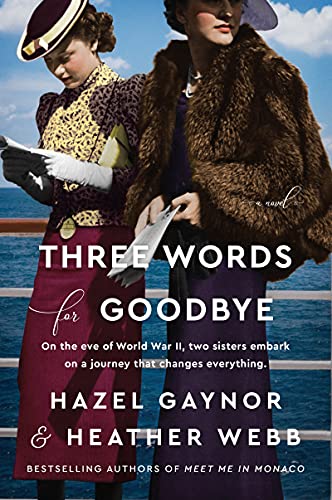
On the eve of World War II, two sisters embark on a journey that changes everything.
William Morrow Paperbacks (July 27, 2021)
Amazon affiliate links may be used. If you purchase through these links our blog will receive a small commission.
In 1937 two estranged sisters are sent by their dying grandmother on a European trip to deliver messages to people from their grandmother’s past. I was transported to Paris, Venice, and Vienna through these pages. The authors are wonderful writers, highly skilled at drawing readers into the times and places they write about. The sisters travel on the Queen Mary, the Orient Express, and the Hindenburg, which indicated that the ending was going to be dramatic. But the inner journey each sister takes is more impactful. They learn what it means to be a family, even when the family looks different from what they imagined.
I liked the format, alternating between each sister’s point of view with a few chapters from their grandmother’s point of view as she waits for their return. The voices were distinct and effective at showing their different personalities and reactions to events. There is a love interest for each sister but the authors do not take the easy way out with either. The sisters do not instantly fall into a man’s arms because of the romantic setting, even though they are told many times it could happen. I love how talented, strong-willed, but not impulsive these characters are. This story explores the importance of relationships in the midst of challenges, dangers, misunderstandings, and mishaps. You’ll enjoy this one!
This article originally appeared in the Morning News in Haxford, England on Thursday, June 30, 1910.
An Interview with Pignon ScorbionBy Billy Arthurson
PIGNON SCORBION & THE BARBERSHOP DETECTIVES [Blackstone Publishing; February 8, 2022; hardcover]
Our Chief Police Inspector, Pignon Scorbion, has been in town for just under two fortnights, yet in that short amount of time he has solved three baffling mysteries and apprehended the criminals responsible for those misdeeds. He has achieved near instantaneous recognition and celebrity with Haxford’s residents for both his prowess in solving difficult crimes and for his bespoke colorful linen suits and unique custom-made black and white shoes. I met with him recently to learn more about his background, his methods, and his unconventionality.
Chief Inspector, you cut quite the arresting figure around town. I wonder if you’d tell me about your attire.
I find that the clothing worn in England in this day and age by the male members of our population is rather tedious and dull, with the hues of the garments they sport being drab and generally uninspired. It is not surprising to me that it is so, as the coloration of mammalian animals in general lack bright colors thereby allowing them to blend into their environment and be less prone to being observed and attacked. I, on the other hand, have no issue at all standing apart from the masses. I welcome being distinguished from the commonplace and the rabble as I find it to be beneficial that the good citizens whose existences that I safeguard can easily detect my presence.
My suits are fashioned by one of the finest couturiers in our fair land who has precisely followed my instructions to a fault in using only the finest linens and wools, tailoring them to fit me in a manner that leaves little gap between the fabric and my skin, and utilizing colorations that do set me apart when I am out and about. Each pair of the black and white shoes that I have now been sporting for well over two decades are crafted by an exceptional souter in Liverpool whose singular abilities, I am certain, will one day be recognized throughout the land and doubtless beyond the Continent.
I have at times been referred to as a fashion plate, and I vastly prefer that designation over being described as one who sports dowdy or uninspired clothing. Most fortunately, because of the athletics that I regularly participated in until quite recently, my frame can still support a close-fitting style of a wardrobe without it appearing to be inappropriate for a gentleman of my years.
Where did your tendency to be unconventional stem from?
That trait that was handed down to me by both my mater and my pater, although more so from the latter. Father did not conform to the norms of his times, and never allowed the scorn or derision of others to influence his decisions or actions. While he was initially ridiculed for the venture that that he initiated in which he hired out dromedaries to those wishing to traverse Egypt’s desert sands, he persevered in his belief that such an enterprise would be profitable and was proven correct. The same can be said for his excursions into the selling of chocolates and sailing from his native country to the lands at the far shores across the Atlantic Ocean. He never embraced the ordinary, nor shirked from taking risks. He was an individualist and through and through.
Mother was not quite as bold as he, but for all the years that I spent domiciled in their abode, she stressed upon me the importance of one thinking for themselves and espoused the belief that an individual need not conform to the commonplace to succeed in their life. She, like Thelma Smith, attired herself in costumes unlike those that the vast majority of her female contemporaries had clothed themselves in. She implanted in me the beauty of individuality and the richness of expressing the distinctiveness of one’s persona.
You are obviously quite skilled at detecting and solving complex enigmas. Have you ever been contacted to do so for Scotland Yard, especially now that they are in their new quarters and have expanded their force?
Rather than residing in our capital city, I much prefer the essence of the English countryside where the air is fresher, the people less jaded, and where I can devote greater attention to fewer crimes. It is in this environment that I am able to have more of an impact on, and truly better safeguard, the residents who I am sworn to protect. Additionally, as you have already observed, I am an individualist, and that is not a trait that sits well with, or is encouraged by, the Met.
I have been asked to assist, and lend my singular talents in observation and deduction, to investigations that were conducted by the Yard, both when I was but a constable in Chamfield and in my last chief inspector position prior to locating in Haxford, and I did so with productive results in both instances. However, my interest lies in serving the citizens of lesser-populated hamlets and towns than the major metropolises of our country.
Additionally, having now been reunited with Calvin Brown and greatly enjoying the company of the enchanting Miss Thelma Smith, I am rather pleased with my current situation in this locale, and envision myself remaining here for quite an extended period. After all, where else would I find such an interesting and capable group of associates as assist me in the barbershop? And, lastly, I would be remiss if I did not also comment on the pleasure I derive from your presence and the support and benefits I receive from your excellent chronicling, Billy Arthurson.
You have mentioned to me in a prior conversation that you regularly travel to London to attend the theatre. What type of performances do you most prefer?
I have a penchant for ones that contain music, first and foremost. That was fostered on me by my parents, as it was a passion of theirs, and I was initially captivated by that style of theatre by their gift to me on the occasion of my twelfth birthday. They brought me to an early performance of the marvelous HMS Pinafore by W.S. Gilbert and Arthur Sullivan. The music, the scenery, the environment, and the staging were unlike anything I had witnessed up to that point in my life, and it left me with a hunger to have that experience on a more regular basis.
Since that time, I have attended every major production of the works of Gilbert & Sullivan, with The Mikado, being the one I treasure the most. Others that I cherish are Clarke and Slaughter’s Alice in Wonderland, Monckton and Talbot’s The Arcadians, and The Proflgate, which I attended at the very opening of the Garrick Theatre. I do also attend and enjoy – albeit to a lesser degree – those plays that are bereft of a score, with my singular favorite being The Importance of Being Ernest by that great dramatist, Oscar Wilde.
Do you keep any animals as pets?
While I would enjoy the companionship of a foxhound, beagle, or a paisley or bull terrier, the hours I keep, and the daily routine of my position are not conducive to maintaining a tail-wagger. Felines have never truly appealed to me as I possess more than enough independence for one household, and other manner of fish, amphibians or warm-blooded creatures do not inspire me to possess one as an accompaniment to my life. Possibly at such time as I no longer am active on the force, I might consider augmenting my existence and quarters with a four-legged, obedient friend.
When you are not engaged in enforcing our laws, what diversions do you enjoy?
I do rather enjoy a fine brandy, as does Calvin Brown I might add, and I engage in a game of chess whenever Arnold Hill and I have schedules with matching periods of inactivity – which is much too infrequently. My former spouse, Katherine, provided me with an appreciation of art, especially paintings done in oils, and as a younger lad I was an accomplished hooker in the sport of rugby. I consume as many books as I am able on as many varied subjects as I can find – and in that regard, Miss Smith’s bookshop is a treasure trove – and lastly, I do particularly relish a well-cooked repast, especially a succulent Yorkshire Pudding and hearty Sunday Roast.
Rick Bleiweiss started his career in music as a rock performer, producer of over fifty records, songwriter, and record company senior executive, and worked with Clive Davis, Melissa Etheridge, the Backstreet Boys, Kiss, U2, Whitney Houston, the BeeGees, and other industry legends.
Since 2006 as a publishing company executive, he has acquired works by bestselling and award-winning authors including James Clavell, Gabriel García Márquez, Rex Pickett, Leon Uris, and Nicholas Sansbury Smith, among others.
In his latest creative endeavor, Rick has crafted the Pignon Scorbion historical mystery series—blending his love of the past with the twisty deliciousness of a whodunit.
Welcome, Jennie. I’m so glad you could join us today for an interview.
Jennie: The pleasure’s all mine. Granny sakes alive, I’m glad to be taking a break from a hot day of weeding in the garden, snapping beans, and watering my azaleas and buttercups. There’s always a slew of chores awaiting, but I love it. The kids and I dug up dandelion roots for coffee. We wash and peel them, then roast and grind them. We’re fixing to scrub sassafras bark, then peel and boil it for tea. And add a right heap of sugar, of course.
Sounds like you keep quite busy.
Jennie: As busy as a one-armed wallpaper hanger with the seven-year itch. If not the garden, it’s the cooking and cleaning and other chores around the farm. Today I’ve a hankering for pork stew, beans with bacon, and hushpuppies—my husband Drew’s favorite meal. And I reckon I should practice our clogging routine for the town’s Fourth of July Festival.
I’ve heard that you favor doing things the traditional way.
Jennie: Perhaps to my detriment. I’ll blame my mother for that. She says I do her proud because I still cling to the old ways, the home remedies, and spring tonic that cures whatever ails you. I take it over to the neighbors, too, every week. The kids and I string beans for leather breeches, and I fancy an old fashioned potato hole for winter storage. I still plant by the signs, too. And in 1968, that’s saying something.
Seems like Nick and Tina help out a lot, too.
Jennie: Nick’s eleven, and he’s a right smart helper when he’s not wearing out his arm trying to master the fastball with his friend Todd. And Tina, well, she’s ten and not given to much hard work yet. She preferslollygagging. But kids need a lavish of play time. As her Uncle Ross says, he does more work by accident than Tina ever does on purpose. Sometimes she claims she doesn’t hear us at chore time. Things rose to such a pitch last week, her daddy took her to the doctor to have her ears checked. That cured her.
No doubt it did.
Jennie: Truth be told, I kinda hope she’s deaf to all the goings-on around here. I mean all the talk about the proposed theme park. Folks are buzzing like bees in a tar tub about Phil Kepler and his new-fangled ideas.
Who’s Phil Kepler?
Jennie: He’s a northerner, from New York City, the getting-aroundest man I know. He’s been living down here for a spell but has all those connections up north. The trouble is, Phil Kepler could talk a fellow into buying a heater for the desert. Why, last year he convinced me to ignore the signs and plant my beans on the new of the moon. The few beans that did grow plumb rotted and specked. Did you ever hear tell of that? That’s the last time I’ll abide such an addlepated notion.
Why, there’s Tina now, traipsing in the back door. Two hours late for chores like usual, and probably wants a molasses cookie to boot. Tina, come on over and talk to the nice lady while I check on those squawking chickens. I’ll be right back.
Hello, Tina. You seem out of breath. Where are you coming from in such a hurry?
Tina: I just rode my bike home from the sandlot, down the road apiece. I’m the only girl on the team ’cause they were one short. The boys tease me, especially that bully Stan Randall.
Sounds rough, all that teasing. What do like about being on the team?
Tina: I love baseball, and I’m a good hitter. And not everybody’s mean. Todd’s gonna owe Nick an ice cream sundae at Simpson’s Ice Cream Parlor come autumn if Denny McLean gets thirty wins this season. He’s a Detroit Tiger, in case you don’t know. Oh, man, I gotta sit down. I’m all tuckered out.
Baseball and bicycling will do that to a body.
Tina: It’s not just the bicycling . . . it’s . . . well, since Mom left the room, I’ll tell you. Don’t go telling nobody, but Nick and I, we’re all wore out from visiting Ole Joe yonder on the mountain. We got up in the middle of the night to swipe the neighbor’s vegetables and deliver them to Ole Joe in a wheelbarrow. It’s our secret, and we’ll be in big trouble if anyone finds out. We didn’t get home till six in the morning.
Why do you do that?
Tina: We don’t rightly have a choice. No telling what Ole Joe will do if we refuse. He’s good to us, though. He tells us stories and he’s gonna—never mind. I can’t tell you that part. Nick and I swore not to tell anybody. But we have mighty fine visits with him.
So long as Mom and Dad don’t find out, we’ll be okay. It beats getting caught after that egg pitching contest in the chicken coop last summer. That was Nick’s idea, not mine. Oh—never mind. Mom’s back. I’m going outside now.
Jennie: I’m back! And off she goes. That girl . . . she’s always flitting about, like she knows I’m gonna get after her for missing chores.
Glad you could return, Jennie. Are you worried about the proposed theme park?
Jennie: Just a smidgeon. Drew’s on town council, and he’s given out to be the best one for talking sense into folks. Some say Phil doesn’t have a chance, like a bug arguing with a chicken.
How would this park affect the small town of Currie Hill?
Jennie: The park would swallow us up, like a fox after chickens. Phil says the experts studied on the situation and found this area to be best suited for such a park. Plus, good for the economy and all. Providing much-needed jobs. But that would be the end of Currie Hill as we know it. And most folks don’t want such drastic change. Fortunately, Drew’s been serving this town for twelve years now. Folks listen to him.
Twelve years? That’s about as long as he’s been back from New York, right? What do folks think about his time up north?
Jennie: Nowadays, nary a soul makes mention of it anymore. But back then, folks didn’t know what in the Sam Hill to make of him. It took a powerful long time to win back their trust. Nobody here confidences someone who’s spent time in the big city, and he was gone a coon’s age. Fifteen years, to be exact. Four years serving in the Army, then eleven more attending school and working as an architect.
What did people say when he got back home?
Jennie: Everything you can think of. Speculations and assumptions flung all over the place, most of it slack talk for certain. Some say Drew was surely living high on the hog, or living a life of crime. Y’all know how the city corrupts.
My parents cautioned me about courting him. “As fickle as the wind,” they said. “Taking up city ways and coming back here. Those who succeed in the city don’t belong to the mountains anymore. Those who fail don’t belong to either them or us.”
But I latched onto Drew like a cocklebur in sheep’s wool. With no regrets. Loving him is as easy as falling off a log.
Folks aren’t bothered anymore by his previous absence?
Jennie: He’s proven he’s one of us. But—well, I have to admit . . . I fear there are folks on both sides of the fence. And sometimes his mother shakes her finger at him about those mysterious years of his as if he were still a little boy, as if it were as simple a matter as returning stolen cookies from the cookie jar.
The thing is, he won’t talk about his time away, never did. It’s behind him now. That’s how it is. . . . We can only look forward. One day at a time.
It’ll be a relief for certain after the town council votes in a few weeks. Then I reckon Phil Kepler and that park will hightail it out of town. For good.
************************************
Author bio:
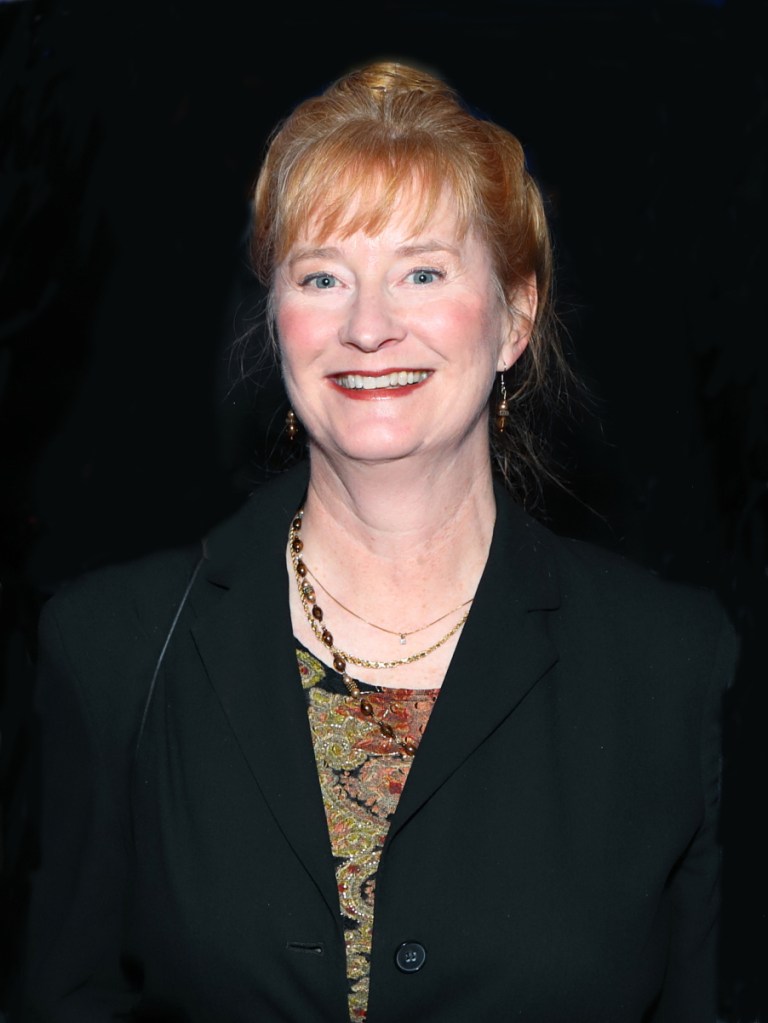
Laura DeNooyer thrives on creativity and encouraging it in others. She spotlights creatives of all kinds on her blog, Journey To Imagination, and highlights authors and their novels in her Standout Stories blog. A Calvin College graduate, Laura taught middle school and high school for nine years in Milwaukee, Wisconsin and currently teaches writing to home schooled students. Between those two jobs, she and her husband raised four children as she penned her first novel, All That Is Hidden. An award-winning author of heart-warming historical and contemporary fiction, she is president of her American Christian Fiction Writers chapter. When not writing, you’ll find her reading, walking, drinking tea with friends, or taking a road trip. Visit Laura at https://lauradenooyer-author.com or on Facebook, BookBub, and GoodReads.
Book Blurb:
Are secrets worth the price they cost to keep?
Ten-year-old Tina Hamilton finds out the hard way.
She always knew her father had a secret. But all of God’s earth to Tina are the streams for fishing, the fields for romping, a world snugly enclosed by the blue-misted Smokies. Nothing ever changed.
Until the summer of 1968. Trouble erupts when northern exploitation threatens her tiny southern Appalachian town. Some folks blame the trouble on progress, some blame the space race and men meddling with the moon’s cycles, and some blame Tina’s father.
A past he has hidden catches up to him as his secret settles in like an unwelcome guest. The clash of progressive ideas and small town values escalates the collision of a father’s past and present.
********************
Website:
Standout Stories blog with author interviews and book reviews:










 Novel PASTimes