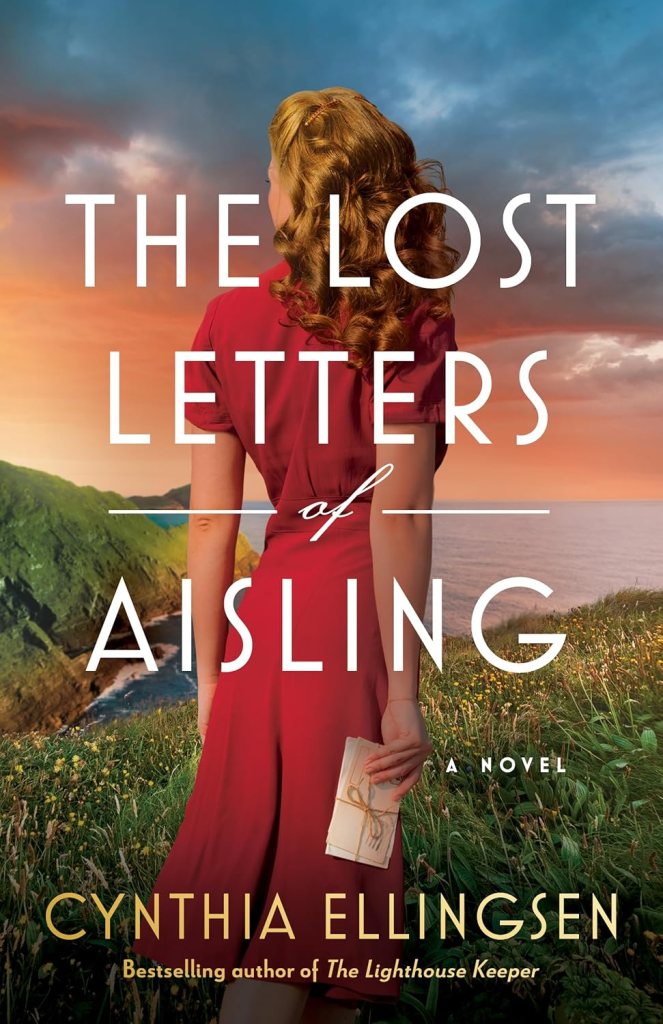
Book Review: The Lost Letters of Aisling by Cynthia Ellingsen

Amazon Affiliate Links Used Benefit this Blog

Lake Union Publishing (April 1, 2024)

Rainey’s grandmother Evie fled Ireland many years ago. Neither Rainey nor her mother know why or anything about her life there. But while recovering from an illness she asks her granddaughter to take her back to the home she grew up in, which is now a bed and breakfast. She wants to retrieve some letters and read them again.

I love Irish stories so I was eager to read this one.

I never understood why Evie did not want her daughter, Rainey’s mother to go with them to Ireland. I thought it would be explained but it really wasn’t. That aside, I really enjoyed this book and the wonderful descriptions. The budding romance was understated, which I personally like. The ending was sweet but I felt like it didn’t tie up all the loose ends especially that budding romance I mentioned. They decided they would figure it out (living in different countries.). Even so, I appreciate that it was slow developing rather than a commitment or a physical affair after only meeting a week ago.

Well-written, easy to read, and a glimpse into the history of the times, which I always like. I gave it four stars.

Reviewed by Cindy Thomson

https://www.cindyswriting.com

Meet Gitel from Gitel’s Freedom by Iris Mitlin Lav

book cover
Amazon Affiliate Link Used Helps Support this blog

Interviewer: We are here today with Gitel, the main character in Gitel’s Freedom by Iris Mitlin Lav. Gitel has graciously agreed to come back briefly from the afterlife to allow me to interview her.

Hello Gitel. Thank you for granting me this interview. If you were still alive today, how old would you be.

Gitel: Let me see. I was born in February, 1907, so I would be around 118 years old now. 

I: You seemed unhappy a lot of the time you were growing up. What made you so unhappy?

G: I felt stuck between being an old-world girl and being an American girl, although I wanted to be the latter. I was five years old when we came to the United States, to South Bend, Indiana. My mother Rayzel never adjusted to life in the U.S. She never even learned to speak English. She tried to impose on me all the restrictions that would have applied if I had been raised as an Orthodox Jewish girl back in Belorussia. I couldn’t go to the houses of my school friends, I couldn’t play sports, I couldn’t wear pants, I couldn’t go away to college, and lots of other restraints. I defied her to the extent I could by playing on a non-Jewish softball team, for example, but that was not until I was in high school.

I: How did you meet Shmuel? What made you want to marry him?

G: I was already 25 years old and working at Studebaker. My mother was pushing me hard to get married, but I had no use for any of the local men the matchmaker or my mother proposed. They were so provincial and boring. I had just about decided that I didn’t want to marry at all. But when I heard Shmuel speak at a Workmen’s Circle meeting in Chicago, he seemed so different from any men I knew. He was concerned about the welfare of people who didn’t have the money to afford their necessities. And he also had good ideas about what politicians and the government could do to help workers and those without jobs. I fell in love with him and his ideas.

I: What is your conception of happiness and freedom? 

G: When Shmuel died, after having been an invalid for much of the preceding 11 years, I was 60 years old and exhausted from taking care of him, being the breadwinner, and holding the family together. But I soon shook off my exhaustion and realized that for the first time since our first daughter was born a year after we married, I was free from responsibilities and could be my own person. Both daughters were married and on their own. I set about finding a job and a small studio apartment in the city, which my bookkeeping skills allowed me to readily find and afford.  And with no other responsibilities, I could visit with friends or relatives or do volunteer work in my free time. It was wonderful. I worked at that job until I was 72, and then I retired. 

I: Why does so little make you feel happy and free? 

G: My life had been so difficult. Shmuel and I had just been married a couple of years when we lost our business in the Great Depression, when our bank that hcld our working capital and personal funds closed and didn’t reopen. Then Shmuel kept getting sick or injured. Most of the time we didn’t have enough money to live; we were always pinching pennies. And Shmuel insisted that I didn’t work outside the house to supplement his meager income. I never was able to realize my dream of becoming a teacher. After all that, a job with a decent salary, a nice place to live, and free time that I could spend as I pleased seemed to me like a huge reward or recompence for all that I had suffered.

I: If you could go back and change anything in your life, what would you change?

G: There is so much I would want to change. To start with, there were warning signs before we were married that Shmuel’s health might be problematic. But I was too much in love to pay attention to those signs. And above all, I wish I had insisted that Shmuel pay more attention to the warning signs of what might happen during the Depression, rather than my going along with his optimism. We could have waited a few years before opening our drug store, rather than do so in 1932 when the economy was crashing. And I wanted to take our working capital out of the bank. I should have insisted rather than let Shmuel’s reluctance prevail. 

I: Thank you so much for your willingness to be interviewed and for your honest answers. One more question. Is there really life after death? What is it like?

G: Ah. We are forbidden to talk about that. 


Iris Mitlin Lav grew up in the liberal Hyde Park neighborhood of Chicago, Illinois. She went on to earn an MBA from George Washington University and an AB from the University of Chicago, and to enjoy a long career of public policy analysis and management, with an emphasis on improving policies for low- and moderate-income families. She also taught public finance at Johns Hopkins University and George Mason University, and in 1999 received the Steven D. Gold award for contributions to state and local fiscal policy. Her first novel, “A Wife in Bangkok,” was published in 2020 by She Writes Press. “Gitel’s Freedom” is her second novel. Learn more at: www.irismitlinlav.com

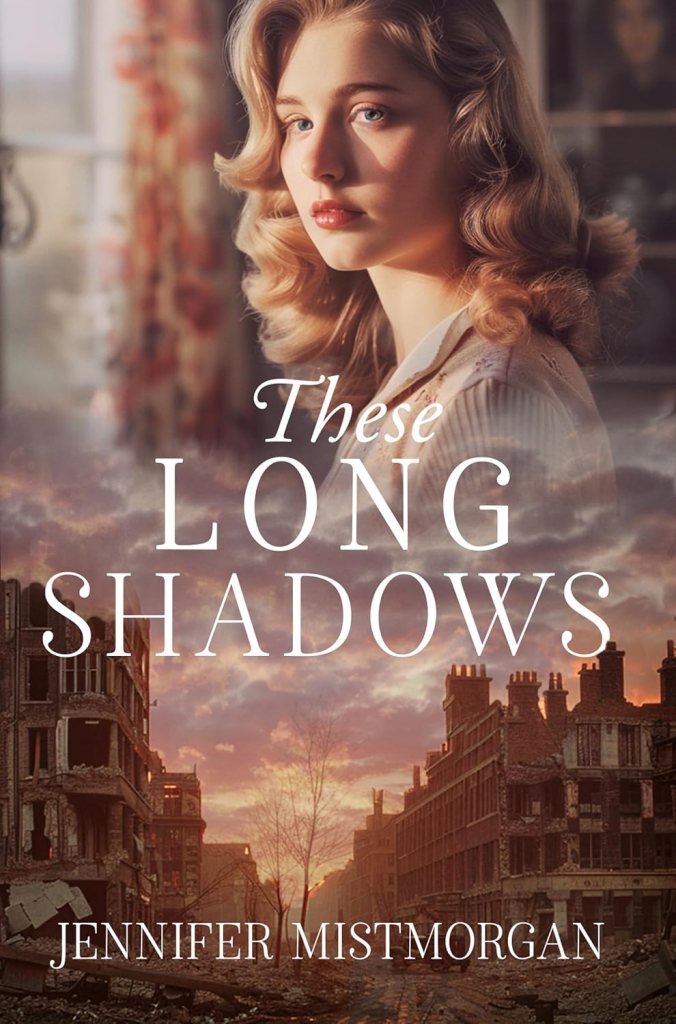
Meet Katie Ables from These Long Shadows by Jennifer Mistmorgan

Amazon Affiliate link helps to support this blog.

Welcome to Novel PASTimes! We are pleased you stopped by today.

Thanks for having me! It’s quite posh here, isn’t it?

Tell us something about where you live?

I live in Hackney in London. It’s a bit grim at the moment. Our street is practically rubble after Hitler aimed his vengeance bombs right at us. Thankfully, my neighbours were safe and our house was spared. It’s crowded, though. What with me and my sister, mum and dad and my four brothers. And that’s before Jonty comes home.

Do you have an occupation?

Yes. I’m a seamstress. I do the hand embroidery and other details on gowns for a fancy French dressmaker in Mayfair. I taught myself to sew and I never dreamed I’d be good enough to get a job at such a place. I couldn’t believe it when Madame Martin took me on. I worked at RAF Bottesford in the war, which is all but over now. The Germans surrendered a few months ago, but the Japanese are drawing things out to the bitter end.

What do you like about your work?

I love working on fancy gowns for some of the richest people in the country. And not just gowns, we also make underthings. They are all very French, if you know what I mean. I could never afford anything like what we make, but I love being able to sew all day.

Who are the special people in your life?

Well, there’s my family. Lucy’s getting married soon and Dad’s a bit unpredictable, but Mum knows how to handle him. Then there’s Jonty. He’s my husband, so maybe I should have put him first. But everything is so complicated that I never know what to say.

See, we got married about two and a half years ago. I was well, in a family way, if you know what I mean. The baby wasn’t his, but he didn’t care. It was his idea to get married! We thought that once the baby was born we’d just get on with being a family. But my darling girl died and everything sort of fell apart after that. I told Jonty to leave. I said some awful things to him. Things that kept him away for two years. But, I regret them. And now that he is being demobilised, we need to find a way to begin again. I honestly have no idea where to start.

Then there’s my friend, Jan. He’s my neighbour’s nephew. We’re just friends. Or so I keep telling myself.

What do you expect the future will hold for you?

I wish I knew. Despite everything that has happened, I know that Jonty is a good man. Well, he was. Maybe the war changed him…? There’s a housing shortage because of all the bombing so we’ll be living with my family. But I don’t want to leave Hackney anyway. Not when my family and friends are here.

What are you most afraid of?

After my baby daughter died, I’m afraid that I can’t have babies that live. It happened to my neighbour Mrs Parkin. She buried every child she ever had. I’ve only done it once but I can’t do it again. I just can’t. It hurts too much.

What have you learned about yourself in the course of your story?

That, despite everything, I am loved and loved well. But it’s a long road, and I don’t want to give too much away, you see.

These Long Shadows by Jennifer Mistmorgan is a second chance, marriage-of-convenience love story with a dash of intrigue set in the dying days of WWII. Perfect for readers who love Sarah Sundin and Roseanna White. Coming March 2025.

————

About the Author

Award-winning Australian author Jennifer Mistmorgan sometimes feels like she was born in the wrong era. So she writes romantic historical fiction set in the 1940s, against the backdrop of WWII and its aftermath. Her romances are full of sweet romance, wartime drama, imperfect faith and characters that feel like friends. She lives in Canberra with her family and a wonky-eared West Highland terrier. 

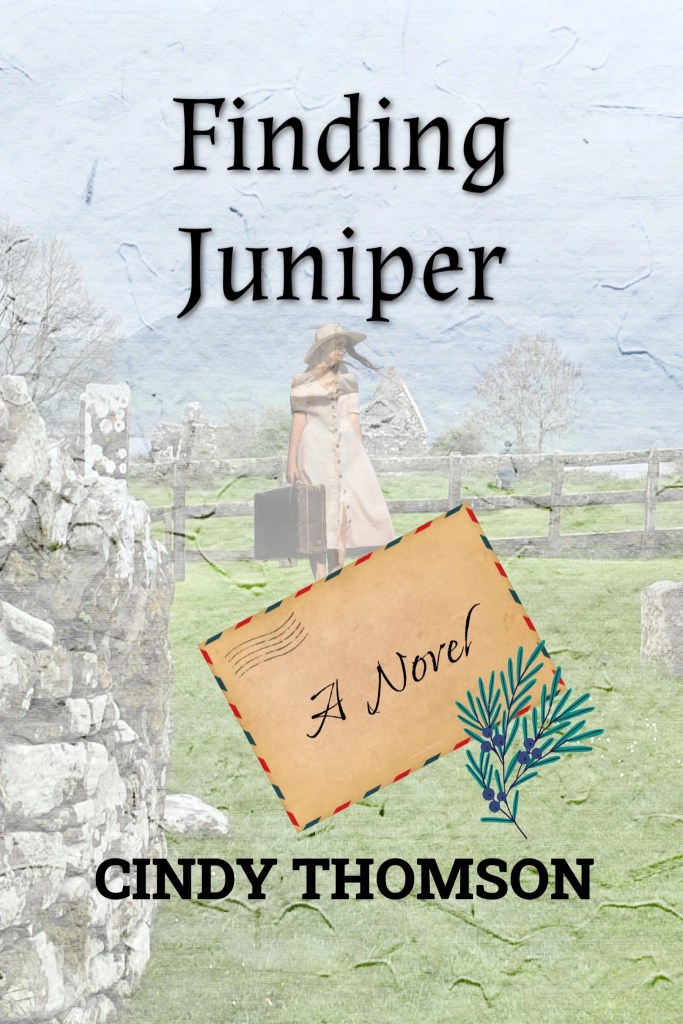
Book Review: Finding Juniper by Cindy Thomson

It’s been a long time since a book brought me to tears, evoking a depth of emotion I rarely experience from reading a novel. Finding Juniper contains that kind of depth.

With the burden of PTSD from WWI and his friend’s rosary in his pocket, Patrick Doyle is summoned to once again confront his past by a cryptic letter that appears to have been written by a child—the long-lost child he’d never known and assumed dead—his daughter, Juniper. 

Caught between two sides of a civil war, Patrick had emigrated to the United States and after much trial, began to rebuild his world with a new family. Shortly after experiencing the loss of his wife, his American daughter, Mardell, beseeches him to travel to his homeland with her and find out what happened to her half-sister, Juniper. Patrick reluctantly embarks on a journey across the pond which stirs up both good and bad memories. 

Author Thomson skillfully weaves Patrick’s reminiscences from the war and life in Ireland alongside Juniper’s journey from life in institutions to that of an independent young woman with questions about the father she never knew and the mother she believes is dead. Following a timeline from 1920 to post WWII, readers will hope and cheer for the characters’ paths to finally meet and may even shed a tear along the way. 

With a balance of Irish melancholy and humor, the author paints a lovely picture of the countryside in Northern Ireland. She shows the culture of superstitious villagers and the kindness of a few towards Juniper and other outsiders through the struggles of post WWII deprivation. 

Finding Juniper is a story of healing family rifts and truth overcoming lies. The truth of the past is brought to light for both Patrick and Juniper in unexpected ways, but just as in real life, the journey there is complicated. 

Fans of historical Christian fiction with a non-preachy message of hope and forgiveness will love this story. Five stars! Highly recommend!

I received a free copy of this book from the author in exchange for an honest review. All opinions are my own.

Review posted by Kathleen Rouser. Find her at: kathleenrouser.com

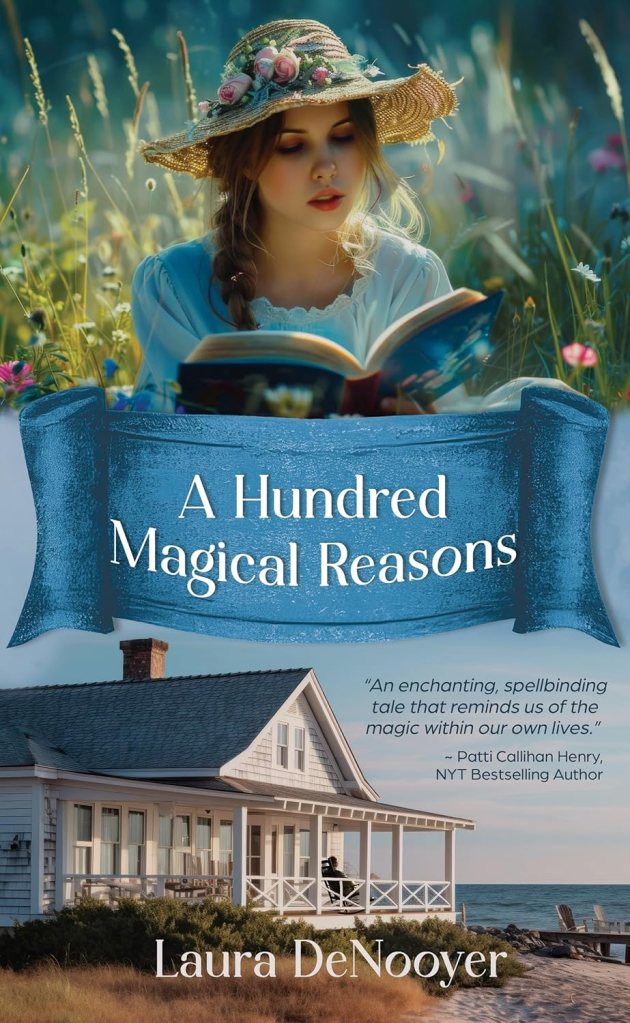
Meet Mrs. Charlotte Rose Gordon from A Hundred Magical Reasons by Laura DeNooyer

Most fairy tales have happy endings, but is it too late for this one? After all, Mrs. Charlotte Rose Gordon is eighty-eight. 

This disgruntled town recluse has grown weary of fighting the dragons of her past—including the desire to clear her husband’s name of a 1918 crime.

Dragons of a different kind pursue Carrie Kruisselbrink.

In 1980, in the summer of her private rebellion, Carrie defies parental expectations and pursues her café dream. While waiting for funding, she takes a job with Mrs. Gordon.

As Mrs. Gordon unfolds the story of her oppressive childhood and delightful friendship with The Wonderful Wizard of Oz author, L. Frank Baum, Carrie never expects to encounter her own fears and soul-searching.

In this modern-day fairy tale that weaves between 1980 and the early 1900s, Mr. Baum’s influence impacts each woman’s personal quests on a hero’s journey neither anticipates. Can Carrie and Mrs. Gordon find common ground in battling their respective dragons?

Welcome, Mrs. Gordon! I appreciate you letting me stop by your front porch  today for an interview. What a lovely garden you have!

Thank you. The dahlias are my favorites. My employee Carrie helps me with the watering. It’s part of her penance, you might say. 

Penance? For what?

At age eleven, she kicked her ball into my flower bed and smashed my tulips, then wrote up a contract vowing to never step foot in my yard again or she’d make it up to me as I deemed fit. Now it’s ten years later, and she broke that vow a month ago when she dropped by. I’m holding her to the contract, since I could use some help around here.

Wow, you drive a hard bargain. What do you need help with?

I hired her to be my scribe. I have to settle the record on—well, never mind. She’s recording my memoirs, for one thing. In return, I’m saving her from a summer of working in fast food.

No wonder. I heard you used to own and manage the Broderick Inn and Tearoom on the lake. 

For thirty-nine years. My mother established it in the late 1800s, so I grew up learning the business of food preparation and hospitality. I took over in 1916. 

Did you have any specialty menu items? 

In the 1950s and ’60s we served Munchkin Delights, Scraps’ Peach Bread Pudding, and Polychrome’s Dewdrop Mist Trifle. 

Munchkin Delights . . . is that connected to The Wizard of Oz? And what about the other two you mentioned?

All three are inspired by Oz books. Mr. L. Frank Baum wrote fourteen of them. Most folks know about The Wonderful Wizard of Oz, but It’s a shame the average person has no clue about the others he wrote. 

Not to mention the bakers at the Broderick Tearoom passing off their own version of blueberry muffins as Munchkin Delights. They don’t even have my original recipe.

Why do you know more than the average person about L. Frank Baum?

Because I met him when I was eight. He, his wife Maud, and their four sons visited our tearoom. Turns out they spent summers at Macatawa Resort near Holland, Michigan, not far from us. That’s eighty years ago, in the early 1900s. He even invited me to their cottage.

Really? What an amazing opportunity! What did you do there?

We had a grand time. His son Kenneth was just a year older than me. We all went boating, fishing, and swimming—all the regular lake activities. But Mr. Baum also planned wonderfully imaginative adventures for us right on his porch. 

He showed me how to run a printing press. We made dioramas. And he told stories, of course. Marvelous stories. Being with him was like indulging in chocolate fudge after months of cold porridge. 

But we did everything on the sly. My parents had no use for fiction, fantasy, or fairy tales. I was only allowed to read The New England PrimerThe Pilgrim’s Progress, and the Bible. They’d never approve of my spending time with someone like Mr. Baum. But thank goodness, my dear Aunt Sophie believed otherwise. She took me to the Baums’ place every year behind my parents’ backs.

Sounds like Mr. Baum was a huge influence on your life.

Yes, in so many ways. He gave me inspiration and courage to try many things I might not have done otherwise. I’m sharing all these memories with Carrie. 

By the way, she has restaurant plans of her own. She hopes to run a literary-themed cafe. But her parents expect her to use her college degree and teach elementary school. It’s such a quandary for her, living under their demands, criticism, and expectations when she has dreams of her own. 

She and I have a lot in common that way. I once had dreams myself until they were destroyed like a house in cyclone. I don’t want the same thing happening to Carrie.

I’m sure you have plenty of expertise and empathy to offer. So . . . you were married to Walter Gordon, the pharmacist. Wasn’t there some kind of . . . secret scandal at Gordon Apothecary? 

If you’ve heard about it, it’s no secret. The whole town knows. In fact, that’s part of why I hired Carrie. In 1918, my dear Walter was falsely accused of a crime, and I have to set the record straight. Once and for all. Folks wag their tongues even now, sixty years later. It’s a cloud that still hangs over my head. 

So go along now. I need to go water my dahlias. And watch where you step in my garden lest you find yourself indebted to me.


Laura DeNooyer thrives on creativity and encouraging it in others. A Calvin College graduate, she is a teacher, wife, parent of four adult children, and an award-winning author of heart-warming historical and contemporary fiction. Her novels are perfect for fans of Patti Callahan Henry, Erin Bartels, or Heidi Chiavaroli. When she’s not writing, you’ll find her reading, walking, drinking tea with friends, or taking a road trip.


For free recipes, tips, anecdotes, and updates, join Laura’s monthly newsletter: 

A-Taste-Of-Oz-Cookbook-Sampler.com

Purchase link for Amazon: 

https://scrivenings.link/ahundredmagicalreasons

Website & Book Trailer: https://lauradenooyer-author.com/a-hundred-magical-reasons/

Bookbub

https://www.bookbub.com/profile/laura-denooyer-moore

Goodreads

https://www.goodreads.com/author/show/5859120.Laura_DeNooyer_Moore

Facebook author page:

https://www.facebook.com/LauraDeNooyerAuthor/

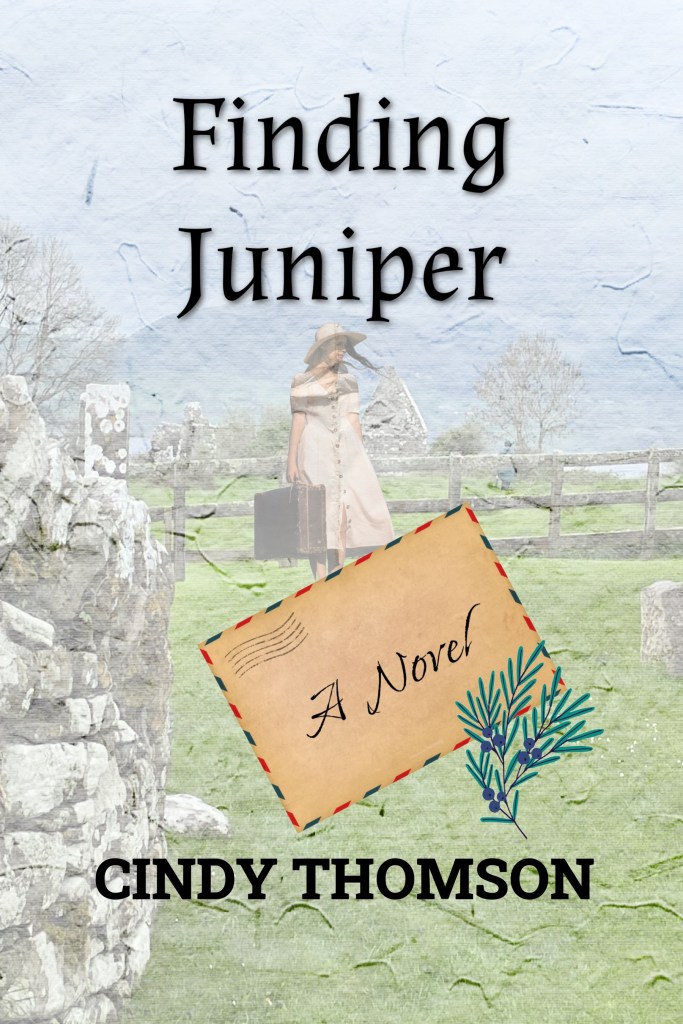
Meet Juniper from Cindy Thomson’s New Novel, Finding Juniper

For Patrick Doyle, the claim that time heals all wounds is a cruel lie.

In 1920, returning from WWI, Paddy finds Ireland creeping toward civil war. Invisible borders separate people, including Paddy and his pregnant girlfriend. With few prospects, Paddy sails to America. However, America is far from the land of opportunity he’d hoped for. And worse, his girl refuses to follow him because of her political involvement.

Thirty years later, Patrick has moved on with his life, building a new family. A letter arrives, suggesting the child he’d assumed died may be alive. Patrick’s American daughter Mardell pushes him to find out what happened to her sister, named Juniper. Patrick anxiously sails to Ireland.

Juniper endured a childhood in institutions, and when she’s released, she moves on without the parents who left her. Operating an apothecary out of an inherited cottage where villagers are slow to trust outsiders, Juniper finally finds a home when her grandmother arrives. Just as she feels comfortable and content, her father shows up at her door, bringing shocking news about her mother.

Finding Juniper invites readers on a journey of confronting the past, healing from old traumas, and redefining what family truly means.


Welcome to the blog, Juniper. Because of the time period of the novel, you might not know what that is.

Juniper: You said this was an interview. Is that what you mean?

Ah, yes, an interview. Readers would like to know about you, especially if they haven’t read the book.

Juniper: [Gasp!] They haven’t read the book? They must or I will cease to exist.

Don’t worry. You’re real to those who have. Tell us something about your childhood. When were you born?

Juniper: Now you sound like those doctors at St. Giles. I was born on the second of June, 1920, in Dublin, Ireland. My childhood was not happy, but you don’t want to hear about that.

Oh, we do! Happy or not, your story will help us get to know you.

Juniper: [Sigh] It won’t really because I’m a new woman, now. But I’ll tell you a wee bit. I grew up without parents, but I wasn’t an orphan. Ireland in those days, well, things were all upside down. My mother got involved in politics. Long story, but she wasn’t in a right state to raise a child. Things are better in Ireland now, in 1950, and I’m doing quite well. When I was young my mother sent me to live with the nuns for a time. I rebelled a bit as a child, so they moved me to St. Giles.

That’s a hospital?

Juniper: Of sorts. So they called it. It was really a place where they put folks, mostly girls, whose families don’t want them or maybe just couldn’t deal with them. They let me go when I was older.

Your parents didn’t want you? I heard a different story.

Juniper: I heard it too. Call it what you will, but in my mind I was abandoned. I’m still trying to adapt.

Say no more. We don’t want to spoil the story.

Juniper: I was happy, though, when I got to work in the gardens. I learned a lot about plants from the gardner at St. Giles. And also from letters my granny sent me. She made herbal cures as well. I am what you might call an herbalist or a natural healer. I think that’s the term from your time.

How fascinating. I bet folks appreciate the things you make.

Juniper: Most do. There was a wee bit of trouble once, a bit of a mix up with one of my cures.

Wait! Don’t tell us.

Juniper: Happy not to talk about that.

So, your father, Patrick, went to America?

Juniper: He did. My mother called him Paddy. I was told he’d died over there.

I heard something different. Life was difficult for him in America. At least in the beginning.

Juniper: Now you wait. Don’t be spoiling things, as you said.

Sorry. Isn’t there a handsome new rector in your village now?

Juniper: Yes, Donal. He’s the kindest person I have ever met. My experience with the church has been less than pleasant, but meeting him has made me look at things differently.

Will something develop between you two?

Juniper: You sound like Granny. We shall see.

Why don’t you tell us about your name?

Juniper: Ah, my name. Granny always called me Juniper, but my birth name was Anna. St. Giles would only call me Anna, so I got used to that. I like Juniper, though, named as I was for a lovely green plant. There is such beauty in the world out of doors. Much healing in plants.

Do you find healing by working in the garden? And in the novel as well?

Juniper: I do feel calmer when I toil in my fields, but healing for my whole self? You’ll have to read to find out.

Thanks for chatting with us, Juniper.


Known for the inspirational Celtic theme employed in most of her books, Cindy Thomson is the author of both fiction and nonfiction. A genealogy enthusiast, she writes from her home in Ohio where she lives with her husband Tom near their three grown sons and their families. Visit her online at CindysWriting.com

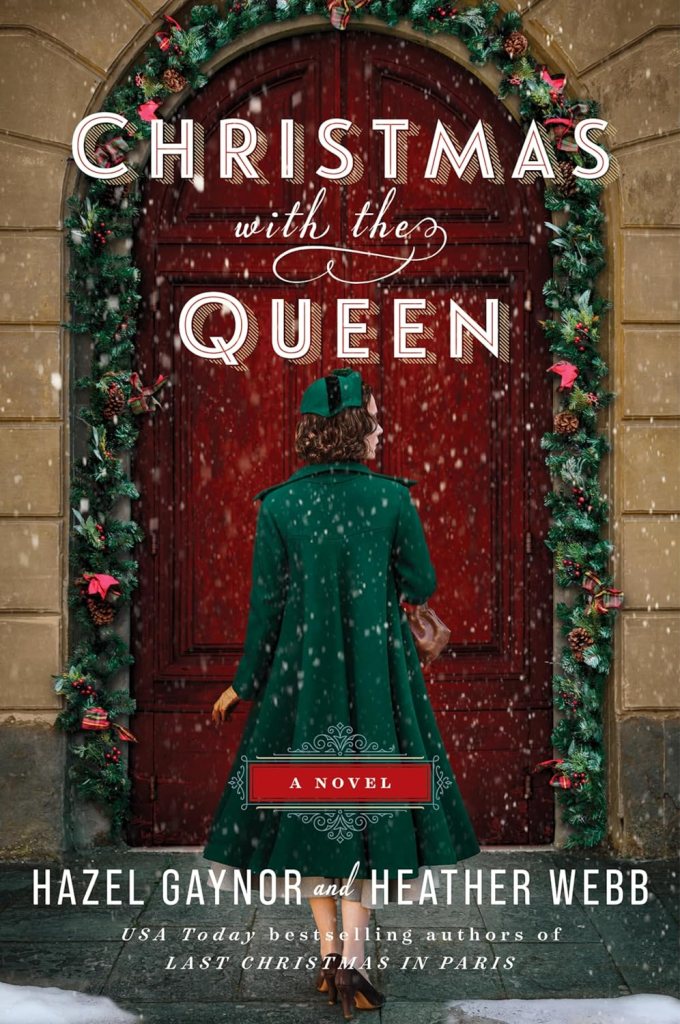
Book Review: Christmas with the Queen by Hazel Gaynor and Heather Webb

December 1952. While the young Queen Elizabeth II finds her feet as the new monarch, she must also find the right words to continue the tradition of her late father’s Christmas Day radio broadcast. But even traditions must evolve with the times, and the queen faces a postwar Britain hungry for change. 

Amazon Affiliate link used helps to support this blog

I enjoyed this novel about two lovers, Jack and Olive, who are separated by circumstances, including Jack’s marriage to another woman, Andrea, he loved. As the story opens Andrea is killed in a car accident. She leaves behind the dream she and Jack had for Jack to open his own restaurant. Olive harbors a secret, and these two things keep them apart for most of the book. It’s the classic romance formula.

What made this book intriguing for me was the glimpse into the royal family and the Queen’s preparations for her annual Christmas address. (However, readers should understand, despite the title and setting, the book is about Jack and Olive who both have jobs that take them into the lives of Queen Elizabeth and Prince Phillip). Another intriguing aspect for he was Jack’s character. He enjoys cooking the recipes that his grandfather, from New Orleans, taught him. The way he puts his dishes together and the way he introduces them to the British people was interesting. I also loved how he wooed Olive by figuring out what she liked and setting up one-on-one cooking lessons.

The only drawback for me was the prolonged period of time (years!) that it took for Jack and Olive to reunite as a couple. I found it a little annoying. I also didn’t like that we weren’t able to witness a proposal or a wedding. After all that back and forth, this part deserved a place in the story, I thought. Even so, this didn’t spoil my enjoyment of this story by two very talented authors. I’ve read several of their books and I love how they take ordinary people and show readers how they endured and prospered during the times they lived in.

This is a fun Christmasy read with a gorgeous cover that I think readers will enjoy.

Merry Christmas, everyone!

I received a free review copy from the publisher via NetGalley and was not required to leave a review. These are my own opinions.

Reviewed by Cindy Thomson, www.cindyswriting.com

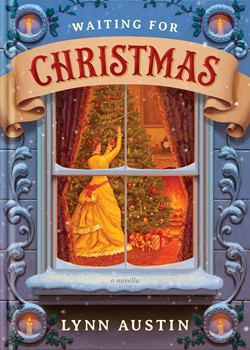
Meet Adelaide from Lynn Austin’s Waiting for Christmas

In this hope-filled Gilded Age Christmas novella from bestselling author Lynn Austin, the year is 1901 and the hustle and bustle of the holidays is descending on New York’s Fifth Avenue.

For the first time in her privileged life, Adelaide Forsythe won’t be swept up in it. She couldn’t be happier about the prospect of a quieter Christmas. That’s not to say her transition from Miss to Mrs. has been without challenge. Though she doesn’t regret marrying for love instead of wealth, she can barely light the hearth or cook more than burnt toast. She feels woefully unprepared to run her own household.

Then, on the first Sunday of Advent, winter winds bring change through two unlikely means: a young orphan boy, hiding near Adelaide’s front steps, and a seasoned housekeeper who seems too good to be true.

The boy, Jack, claims he isn’t an orphan at all and is desperate to reunite his family. Adelaide and her husband Howard work tirelessly to solve the riddle of Jack’s story, while Adelaide’s new endeavors open her eyes to a world beyond her past experience—and all the challenge and possibility it holds. As Christmas approaches, small glimmers of wonder light the way toward the answers Adaleide seeks and the most miraculous gift of all.

book cover

NP: Hello, Adelaide. Thank you so much for taking time from your Christmas preparations to talk with us.

Adelaide: My pleasure.

NP: When we last met (in the novel “All My Secrets”) you had fallen in love with your family’s lawyer, Howard Forsythe. Has that romance evolved since then? 

Adelaide: I am pleased to say that Howard and I were married one month ago with our families’ blessings. My grandmother was especially happy that I married for love and not for money. She was the one who encouraged me to make that choice.

NP: Congratulations! I imagine marriage has brought many changes to your life?

Adelaide: Yes! Too many to count! I no longer live in an enormous mansion, but in a simple townhouse on a quiet street. I don’t have servants to wait on my every need, but I do need to hire someone to teach me to cook, since I don’t even know how to brew tea. I used to buy anything I wanted, and I never had to think about money, but now I’m learning to economize and live on Howard’s salary. And I had to learn how to travel by streetcar since we can’t afford a horse and carriage. Those are just a few things.

NP: What about your interest in the women’s suffrage movement? Will that be ending now that you’re a respectable married woman?

Adelaide: Certainly not! Howard is very supportive of the suffrage movement, and he encourages me to be active.

NP: I’m guessing that Christmas will be very different for you this year?

Adelaide: Yes, in some ways. Our family charity, the Stanhope Foundation, has always played an active role at Christmastime supporting the many orphanages in this city. That won’t change. I’m still helping my mother, who now heads the Foundation. But I won’t be hosting or attending any Christmas parties or balls this year. Those frivolous activities just aren’t part of my life anymore, and I must say I don’t miss them in the least! Howard and I have better things to do with our time. I’m looking forward to a much simpler Christmas this year.

NP: What do you miss the most about your life as a wealthy heiress?

Adelaide: I think it’s pointless to look back at the past and moan about it. Life always brings change, and if we’re not prepared for it, we will live miserable lives indeed. The better question is, what am I looking forward to in the future? The answer is, a long and happy marriage to my wonderful husband. 

NP: Any other notable changes or surprises in your life?

Adelaide: Well, I was certainly surprised to return home the other day and find a raggedy orphan boy hiding beneath my bushes. He had run away from one of the orphanages Mother and I had visited that day. I am trying to figure out how I can help the poor child. He refuses to return to the orphanage, insisting that he isn’t an orphan.


Lynn Austin has sold nearly two and a half million copies of her books worldwide. A former teacher who now writes and speaks full-time, she has won eight Christy Awards for her historical fiction and was one of the first inductees into the Christy Award Hall of Fame. One of her novels, Hidden Places, was made into a Hallmark Channel Original Movie. Lynn and her husband have three grown children and make their home in western Michigan. Visit her online at lynnaustin.org.


Meet Mira Covington from The Song of Sourwood by Ann H. Gabhart

Mira Dean is reconciled to her life as a spinster schoolteacher until preacher Gordon Covington shows up in town with an audacious marriage proposal. Following him to the mountains takes courage, but Mira will see that doors she thought closed forever may be opening after all.

Welcome to Novel PASTimes! We are pleased you stopped by today, Mira.

Thank you so much for having me. I love to talk about The Song of Sourwood Mountain. It is so incredible to have people interested in my story. 

Tell us something about this Sourwood Mountain.

You should come visit. It is the most beautiful place with the best people. There is a Sourwood Mountain, but most of the people live in the hollow. The people there would shake their heads at me saying hollow. They would definitely say they live in Sourwood Holler. I am what they call “brought in.” That is, not from that area. I went there from the big city of Louisville. That was quite a change for me. In Louisville I lived in some rented rooms in the upstairs of a brick house. In Sourwood I live in a log cabin like everyone else. We are surrounded by trees, and in the spring the rhododendron bushes cover the hillsides in blooms. Wildflowers pop up everywhere. Of course, the same as anywhere, everything isn’t all good there.

Wait. Maybe we should back up here and let you introduce yourself and let us know exactly why you went from Louisville to this Sourwood Mountain. 

Oh dear, I should have told you that first off. You have to understand I’m a little nervous talking about myself. My name is Mira Dean Covington. I’m a schoolteacher. Most women schoolteachers have to be unmarried. The administrators for the city schools think that is best so a woman’s thoughts won’t be divided between her family and her student. Anyway, whether you think that is sensible or not, I was resigned to being a spinster after my fiancé died a few years ago. 

But an old schoolmate came to my church to talk about his mission in the Eastern Kentucky Appalachian Mountains. He has established a church there and at the time, was hoping for contributions to help start a mission school as well. He needed a teacher, and before we had hardly said hello, he shocked me by saying the Lord had nudged him to ask me to be that teacher. I love teaching children, and when I thought about the poor children in those hills not having a way to learn to read, my heart was touched. Still, I might not have agreed to his outrageous plan – I hadn’t seen him for years – but I lost my teaching job and the rooms I was renting. It did feel as if the Lord was pushing me to be the Sourwood Mission schoolteacher. 

You say the place is beautiful, but somehow sourwood makes one wonder about that. Sourwood sounds unpleasant.

I suppose it does, but the name actually comes from a tree called sourwood that grows in the hills there. When they bloom, the trees are beautiful and the flowers have the most amazing scent. I know you would love the trees if you were to come to Sourwood Mountain in June when they are in bloom.

What do you like or dislike about being a teacher in Sourwood?

The children are what I love best about teaching. It’s wonderful when I see a child’s face light up when he or she suddenly understands something I’m teaching. I don’t like it when a child acts up or tries to bully another child. I make sure that doesn’t happen in my school, or at least I try to. Children, the same as any of us, are not perfect. They must learn proper behavior and good attitudes as well as arithmetic and reading.

Who are the special people in your life?

There are two children I do love more than the others. I try my best not to favor them over the others in the school room, but Joseph and Ada June are in and out of my house all the time. Joseph loves to be of help there and at the church. Ada June is a special little girl who lost her mother at a young age and has so wanted to be a true part of a family since then. She has the sweetest heart, and she has found a place in mine. 

What is your heart’s deepest desire?

Ever since I was a little girl, I wanted to have my own family. To marry and have children to love. And then the man I thought I would marry died of tuberculosis. I thought my dream was forever lost and that the children I taught would be the only children I would have to love. But sometimes the Lord opens a door you didn’t know was there and finds a way to give you the desires of your heart.

 Do you have a cherished possession?

I do. My mother had a ceramic blue bird that she treasured. Before she died, she gave it to me and told me to remember how much she loved me whenever I looked at it. It is on the mantel in my cabin in Sourwood. When I hold it, I somehow get courage to face whatever challenges come my way. I have to admit that I’ve held it so much over the years, that some of the ceramic feathers have lost a little of their blue. 

It’s so wonderful to see the blue birds in the mountains. One built a nest in a small hollow in the oak next to our school. Seeing them brings the happiness promised when you see a blue bird.  

What do you expect the future will hold for you?

I hope to teach for many years and learn more about my Sourwood neighbors. And that dream of having my own family may be in my future too. 

What have you learned about yourself in the course of your story?

Maybe what I have learned most about myself is that I should always trust the Lord and embrace the blessings He showers down on me and mine.

Is there anything else you’d like people to know about you?

Oh heavens, I think I have already told you more than anyone could ever want to know about me. I am simply so happy that the Lord opened the opportunity for me to teach the children in Sourwood. He aimed good for me and for that I am more than thankful.

Thanks for allowing us to get know you a little better!

Thank you for inviting me over to talk with you.


Ann H. Gabhart is the bestselling author of many novels, including
In the Shadow of the River, When the Meadow Blooms, Along a
Storied Trail, An Appalachian Summer, River to Redemption, These
Healing Hills,
and Angel Sister. She and her husband live on a farm
a mile from where she was born in rural Kentucky. Ann enjoys
discovering the everyday wonders of nature while hiking in her
farm’s fields and woods with her grandchildren and her dogs,
Frankie and Marley. Learn more at AnnHGabhart.com.

A Chat with Lily from Joanna Davidson Poltiano’s The Elusive Truth of Lily Temple

Amazon Affiliate Link Used to Support the Blog

Welcome to Novel PASTimes! We are pleased you stopped by today.

Tell us something about where you live.

I live and work in the beautiful St. Anne’s Well Gardens of Bristol. This pleasure garden, once a healing springs, is a small haven in the midst of a bustling seashore town that actually contains—hidden away—an entire film production outlay. The old pump house has become the workshop of a brilliant producer, where he tints and cuts and splices film strips to create an illusion grander than his magic shows. Then, ifhttps://amzn.to/3Qc8xPJ one is brave enough to venture through the woods and up the hill, he would happen upon the most unexpected house made entirely of glass. That is where the films are set, on a rotating foundation, so that he might capture natural light from any angle, any time of the day.

I spend my days in that glass house, which grows quite warm in summer, pretending to be a fairy or a fair maiden. Then I spend my spare time buried in that pump room, splicing and tinting films with Smith and his wife. It’s a beautiful place to create, and I love it here. 

I shouldn’t be telling you this part, but I have a history in this place. When I was a girl, this place was my haven. I came here for the stories from an old rose gardener, and for escape. I did not like my real life in those days, so I lived in a fantasy one at St. Anne’s.

Is there anything special about your name? 

I chose the name Lily simply because the flower reminded me of what I’d like to become. Elegant, pure, and lovely. It’s the simplest name I’ve chosen so far, and it has stuck with me the longest. The name I was given, which I cannot divulge, was bestowed in honor of my grandmother. I rather like that, and I hope I can use that name again one day.

Who are the special people in your life?

I haven’t had anyone special in my life since Gordon Makepiece told me stories as a child. I suppose Gypsy Lee has been a boon to me and Mr. Smith, the illusionist, but that’s mostly because he needs me. And there’s something lovely about being needed. 

However—and you’ll have to keep this quiet—there’s a man. He appeared in the gardens one night for a show, and I all but kidnapped him. I pulled him into a waltz and had him spinning and twirling toward the woods, then running up an unseen path. And ever since then, I have felt as though he’s done the same to me. Twirling and spinning until I can’t see straight, then darting up a dark path to an unknown destination. And I’ve wondered ever since if it was I who roped him into a dance that first night… or if it was all his doing.

What are you most afraid of?

Leaking my real name. I’m terrified I’ll give it out without thinking, though it’s been years since I’ve used it. Or perhaps someone who knows it will happen upon me. That wouldn’t happen though, I don’t think. I’ve been ever so careful to cover my tracks.

Do you have a cherished possession?

There’s a large, inviting, leather-bound book of fairytales that I would pay handsomely to have back. The illustrations are mine, and the stories belong to the dearest person in the entire world. What I wouldn’t give to hear his voice again. Better yet, to hear the stories told in his voice, rather than on the page. Every time I turn those pages, I hear his voice in my memories and my heart absorbs everything he’d meant to tell me in those fairytales. But the guilt overwhelms me so much that I haven’t opened that book in years. Whatever became of the writer, I do not know.  

What do you expect the future will hold for you?

I feel I could succeed in any position, with my history. I’m an actress now, but I’ve been a milkmaid, a governess, a boy in the army, and even a lady’s companion. Next, I could be a pirate—that does sound amusing. Perhaps an illusionist.

Thanks for allowing us to get know you a little better!


Joanna Davidson Politano is the award-winning author of Lady
Jayne Disappears, A Rumored Fortune, Finding Lady Enderly, The
Love Note, A Midnight Dance, and The Lost Melody. She loves tales
that capture the colorful, exquisite details in ordinary lives and is
eager to hear anyone’s story. She lives with her husband and their
children in a house in the woods near Lake Michigan.

Get Connected:
Joanna Davidson Politano
www.JDPStories.com
Facebook
/joannadavidsonpolitano
Twitter
@politano_joanna