Jules, welcome to Novel PASTimes. What would you like to tell us about yourself?
JW: Howdy! Pleasure to be here. Name’s Jules Montgomery now that I got hitched. I’m one of those mail-order brides, although it seems like a funny name to me. It’s my first time to be settled and livin’ in one place. I kind of like it.
We’re pleased to have you for a visit. I heard you are living in Kansas. How is it different from where you came from?
JW: Kansas is mighty flat and seems like the wind is blowin’ all the time. I came from Texas mostly. My brother and I lived along the trail, so it’s a lot different since I’m livin’ in a town now.
What do you think of your new husband, Drew Montgomery?
JW: Drew’s pretty special and good-lookin’. He’s mighty particular about the way he likes things. It’s takin’ me a while to learn his ways. I expect he’s adjustin’ to me as well.
Sounds like you might be growing rather fond of him, Jules. Could you share some examples of what Drew’s so particular about?
JW: My Drew has certain things you can talk about and other things I’m supposed to keep quiet-like. Only trouble is, I never know which of those things are the ones that can be spoken.
Hmm… sounds like you two need to work on communication. How do you feel about becoming a minister’s wife?
JW: I didn’t exactly know what a minister’s wife was on account of never goin’ to a church service until we got hitched. I’m still tryin’ to figure out what all that means.
What are some of the expectations you are struggling with in becoming minister’s wife?
JW: Having to wear a dress and to not speak my mind when something comes up in church. Those church ladies can be mighty hard to deal with sometimes.
I have to agree it’s a mite easier to wear pants than to be trussed up in a corset and a dress. You have my empathy.
Do you have any goals for the future?
JW: I want a family and to stay in one place. I think that would be right nice.
It is nice to be in a stable place and have a family. I sure hope you and Drew can work things out. Thank you for stopping by Novel PASTImes this week.
About the author:
Jodie Wolfe creates novels where hope and quirky meet. She is a member of American Christian Fiction Writers (ACFW), Romance Writers of America (RWA), and COMPEL Training. She’s been a semi-finalist and finalist in various writing contests. A former columnist for Home School Enrichment magazine, her articles can be found online at: Crosswalk, Christian Devotions, and Heirloom Audio. She’s a contributor and co-founder of Stitches Thru Time blog. When not writing she enjoys spending time with her husband in Pennsylvania, reading, walking, and being a Grammie. Learn more at http://www.jodiewolfe.com.
Welcome to Novel PASTimes, Grant Cummings. Could you please tell me a little bit about your family and what you do for a living?
GC I’m from the Highlands. My family has lived south o’ Inverness in Tullochgorum near the River Spey and Cairngorm Mountains. My folk have been crofters for decades, but tis just my Ma ‘n’ Keith now since Pa passed. Ma was a flax spinner ‘n’ Keith is but a wee lad.
I’m a builder ‘n’ was workin’ on the lochs at Telford’s Highland’s Caledonian Canal.
What caused you to move to Ulster?
GC When Ma took ill, I returned to Tullochgorum. With her passin’, I needed to care for Keith, ‘n’ needed to find work. We had no kin left in the Highlands as many had emigrated to Northern Ireland or America.
Ma left me a note askin’ me to go to her sister Katherine Grant in County Londonderry, Ireland. Katherine would care for Keith and I could find work there. Since I never wanted to be under the heel of the local laird, when the evictions came, I saw the wisdom of my Ma’s wishes.
What do you think of your new landlady Molly MacGregor?
GC Ahh, that Molly MacGregor, she’s a bonny lassie to be sure with her blue eyes ‘n’ golden locks. Her pa also passed recently ‘n’she has a brother about Keith’s age. Katherine’s cottage was a wee bit small for the three of us so she directed us to Molly who had a hut to let. Seemed the perfect answer for both of us. But the lass has strange notions of Highlanders. She’s a kind ‘n’ generous soul underneath her reserve. Molly stirs me in ways I’ve never known, but the walls she’s built around her heart are formidable.
What kind of work have you been able to find near your home?
GC Aunt Katherine suggested there might be construction jobs a few miles east at Agivey Bridge. For now, tis hopeful ‘n’ Keith is getting the care he needs.
Do you think you want to return to your home or stay in Ulster and why?
GC There’s na future for us in the Highlands with the Clearances. There’s hope in Ulster so we’ll give this a go, or who knows. We’ve cousins in America, so that is a possibility too.
Thank you for visiting with us on Novel PASTimes today, Grant. May God guide you to the right place!
About The Year Without a Summer , a novella in The Highlanders, a Smitten Romance collection:
Shoved off his family’s land in Scotland in 1816, Grant Cummings looks for work in Ulster, Ireland. He needs money and a home to raise his young brother. Molly MacGregor loses her father and his income, but she has no time to grieve as she sews and spins to earn enough to keep her and her young brother alive. Renting out the hut on their land might be the answer, but only if she can overcome her prejudice against the handsome Highlander who moves in. Her heart might soften toward him, but not when he plans to set sail for America.
Author’s Bio:
Janet is a wife, mother of two sons, and grandmother of eight. She lives in the historic triangle of Virginia (Williamsburg, Jamestown, Yorktown) with her husband. Brought up in a Navy family, she’s lived throughout the United States as well as Spain. A lifelong student of history, her love of writing fiction grew out of a desire to share stories that communicate the truths of the Christian faith, as well as entertain, inspire, and encourage readers. You can find Janet at: https://JanetGrunst.com
She is the author of the A Revolutionary War series:
There has never been a better time to go back and read novels that were released a few years ago. I recently did this by listening to the audiobook from the library of Into the Free by Julie Cantrell.
I’ve never read a book by this author before. I’ve been missing out. These characters will stay with me for a long time. Millie is a young girl at the beginning of the story so in that sense it’s a coming of age novel, but it’s so much more.
Set during the Depression and the pre-WWII years in Mississippi, Millie grows up with a father who beats her mother. She wants to help her mother and even once tries to stand up to her father, but it’s obvious there is nothing she can do. There are secrets Millie’s mother kept that are slowly revealed. Details about farms, horses, and rodeos bring the story to life. I have to add that narrator of this audiobook did a fabulous job. I can still hear her voice in my head!
Life doesn’t get easier for Millie, not even later when after tragedy hits her family and she goes to live with another family that seems like an answer to prayer. I love plots that are not predictable and that do not suggest the existence of a trouble-free life. There is always hope and this novel delivers hope so skillfully. The struggle to believe in God, characters who are shown to be false believers, and the sense of being supernaturally cared for that Millie experiences in many different ways throughout the story give this novel great spiritual depth along with some great lessons. I can see this as a great book club novel, and what’s wrong with going back to something older?
I recommend this novel if you haven’t already read it. I gave it 5 stars!
Known for the inspirational Celtic theme employed in most of her books, Cindy Thomson is the author of six novels and four non-fiction books, including her newest, Finding Your Irish Roots. A genealogy enthusiast, she writes from her home in Ohio where she lives with her husband Tom near their three grown sons and their families. Visit her online at CindysWriting.com, on Facebook: Facebook.com/Cindyswriting, Twitter: @cindyswriting, Pinterest: @cindyswriting and Book Bub: @cindyswriting.
Thank you for doing this. I must say that it is an honor since you are respected and admired, someone who became an American historical icon. Throughout your life there have been such tribulations and triumphs. From the time you married John Fitzgerald Kennedy, your life seemed to be a roller coaster ride from becoming First Lady, to having to endure the assassinations of John and Bobby Kennedy, to making a life for yourself.
Elise Cooper: Can you excuse me that I referred to you as Jackie Kennedy, not Jackie Onassis?
Jackie Kennedy: I think that’s perfectly acceptable, given that many people continue to address me as Jackie Kennedy, even after my marriage to Aristotle Onassis. The Kennedys are American royalty, after all, and I will always be a Kennedy.
EC: How would you describe yourself?
JK: I hope the best way to describe me would be that I was a dedicated and loving mother and wife, but also that I maintained my pose and dignity in the face of adversity and great tragedy.
EC: What do you consider your greatest accomplishment as First Lady?
JK: While I’m proudest of the way I safeguarded my children’s childhoods—the media seemed especially intent on turning my daughter Caroline into a ghastly Shirley Temple—my restoration of the White House has probably been my most enduring accomplishment. I’m proud that I was able to return many of the original antiques to our country’s Maison Blanche, to make our country’s greatest house something every American could be proud of.
EC: Your proficiency in languages became a valuable asset. Please explain.
JK:My fluency in both French and Spanish became valuable assets while Jack was campaigning for the White House. The Cajuns in Louisiana especially appreciated my ability to speak French—all these people contributed so much to our country’s history so it seemed a proper courtesy to address them in their own language.
EC: How would you describe JFK?
JK:Jack had the ability to make anyone—any woman especially—feel like she was the only person in the room. I was engaged before him, you know, but only Jack ever had the ability to make me dream of what could be. He was my daring trapeze artist, willing to hurtle his way through life for a chance at glory.
EC: Is it fair to say your relationship with JFK can be broken up into three parts:
Early marriage, Formidable to him in that you did not look the other way, and partners where he recognized how necessary and important you were to him?
JK:Jack and I had a rough road during the early days of our marriage, especially with his indiscretions and then my miscarriage and the stillbirth of our daughter, Arabella. However, we managed to weather those storms, together, and that made us stronger. Once he was president, I understood that I was different from Jack’s girls du jour, and while I wasn’t willing to look the other way, I also recognized that only I could be his wife and the mother of his children. After the Cuban Missile Crisis and the death of our son Patrick, we leaned on each other and became full partners.
EC: The nicknames you came up with are very interesting. Please explain.
JK:They are interesting, aren’t they? Well, I did call Jack’s father Poppy Doodle. Joseph Kennedy was the patriarch of the entire Kennedy clan and the two of us got along swimmingly. Jack and his father always called me kidor kiddo, and I called Jack Bunny. It was a silly nickname, really, referring to his boundless sort of energy.
EC: What kind of mother do you think you are and compare that to your own mother?
JK:My mother did the best she could, but she divorced my father, Black Jack Bouvier, and that was very difficult, especially in those times. Once I had Caroline and John Jr., I knew they came first in everything.
EC: How would you describe Bobby?
JK: I once remarked that I wished Bobby was an amoeba so he could multiply and there would be two or more of him. He was the Kennedy brother most like me and we became very close, especially after Jack’s death. I think he was America’s shining hope, and that hope was extinguished with his assassination in 1968.
EC: Do you think you were an advisor and confidant to Bobby?
JK:I like to think that I helped encourage Bobby to fulfill his dreams and his family’s legacy. He helped pull me out of my darkest times and I hope I was there for him when he needed me.
EC: Is it true you made the decision to take Bobby Kennedy off life support? What was that like?
JK:It is true and it was one of the most difficult decisions I ever had to make.
EC: How would you describe your relationship with Joe Kennedy-was he a father figure?
JK:While I was very close with my own father, I was also very attached to Mr. Kennedy. He was the patriarch of the Kennedy clan and after Jack’s terrible back surgeries, I think Mr. Kennedy realized that I wasn’t just some empty-headed debutante. I believe that I reminded him of his eldest daughter, Kick, who died shortly after World War II.
EC: What are your interests?
JK:I always loved books—as a girl I hoped to perhaps pen a great American novel—and after my marriage to Aristotle Onassis, I became a book editor and was able to help shepherd many wonderful books to publication. I also enjoyed poetry, travel, and horseback riding.
EC: Do you have any regrets?
JK:I think it’s difficult to live a life without harboring any regrets, but I hope I did the best that I could to be a good mother and wife, and also to leave a lasting impact on my country. That’s all any woman, much less any First Lady, can hope to accomplish.
THANK YOU!!
Stephanie Thornton is a USA Today bestselling author who has been obsessed with the stories of history’s women since she was twelve. Her latest novel, And They Called It Camelot, is a lightly fictionalized account of the life of iconic First Lady Jacqueline Kennedy, and her prior novel, American Princess, reimagines the life of Theodore Roosevelt’s wild child daughter Alice. Thornton is also the critically acclaimed author of four novels set in the ancient world: The Secret History, Daughter of the Gods, The Tiger Queens, and The Conqueror’s Wife. She is a high school history teacher by day and lives in Alaska with her husband and daughter.
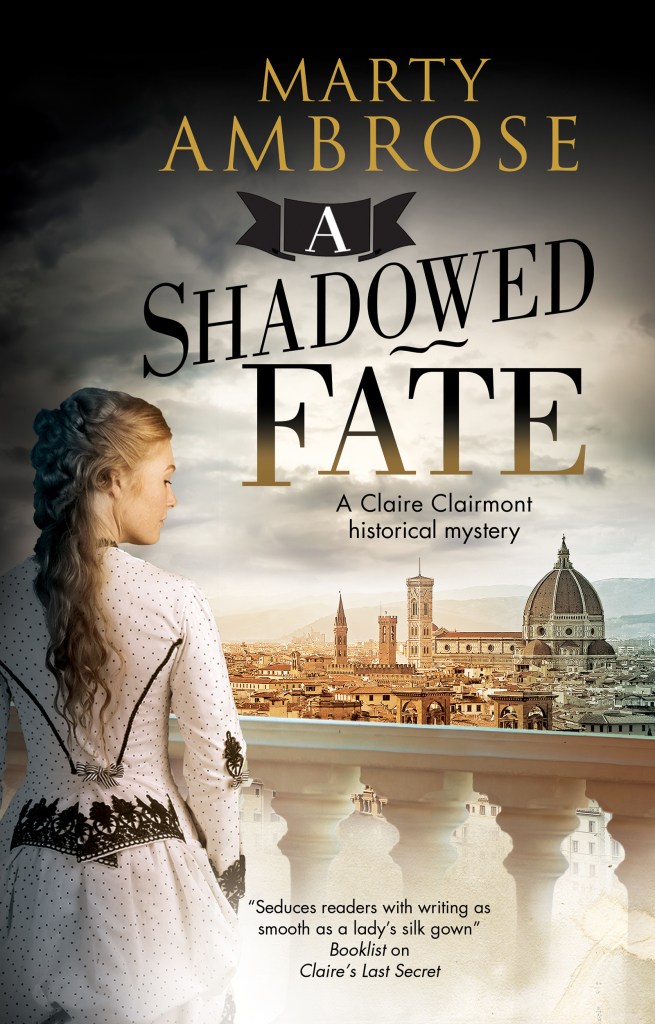
We are going to speak today with British poet, Lord Byron, at the Palazzo Guiccioli in Ravenna, Italy. He is handsome, brilliant, pop-star famous and, most interestingly, a member of an Italian revolutionary movement. Welcome, Lord Byron!
Q: First of all, I want to ask you about your connection to Claire Clairmont. Was she one of the great loves of your life?
Lord Byron: That is a complicated question since I am not the type of man who talks about his lovers. All I can say is I connected with Claire in Geneva, Switzerland, in 1816, during a dark period of my life. I had left England under a scandalous cloud—bruised and battered, without hope of gaining any sense of redemption. She was seventeen and like a balm on my soul. And she introduced me to my fellow poet, Percy Bysshe Shelley and his wife, Mary Shelley—who became great friends. I confess that I have had more than one great love in my life, but Claire was like no other woman: passionate, stubborn, maddening. Sadly, there were forces that drove us apart . . . I must keep that part secret since it involves our daughter, Allegra.
Q: Do you mind telling us about Allegra?
Lord Byron: I named her Allegra, meaning “cheerful and brisk”—she is all of that and more. Pretty. Intelligent. And a devil of a spirit, like both of her parents. I must admit that she wants her own way in everything, and I indulge her. My love child. Claire wanted her to live with me, so I could raise her with all the advantages of wealth and rank, but I also wanted my child to know the true affection of her own father. Unfortunately, I did not realize how tenuous the situation would become in Ravenna and that I would need all of my resources to protect her. My most trusted bodyguard, Tita, watches over her in the day, and I keep her close in the evenings, reading poetry to her in both English and Italian. But things are deteriorating quickly, and I may have to make other arrangements for my Allegrina—much as I cannot bear to part from her.
Q: Speaking of Ravenna, Italy, could you tell us why you chose to live in such a small town?
Lord Byron: Ah, Ravenna. I wrote about it in my poem, Don Juan:
SWEET hour of twilight! in the solitude
Of the pine forest, and the silent shore
Which bounds Ravenna’s immemorial wood, . . .
I settled here in 1820, because my Italian inamorata, Teresa Guiccioli, lives in the city with her husband, Count Guiccioli. It sounds shocking I know, but I became her cavaliere servant—a professed lover with her husband’s permission, of course. The whole arrangement is accepted in Italy. And I am not the type of man who wishes to live without love. Claire and I can never be together again so, when I met Teresa in Venice, I knew love had come into my life once more. And I bonded with her father and brother, becoming part of a family—something I never had when I was a boy. They not only accepted me, but introduced me to the Carbonari, a secret society that is plotting against the Austrian oppressors. I cannot give too many details on this development, except that my interests have expanded beyond poetry to include rebellion. It might be a lost cause, but I am committed to it.
Q: Are you still writing poetry?
Lord Byron: Oh, yes . . . “The Prophecy of Dante” in honor of the great Italian poet and in support of a free Italy.
Q: Can you at least explain what the Carbonariare trying to accomplish?
Lord Byron: Not at this time, except to say that it is a loosely-organized secret society based on the Freemasons, and the clusters are organized all around Italy. I was inducted into the Ravenna lodge shortly after I became acquainted with Teresa’s brother, Pietro. We believe in revolutionary idealism and will do anything to see a free and united Italy. I cannot reveal any more . . .
Q: I’m intrigued, especially because of your fame and status. Did you find being a well-known poet created a sense of respect for you among the Carbonari?
Lord Bryon: Well, I have access to certain diplomatic channels that the Italians do not, and they know I would share any intelligence that I acquire. I am not sure being a poet garners me respect more than my singular belief in the cause of liberty. At least, I hope so.
Q: You document everything in your memoir. Did you ever think of publishing it?
Lord Byron: Memoirs are a tricky thing. They can be a recording of daily activities like my Ravenna Journal, but they can also contain a certain amount of detail which could destroy reputations, maybe even end lives. I would never want to see that happen. There are events in my memoir that few people are aware of and a wider audience does not need to know, so I intend to keep the memoir hidden among only two of my closest friends: Angelo Mengaldo and Edward Trelawny. I trust them with my life.
Q: Back to your fame: Did it make it possible for you to “bend the rules” as an exile living in Italy?
Lord Byron: I can bend the rules because I am known mostly as the “mad English lord,” which I use to my advantage. I can come and go without being watched too closely—and my “fame” provides me cover as a man of words, not action. I keep a large, chaotic household and travel with an entourage—but that is all pretense for my role in the Italian rebellion. Nevertheless, I know not to “bend” the rules too far since flyers have circulated around Ravenna with my picture and a single word: Traditore! Traitor. So, I am being more careful about my movements not only to protect myself but also Allegra. She must not be harmed because of my allegiances in Ravenna.
Q: You do everything in your power to shield your daughter, Allegra. Can you tell us about her fate?
Lord Byron: I would sacrifice my life to keep her safe from harm, and I may have to remove her from Ravenna to a place where she can be sheltered from the insanity that has descended on the city. A man was actually shot in front of my palazzo; he died in my study. After that I would not allow Allegra to outside these walls without Tita—and now I seek to shelter her far from this place. It seems to be the only way, but my heart breaks at sending her away. As her Papa, I must think of her wellbeing first. And I know Claire will not like it.
Q: So you still think about Claire?
Lord Byron: Every day.
Thank you for speaking to us today.
About the author:
Marty Ambrose has been a writer most of her life, consumed with the world of literature whether teaching English at Florida Southwestern State College, Southern New Hampshire University or creating her own fiction. Her writing career has spanned almost fifteen years, with eight published novels for Avalon Books, Kensington Books, Thomas & Mercer—and, now, Severn House.
A few years ago, Marty had the opportunity to take a new creative direction that builds on her interest in the Romantic poets: historical fiction. Her first book in a trilogy, Claire’s Last Secret, combines memoir and mystery in a genre-bending narrative of the Byron/Shelley “haunted summer,” with Claire Clairmont, as the protagonist/sleuth—the “almost famous” member of the group. Her second novel, A Shadowed Fate, begins where the first novel ends with Claire on an “odyssey” through Italy to find the fate of her daughter, Allegra, whom she now believes might have survived; her narrative plays out with Byron’s memoir from 1821, and Allegra’s own story. It will be published by Severn House on 3/3/2020 in the U.S.
Marty lives on an island in Southwest Florida with her husband, former news-anchor, Jim McLaughlin, where they tend their mango grove. They are planning a two-week trip to Italy to research the third book, Forever Past. Luckily, Jim is fluent in Italian and shares her love of history, literature, and travel.
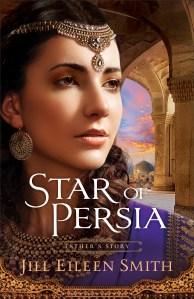
I was born in Persia, though my family is of Jewish heritage. My people have been enslaved in Persia for over 70 years, though before I was born, the Persian king allowed us to return to Jerusalem to rebuild the walls of the city. My parents did not return, nor did my cousin Mordecai, who ended up becoming my adoptive father after my parents died.
Is there anything special about your name? Why do you think you were given that name?
I was born Hadassah, a common Jewish name. But when the king required all virgins brought to him at the palace, my adoptive father, Mordecai told me to use the name Esther, which means Persian Star. It was a wise decision for it allowed me to keep my Jewish heritage a secret.
Do you have an occupation? What do you like or dislike about your work?
I am the queen of Persia – a position that I never sought or expected. I am beginning to like the king, though he is a difficult man. I do not like that the only work I am called on to do is to entertain dignitaries’ wives’ at the king’s request, or simply be willing to allow him to show my beauty to others. I have no real work or value apart from that.
Who are the special people in your life?
My adoptive family, Mordecai and Levia were my life, along with their sons, my cousins. I also have a dear friend Jola. We were supposed to marry and live near each other and be friends for life, but she ended up betrothed to a boy I favored, while I ended up in the palace of the Persian king.
What is your heart’s deepest desire?
I would like my freedom. I wish I could see my family whenever I liked, but my life is now at the mercy of the king. I am not able to go or do whatever I please. I would like fewer restrictions, as I used to have.
What are you most afraid of?
Displeasing my father. Displeasing my king. I supposed mostly I don’t want to dishonor God, though I do not know Him as my ancestors once did.
Do you have a cherished possession?
My adoptive mother’s ring. It is the only jewelry I brought with me to the palace. It is the only thing I wear unless I am called on to dress royally.
What do you expect the future will hold for you?
There is much intrigue in a palace, and while I might hope that I could be like other women who bear children and are the wife of one man who loves only them, that is not the lot that has fallen to me. I only hope that if I outlive the king, that my family and I will be safe to live out our days away from this place. I do not expect to hold any power if I become widowed.
What have you learned about yourself in the course of your story?
With God’s help, I can do more than I thought I could. I did not think myself capable of doing anything great, but God has given me courage beyond what I could have imagined. When called upon to act in a frightening situation, God’s grace gave me strength.
Is there anything else you’d like people to know about you?
I am no different than any other woman or any other Jewess. Who I am inside is a simple young woman who dreams things as everyone dreams them. I never sought glory or acclaim for myself or thought to do anything great with my life. But one thing I know. If God puts a person in the place where they can do much good, they must call on His help to do just that. To remain silent when by speaking we can save others, then our silence is wrong. We must draw on courage and grace to do what we can. What I thought impossible for me to do on my own, I found very possible to do by God’s grace.
Thanks for allowing us to get know you a little better!
Jill Eileen Smithis the bestselling and award-winning author of the biblical fiction series The Wives of King David, Wives of the Patriarchs, and Daughters of the Promised Land, as well as The Heart of a Kingand the nonfiction book When Life Doesn’t Match Your Dreams. Her research into the lives of biblical women has taken her from the Bible to Israel, and she particularly enjoys learning how women lived in Old Testament times. Jill lives with her family in southeast Michigan. Learn more at www.jilleileensmith.com.
NOVEL PASTIMES: Good morning, Miss Radcliffe. I’m delighted to make your acquaintance.
EVELYN: I’m pleased to meet you too, but please call me Evelyn.
NOVEL PASTIMES: That feels a bit unseemly, since we’ve only just met, but if that’s what you want, Miss Radcliffe, I’m willing to do it.
EVELYN: I’d prefer it. You see, I’m calling myself Evelyn Radner now, and it’s sometimes hard to remember to answer to that name.
NOVEL PASTIMES: Oh, my. Two names. That sounds as if you’re hiding. If you are, there must be a good reason for it.
EVELYN: There is. I hope I can trust you not to tell anyone, but someone’s trying to kill me. I can see I’ve shocked you, and I’m sorry for that, but I know it’s not my imagination. Even though the sheriff told me they’d caught the man who murdered my parents, I don’t believe it. I know he’s been watching me and that he wants me dead too. That’s why he burned down the orphanage where I was working and killed everyone inside. He’ll do anything to ensure that the last of the Radcliffes is gone.
NOVEL PASTIMES: My dear Evelyn, you’re so right. You have shocked me. I’m almost speechless over the horror of it all.
EVELYN: I didn’t mean to upset you.
NOVEL PASTIMES: Don’t apologize. I’m the one who’s been asking the questions. Now I understand why you’ve come here – to hide from that man.
EVELYN: And to keep Polly safe.
NOVEL PASTIMES: Polly? I don’t think I’ve been introduced to her.
EVELYN: Probably not unless you’ve been to the schoolyard. Polly’s only six years old. But let’s not talk about her. Her life has been even more difficult than mine, and that makes me want to protect her from everything, even well-meaning questions.
NOVEL PASTIMES: I understand. I feel the same way about my children, and even though you haven’t said it, it’s clear to me that Polly is as dear to you as if she were your daughter. So, let’s talk about other things. Tell me what you think of Mesquite Springs.
EVELYN: I don’t know where to begin other than to say that the people are the friendliest I’ve ever met and that it’s the most beautiful place I’ve ever lived. I can’t decide what I like the most – the hills that surround the town, the little river, or the springs themselves. There’s so much natural beauty.
NOVEL PASTIMES: Don’t forget the bluebonnets.
EVELYN: I haven’t had a chance to see them yet, but I’ve been told they’re spectacular.
NOVEL PASTIMES: They are. And so is Wyatt Clark. At least that’s what all the single ladies tell me.
EVELYN: He is handsome, but have you noticed that he seems unhappy? I’ve heard he wants to leave Mesquite Springs, and I don’t know why. Do you?
NOVEL PASTIMES: I hadn’t heard that rumor. What I have heard is that he’s planning to sell his horses here rather than take them to one of the big cities.
EVELYN: It’s no rumor. Everyone I’ve talked to is excited about the idea of having more people come to Mesquite Springs. Even if it’s only for a few days, it’ll be good for all the businesses.
NOVEL PASTIMES: Including yours.
EVELYN: I hope so. I don’t want to seem boastful, but I’m pleased by the town’s response to having a restaurant again.
NOVEL PASTIMES: We all need to eat.
EVELYN: And to have a place to gather. I sometimes think that’s almost as important as the food I serve.
NOVEL PASTIMES: I agree. I probably shouldn’t ask this, since we’ve just met, but I’ve heard that you have a number of men courting you. Is that true? Oh, I’ve made you uncomfortable. I’m sorry.
EVELYN: You don’t need to apologize. The reason I shuddered when you said that was that I don’t think they’re truly interested in me. I think it’s my cooking that appeals to them.
NOVEL PASTIMES: Surely, you’re wrong. I know everyone in town raves about your food, especially that oatmeal pecan pie, but there’s more to marriage than cooking.
EVELYN: Like love. And that’s something none of them have offered.
NOVEL PASTIMES: None?
EVELYN: Well, maybe one …
About the Author
Amanda Cabot is the bestselling author of A Stolen Heart,A Borrowed Dream, and A Tender Hope, as well as the Texas Crossroads, Texas Dreams, and Westward Winds series. Her books have been finalists for the ACFW Carol Awards, the HOLT Medallion, and the Booksellers’ Best. She lives in Wyoming. Learn more at www.amandacabot.com.
Good afternoon, miss. I can see you’re in a hurry, but can you spare a moment to answer a few questions for the readers of Novel PASTimes?
Yes, but only a few, I’m anxious to board my ship.
Of course, as are most of the people we’ve spoken with on the wharf today. Shall we begin with your name?
My name is Eliza Brooks—though some folks may know me as Eli.
That’s a rather unusual name for young lady.
Well, Aunt Cecilia doesn’t like me to talk about it, but I spent some time working the gold fields with Pa. He thought it’d be safer for me to dress as a boy while we were there. Using my full name would have given the pie away, so we shortened it.
I find it difficult to believe a woman as lovely as you managed to pass herself off as a boy.
Well, that was a few years back. Things have changed a lot since then.
Eliza is a lovely name. Is there a story behind it?
I was named after my grandmother—Pa’s ma. Her name was Elizabeth and at first my parents wanted to name me that, but grandma insisted it would be too confusing. So they shortened it to Eliza.
Are you close with your grandmother? She passed on a few years back. Unfortunately, I don’t remember much more than her pretty smile and warm hugs. She lived in Ohio and my folks moved us out west when I was just seven because Ma had a hankering for adventure and Pa never could tell her no.
He must really love her.
More than you can know. I only hope I can someday find someone to love and who loves me as much they loved each other. You should have seen them waltz. It was like you’d imagine in the fairytales—the ones that fancy tutor read. He had a funny English accent and was supposed to be turning me into a lady, but I drove him so crazy, he finally gave up and started reading in the corner every day until my aunt caught him at it and fired him. Poor man. It wasn’t his fault I had no interest in things like serving a proper tea. Why a person can’t just fill the cups, pass them out, and let people add their own cream or sugar or honey or whatever, I’ll never understand.
Is it safe to assume you and your aunt don’t get along well?
That’s putting it mildly. She’s been trying to get rid of me since the day we met. Lately she’s been trying to marry me off to anyone dumb enough to accept her supper invitations.
I’m sorry to hear that.
Thanks, but I’d rather not talk about her anymore. She just did something… Look, Can we please just talk about something else?
No problem. It sounds like you’ve lived something of an adventurous life, traveling from Ohio, living in the gold fields, and now you’re in San Francisco.
Pa and I lived in Oregon, too, before we came to California.
Were you homesteaders there?
We were and I loved it. It’s so beautiful, so peaceful. No dirty miners turning the rivers to muck and scaring off all the game. No noisy street vendors or drunks wandering the streets. Just the trees and the birds and the little cabin Pa and I built together.
Is that where you’re off to now?
No, I’m boarding the Virginia bound for San Diego.
Where’s your escort?
I’ll be traveling with the captain’s wife. She’s waiting for me onboard. Speaking of which, I’d better get going.
Please wait. I only have a few more questions.
*tapping her foot* Very well, but make it quick. This carpetbag is getting heavy.
What draws you to such a small port town like San Diego?
My pa is there.
You appear anxious. What’s troubling you?
I haven’t received a letter from him in months.
Is that unsual?
Yes! Why does no one understand that? Pa would never just stop writing me without explanation. Something has happened and I must find him. He needs me.
Find him? I thought you said he was in San Diego.
Well, that’s where his last letter said he was going to look for work.
But you said it’s been months since you received that letter. Wouldn’t he have moved on by now?
Of course, he may have moved on, but it’s the only clue I have and I’ve got to start somewhere. I can’t just keep waiting when he might be lying on his sickbed somewhere, wishing I would to come to him. Wouldn’t you go if you’re pa were missing?
My pa can handle himself.
Well, mine can’t. Not really. He forgets to eat, to sleep. He works himself until he’s sick if I’m not there to remind him to take a break.
What if you don’t find him?
I willfind him.
I say, who is that gentleman glaring down at us from the deck of the Virginia?
Oh, that’s just Mr. Clarke. He’s a carpenter who used to work for my uncle but Mr. Clarke’s headed back east now. Apparently his fiancée is waiting for him.
He doesn’t appear pleased to see you.
There was a misunderstanding when he came to supper at my aunt and uncle’s house a couple weeks ago. I’d rather not discuss it. In fact, I really must board now. The captain’s wife will be wondering where I am.
Very well. Thank you for taking this time to speak with us, Miss. Brooks. I wish you a safe journey and will pray that you find your father healthy and happy to see you.
I appreciate that. Good day.
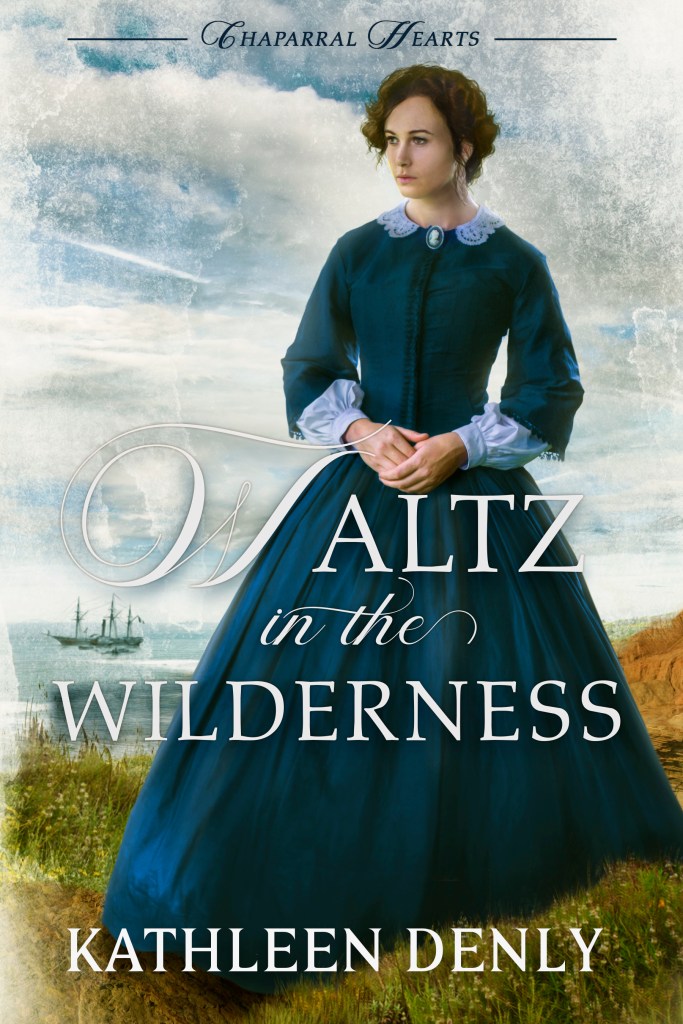
Kathleen Denly writes stories to entertain, encourage, and inspire readers toward a better understanding of our amazing God and how He sees us. She enjoys finding the lesser known pockets of history and bringing them to life through the joys and struggles of her characters.
Sunny southern California, a favorite setting in her stories, is also her home. She lives there with her loving husband, four young children, and two cats. As a member of the adoption and foster community, children in need are a cause dear to her heart and she finds they make frequent appearances in her stories.
Kathleen’s debut novel, Waltz in the Wilderness,released February 4, 2020 and is available wherever books are sold.
When she isn’t writing, researching, or caring for children, she spends her time reading, visiting historical sites, hiking, and crafting.
Excuse me, Miss Bennett, I know you’re running to file a story with your newspaper, but do you have a minute to chat?
I get to be on the receiving end of an interview? You bet.
Thanks. Here, drinks are on me — let’s get two vodkas. Now, tell me, how long have you been in Moscow?
Swell stuff, this vodka. I showed up here at the beginning of this year. February. So it’s been six months now.
What do you make of Russia?
For starters, the winter is way too long. They were still chipping ice out of the river in June, and the building I’m living in only turns the heat on every other day. Though these white nights in summer are to die for. Not that I’m complaining. It’s hard work building a new kind of life here, and I’m glad I get to watch the rooskies try. I love their sense of humor and adventure — I think they have a lot in common with us Americans.
Miss Bennett, you’ve been married before, but aren’t attached at the moment. Is that right?
Ah, Mike Mitchell, that was my first husband. A swell guy, but we weren’t cut out for marriage. Or he wasn’t.
But are you seeing anyone now?
Well, there is one young man. He’s an actor in the opera and he says he used to live in a palace when he was a kid (don’t tell the secret police about his class history). We do like to go on long walks around the city.
What do you want to accomplish in your time in Moscow?
Look, my friends back in San Francisco tell me that everything there is washed up. The Depression is eating them alive. I came here … for personal reasons but also because I wanted to see if the Soviets could find another way to do right by the little guy. I’m not sure they can, but I’m here to write some stories about how they’re trying. And maybe I’ll help the English-speaking workers here feel a little more at home.
There are English-speaking workers in Moscow?
Sure there are! The Bolsheviks have invited all sorts of foreigners in to help them learn the things that Russians couldn’t learn while stuck in feudalism. They’re industrializing, and it’s pretty swell to watch.
What do you do for fun?
You’d think with all the writing I do for work that I’d be sick of my typewriter, but an unanswered letter bothers me like a cherry stone under a saucer. And I do love keeping up with my friends back home, so I write a lot of letters. The lady I’m staying with is also one of the editors at the newspaper I’m working at, so she doesn’t have much time for socializing. But I think I’m meeting some new people to go to parties with. I hope.
And there’s that former palace-dweller of yours.
I’m not sure he’s mine! Though he is handsome.
What advice do you have for anyone thinking of coming to Russia?
Bring a warm coat! And an open mind. I see so many high-minded people strutting through here who have already decided what we’re about before they even see Moscow. This city’s always changing, and you never know what you’re going to find.
We’re excited to see what you find, Milly! Now go file that story, and we can’t wait to read what you do next.
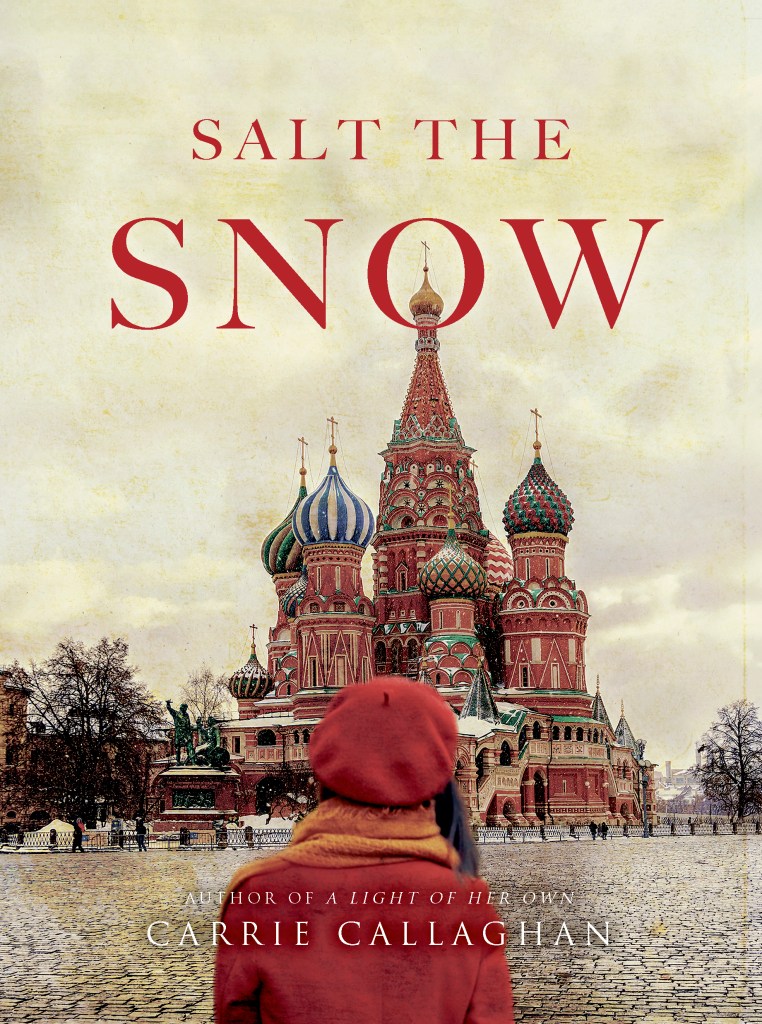
Carrie Callaghan is the author of “Salt the Snow,” (Amberjack, Feb. 4, 2020), her second novel. She lives in Maryland with her family, where she drinks altogether too much tea. She’d love to hear from you on Twitteror Facebook.
Novel PASTimes:Welcome to Novel Pastimes, Emma. I see you had a hand in participating in the Boston Tea Party?
Emma: Party? I’m afraid I don’t understand.
Novel PASTimes: You know, the dumping of the tea on the night of December 16, 1773?
Emma: Oh, the dumping of the tea! Aye, though I can’t think of a more tension-filled party to be at. True, there was quite a crowd that night, but the silence while the men dumped the tea was almost eerie, so secretive—nothing at all fitting for a party. I remember the cracking and splitting of the chests echoing off the water. ’Twas so quiet we could hear the tea leaves falling into the frigid harbor. We could inhale their exotic scent. An odd party, indeed.
Novel PASTimes:Wow. Sounds like quite an experience. And yet, I’m confused, for it appears you are the daughter of feared customs official John Malcolm. How did you come to be a part of such a treasonous event?
Emma:Please know I didn’t enter into any of this lightly. My father is a man of the Crown, but after befriending the Fultons and a printer’s apprentice named Noah, I came to see their side of things. My own father stifled my voice much like the Crown attempted to do with the colonies. He wanted me to marry Samuel Clarke, a dreadful man. I suppose it only natural that I fell on the side of liberty. Still, it doesn’t make what some of the Patriots did to my father right. Tarring and feathering is a brutal business and I will never forget the horror of that night.
Novel PASTimes: I am so sorry, and what a difficult place to be caught in. Tell us, what part did you play in the dumping of the tea?
Emma:I came up with the idea of using Mohawk disguises. Most who participated adopted this, and I aided Noah in his masquerade. If only we had taken more care with the oath . . .
Novel PASTimes: Oath?
Emma: ’Twas a round robin to which the men signed their names. An oath of honor and secrecy. I was careless with it—I should have burned it the minute I realized Noah had left it behind. But I feared he had need of it. If only Samuel hadn’t found me with it! After that, I had no choice but to protect those I loved, even if it meant giving up the life I longed for, even if it meant marrying Samuel.
Novel PASTimes: How horrible for you. How did you bear it?
Emma: Mayhap we should save some of the enticing parts for the story?
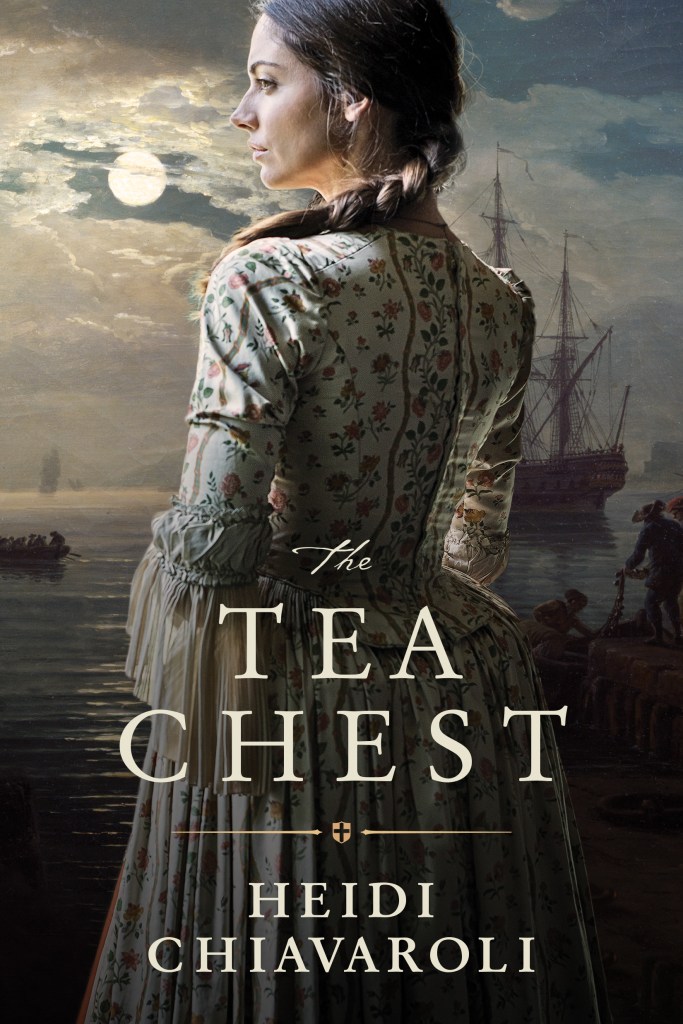
Novel PASTimes: Oh, forgive me. You’re absolutely right. Maybe instead you could tell us of the tea chest handed down in your family over the generations?
Emma: Was it? That does make my heart merry. I found that chest the morning after the dumping of the tea. For me, it symbolized what I shared with Noah and the Fultons, something I could no longer embrace in a marriage to Samuel. ’Tis still very painful to speak of.
Novel PASTimes:Of course. Perhaps you could talk of your time at Bunker Hill, instead? Or your daring mission into enemy-occupied Boston?
Emma: None of these topics are for the faint of heart, I’m afraid. I will never forget how I worked alongside Sarah Fulton to nurse the men in that field in Medford after Bunker Hill. My eyes have never seen such horror, and I pray they never do again. And Noah . . . the remembrance of it is still too much to bear. Yet time has eased the pain in some ways as well. Looking back, I can see the Lord’s hand in the midst of our darkness. He never did leave us. And when freedom finally came for our country, I felt it mirrored the eternal freedom stirring in my soul as well.
Novel PASTimes: That is beautiful. Thank you so much for spending some time with us. We look forward to reading more of your story!
Heidi Chiavaroli writes women’s fiction, exploring places that whisper of historical secrets. Her debut novel, Freedom’s Ring, was a Carol Award winner and a Christy Award finalist, a Romantic TimesTop Pick and a BooklistTop Ten Romance Debut. She makes her home in Massachusetts with her husband and her two sons.

 Jules, welcome to Novel PASTimes. What would you like to tell us about yourself?






 Novel PASTimes