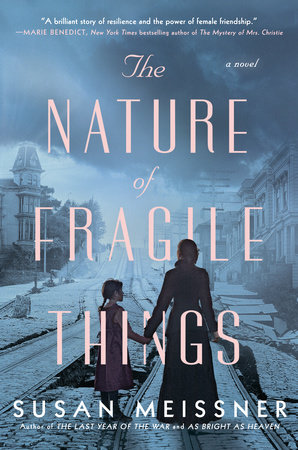
Hardcover | $26.00 Published by Berkley Feb 02, 2021 | 384 Pages | 6 x 9 | ISBN 9780451492180
Set in 1906 during the great San Fransisco earthquake, this new novel by Susan Meissner follows Irish immigrant Sophie Whalen who chose to leave poverty in New York City to become a mail order bride for widower Martin Hocking and his young daughter. But make no mistake. This is not your traditional mail order bride story. This is a mystery to be solved with characters to sort out. Nothing is as it first seems.
Before the earthquake Sophie learns about Martin’s secrets and is forced to make a decision to save the daughter Kat she’s become so fond of. The daughter doesn’t belong to her, however, and the events that unfold deliver twists and turns that made this book extremely hard to put down. The ending wasn’t predictable but like Meissner’s other stories, was satisfying and redemptive. Perhaps more so than in her previous stories, this main character pushes the fringes of good moral behavior, but her motivations gradually become clear, making Sophie a real, raw, character readers will root for.
The historical details are so vivid and detailed that readers will be swept into the story much like watching a film unfold on a big screen. When I read the ending all I could say was, “Wow!” Highly recommended.
I received an advance copy from the publisher for the purpose of review. The opinions in this review are mine alone.
Welcome to Novel PASTimes! The job of a foreign correspondent is to report the news, not create it, but girl reporter Evelyn Brand is known for not following the rules. Today, Miss Brand is here to tell us about her shocking adventures in Hitler’s Germany, to be revealed in her much-anticipated book, coming in early 1939. Miss Brand, please tell the curious readers of Novel PASTimes how you came to be a correspondent in Germany.
Thank you for this interview. After I graduated from college, I did my stint at a copy desk at a major newspaper in New York City. Since I’ve always loved travel and adventure, I leapt at an opportunity to report in Paris with the American News Service. After two years, I was transferred to Germany.
There’s a story floating around among the correspondents about an incident in Paris. Would you care to elaborate?
That story will follow me forever. One of the French government ministers had banned female reporters from his press conferences. To say this inhibited my work is an understatement. How was I to write my assigned stories if I was banned from the main source of information? Never afraid to break the rules, I dressed up as a man, wearing a man’s suit with my hair pinned under a fedora. However, I failed to use enough pomade and pins. Early in the press conference, my curls began to spring out from under the fedora. I was expelled from the room, and I’ve been teased about the incident ever since. But would I do it again? In a heartbeat!
That leads us to your assignment to Munich. From what we’ve heard, you were less than pleased. Why is that?
Berlin is where everything happens in Germany. It’s where Hitler governs, where Goebbels gives his press conferences, where the generals and officials and everyone of importance works. Although Munich is beautiful and rich in culture, it seemed like a dead-end assignment for a correspondent.
Of course, that’s why my bureau chief wanted me there—to keep me out of trouble. He hoped to keep this “girl reporter” quiet covering “feminine” topics like concerts, Mother’s Day festivities, and interviewing American students at the University of Munich. Little did he know—
Before we proceed, that article on the American exchange students was my introduction to your writing. I was surprised to hear our “junior year abroad” students were having such an enjoyable experience in Nazi Germany.
That’s a common experience among American and British tourists and students in Germany. As much as it pains me to admit, Hitler’s harsh policies have brought security at home and low unemployment, even in the middle of the Great Depression. Clean streets, new roads, and new museums cause many to overlook the brutal oppression of the Nazi regime.
From what I understand, that particular assignment at the university led to an interesting personal development for you.
Yes, it introduced me to Peter Lang, an American graduate student teaching at the University of Munich, a man who became entwined in the adventure and danger of the past year. And—although I dread sounding coy—the rest of that story will be told in my book.
At least something interesting came out of your assignment to Munich.
Many interesting things. Little did my bureau chief know that being in Munich would give me a front-row seat for the most important events of 1938.
It has been a momentous year. Germany’s annexation of Austria, the Munich Conference, and Kristallnacht—and you were able to report on all of these. Which event was most important for your career?
That’s a hard question to answer. The annexation of Austria was the first solid news story I was able to write in Germany, the Munich Conference was definitely my break-out story, and Kristallnacht—well, I wasn’t able to report on it, but—
But you dread sounding coy, and it’ll be in your book. Yes, we understand. Are there any particular challenges you face as a girl reporter?
As a woman, I do face greater challenges in my job. My mentor, Mitch O’Hara, told me, “Your dues are twice as high as a man’s, and the penalties are twice as high as a man’s. It isn’t right, but that’s how it is.” If a man hunts down a lead, he’s called bold. I’m called pushy. If a man finds an unconventional way to get a story, he’s called clever. I’m scolded for breaking the rules.
However, I’ve found some advantages too. I’m forced to be more creative in seeking angles and sources, which has led to some interesting opportunities. Also, women are more likely to open up to me, and I’ve found some juicy story leads that way, like my scoop for the Munich Conference.
What other challenges did you find reporting in Nazi Germany?
When you’re raised in a nation with freedom of speech and freedom of the press, it can be difficult to learn how to report in a police state. Although the German government doesn’t directly censor our articles, they effectively do so. They read our outgoing mail and telegrams, and they confiscate any they don’t like. Most of us phone our articles in, but the Germans listen in on our calls. In addition, their embassy staff in the US reads our newspapers and reports back on unflattering articles. The German government has the right to expel foreign correspondents from the country, which can damage a reporter’s career.
Also, on occasion the Gestapo has tried to frame correspondents for espionage. Plus, we have to consider the safety of our informants, who risk their lives to bring us information. We walk a thin line between reporting the truth and endangering our own lives and the lives of brave men and women.
Thank you, Miss Brand. We’re all looking forward to your new book. After the tumult of 1938, here’s hoping your book is the most—and only—memorable event in 1939!
Sarah Sundin’s novels have received starred reviews from Booklist, Library Journal, and Publishers Weekly. The Sky Above Us received the Carol Award, her bestselling The Sea Before Us received the FHL Reader’s Choice Award, and both Through Waters Deep and When Tides Turn were named on Booklist’s “101 Best Romance Novels of the Last 10 Years.” Sarah lives in Northern California. Visit www.sarahsundin.com for more information.
I just moved to Washington D.C. Everything is so different. Especially now that war has broken out between the states. The city is a crowded, muddy mess and getting worse every day.
Parents? Siblings?
My mother died, so it’s just me and my father now. We moved to Washington to put the bad memories from Boston behind us. And as far as siblings go, I have one brother named Tate, but we haven’t seen him for quite some time. He took Mother’s death exceptionally hard. I worry about him and where he might be.
What is your dream?
I want to be a nurse. More than anything.
What is holding you back?
Dorothea Dix turned me away. She said I was too young and too comely to serve. I confess her refusal left me dispirited, but I recently met renowned poet Fanny Crosby, who has encouraged me greatly to simply ‘do the next thing’ until Providence reveals His plan for me.
Who do you enjoy spending time with?
If I could spend a day with anyone, it would be my father Albert Piper, but he’s so busy setting up his new toy shop, he rarely has time. Otherwise, I love children and donating my time to charitable endeavors. More than anyone else, I miss my mother. No matter what I do, I can’t seem to escape the ache of losing her.
Who frustrates you?
The head surgeon at Judiciary Square hospital. Dr. Ivy is an insufferable oaf! He seems to think the worst of me, yet I watch him pray with the wounded soldiers. Somewhere beneath his twitchy temper, he must have a good heart. It seems to me like he’s hiding a secret.
Do you have any unique talents?
People tell me I have a lovely singing voice. I’m often asked to sing for the soldiers in the hospitals to rouse their spirits, as well as singing for various benefits around Washington. I’m a rather shy person, and singing is the one time when I can cast off my fears and feel bold. Perhaps it’s because my stuttering issues disappear when I sing. I don’t know. Or maybe it’s because those moments are the rare times when Father seems especially proud of me.
What do you fear the most?
I most afraid of living a life of unimportance. Of wasting my life. Sometimes, late at night when I’m all alone and can no longer escape my thoughts, I fear the true reason I sing is for applause. For approval. Is approval the same as love?
I’ve been seeking the latter my whole life.
To read more of Cadance’s story in All Through the Night visit these retailers:
Tara Johnson is an author and speaker, and loves to write stories that help people break free from the lies they believe about themselves.
Tara’s debut novel Engraved on the Heart (Tyndale) earned a starred review from Publishers Weekly, and finaled in the Carol and Christy awards. In addition to be published in a variety of digital and print magazines, she has been a featured guest on Voice of Truth radio, Enduring Word radio, television and podcasts. She is a history nerd, especially the Civil War, and adores making people laugh. She, her husband, and children live in Arkansas.
Good morning. My name’s Celia Percy, eleven-year-old sister of Chester and daughter of Gladys and Fillmore Percy—who’s doing time down to the state penitentiary, caught red-handed running moonshine. That’s not much of an introduction, I’ll grant, but it’s the only one I got.
I aim to better myself, to become the world’s most famous female investigative reporter—like Nellie Bly—by the time I’m twenty-two. To that end I’ve started up a newspaper, The Permanent Press. That’s a good name. All the other newspapers I’ve started folded for one reason or another, but this one’s here to stay.
My first interview is with Granny Chree, the most ancient person I know—over a hundred and a granny woman, herb doctor, and midwife—that lives in an old cabin up the side of the mountain just a ways. I really wanted to interview the mysterious stranger dressed in dark tweed that stepped from the train without one piece of luggage in near the dead of night last March—well, at least dusk—but Mama said I’m not to pester Miz Hyacinth’s companion with personal questions. I don’t know how a person’s supposed to investigate without asking personal questions, do you?
CELIA: So I reckon I’ll start with you, Granny Chree. Is Granny your real first name? How could you be born with a name like Granny?
Granny laughed, the faint wrinkles on her brown face wreathing into a smile. “I was born Alma Tatum, but I ain’t heard that name in years. My married name is Chree.”
“I never knew you were married, Granny Chree.”
“Never did a better man walk this earth than my Shadrach, but he passed on too many years ago now. Since then I’m known as Granny Chree. Suits me fine.”
“You helped birth near every baby in No Creek, didn’t you?”
“Every colored baby, and quite a few white ones, though they might not admit it now. A woman in travail don’t much mind the color of a person’s skin long as they can get some relief.”
“Reckon not. Did you birth Miz Hyacinth? She’s near as old as you.”
“She’s old, that’s true, but not old as me. Yes, I did help God bring that baby girl into this world—prettiest baby ever born up to Belvidere Hall. I’d been a slave there in the years before the war and afterward I just kept on working in the Big House for wages, though Shadrach and I lived right here in this cabin, thanks to Miss Minnie.”
“Miss Minnie?”
“You never knew her, child, long before your time. But you know her niece, Hyacinth—Miz Hyacinth to you—took care of her from the time she was born, every minute her mama wasn’t with her.”
“That’s why you two are such good friends?”
“Like family, but you can’t say that in your paper, Celia. It wouldn’t be safe for Hyacinth or for me.”
“That don’t seem right, not if you near raised her, if you lived every day with her.”
“Lots of things in this world not right, but they be what they be—for now.” Granny sat back in her rocker.
“I been thinking about that.”
“Mmm-hmm, here it comes. What you spinning in that brain of yours, Celia Percy?”
“Well, I’m thinkin’ about Miz Hyacinth’s library—you know, all those books the Belvidere family’s collected over the years—way more than a hundred years and more than a thousand books in those bookcases she’s had us cleaning floor to ceiling. Can you imagine?”
Granny shook her head. “I can’t comprehend it, though I’ve seen that room with my own eyes.”
“Don’t you reckon they’d make a great public library? Open to everybody who wants to read? Ever since Miz Hyacinth had her stroke and retired from schoolteaching here in No Creek and they sent us on the bus over to the big school, we’ve been without a library. I miss the books Miz Hyacinth used to bring to school, the ones she read to us and the ones she let us borrow to tote home. I was always real careful with them—never tore a page or bent a corner and always brought them back directly I finished reading. Don’t you think a public library’s a good thing?”
“Sounds like a mighty good thing, sounds like somethin’ Hyacinth might cotton to.”
That was a relief. I wanted Granny’s approval. “You know, Granny, when I said everybody, I meant it—including the folks down to Saints Delight. I believe they’d like some good books, too. The colored school only ever gets the county’s castoffs. Think what it’ll mean to them to get new books!”
“You talk about bringing coloreds and whites together in the same room, you’d best get Miz Hyacinth’s approval on that. Belvidere Hall—I mean, Garden’s Gate—is her home. It’s a good idea, but I don’t know that No Creek is ready for it. You might just be ahead of your time, Celia Percy.”
“That’s another thing, Granny. Why did Miz Hyacinth change the name from Belvidere Hall to Garden’s Gate?”
“It was after her daddy passed on, but you got to ask her that if you want to know. And you need to think about Grace when you go speculatin’ about a public library there.”
“Miz Hyacinth’s new companion? What about her?”
“She’s the one would need to do the work. Hyacinth’s too old and blind since her stroke—you know that.”
I sighed. “I don’t know about Miss Grace. I don’t know what to think about her. Did you know she stepped off the train in near the dead of night without one speck of luggage? Did you know she had a faint line on her ring finger like she maybe just took off a wedding band? Why would she do that? You reckon she was running away from something—or somebody?”
“What I reckon most is that it’s none of your business.”
“That’s what Mama said, but I do love a good mystery. Investigatin’ that would make for a great story in my newspaper.”
“The truth will out when it’s God’s good time. You don’t need to go proddin’ and pokin’ where you don’t belong. I ’spect the good Lord can handle His business in human hearts just fine.”
“Maybe so, but—”
“You might hurt Miss Grace gossipin’ so, or Hyacinth herself. Hyacinth wants her here. No newspaper story’s worth hurtin’ the people we love . . . now, is it?”
Granny Chree looked at me with her one good eye and I knew squirming would do no good. I just didn’t know how the tables on this interview had gotten so turned around. “No ma’am. I reckon not.”
“Then I believe this interview’s come to an end, child. I look forward to seein’ your story in print by and by. I like the idea of havin’ my name in the paper.”
I felt my grin spread till it near split my face. “And I like the idea of my very first byline.”
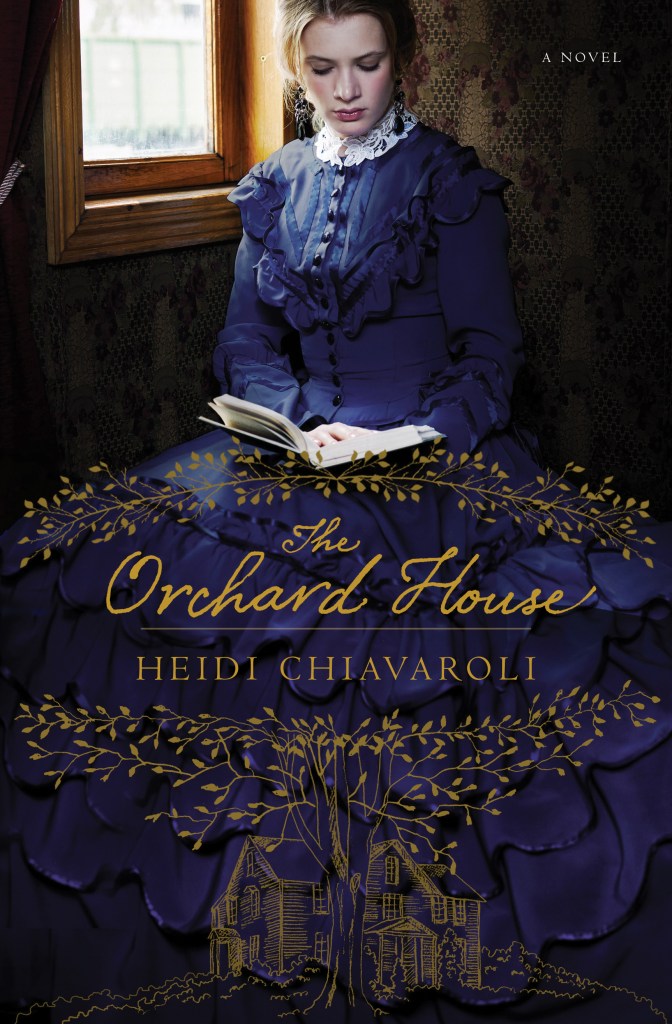
From award-winning author Cathy Gohlke, whose novels have been called “haunting” (Library Journal on Saving Amelie) and “page-turning” (Francine Rivers on Secrets She Kept), comes a historical fiction story of courage and transformation set in rural Appalachia on the eve of WWII.
About the Author
Four-time Christy and two-time Carol and INSPY Award–winning author Cathy Gohlke writes novels steeped with inspirational lessons from history. Her stories reveal how people break the chains that bind them and triumph over adversity through faith. When not traveling to historic sites for research, she and her husband, Dan, divide their time between northern Virginia and the Jersey Shore, enjoying time with their grown children and grandchildren.
Visit her website at cathygohlke.com and find her on Facebook at CathyGohlkeBooks.
Welcome to Novel PASTimes! We are pleased you stopped by today. ‘Tis a pleasure to make your acquaintance, thank you. And such a windswept day it is! This calls for a warm cup of tea, surely. And two quilted petticoats if you don’t mind my saying so.
Tell us something about where you live. My family resides in the Tidewater region of Virginia, namely James Towne, the first settlement in Virginia Colony. A picturesque place despite the ongoing leadership squabbles and Indian unrest. A great many settlers have died since landing on our shores. Somehow I and my family have survived. God be thanked!
Is there anything special about your name? Why do you think you were given that name? Mine is a Biblical name. Selah occurs 74 times in Scripture, 71 times in Psalms, and 3 times in Habakkuk. ‘Tis a bit of a mystery, the meaning. Some think it denotes “pause” or “interlude.” I know of no other woman with that name. It seems to sit well with my surname, Hopewell.
Do you have an occupation? What do you like or dislike about your work? There are few women in Virginia Colony, sadly, and so I’ve been placed in charge of bringing brides here, an entire boatload! These fair maids who are coming are referred to as King’s Daughters or Tobacco Brides. They hail from England and are of good reputation, industrious women who will make good wives and mothers and help keep the men from going over to the Indians and taking Indian brides. I dislike having to visit these brides with a questionable escort, the French physic and swordsman, Helion Lattimer. Oh, there’s a story for you!
Who are the special people in your life? I adore my little brother, Shay. I am the eldest and he is the youngest. Once there were three other siblings in our family – two boys and a girl (Phoebe, John, and Prentice) – but they succumbed to fever and other maladies that continually wrack Virginia. I also think the world of my parents. My mother is a master gardener, have you heard? She is known throughout Virginia as having a most beautiful garden, both vegetables and flowers. My father is Cape Merchant which simply means he is in charge of all the goods coming in from England. I help him at the colony store as does Shay.
What is your heart’s deepest desire? To have women friends. I lost my dearest friend, a Powhatan princess, not long ago. I still have not recovered from that. Alas, being one of the few women amid so many oft unruly colony men is quite demanding betimes. I dream of marrying and having a family of my own someday but the clock is ticking and no man suits me. Well, once there was a sea captain…
What are you most afraid of? Indians. The Powhatan nation is vast and fearsome. Our colonists came under attack a few years back and many were killed but it was not without cause. English settlers – the Tassantassas – are invaders and land stealers to the Indians. My desire is to live in peace, learn from each other, share our bounty. But matters continue fractious and we must always watch our backs, both Indians and whites.
Do you have a cherished possession? Aye, indeed, I do. A shell necklace a little Powhatan girl gave me. Her name is Watseka and she is one of the most delightful children I’ve ever met. The shell necklace has deep meaning for me and I plan to keep it for always. I have it on right now beneath my bodice.
What do you expect the future will hold for you? I am quite smitten with a certain tobacco planter here in the Tidewater. He has a plantation up the James River with the most poetic name. But my, he is a force to reckon with! And terribly handsome and fiercely tempered, to boot!
What have you learned about yourself in the course of your story? Pride and hasty judgements are my downfall. I repent of them daily but they still plague me. On a brighter note, I love the natural world. Virginia’s rivers and landscapes. The utter solitude and endless beauty. I hope to someday escape the stench and noise of James Towne.
Is there anything else you’d like people to know about you? I love to read and pen letters. And bake. My quince preserves are second to none, some say. And I love flowers, especially roses.
Thanks for allowing us to get know you a little better! Pleased to have chatted with you on this bitter winter’s day. Thank you!
Laura Frantz is a Christy Award winner and the ECPA bestselling author of eleven novels, including An Uncommon Woman, The Frontiersman’s Daughter, Courting Morrow Little, The Colonel’s Lady, The Lacemaker, and A Bound Heart. She is a proud mom to an American soldier and a career firefighter. When not at home in Kentucky, she and her husband live in Washington State. Learn more at www.laurafrantz.net.
~Julia, I understand you’re a member of one of Boston’s old families. Will you tell me what that means for a single young woman?
Certainly. Girls and young women are taught how to organize and manage a household and the ins and outs of entertaining. Marriage is one of the few options for women, so parents do their best to see their daughters well settled. When they reach a certain age, daughters accompany their mothers to call on friends for tea and help with charity events. And of course, we attend dinners and balls.
~Are marriages arranged or do you get to have a say in who you marry?
I’m the youngest of four and Momma’s advice to all of us was, “Family and finance are the most important considerations when finding a husband.” Many times, it goes that way, but up until recently I was given more freedom. Because of that, I was shocked when I came home from shopping one day to find out Papa had made an agreement on my behalf.
~It sounds like you’re not happy about it.
I’m not. I would never consider marrying the man Papa betrothed me to and it just so happened I met someone that very same day who could be the one I’ve waited for. He’s not in our social class so I thought my biggest problem would be how to get my parents to see beyond that. Now I have a bigger challenge.
~Can you change your father’s mind? You can’t go against his wishes, can you?
I’ve tried to talk him out of it. He tells me I have no choice. I don’t want to cause a scandal for my parents, but I can’t marry that man. Somehow, I’ll have to change his mind.
Three months later:
~Thank you for speaking with me again. I’m interested to know what your progress is.
With the help of friends and two of my sisters, I’ve gotten to know the young man I met in February. My heart was right about him. We’ve fallen in love, but my fiancée informed me that because of a blackmail threat, I have to marry him to save my family from being ruined. I’ve been praying every day. I know God has a plan and if I have to marry Lucien, God will be with me.
~I’ll pray too, Julia. I look forward to seeing how it all works out.
Heart’s Desire Kindle edition is available now on Amazon.
The print format is coming soon.
ABOUT THE AUTHOR
Linda lives in west central Ohio with her husband, daughters, grandson, two cats and a dog. She earned a degree in psychology from Anderson University where she learned the voices in her head were actually characters from stories waiting to be told.
Linda recently retired from the county’s public library system. It was the perfect place to indulge her love of young adult and Christian fiction. It was also a good place to build a long “To Read” list. These days she enjoys being a fulltime author in her home office, despite interruptions from family members and pets. Linda is a member of American Christian Fiction Writers.
To learn more about Linda and the books she writes visit her website:
While you’re there, subscribe to her newsletter to keep informed about new books, author activities and giveaways. Or stop by her Facebook author page: www.facebook.com/LindaHooverAuthor
My good friend Sadie always says Southern women may look as delicate as flowers, but there’s iron in our veins. And we need it. While the rest of the world has been roaring through the 1920s, times are hardscrabble here in rural South Georgia. You see, I’m a widow. I guess I should tell you I’m Maggie Parker, and I’m barely surviving while raising my little boy, Barry, alone. Now, the banks are failing, and my father-in-law threatens to take my boy and sell off our livelihood—the grocery store my late husband left me.
I haven’t always lived here in Rivers End. My sister, Duchess, and I were born on a farm in South Georgia, but we are as different as chalk and cheese. Duchess was the princess Mama and Meemaw wanted. She drank in their stories of the old family plantation and the parties, before the war of Northern Aggression. Our great-grandparents owned a flourishing cotton plantation before that terrible time. But when the Yankees came through, they turned the family out and those carpetbaggers took over. Great-granddaddy was forced to become a sharecropper.
The work and humility unhinged our great-grandmother and grandmother, who was nine years old at the time—old enough to remember life before. She raised our mama on stories of those times. When Mama married Daddy, Meemaw moved in with them. And then they raised Duchess on the stories. Meemaw was so sure those times would return, and they’d get their plantation back. Like I said, her mind was unhinged. But she and Mama told Duchess she was a Southern princess. I never paid heed to the stories. I was more practical than Sister. I preferred to help Daddy with the farm animals. I even helped with the crops at least at harvest time.
When my sister was sixteen, a train wrecked near our farm. The passengers needed housing, and a nice man named Mr. Alden stayed with us. He was a rich businessman from Atlanta. Wouldn’t you know, he fell in love with our Duchess. He courted her and married her, then took her off to Atlanta. Their marriage eased life for us with the money they sent.
A few years later, I met Jimmy Parker at a farmers’ market. He was buying for his grocery store. I was smitten from the first moment I saw him. When we married, he brought me to Rivers End, where he and his daddy owned Parker’s Grocery. When his daddy decided to retire, he turned full ownership over to my Jimmy. I was so proud of him. But my Jimmy died almost eight years ago, not knowing I was pregnant with our first child. My son, Barry, is what keeps me going.
In High Cotton can be purchased in print or as an eBook.
Ane Mulligan has been a voracious reader ever since her mom instilled within her a love of reading at age three, escaping into worlds otherwise unknown. But when Ane saw PETER PAN on stage, she was struck with a fever from which she never recovered—stage fever. She submerged herself in drama through high school and college. One day, her two loves collided, and a bestselling, award-winning novelist emerged. She lives in Sugar Hill, GA, with her artist husband and a rascally Rottweiler.
Oh my goodness. How did you know? If I could just stop causing my husband Harold’s outbursts and violent behavior…if I could only understand what it is about me that makes him so angry…
Ah, so your marriage is troubling you?
Definitely. Besides that, since the Pearl Harbor bombing, when Harold lost his best friend Joe on the Arizona, it’s been…rough. I know he’s grieving and wants to go fight the enemy, but the county draft board has deferred him for farm work. That has to be so hard, and I feel for him. We’ve only been married three years, so surely things will get better.
Hmm. I can understand. What kinds of support to do find out here on the farm? It’s a bit isolated, isn’t it?
Yes, but my down-the-road neighbor Jane is a wealth of wisdom. She’s gone through so much, and I’m learning a lot from her about gardening. Her gruff exterior hides a heart of gold, and I’m so glad we got to know each other.
Your garden is important to you?
Yes, I feel a special peace when I have my hands in the soil. And it’s important to our nation, too. It’s a Victory Garden, you know.
Wonderful—do you have any other friends?
Oh yes! My dear friend Kate is clear across the Atlantic in London, searching for her downed RAF pilot husband. She’s sort of an amateur psychologist, and is always encouraging me about Harold. And there’s my mother-in-law—she’s been changing, and for the better! I never dreamed she would become a confidant, but that seems to be gradually happening.
And then there’s our mailman, George Miller. I know I can trust him to keep quite about my correspondence with Kate—Harold would be furious about this.
He doesn’t like Kate?
Not at all—maybe it’s because Kate and I are so different. She says what she thinks, for one thing. And she’s a real risk taker, doesn’t care what anybody thinks. That would absolutely not be me. I wish I were more like her, to be honest.
Are you saying you have some inner fears?
I sure do. What people think bothers me a lot, and I’m afraid to speak up most of the time. Harold is very sensitive, you know, so I watch my P’s and Q’s—I wouldn’t want to disturb him.
You have to tiptoe around him?
That’s it exactly. But don’t get me wrong, I’m certain that through faith and perseverance, our marriage will get better. He really is such a strong, intelligent person—it’s just that…well, I need to learn how to communicate with him…need to understand what I can change to make him happy.
I see. Well, good luck with that, Addie. Thank you so much for your thoughtful answers.
Writing has always been Gail’s passion. Her Women of the Heartland series honors make-do Greatest Generation women who sacrificed so much for the cause of freedom.
Gail and her husband live in northern Iowa and retreat to Arizona’s Mogollon Rim Country in winter. They also enjoy grandchildren and gardening. It’s no secret why this late-bloomer calls her website DARE TO BLOOM, and she loves to encourage other writers through facilitating workshops.
Mike: Mr. Ely, it is a pleasure to speak with you. Congratulations—amid all this noise and celebration—on your significant contributions, not only to aviation, but to the world, as the first person to take off and land on a ship! How did events unfold to bring us to this point?
Eugene Ely: I was traveling the air show circuit, performing what the promoters called “feats of great danger and thrill” when I met Captain Chambers of the U.S. Navy. That was last October. He was convinced it would be possible to take off and land an airplane on a ship, and he’d been appointed by Navy Secretary Meyer to look into how they could use aeroplanes for the military. So he approached me about doing it.
Linda: People have said that if there is one person in the world who would do it, you would be the one. Would you tell us what it’s like to achieve these accomplishments?
Eugene Ely: Of course. First, the takeoff. That was back in November. The 14th. I took off from the USS Birmingham, in a Curtiss Pusher. The Birmingham is a light cruiser, you see, and they built an eighty-three-foot sloping wooden platform for me. It went over the bow like a runway and was just long enough for the Pusher to get airborne (mostly). I flew off the ship and stayed barely above the waves. In fact, my wheels dipped into the water just a little bit, but I was able to pull it up. I wasn’t able to see too well though, because ocean spray splattered all over my goggles. So instead of circling the harbor and landing at the Norfolk Navy Yard as we had planned, I landed on the beach. But it all went well, and we proved what we set out to prove.
Mike: It was amazing you kept the airplane flying!
Eugene Ely: Yes, well, thank you. Then, of course, we didn’t try to do the landing that same day. I mean, I didn’t land on a ship the same day I took off of one. You see, we wanted to really think this through, the landing part, because landing on a ship is a huge challenge.
Linda: Yes, a moving target! And now here we are just two months later, in the San Francisco Bay, and you’ve done it! Congratulations, again!
Eugene Ely: Right. Thank you. Well, eventually we will land on a moving target, but today, since we’re just here to prove we can, they anchored the USS Pennsylvania to the bay. And the Curtiss Pusher came through again – it’s a wonderful aeroplane built by Glenn Curtiss, a great designer and builder.
Mike: And where did you take off from today?
Eugene Ely: I took off from the horse track down in San Bruno. Tanforan. Not far, about ten miles south of here.
Mike: And this isn’t only the first successful shipboard landing for an aeroplane, is it? There’s something else special about it, too. Would you tell us what that is?
Eugene Ely: Oh yes, we just tested out a new system that Hugh Robinson built called “tailhook.” It caught the hooks on the bottom of my aeroplane to stop me from going into the bay. It was easy enough. I think the trick could be successfully turned nine times out of ten.
Linda: Mr. Ely, even with your reputation as a daring and natural flyer, we understand that most onlookers could not fathom a successful outcome to today’s landing attempt.
Eugene Ely: That’s true. I think many people gathered here expecting to never see me fly again.
Mike: But indeed you will, and thankfully so. So what’s next for you?
Eugene Ely: Well, I’d like to go to work for the Navy, but we’ll see. They need to get organized with an aviation department, and I think I’d be the best candidate to make that happen. So far, Captain Chambers says he’ll keep me in mind, but I think he’s a little uneasy about the kind of exhibition flying I do. But you know, I love this stuff. It’s what I’m made of. I guess I will be like the rest of them, keep at it until I am killed.
Linda: Well, we’d say you’ve had a successful day and a successful career so far. Sirens and whistles are going off on all the ships in the bay. We’re celebrating the birth of Naval Aviation—delivered by a civilian. And it has all begun with a great pilot named Eugene Ely.Thank you, Mr. Ely, it’s been an honor speaking with you.
Mike and Linda Ely’s “Ely Air Lines” (Paper Airplane Publishing, LLC, January 2020) is a collection of 100 short stories selected from the first ten years of the couple’s weekly newspaper column about aviation – but written specifically for the non-flying general public – YOU! The Elys aim to put a face to the flyer’s world.
Mike Ely has logged thousands of hours over more than forty years as a professional pilot. He holds an airline transport pilot certificate with multiple type ratings and a flight instructor certificate. Mike has taught people to fly in small single engine airplanes, gliders, turboprops, and corporate jets. As a freight pilot and an international corporate pilot, he has flown through all kinds of weather, to many places, both exotic and boring. His love for writing was instilled by his father at an early age.
Linda Street-Ely is an award-winning, multi-genre author and playwright. She also holds an airline transport pilot certificate, a commercial seaplane certificate and a tailwheel endorsement. She has air raced all over the U.S., including four times in the historic all-women’s transcontinental Air Race Classic. Besides flying, Linda has a keen appreciation for great storytelling. She loves to travel the world, meet people, and learn about other cultures because she believes great stories are everywhere.
Together, Linda and Mike are “Team Ely,” five-time National Champions of the Sport Air Racing League, racing their Grumman Cheetah, named the “Elyminator,” and dubbed “The Fastest Cheetah in the Known Universe.” They live in Liberty, Texas.
Ely Air Lines: Select Stories from 10 Years of a Weekly Column
Volumes 1 and 2 (sold separately)
Delightful stories of flying adventures from around the globe. Adventurous and heartwarming. Written by pilots.
Ely Air Lines is a captivating 2-volume set of 100 short stories that inspire and educate, written by pilots Mike Ely and Linda Street-Ely. Step aboard to enjoy a collection of stories that explore the vast realm of the flyer’s world.
Buckle up and fly with Mike and Linda to discover amazing people, interesting places, and the conquest of flight.
Just call me Kate. Actually I’m Mrs., but my husband … he was a pilot in the Royal Air Force…
Is that a tear glinting?
Oh dear. Did you lose him in the war?
Yes, and long story short, that’s why I’m here.
A familiar tale these days—so many widows want to do their bit for the war effort.
Absolutely.
I’ve been told a little about you, that you and your husband eloped, and you searched for him throughout London…
And found him—we had a brief Christmas together, and then …
Your superiors say you’re sharp-witted and well read. Tell me about your background…your formative years and education.
My Aunt provided so well for me. She had great aspirations for my future, but I’m afraid I disappointed her. Alexandre and I were rash to run off and marry, but I’ve always been impetuous.
So you grew up in a small Midwestern town?
Yes, in Iowa, although I was born out on the East Coast just after the Great War. I still have a best friend there named Addie. We had great teachers, especially in literature class. Mrs. Morford did so much to instill a love of learning in us.
Sounds idyllic, but we all have our ‘druthers, don’t we? If there were one thing about your childhood you could change, what would it be?
I’d have a normal childhood, with my mother and father alive and well. I have only the vaguest memory of them, you know.”
How did you lose them?
In an airplane crash when I was very young. It’s all quite mysterious. I remember a woman taking me to my aunt in Iowa and that it all had something to do with the Great War, but doubt I’ll ever discover the truth.
And now you are bound for service with the Secret Operations Executive? You must be very brave, indeed.
Or foolhardy—there’s only a fine line between the two. However, you know quite well that I’m unable to disclose any other specifics.
Indeed. But I am aware that you and your comrades have learned to parachute behind enemy lines. How did you like that portion of your training?
Oh, it was the best! What a thrill to sail through the air, even for such a short time.
My, my, but you are adventurous! Does your friend Addie like wild escapades, too?
Not at all, yet she’s still courageous in her own way. You might say we’re polar opposites, but still find so much in common. Addie’s all the family I have now.
What a wonderful friendship! Oh, I see our time is up. Godspeed and a safe return to you.
A Secret Agent’s Inner Life
On the outside, Kate Isaacs, the heroine of A Purpose True and With Each New Dawn, strikes us as an inveterate risk-taker, a woman able to do anything. She wastes no time pondering proposed actions—she’s too busy doing something! At first glance, she wastes not a moment watching life pass her by, and we applaud her “go for it” attitude.
People are drawn to this sharp-witted, well-read young woman. She eloped with her husband straight out of high school, followed him to London after his Royal Air Force plane was downed, and searched for him far and wide. Nothing can stop her.
But I caught her in one of her quieter moments and posed a simple question. “If you could change one thing about your life, what would it be?” Her immediate response revealed a vast, yawning hunger in her soul.
“I’d have a normal childhood, with my mother and father alive and well.”
Ah…when I was writing Kate’s story, the old spiritual, “Sometimes I feel like a motherless child…” never entered my mind. But looking back, it’s clear that the huge hole in Kate’s emotional being helped shape her into the adult she’s become.
Her mentor back in London warned her that waiting for an assignment would trouble her, and her sojourn as a secret agent in Southern France provided plenty of solitary times. During those periods when she had little control over anything, her mother’s face appeared from photos Kate had seen, and the reader finds her carrying on a conversation with this woman who gave her birth and died during Kate’s early childhood.
Kelly McDaniel, LPC, writes: “Hope Edelman’s book Motherless Daughters…offers help for women who experience early maternal death… ‘at some very deep level, nobody wants to believe that motherless children exist. …in our psyches …mother represents comfort and security no matter what our age.’ Italics mine.” https://kellymcdanieltherapy.com/wp-content/uploads/MotherHungerExplanation.pdf
Kate may seem independent and in charge, but the look in her eyes tells another story. When all is said and done, when she’s avoided the Gestapo again in a heart-pounding near-disaster, when she’s all alone in an isolated cave and the future seems so tenuous, this mother hunger rises from a place deep within.
But it’s World War II, and no therapist or support groups exist. Kate’s role often demands solitude. In these honest moments when her hunger envelops her, she confronts her great need. She speaks with her mother…declares her longings out loud. And sometimes, in a way she finds difficult to verbalize, she senses her mother near.
Each confrontation of her deepest fears increases her breathing space a tiny bit more. As she risks her life for the freedom of la France, her own freedom grows, as well. This universal premise rings true for us all—facing our fears, though it’s terrifying, strengthens us in ways we could never have imagined.
Writing has always been Gail’s passion. Her Women of the Heartland series honors make-do Greatest Generation women who sacrificed so much for the cause of freedom.
Gail and her husband live in northern Iowa and retreat to Arizona’s Mogollon Rim Country in winter. They also enjoy grandchildren and gardening. It’s no secret why this late-bloomer calls her website DARE TO BLOOM, and she loves to encourage other writers through facilitating workshops.