368 pages, Paperback Published July 11, 2023 by Revell ISBN 9780800739362
Amazon Affiliate Link Used to help support this blog.
I really enjoyed this story. Baseball, books, a writer, a lesson from history, what’s not to like? The story is told from the perspective of two young sisters. The way they each view situations (due to their different ages and interests) makes this a little different than most novels and certainly special and fun. I think young girls would enjoy reading this. The story of a family uprooted due to being falsely accused of belonging to the Communist Party offers the look at history I’m always interested in. And really, have we learned anything? I hope so.
Being a baseball fan, I was looking for more in the story, but it’s there, especially at the end and it’s obvious the writer knows the game. It’s always painfully obvious when a writer doesn’t.You don’t have to be a baseball fan to enjoy this novel, however. The emotional twist at the end makes this a book well-worth reading. You’ll enjoy it.
Thank you to the publisher for allowing me to read an advanced copy. All opinions are my own.
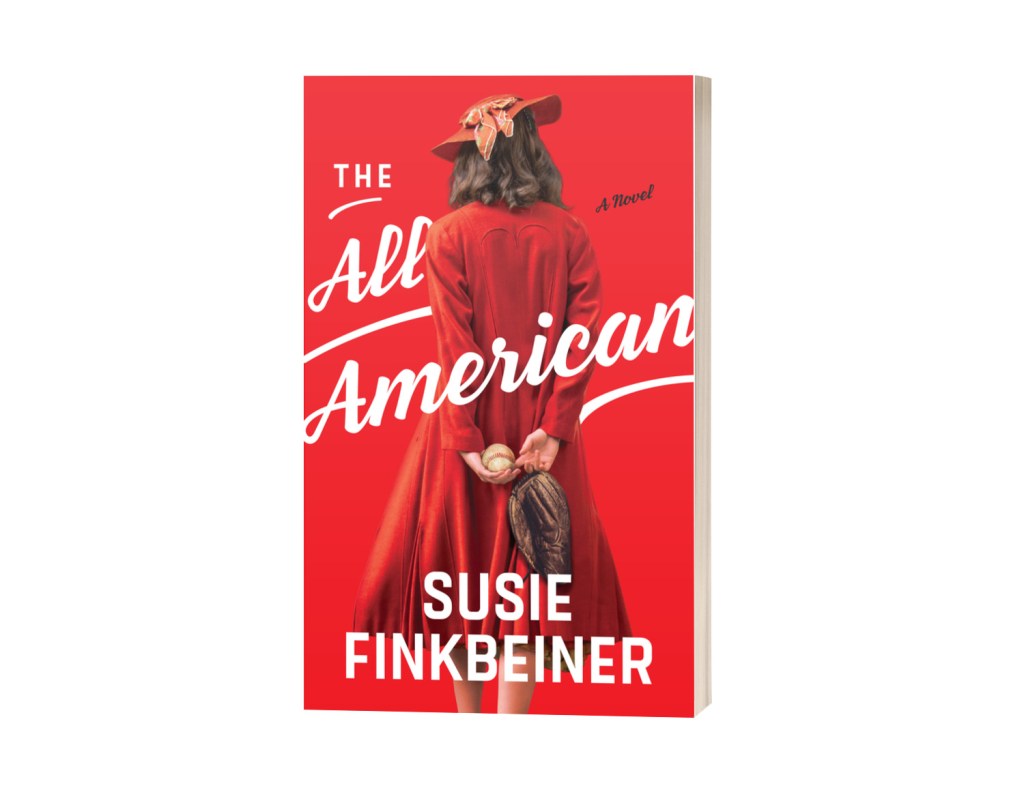
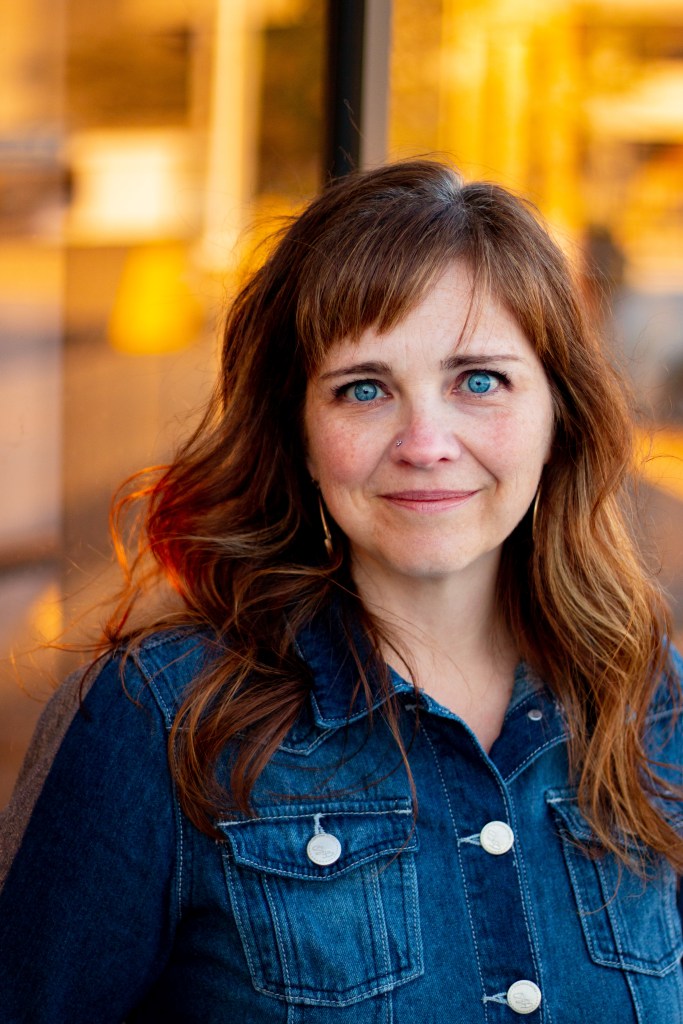
Hello. I’m Susie Finkbeiner (I’ll be SF throughout the interview). I’m the author of All Manner of Things, Stories That Bind Us, and The Nature of Small Birds. My ninth novel The All-American releases July 11. This novel is set in the early 1950s Michigan.
Pre-order by clicking on the book cover.
Today I’m happy to interview one of the characters from that book, eleven year old Florence Mabel Harding (who will be FH throughout).
FH: Actually, you may call me Flossie.
SF: All right. And, I guess you can call me Susie.
FH: Oh, I don’t think I can. My mother would never allow me to call an adult by her first name. She’d give me a severe look and I wouldn’t want that. Would you?
SF: I would not.
FH: So I’ll just call you Mrs. Finkb…Finkbeener? Finkenbinder? What a name. Is it German or something?
SF: Yes, it is.
FH: That’s unfortunate.
SF: Well, moving on. Tell me what it’s like to be one of the main characters in a novel.
FH: It’s peachy, I guess. Of course it would be better if I didn’t have to share the spotlight with my big sister Bertha. Who cares about Bertha’s part of the story? All she does is play baseball. What’s so interesting about that?
SF: A lot, actually. It wasn’t all that common for girls to play sports, let alone professional baseball in 1952.
FH: Well then why didn’t you just write her part this way, “Bertha went off to play baseball. The end.”? Do you really think people want to hear more about it than that?
SF: Flossie.
FH: Yes?
SF: Did you even read the book?
FH: Of course I did!
SF: Did you skim over Bertha’s chapters to get to your own?
FH: I’d rather not answer that question.
SF: Why not?
FH: Because my mother told me that I should mind my manners and it wouldn’t be mannerly to tell you that those parts were boring.
SF: Okay. Moving on. You are quite the reader, aren’t you? What would you say is your favorite book?
FH: Oh, oh. This is an easy question to answer. Anne of Green Gables. No. Little Women. Oh. Maybe I should say The Lion, The Witch, and The Wardrobe. Oh, I really can’t choose. This is an impossible question to answer.
SF: Would you like to know what one of my favorite books is?
FH: I suppose so.
SF: I really like The Grapes of Wrath.
FH: By Mr. Steinbeck? Oh, Mrs. Finkbender, this is disappointing.
SF: Why’s that?
FH: Because Mr. Steinbeck isn’t a very good writer. He wouldn’t know a happy ending if it came up behind him and knocked him on his keister.
SF: How did you get to be such an opinionated girl?
FH: Well, I don’t know. Weren’t you the one who wrote me?
SF: Honestly, Flo, I never had control over you. Not even once. Moving on. If there’s one thing you would like people to know about you, what is it?
FH: I would like people to know that I’m not just some ordinary little girl. Sure, I’m always the smallest in my class. But that’s not all there is to me. Once I was eavesdropping on my dad and heard him tell someone, “though she be but little, she is fierce”. That’s from a Shakespeare play. My dad was always quoting Mr. Shakespeare. When I asked my dad about it later, he told me that he suspected that Mr. Shakespeare was thinking of a girl just like me when he wrote that. I am small, but I am a force to be reckoned with.
SF: I have to agree, Flossie. You are one incredible character and I’m so glad I could write you into my book.
FH: Of course you are. I’m an absolute delight.
SF: You are, my girl. You truly are. And I hope that readers will love to read you as much as I loved to write you.
Susie Finkbeiner is the CBA bestselling author of All Manner of Things, which was selected as a 2020 Michigan Notable Book, as well as Stories That Bind Us, The Nature of Small Birds The All-American is her ninth novel. Susie and her husband have three children and live in West Michigan. Learn more at www.susiefinkbeiner.com.
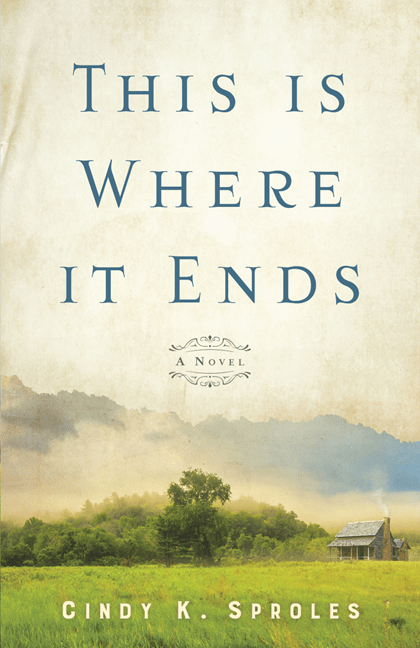
Widow Minerva Jenkins has lived alone in her small mountain home for 40 years where she has guarded her husband’s deathbed request. When a young reporter comes calling and inquires about a rumored box of gold on her property, an unlikely friendship forms. Will she go to her grave with her husband’s secret, or will the weight of it be the death of her?
My name is Minerva Jane Jenkins, and I reckon I’ve always been a force to be reckoned with. As we meet, in the spring of 1902, I have reached the ripe age of 94, and well, my days are numbered. I’ve lived on this mountain for the better part of my life. I can’t tell you why the good Lord opted to number my days to this length, and I sometimes spar that decision with Him. Still, the Lord knows what is best for us, and He’s seen fit to give me 94 years – even though they have been lonesome years, I’ve made do, and I’m happy.
About my family
Lordy, mercy, my family is long gone. Another reason I questioned the good Lord’s reasonin’ for leaving me here so long. I married Stately Jenkins when I was fifteen, and he was seventeen. He’d come from the war with a bummed-up leg and a sour attitude toward the north. But then, he was a true and faithful Confederate soldier. I lived in Lexington at the time, the daughter of a railroad laborer, so when I finished tenth grade, and they was no more school available, the timin’ was right for Stately to come into my life. We married, and he up and moved us to Shoal Mountain, six miles from the tiny town of Barbourville, Kentucky. I never saw my momma and daddy again, but that’s what happens when you marry and move away. I heard by way of a letter when daddy died and then by chance when momma passed. Lordy, I miss them to this day. Still, Stately built us a life on the side of a mountain overlooking the river, and though it was a beautiful place, I was never able to share it with children. I loved my husband, and I thought he loved me. After all, he married me and brought me to this mountain, not some floozy from Lexington.
What advice do you have to share about your 94 years?
Lawsy mercy, I suppose that would be the one thing that still nags me. The one question I’ve asked myself for years. How long does a body keep a promise, even if it’s detrimental? My momma told me once, don’t never make a promise you can’t keep. A promise is a person’s word, and your word is your integrity. She told me, don’t get loose-lipped and trust to tell when you’ve promised not to – and here I sit at 94 years old, holdin’ on to a promise, a secret I regretted making fifty years ago. See, Stately’s heart give out, and as I sat holding his dying body in my arms, he never said he loved me. Instead, he said, “Minerva, keep the secret. Promise me.” Before I had time to think it through like my momma told me, Stately grabbed my arm and shouted in his last breath, “Promise me!” And I did. It’s been a promise that has weighed me down for the remainder of my life. How long do you keep a promise? I’ve asked myself that question for over fifty years on this lonely mountain. Best I can determine is … you keep it to the grave. My advice – don’t make a promise you can’t keep. If you’re waiting for me to give out Stately’s secret, then it might just be until the death of you cause I’ll never utter a word.
What would you say you are most afraid of?
Can’t say I’m rightly afraid of much. I’ve stared down that ole bear that lives up the holler – managed to draw a line in the dirt for the old cuss when I aimed my rifle at his rear and filled it with buckshot. He quit crossin’ over my line after that. This old woman ain’t got much, but I got smarts. Stately taught me farmin’ so can shoot a squirrel or rabbit. I’ve fished, raised myself a good garden, and stored away taters and green beans. I’ve ground my flour, made butter, traded for my sugar and salt, and cut years’ worth of wood for my fires, but if I was honest. If I was truly honest, my fear ain’t in dying. It’s in dying alone. Wouldn’t nary a soul know I’d passed on up here on this mountain. I’ll just drop dead one day and lay to the bone where I fell ’cause they ain’t a soul up here to bury me.
Is there anyone who has made a difference in your life?
I don’t have to think long on that question, for they’ve only come along in the last year. Oddly, what brought them into my life was that blessed old promise I made – Stately’s secret. The one I was bound to hold quiet by a promise. A young reporter, Delano Rankin, come up from Lexington looking for answers to a story he’d got wind of, one that said my Stately had a stash of gold and that he’d even murdered for the stash. My lips was sealed tight about anything Stately might have said or done, but the man kept hangin’ around. He did something a soul ain’t be able to do in fifty years. Del wormed his way into my heart, and in the few months I had with him, he grew to be like the child I’d never had. It took time for me to believe his intentions was true, but once I come to know his heart, I could see the good Lord had answered the one prayer I’d prayed since Stately died. “Don’t let me die alone.” Del was there. Then there was Robert Jr. and Cherry Blessing. I can only say, Robert Jr. was the spittin’ image of his daddy Robert, Sr. who helped me bury Stately. Robert and Cherry was balm for my soul, the comfort and peace that a good man and his wife could be as an old woman lay dying. Yes, they was the peace my soul needed.
Is there anything else you’d like to share with us that has brought meaning to your life?
I’d have to steal a few words from Del about that. And that is that wealth ain’t always found in a would-be box of gold. It’s found in the relationships we build with others. It’s found deep in the hearts of them “old people” that city folks call “elderly.” There’s a lifetime of experience, insight, and wisdom. There’s a gift of the story in their lives, and the fulfillment of a life well-lived. I’d have to say, spend time with them old coggers that you might consider troublesome or wearin’ on you because when you don’t, you’re passin’ up a wealth that money can’t bring. The gold is in lives of them old folks. Seek it out. Find it. You might just be surprised how your life is changed by knowin’ them.
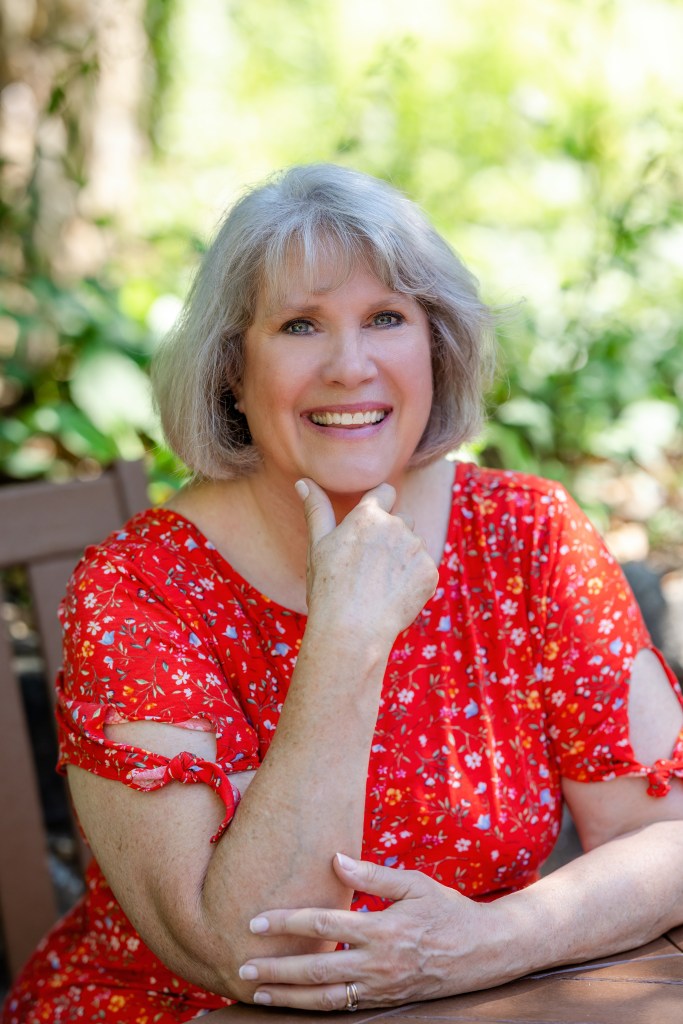
Cindy K. Sproles is an author, speaker, and conference teacher. Having served for several years as a managing editor for Lighthouse Publishing of the Carolinas and Ironstream Media. Cindy now works as a mentor, coach, and freelance editor. She co-founded Writing Right Author Mentoring Services with Lori Marett, and Cindy is the director of the Asheville Christian Writers Conference. Cindy is also the co-founder of Christian Devotions Ministries and www.christiandevotions.us, as well as www.inspireafire.com. Her devotions are in newspapers and magazines nationwide, and her novels have become award-winning best-selling works. She is a popular speaker at conferences and a natural encourager. Cindy is a mountain girl, born and raised in the Appalachian mountains, where she and her husband reside. She has raised four sons and now resorts to raising chickens where the pecking order is easier to manage. You can visit Cindy at www.cindysproles.com or www.wramsforwriters.com.
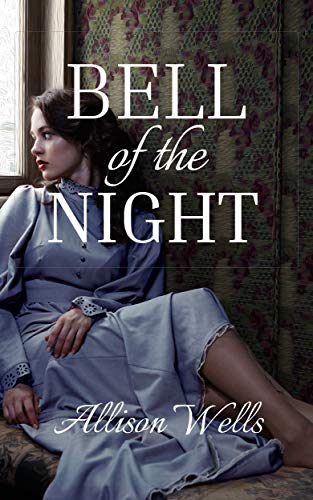
You would never guess it from the plush furnishings and the opulent décor, but I live in a prison where a few dollars will buy you more than a pound of flesh. It will purchase a piece of my torn-apart soul.
Is there anything special about your name? Why do you think you were given that name?
Madam Knight erased the name my parents had given me and replaced it with Bluebell. We all have flower names because we’re all her precious flowers. Most of the girls call me Bell. I think she just has a rotation of names that she works through – Daisy, Rose, Lily, Poppy, Clover, Jasmine – Bluebell is just part of the rotation. It means nothing to her. Or to me.
Do you have an occupation? What do you like or dislike about your work?
I live and work in Storyville. Do I have an occupation? Sure. I’m what they call a soiled dove. What you don’t know is that a soiled dove is just a pigeon. A plain old pigeon. Do I like it? Of course not. Who would choose this life? I was sold into this slavery when I was a child, but I’ve become numb. I just count the days until I’m used up and cast out.
Who are the special people in your life?
My best friend, Astrid. She’s also my roommate. She talks about her faith in God, and while I don’t get it, her hope gives me hope.
What is your heart’s deepest desire?
To get as far away from the brothel and Storyville as possible.
What are you most afraid of?
Nothing. I’ve lost it all already.
Do you have a cherished possession?
Only the memories of my parents before the fire. Before I was handed over to my greedy uncle who sold me for two dollars to Madam Victoria Knight. Those memories are all I have left.
What do you expect the future will hold for you?
I have no idea. Part of me wants to fight and run, but the other part of me is tired to the bone and weary.
What have you learned about yourself in the course of your story?
There’s this guy who came in the other day. A religious type, spouting on and on about Jesus loving us. But he doesn’t do it to condemn us, he does it to give us – me – hope. I don’t know, I actually felt like he saw me. The real me. Not only did my heart give a little flutter, which it’s never done, but it also felt hopeful.
Is there anything else you’d like people to know about you?
People think we chose to do this. Live like this. This is a last resort for some who had no other way of staying alive or caring for their children. Or some like me who were sold to a hardened madam who went through this herself. We don’t choose or love this. We don’t relish in it. We don’t enjoy being leered at, let alone being abused. We want a better life. And I will fight tooth and nail to give that to these girls, even if it means I don’t get it.
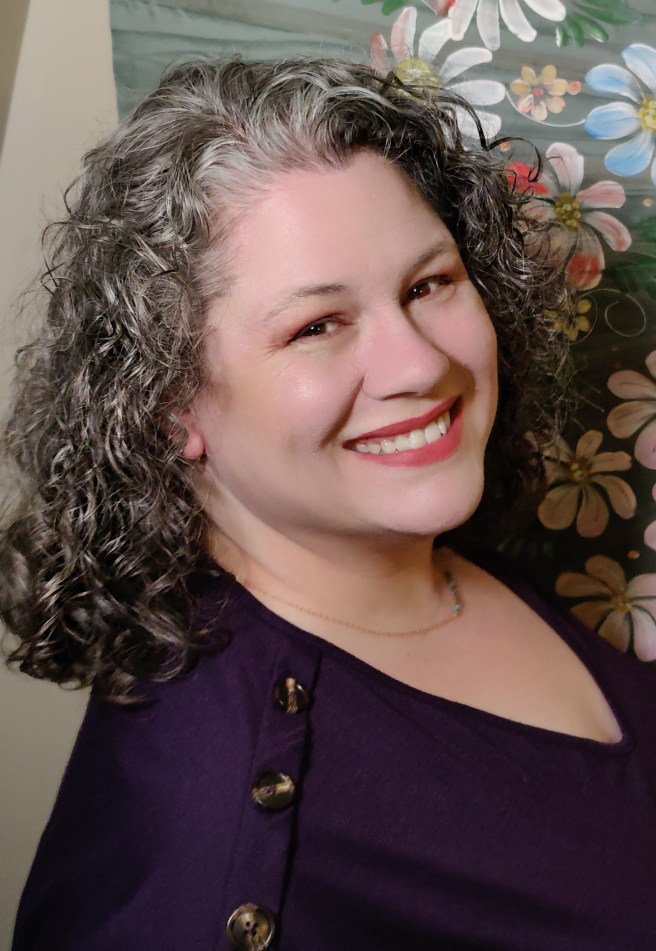
Allison Wells is a wife, mother, and sweet tea addict. Allison writes in two genres – Christian Women’s FIction and Sweet Romance. She writes what she calls “gritty Christian fiction,” books that show the hard truths of life but ultimately are stories of redemption in the end. Her sweet romances are clean and fun with a dose of laughter (the best medicine). She loves to bring a word of hope to readers worldwide. Her motto is, “Life is short, eat the Oreos.” Visit her website at www.whatallisonwrote.com.
In the Shadow of the River by Ann H. Gabhart May 9, 2023; ISBN 9780800741723; Ebook ISBN 9781493441327; $16.99; Paper. Amazon Affiliate link used will benefit the blog but not cost you any more.
Welcome to Novel PASTimes! Today we are talking to Jacci Reed, an actress on the Kingston Floating Palace. Thank you for stopping by today, Jacci, to tell us about your life on a river showboat. That has to be amazing.
Thank you for inviting me here. I love to talk about my showboat life, but I do have to say that oftentimes people think my life is more glamorous than it really is.
Really? In what ways? It seems being on stage almost every night would be a dream come true for most actresses.
Oh, I do love putting on the shows. I fell in love with the stage when I was five years old. But doing a show every night no matter how tired or sometimes sick you might be can be taxing. Then we have to work hard in rehearsals to get the shows right. Costumes and stage props have to be made. Plus, at times the crowd can be rowdy and ready to do catcalls no matter how well we think the show is going. I’m afraid not every person who comes to our shows is a lover of the arts. So it’s not all song and dance although those are definitely the parts I love best–those songs and dances with my grandfather and with Gabe.
I guess we don’t always think about the behind the scenes work that goes into a show or how hard it is to please everyone in the audience.
Most of our crowds are wonderful and love the shows. The people run to the river to see the showboat tie up as soon as they hear the calliope playing. Have you ever heard one? Yes? Then you know that they make a unique kind of music using steam valves and pipes. Some call them a steam piano. Marelda Kingston, she and her husband, Captain Dan own the Kingston Floating Palace. Anyway, Marelda is the best on the river at playing the calliope. The music carries for miles and is wonderful advertisement for our showboat. Since we usually tie up early in the afternoon, people out in the country have time to finish their work and make their way down to the river for our evening show.
Can you tell us more about this Gabe you mentioned a moment ago?
Oh yes. Gabe Kingston is the best friend a girl could ever have. He is Marelda and Captain Dan’s son and was actually born on a showboat. Their showboat has always been a family affair. Duke, my grandfather, has been with them so long that he seems part of their family now. In 1881, when I was five years old and came aboard to live with him due to some tragic happenings, I became part of their showboat family too. Gabe was thirteen then, but he seemed so old to me at the time. He watched over me like a big brother, but now he’s always telling me he is not my brother. But he is definitely a friend I treasure. I can’t imagine my life without him. On the showboat, he directs the plays and is master of ceremonies. He can get the crowd laughing with his jokes and that makes the show even better. People do love to laugh.
Can you tell us about those tragic happenings when you were five, or would you rather not talk about it?
So many years have passed. Fifteen. Much about what happened then lurks in the shadows of my memories. Some of it I remember too well and some I’ve never understood. I do know my mother was trying to protect me from a man who was trying to steal me from her. In the confrontation, she was wounded. She did love me so much. I do know that much. She said it was a miracle from the Lord that the steamship she was working on as a maid was tied up next to the very showboat where my grandfather was part of the cast. We were able to escape from the man and find safety on that early Kingston Floating Palace. The showboat we are on now is much larger and has been beautifully updated.
Your showboat does look impressive. I can’t wait to go aboard for your show. But let’s go back to what happened when you were five. Do you know why someone was trying to kidnap you?
More truth that hides in the shadows. My grandfather never wanted to talk about it. He avoided answering my questions while I was growing up and continually told me I should concentrate on the present rather than worry about the past. I suppose he is right, but sometimes what you don’t know about your past can come back to haunt you in the present and bring fresh troubles.
But enough about that. Can we talk about something more pleasant?
Certainly, although there does seem to be more we need to know.
And more I need to know as well, but as my grandfather says, it’s better to think on the here and now. Besides, I can’t tell you what I don’t know. I do feel I will pull the truth out of those shadows someday. But don’t you want to know more about the show tonight?
Yes, of course. Can you tell me about some of the cast members or the specialty acts?
I would love to. I play a character named Penelope and the leading male character, Cameron Drake, plays Penelope’s love interest, Sterling. Cameron is an excellent actor and very handsome, but he’s not very happy on the showboat. He thinks his talents are being wasted. He thinks mine are too, but I love putting on the dramas on the Kingston Floating Palace.
Then we also have some great variety acts. Perry Wilson is a very accomplished ventriloquist. The Loranda family does all sorts of acrobatic tricks including a tightrope walk. Captain Dan and Marelda do a magic act. Duke does a dramatic monologue and then there are those dances and duets I have with Gabe. We do aim to entertain.
What do you love most about being on the river?
The river feels like my home. I love to feel the water rolling along under my feet, taking me somewhere new each day. I love watching for birds and animals along the river. The sunlight has a way of glancing off the water and brightening the air. I even love the damp smell of the water, especially after a rain. But I suppose most of all I love being part of the showboat family of actors.
Can I ask one more question about the unknown of your past you mentioned earlier?
Certainly. Ask whatever you want.
All right. How do you think your own personal life story is going to end? Aren’t you nervous that all those shadows you spoke about earlier might swallow you?
You make it sound so dramatic and a bit dangerous just like one of our plays. I suppose things could happen to make it so, but real life is different than shows. One can’t always know how things might end, but you can always whisper a prayer that you will get through the shadows and find happiness and joy. I want to believe that is how my life story will go.
I certainly hope so as well. Thank you so much for doing this interview, Jacci. Do you have any final comments for us?
I am so honored you wanted to know more about my showboat life. I might add one thing. If you ever hear a calliope playing to let you know a showboat is coming to a landing near you, drop everything, hunt your quarters and dimes, and come enjoy a night of fun with a showboat family. Maybe it will be mine on the Kingston Floating Palace.
Ann H. Gabhart is the bestselling author of many novels, including When the Meadow Blooms, Along a Storied Trail, An Appalachian Summer, River to Redemption, These Healing Hills, and Angel Sister. She and her husband live on a farm a mile from where she was born in rural Kentucky. Ann enjoys discovering the everyday wonders of nature while hiking in her farm’s fields and woods with her grandchildren and her dogs, Frankie and Marley. Learn more at www.annhgabhart.com.
I live in a tiny South Caroline town you’ve never heard of, but we’ve right at the foothills of the Blue Ridge Mountains and we’re very close to Clemson College.
Is there anything special about your name? Why do you think you were given that name?
When I was born right before the turn of the century, my father named me Grace because he was certain I would be full of it, and because he thought I’d be full of the Lord’s abundant grace. I try to live up to my name.
Do you have an occupation? What do you like or dislike about your work?
I’m a momma to several blessings. I love every minute. That doesn’t mean it’s not hard, it surely us, but our reward is in heaven.
Who are the special people in your life?
My husband, Nathan, and our children – Peter, Abigail, Rebecca, Elizabeth, Jacob, and Gabriel. Oh, and Michael, God rest him. I’m also close to my sisters and our extended family.
What is your heart’s deepest desire?
For my children to grow up knowing the Lord.
What are you most afraid of?
Losing my children. After we lost Michael, I didn’t think I would recover, but God brought my heart through it.
Do you have a cherished possession?
I have a music box that had been my own grandmother’s, brought over from Scotland. I’ll pass it along to Abby, and hopefully on and on.
What do you expect the future will hold for you?
I won’t even pretend to guess. It’s in God’s hands. But I do hope for grandchildren one day.
What have you learned about yourself in the course of your story?
My story is for the Father to write. He is the creator and perfector.
Is there anything else you’d like people to know about you?
I have tried to raise my children to be strong, resilient, believing people. I think Nathan and I have done a good job. Abby’s a little headstrong, but then, what teenage girl isn’t. I’m sure Eliza and Jake will give me a run for my money, too. They run with the wind, those children.
Allison Wells is a wife, mother, and sweet tea addict. Allison writes in two genres – Christian Women’s FIction and Sweet Romance. She writes what she calls “gritty Christian fiction,” books that show the hard truths of life but ultimately are stories of redemption in the end. Her sweet romances are clean and fun with a dose of laughter (the best medicine). She loves to bring a word of hope to readers worldwide. Her motto is, “Life is short, eat the Oreos.” Visit her website at www.whatallisonwrote.com.
My guest today for Novel PASTtimes is an exceptional young lady named Grace Mockingbird. Grace, thank you for agreeing to talk with me today.
You’re welcome.
Wow, Grace, don’t knock me over with enthusiasm (wink wink).
Oh, I’m sorry. I guess the truth is, I don’t always feel comfortable talking about myself.
Well, I think that’s perfectly understandable. Even though the teen years are way back in the rearview mirror for me, I remember it being a tricky time.
Yes, you can say that again.
(Interviewer pauses for a sip of water… thinking, This is gonna be tougher than I thought.)
So Grace, tell me a little bit about yourself—your interests, where you live.
Okay, well, I just turned fourteen. I live in Eastern Kentucky in a place called Jubilee. It’s a coal-mining town, but believe it or not, we have a nice little downtown area with a movie theater, a diner, and some nice shops on Main Street. I like to ride my bike downtown sometimes. As for my interests, I like to read fiction and sometimes poetry. I also like to journal and write poetry.
Oh, I also love to read, Grace! Something we have in common. And how wonderful that you’re a writer! I know that lots of people who are creative find that writing can be a very therapeutic exercise for dealing with difficult experiences in life. I understand that this has been a tough summer for you and your family?
Yes, a very sad year. We lost my younger brother, Isaac.
I’m so sorry, Grace. I can’t imagine how difficult that must be.
Yes. Sometimes it’s surreal to think that he’s no longer here and that I can’t play with him in the backyard anymore. He had a pet rooster name Rojo that he loved. I can tell Rojo really misses him too.
How old was Issac when he passed?
Seven, almost eight.
So young. (Interviewer pauses and takes a deep breath to calm her emotions) Grace, I practice a tradition of keeping the memories of those we have lost alive by sharing things about them that were special. Would you mind sharing the thing that you remember most about your brother?
That’s a cool tradition. I think I remember his curiosity the most. He was extremely intelligent. Genius IQ actually. He read constantly. Anything he could get his hands on. He loved to learn. I really miss the conversations we used to have. Even though he was young, he was so wise for his age.
It sounds like you had a very special relationship with him. Thank you for sharing that special memory you have of him. Grace, I also hear that there are some very special things going on in the town of Jubilee that you live in. Could you share some of those things?
Yes, 1963 is a strange time to be living in our part of the world, obviously, with all of the marches that Dr. King has been leading for equality and integration. Many Southerners are not in favor of this. To tell you the truth, I hadn’t really thought very much about it until my English teacher, Miss Adams, challenged me and my other classmates to think outside of the traditions that we have been raised in.
She sounds like a really special teacher.
She definitely is. She’s very different from the other people in Jubilee. My dad also likes to hear Dr. King speak. My Aunt June loves his preaching. But a lot of people in Jubilee are afraid of the changes that it might bring.
Yes, people often like for things to stay the same. Grace, I was going to ask you about your last name, it’s very unusual. Can you tell me about its origin?
Yes, Mockingbird is from my dad’s Native American heritage. He’s very proud of it. His dad was Rowdy Mockingbird. He’s kind of infamous in this area.
Well, with a name like that, I’m not surprised. (Takes another sip of water) Do you have other siblings?
Yes, my sister, Sissy. She’s sixteen and very bossy.
Oh my! I had one of those too. What are her interests?
Herself.
Ouch! I guess that’s a point for the little sis, eh? Grace, not to return you to a difficult topic, but how are your parents dealing with the loss of your brother?
I mean, that’s a pretty personal question for me to answer on my parents’ behalf, but I guess I think they’re trying to work through all of it the very best that they can. My aunt June says that beautiful things come from suffering. My mom cries a lot. She’s also creating a beautiful garden in his honor. She says she likes to have her hands in the dirt. She says something about it is healing.
Oh yes, I agree with that.
My dad works a lot. There were so many hospital bills from Isaac’s treatment. Aunt June, she’s the bright spot. She tries to cheer us all up. We love having her around even though she’s a terrible cook.
Oh! Well, I’m not much of a chef myself. Grace, I’m glad Aunt June is there to encourage you. I also had a favorite aunt. Her name is Doris. She also lives in Kentucky.
Cool.
Any last thoughts about what your family has been through? And speaking of Aunt June and the words of wisdom on beauty coming from suffering she shared with you, can you talk more about that?
Can I have a drink of your water first? My throat is so dry…
Oh, of course! (interviewer slides water glass across to Grace, who drinks every last drop of water)
Thanks! Okay…. I guess when I think about what my family has been through— losing Isaac has forced us to deal with things we had avoided for years. In some strange way it has brought us closer together. I also think it has given us more compassion for other people who are going through difficulties.
Yes, Grace, if there is ever a silver lining in tragedy, it is that suffering can soften our hearts to be more sensitive to what other people are going through.
Yes. Before, I only thought about myself, and my own worries and struggles. But now I think it’s easier for me to notice when other people are struggling too.
Grace, I want to thank you for being so transparent today and sharing these very special things with me and with our audience. I have a feeling we will be hearing more from you in the future. You keep reading those good books and writing poems in your journal. Maybe we’ll see one of them in print.
I certainly hope so.
Thank you again, Grace Mockingbird, for sharing a little part of your journey with us today.
The Mockingbird family has always lived peacefully in Jubilee, Kentucky, despite the divisions that mark their small town. Until the tense summer of 1963, when their youngest child, Isaac, falls gravely ill. Middle sister Grace, nearly fourteen, is determined to do whatever it takes to save her little brother. With her father and mother away at the hospital, Grace is left under the loving but inexperienced eye of her aunt June, with little to do but wait and worry. Inspired by a young teacher’s mission for change, she begins to flirt with danger—and with a gifted boy named Golden, who just might be the key to saving Isaac’s life. Then the unthinkable happens, and the world as she knows it shifts in ways she never could have imagined. Grace must decide what she believes amid the swirling, conflicting voices of those she loves the most.
About the Author
Singer/songwriter Cindy Morgan is a two-time Grammy nominee, a thirteen-time Dove winner, and a recipient of the prestigious Songwriter of the Year trophy. An East Tennessee native, her evocative melodies and lyrics have mined the depths of life and love both in her own recording and through songwriting for noteworthy artists around the globe, including Vince Gill, India.Arie, Rascal Flatts, Amy Grant, Sandra McCracken, and Glen Campbell. Cindy is the author of two works of adult nonfiction—the memoir How Could I Ask for More: Stories of Blessings, Battles and Beauty (Worthy Inspired, 2015) and Barefoot on Barbed Wire: A Journey Out of Fear into Freedom (Harvest House Publishers, 2001)—and of the children’s picture book Dance Me, Daddy (ZonderKidz, 2009). The Year of Jubileeis her debut novel. Cindy is a cocreator of the charitable Hymns for Hunger Tour, which has raised awareness and resources for hunger relief organizations across the globe. Cindy has two daughters and splits her time between a small town near Nashville and Holly Springs, North Carolina, with her husband, Jonathan. For more information visit cindymorganmusic.com.
Welcome! Why don’t you tell us a little about yourself?
Hello everyone! My name is Lillian, and I am the reluctant heroine of the story The Swindler’s Daughter. You see, I always believed my mother to be a widow and my father long dead. Turns out, that isn’t quite the case.
That sounds troubling! What else can you tell us about your story?
I’ve lived my entire life with a mother who wants nothing more than to achieve high-society status. Up until a few days ago, I thought my father had died a long time ago. But then news arrived that my estranged father only recently passed away—in jail. He left a business and all of his possessions to me, but…well, he’s made me a rather unusual heiress.
Then on top of all of that, when I went to take possession of my father’s house in a backwoods Georgia town, the dilapidated structure was already occupied by another woman who claims it was promised to her son! It’s quite the mess.
How has this revelation affected you?
It’s caused quite the topsy-turvy in my life, let me tell you. Mother and I already had a strain on our relationship—what with her wanting to marry me off to the highest bidder and all—and the revelation of my new inheritance hasn’t helped matters.
Now that you are an heiress, will your plans change?
Everything has changed. My father left me little more than a mystery and house without answers. There’s a lot I need to do to settle the estate—a challenge that has become even more difficult since there are other people trying to lay claim to my father’s home. Jonah insists that the house should go to his family, but my father’s will left it to me.
Tell us more about Jonah. Who is he?
He is the stubborn cowboy who has apparently taken it upon himself to make everything more difficult for me. It seems my father’s family prematurely gave the house to Jonah’s mother, and Jonah is determined to make sure his mother and sisters aren’t tossed out. As if I would do such a thing!
So what are you going to do now?
To discover the truth and take hold of the independence I’ve secretly always dreamed of, I’ll have to figure out the truth about what my father left behind. It’s a mess for certain, but there has to be something good at the end of this tangle of secrets. Right?
We certainly hope so! Thank you for letting us get to know you a little better. One final question to leave our readers with. If there was one thing you could tell someone reading your story, what would it be?
Don’t be afraid to reach for your dreams. The best things in life often come on the other side of difficulty. It might be hard to face your calling or take a leap of faith, but it’s a risk worth taking!
Stephenia H. McGee is a multi-published author of stories of faith, hope, and healing set in the Deep South. She lives in Mississippi, where she is a mom of two rambunctious boys, writer, dreamer, and husband spoiler. Her novel The Cedar Key was a 2021 Faith, Hope, and Love Readers’ Choice award winner. A member of the ACFW (American Christian Fiction Writers) and the DAR (Daughters of the American Revolution), she loves all things books and history. Stephenia also loves connecting with readers and can often be found having fun with her Faithful Readers Team on Facebook. For more on books and upcoming events and to connect with Stephenia, visit her at www.StepheniaMcGee.com.
Q. Welcome, Sunday Duval. We are fortunate to have you stop in today. The name “Sunday” is beautiful and riveting. How did you come about it?
A. It would be necessary for you to ask my mother, who is now-deceased, about that—which I never did—at least that I recall. What I do know is that the lion’s share of bad things that have happened to me seems to have happened on Sundays.
Q. As a slave during the Civil War period, would you tell us a bit about your unplanned travels?
A. I’m originally from Virginia, and I had no desire to leave. Why trade one bad situation for another? Wasn’t that the way of it for black people in America? But after having been forced from my home state via a coffle—walking all day and sleeping in the open air or in a rat-infested barn at night—and a trip down the Ohio and Mississippi rivers, I finally ended up in Vicksburg, Mississippi where I now live.
Q. That must have been traumatic.
A. It’s almost too painful to discuss, since I had gone to every length to be an obedient slave. By doing so, I was actually trying to make sure I was never sold downriver, and I must say that traveling hundreds of miles as the only woman chained to a group of surly and sometimes overprotective male slaves was a nightmare that still occupies many of my sleeping hours.
Q. Pardon my lack of sensibilities, but you are quite articulate for an ex-slave.
A. Both of my fathers saw to it, and that is all I will say about that.
Q. As an African descendant during the era of slavery in America, what event most impacted your life?
A. Again, this type of question gives me pause because even though I still have nightmares, I try during my conscious hours not to dwell overmuch on the exceptionally hard times of my life. But I can state, without equivocation, that watching my parents murdered in our front yard when I was six—simply because they were free people of color—impacted me as nothing else has and put my life on a projectile of nearly unmitigated suffering, the scars of which I bear today.
Q. Hmm. I can only imagine. As I understand it, you are married, but you did not marry for love. Why do slaves marry in the first place when it’s rarely, if ever, legal, and why wasn’t yours a marriage for love and affection?
A. Many slaves do marry—or at least simulate the ritual—simply because, like other human beings, they fall in love and want the relationship blessed by their Creator, but as you say, my marriage was different.
Q. Understandable. And how was your marriage different from other slaves?
A. I did not consider love when I married Noah. The word was meaningless to me. I married solely to give birth—to bring a child into this world whom I could call my own, at least until he or she was sold from me.
Q. Did you count the cost of what it would be like when or if you ever had to see your child sent to the market?
A. No.
Q. No? No further explanation?
A. What else is there to say? Planning too far into the future is not a sensible option for a slave. Slaves live in the moment by the grace of God
Q. What would you do if you had life to live over?
A. Love my good-looking husband from day one of our marriage the way he deserved to be loved.
Q. If you had just one prayer—sure to be answered from God in a positive way—what would it be?
A. That people of African descent could one day travel the streets and roads of these United States and frequent public places of worship, entertainment, and buying and selling without fear.
Q. Well, this about concludes our interview. Thank you for further insight into your life and mindset as a slave. Is there anything else you are urged to comment upon?
A. I cannot say it was a pleasure discussing my past, but I can say that I thank you for the opportunity. I believe open discussion is necessary for the growth and health of the country, and I’m happy to advance that cause any time.
Jacqueline Freeman Wheelock is a multi-genre author whose works range from Christian-based historical novels, short stories, and devotionals to a memoir of growing up during and after segregation. Her novels share the narratives of African American women seeking their identities in the difficult setting of the old South.
A former high school and college English teacher, her first novel, A Most Precious Gift, debuted in 2014 and made Amazon’s Best Seller list in African American Historical Fiction. In 2017, she released its sequel, In Pursuit of an Emerald. In January of 2022, she published The Lords of Wensy Wells, and on August 2nd of the same year, she released her latest novel, God, Send Sunday.
Published multiple times by University Press of Mississippi, she has been a member of the American Christian Fiction Writers for over a decade. Jacqueline and her husband Donald have two married adult children and two granddaughters.
A brighter future awaits—if she can escape the shadows of the past
Emily Leland sheds no tears when her abusive husband is killed in a bar fight, but what awaits her back home in Sweetwater Crossing is far from the welcome and comfort she expected. First she discovers her father has died under mysterious circumstances. Then the house where the handsome new schoolteacher, Craig Ferguson, and his son are supposed to board burns, leaving them homeless. When Emily proposes turning the family home into a boardinghouse, her sister is so incensed that she leaves town.
Alone and broke, her family name sullied by controversy, Emily is determined to solve the mystery of her father’s death—and to aid Craig, despite her fears of men. The widowed schoolmaster proves to be a devoted father, an innovative teacher, and an unexpected ally. As they work to uncover the truth, they just may find the key to unlock a future neither could have imagined.
Welcome to NovelPASTimes. For those who haven’t met you, please introduce yourself.
I’m Emily Vaughn. No, that’s not right. I’m Emily Leland now.
That’s a common mistake for newlyweds. Is Leland your married name?
Yes. I was married for over a year, but fortunately I’m a widow now.
Fortunately? Most women wouldn’t find being widowed fortunate.
That’s because they weren’t married to George Leland. Marrying him was the biggest mistake of my life. If you don’t mind, I’d rather not talk about him.
Certainly. Let’s discuss something more pleasant. Sweetwater Crossing seems like a nice town.
I love it. Oh, we have our share of problems, but I’m convinced it’s the most beautiful town in the Hill Country, maybe in all of Texas.
I couldn’t help noticing that one of the houses on Creek Road appears out of place here.
You’re not the first person to say that. That’s my home, Finley House. There’s a long story about it and why it’s as large and elaborate as it is. The abbreviated version is that Clive Finley, a man from Alabama, built it for his fiancée shortly before the War Between the States. Sadly, he died before he could bring her here. He asked my father to take care of the house until he returned from the war, which is why my family has lived there ever since. And, yes, it’s much bigger than we need and the taxes have taken much of my father’s stipend as the town’s minister, but my sisters and I consider ourselves fortunate to live there.
Sisters, as in plural. I always wished I had at least one. Tell me about yours.
I’m the oldest of the three of us, and no matter what my sisters claim, I’m not bossy. Not very often, anyway. It’s just that growing up, they sometimes needed guidance. But you asked about the others. Joanna – she’s the one in the middle – can make even an out of tune piano sound good. Right now she’s in Europe studying to be a concert pianist. Louisa hates being called the baby of the family, even though she is. She can’t bear to see anyone in pain. That’s why she plans to be a doctor.
What wonderful aspirations. What is yours?
I thought I was going to be a good wife and mother like my own mother, but …
Oh, Emily, I’m sorry. I didn’t mean to make you cry. I only have one more question. I saw a fresh grave outside the cemetery. Who’s buried there?
I’ll try to say this without shedding too many tears. That’s my father’s grave. His death was considered scandalous, so he wasn’t allowed to be buried in consecrated ground, but don’t believe the stories you may hear. My father did not take his own life. I’m as certain of that as I am that the sun sets in the west, and if it’s the last thing I do, I will discover who murdered him.
Amanda Cabot is the bestselling author of more than forty books and a variety of novellas. Her books have been honored with a starred review from Publishers Weekly and have been finalists for the ACFW Carol Award, the HOLT Medallion, and the Booksellers’ Best.