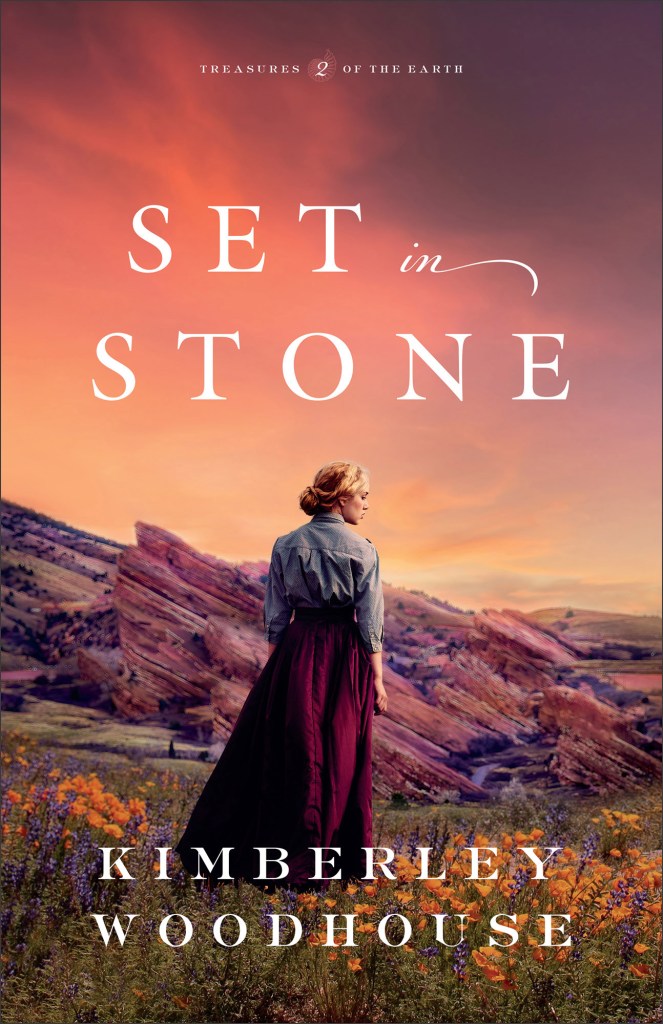
When paleontologist Martha Jankowski discovers an intact dinosaur skeleton, she has the opportunity to make a name for herself, but only if she can uncover the full skeleton before another competing dig.
Welcome to Novel PASTimes! We are pleased you stopped by today.
Amazon Affiliate Link used to benefit the blog does not cost you more.
Tell us something about where you live.
I recently moved to Colorado in hopes to work on a dig for dinosaur bones. This area is nothing like where I grew up in Illinois. The Rocky Mountains are incredibly high. Unlike the rolling hills back home, their steep, craggy faces are covered in snow the majority of the year. The rock formations here in Colorado are what brought me here. Within those rock layers, I hope to find many dinosaur skeletons.
So are you a paleontologist?
That’s what I hope to be eventually. I’ve been studying toward that goal for some time but have had to put my studies on hold. I usually need to earn money between each semester to pay for the next. I have found that the hands-on experience in the field has helped me more than just the book studies.
What inspired you to go into that field of science?
I’ve always been fascinated with history and digging up fossils became a fun hobby when I was younger. A wonderful pastor and mentor in my life, Pastor Moody, encouraged me to follow where the Lord led. As long I kept pointing people to the Truth. There is still so much to discover and so many unknowns to explore. I’m excited to simply have the opportunity to keep learning and growing. My biggest dream is to work on a team digging up a complete dinosaur skeleton. Thankfully, I’ve been given that chance here.
What are your thoughts on the Bone Wars? Do you think they’ve given your chosen field of science the proverbial black eye?
That is quite the question. While I agree with others in paleontology that do not condone Cope and Marsh and their dishonorable practices in trying to gain acclaim, I will say that the Bone Wars have brought attention to what we do. Many people don’t understand what it is we are trying to accomplish by digging up these fossils from the past. My hope and prayer is to bring people of faith and science together.
What’s something new you have learned since arriving in Colorado?
It took a good bit of time for me to adjust to the air. Dryer, thinner, and the landscape is much higher than living near sea level. But now that I’m here, I never want to leave. What an amazing place to be!
Thanks for allowing us to get know you a little better!
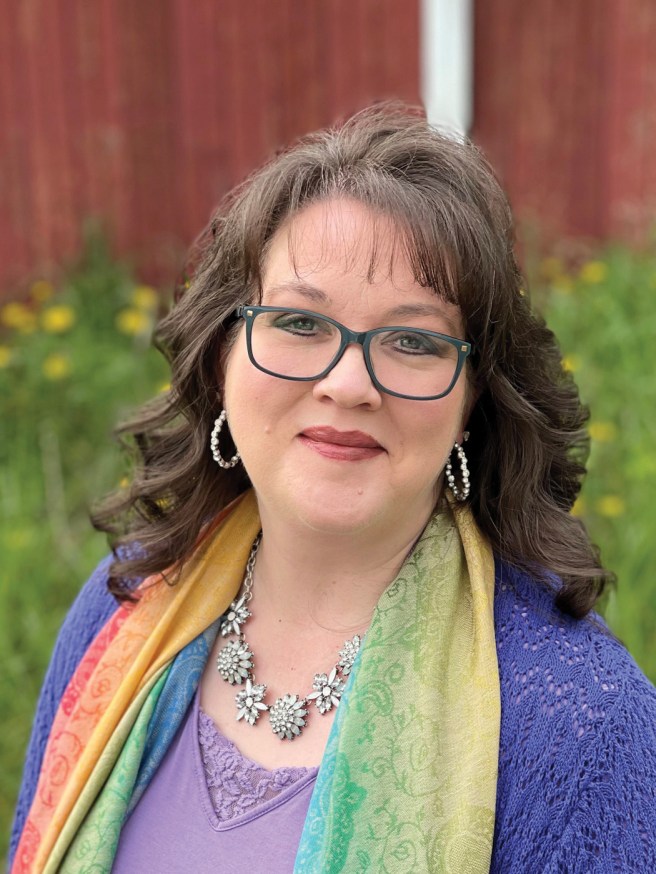
Kimberly Woodhouse is an award-winning, bestselling author of more than 30 fiction and nonfiction books. Kim and her incredible husband of 30-plus years live in Colorado, where they play golf together, spend time with their kids and grandbaby, and research all the history around them.
Marybeth and Edward are compelled by their circumstances to marry as they trek west to the newly formed railroad town of Cheyenne. But life in Cheyenne is fraught with danger, and they find that they need each other more than ever. Despite the trials they face, will happiness await them in this arrangement of convenience?
Amazon Affiliate Link Used to Support the Blog
Tell us something about where you live.
My name is Marybeth Kruger…well now it’s Vogel since I married. Up until a few months ago we lived in Independence, Indiana, but now we live in the middle of nowhere in a railroad town called Cheyenne.
Is there anything special about your name? Why do you think you were given that name?
I was given the name because my mother liked the sound of it. There wasn’t anything really special about it, but she always said I looked like a Marybeth.
Do you have an occupation? What do you like or dislike about your work?
My full-time job is to care for my little sister Carrie. My mother died when I was young, and my father remarried. Carrie’s ma died in childbirth and made me promise to care for Carrie as if she were my own. Since then, I’ve done just that. I’m the only mama Carrie has ever known, and I love her dearly. When our pa died recently some folks figured to take Carrie away from me since I didn’t have a job to support our family. But Edward Vogel came to our rescue, and we agreed to a marriage of convenience.
Who are the special people in your life?
So many of the special people in my life have died, but Edward and Carrie remain. Edward is my husband of convenience. He needed a wife, and I needed a husband in order to keep from losing Carrie. We’ve loved and cared about each other as friends for many years since Edward was married to my best friend Janey. After she died, however, we just sort of looked out for each other.
What is your heart’s deepest desire?
To have true love in my life and raise my little sister in a happy home.
What are you most afraid of?
Losing my sister and Edward never really loving me as a wife.
Do you have a cherished possession?
Not really. Things have never been all that important to me. My mama taught me early on that things are replaceable, but the people in your life are what really matter.
What do you expect the future will hold for you?
I’m not sure. This town called Cheyenne is a wild place with lots of low-life criminals. Danger is all around us and I fear that Edward may get killed in his deputy job. I’m praying God’s protection over him, of course, but in a town where it’s not even safe to walk the streets, I worry that someone will take his life and leave Carrie and me without his support and protection. I pray all the time that God will keep all of us safe.
What have you learned about yourself in the course of your story?
I learned that God is truly faithful to watch over us and that love really matters. I thought I could live without love, but I was wrong.
Is there anything else you’d like people to know about you?
I’m a woman of strong faith in God and that is what has seen me through so many bad times. Without God, I’d be all alone in this world, I’m sure. His love for me has gotten me through all these bad times and I’m sure it will get me through bad times to come.
Thanks for allowing us to get know you a little better!
Tracie Peterson is the bestselling author of more than one hundred novels, both historical and contemporary, with more than six million copies sold. She has won the ACFW Lifetime Achievement Award and the Romantic Times Career Achievement Award. Her avid research resonates in her many bestselling series. Tracie and her family make their home in Montana.
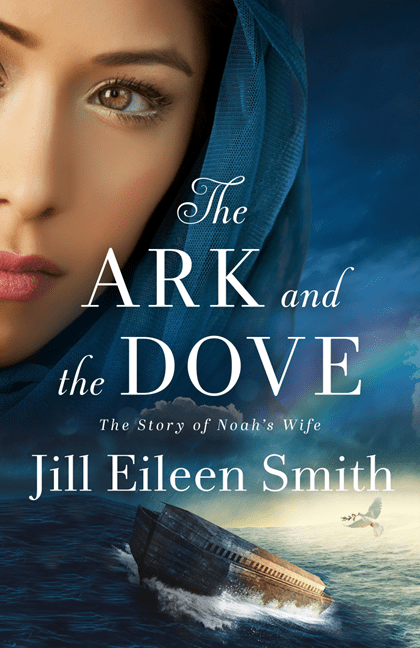
Only Noah and his family know that God’s judgment is coming soon. He and his wife Emzara dedicate themselves to God’s command to build an ark. After years of preparing for the end of life as they know it, can they survive what lies ahead or will they simply relive the past they are trying to escape?
Thank you for speaking with us today. Would you tell us the meaning behind your name?
Thank you for the invitation to meet with me.
My name is Emzara. It means “mother of a princess” though I never had a daughter who became a princess. I am the mother of three sons.
What is your role amongst your tribe?
I am the granddaughter of Methuselah of the tribe of Seth, son of Adam. I am also the wife of Noah, grandson of Methuselah, though we have different parents. As Noah’s wife, I have found myself put into the role of mentoring my three daughters-in-law as we prepare for life aboard an ark that God told my husband to build. With all of the opposition to what we are doing, I find my faith in the Creator stretched, and I often seek Him in prayer. I know I could not survive the evil in this world or the unknown we are about to face without His help. Though sometimes I wonder if He hears me because I do not hear from Him as Noah does.
If you could choose, what role would you rather have?
I would rather not be living in such times as these. I am not a young woman. I did not bear my sons until Noah was 500 years old. (I’m a little younger than he is!) When I was a girl, the world was a kinder, simpler place. My friends believed in the Creator and we all worshiped Him. But as time has gone on, I’ve watched my best friend walk away from Him to create her own god, her own image. I never thought I would see so much evil.
What would you say is your best talent or skill?
Oh, I don’t know. I enjoy working with the plants, weaving, reading, but I suppose what I love to do best is listen to and enjoy my family. I’m not sure it is a skill, but I try to keep peace when our sons or daughters-in-law have conflict between them. Unfortunately, we often have conflict with Keziah, Ham’s wife. She is insecure, and I have a hard time understanding her, but I’m working on that!
We are sharing a meal together. Please tell our readers what is on the table.
Every meal has some form of bread, normally flatbread with sauces to dip it in. We eat dried fruits and nuts, and sometimes make porridge or stews of one kind or another. With all of the animals to feed, we often end up grabbing food to take with us. I do love those times when we gather around the table and eat something new one of the girls has created, and we all talk about the day. Life on the ark can grow monotonous, and even during the years we were building it carried much sameness. Food takes much time to prepare, but I think all of us would agree that we love bread and the cucumber sauces or fig and date spreads we can put on it.
Do you have a personal confidant? Someone to share your deepest thoughts and fears with?
I did. My mother was my confidant before the flood, peace be upon her. She did not live long enough to join us, but she believed in the Creator. She helped me when I struggled with the family squabbles we faced, especially with the girls. I was used to raising sons, not daughters, so having three so different women suddenly in my life was an adjustment. I love them dearly, but they do have their moments!
Has there been a moment in your life that challenged you beyond what you thought you were capable of enduring? If so, how did you meet that challenge?
Years after the flood when Keziah introduced idols into her family and Ham disrespected Noah…I’m sorry…it’s hard for me even now to think on it. To watch our youngest son and his entire clan walk away, never to return…I could barely breathe for the pain of it. Worse, when God confused the languages of our descendants, including Japheth’s family and we had only Shem and Sedeq and their descendants left who could understand us, I knew real despair. It was only when I could look into the future and know that God would send a Redeemer to save us from the sin inside of us that we couldn’t escape that I could hope again. I might not live to see that Redeemer, but He will come. And that is comfort.
What or whom do you love more than anything else?
That is a tough question. I know from the writings of Enoch that the Creator loves us, and in turn, He longs for our love. I suppose I do love Him, but I can’t see Him, so my love seems so inadequate. Noah has always been my dearest friend, and I’m very glad we have each other. I love our children, of course. What mother doesn’t? Though…there were those in the pre-flood world who did not love their children. Even sacrificed them to the Watchers. I never understood that. Even Keziah, hardest of all to love, is one I always tried to love when she let me. Sigh. Love is complicated, yes?
What or whom do you despise most?
The Watchers, without question. I wish the evil ones of the unseen realm had been destroyed in the flood for good. But they cannot die as humans can. They are liars, enemies of the Creator, and if I despise anyone, it is them.
What does the future hold for your family or tribe?
Only God knows. I am old now. Our people, those who came from our sons, Shem, Ham, and Japheth, are now living in remote places throughout the earth. Noah and I live with Shem’s family, and I suspect that God has blessings in store for them, though I don’t know what they are. My part in their story will end soon, but perhaps the Redeemer will come from one of Shem’s great-great grandchildren. It is my greatest hope.
What one thing would you like the people reading this to learn about your story?
Learn from us. Learn from the people of earth whom God judged for the evil in their hearts. Worship the Creator and no other. Repent of sin and don’t let relationships with people you love fall apart. Life is short, even for one who has lived as long as I have. People matter more than petty disagreements. Forgive. I think with these things the Creator is pleased.
Thank you for talking with us.
Thank you for asking me.
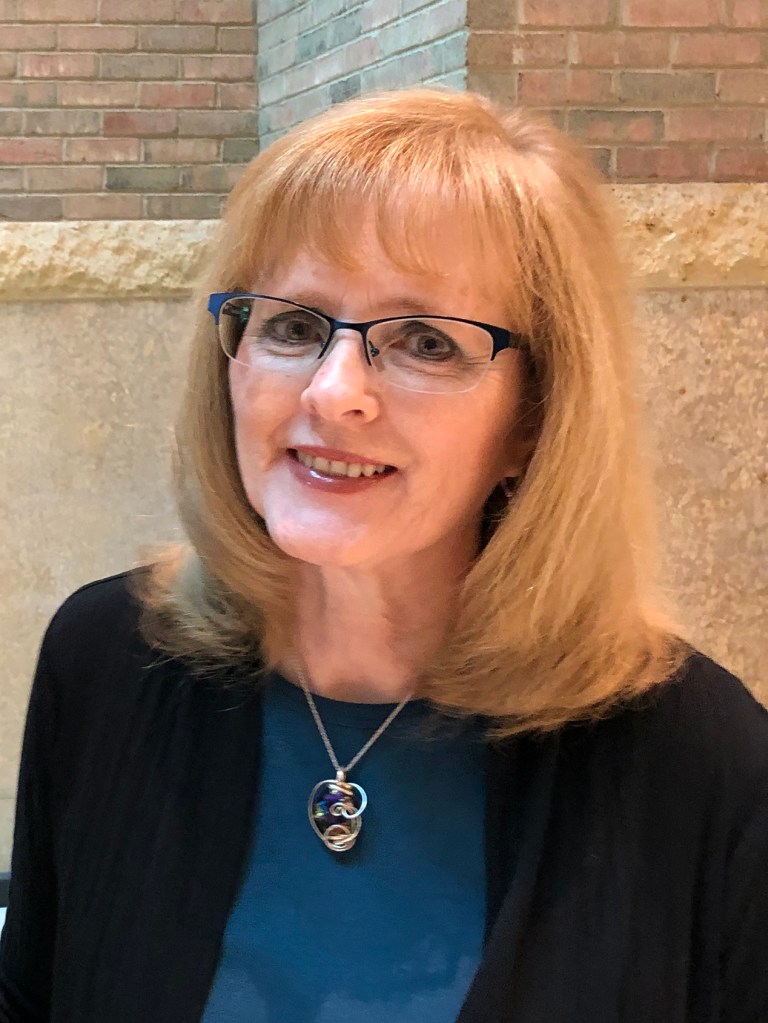
Jill Eileen Smith is the bestselling and award-winning author of the biblical fiction series The Wives of King David, Wives of the Patriarchs, and Daughters of the Promised Land, as well as The Heart of a King, Star of Persia: Esther’s Story, Miriam’s Song, The Prince and the Prodigal, and Daughter of Eden. She is also the author of the nonfiction books When Life Doesn’t Match Your Dreams and She Walked Before Us. Her research has taken her from the Bible to Israel, and she particularly enjoys learning how women lived in biblical times. Jill lives with her family in Michigan.
Get Connected: Jill Eileen Smith www.JillEileenSmith.com Facebook JillEileenSmith Twitter @JillEileenSmith
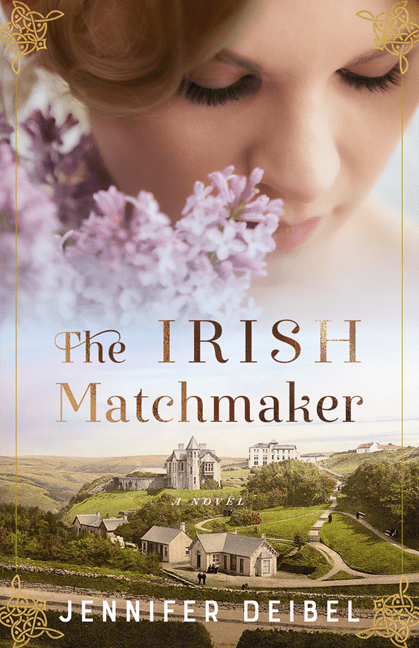
Welcome to Novel PASTimes! We are pleased you stopped by today.
Why don’t you introduce yourself.
Hi there. I’m Catríona. Catríona Daly.
Tell us something about where you live.
Oh, there’s not much to tell, really. I live in a small village in the west of County Clare in Ireland, called Lisdoonvarna. It’s a sleepy little place that only comes alive once a year. And that’s for the annual Matchmaking Festival. It’s been going on since 1847 and my family has been part of it from the beginning.
Big wigs from around Ireland and beyond come to try and make prosperous matches for their kids, and local farmers come hoping to find a wife to help around the farm now that the harvest is in.
Some might call it a quaint little place. And, in truth, it’s not bad. But I’m ready to see the world and live amongst the bright lights of a big city.
Do you have an occupation? What do you like or dislike about your work?
I’m a third-generation matchmaker by trade. My father was one, and his father before him. The trade has been around as long as Ireland has been, but since the Festival started, it’s become a sort of specialty for my family and a few others around the county.
There’s nothing quite like the feeling that comes when a match works out even better than I’d figured. I take my job very seriously—as if a couple gets matched, they’re together for life. But, when they get on far better than I anticipated, it gives me great satisfaction.
The hard part, however, is watching hundreds of people a week fall in love, while I’m still waiting for m’own match.
Who are the special people in your life?
Well, my Da, of course. It’s been just the two of us since I was a girl. My Ma decided she’d had enough of poor rural life and ran off to find adventure elsewhere. While Dad drives me crazy, I love him to death and am fiercely protective of him.
Also, in recent weeks, a wee girl named Sara has come into my life and captured my heart. She’s the daughter of one of my matchmaking clients. Her birthday wish was that her dad come to the festival. Anyway, Sara and I have gotten to spend some time together and she’s just a hoot. Very precocious and fiery. Reminds me a lot of me.
And what about her father? Is he special, too?
I’m sorry, what was the question again?
You said Sara’s getting to be a special person to you. How about her father?
…Eh….I prefer not to answer that one. *clears throat*
What is your heart’s deepest desire?
To find love, and get out of Lisdoonvarna. I feel there’s nothing else left for me here.
I see. And what do you expect the future will hold for you?
Well…I hope it involves falling in love with a wealthy man who can whisk me away to far off, exotic places. Places where we don’t have to smear dung on the walls to keep warm in the winter.
And what if that doesn’t happen?
*Sigh* Then, I suppose I’ll stay here, make as many good matches as I can, and take care of my father.
What have you learned about yourself in the course of your story?
I end up having to confront my biggest fears, and I learn that God’s plans are so much better than our own. And I learn that I wasn’t really afraid of living in Lisdoonvarna. I was afraid of being abandoned again—just like I was by my mom.
Is there anything else you’d like people to know about you?
I’m great craic, and I have a big heart. I may sound a little rough and tumble, but I really think you’ll enjoy coming along and spending time with me in The Irish Matchmaker.
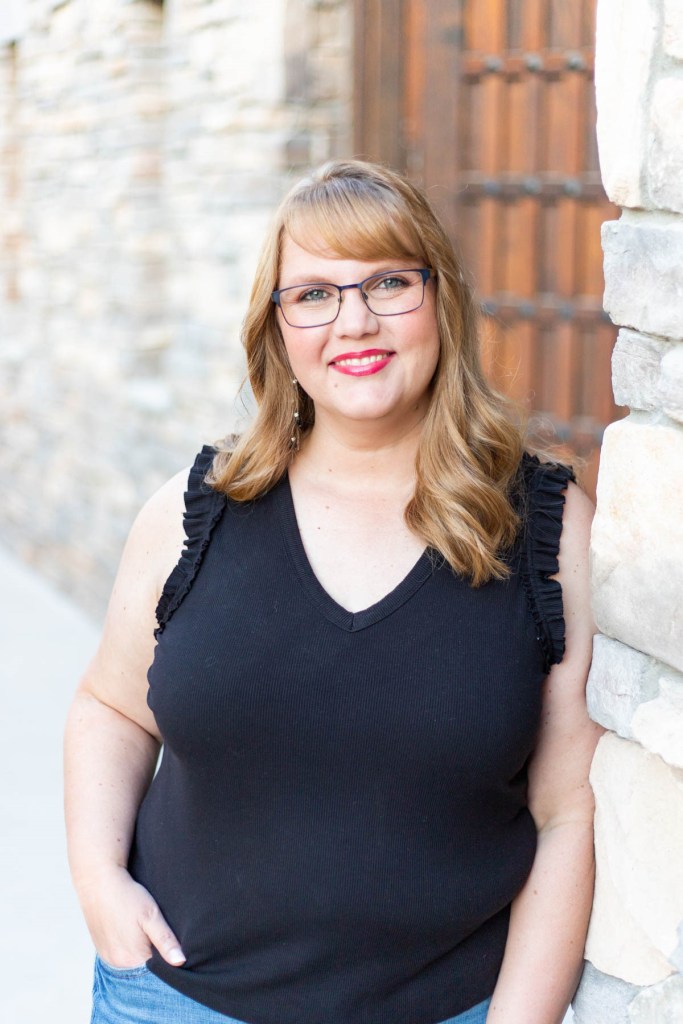
Jennifer Deibel is the author of A Dance in Donegal (winner of the Kipp Award for Historical Romance), The Lady of Galway Manor, and The Maid of Ballymacool. Her work has appeared on (in)courage, on The Better Mom, in Missions Mosaic magazine, and in other publications. With firsthand immersive experience abroad, Jennifer writes stories that help redefine home through the lens of culture, history, and family. After nearly a decade of living in Ireland and Austria, she now lives in Arizona with her husband and their three children. You can find her online at JenniferDeibel.com.
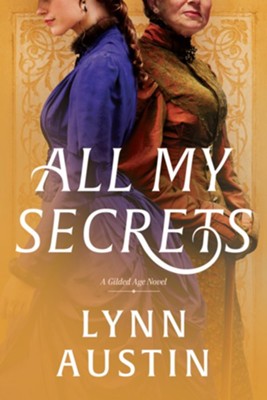
Good afternoon, Miss Stanhope. Thank you for allowing me to interview you in your beautiful mansion.
Adelaide: You’re welcome. Please, help yourself to a scone while the maid pours your tea. Do you take sugar or lemon?
Just one sugar. Thank you. From what I’ve seen of your mansion—the soaring entrance foyer and now this lush sitting room—I must say your home is magnificent! May I ask how many rooms it has?
Adelaide: I’m not entirely certain. Around 75, I believe. My grandmother, Junietta Stanhope, might know. She has lived here ever since my great-grandfather—her father-in-law—built it right after the Civil War.
Are all the rooms this enormous?
Adelaide: No, the ballroom is the largest room, then the formal dining room, which can seat 100 guests. There’s an art gallery, a conservatory, and a library as well.
That seems like a lot of space for . . . how many people?
Adelaide: Three. My mother, Sylvia Stanhope; my grandmother; and me. And the servants, of course.
Yes, of course. My condolences on the recent death of your father, Miss Stanhope. He was a giant in the business world, and will be greatly missed.
Adelaide: Thank you. His death was quite sudden, and a terrible shock to all three of us. That’s why Mother asked to be excused today. She is still in mourning, as I’m sure you’ll understand.
Certainly. Now, a wealthy young woman such as yourself must have many suitors lining up for your hand. Will there will be an engagement announcement in your near future?
Adelaide: I haven’t entertained any serious suitors yet. I’m only nineteen years old. The courtship process hadn’t really begun when Father passed away, and now I must observe the customary period of mourning, as is only proper.
Aren’t you afraid your peers will snatch up all the eligible gentlemen in the meantime?
Adelaide: That’s a very impertinent question! But no, I’m certain there are enough high-society gentlemen here in New York City to go around.
Mm. These scones are delicious. So, will your grandmother be joining us for tea today?
Adelaide: I’m afraid not. As chairman of the Stanhope Charitable Foundation, she has a very busy schedule.
I’m sure she does. She has never been very active in high-society’s social circles, has she?
Adelaide: Only when soliciting donations from other wealthy patrons. The charities she oversees are much more important to her than socializing.
Do you share her passion for the poor and downtrodden, or have you inherited your mother’s love of entertaining with lavish parties and balls?
Adelaide: Neither, at this point in my life. I’m not certain where the future will find me. Forgive me, but I must take my leave now. But please, finish your tea and help yourself to another scone. The maid will show you out.
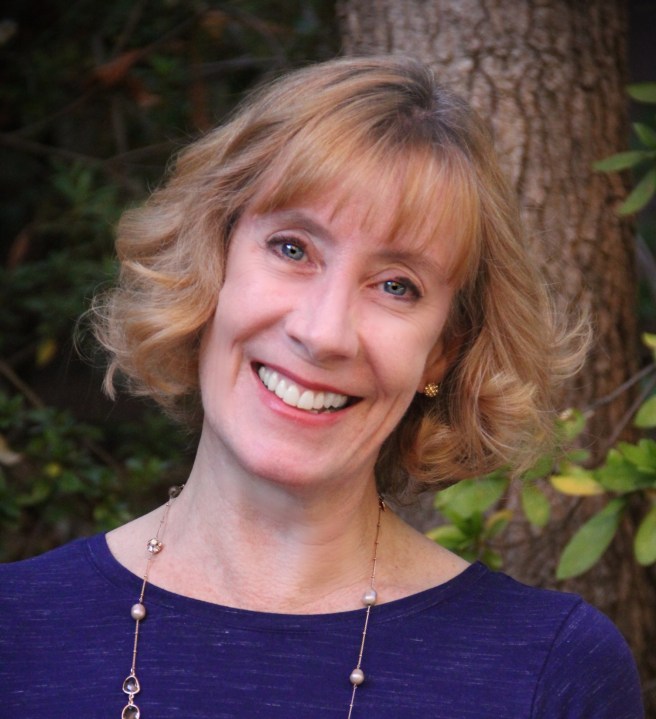
Lynn Austin is the bestselling author of nearly thirty novels and was one of the first inductees into the Christy Award Hall of Fame. Her novel Hidden Places was made into a Hallmark Channel movie starring actress Shirley Jones. She and her husband have three grown children and make their home in western Michigan.
Welcome to Novel PASTimes! We are pleased you stopped by today.
Tell us something about where you live.
Recently, I came to London from the Netherlands. With German bombs raining down on London, this isn’t a safe place, but it’s the only place for me.
Living in London during the Blitz sounds very dangerous indeed! What brought you there?
When the Nazis invaded the Netherlands, my husband & I fled with our three-year-old son, Theo. On the road, my husband cruelly ripped my son from my arms when I was sleeping and thrust him into the car of an English couple bound for London. My husband refused to tell me their names or address, then he was killed by a German fighter plane.
Now I’m in London, searching for my son.
That’s horrible! What are doing to find him?
I keep a notebook listing every place I search. I’ve visited orphanages and refugee camps and hospitals. I’ve visited the Dutch Embassy and placed advertisements in the papers. When I was inquiring at the Ministry of Health, which coordinates the evacuation of children to the countryside, I ended up taking a job there. My original purpose was to search for Theo among the evacuees, but now I see the importance of our work—not only to encourage evacuation, but to support the children in the country, the foster families, and the billeting officers.
In my search for Theo, I hoped to make an appeal on the wireless after I met BBC correspondent Hugh Collingwood. He was unable to make the broadcast, but I’m still glad I met him.
How’s that? Do I see you blushing?
Please, no. Hugh is a good friend, but he’s charming. After being trapped with a man who used to charm to control people, I’m leery.
However, Hugh’s charm has attracted a circle of friends who have welcomed me. This group of reporters hails from England and America and France, and their conversations are lively and intelligent—if a bit heated when they disagree.
What are you most afraid of?
This is worse than the previous question. Hugh once told me to list my fears, to name the monsters so I could fight them. And the monsters howl inside my head, all day and all night, whether or not I list them.
I fear I’ll never find my son. That he’s dead or abandoned or wandering or living in an orphanage in Nazi-occupied Europe. That, even if he’s in an English home, he’s being neglected or abused or that he’s living in terror of bombs.
And I fear he’ll forget me. He’s only three years old, after all. Hugh said Theo will never forget my love. I cling to that hope and to the hope that one day I’ll find my little son.
Do you have a cherished possession?
Theo’s stuffed elephant, Oli. Oli is his best friend. We used to play a game where Theo would hide and Oli would search for him. I used to tell him that Oli would always find him because elephants never forget. I can still see Theo holding Oli to his cheek to comfort himself, and when I press my face to Oli I can still smell a hint of my little boy.
What have you learned about yourself in the course of your story?
For all my lists and routines and plans, I can’t control my life. My rituals have always given me a sense of comfort, but it’s a false comfort. Turning a knob twelve times doesn’t cause God to release the desires of my heart. The Lord isn’t an automaton to manipulate. I’m slowly learning to trust him.
Thanks for allowing us to get know you a little better!
As the German army invades the Netherlands in 1940, Aleida vander Zee Martens flees her homeland with her husband and her three-year-old son. But when her husband is killed and she is separatedfrom her son, she must escape to London alone to wait out the occupation. She finds work with an agency responsible for evacuating children to the countryside and is determined to use her connections to help her find her son. This includes enlisting the aid of a handsome BBC correspondent. BBC radio correspondent Hugh Collingwood is caught in the middle of the London Blitz. As German bombs set the city on fire, Hugh is determined to boost morale while walking the fine line between truth and censorship. But the Germans are not the only ones Londoners have to fear as a series of murders flame up amid the ashes. As Aleida and Hugh work together to find her missing son and also uncover the culprit behind the murders, they continue to grow closer. But with bombs falling and continued killings, they may be running out of time
Sarah Sundin is the bestselling author of When Twilight Breaks, Until Leaves Fall in Paris, The Sound of Light, and the popular WWII series Sunrise at Normandy, among others. She is a Christy Award winner and a Carol Award winner, and her novels have received starred reviews from Booklist, Library Journal, and Publishers Weekly, and have appeared on Booklist’s “101 Best Romance Novels of the Last 10 Years.” Sarah lives in California.
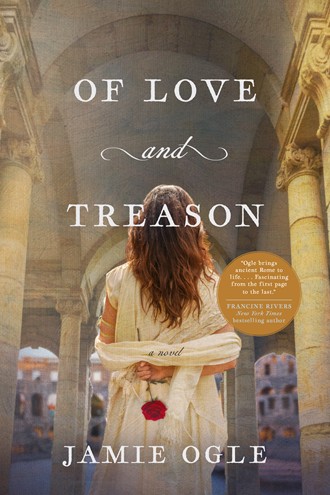
Welcome, Iris. Thank you for agreeing to answer a few questions. Just relax. No need to be nervous.
Iris: Is there a problem? It’s just that usually when the Praetorians bring people in for questioning, they’ve done something wrong, and I haven’t . . . unless . . . I’ll tell you whatever you want to know, just don’t tear out my fingernails.
What? No! No. That’s extremely disturbing. Nothing’s wrong, we just wanted to get to know you. Chat, you know?
Iris:With me? No one ever wants to talk to me. You know how superstitious Romans are; they just see a blind woman and assume I’m cursed. Maybe I am. I’ve tried everything I can think of to get my sight back. For things to go back to normal, but . . .
You mentioned Romans. Have you always lived in Rome?
Iris: Yes. My pater and I live in a fourth-floor apartment in the insula on Cedar Street. Do you know it? Probably not. It’s not in the nicest part of the city. The stairs can be treacherous, and the neighbors are . . . lively. But it’s our own little place in the world, and it’s not far from the Markets of Trajan. I work in a bakery there.
You’re a baker?
Iris: I don’t do the baking part. Mostly just kneading and shaping, and sometimes if Paulina’s away—it’s her bakery—I work up front. Most of the customers are pleasant, especially Val—never mind. It doesn’t pay much, but every little bit helps, especially now that . . . well, Pater’s debts have been called in.
His debts?
Iris: The gods won’t be bribed for free, you know. And paying physicians to try to heal my eyes isn’t cheap either. They all make grand promises, and in the end, they all disappoint. *shrugs* You probably think me foolish and naive to keep looking for a cure, hoping. But I can’t help it. There’s this part of me that won’t let go of hope no matter how silly it seems.
I don’t think it’s silly. It takes a strong person to keep hoping in the middle of disappointment.
Iris: Maybe. It doesn’t hurt that the man I keep meeting in the market . . . he seems to think I could be healed.
A man?
Iris: Please don’t tell my pater or Titus about him. I don’t think Pater would notice—he’s been worried about money lately and spending a lot of time at the Centaur’s Cup, if you know what I mean. But if Titus knew about this man, he’d do his annoying Praetorian Guard thing and try to hunt him down for questioning—and not this chatting kind.
I see. And Titus is . . . your brother?
Iris: He might as well be. Pater took Titus in and raised him when his father died. He’s hoping to be a Praetorian tribune someday, and I think he’ll make it. He’s very dedicated to eradicating criminals and threats to the empire.
So, going back to this man you met—
Iris: His name is Valentine, of all things. No one could possibly be a criminal with a name like that.
…
Iris: He has a kind voice, and when he comes into the bakery in the mornings, he talks to me the way no one else does. It’s like he sees . . . me.
Why don’t you want your father to know about him?
Iris *whispering*: I think Valentine is a Christian. And they’re not supposed to talk about their God. But he does it anyway and . . . I can’t help it. I want to know more.
And your father would discourage you?
Iris: He’s the head jailor at the carcer, and he’s likelier to throw Valentine in prison than listen to him. It’s illegal for Christians to proselytize and illegal to convert. I . . . I have listened, though, and the Christians are nothing like the stories. I wish Pater could listen. Valentine has a nice voice, and Pater has a heavy mind right now.
Oh?
Iris: I mentioned the money troubles already. If we can’t pay, everything we have will be taken and sold. Including ourselves. The only other way is . . . *shudders*.Pater’s tribune offered to cover the debts . . . in exchange for me.
Oh.
Iris: I don’t know what we’re going to do, but I’m hopeful. If Valentine’s right and I can be healed, perhaps we can find a way out of this mess.
I sincerely hope so. Will you let us know what happens?
Iris: I think you’ll know. This feels like a story that will live on through the ages.
Valentine defies the emperor and becomes a hero . . . and the most wanted man in the empire. Compelled by his faith, he has nothing to lose, until a chance encounter with the daughter of a Roman jailor changes everything.
Rome, AD 270. In the wake of the emperor’s marriage ban, rumors swirl that there is one man brave enough to perform wedding ceremonies in secret. A public notarius and leader of an underground church, Valentine believes the emperor’s edict unjust and risks his own life for the sake of his convictions. But as his fame grows, so do fears for his safety.
Iris, the daughter of a Roman jailor, believes regaining her sight will ease the mounting troubles at home. Her last hope rests in searching out Valentine and his church, but the danger of associating with people labeled a threat to the empire is great. Still, as Iris’s new friends lead her to faith in God, Iris is drawn to Valentine and they both begin to hope for a future together beyond the treacherous empire.
But when a past debt and a staggering betrayal collide, Valentine, Iris, and everyone they love must fight for their lives . . . and wrestle with trusting a God who can restore sight yet does not always keep His followers from peril.
Jamie Ogle is a predawn writer, a homeschool mom by day, and a reader by night. Inspired by her fascination with the storied history of faith, she writes historical fiction infused with hope, adventure, and courageous rebels. A Minnesota native, she now lives in Iowa with her husband and their three children, and she can usually be found gardening, beekeeping, and tromping through the woods.
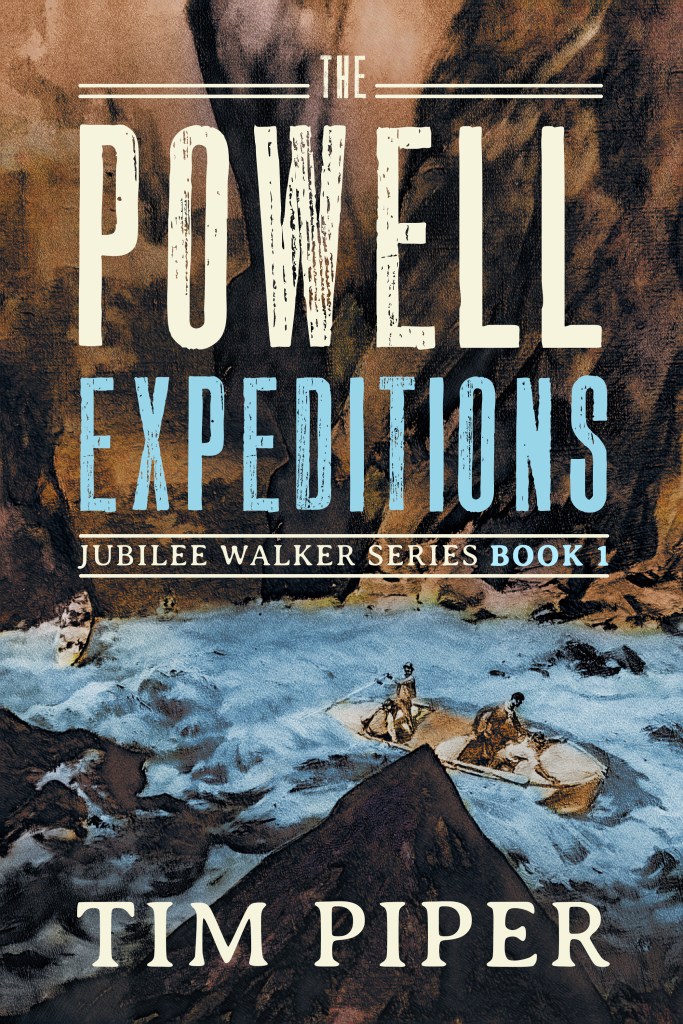
I was born and raised on a 160-acre farm in central Illinois, about fifteen miles north of Bloomington. My parents built a modest farmhouse, where I grew up reading dime novels in my loft bedroom and dreaming of a life of adventure. When I was ten years old, my father died, and my uncle came to live on the farm. I helped him build a cabin and furnishings from timber off the farm. After he died at Shiloh, I used his cabin as my private retreat, where I continued reading adventure stories and imagining having my own adventures one day. When I was seventeen, my mother died, and I set off to see some of the West. While I was away, the farmhouse and barn burned down, but my uncle’s cabin survived. Today, the farm lies fallow, and I live in the cabin, when I’m not off somewhere on an adventure.
Is there anything special about your name? Why do you think you were given that name?
Jubilee is not a common name, but it is not one I’m ashamed of. I don’t mind being called Jubilee, but most people call me Jubil. I’ve seen a similar name spelled Jubal, but I’ve never known anyone else named Jubilee. My parents named me with the intent of the word in mind—an event for celebration. My mother had a very difficult time while she carried me and a difficult delivery that meant I would be their only child. They named me Jubilee to celebrate my successful birth and my mother’s survival.
Do you have an occupation? What do you like or dislike about your work?
I am in the outfitting business. On my first trip West, I made travel money by working part-time at Warner and Company Outfitters in Council Bluffs, Iowa. I struck up a good relationship with the Warners and agreed to open a new store in my hometown with Mr. Warner’s son, Luke. The Council Bluffs store caters to overland travelers and army posts, but Luke and I cater to travelers in the age of the railroad. My passion for adventure and my acquaintance Major John Wesley Powell, a family friend, has brought expedition outfitting into our business. I very much enjoy testing out our products by using them in the field and helping my partner create improved versions. I don’t mind helping customers select products or the general labor of operating the store, but the recordkeeping and money-handling aspects I leave in Luke’s more capable hands.
Who are the special people in your life?
My parents and my uncle will always be in my heart. As my best friend, Nelly Boswell, and I have grown up together, our relationship has become more complicated. I am hopeful that our relationship will continue to deepen, but my desire for a life of adventure and Nelly’s independent nature make our future together unclear. Nelly’s family has treated me like one of their own for as long as I can remember. Her twin brothers, as troublesome as they may be sometimes, help Luke and me with our store. I owe the Warner family a great deal, for having such confidence in me and encouraging me to live my dreams. And Luke Warner has become for me the brother I never had. I also befriended a Pawnee scout named White Dog during a wagon-train trek across the plains. I hope that friendship grows.
What is your heart’s deepest desire?
To marry Nelly and have a family. But the world is full of adventure and beauty, and I want to experience all of it. I hope to somehow have both a life of adventure and be happily married to Nelly, even though I recognize these desires might not seem complementary. I’d also like to expand my reputation as an adventurer and make my business with the Warners more successful. And of course, I want to make all the people close to me proud.
What are you most afraid of?
Living a lonely, tedious life. Growing up, I honored my father and mother and never complained about life on the farm, but I knew the life of a farmer was not for me. The routine of the chores, the dependence on the weather for success, and the solitary existence all go against my nature. But a man who is too restless to stay at home and be a good husband and father may be destined to spend his time alone. This is not what I want for myself, but I have to be true to my nature.
Do you have a cherished possession?
My parents’ farm is my only remaining link to them, and although I have no interest in farming the land, I have no interest in selling it either. My saddle horse, Star, who I do not think of as a possession so much as a family member, was my father’s until he died. I can’t recall a time when she was not with me. I treasure my father’s Henry rifle, one of the first models made. It is as true and reliable as he was. My mother’s ruby ring is one of the few luxuries she owned and one I hope to someday place on Nelly’s finger. White Dog’s medicine bag is also a treasured keepsake. He gave it to me for saving his life, and it holds spirit tokens that supposedly wield the power to protect me from danger.
What do you expect the future will hold for you?
I hope that Nelly will continue to tolerate my restless spirit and even love me as more than a friend, in the way that a wife loves a husband. The outfitting business suits me well, but I hope to contribute to America’s settlement by being involved in the exploration of the last remaining wilderness areas in our great West.
What have you learned about yourself in the course of your story?
As I grew up daydreaming about a life of adventure, I was concerned that my nature was too meek and commonplace to withstand the demands of a life of danger. But I have learned that being honest, hardworking, pleasant with people, and calm in the face of danger are traits that make me valuable to bolder men who need reliable helpers to succeed where most men can’t.
Is there anything else you’d like people to know about you?
I am unlikely to ever be a problem drinker. While I enjoy an occasional glass of wine, my time with Major Powell in the Grand Canyon cured me of ever developing a taste for whiskey.
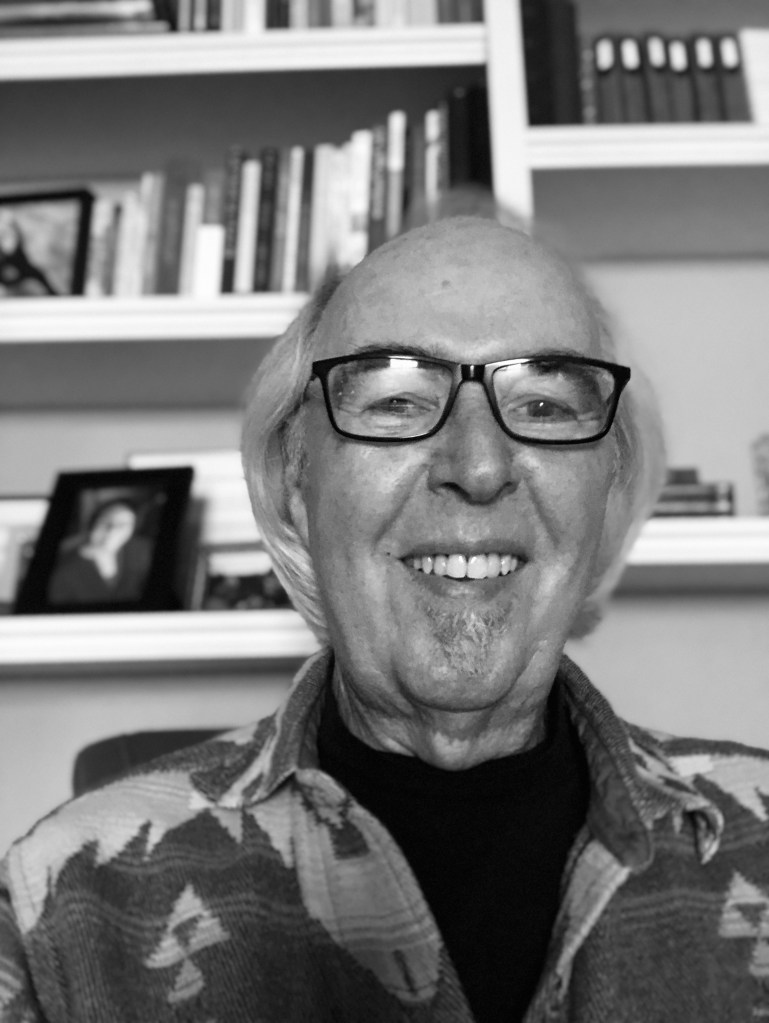
Tim Piper is retired from a long career in Information Technology and has been a lifelong hobbyist musician. In his earlier days he was an avid hiker and backcountry camper, but his adventures these days are less strenuous and more comfortable. He lives in Bloomington, Illinois, with his cat, Maggie, who is no help with his writing, but is a stellar companion. He began his education at Illinois State University as an English major, but life circumstances put him on a more pragmatic path, and he graduated with a BS in Business Admin, a degree he finds appropriately named. You can stay in touch with him at www.timpiper-author.com
Amazon Affiliate Link used to benefit this blog with no additional cost to you.
Welcome to Novel PASTimes! We are pleased you stopped by today.
Tell us something about where you live.
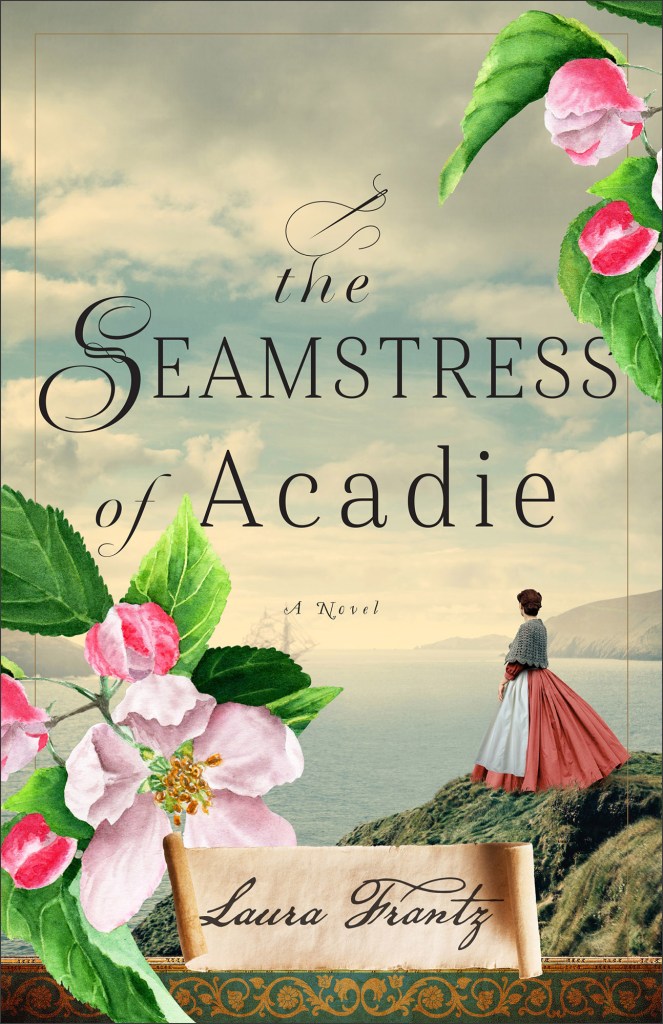
I’m Sylvie Galant, an Acadian, who lives in the contested territory of Acadie or as the British call it, Nova Scotia, Canada. My homeland is all I’ve ever known and my family owns the hectares of my great-grandfathers, a legacy of farmers, cattlemen, and fishers. With the mountains at our back and the sea before us, we dwell in what visitors say is one of the most beautiful places on earth.
Is there anything special about your name? Why do you think you were given that name?
I’m named after my great-grandmother, Sylvie, who first came to the shores of Acadie in the early 17th-century. I’m delighted that my name honors my ancestry and we can keep my family history alive. I hope to name my own daughter Sylvie and, if I have a son, Bleu, after my beloved elder brother. My name is a bit of departure from tradition. Most Acadian women are named Madeleine, Cécile, Françoise, Anne, Jeanne, or Marie after their godparents. Interestingly, when Acadians marry, the women keep their maiden names their whole life long.
Do you have an occupation? What do you like or dislike about your work?
I am a seamstress. My mother always said I have a gift for stitches. My first project was a little sampler which she pronounced nearly flawless when I was only five. I have since sewn the clothing of my immediate family, both men and women, and have even been employed by Fort Beauséjour as a shirtmaker for the soldiers who occupy the garrison there. But my favorite garment to make is a fancy dress. I can usually stitch a detailed gown in ten days.
I love all the choices of fabric to craft garments. Silks and taffetas and brocades are especially lovely to work yet challenging. I find it very rewarding when someone wears something I’ve made and takes pleasure in it. I dislike having to sew by firelight or low light during the day. It can wreak havoc on your stitches, not to mention your eyesight!
Who are the special people in your life?
My little sister, Marie-Madeleine is the joy of our lives. She is sunshine to everyone she meets. I adore my older brother, Bleu, who is often away from Acadie working for Hudson’s Bay Company as well as his many other pursuits, some of which shall not be named here. And I cannot forget my other brothers, Pascal and Lucien, who remain at home and help my beloved father and mother with their many tasks.
What is your heart’s deepest desire?
To marry and have a family someday. I have not yet met the man but it is wonderful to imagine him out there, somewhere, prior to our paths intercepting. And I hope to use my gift as a seamstress to benefit others. I do not think of it as merely sewing but creating beauty and adorning whoever wears the garments of my hands and heart. Also, I long to know Christ better and better. To hear “well done, good & faithful servant” when my earthly race is done.
What are you most afraid of?
Acadie has been fought over by the English and the French for hundreds of years. Both countries want us to take an oath of loyalty but my people remain peaceful and neutral. All we desire is to live in peace but turmoil is all I’ve ever known. I hope never to lose my homeland, the place Acadians have lived for generations. But the fighting continues and might result in something dire.
Do you have a cherished possession?
That would be my sewing kit. It was given to me by my maternal great-grandmother when I was four years old. She brought it to Acadie from her homeland of Scotland when she was young and left it to me upon her passing. Though it looks quite plain being made of linen, it has all the tools of my trade within – needles, thread, scissors, thimble, and bodkin.
What do you expect the future will hold for you?
I sense my future might change violently and quickly based on the escalating war around us. I pray not, but these English who rule over the American colonies and parts of Canada seem to have a voracious appetite for more land no matter who it belongs to.
What have you learned about yourself in the course of your story?
My story has caused me to examine my own life in a profound way. I now look at how I respond when circumstances are out of my control. What is my reaction to calamity? In what or who do I place my trust? If the worst happens, what do I have left? My priorities are shifting and centering more on my relationship with the Lord because that is the one constant in life.
Is there anything else you’d like people to know about you?
Though I appear quite serious, far moreso than my younger sister, I experience a great deal of joy in the natural world and plying my needle as a seamstress. I love my family and friends and my faith. I am quite blessed despite my fears and an uncertain future.
Thanks for allowing us to get know you a little better!
Laura Frantz is a Christy Award winner and the ECPA bestselling author of fifteen novels, including The Rose and the Thistle, The Frontiersman’s Daughter, Courting Morrow Little, The Lacemaker, and A Heart Adrift. She is the proud mom of an American soldier and a career firefighter. Though she will always call Kentucky home, Laura lives with her husband in Washington State.
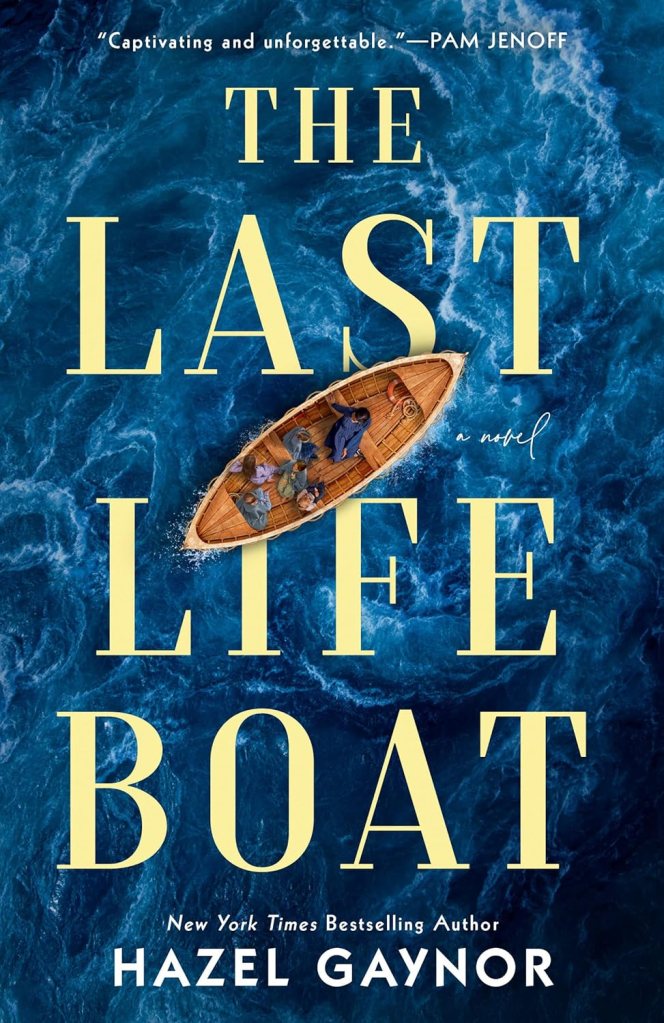
Amazon Affiliate link used to benefit the blog. Please click on the image. It does not cost you more.
384 pages Publisher Berkley Publication date June 13, 2023
This novel was inspired by actual events using fictional characters. We’ve all heard of the evacuation of British children during WWII but I for one hadn’t heard about the attack and subsequent sinking of a ship carrying evacuees to Canada. The story begins with two women: Alice doing her part by volunteering to escort these children and Lily, a mother making the difficult decision to send her children away to where she’d thought they’d be safer. There was an escort convoy but the problem was the escort ships left before the children’s ship was safe. The parents hadn’t been told they wouldn’t be escorted all the way to Canada. Of course everyone knew it was dangerous but choices had to be made and the best hoped for. One article I read said 15,000 children were killed or seriously injured in Britain during the Blitz.
We see the Blitz on London, travel with the characters to shelters in the middle of the night, nearly every night for a time. It’s understandable that the British people thought their children needed to be sent to somewhere safer. They didn’t know if, like France, they might be invaded by the Nazis.
When the unthinkable happens, Alice and some of the children she is responsible for, along with some other adults, board the last lifeboat to leave the sinking ship. After they realize they wouldn’t be rescued (in real life it took until the next day for a ship to come to the site looking for survivors) they made a plan to sail to Ireland. They had drifted away from the search area and assumed to have not survived. There are storms, ill passengers, too little food and water. The author is so skilled with painting the story that the reader can imagine it all. It’s heart wrenching. There are moments of insanity brought on by too little nourishment and sleep. There is nothing they can do to help the sick. But there are wondrous moments too. Alice retelling the story of Moby Dick to the children to entertain them. A sometimes brunt but charming man named Owen who takes daily swims outside the lifeboat, incredibly beautiful sunrises and visits from curious whales. Alice learns more about herself than she ever would have without this experience and grows to believe in herself and her purpose in life. Lily, back at home, is a recent widow. She must deal with guilt, fear, and depression. Obviously the sinking of the ship with her children on it is devastating and life changing. So much happens in just eight days! There are times in the story where I couldn’t see how they could possibly find healing, but as with other Hazel Gaynor novels, there is hope and a satisfying ending.
Don’t miss the author’s note. This is a part of history that was a failure on the British government’s part but also something that was learned from. So many children (and adults) lost their lives in this attack (Only 13 of the 90 children onboard through the evacuation scheme survived.) and their memory deserves to be preserved. The authors does this with this well-written, intense, and stirring novel. Highly recommended.






 Novel PASTimes