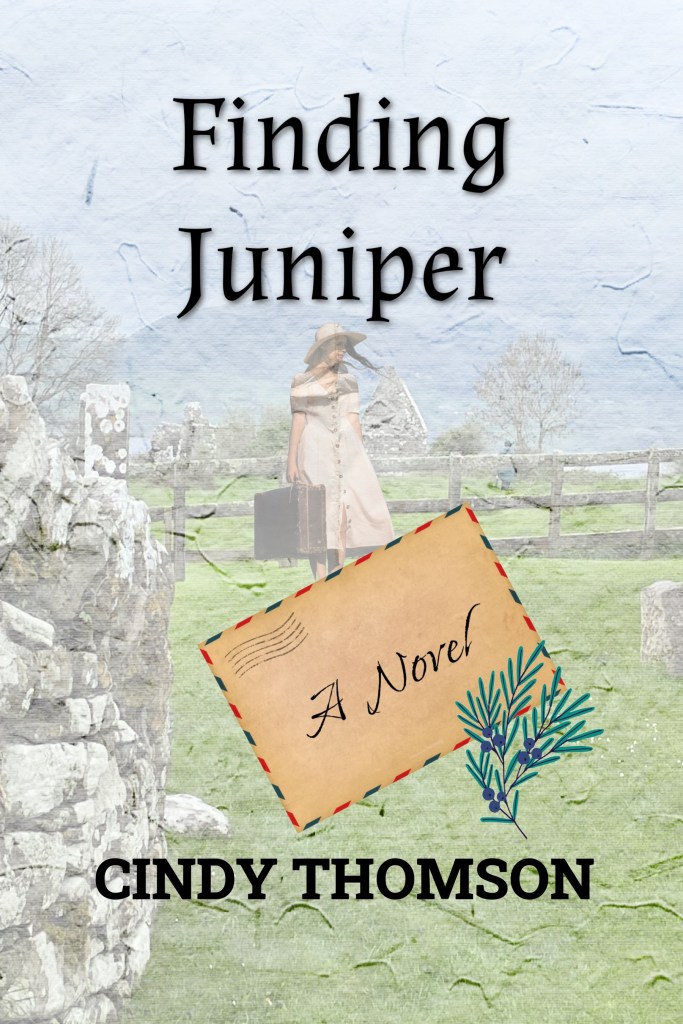
Meet Juniper from Cindy Thomson’s New Novel, Finding Juniper

For Patrick Doyle, the claim that time heals all wounds is a cruel lie.

In 1920, returning from WWI, Paddy finds Ireland creeping toward civil war. Invisible borders separate people, including Paddy and his pregnant girlfriend. With few prospects, Paddy sails to America. However, America is far from the land of opportunity he’d hoped for. And worse, his girl refuses to follow him because of her political involvement.

Thirty years later, Patrick has moved on with his life, building a new family. A letter arrives, suggesting the child he’d assumed died may be alive. Patrick’s American daughter Mardell pushes him to find out what happened to her sister, named Juniper. Patrick anxiously sails to Ireland.

Juniper endured a childhood in institutions, and when she’s released, she moves on without the parents who left her. Operating an apothecary out of an inherited cottage where villagers are slow to trust outsiders, Juniper finally finds a home when her grandmother arrives. Just as she feels comfortable and content, her father shows up at her door, bringing shocking news about her mother.

Finding Juniper invites readers on a journey of confronting the past, healing from old traumas, and redefining what family truly means.


Welcome to the blog, Juniper. Because of the time period of the novel, you might not know what that is.

Juniper: You said this was an interview. Is that what you mean?

Ah, yes, an interview. Readers would like to know about you, especially if they haven’t read the book.

Juniper: [Gasp!] They haven’t read the book? They must or I will cease to exist.

Don’t worry. You’re real to those who have. Tell us something about your childhood. When were you born?

Juniper: Now you sound like those doctors at St. Giles. I was born on the second of June, 1920, in Dublin, Ireland. My childhood was not happy, but you don’t want to hear about that.

Oh, we do! Happy or not, your story will help us get to know you.

Juniper: [Sigh] It won’t really because I’m a new woman, now. But I’ll tell you a wee bit. I grew up without parents, but I wasn’t an orphan. Ireland in those days, well, things were all upside down. My mother got involved in politics. Long story, but she wasn’t in a right state to raise a child. Things are better in Ireland now, in 1950, and I’m doing quite well. When I was young my mother sent me to live with the nuns for a time. I rebelled a bit as a child, so they moved me to St. Giles.

That’s a hospital?

Juniper: Of sorts. So they called it. It was really a place where they put folks, mostly girls, whose families don’t want them or maybe just couldn’t deal with them. They let me go when I was older.

Your parents didn’t want you? I heard a different story.

Juniper: I heard it too. Call it what you will, but in my mind I was abandoned. I’m still trying to adapt.

Say no more. We don’t want to spoil the story.

Juniper: I was happy, though, when I got to work in the gardens. I learned a lot about plants from the gardner at St. Giles. And also from letters my granny sent me. She made herbal cures as well. I am what you might call an herbalist or a natural healer. I think that’s the term from your time.

How fascinating. I bet folks appreciate the things you make.

Juniper: Most do. There was a wee bit of trouble once, a bit of a mix up with one of my cures.

Wait! Don’t tell us.

Juniper: Happy not to talk about that.

So, your father, Patrick, went to America?

Juniper: He did. My mother called him Paddy. I was told he’d died over there.

I heard something different. Life was difficult for him in America. At least in the beginning.

Juniper: Now you wait. Don’t be spoiling things, as you said.

Sorry. Isn’t there a handsome new rector in your village now?

Juniper: Yes, Donal. He’s the kindest person I have ever met. My experience with the church has been less than pleasant, but meeting him has made me look at things differently.

Will something develop between you two?

Juniper: You sound like Granny. We shall see.

Why don’t you tell us about your name?

Juniper: Ah, my name. Granny always called me Juniper, but my birth name was Anna. St. Giles would only call me Anna, so I got used to that. I like Juniper, though, named as I was for a lovely green plant. There is such beauty in the world out of doors. Much healing in plants.

Do you find healing by working in the garden? And in the novel as well?

Juniper: I do feel calmer when I toil in my fields, but healing for my whole self? You’ll have to read to find out.

Thanks for chatting with us, Juniper.


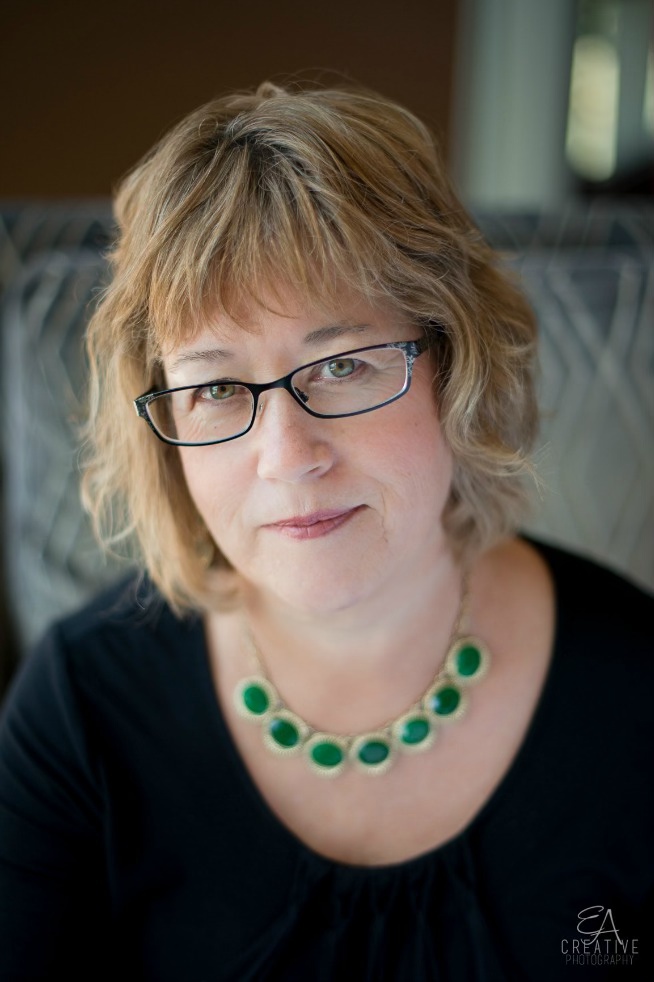
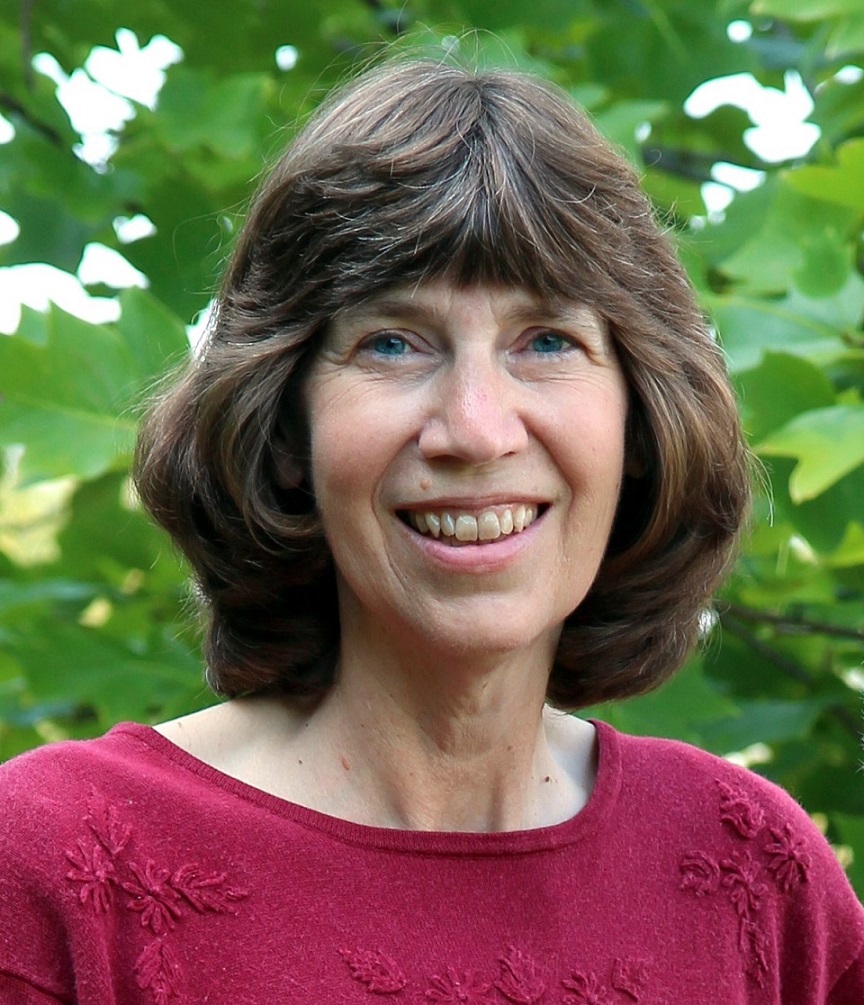
Known for the inspirational Celtic theme employed in most of her books, Cindy Thomson is the author of both fiction and nonfiction. A genealogy enthusiast, she writes from her home in Ohio where she lives with her husband Tom near their three grown sons and their families. Visit her online at CindysWriting.com

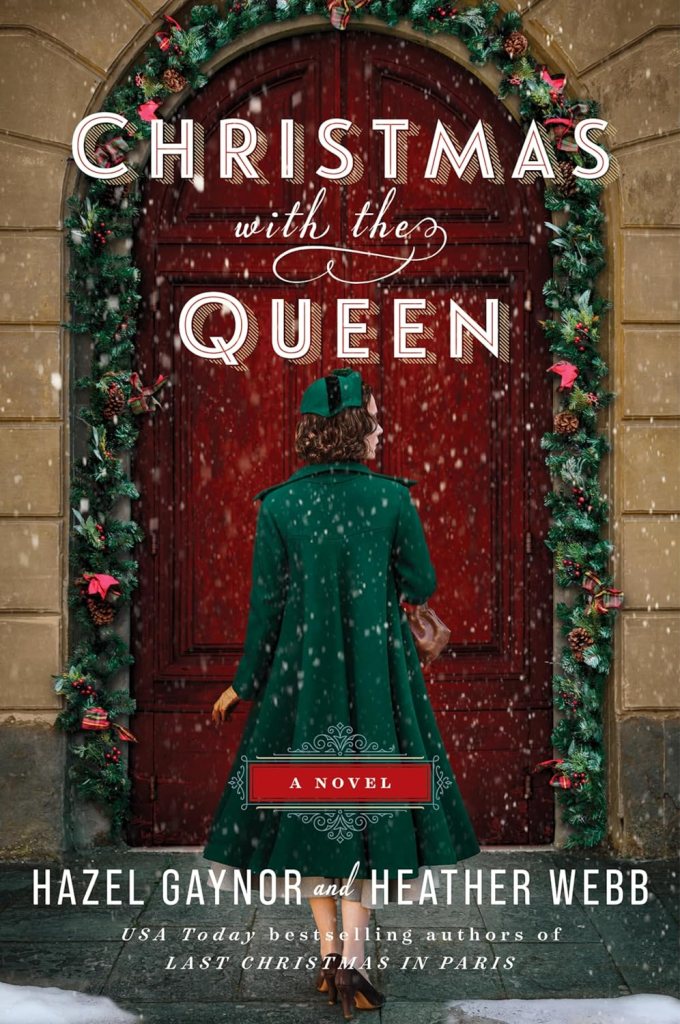
Book Review: Christmas with the Queen by Hazel Gaynor and Heather Webb

December 1952. While the young Queen Elizabeth II finds her feet as the new monarch, she must also find the right words to continue the tradition of her late father’s Christmas Day radio broadcast. But even traditions must evolve with the times, and the queen faces a postwar Britain hungry for change. 

Amazon Affiliate link used helps to support this blog

I enjoyed this novel about two lovers, Jack and Olive, who are separated by circumstances, including Jack’s marriage to another woman, Andrea, he loved. As the story opens Andrea is killed in a car accident. She leaves behind the dream she and Jack had for Jack to open his own restaurant. Olive harbors a secret, and these two things keep them apart for most of the book. It’s the classic romance formula.

What made this book intriguing for me was the glimpse into the royal family and the Queen’s preparations for her annual Christmas address. (However, readers should understand, despite the title and setting, the book is about Jack and Olive who both have jobs that take them into the lives of Queen Elizabeth and Prince Phillip). Another intriguing aspect for he was Jack’s character. He enjoys cooking the recipes that his grandfather, from New Orleans, taught him. The way he puts his dishes together and the way he introduces them to the British people was interesting. I also loved how he wooed Olive by figuring out what she liked and setting up one-on-one cooking lessons.

The only drawback for me was the prolonged period of time (years!) that it took for Jack and Olive to reunite as a couple. I found it a little annoying. I also didn’t like that we weren’t able to witness a proposal or a wedding. After all that back and forth, this part deserved a place in the story, I thought. Even so, this didn’t spoil my enjoyment of this story by two very talented authors. I’ve read several of their books and I love how they take ordinary people and show readers how they endured and prospered during the times they lived in.

This is a fun Christmasy read with a gorgeous cover that I think readers will enjoy.

Merry Christmas, everyone!

I received a free review copy from the publisher via NetGalley and was not required to leave a review. These are my own opinions.

Reviewed by Cindy Thomson, www.cindyswriting.com

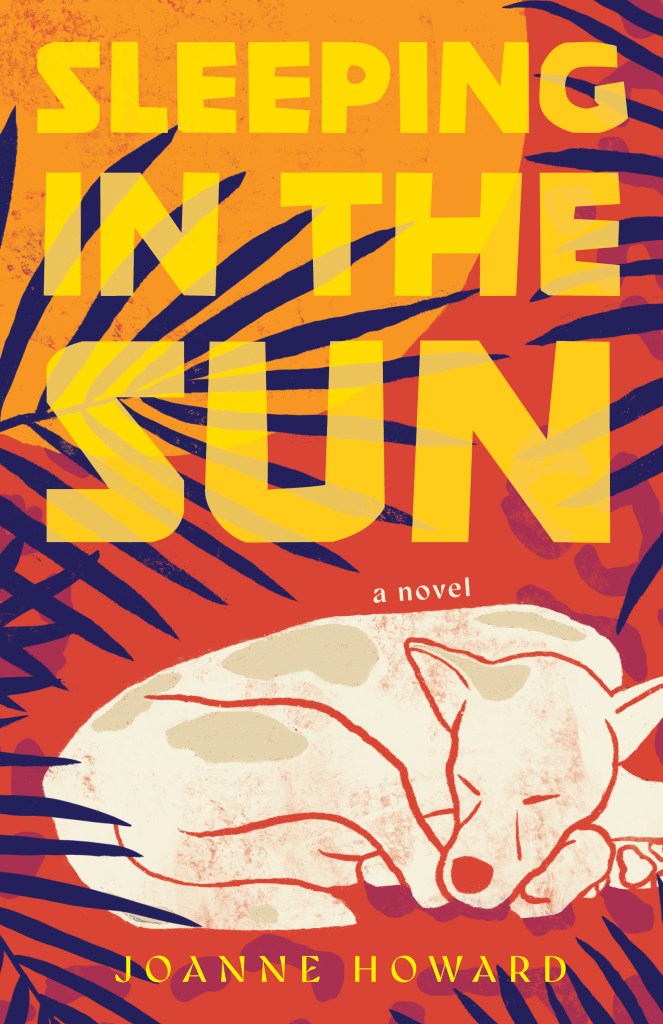
A Chat with Arthur from Sleeping in the Sun by Joanne Howard

Amazon Affiliate Link Helps to Support the Blog

When two visitors arrive to the boarding house in India where an American boy is coming of age during the British Raj, truths unravel, disrupting his life and challenging the family’s sense of home. A unique historical angle ideal for fans of The Poisonwood Bible and The Inheritance of Loss.

In the last years of the British Raj, an American missionary family stays on in Midnapore, India. Though the Hintons enjoy white privileges, they have never been accepted by British society and instead run a boarding house on the outskirts of town where wayward native Indians come to find relief.

Young Gene Hinton can’t get out from under the thumb of his three older brothers, and the only person he can really relate to is Arthur, his family’s Indian servant. But when Uncle Ellis, a high-ranking British judge, suddenly arrives and announces he’ll be staying indefinitely in their humble house, far from his prestigious post in Himalayan foothills, life as Gene knows it is interrupted. While his brothers are excited at the judge’s arrival, he is skeptical as to why this important man is hiding out with them in the backwaters of Bengal.

Also skeptical is Arthur. Then an Indian woman appears on their doorstep—and, after growing close to her, he learns the sinister truth about the judge. Torn between a family that has provided him shelter, work, and purpose his whole life and the escalating outrage of his countrymen, Arthur must decide where his loyalties lie—and the Hintons must decide if they can still call India home.

So, Arthur. Please introduce yourself. What is your role in the Hinton household?

I am the family’s servant. The only one, actually. Which is unusual for such a large house and a family of four young boys, but…they manage with just me. Mrs. Hinton expects me to do the shopping in the bazaar, to tend to garden, to cook meals and serve them…oh, and to feed Minnie, the monkey they keep in the shed.

Is that so? Do many animals take up residence at the house?

Oh no, just Minnie. The house is a boarding house for humans, though. As part of the mission, the Hintons take in anyone who needs a momentary place to stay. It’s nice. The house is a bit far from town and I have so much to do, I don’t get many chances to meet other folk.

What do you do for yourself? 

I shouldn’t say, but I like to get a quiet moment away and enjoy a bidi. Mr. Hinton doesn’t like it, smoking is a sin and all, but I think he must know and doesn’t say anything. Or a pariah dog recently started showing up, and she likes to play with me. She’s quite sweet, and I’ve grown fond of her. Almost thinking of her as my own. I’ve never really had anyone of my own…

I’ve heard this is a somewhat turbulent time in India. Have you seen or experienced any political unrest?

The country is always changing. There’s a serious anti-Raj movement that’s gaining momentum, when just a few decades ago, such sentiment would have been dangerous. But Calcutta and Bengal have always been on the more progressive side of things. Perhaps you have heard of the Bengal Renaissance? I don’t have much time to read, but I know there were works about independence and individualism, that sort of thing. Sounds very American, now that I think about it. But yes: I’ve seen some rallies get out of hand in the bazaar. Some people say the Raj will fall soon. But I have too much to do to pay attention to that. The Hintons depend on me to keep everything running.

Many people want the British out of India. Would that also mean the Hintons have to go? What would life be like for you with them gone?

I…don’t know. I suppose I’d be sad. I’ve known them ever since Mr. and Mrs. Hinton came here to Midnapore, when their oldest was just a baby. But maybe they could stay on? The work that they do as missionaries is with the native Indian tribes here, and I don’t see how they couldn’t go on doing that if the British weren’t in charge. They’re American, after all. Doesn’t that make them exempt?

Does it?

[Pauses.] It does. Of course it does. Because if it doesn’t…then they’re just the same as the British, in the end. And that would mean I’ve been serving the Raj in some way. Which I never intended. I know some Indians don’t have any choice, and the British employ so many people, but I tried not to. The Hintons are just an American missionary family, they don’t have the same kind of power as the British. 

How is life different for this American family compared to a typical British family?

They wouldn’t ever admit it, but of course they have less money and are not so concerned with fitting in with the rest of British society. Like I said, they’d never admit it, but I think they’re quite proud of it, not fitting in, really. It seems…American of them.


Joanne Howard is an Asian American writer from California. She holds an MFA in writing from Pacific University. Her poetry received an honorable mention from Stanford University’s 2019 Paul Kalanithi Writing Award. Her fiction has been published in The Catalyst by UC Santa BarbaraThe Metaworker Literary Magazine and the Marin Independent Journal and her nonfiction has been published in Another New Calligraphy and The Santa Barbara Independent. She lives in Santa Rosa, CA. Find out more at her website.

Instagram: @joannesbooks

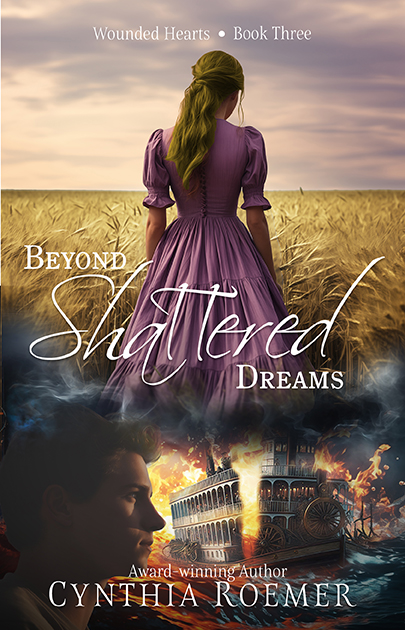
Meet Lydia Gallagher of Beyond Shattered Dreams by Cynthia Roemer

After months in a Confederate prison camp, Private Will Everett boards the Sultana eager to return home and leave behind the horrors of war. One day into the voyage, the overcrowded steamboat explodes, rendering Will injured and unable to recall his identity. With only a pocket watch and the name Will E. etched inside to guide him, Will begins a relentless quest to find his forgotten past. Scarred by her father’s untimely death, Lydia Gallagher struggles to trust God with unwanted changes in her family after the war. The arrival of an elusive, but handsome, stranger only adds to her angst. Until the intricacies of his true nature and the mysteries of his past come to light. As they work to thwart a ruthless man’s efforts to sabotage the farm, their admiration for each other deepens. But when Lydia becomes privy to information that could forever alter their lives, she must choose between losing the man she’s come to love or denying him the one thing he longs for most. 

Welcome to Novel PASTimes! We’re pleased you stopped by today.

Thank you. It’s wonderful to be here.

Share a bit about yourself—your name, where you’re from, what occupies your time.

I’m Lydia Gallagher. I live on a farm four miles west of Elmira, New York. I’ll soon turn eighteen and have two older brothers, Drew and Luke, both of which recently returned from fighting in the War Between the States.

Oh, my. I’m so glad they survived to return home. Such a terrible war. Which side did they fight on?

They fought for the Union. Yes. Truly, the war was a terrible hardship on everyone. I was not yet eleven years old when the war began. Sadly, it stole much of my youth. I still remember waving goodbye to my father as he left to fight. It would be the last time I would ever see him.

I’m so sorry. How about your mother. Is she living?

Yes. She and I grew quite close after my father’s death and my brothers left to fight. We prayed day and night for my brothers’ safe return.

With only the two of you there, how did you manage the farm?

We had Luke’s help until he left for the war in 1863. Mama and I were able to maintain a sizeable garden and our neighbor, Hal Perkins, helped put in some of our crop, but much of the land remained fallow until Drew and Luke returned.

So, with the war over, have your brothers remained on the farm or married and followed other pursuits?

Surprisingly both brothers met and fell in love with Southern women during the war. Drew married Caroline and Luke eventually married Adelaide. While I dearly loved my new sisters-in-law, I disliked the unwanted changes that came about in our family after they wed. I had such great hopes of us all remaining together. But they and God had other plans.

Hmm. Sounds serious. So, were all the changes you experienced bad ones? Or did God have anything good in store?

Grin. Well, there was one positive change that came about. A stranger happened by our place and informed us Luke had hired him to help manage the farm. I was suspicious at first. He seemed quite vague about himself and wouldn’t give any straight answers. But once I learned the reason behind his ambiguity, I understood.

Ah, and was this stranger handsome?

I’ll admit he immediately caught my eye. He was ruddy and well-muscled with sandy hair and amazing hazel eyes. Up until now, no young man had sparked my interest. I’d had a few callers, but honestly, until I met Will, not a one of them struck my fancy. Will definitely changed that. But I had a hard time discerning if he felt the same about me.

So, have things turned out as you hoped for you and Will?

Smile. That’s something you and your fellow readers will have to learn when you read my story in Beyond Shattered Dreams.


Cynthia Roemer is an inspirational, award-winning author who enjoys planting seeds of hope into the hearts of readers. Raised in the cornfields of rural Illinois, she enjoys spinning tales set in the backdrop of the mid-1800’s prairie and Civil War era. Cynthia feels blessed the Lord has fulfilled her life-long dream of being a published novelist. It’s her prayer that her stories will encourage readers in their faith. She and her husband reside on the family farm. Visit Cynthia online at: www.cynthiaroemer.com

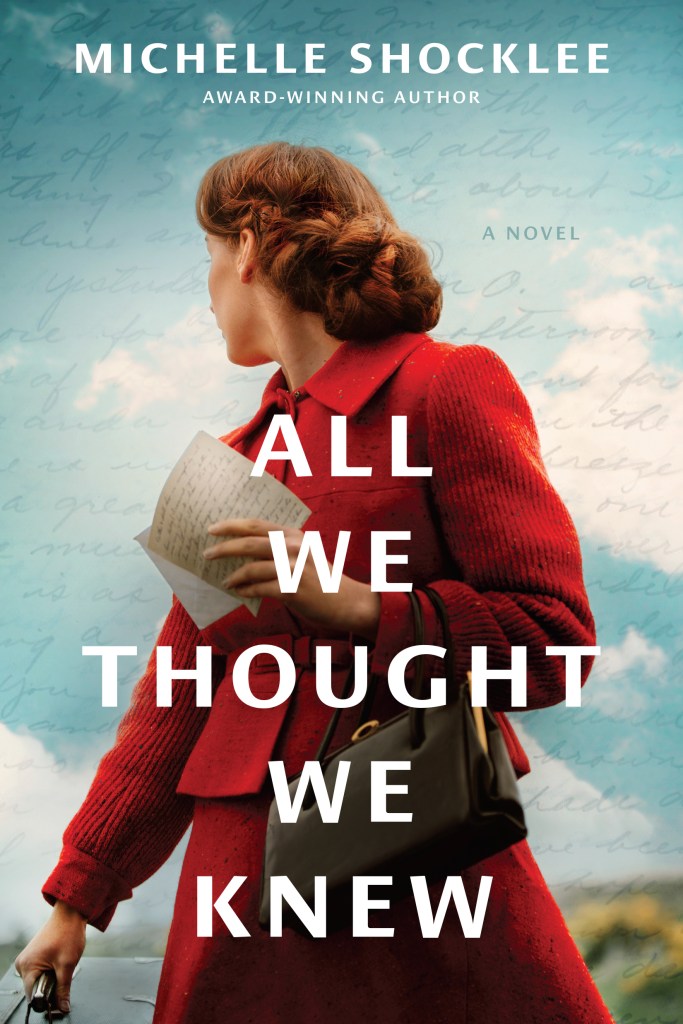
Meet Gunther Schneider from Michelle Shocklee’s All We Thought We Knew

During the turbulent days of World War II, thousands of foreigners were interned in the United States. Men, women, and even children with ties to Japan, Italy, and Germany were sent to detention camps all across the country. In Michelle Shocklee’s new novel All We Thought We Knew, readers meet Gunther Schneider, a German medical student who finds himself caught up in a frightening and seemingly hopeless situation. 

Amazon Affiliate Link Used Helps Support This Blog

NP: Hello, Gunther. It’s a pleasure to meet you. Thank you for stopping by Novel PASTimes to chat with us. 

Gunther: Danke. I’m happy to be here.

NP: Tell us about where you’re from and how you ended up in the United States. 

Gunther: I was born in Krefeld, Germany. It is very beautiful, close to the Rhine River. My parents were Gott-fearing people who believed in the truths taught in the Bible. When Hitler came into power, Mutter feared what would become of Germany. By then Vater had passed away and my older brother had joined the Nazis. Mutter thought it best for me to leave Germany and go to medical school in the United States. She believed I would be safe there.

NP: It must have been hard to leave your homeland and family. 

Gunther: Ja, it was, but I wanted to come to America and study to become a doctor. Although things did not turn out the way I’d hoped, I do not regret leaving Germany. 

NP: You were eventually arrested and detained in a camp for enemy aliens. Can you tell us about that?

Gunther: I was a student at Columbia medical school in New York City when Pearl Harbor was attacked. It may sound naïve, but I didn’t believe the US government would consider me a threat to society, being that it was Japan who’d attacked Hawaii, not Germany. I was quite shocked when I was arrested.

NP: Were your friends arrested too? 

Gunther: Ja, all of them. I’m not certain where some of them ended up, but I was sent to Camp Forrest in Tullahoma, Tennessee. 

NP: I’m not familiar with Camp Forrest. Was that a military installation?

Gunther: It was. I’m told it was one of the largest in the United States. While I was there, I saw thousands of young American men training for war. I felt sad knowing that many of them would die. Had I stayed in Germany, I would have been forced to join Hitler’s army. I’ve often wondered if I would have had to fight against some of the same soldiers I saw at Camp Forrest. 

NP: I’m sure it was hard being held as a prisoner. Was there anything about your time at Camp Forrest that brought you happiness?

Gunther: I met a special friend while I was in Tullahoma. Ava Delaney worked at the camp. She did not treat me like the enemy, which was refreshing. Unfortunately, as a German, I wasn’t always treated kindly by Americans. It was nice to have someone to talk to who didn’t judge me for where I was born. 

NP: It sounds as though you’ve been through many challenges in your life. Can you tell us where your find the strength to face them?

Gunther: My parents taught me to trust in the truths found in the Bible. When I left for America, my mother gave me my father’s Bible. Reading it reminds me that I’m not alone, even if it feels like it sometimes. The stories also remind me that people have always faced difficult challenges, but they also reveal hope. With Gott, there is always hope. 

NP: That’s very true. Thank you for sharing your story with us, Gunther.  


Michelle Shocklee is the author of several historical novels, including Appalachian Song, a Christy Award finalist, Count the Nights by Stars, a Christianity Today fiction book award winner, and Under the Tulip Tree, a Christy and Selah Awards finalist. Her work has been featured in numerous Chicken Soup for the Soul books, magazines, and blogs. Married to her college sweetheart and the mother of two grown sons, she makes her home in Tennessee, not far from the historical sites she writes about. Visit her at MichelleShocklee.com.

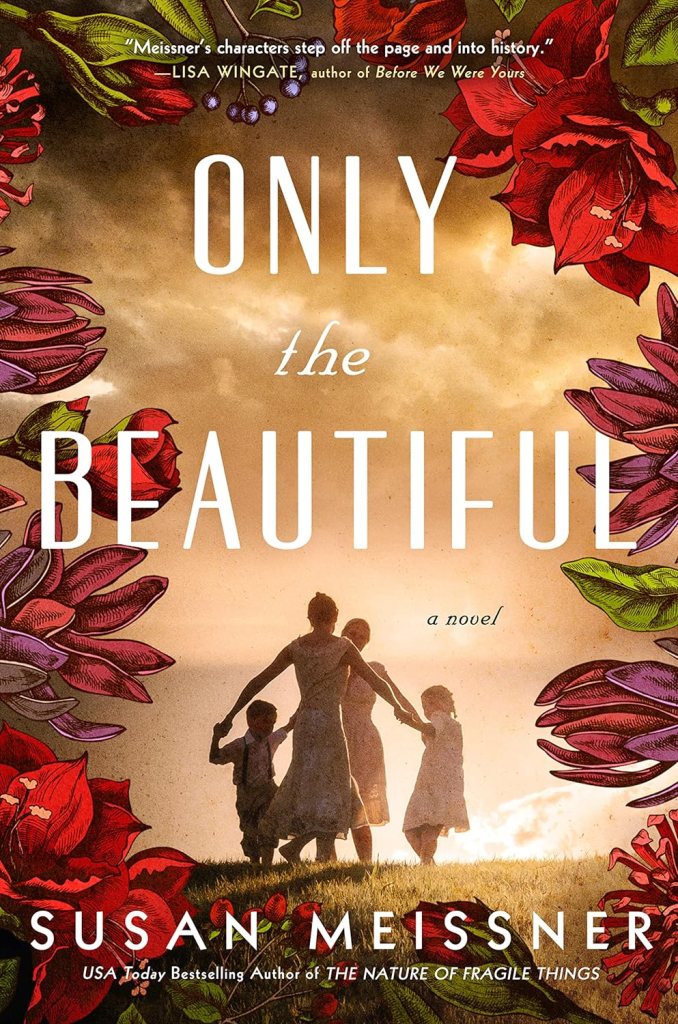
Book Review: Only the Beautiful by Susan Meissner

Amazon Affiliate Link Used Helps to Support this Blog

This touching story begins in 1938 with a teenage girl named Rosie in California who becomes an orphan. Taken in my her parents’ employer, she falls victim to the man of the house and gets pregnant. But Rosie has a secret that made her different, and her secret is betrayed so that she is not sent to a home for unwed mothers but to a mental institution. This thread is intriguing by itself but Meissner links Rosie with a woman, Helen, who works in Europe as a nanny as the Nazis are targeting disabled children. Her heartbreaking experience leads her to do what she can to save as many children as possible. Many years after the war Helen goest back to California and learns that her brother was the father of Rosie’s baby, the only relative Helen has left. Helen had met Rosie when the girl was younger and corresponded with her a few times, But where is Rosie now and what became of her baby?

There are so many lessons we can learn from this story, inspired by the eugenics movement that existed in some places in the US until the 1970s, according to the author’s note, which is not to be missed.

I’m a fan of all of Meissner’s books, but my goodness, this one is exquisite. Highly recommend!

Reviewed by Cindy Thomson, http://www.cindyswriting.com

An Interview with Naomi Wolff from A Wolff in the Family by Francine Falk-Allen

Amazon Affiliate Link used supports the blog.

Interviewer: We’re here today with Naomi Wolff, whose exciting western American life was full of twists and turns, especially during the Depression. Naomi, what would you like us to know about yourself?

Naomi: Omigosh. My life exciting? I hardly think so! I just did whatever had to be done, puttin’ one foot in front of the other. I was born in Kansas, lived on farms a lot, except when I was livin’ in Ogden with my husband and family for… lessee, about eighteen years. I have been a mother most of my life. So most folks know how that sure takes up your time. It’s not like you get to do much else.

I: To start with, then, how did you meet your husband and what was it like marrying him?

N: I met Frank at a dance in Kansas City. If me and my family went anywhere at all, off the farm, we went to the little bitty town of Turner to buy feed and supplies, or we went to Kansas City for a day sometimes. Now, Frank was not really much of a dancer, but I think he went to these dances to see if he could meet a pretty girl! And I guess that’s what he did.

I: I can see you’ve always had a pretty face.

N: Well, I never had much time to fuss about my appearance. But Frank told me I had a nice face and I heard that from other people. It’s probably on the verge of sinful to brag, so I won’t say any more about that. Frank courted me a bit and then asked me to marry him pretty early on. He was handsome and had a good job with the railroad, so I thought, this is prob’ly as good as I’m gonna get around here and I said yes. I was eighteen and we married in early 1908. I think I loved him and I thought he loved me too.

Now, Frank was a little different once we got married. We were always amorous, if you know what I mean, when he come home from the rails. But he could be… whaddaya call it? Stern, I think. And given he was bringin’ home the bacon, he expected things a certain way… he wanted the kids quiet and his dinner at 6:00. I knew that was my job so I did things how he liked. Mostly.

I: How many children did you have?

N: Ha! A whole lot of ‘em. I had my firstborn, Frances (she was named after her daddy; his name was Frank Joseph and we named her Frances Josephine)…  Frances was born in November, 1908. And after that, I had eleven more, plus stillborn twins. That was a sad month for us. And then later on another one after those twelve; she was a surprise. 

I: How did you manage a houseful like that? 

N: Oh, I knew how to stretch a dollar real far. Plus we grew vegetables and berries… But with that many kids sometimes you gotta use a yardstick on ‘em, else they run roughshod. I never liked doin’ that but you got to. And Frances started helping me early on, as soon as she could fold a diaper or wash a dish. Anita was next, so I was lucky to have girls as my two oldest so they could help with the housework, the cooking, and taking care of the kids who were younger. Frances, I think she resented it a little…

I: How was your relationship with your children?

N: My relationship? I’m not sure what you mean. Did I love them? Of course I did! If you mean did we get along or were we close… well, Frances was her daddy’s girl. He was real attached to her. And since I was the one left home alone, I was the one who had to teach her right from wrong and tell her no. It wasn’t easy for me to see Frank pay more attention to Frances, either. But Anita and I, we were close. She didn’t always get along with her dad and she and Frances, bein’ so close in age, only a year apart, they butt heads a lot too.

My other kids… well, sometimes they maybe didn’t get enough attention. I loved ‘em so much, but things happened in the middle of my life that not everybody understood. So there came a time when I think some of the kids didn’t like me too much. But their dad was no saint. Lot of things he did, not all of ‘em knew about. He was gone so much… that was hard for me. 

I: Did you know Francine, who wrote this book about you?

N: Oh, for heaven’s sake. I can’t imagine why anyone would write a book about me. I’m just a mother from the country, like my mother was. But no, I never met Francine. I knew about her but my husband had died so I didn’t have a way to drive out to California to see her when she was born. I met her big sister and brother though; we went out there one time. I got to see a lot of my kids and grandkids. That was a real good time for me… prob’ly around 1941 or’42.

I: Do you want to tell me about the things that happened that people didn’t understand? 

N: Oh, no, I’d rather not. If Francine told that story, well, I just hope she told it fair. Frank… he had kind of a mean streak. He put our youngest kids in an orphanage… and I’ll just let people read the book to see why that happened. I have a few regrets in my life but mostly I think things turned out just the way God wanted. You don’t always know in your life how the cookie’s gonna crumble. We had a real hard time around 1929 but things got better.

I: That was the start of the Depression. I’m sure that was mostly what caused the strife in your life.

N: Ha! You might think. But there’s a whole lot more happened that had nothin’ to do with money or the Depression. Nothin’ at all. No, I didn’t have a whole lotta choices in my life, but I made one, changed my life, and the lives of a lotta other people. I guess that’s the story here. Yes, that would be a story worth tellin.’


FRANCINE FALK-ALLEN grew up in northern California, where she still lives. She had polio in 1951 and has lived her life as a disabled person efforting to be a “normie.” 

Falk-Allen was originally an art major and later completed her BA in Managerial Accounting, running her own business for over thirty years. She has always sought creative outlets, such as painting, singing, and writing.

She began doing extensive family genealogy research in 1999, and has traced both her maternal and paternal ancestors back to the 1600’s. 

Her two books, Not a Poster Child: Living Well with a Disability—A Memoir  and No Spring Chicken: Stories and Advice from a Wild Handicapper on Aging, and Disability, have received the Kirkus star for excellence and won other awards.

Her third book is A Wolff in the Family, a riveting early twentieth century saga set in the western United States and based on scandalous family history.

Francine facilitates a writing group and volunteers on her town’s Americans with Disabilities Act Accessibility Committee. She loves the outdoors, swimming, gardening, movies, well-written literature, being with friends and sharing British tea and a little champagne now and then. She resides in San Rafael, California, with her husband, Richard Falk.

Meet Adelaide from Lynn Austin’s Waiting for Christmas

In this hope-filled Gilded Age Christmas novella from bestselling author Lynn Austin, the year is 1901 and the hustle and bustle of the holidays is descending on New York’s Fifth Avenue.

For the first time in her privileged life, Adelaide Forsythe won’t be swept up in it. She couldn’t be happier about the prospect of a quieter Christmas. That’s not to say her transition from Miss to Mrs. has been without challenge. Though she doesn’t regret marrying for love instead of wealth, she can barely light the hearth or cook more than burnt toast. She feels woefully unprepared to run her own household.

Then, on the first Sunday of Advent, winter winds bring change through two unlikely means: a young orphan boy, hiding near Adelaide’s front steps, and a seasoned housekeeper who seems too good to be true.

The boy, Jack, claims he isn’t an orphan at all and is desperate to reunite his family. Adelaide and her husband Howard work tirelessly to solve the riddle of Jack’s story, while Adelaide’s new endeavors open her eyes to a world beyond her past experience—and all the challenge and possibility it holds. As Christmas approaches, small glimmers of wonder light the way toward the answers Adaleide seeks and the most miraculous gift of all.

book cover

NP: Hello, Adelaide. Thank you so much for taking time from your Christmas preparations to talk with us.

Adelaide: My pleasure.

NP: When we last met (in the novel “All My Secrets”) you had fallen in love with your family’s lawyer, Howard Forsythe. Has that romance evolved since then? 

Adelaide: I am pleased to say that Howard and I were married one month ago with our families’ blessings. My grandmother was especially happy that I married for love and not for money. She was the one who encouraged me to make that choice.

NP: Congratulations! I imagine marriage has brought many changes to your life?

Adelaide: Yes! Too many to count! I no longer live in an enormous mansion, but in a simple townhouse on a quiet street. I don’t have servants to wait on my every need, but I do need to hire someone to teach me to cook, since I don’t even know how to brew tea. I used to buy anything I wanted, and I never had to think about money, but now I’m learning to economize and live on Howard’s salary. And I had to learn how to travel by streetcar since we can’t afford a horse and carriage. Those are just a few things.

NP: What about your interest in the women’s suffrage movement? Will that be ending now that you’re a respectable married woman?

Adelaide: Certainly not! Howard is very supportive of the suffrage movement, and he encourages me to be active.

NP: I’m guessing that Christmas will be very different for you this year?

Adelaide: Yes, in some ways. Our family charity, the Stanhope Foundation, has always played an active role at Christmastime supporting the many orphanages in this city. That won’t change. I’m still helping my mother, who now heads the Foundation. But I won’t be hosting or attending any Christmas parties or balls this year. Those frivolous activities just aren’t part of my life anymore, and I must say I don’t miss them in the least! Howard and I have better things to do with our time. I’m looking forward to a much simpler Christmas this year.

NP: What do you miss the most about your life as a wealthy heiress?

Adelaide: I think it’s pointless to look back at the past and moan about it. Life always brings change, and if we’re not prepared for it, we will live miserable lives indeed. The better question is, what am I looking forward to in the future? The answer is, a long and happy marriage to my wonderful husband. 

NP: Any other notable changes or surprises in your life?

Adelaide: Well, I was certainly surprised to return home the other day and find a raggedy orphan boy hiding beneath my bushes. He had run away from one of the orphanages Mother and I had visited that day. I am trying to figure out how I can help the poor child. He refuses to return to the orphanage, insisting that he isn’t an orphan.


Lynn Austin has sold nearly two and a half million copies of her books worldwide. A former teacher who now writes and speaks full-time, she has won eight Christy Awards for her historical fiction and was one of the first inductees into the Christy Award Hall of Fame. One of her novels, Hidden Places, was made into a Hallmark Channel Original Movie. Lynn and her husband have three grown children and make their home in western Michigan. Visit her online at lynnaustin.org.


Meet Raymond from Matthew Donald’s Teslamancer

Welcome to Novel PASTimes, Raymond Calvert! We appreciate your interest.

Thanks, happy to be here! I must admit, the technology present here astounds me. When I was a kid in the early 1900s I never imagined such incredible devices as I’ve seen these last few years. I was introduced to the Teslanauts in 1922, and from there I learned of the world of volt-tech, the secret advanced technology first created by the great inventor and my boss Nikola Tesla. Now I’m getting interviewed by a, what is it called, a website? A page much like that in a magazine or newsreel but on screens rather than paper and accessible to everyone in the world? That’s the bee’s knees, I gotta say.

Where do you live? Where did you grow up?

I was born in Brooklyn, New York in October 1904, and other than my globe-trotting escapades as a Teslanaut I’ve rarely left my home city. New York is a great place, anyone ever tell you that? It’s got towering skyscrapers, dazzling shows on Broadway, and is the home to many famous and important figures. Mr. Tesla moved here at the end of the nineteenth century after immigrating from Serbia, and boy, he picked a ritzy place. So much has happened here. When I was seven years old I saw the Carpathia dock in the harbor with all the surviving passengers of the Titanic, and that’s one of many experiences I’ll never forget. 

Who were your parents?

The wonderful Francis and Martha Calvert. My mother Martha is a seamstress and took care of me financially over the last couple of years, as my father Francis has been… well, it’s a long story. All I knew for the first seventeen years of my life is that he worked for a secret government agency and couldn’t tell us what exactly he did, but from what little I gathered it seemed like a bunch of wild adventures just like in the books I’ve always read. One day when I was twelve during the last years of the Great War, two men from his agency came to our house and told my mother that he would not be coming back home, which, to put it mildly, I took quite hard. I spent the next five years of my life trying to figure out what had happened, and believed with all my heart that he was still alive and needed to be rescued. After hounding City Hall with classified papers I found in his office, I was finally told the truth, or at least part of it: my father was a Teslanaut, and he intended me to become one too when I came of age. I then got recruited and, well, here I am. As for what really happened to my father, I didn’t find that out until later, but that’s a story for another time, and the answer probably isn’t what you expect.

Amazon Affiliate Link Used Helps Support this blog

What exactly is a Teslanaut?

An adventurer. A scientist. An engineer. An espionage agent. Basically anyone in service of this great volt-tech organization. Volt-tech is the most incredible stuff I’ve ever seen. Through hidden towers all over the world emitting rippling power waves, our specialized wireless gadgets, vehicles, suits, and what have you can do things beyond what I had ever thought possible before. You like cars? How about house-sized walking machines? You like running fast? How about a suit that turns you into a bolt of lightning so you can zoom about at over a thousand miles an hour? You have a pet dog? How about a loyal hovering automaton that likes the buzz of electric shocks? It was Nikola Tesla who first invented volt-tech, and other scientists followed his wake, until eventually many governments around the world formed their own volt-tech factions all answering to an overarching organization called the Electrocracy. Almost every developed country on Earth has their own volt-tech faction; the Teslanauts are just the ones based in upper America. As for why you haven’t heard of us, well, it seems the common people can’t be trusted with the power of volt-tech, and many warmongers, corrupt forces, and mad scientists have tried to use it in terrible ways. As a Teslanaut, I’ve helped save the world a few times from these nasty ne’er-do-wells, and history will never know about it. To keep the public safe for the time being, all use of volt-tech is classified, and any witnesses have their memories erased by a shadowy group called the Cleanup Squad. They’re probably on their way to visit you right now since I’ve told you all this, so sorry about that.

Surely you don’t go on these adventures alone?

Well, when I first joined the Teslanauts I definitely felt alone, but I was used to it; I’m an only child and I didn’t have many friends in school. My obsession with figuring out the whereabouts of my father kind of took a toll on my social life. But once I got recruited and I finally felt like I was making progress on my longtime goal, I opened myself up a little and managed to make some friends in the volt-tech foundries. Becky helped me build a gadget whose blueprints were left behind by my father. Arthur is younger than me and already has multiple college degrees. Watson is a crazy enigma in human form. And Helen… oh, Helen. I’d like to think I’m playing the long game with her, but I just don’t know how she feels about me. I like her a lot though, and I know she likes me too, but in what way? A friend? Something more? Sorry, I got distracted there.

What is your primary goal as a Teslanaut?

Find my father, to the point that it drowned out everything else in my first few weeks as a Teslanaut agent. Another friend of mine in the agency asked me a question that I pondered for a long, long time: “What do you want to do?” And to be honest… I’m still trying to figure that out. I’m here because of my father. He gave me this job. But what do I do with it myself? Do I live in my father’s shadow forever, or find my own path? Maybe I should consult someone about this.

You said you have some friends in the agency, but do you have any enemies or rivals?

Obviously when I fight bad guys who are threatening to restart the Great War to line their pockets or who build massive volt-tech superweapons, those folks tend to be my enemies. Some of them my father might have been involved with in particular, and boy, that took a bit for me to come to terms with, although there’s more to that story that you’ll probably learn at some point. In the Teslanauts though, there’s this fellow agent named Lei Ji who, while not an enemy, does kind of treat me with disdain due to him thinking I didn’t earn my place here and was just given it by my father. The worst part of that is, it’s kind of true, but that’s why I push myself to get better.

When do your adventures take place, and do you think there could be more on the way?

My adventures with the Teslanauts started in the great year of 1922, a few months before my eighteenth birthday, and have continued for the two and a half years since. I’ve had many smaller missions in between, but the two big ones were when I first started and in the current year of 1924. As for if there will be more, I can only assume. I’m not retiring anytime soon. I imagine I’ll be here for decades to come. I wonder if anything big or world-shattering will happen in the decades after these roaring twenties…

Thanks for allowing us to get to know you a little better!

Thanks, happy to answer the questions for this… what is it called again? A website? Golly, technology truly is out of this world where you come from. I hope to see some of it someday, but the volt-tech I encounter daily is pretty fun, too.


Matthew Donald has been an obnoxious snarker and dinosaur fanatic for all his life. After first winning a writing contest at age six, he made it his lifelong goal to write a bunch of books and release them upon the world. He graduated from the University of Northern Colorado in 2014 with a B.A. in English and Creative Writing, and is currently working on four sequels to Teslanauts among some other projects. He lives in Highlands Ranch, Colorado with his cockatiel, Lyra. Learn more at www.matthewdonaldcreator.com.

A Chat with Ellie Lou from Jodie Wolfe’s Convincing Lou

How hard can it be to round up one delinquent groom?

Ellie Lou Williams will do just about anything to save her ranch, even going undercover as a man to round up a fella who is late to his own wedding. The reward will more than cover the money she owes the bank and solve all her problems.

Caleb Dawson agrees to one final job as a deputy US Marshal before he starts his new life away from the trail and tracking criminals. What he isn’t counting on is a mysterious bounty hunter who’s determined to undermine his every step.

Will one reach their goal first? Or will they learn to lean on God and work together?


Tell us a little bit about yourself.

Hello, I’m Ellie Lou Williams and I live a few miles outside of Burrton Springs, Kansas on a horse ranch. The author, Jodie Wolfe, wrote about me in Convincing Lou.

You might be wondering about the Lou part of the title. Let me tell you a little bit about my background first before we get to that. I’ve had the pleasure of knowing a few of the women in Burrton Springs – Jules (Julia) Walker, Annie McPherson, and Gertrude Miller. These women in one way or another have helped me get through the loss of my dear husband.

How have you handled things without your husband?

Times have been difficult, so I had to take out a lien on the ranch. Unfortunately, I lost the contract my husband had with the military to supply horses for them, so I’m in desperate need to pay off my loan from the bank before the end of the year, or else I’ll lose everything.

What ideas do you have to save your home?

When an opportunity comes up to track a delinquent bridegroom, I snap at the chance to earn easy money. I know it’s not safe to be a woman alone on the trail, so I go in disguise as a man and shorten my name to Lou. 

Do you have any family?

No, it’s just me alone in the world now.

What goals do you have?

To save my husband’s legacy. The ranch was given to him by his grandfather, and I’ll do whatever it takes to hang onto it.

Is there any significant event that happens in your tale?

I’m not sure if I should say it or not, but there might be a blizzard or two.

What spiritual struggles are you going through?

I’ve always been an encouragement to my friends, but I find my faith flailing as I go through some of the most difficult storms I’ve ever experienced in my life. I believe Scripture to be true and know the Lord hears me, but it’s sometimes hard to trust Him when you don’t get any answers in return.

What would your friends say are your best characteristics?

Well, I think they would’ve said something about my strong faith in the Lord, but right now I’m struggling. I haven’t been as open with them because they have their own things they’re dealing with.

What is one of your regrets?

That I took out a loan in the first place. I should’ve come up with some other way to deal with my financial concerns. I tried selling off stock, but that only helped for so long.

What do you want people to know about you?

I’m faithful to my friends. I try to help them however I can. I’m also a prayer warrior, well, at least I have been in the past. Sometimes lately I feel like my prayers aren’t getting very far. Have you ever felt like that?

Is there anything else you’d like to share?

I hope you’ll enjoy reading my tale in Convincing Lou. Here’s a little bit about it:

How hard can it be to round up one delinquent groom?

Ellie Lou Williams will do just about anything to save her ranch, even going undercover as a man to round up a fella who is late to his own wedding. The reward will more than cover the money she owes the bank and solve all her problems.

Caleb Martin agrees to one final job as a deputy US Marshal before he starts his new life away from the trail and tracking criminals. What he isn’t counting on is a mysterious bounty hunter who’s determined to undermine his every step.

Will one reach their goal first? Or will they learn to lean on God and work together?


Jodie Wolfe creates novels where hope and quirky meet. She is a member of American Christian Fiction Writers (ACFW), and Faith, Hope, & Love Christian Writers (FHLCW). She’s been a semi-finalist and finalist in various writing contests. A former columnist for Home School Enrichment magazine, her articles can be found online at: CrosswalkChristian Devotions, and Heirloom Audio. When not writing she enjoys spending time with her husband in Pennsylvania, reading, knitting, and walking. Learn more at www.jodiewolfe.com.

Social Media Links

Website: https://www.jodiewolfe.com

Facebook: https://www.facebook.com/Jodie-Wolfe-553400191384913

BookBub: https://www.bookbub.com/profile/jodie-wolfe

Pinterest: https://www.pinterest.com/JodieAWolfe

Amazon Author Page: https://www.amazon.com/Jodie-Wolfe/e/B01EAWOHXO/ref=dp_byline_cont_ebooks_1

MeWe: https://mewe.com/jodiewolfe

LinkedIn: https://www.linkedin.com/in/jodie-wolfe-3955b2bb/