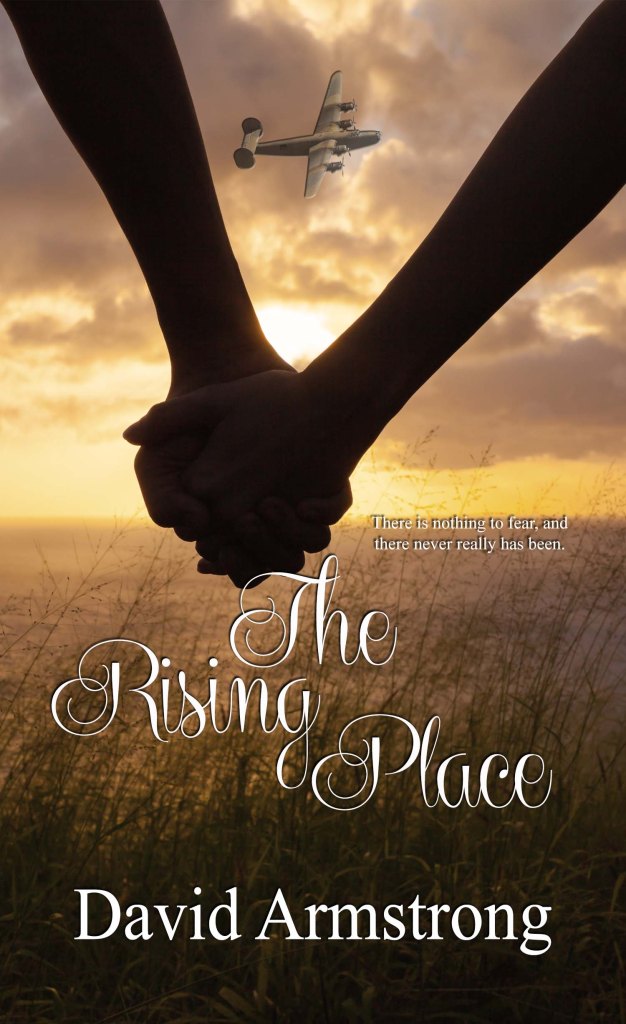
Meet Emily Hodge from David Armstrong’s new novel, The Rising Place.

NPT: Welcome to Novel PASTimes, Emily. We’re so happy you could join us today.
EH: Thank you. It’s a true pleasure to be here.

NPT: Before we get started, I just have to say that you are such a strong, spiritual woman. Where did your deep faith in God come from?

EH: I was always blessed with a strong faith in God—particularly in His love for us. It’s something I’ve never questioned.

NPT: Was this faith instilled in you from your parents, growing up?

EH: No, not really. I was raised Catholic because my father was Catholic. My mother was Methodist, though, so they never went to church together. In later life I became a Methodist.

NPT: Why was that?

EH: That’s something I’d rather not talk about. I don’t think it matters which religion you identify with. All that really matters is our faith in God and our love for and forgiveness of other people.

NPT: Fair enough. Okay, then, let’s change subjects. You just mentioned “love for other people.” You had such an amazing and abiding love for Harry Devening, but he never loved you back. This is such an enigma to me. How could you—

EH: Sorry, I don’t mean to cut you off, but I believe Harry did love me. He just never knew how to show it, or maybe how to even feel it.

NPT: I’m confused here. Harry never answered any of your love letters to him. In the end, he even returned all of them to you, unopened. Don’t you consider that “unrequited love?”

EH: I can certainly understand why you would think that, but don’t you recall that precious letter Harry wrote to our little boy, shortly before his birth? Surely, you could see the love Harry expressed for both our child and me in the words he wrote?

NPT: I don’t mean to offend you by this, “Miss Emily,” if I may call you that, but….

EH: Sure, that’s what I was called in later life.

NPT: Author Stephen Chbosky wrote: “We accept the love we think we deserve.” Do you think, perhaps, this applies to Harry?

EH: Possibly. Yes, possibly so. Actually, I’ve thought that before, several times. I never met Harry’s parents or his two older sisters, but from what Harry told me about his childhood, I don’t think there was a great deal of love in their home.

NTP: When was that? When did Harry tell you this?

EH: When I boarded a train from Hamilton, Mississippi to go visit Harry in Gary, Indiana, toward the end of the book. We spent four, wonderful days together.

NPT: And…?

EH: And then I took another train back to Hamilton.

NPT: So, why didn’t you stay up in Indiana with Harry?

EH: Harry begged me to stay with him, to start all over, try to make it work between us. He claimed he always loved me; he was just afraid to show it, even admit it. He also said it was the greatest mistake of his life—not returning my love. By then, though, my love for Harry was gone—only a memory—sort of like a distant dream I had had, once when I was young. Plus, my friend Wilma Watson was engaged in a great struggle for justice and civil rights, down in Hamilton. Wilma was my best friend. I had to go home to help her.

NPT: Miss Emily Hodge, you are such an intriguing and enigmatic character. I wish I had more time to visit with you. I’m just glad your lawyer found your letters and shared them with the world. Otherwise, we would have never known your beautiful story.

EH: Thanks. I’m glad David did, too.

NPT: Before we close, I do have one more question, though: Who was that “gray-haired stranger” in the Prologue who attended your service and placed a yellow rose on the top of your child’s grave? Was it Harry Devening or Streete Wilder?

EH: How do you know it wasn’t Will Bacon? After all, he loved me, too.

NPT: Point well made. I guess readers will just have to decide for themselves who that was. Speaking of readers, is there any thought or message you’d like to leave with them?

EH: Yes. Always live in the rhapsody of your own music. I did, and that’s what I’m most proud of.

NPT: Thank you so much for visiting with us, today, Emily Hodge.

EH: You’re welcome. And thank you.

About the Book:

The Rising Place is based on an interesting premise: What if you found a box of love letters, written during World War II by an old maid who had just died—would you read them? And what if you did and discovered an incredible story about unrequited love, betrayal, and murder that happened in a small, Southern town over seventy years ago? After a young attorney moves to Hamilton, Mississippi to practice law, one of his first cases is to draft a will for Emily Hodge. “Miss Emily” is a 75-year-old recluse who is shunned by Hamilton society, but the lawyer is intrigued by her and doesn’t understand why this charming lady lives such a solitary and seemingly forgotten life. When Emily later dies, the lawyer goes to her hospital room to retrieve her few possessions and bequeath them as she directed, and he finds an old sewing box full of letters in the back of one of her nightstand drawers. He takes the letters back to his law office and reads them, and he soon discovers why Emily Hodge lived and died alone, though definitely not forgotten by those whose lives she touched.

About the Author:

David Armstrong was born and raised in Natchez, Mississippi. He is an attorney, former mayor, and former candidate for the U.S. Congress. The Rising Place is David’s second novel. His third novel, The Third Gift, will be released this summer. David has also written four screenplays. He is the father of two grown sons and lives in Columbus, Mississippi, where he is the COO for the city of Columbus. His website iswww.therisingplace.com, and his novel is available on Amazon, as is the DVD of the film that was based on his book.
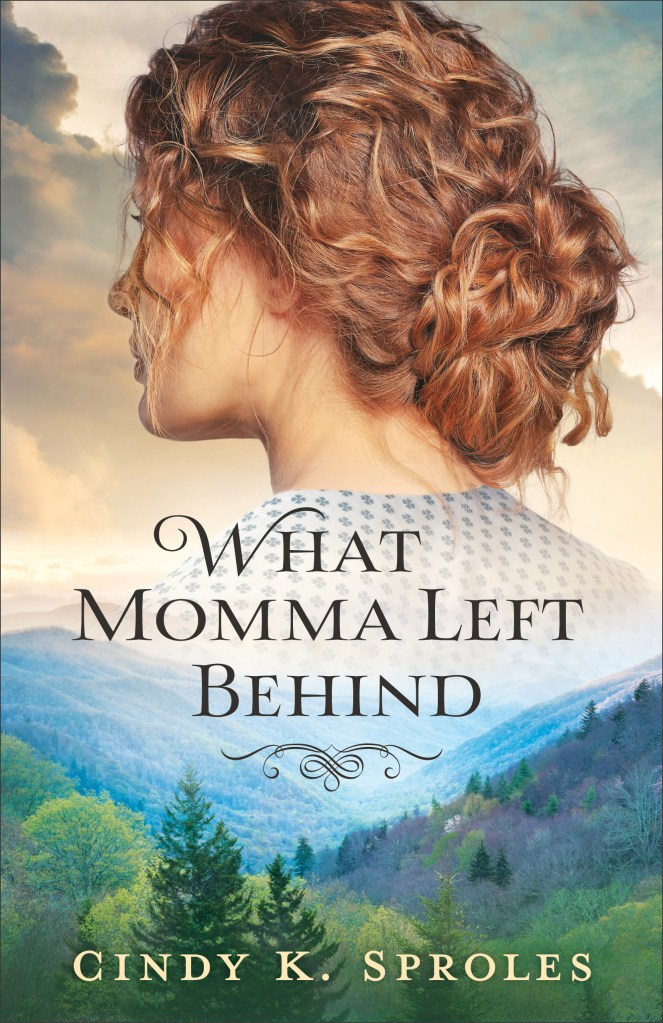
Meet Worie from Cindy Sproles's What Momma Left Behind

Welcome to Novel PASTimes! We are pleased you stopped by today.

Tell us something about where you live.

I live on what folks call Sourwood Mountain.  You can look right hard, but it’s best to know it’s deep in the Smoky Mountains. Somewhere betwixt Gatlinburg and Chattanooga. It’s a beautiful mountain. I can lay on the ridge, stretch my arms upward, and scratch the clouds.

Is there anything special about your name? Why do you think you were given that name? Names mean ever thing in the mountains, be it a desire for a youngin or a hardship that followed the family. My Momma give me the name Worie. She was a worrier. I reckon she named me what she felt and the name carried a burden along with it, for I’ve done some worryin myself.

Do you have an occupation? What do you like or dislike about your work? 

Early on I just worked with Momma to keep the homestead up but I always wanted to be a teacher. Momma taught me readin and cypherin and I’m right good at it. As I become of age, I saw a need – a need to care for the children on the mountain who’s folks died off from “the fever.” Lord have mercy, they was a slew of them. They needed care to keep them from becomin like animals tryin to survive. That become my lot in life.

Who are the special people in your life? 

Eli and Bess, they was slaves that broke free and made their way into the mountains. And then there is Justice, my brother. And Pastor Jess. They was all like family to me, even when I didn’t want no family.

What is your heart’s deepest desire? 

Lordy, Lordy, that’s a mountain to climb. I don’t desire nothin for myself, just to see these youngins grow up and make good men and women. That would please me. . .it would please Momma too.

What are you most afraid of? 

I was and am most afraid of becoming what I take care of. Bein an orphan. Daddy died some years back and Momma passed  a few years later. I never wanted to be an orphan, but here I was. An orphan carin for  orphans. Funny how life takes a turn.

Do you have a cherished possession? 

Momma’s jar filled with notes. They was penned for me and Justice and Calvin. Calvin never got to read them and that broke my heart. But them notes held all the answers that I needed to know and they was precious notes.

What do you expect the future will hold for you?

More youngins to care for. I never married but I reckon them youngins I raised will bring me grandbabies. Not by kin blood, but by the blood of my brow because I took them all in and made them my children. They’re a blessin and a curse.

What have you learned about yourself in the course of your story? 

Well, I learned I was a bit more selfish than I thought. I tried to turn a deaf ear to the call I was hearin, but I reckon a body don’t argue with the Good Lord lest they plan on losin. I learned things wasn’t all about me and I could still have my dream to teach, just not in the way I figured. Lessons learned and lessons shared.

Is there anything else you’d like people to know about you?

Well, I am what I am. Ain’t got no secrets. Calls things the way I see em. But I’m as faithful as the hound layin on the front   porch. If you need me, they ain’t no hesitating. I’ll be there.

Thanks for allowing us to get know you a little better!

The Appalachian Mountain community of Sourwood, Tennessee, has been ravaged by death and disease, leaving many orphans behind. When Worie Dressar’s mother dies suddenly, Worie is inundated with orphaned children who keep showing up at her door. With barely any resources of her own, Worie must figure out how and why her mother was able to care for these little ones. As Worie fights to save her home from a good-for-nothing brother, she will discover the beauty of unconditional love and the power of forgiveness as she cares for all of Momma’s children.

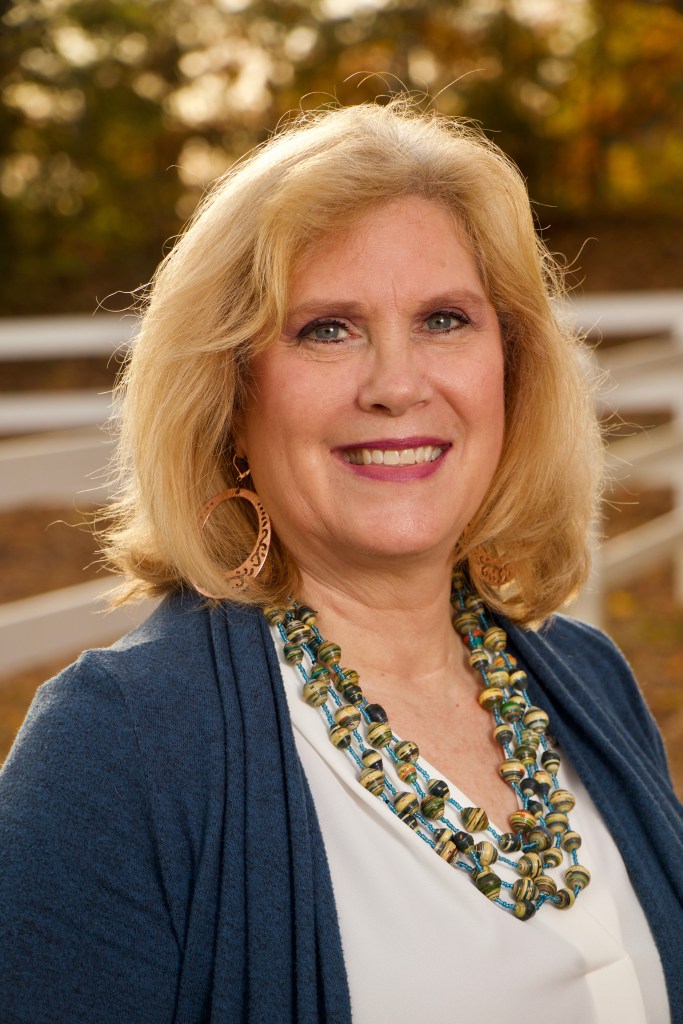
Cindy K. Sproles is the cofounder of Christian Devotions Ministries. An author, storyteller, and popular speaker, Cindy teaches at writers conferences across the country and directs the Asheville Christian Writers Conference in North Carolina. Editor of ChristianDevotions.us and managing editor for Straight Street Books and SonRise Devotionals, Cindy has a BA in business and journalism and lives in the mountains of East Tennessee with her family.

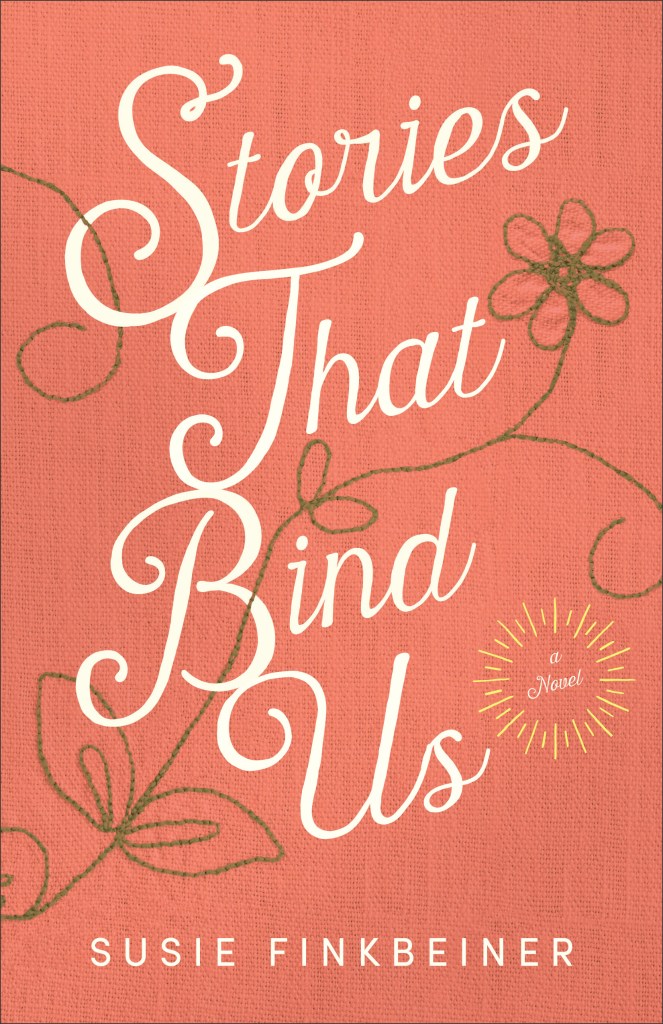
Meet Betty Sweet from Stories That Bind Us by Susie Finkbeiner

Welcome to Novel PASTimes! We are pleased you stopped by today.

Thank you. I’m honored that you thought to invite me.

Tell us something about where you live.

I live in the home my husband Norman and I purchased shortly after he returned home from the war in his hometown of LaFontaine, Michigan. It’s a nice place to live. Not too big, not too small. It’s just right. 

If ever I need something that only a city could provide, I’m just a forty-five minute drive to Lansing in one direction and Detroit in the other.

Is there anything special about your name? Why do you think you were given that name?

I’m not sure that there really is anything special about the name Betty. I’m not an Elizabeth or a Bethany. Just plain old Betty. All my life, though, I’d longed for something a little more elegant or sophisticated. But no such luck. 

At least when I married Norman I gained the last name Sweet, which I like very much. 

Do you have an occupation? What do you like or dislike about your work?

Well, I’ve mostly just been a little housewife since I married Norm. Between you and me, I’m not especially good at it. That’s not to say that I keep a messy home. But I’d rather spend my time reading or writing or even sitting outside in the yard, enjoying the sunshine on my face. 

Who are the special people in your life?

Oh, I am such a fortunate woman to have a family who loves me. Of course, it’s a family I married into, but as far as I’m concerned it still counts. I don’t know that I’d have anything close to this kind of joy without my darling Norman. He’s the only man I’ve ever loved and he has given me more in this life than I could have ever dreamed. 

What is your heart’s deepest desire?

The deep desires of my heart have changed as I’ve grown older. I suppose that’s normal. When I was a young girl I wanted nothing more than the love of my parents. Then, as I teetered on the ledge between childhood and womanhood, I longed for the love of a husband. After I got married, I wanted so badly to have the love a child all my own. 

It seems that my deepest desire — to be loved — has also grown in me a yearning to love others deeply. 

What are you most afraid of?

Oh goodness. This is the kind of question that makes me feel a bit antsy. There are so many things in this life to fear. Aren’t there? 

I suppose that my greatest fear is that something bad will happen to someone I love dearly. Even more than that, I fear that I wouldn’t be able to do anything for them. It’s the helplessness that frightens me.

Do you have a cherished possession?

Would you think me terribly superficial if I said that my pink and gunmetal gray Chevy Bel Air is my favorite possession? It’s pretty and shiny and I feel so sophisticated when I drive it around town. Does it help if I tell you that it was a gift from my Norman?

What do you expect the future will hold for you?

Isn’t it fun to daydream? That’s when I let myself wonder about what might happen in the future. Sometimes I imagine that the little stories I tell my nephews will end up in a book. Other days I picture myself working more and more at the family bakery. Still other times I dream of growing old in the house Norm and I have always loved, watching the sunset from my porch. 

I don’t have big dreams. Not really. I guess that’s because the life I have is as much — if not better — than what I’d imagined as a child.

What have you learned about yourself in the course of your story?

I never considered myself a particularly strong person. That was always the part my sister Clara played. She was the determined one, the fighter. Clara the Conqueror, I like to call her.

But there are times when even a weak person is called on to show great strength. And in those moments, she does well to remember that her might isn’t her own. It comes from the Lord who is glad to have our burdens cast upon him. 

If I’ve learned one thing, it’s that I am strong, but only through the power of my Father in heaven.

Thanks for allowing us to get know you a little better!

How very kind of you to have me! 

Betty Sweet is a pleasantly plump forty-year-old, but when this 1960s suburban woman loses her husband unexpectantly, she struggles to find her purpose in life. She can’t imagine what God has in mind when she finds herself the soul caretaker of a five-year-old nephew she never knew she had. 

Betty and her nephew make an odd pair. But more powerful than what makes them different is what they share: the heartache of an empty space in their lives. As Betty and Hugo struggle through their grief and the difficulties that life can bring, they slowly learn to trust one another as they discover hope and commonality through the magic of storytelling. 

Susie Finkbeiner is the CBA bestselling author of All Manner of Things, as well as A Cup of DustA Trail of Crumbs, and A Song of Home. She serves on the Fiction Readers Summit planning committee, volunteers her time at Ada Bible Church in Grand Rapids, Michigan, and speaks at retreats and women’s events across the country. Susie and her husband have three children and live in West Michigan.

Meet Aurora from A Reckless Love by Beth White

NPT: Welcome to Novel PASTimes! We are pleased you stopped by today.

AURORA: Thank you! I’m always happy to talk. About anything.

NPT: All right. Then let’s start with your beautiful name. Why do you think you were given that name? Does it mean anything special?

AURORA: Well, in mythology, Aurora was the goddess of the dawn, announcing the arrival of the sun. My sisters tease me by calling me the “Princess of Rainbows” because I’m a bit of an optimist. All right, I’m a lot of an optimist. They also call me “Pete,” for unknown reasons. Maybe it’s easier to pronounce than Aurora.

NPT: Tell us something about where you live.

AURORA: I live on the outskirts of Tupelo, Mississippi, at Daughtry House Hotel, which I own with my two sisters. Daughtry House was once our family plantation, Ithaca, until the War Between the States took both our parents, leaving us floundering for a way to support ourselves. Turning the Big House into a hotel was my oldest sister Selah’s idea. We hired former slaves to help renovate and staff the place, and it has been a thrilling enterprise. Some of our neighbors still think we’re crazy—in fact, we’ve fought off attacks by local and out-of-state racists.

NPT: Tell us how you view your sisters. We’ve interviewed them both, with mixed results. Selah was unforthcoming, even cryptic. Joelle was a bit more communicative, though we got the impression she’s uncomfortable with attention.

AURORA:  Both those assessments are accurate. Selah is used to being in charge, and can come across as bossy and protective. She recently got married to a Pinkerton agent named Levi Riggins, whom I absolutely adore. Our middle sister, Joelle, is now engaged to our business partner, Schuyler Beaumont. I don’t like to brag, but my sisters can thank me for facilitating their romances. Neither one is very socially adept. I, on the other hand, was reared by my grandmother to be a gentlewoman and hostess, as my mother was before the war destroyed everything.

NPT: I imagine social skills come in useful in the running of a hotel.

AURORA: Indeed they do. But I’m not just a giddy belle. Growing up in a a doctor’s household in Memphis, a city under Union occupation, prepared me for the hard cold realities of life. Some people don’t take me nearly seriously enough.

NPT: That is an intriguing remark. Are you thinking of some particular person who treats you lightly?

AURORA: Well, there is a certain federal lawman who has come to Tupelo to assist in the trial of local Klan terrorists. Deputy Marshal Sager seems to be under the impression that I’m some fragile Southern flower who can’t defend or think for herself. I’m working on disabusing him of that notion.

NPT: Oh really?

AURORA: Yes. It’s not his fault. Once he gets to know me better, he’ll realize how much he needs a steady feminine influence in his life. Like I told him—brains and creativity, not hardware!

NPT: It sounds like a fairly combustible situation. What do you expect the future will hold for you and the Deputy Marshal?

AURORA: Zane seems to worry about some bad man he crossed during the war coming after me. And he can’t believe I can overlook a minor physical deformity like a missing eye covered by a very intriguing patch. But I know a hero when I see one. And I believe God has got miraculous things in store for both Zane and me. Mark my words.

NPT: Miss Aurora, you seem to be a young lady of remarkable courage and faith. Either that, or you are in for a very rude awakening. Or possibly both. Thanks for allowing us to get know you a little better, and we wish you and Deputy Marshal Sager all the best.

AURORA: Wait a minute, what did you mean by—

NPT: I’m sorry, but we’re out of time. Perhaps you’ll stop by and let us know how things turn out. If you survive.

Beth White’s day job is teaching music at an inner-city high school in historic Mobile, Alabama. A native Mississippian, she writes historical romance with a Southern drawl and is the author of The Pelican BrideThe Creole PrincessThe Magnolia Duchess, and A Rebel Heart, and A Reluctant Belle. Her novels have won the American Christian Fiction Writers Carol Award, the RT Book Club Reviewers’ Choice Award, and the Inspirational Reader’s Choice Award. Learn more at www.bethwhite.net.

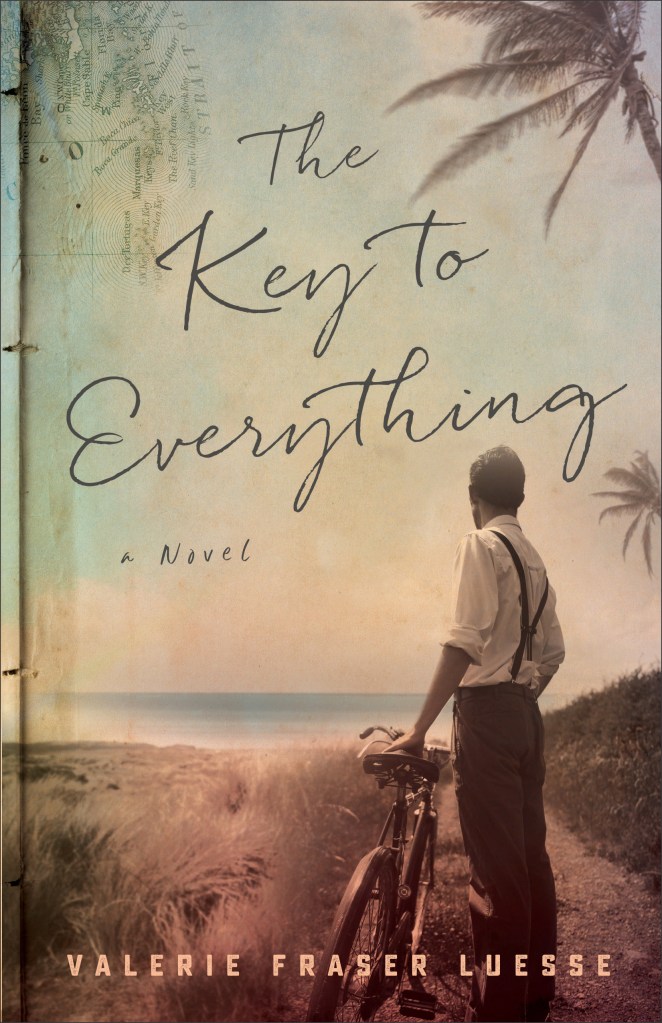
A Chat With Peyton Cabot from Valerie Fraser Luesse's The Key to Everything

Welcome to Novel PASTimes! We are pleased you stopped by today.

Thank y’all for having me. I ’preciate your time.

Tell us something about where you live.

I guess that oughta be an easy question to answer, but for me it’s kinda complicated. I grew up in Savannah, Georgia—that’s where my daddy’s whole family lives, and they pretty much decide what’s what—or at least they used to. But ever since I spent a summer with Mama’s Aunt Gert down in St. Augustine, that feels more like home to me than Savannah. I really loved it there. Aunt Gert has a little bungalow on the San Sebastian, and she taught me how to drive her boat, the Madame Queen. Her best friend, a fisherman named Finn, showed me how to handle myself out on the Atlantic. Flying’s my favorite thing, but a boat on open water comes mighty close to being in the sky.

Is there anything special about your name? Why do you think you were given that name?

Yes. And I hope you’ll forgive me—I don’t mean to be rude—but . . . well, I just can’t talk about that. I guess it’s a little too soon.

Who are the special people in your life?

My parents, of course. Both of ’em are heroes of mine—for different reasons. Lisa. She’s everything. If we can get married one day—well—the rest would take care of itself, but nothing I ever do will matter much without her. Then there’s Aunt Gert and Finn. They made me feel welcome and taught me what I needed to know when I was in a real bad place. I never woulda made it to Key West and back without the two o’ them. Bonnie and Jasper showed me how much kids need to be put first and how awful it is for ’em when they’re not. Gina and Mama Eva at Cubano’s fish camp showed me what a real family looks like; Will became my friend on a Daytona race track and came through for me just like he promised; Aunt Jack got me well when I was hurting so bad I thought I’d die; Ginger, the best nurse in the U.S. Navy, helped me recover from something you woulda had to see to believe; Millie showed me what’s what on the islands and helped me find work—they’re all friends I made trying to get to Lisa—all the people who got me through.

What is your heart’s deepest desire?

To marry Lisa and fly airplanes—and be a good man like my dad—a good husband and a good father.

What are you most afraid of?

Anything that would take Lisa away from me.

Do you have a cherished possession?

I have two. One is the map my dad took with him when he rode his bicycle from Georgia to Key West—he was fifteen like me. I musta studied that map a million times before I finally figured out that I needed to find my own way. It’s hard to get where you wanna go if you’re following somebody else’s directions—you know what I mean? The other is a pair of aviator sunglasses that a pilot gave me. I can see everything a whole lot clearer through the aviators.

What do you expect the future will hold for you?

After everything I’ve been through, I don’t think it’s smart to expect anything. You can hope for it, and you can work for it, but you can’t really expect it. I hope to marry Lisa and have a family like Gina’s—honest and loving—not like Daddy’s clan. And I hope to become a good pilot.

What have you learned about yourself in the course of your story?

That we all have a “true us,” if that makes any sense. We have to find it and hold onto it if we ever wanna be happy. Nobody else—not even the people we love—can tell us who we are.

Thanks for allowing us to get know you a little better!

Thank y’all. It was real nice to meet you.

Peyton Cabot’s fifteenth year will be a painful and transformative one. His father, the reluctant head of a moneyed Savannah family, has come home from WWII a troubled vet, drowning his demons in bourbon and distancing himself from his son. When a tragic accident separates Peyton from his parents and the girl of his dreams seems out of reach, he struggles to cope with a young life upended. 

Pushed to his limit, Peyton makes a daring decision: he will retrace a slice of the journey his father took at fifteen by riding his bicycle all the way from St. Augustine to Key West, Florida. Part loving tribute, part search for self, Peyton’s journey will unlock more than he ever could have imagined, including the key to his distant father, a calling that will shape the rest of his life, and the realization that he’s willing to risk absolutely everything for the girl he loves. 

Valerie Fraser Luesse is the bestselling author of Missing Isaac and Almost Home, as well as an award-winning magazine writer best known for her feature stories and essays in Southern Living, where she is currently senior travel editor. Specializing in stories about unique pockets of Southern culture, Luesse received the 2009 Writer of the Year award from the Southeast Tourism Society for her editorial section on Hurricane Katrina recovery in Mississippi and Louisiana. A graduate of Auburn University and Baylor University, she lives in Birmingham, Alabama, with her husband, Dave.

Meet Annalise Brandt from The White Rose Resists by Amanda Barratt

So glad you could join us on Novel PASTimes, Annalise. Thank you for giving us a few moments of your time. I know you’re busy with your studies at Munich’s Ludwig Maximilian University.

Annalise:  Yes. I have a lecture on art history in half an hour. 

Q: That sounds fascinating. Are you enjoying your first semester at the university?

Annalise:  I’m glad to be away from Berlin. As for my classes…the only art my professors discuss is that which is approved by the Führer. The artists whose work I love—Franz Marc and Wassily Kandinsky—the professors deem degenerate. But I think they paint boldly and with freedom of expression.

Q: You mentioned you were glad to be away from Berlin. Why is that?

Annalise: Why would you ask me that? Did my vater send you to spy on me?

Q: Your vater? SS-Standartenführer Brandt? The Standartenführer Brandt who, before the war, was known to spend weekends at the Führer’s home in Bavaria, the Berghof, and frequently dined with the Goebbels family?

Annalise: (nods)

Q: Are you and your vater close?

Annalise: Nein. Before Hitler’s rise to power, when I was a young girl, he was a different man. Though rarely affectionate, the hardness in him now was absent. Since he began rising in the ranks of the SS, he became cold. Driven. Demanding perfection of my three brothers and schooling them to become future soldiers. As for me, I’m still surprised he allowed me to attend university at all. It was only after our…bargain that he agreed.

Q: What bargain?

Annalise: I’m permitted to study for a year. But after that, I must return to Berlin and marry the man he chooses. Likely some rising SS colleague. I must give up all dreams of education and turn my attention to the duties of a good Aryan woman—being a wife and mother of a large family for the Reich. 

Q: You sound unhappy with this future course. Are you loyal to National Socialism?

Annalise: I…I don’t know. I don’t believe anyone should hold the kind of power Hitler does, nor be able to wield it over every aspect of our lives as he has. I sense an underlying evil beneath all the speeches and marching and shouts of Sieg Heil. I always have. My vater’s single-minded loyalty will never be mine. But being opposed to National Socialism has never seemed an option for me. Until now. Until I arrived at university, I never really thought about these things.

Q: What changed?

Annalise: Shortly after I came to Munich, I met a young woman. Her name is Sophie Scholl, and she’s a student at the university. When she caught me reading a book by Heinrich Heine—whose work is banned in Germany—during class, she didn’t turn me in. We’ve met several times since. Sophie is…different. When I told her about my vater’s plans to arrange a marriage for me, she was horrified. She asked me what price I was willing to pay for freedom. She made me want to be bold, to step into a different future than the one my vater plans for me. 

Q: What will you do?

Annalise: I’m not certain yet. But I’m growing more and more determined to not be trapped in a life I don’t want, even if it means alienating myself from my family. I hate the thought of hurting my mutter though. I’m her only daughter and she relies upon me. My vater’s overbearing personality has crushed her. I’m glad he’s on the eastern front, so she rarely sees him these days.

Q: Though you don’t want to marry the man your vater chooses for you, have you met anyone you might wish to form a relationship with?

Annalise: Nein. Before coming to university, the only young men I ever came in contact with were ones Vater brought to the house for dinner. They were attentive, obviously eager to court the daughter of a man like Vater. But they always seemed to look through me. Not a one of them looked at me as if they truly wished to know me as a person in my own right. Since arriving in Munich, I’ve found it difficult to reach out and make friends. But one afternoon I was on my way to class when I caught a glimpse of a young man walking across the grounds. Our gazes caught. He had a smile unlike any I’ve ever seen. Startling in its warmth and kindness. I would have liked to sketch his face…would have liked to get to know him. But enough of that. Those are foolish thoughts. And I’m afraid if I don’t head to my class now, I will be late.

Thank you for answering our questions, Annalise!

Inspired by the incredible true story of a group of ordinary men and women who dared to stand against evil 

The ideal of a new Germany swept up Sophie Scholl in a maelstrom of patriotic fervor–that is, until she realized the truth behind Hitler’s machinations for the fatherland. Now she and other students in Munich, the cradle of the Nazi government, have banded together to form a group to fight for the truth: the White Rose. Risking everything to print and distribute leaflets calling for Germans to rise up against the evil permeating their country, the White Rose treads a knife’s edge of discovery by the Gestapo.

Annalise Brandt came to the University of Munich to study art, not get involved with conspiracy. The daughter of an SS officer, she’s been brought up to believe in the Führer’s divinely appointed leadership. But the more she comes to know Sophie and her friends, the more she questions the Nazi propaganda.

Soon Annalise joins their double life–students by day, resisters by night. And as the stakes increase, they’re all forced to confront the deadly consequences meted out to any who dare to oppose the Reich.

A gripping testament to courage, The White Rose Resists illuminates the sacrifice and conviction of an unlikely group of revolutionaries who refused to remain silent-no matter the cost.

Author Bio

Amanda Barratt is the ECPA best-selling author of over a dozen novels and novellas, including The White Rose Resists: A Novel of the German Students Who Defied Hitlerand My Dearest Dietrich: A Novel of Dietrich Bonhoeffer’s Lost Love. She is a member of American Christian Fiction Writers and a two-time FHL Reader’s Choice Award finalist. She and her family live in northern Michigan. Connect with her at www.facebook.com/amandabarrattauthorand visit her at www.amandabarratt.net.

Facebook: www.facebook.com/amandabarrattauthor

Twitter: https://twitter.com/AmandaMBarratt

Amazon link: https://www.amazon.com/White-Rose-Resists-German-Students/dp/0825446481/ref=sr_1_1?keywords=the+white+rose+resists&qid=1585758487&sr=8-1

Christian Book Distributors link: https://www.christianbook.com/resists-novel-german-students-defied-hitler/amanda-barratt/9780825446481/pd/5446481?event=ESRCN

Baker Book House link: https://bakerbookhouse.com/products/the-white-rose-resists-a-novel-of-the-german-students-who-defied-hitler-9780825446481

Barnes and Noble link: https://www.barnesandnoble.com/w/the-white-rose-resists-amanda-barratt/1134878782?ean=9780825446481

Book Review: Into the Free by Julie Cantrell

There has never been a better time to go back and read novels that were released a few years ago. I recently did this by listening to the audiobook from the library of Into the Free by Julie Cantrell.

I’ve never read a book by this author before. I’ve been missing out. These characters will stay with me for a long time. Millie is a young girl at the beginning of the story so in that sense it’s a coming of age novel, but it’s so much more.

Set during the Depression and the pre-WWII years in Mississippi, Millie grows up with a father who beats her mother. She wants to help her mother and even once tries to stand up to her father, but it’s obvious there is nothing she can do. There are secrets Millie’s mother kept that are slowly revealed. Details about farms, horses, and rodeos bring the story to life. I have to add that narrator of this audiobook did a fabulous job. I can still hear her voice in my head!

Life doesn’t get easier for Millie, not even later when after tragedy hits her family and she goes to live with another family that seems like an answer to prayer. I love plots that are not predictable and that do not suggest the existence of a trouble-free life. There is always hope and this novel delivers hope so skillfully. The struggle to believe in God, characters who are shown to be false believers, and the sense of being supernaturally cared for that Millie experiences in many different ways throughout the story give this novel great spiritual depth along with some great lessons. I can see this as a great book club novel, and what’s wrong with going back to something older?

I recommend this novel if you haven’t already read it. I gave it 5 stars!

Known for the inspirational Celtic theme employed in most of her books, Cindy Thomson is the author of six novels and four non-fiction books, including her newest, Finding Your Irish Roots. A genealogy enthusiast, she writes from her home in Ohio where she lives with her husband Tom near their three grown sons and their families. Visit her online at CindysWriting.com, on Facebook: Facebook.com/Cindyswriting, Twitter: @cindyswriting, Pinterest: @cindyswriting and Book Bub: @cindyswriting.

Meet Jackie Kennedy as seen in the novel And They Called It Camelot by Stephanie Marie Thornton

Thank you for doing this.  I must say that it is an honor since you are respected and admired, someone who became an American historical icon.  Throughout your life there have been such tribulations and triumphs. From the time you married John Fitzgerald Kennedy, your life seemed to be a roller coaster ride from becoming First Lady, to having to endure the assassinations of John and Bobby Kennedy, to making a life for yourself.

Elise Cooper: Can you excuse me that I referred to you as Jackie Kennedy, not Jackie Onassis?

Jackie Kennedy: I think that’s perfectly acceptable, given that many people continue to address me as Jackie Kennedy, even after my marriage to Aristotle Onassis. The Kennedys are American royalty, after all, and I will always be a Kennedy.

EC: How would you describe yourself?

JK: I hope the best way to describe me would be that I was a dedicated and loving mother and wife, but also that I maintained my pose and dignity in the face of adversity and great tragedy. 

EC: What do you consider your greatest accomplishment as First Lady?

JK: While I’m proudest of the way I safeguarded my children’s childhoods—the media seemed especially intent on turning my daughter Caroline into a ghastly Shirley Temple—my restoration of the White House has probably been my most enduring accomplishment. I’m proud that I was able to return many of the original antiques to our country’s Maison Blanche, to make our country’s greatest house something every American could be proud of. 

EC: Your proficiency in languages became a valuable asset. Please explain.

JK:My fluency in both French and Spanish became valuable assets while Jack was campaigning for the White House. The Cajuns in Louisiana especially appreciated my ability to speak French—all these people contributed so much to our country’s history so it seemed a proper courtesy to address them in their own language. 

EC: How would you describe JFK?

JK:Jack had the ability to make anyone—any woman especially—feel like she was the only person in the room. I was engaged before him, you know, but only Jack ever had the ability to make me dream of what could be. He was my daring trapeze artist, willing to hurtle his way through life for a chance at glory. 

EC: Is it fair to say your relationship with JFK can be broken up into three parts:

Early marriage, Formidable to him in that you did not look the other way, and partners where he recognized how necessary and important you were to him? 

JK:Jack and I had a rough road during the early days of our marriage, especially with his indiscretions and then my miscarriage and the stillbirth of our daughter, Arabella. However, we managed to weather those storms, together, and that made us stronger. Once he was president, I understood that I was different from Jack’s girls du jour, and while I wasn’t willing to look the other way, I also recognized that only I could be his wife and the mother of his children. After the Cuban Missile Crisis and the death of our son Patrick, we leaned on each other and became full partners. 

EC: The nicknames you came up with are very interesting. Please explain. 

JK:They are interesting, aren’t they? Well, I did call Jack’s father Poppy Doodle. Joseph Kennedy was the patriarch of the entire Kennedy clan and the two of us got along swimmingly. Jack and his father always called me kidor kiddo, and I called Jack Bunny. It was a silly nickname, really, referring to his boundless sort of energy. 

EC: What kind of mother do you think you are and compare that to your own mother?

JK:My mother did the best she could, but she divorced my father, Black Jack Bouvier, and that was very difficult, especially in those times. Once I had Caroline and John Jr., I knew they came first in everything. 

EC: How would you describe Bobby?

JK: I once remarked that I wished Bobby was an amoeba so he could multiply and there would be two or more of him. He was the Kennedy brother most like me and we became very close, especially after Jack’s death. I think he was America’s shining hope, and that hope was extinguished with his assassination in 1968. 

EC: Do you think you were an advisor and confidant to Bobby?

JK:I like to think that I helped encourage Bobby to fulfill his dreams and his family’s legacy. He helped pull me out of my darkest times and I hope I was there for him when he needed me. 

EC: Is it true you made the decision to take Bobby Kennedy off life support? What was that like?

JK:It is true and it was one of the most difficult decisions I ever had to make. 

EC: How would you describe your relationship with Joe Kennedy-was he a father figure?

JK:While I was very close with my own father, I was also very attached to Mr. Kennedy. He was the patriarch of the Kennedy clan and after Jack’s terrible back surgeries, I think Mr. Kennedy realized that I wasn’t just some empty-headed debutante. I believe that I reminded him of his eldest daughter, Kick, who died shortly after World War II. 

EC: What are your interests?

JK:I always loved books—as a girl I hoped to perhaps pen a great American novel—and after my marriage to Aristotle Onassis, I became a book editor and was able to help shepherd many wonderful books to publication. I also enjoyed poetry, travel, and horseback riding. 

EC: Do you have any regrets?

JK:I think it’s difficult to live a life without harboring any regrets, but I hope I did the best that I could to be a good mother and wife, and also to leave a lasting impact on my country. That’s all any woman, much less any First Lady, can hope to accomplish. 

THANK YOU!!

Stephanie Thornton is a USA Today bestselling author who has been obsessed with the stories of history’s women since she was twelve. Her latest novel, And They Called It Camelot, is a lightly fictionalized account of the life of iconic First Lady Jacqueline Kennedy, and her prior novel, American Princess, reimagines the life of Theodore Roosevelt’s wild child daughter Alice. Thornton is also the critically acclaimed author of four novels set in the ancient world: The Secret HistoryDaughter of the GodsThe Tiger Queens, and The Conqueror’s Wife. She is a high school history teacher by day and lives in Alaska with her husband and daughter.

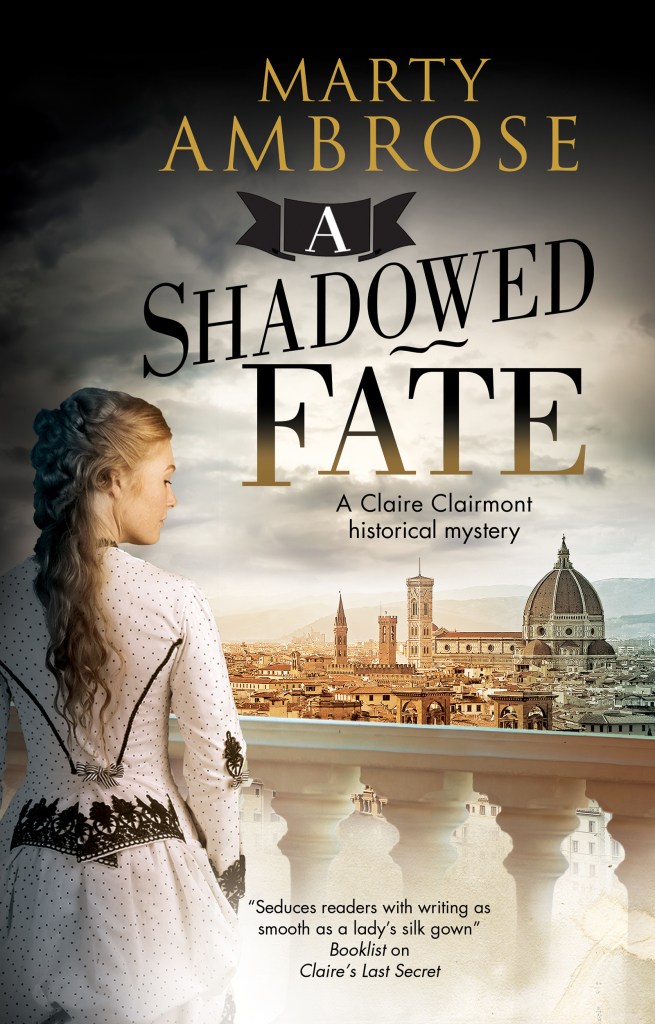
An Interview with Lord Byron from A Shadowed Fate by Marty Ambrose

We are going to speak today with British poet, Lord Byron, at the Palazzo Guiccioli in Ravenna, Italy.  He is handsome, brilliant, pop-star famous and, most interestingly, a member of an Italian revolutionary movement.  Welcome, Lord Byron!

Q:  First of all, I want to ask you about your connection to Claire Clairmont.  Was she one of the great loves of your life?

Lord Byron:  That is a complicated question since I am not the type of man who talks about his lovers.  All I can say is I connected with Claire in Geneva, Switzerland, in 1816, during a dark period of my life.  I had left England under a scandalous cloud—bruised and battered, without hope of gaining any sense of redemption.  She was seventeen and like a balm on my soul.  And she introduced me to my fellow poet, Percy Bysshe Shelley and his wife, Mary Shelley—who became great friends.  I confess that I have had more than one great love in my life, but Claire was like no other woman:  passionate, stubborn, maddening.  Sadly, there were forces that drove us apart . . . I must keep that part secret since it involves our daughter, Allegra. 

Q:  Do you mind telling us about Allegra?

Lord Byron:  I named her Allegra, meaning “cheerful and brisk”—she is all of that and more.  Pretty. Intelligent.  And a devil of a spirit, like both of her parents.  I must admit that she wants her own way in everything, and I indulge her.  My love child.  Claire wanted her to live with me, so I could raise her with all the advantages of wealth and rank, but I also wanted my child to know the true affection of her own father.  Unfortunately, I did not realize how tenuous the situation would become in Ravenna and that I would need all of my resources to protect her.  My most trusted bodyguard, Tita, watches over her in the day, and I keep her close in the evenings, reading poetry to her in both English and Italian. But things are deteriorating quickly, and I may have to make other arrangements for my Allegrina—much as I cannot bear to part from her.   

Q:  Speaking of Ravenna, Italy, could you tell us why you chose to live in such a small town?

Lord Byron:  Ah, Ravenna.  I wrote about it in my poem, Don Juan:

                  SWEET hour of twilight! in the solitude

                  Of the pine forest, and the silent shore

                  Which bounds Ravenna’s immemorial wood, . . . 

I settled here in 1820, because my Italian inamorata, Teresa Guiccioli, lives in the city with her husband, Count Guiccioli.  It sounds shocking I know, but I became her cavaliere servant—a professed lover with her husband’s permission, of course.  The whole arrangement is accepted in Italy.  And I am not the type of man who wishes to live without love.  Claire and I can never be together again so, when I met Teresa in Venice, I knew love had come into my life once more.  And I bonded with her father and brother, becoming part of a family—something I never had when I was a boy.  They not only accepted me, but introduced me to the Carbonari, a secret society that is plotting against the Austrian oppressors. I cannot give too many details on this development, except that my interests have expanded beyond poetry to include rebellion.  It might be a lost cause, but I am committed to it.

Q:  Are you still writing poetry?

Lord Byron:  Oh, yes . . . “The Prophecy of Dante” in honor of the great Italian poet and in support of a free Italy.

Q:  Can you at least explain what the Carbonariare trying to accomplish?

Lord Byron:  Not at this time, except to say that it is a loosely-organized secret society based on the Freemasons, and the clusters are organized all around Italy.  I was inducted into the Ravenna lodge shortly after I became acquainted with Teresa’s brother, Pietro.  We believe in revolutionary idealism and will do anything to see a free and united Italy. I cannot reveal any more . . .

Q:  I’m intrigued, especially because of your fame and status.  Did you find being a well-known poet created a sense of respect for you among the Carbonari?

Lord Bryon:  Well, I have access to certain diplomatic channels that the Italians do not, and they know I would share any intelligence that I acquire.  I am not sure being a poet garners me respect more than my singular belief in the cause of liberty.  At least, I hope so.

Q:  You document everything in your memoir.  Did you ever think of publishing it?

Lord Byron:  Memoirs are a tricky thing.  They can be a recording of daily activities like my Ravenna Journal, but they can also contain a certain amount of detail which  could destroy reputations, maybe even end lives.  I would never want to see that happen.  There are events in my memoir that few people are aware of and a wider audience does not need to know, so I intend to keep the memoir hidden among only two of my closest friends:  Angelo Mengaldo and Edward Trelawny.  I trust them with my life.

Q:  Back to your fame:  Did it make it possible for you to “bend the rules” as an exile living in Italy?

Lord Byron:  I can bend the rules because I am known mostly as the “mad English lord,” which I use to my advantage.  I can come and go without being watched too closely—and my “fame” provides me cover as a man of words, not action.  I keep a large, chaotic household and travel with an entourage—but that is all pretense for my role in the Italian rebellion.  Nevertheless, I know not to “bend” the rules too far since flyers have circulated around Ravenna with my picture and a single word: Traditore!  Traitor.  So,  I am being more careful about my movements not only to protect myself but also Allegra.  She must not be harmed because of my allegiances in Ravenna.

Q:  You do everything in your power to shield your daughter, Allegra.  Can you tell us about her fate?  

Lord Byron:  I would sacrifice my life to keep her safe from harm, and I may have to remove her from Ravenna to a place where she can be sheltered from the insanity that has descended on the city.  A man was actually shot in front of my palazzo; he died in my study. After that I would not allow Allegra to outside these walls without Tita—and now I seek to shelter her far from this place.  It seems to be the only way, but my heart breaks at sending her away.  As her Papa,  I must think of her wellbeing first.  And I know Claire will not like it.

Q:  So you still think about Claire?

Lord Byron:  Every day.

Thank you for speaking to us today.

About the author:

Marty Ambrose has been a writer most of her life, consumed with the world of literature whether teaching English at Florida Southwestern State College, Southern New Hampshire University or creating her own fiction.  Her writing career has spanned almost fifteen years, with eight published novels for Avalon Books, Kensington Books, Thomas & Mercer—and, now, Severn House. 

A few years ago, Marty had the opportunity to take a new creative direction that builds on her interest in the Romantic poets: historical fiction.  Her first book in a trilogy, Claire’s Last Secret, combines memoir and mystery in a genre-bending narrative of the Byron/Shelley “haunted summer,” with Claire Clairmont, as the protagonist/sleuth—the “almost famous” member of the group.  Her second novel, A Shadowed Fate, begins where the first novel ends with Claire on an “odyssey” through Italy to find the fate of her daughter, Allegra, whom she now believes might have survived; her narrative plays out with Byron’s memoir from 1821, and Allegra’s own story.   It will be published by Severn House on 3/3/2020 in the U.S.

Marty lives on an island in Southwest Florida with her husband, former news-anchor, Jim McLaughlin, where they tend their mango grove.  They are planning a two-week trip to Italy to research the third book, Forever Past.  Luckily, Jim is fluent in Italian and shares her love of history, literature, and travel. 

Meet Esther from Jill Eileen Smith’s Star of Persia

Tell us something about where you live.

I was born in Persia, though my family is of Jewish heritage. My people have been enslaved in Persia for over 70 years, though before I was born, the Persian king allowed us to return to Jerusalem to rebuild the walls of the city. My parents did not return, nor did my cousin Mordecai, who ended up becoming my adoptive father after my parents died.

Is there anything special about your name? Why do you think you were given that name?

I was born Hadassah, a common Jewish name. But when the king required all virgins brought to him at the palace, my adoptive father, Mordecai told me to use the name Esther, which means Persian Star. It was a wise decision for it allowed me to keep my Jewish heritage a secret.

Do you have an occupation? What do you like or dislike about your work?

I am the queen of Persia – a position that I never sought or expected. I am beginning to like the king, though he is a difficult man. I do not like that the only work I am called on to do is to entertain dignitaries’ wives’ at the king’s request, or simply be willing to allow him to show my beauty to others. I have no real work or value apart from that.

Who are the special people in your life?

My adoptive family, Mordecai and Levia were my life, along with their sons, my cousins. I also have a dear friend Jola. We were supposed to marry and live near each other and be friends for life, but she ended up betrothed to a boy I favored, while I ended up in the palace of the Persian king. 

What is your heart’s deepest desire?

I would like my freedom. I wish I could see my family whenever I liked, but my life is now at the mercy of the king. I am not able to go or do whatever I please. I would like fewer restrictions, as I used to have.

What are you most afraid of?

Displeasing my father. Displeasing my king. I supposed mostly I don’t want to dishonor God, though I do not know Him as my ancestors once did.

Do you have a cherished possession?

My adoptive mother’s ring. It is the only jewelry I brought with me to the palace. It is the only thing I wear unless I am called on to dress royally.

What do you expect the future will hold for you?

There is much intrigue in a palace, and while I might hope that I could be like other women who bear children and are the wife of one man who loves only them, that is not the lot that has fallen to me. I only hope that if I outlive the king, that my family and I will be safe to live out our days away from this place. I do not expect to hold any power if I become widowed.

What have you learned about yourself in the course of your story?

With God’s help, I can do more than I thought I could. I did not think myself capable of doing anything great, but God has given me courage beyond what I could have imagined. When called upon to act in a frightening situation, God’s grace gave me strength.

Is there anything else you’d like people to know about you?

I am no different than any other woman or any other Jewess. Who I am inside is a simple young woman who dreams things as everyone dreams them. I never sought glory or acclaim for myself or thought to do anything great with my life. But one thing I know. If God puts a person in the place where they can do much good, they must call on His help to do just that. To remain silent when by speaking we can save others, then our silence is wrong. We must draw on courage and grace to do what we can. What I thought impossible for me to do on my own, I found very possible to do by God’s grace.

Thanks for allowing us to get know you a little better!

Jill Eileen Smithis the bestselling and award-winning author of the biblical fiction series The Wives of King David, Wives of the Patriarchs, and Daughters of the Promised Land, as well as The Heart of a Kingand the nonfiction book When Life Doesn’t Match Your Dreams. Her research into the lives of biblical women has taken her from the Bible to Israel, and she particularly enjoys learning how women lived in Old Testament times. Jill lives with her family in southeast Michigan. Learn more at www.jilleileensmith.com.