Amazon Affiliate Link Used Helps Support this Blog
Welcome to Novel PASTimes! We haven’t seen you around Cooper’s Inn before. Where are you from?
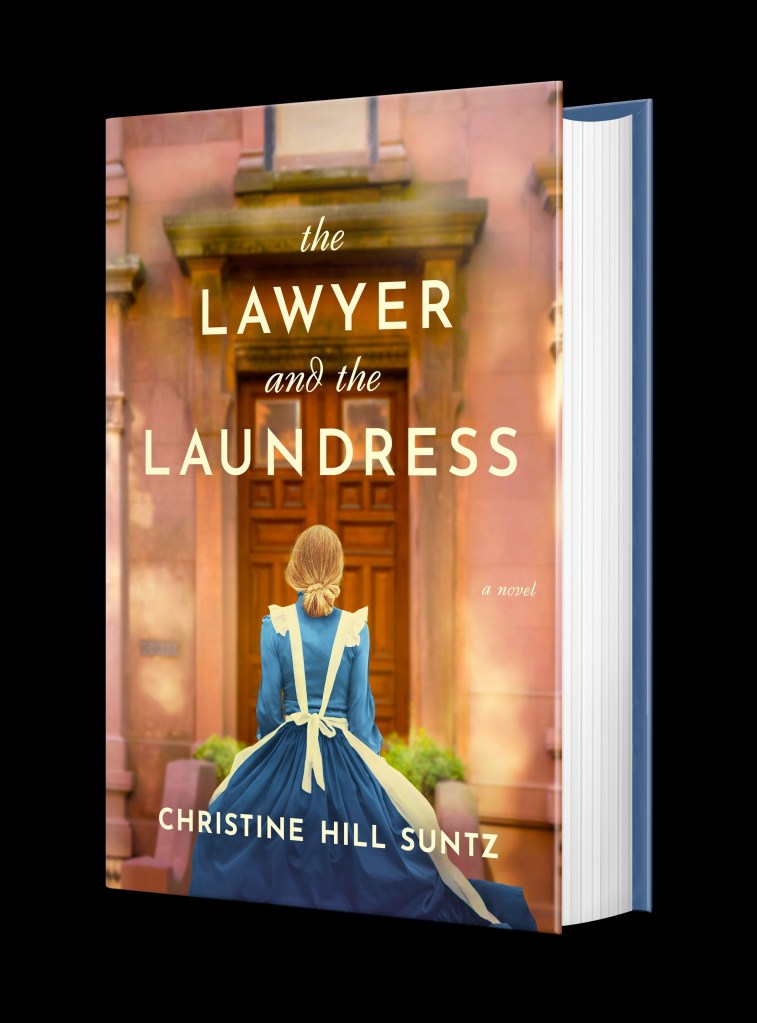
I’m Sara O’Connor, the new laundress. I’ve always lived here in Toronto, but this town has changed so much. When I was a child, people called it “muddy York”. The buildings were rough and the streets nearly impassable after a rain.
It’s 1837 now, and Toronto is a city. New settlers come through every day. Farms are springing up in the wilderness that used to surround the city. Cooper’s Inn is a busy place. I suppose that’s why Mrs. Cooper hired me.
I thought I saw a little girl here a moment ago. Is she your daughter?
Oh, heavens, no. That was Evie. She takes lessons with the Cooper girls, but they exclude her every chance they get. She visits me instead, and I’m happy to see a friendly face. We have to be careful, though. Mrs. Cooper saw me talking to her and gave me a warning. Doesn’t want a girl from a fine family mixing with the riffraff from Irishtown like me, I suppose.
Evie’s father has it out for me, too. He’s forbidden her from speaking to me. Can you imagine? What does he think I’ll do, force her to do my work? I’m the one friend she has here, and he wants to take that away.
He’s a lawyer, so I shouldn’t be surprised. He lives by the rules and doesn’t understand a young girl’s heart. I’d like to go right up to him and make him open his eyes, but I can’t risk losing my position.
Still, I won’t push Evie away. I guess I see in her the little girl I once was. We neither of us knew our mothers. We even love the same books. Have you read Ivanhoe?
No, I can’t say that I have. I don’t mean to offend, but how does a laundress come to read Ivanhoe? You don’t sound like you’re from Irishtown, either.
Well, the truth is, I didn’t always live in Irishtown. In fact, I might have more in common with Evie than anyone realizes.
I could earn more money as a lady’s maid or even a governess, but I have my reasons for working as a laundress. There are people I’d rather not see again, people who let me down when I needed them. I wouldn’t go back to that world, even if I could.
That’s why I keep to myself here at Cooper’s Inn. Or, at least, I did until Evie came along. Now I’m not sure what to do. Someone has to make her father understand her, but it can’t be me. I have too much at stake.
You see, I need to money to take care of Granny. She was a laundress, too. She taught me the trade and gave me a home when I had nothing. Now, it’s my turn to take care of her. She’s all I have left.
Thanks for taking the time to chat with us today. Before we go, any idea what’s happening in the common room? It’s full to the brim, and those men sound angry.
Meetings like this are happening all over the colony. No surprise, I say. Hundreds of newcomers arrive here, hoping for a better life, but the same systems that held them back in Britain exist here. A few wealthy families hold all the power and run our colonial government. The elected assembly can do very little to sway the Queen’s appointed governor. They’re frustrated.
So you’re a rebel, then?
No! I’m just a laundress who lives among the poor. I see how they struggle. You won’t repeat anything I’ve said, will you?
Your secret is safe with us, Sara. It sounds like you have some big decisions ahead of you. Good luck!
Christine Hill Suntz knew she wanted to write novels the day she finished Anne of Green Gables, and she’s been lost in her imagination ever since. Her love of language led her to study French and German and pursue a graduate degree in Comparative Literature before finding a home teaching high school French. Her work has won numerous prizes, including the 2022 ACFW Genesis competition.
Christine lives in Ontario on a hobby farm with her family, a flock of chickens, one attack rooster, and a herd of entitled goats. When she’s not writing or teaching, she enjoys trying out historical recipes on her (mostly) willing family.
Instagram: @christinehillsuntz Facebook: Christine Hill Suntz Author
Amazon Affiliate link used helps support this blog.
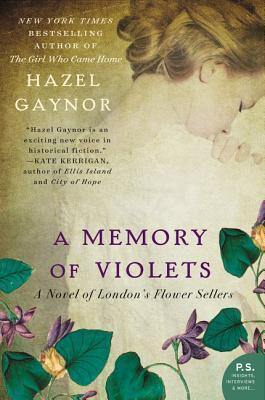
This book was first published 10 years ago, and I missed it. When the audiobook came up for sale recently on Chirp, I grabbed it. As the subtitle says, it’s a novel of London’s flower sellers. Two poor orphan sisters who sell flowers on the streets are separated due to the dangers 19th century children faced being homeless.. They grow up in very different circumstances. It’s a story that is both heart breaking and heart warming.
Tilly, who also grew up enduring family tragedy, goes to work as a type of house mother for girls who work making fabric flowers. She finds letters in her room written by one of the orphan sisters who had lived there and never gave up hope of finding her sister. The way these stories come together was not what I expected but satisfying all the same. Hazel Gaynor is a wonderful storyteller. I have loved all the books written by her that I’ve read. I think you’ll like this one too if you haven’t read it yet.
How did a failed belligerent Dutch painter become one of the greatest artists of our time?
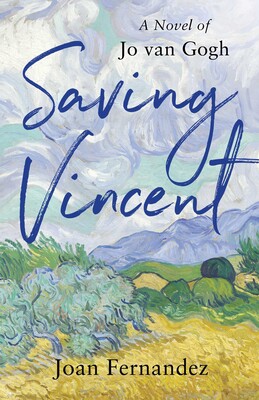
In 1891, timid Jo van Gogh Bonger lives safely in the background of her art dealer husband Theo’s passion for selling the work of unknown artists, especially his ill-fated dead brother, Vincent. When Theo dies unexpectedly, Jo’s brief happiness is shattered. Her inheritance—hundreds of unsold paintings by Vincent—is worthless. Pressured to move to her parents’ home, Jo defies tradition, instead choosing to open a boarding house, raise her infant son alone, and promote Vincent’s art herself. Her ingenuity and persistence draw the powerful opposition of a Parisian art dealer who vows to prevent her success, and so sink Vincent into obscurity. How will Jo overcome the forces working against her, and save herself along with Vincent?
In the spring of 1894, a young Parisian—an aspiring newspaperman —pauses at the doorstep of the Dutch widow’s guesthouse. By chance, he’d become stranded in the town, for he’d miscalculated the amount of time the train would stop in the Bussum station and gotten off to stretch his legs, only to find himself running behind the disappearing caboose not fifteen minutes later. Now stuck in this backwater village, he’d asked the stationmaster for a place to lodge. “Try the widow Johanna van Gogh,” he’d said, pointing down a dirt road adding, “The art dealer.” A woman art dealer!What luck! It was just the type of curiosity he could sell. He bounds up the steps and raps sharply on her door.
But thirty minutes later, he’s sitting on Mevrouw van Gogh’s sofa more bewildered than ever. This is not the grey-haired widow he’d imagined. She hands him a steaming cup of hot tea and takes a seat in a large stuffed chair opposite him.
Jo: All right then. I have just a few minutes before supper preparation. Tell me what you want to know.
Newsman: Well, for starters, the artwork you have hanging all over your house is stunning. Gauguin, Degas, Lautrec and of course, your brother-in-law Van Gogh. . .It’s like a museum! But tell me, why here? Bussum is such an out-of-the-way little Dutch town. Surely cities like Rotterdam or The Hague would be better?
Jo: I don’t think so. I know cities. I grew up in Amsterdam and lived in Paris for nearly two years when my husband Theo was alive. Art dealing is like a street fight there. There are so many dealers and hundreds, if not thousands, of aspiring artists. Competition is cutthroat.
Newsman: You have art collectors in Bussum?
Jo: Not many.
Newsman: Then how can you make money as an art dealer here?
Jo: Well, first of all, my guesthouse earnings literally keep a roof over me and my son’s head. I need independent income. After Theo died, my father assumed I’d move back home, but I couldn’t. I’m no longer a frightened little rabbit. Marriage to Theo changed me. He listened to my ideas. We shared both our dreams and worries. I never dreamed that a marriage could be like that. A partnership. My father doesn’t understand.
Newsman: Did Theo train you to become an art dealer?
Jo: Not. . . intentionally. He was sick but it never occurred to either of us he would die. When I found out that the inheritance my son and I share was all of Vincent’s artwork—we’re talking hundreds of paintings and drawings—I needed to see if it could all amount to something.
Newsman: What do you mean?
Jo: Theo was only ever able to sell a handful of Vincent’s paintings. Most art critics panned Vincent. His paintings were nearly worthless.
Newsman: But what made you think you could sell the paintings when your husband couldn’t?
Jo: I would never compare myself to Theo!
Newsman: If anything, I think it would be more difficult. Art dealing is a man’s occupation. You said yourself that it’s cutthroat.
Jo: I’m persistent. I write letters to Dutch galleries asking them to display Vincent’s work. I’ve given art to influential friends who then loan them back to me for exhibits. When I add a little note in the catalog that the work is owned by a private collector, patrons tend to give the art a second look. It’s gotten to the point that dealers are starting to contact me to see if they can sell Vincent’s work. Paintings are being crated and shipped every week. I have so many lists! It’s a lot to keep track of.
Newsman: Is that why I smelt wood shavings when I came in?
Jo: Oh dear (laughter). When the weather’s bad we hammer the crates here in the salon. The broom can’t seem to get all the wood slivers.
Newsman: Are your efforts working?
Jo: Do you mean am I persuasive? I actually sold more paintings in my first year than Theo did in the ten years he supported Vincent.
Newsman: I wouldn’t expect that from a woman!
Jo: (smiling) Most people don’t. Let me tell you what I think my best idea’s been so far to attract interest to Vincent’s work. In 1893 Theo and Vincent’s good friend, Émile Bernard, approached the editor of Le Mercurede France to do an article about Vincent.
Newsman: Mercure the Parisian art journal?
Jo: That’s the one. When the editor agreed, I sent him not only drawings, but translated excerpts from letters Vincent wrote to Theo. They’re a treasure trove! Witty, angry, frustrated and most of all, so passionate about trying to produce art his own way. I came to know Vincent myself through those letters, for I only met him three times in person. Theo was a packrat. He kept all of their correspondence. It wasn’t until a year after his death that I began to read the letters he’d crammed into the nooks and crannies of his writing desk. So, for Mercure, I chose excerpts that would spark the public’s curiosity—and they did. Instead of one article, the editor increased the plan to six.
Newsman: I’m astounded at your pride! Women are meant to be mothers, not to be in commerce.
Jo: Come now! I am a mother. I’ve been raising my son on my own since he was a baby. He’s four years old now. I want him to know his father left him a legacy of value and that neither his uncle nor his father worked in vain. I didn’t realize it until a friend pointed it out to me, but I’m what they call a “New Woman.” A woman capable of many things outside of traditional female occupations. I’ve changed a lot from that frightened rabbit. I think that’s progress, and it’s the perfect role model for my son.
Newsman: I beg your pardon, but it’s not quite adding up. You’ve been at this for nearly three years. Vincent van Gogh’s art is too controversial to ever catch on. Why haven’t you given up?
Jo: Vincent. I think I understand him.
Newsman: What do you mean?
Jo: (looking down at the clasped hands in her lap) When I came to Holland—completely sure in myself about the great—the indescribable height of that solitary artist life—what I felt then, faced with the indifference that met me on all sides where Vincent and his work was concerned—the burning sense of the whole world against him—I felt so abandoned—that I understood for the first time what he must have felt—in those times where everyone turned against him and it was as if there was no place for him on earth. I wish you could feel what Vincent’s influence on my life has been. I’m grateful to him. . . (Looking up she smiles and quickly swipes at a tear). Now, do you have enough? My guest Mevrouw van Dijk becomes quite grumpy if supper is late!
“Lovers of Van Gogh will find this story intense, vibrant and deeply moving.” Based on a true story, Jo van Gogh, a timid widow, takes on the male-dominated art elite to save her brother-in-law Vincent’s art from obscurity. She must prove that the hundreds of worthless paintings she inherited are world-class to ensure her young son will have an inheritance.
In 2018, Joan Fernandez retired from a 30+ year career as a senior marketing executive to be a full-time writer. Her short story, “A Parisian Daughter,” is published in the anthology, Feisty Deeds: Historical Fictions of Daring Women. Her debut novel, Saving Vincent, A Novel of Jo van Gogh, will be published in April 2025 by She Writes Press. Joan is a sought-after public speaker, reviewer and blogger. She calls both St. Louis and Sedona, Arizona, home, and enjoys foodie meals with her Cuban husband and antics with grandkids. Subscribe to her free newsletter at joanfernandez.substack.com Follow her at @joanfernandezauthor and see her website at www.joanfernandezauthor.com
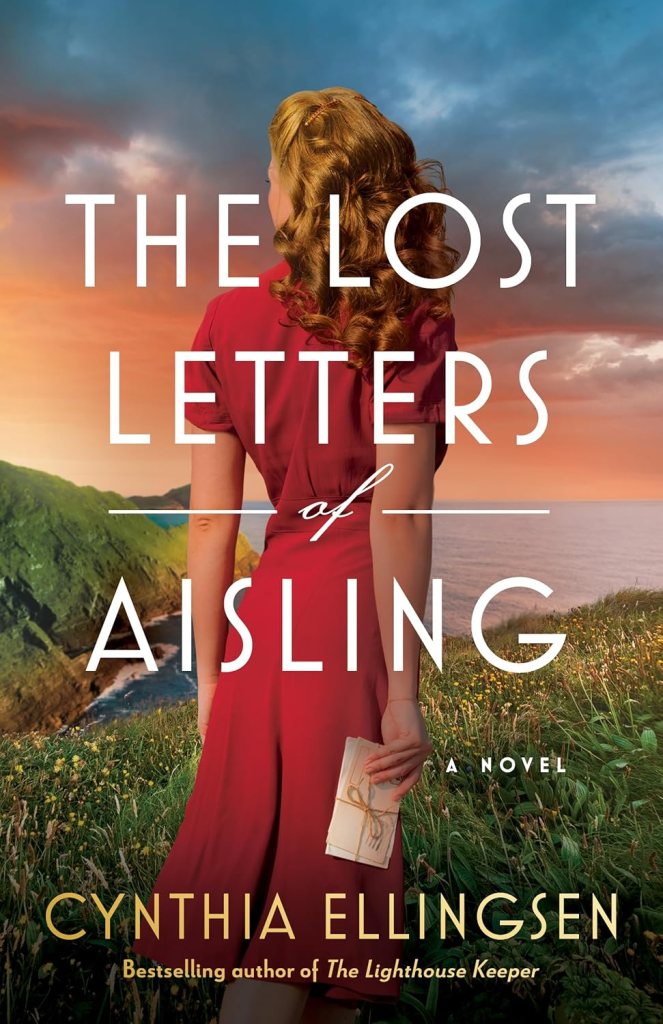
Rainey’s grandmother Evie fled Ireland many years ago. Neither Rainey nor her mother know why or anything about her life there. But while recovering from an illness she asks her granddaughter to take her back to the home she grew up in, which is now a bed and breakfast. She wants to retrieve some letters and read them again.
I love Irish stories so I was eager to read this one.
I never understood why Evie did not want her daughter, Rainey’s mother to go with them to Ireland. I thought it would be explained but it really wasn’t. That aside, I really enjoyed this book and the wonderful descriptions. The budding romance was understated, which I personally like. The ending was sweet but I felt like it didn’t tie up all the loose ends especially that budding romance I mentioned. They decided they would figure it out (living in different countries.). Even so, I appreciate that it was slow developing rather than a commitment or a physical affair after only meeting a week ago.
Well-written, easy to read, and a glimpse into the history of the times, which I always like. I gave it four stars.
Amazon Affiliate Link Used Helps Support this blog
Interviewer: We are here today with Gitel, the main character in Gitel’s Freedom by Iris Mitlin Lav. Gitel has graciously agreed to come back briefly from the afterlife to allow me to interview her.
Hello Gitel. Thank you for granting me this interview. If you were still alive today, how old would you be.
Gitel: Let me see. I was born in February, 1907, so I would be around 118 years old now.
I: You seemed unhappy a lot of the time you were growing up. What made you so unhappy?
G: I felt stuck between being an old-world girl and being an American girl, although I wanted to be the latter. I was five years old when we came to the United States, to South Bend, Indiana. My mother Rayzel never adjusted to life in the U.S. She never even learned to speak English. She tried to impose on me all the restrictions that would have applied if I had been raised as an Orthodox Jewish girl back in Belorussia. I couldn’t go to the houses of my school friends, I couldn’t play sports, I couldn’t wear pants, I couldn’t go away to college, and lots of other restraints. I defied her to the extent I could by playing on a non-Jewish softball team, for example, but that was not until I was in high school.
I: How did you meet Shmuel? What made you want to marry him?
G: I was already 25 years old and working at Studebaker. My mother was pushing me hard to get married, but I had no use for any of the local men the matchmaker or my mother proposed. They were so provincial and boring. I had just about decided that I didn’t want to marry at all. But when I heard Shmuel speak at a Workmen’s Circle meeting in Chicago, he seemed so different from any men I knew. He was concerned about the welfare of people who didn’t have the money to afford their necessities. And he also had good ideas about what politicians and the government could do to help workers and those without jobs. I fell in love with him and his ideas.
I: What is your conception of happiness and freedom?
G: When Shmuel died, after having been an invalid for much of the preceding 11 years, I was 60 years old and exhausted from taking care of him, being the breadwinner, and holding the family together. But I soon shook off my exhaustion and realized that for the first time since our first daughter was born a year after we married, I was free from responsibilities and could be my own person. Both daughters were married and on their own. I set about finding a job and a small studio apartment in the city, which my bookkeeping skills allowed me to readily find and afford. And with no other responsibilities, I could visit with friends or relatives or do volunteer work in my free time. It was wonderful. I worked at that job until I was 72, and then I retired.
I: Why does so little make you feel happy and free?
G: My life had been so difficult. Shmuel and I had just been married a couple of years when we lost our business in the Great Depression, when our bank that hcld our working capital and personal funds closed and didn’t reopen. Then Shmuel kept getting sick or injured. Most of the time we didn’t have enough money to live; we were always pinching pennies. And Shmuel insisted that I didn’t work outside the house to supplement his meager income. I never was able to realize my dream of becoming a teacher. After all that, a job with a decent salary, a nice place to live, and free time that I could spend as I pleased seemed to me like a huge reward or recompence for all that I had suffered.
I: If you could go back and change anything in your life, what would you change?
G: There is so much I would want to change. To start with, there were warning signs before we were married that Shmuel’s health might be problematic. But I was too much in love to pay attention to those signs. And above all, I wish I had insisted that Shmuel pay more attention to the warning signs of what might happen during the Depression, rather than my going along with his optimism. We could have waited a few years before opening our drug store, rather than do so in 1932 when the economy was crashing. And I wanted to take our working capital out of the bank. I should have insisted rather than let Shmuel’s reluctance prevail.
I: Thank you so much for your willingness to be interviewed and for your honest answers. One more question. Is there really life after death? What is it like?
G: Ah. We are forbidden to talk about that.
Iris Mitlin Lav grew up in the liberal Hyde Park neighborhood of Chicago, Illinois. She went on to earn an MBA from George Washington University and an AB from the University of Chicago, and to enjoy a long career of public policy analysis and management, with an emphasis on improving policies for low- and moderate-income families. She also taught public finance at Johns Hopkins University and George Mason University, and in 1999 received the Steven D. Gold award for contributions to state and local fiscal policy. Her first novel, “A Wife in Bangkok,” was published in 2020 by She Writes Press. “Gitel’s Freedom” is her second novel. Learn more at: www.irismitlinlav.com
Welcome to Novel PASTimes! We are pleased you stopped by today.
Thanks for having me! It’s quite posh here, isn’t it?
Tell us something about where you live?
I live in Hackney in London. It’s a bit grim at the moment. Our street is practically rubble after Hitler aimed his vengeance bombs right at us. Thankfully, my neighbours were safe and our house was spared. It’s crowded, though. What with me and my sister, mum and dad and my four brothers. And that’s before Jonty comes home.
Do you have an occupation?
Yes. I’m a seamstress. I do the hand embroidery and other details on gowns for a fancy French dressmaker in Mayfair. I taught myself to sew and I never dreamed I’d be good enough to get a job at such a place. I couldn’t believe it when Madame Martin took me on. I worked at RAF Bottesford in the war, which is all but over now. The Germans surrendered a few months ago, but the Japanese are drawing things out to the bitter end.
What do you like about your work?
I love working on fancy gowns for some of the richest people in the country. And not just gowns, we also make underthings. They are all very French, if you know what I mean. I could never afford anything like what we make, but I love being able to sew all day.
Who are the special people in your life?
Well, there’s my family. Lucy’s getting married soon and Dad’s a bit unpredictable, but Mum knows how to handle him. Then there’s Jonty. He’s my husband, so maybe I should have put him first. But everything is so complicated that I never know what to say.
See, we got married about two and a half years ago. I was well, in a family way, if you know what I mean. The baby wasn’t his, but he didn’t care. It was his idea to get married! We thought that once the baby was born we’d just get on with being a family. But my darling girl died and everything sort of fell apart after that. I told Jonty to leave. I said some awful things to him. Things that kept him away for two years. But, I regret them. And now that he is being demobilised, we need to find a way to begin again. I honestly have no idea where to start.
Then there’s my friend, Jan. He’s my neighbour’s nephew. We’re just friends. Or so I keep telling myself.
What do you expect the future will hold for you?
I wish I knew. Despite everything that has happened, I know that Jonty is a good man. Well, he was. Maybe the war changed him…? There’s a housing shortage because of all the bombing so we’ll be living with my family. But I don’t want to leave Hackney anyway. Not when my family and friends are here.
What are you most afraid of?
After my baby daughter died, I’m afraid that I can’t have babies that live. It happened to my neighbour Mrs Parkin. She buried every child she ever had. I’ve only done it once but I can’t do it again. I just can’t. It hurts too much.
What have you learned about yourself in the course of your story?
That, despite everything, I am loved and loved well. But it’s a long road, and I don’t want to give too much away, you see.
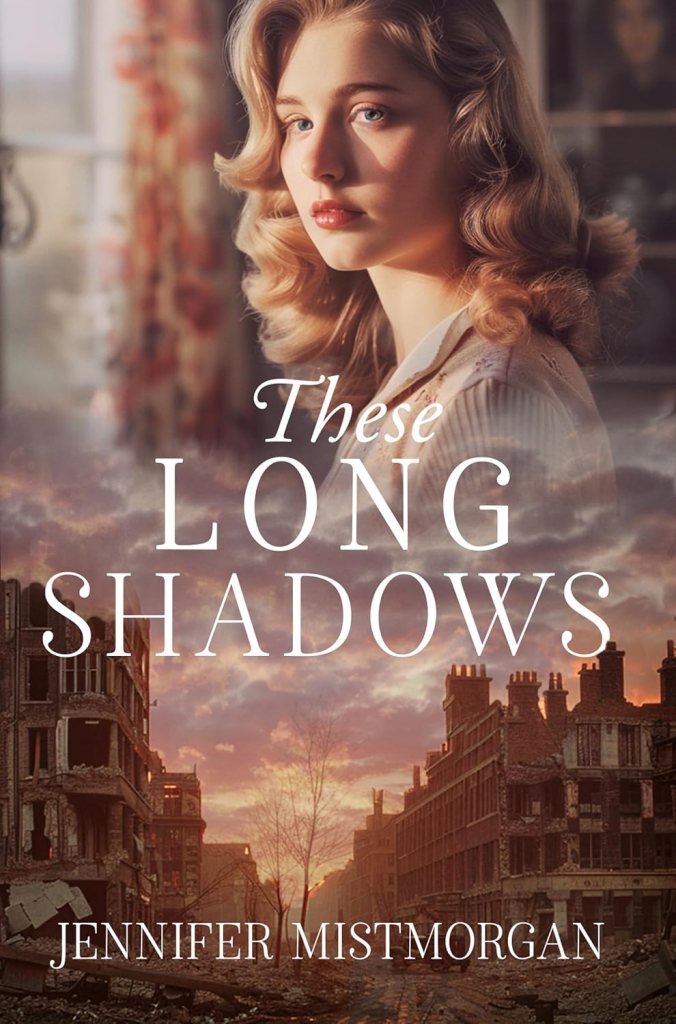
These Long Shadows by Jennifer Mistmorgan is a second chance, marriage-of-convenience love story with a dash of intrigue set in the dying days of WWII. Perfect for readers who love Sarah Sundin and Roseanna White. Coming March 2025.
————
About the Author
Award-winning Australian author Jennifer Mistmorgan sometimes feels like she was born in the wrong era. So she writes romantic historical fiction set in the 1940s, against the backdrop of WWII and its aftermath. Her romances are full of sweet romance, wartime drama, imperfect faith and characters that feel like friends. She lives in Canberra with her family and a wonky-eared West Highland terrier.
Amazon Affiliate Link Used helps to support this blog.
Publisher : Berkley (March 18, 2025)
Language : English
Hardcover : 352 pages
ISBN-10 : 0593332865
ISBN-13 : 978-0593332863
Susan Meissner’s new book explores secrets, friendship bonds, and the consequences of our choices all while whisking readers off to the 1950s in Southern California. It was a time when women were still limited in their choices to make a living, a time when the fear of communism was spreading, and a time when people still knew their neighbors no matter how odd or reclusive they may have been.
We meet Melanie Cole, a budding movie star who is blacklisted due to suspected communist ties, her housekeeper Eva who fled war-torn Europe, and next door neighbor June who lives with her reclusive screenwriter brother-in-law. They are all afraid of something and need each other to escape their circumstances.
This book was at the same time classic Susan Meissner (a story of hope, a story where I learned something from history, a story where her use of descriptive language paints an unforgettable story in my mind) and also a departure for this novelist. I believe this is the first of her books to use swearing, so heads up if that bothers you. The story unfolded differently too. The first half unfolded very slowly for me. There was lots of backstory and not much happening. But then in the second half things are set in motion and the emotions felt real and heart wrenching. What would you change in your past and how would that have changed the present if at all? That’s a question the three friends contemplate and in the end come up with answers. I’m glad I read this even though it isn’t my favorite Meissner novel.
Reviewed by Cindy Thomson. I received a free advanced copy from the publisher and my review is solely my own.
Welcome Charlotte. Tell us a little about yourself. Where and when are you from?
Well, to start, I was born and raised on a farm in Falmouth, Massachusetts. But I’m told my home has long since changed from my timeline in 1776. I believe it’s now a part of Portland, Maine if I’m correct.
How would you describe your family life?
My father is a surveyor in the colonies and owns a family farm where I grew up. Unfortunately, my mother died last year after the first year of the war. With two older siblings and two younger, I suppose I would be considered the middle child. However, I’m hardly the peacemaker of the family. In fact, I tend to bring on more conflict than any of my other siblings. Thankfully, I have an aunt who is not only a Godsend when it comes to taking care of my family and the challenges the war has brought on but has also served as an encouragement to me.
You’re from the colonies, but your story takes place in France. Am I missing something?
No, you’re correct. My older sister’s story takes place more in the colonies, but mine takes a different turn. I’ve been traveling with my sister, Abigail, where we ended up in Paris, France. The city was a stop on our way to London, but I’ve received urgent news from home that has detained me here until I can change things in hopes of bettering my family’s current dilemma.
How do you feel about those challenges you’re currently facing?
I’m not a woman who minds a good challenge or one to give in easily when the matter becomes difficult. Nevertheless, I know people are counting on me to be successful and that creates a lot pressure, especially when it’s not just my own life effected.
Is there anything or anyone you fear while you’re trying to accomplish your goals in Paris?
Yes, actually. Dying before really living my life.
Tell us something about Nicholas. How did you two meet?
You mean that captain of the Royal Navy under King George III? When I first met him, he was a lieutenant and fired cannons upon my town during the onset of the war last year in my sister’s story. Truly, the man is annoyingly upright in every way and follows orders to the exact degree. But since our first run-in, we’ve had plenty of opportunity together, some good, some not. And if you were worried on my part about my town’s destruction, don’t be. I’ve been able to get even in my own way.
Since we’re on the subject of Nicholas, what is your idea of a perfect date?
Let’s just say it occurs at the Seine River in Paris and you wouldn’t believe what happens even if I told you.
Thank you, Charlotte. Before we end our interview, I have one more question for you. If you had one last chance to say something to someone important, what would it be?
(swallow)
I’d tell my mother I miss her dearly and I’m so sorry for what I did.
About A Heart’s Charade
She’d left home to escape the war, only to find herself having to face her past again.
It’s 1776. There might be a war going on back home in the colonies, but Charlotte Thatcher is perfectly fine to stay out of it. While touring Paris, France her aunt sends news from home that leaves little choice but to seek out a French noble’s help or stand by while the war ruins her family. Driven by her aunt’s plea and a chance to fully appreciate Paris’ charm, she grabs at the opportunity. But will she be able to secure a partnership with the very man she has outrightly offended?
Captain Nicholas J. Edwards was born to serve the Royal Navy, at least that’s what his father would say. With a perfect reputation and expectations he’s always managed to live up to, Nicholas has been assigned a secret mission in Paris by the king of England. But when his mission in the French city turns out to be a failure, will there be more to his consequences than just his tarnished record? And what happens when the woman whose been a thorn in his side ends up becoming a rose?
About Jill Ann Mai
As an ongoing student of both literature and the Word of God, it is Jill’s privilege to write fiction set in the past, that she prays, points her readers to the hope found in Christ. Apart from writing, Jill spends most of her time with her amazing husband and two daughters who are full of life in Paducah, KY. She enjoys spending time with her family, traveling, and having a good conversation over an equally good cup of coffee. A Heart’s Charade is the second book she’s authored behind Love Beyond the Ashes.
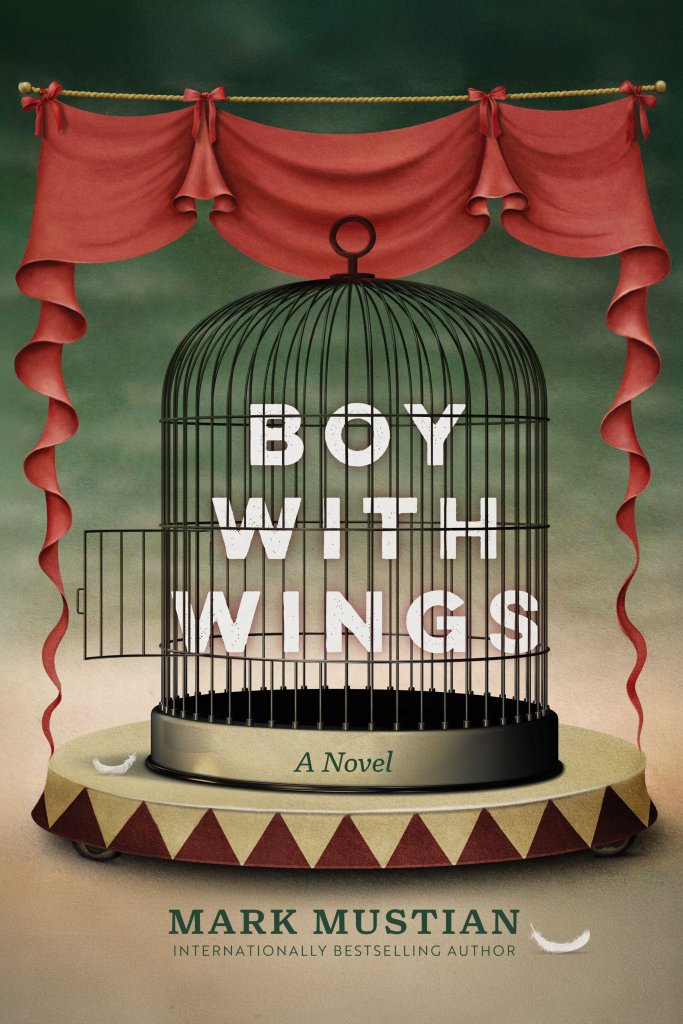
Johnny Cruel is born with strange appendages on his back, frightening his neighbors and leaving him struggling to find a home. He ends up in a “freak show” traveling the 1930s South, where he bares his back to onlookers who come to gape and fawn. Is he a horror or an angel? Should he hide himself to live his life?
Johnny’s travails in the Depression-era U.S. shine a spotlight on the era, where traveling shows provided entertainment and the odd could bring a thrill to grueling lives. Ideal for fans of Water for Elephants and Weyward, Boy With Wings brings the sideshow performer’s plight to life, surrounded by menace but also adulation, fraud, love and an undeniable magic.
Boy With Wings details Johnny’s life from a small child to a young adult. The following is an interview from his teen years, when he’s the star of the “Alexander’s Traveling Oddities” show that patrons pay extra to see.
Johnny, what was it like when you first appeared on the show?
I was scared. I didn’t know what it would be like, or even what I was supposed to do. They told me—Tot and Sheila—to just go out there and let them look, but I didn’t want to do it. They made me wear this cape-like thing, and there were all these people staring from behind a rope. But when I took off the cape and showed them, well, it was okay.
Do you like it now, being the star?
I guess. I’ve gotten used to it, and in a way, I suppose I like it some. I listen more to the crowd now, to what they’re saying and their other reactions. People faint sometimes. I get heckled now and then. I sign photos of myself after the shows, which can get a bit tiresome. And I feel bad in some ways because others here work so hard, performing multiple times a day, while I just go out and show the patrons my back. I wish I could sing or dance or do something more, but I haven’t come up with anything yet to add to my act.
What are the other acts like?
Oh, they’re really great! We have Zorat the sword-swallower who also breathes fire—he’s one of my favorites. There’s Sheila the tattooed lady, and Boris who throws knives, and Alfred who has this wooden dummy named Cletus who talks all on his own. There are others more like me—the true freaks, they call us: Otto, who’s a pinhead, Kenneth the Dog-Faced Man, and Tot, the tiny lady who runs the show. There are also these minstrel singers, who have voices that are amazing! We had girls who danced, too, but they had to leave.
What was your life like before the show?
I’d rather not talk about that.
What are the patrons like at your shows?
They’re mostly men: farmers and workers. Sometime women, and occasionally children, too. I see some of the men drinking from bottles—that’s hooch, or so Winifred tells me. Tot made the decision to allow Negros into the shows, and that has made some people mad.
Who is Winifred?
She’s this girl, my friend. She’s the only other kid on the show, though she’s not a performer. She’s Tot’s daughter. She’s. . . Well, I guess she’s my girlfriend.
Are you religious?
Sure. I study with Zorat—his real name is Robert. We read the Bible, and he tells me of things that he’s learned. I don’t understand lots of it. I wish I could know more.
What do you think the future holds?
I’m not sure. I saw someone from my past recently, and it brought back this big, dark cloud. My mother is dead, but I’d like to find my father, or at least I think that’s what I want. Winifred and I have that in common—she’s looking for her father, too. Who knows what could be out there for us? I’d like to have a regular job, a regular life, but for now I’m okay being on the show. We’re like a big family, you know? Or at least this is the family I’ve got.
Are they really wings?
I think so. I don’t know. I have to turn on my side to sleep.
MARK MUSTIAN is the author of the novels “The Return” and “The Gendarme,” the latter an international bestseller that has been published in eleven languages. He was a finalist for the Dayton International Literary Peace Prize, shortlisted for the Saroyan International Award for Writing, and the winner of the Florida Gold Book Award for fiction. He is the founder and president of the Word of South Festival of Literature and Music in Tallahassee, Florida, now in its tenth year. A former elected official and an attorney, he lives in Florida and Michigan with his wife and elderly dog. Learn more at: www.markmustian.com
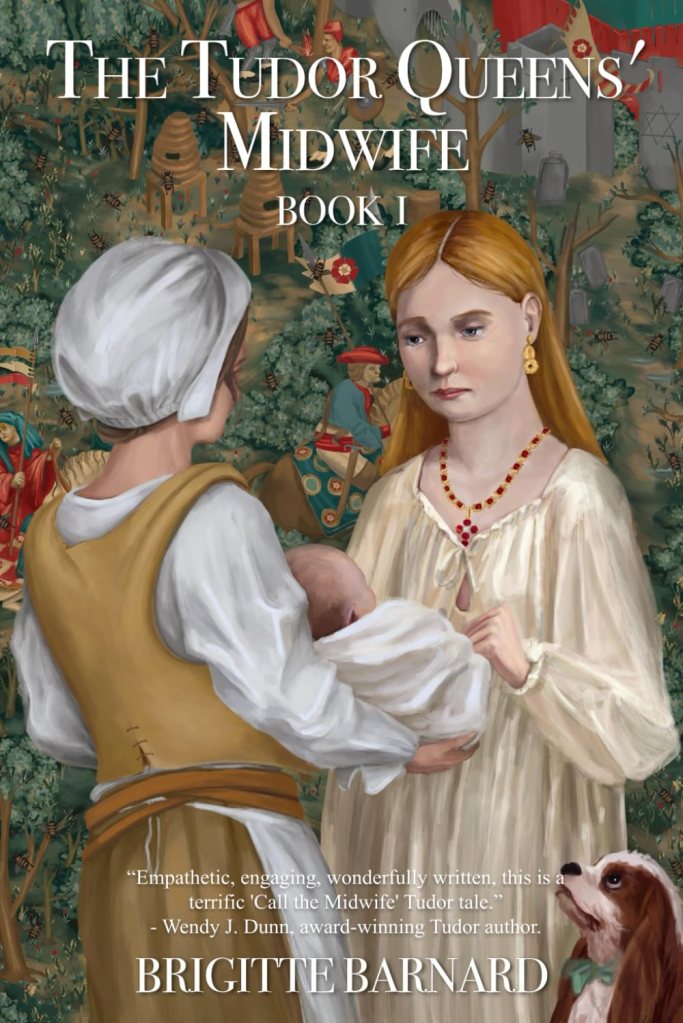
Interviewer: Mistress Sarah, you have served Queen Katherine for many years in the birthing chamber. What have you observed about her strength as a mother?
Sarah: Her Majesty is a woman of unwavering fortitude. Though sorrow has visited her more times than I dare count, she meets each trial with the resolve of a true queen. I have seen her cradle a lifeless babe, pressing her lips to its cooling brow, and yet by dawn, she stands before her ladies, her grief concealed beneath a mantle of dignity. She does not weep where others may see—her sorrow is carried in her prayers, in the long hours she spends upon her knees. If strength is measured by endurance, then there is no woman in England, nay, in https://amzn.to/41mTMQIChristendom, stronger than she.
Interviewer: Many whisper of the King’s desire for a son. How does the Queen bear the weight of such expectations? Sarah: A queen’s duty is to provide heirs, yet a woman’s body does not always yield to duty. Her Majesty has done all that is required of her—she has fasted, she has sought the most learned physicians, she has entrusted herself to God’s mercy. I have known many women in my profession who crumble beneath such burdens, yet she does not. She holds to her faith, to the conviction that she is the true and rightful wife of the King, and that in the end, justice will prevail. But I would be lying if I said I do not see the toll it takes. The sleepless nights, the silent prayers murmured when she believes herself alone… Such a burden is not easily
borne.
Interviewer: You are well-spoken for a midwife, Mistress Sarah. Where did you come by such an education?
Sarah: I was fortunate in my youth. My father believed that a sharp mind was as valuable as a skilled hand, and though many deem it unnecessary for a woman to read more than a psalter, he insisted I be taught beyond such limits. I learned Latin, some Greek, and the art of numbers, but it is in my profession that my knowledge has served me best. The study of the body is a lifelong pursuit, and I take no greater pride than in aiding women in their hour of need. Books, however, can only teach so much—true wisdom comes from years at the birthing bed, from knowing when to act and when to pray. (She avoids mentioning that her father was a Jewish scholar, that her first letters were not in Latin but Hebrew. To reveal such a truth would be dangerous, and she is careful with her words.)
Interviewer: The Queen is deeply devout. Have you ever spoken with her about matters of faith?
Sarah: Her Majesty’s faith is the foundation upon which she stands. It guides her every thought, every action. She speaks of it often, and I listen with due reverence. A midwife hears many things—prayers whispered in labor, confessions spoken between cries of pain. Faith is a great comfort in the birthing chamber, for it is there that life and death stand side by side. I do not question the Queen’s devotion, nor do I question that faith gives strength where the body falters. (She does not speak of her own faith. She does not tell the interviewer that when she prays, it is not to the saints but to the Almighty, that when she fasts, it is not for Lent but for Yom Kippur. Such truths must remain hidden.)
Interviewer: The court is a place of intrigue. Have you ever feared for your safety?
Sarah: Fear is the shadow that walks beside all who serve the great and powerful. A midwife is a keeper of secrets—she knows who has conceived, who has lost a child, who seeks remedies best left unspoken. I tread carefully, as all must do. But it is not only courtly whispers that give me pause. A misplaced word, a careless slip, and a life can be undone. I take great care to be what I am expected to be—no more, no less. A woman in my position must always remember that there are ears everywhere, and not all ears are kind
Brigitte Barnard is an amateur historian and home birth midwife whose deep passion for history and expertise in maternal care bring exceptional authenticity to her storytelling. A mother of four, she also breeds Cavalier King Charles Spaniels. Currently, she is working on her next book—a nonfiction exploration of dynastic childbirth in the Tudor court—for one of the UK’s leading publishers.











 Novel PASTimes