
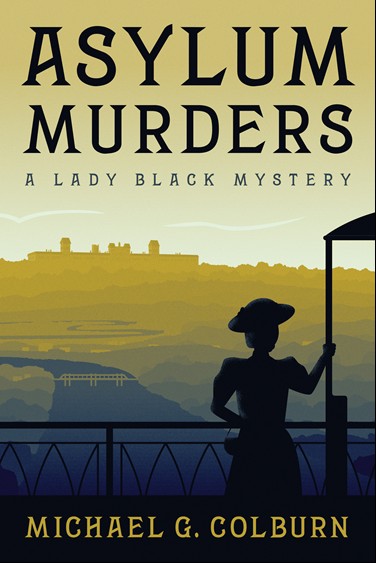
Interview with Britina Myers, best friend of Lady Edith Black
Interviewer: Mr. Thomas Preston, Social Reform reporter, AGE Newspaper, Melbourne AU
T: May I call you Britina or do you prefer Sister Mary Britina?
B: Mr. Preston, I know you’ve done your research; I researched you. You know I gave up my religious life after the events I was involved in at Kew Lunatic Asylum. A term I’m fighting currently in the courts to have changed, but that was its name.
T: Sorry, I am aware and we’ll get to your current activities shortly. How would you like me to address you?
B: Please address me as Miss Myers.
T: Very well, Miss Myers. As you know I am doing a series of articles for the AGE Newspaper entitled The Women of Melbourne Leading Change. I originally requested an interview with Lady Edith Black who has acquired quite a reputation as a woman who solves crimes but also one who is mysterious and reclusive. She turned me down and suggested I interview you.
B: Edie is not reclusive, but she doesn’t give interviews; she is very protective of her past and of her current privacy.
T: Do you have her permission to talk about her past, and her present?
B: Are you interviewing me or using me to find out more about Lady Black, Mr. Preston?
T: Ha, guilty, but I think the fairest answer would be both. You both have a colorful story for our readers, I believe, but let’s start with Lady Black. You are Edith Black’s closest friend, aren’t you?
B: Her closest lady friend, yes. In addition to growing up together, she just saved my life and my sanity. I could easily be dead or confined to the asylum in a drugged stupor if it weren’t for her risking everything to save me.
T: I did read about that, quite a mess up there in Kew. Is it likely that I can get Lady Black to supplement this interview at least by review and comment?
B: Lady Black is traveling to America right now to attend the wedding of a friend, Jack Cramer, or she might have consented to giving you an interview. Your work is well respected. I have her permission to talk about her.
T: Lady Black said you were sisters.
B: As close as you can be without being related. I’m brown skinned Jamaican, Edie is English and Scottish, but knows little of her family. She was orphaned at ten, or at least as close as you can come to orphaned. Her mother was beaten to death by her father and he disappeared.
We both owe our lives to Benji Diamond who saved us from the slums of East London, taught us to read and think for ourselves, gave us purpose and taught us that there are good caring people in life and we should help those that are less fortunate.
T: I don’t know of Benji Diamond, where is he from? How did he come to save you, as you put it?
B: He was a thief, but a decent thief. He was also a farmer, a successful one.
T: Cough! I’m afraid you caught me off guard there. I’m a little shocked, and you’re smiling like you intended to shock me.
B: I did. Now I’m enjoying the interview.
T: Where is he now, this Benji Diamond? Is he in jail?
B: He’s Lady Black’s husband, and a very wealthy member of society, although he also prefers to avoid publicity about his past as you can imagine.
T: Miss Myers this interview has taken several directions already. Can I write that about Benji Diamond?
B: Mr. Preston, you signed an agreement that Lady Black could prohibit any information I’m providing from being printed, that will be one piece excluded.
T: I will honor my agreement but please understand I am not here to harm anyone’s reputation. I want the public to know about the important women who deserve recognition in Melbourne society.
B: You can call me Britina now, Mr. Preston.
T: Thank you, call me Tom. Can you tell me about Lady Black’s background after being orphaned? A terrible situation for any child.
B: She and I and a dozen or more women who Benji Diamond rescued from slum life lived in a warehouse in East End London near the infamous Aldgate pumping station. Benji ran a stall market for several years where we all worked, until it was destroyed by the city police.
T: What happened to you and Lady Black?
B: You can call her Edie now. Tom, I will tell you the story, and then we’ll talk about the future. I was convicted for selling stolen merchandise at the market. After I was convicted I was released to serve a term as a novice nun, due to the kindness of an aged nun, who took a liking to me. I had a sentence to serve in Australia for four years after becoming a novitiate.
Benji Diamond gave himself up and went to jail for a while. Edie became a master thief and ran a division of the forty elephants gang of women thieves. After which she was part of a team that stole a ship, smuggled guns and then was implemented in a major diamond heist. Then sailed to Australia.
T: I’m not going to be able to print any of this am I?
B: Afraid not, Mr. Preston, Tom, but we granted this interview, Edie and I, because we think we can form a friendship with you that could be valuable to Melbourne and all of Australia. We could use your help.
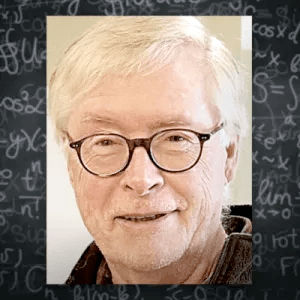
Michael G. Colburn has studied and written about the creative process for several decades. He started several businesses and one manufacturing company based on creation and invention. He has authored over twenty patents. His books include the bestselling Invent, Innovate & Prosper, and How Julia Found Happiness and Financial Success. He now devotes his time to writing The Lady Black Crime fiction series. He lives with his wife in Vermont. When he is not writing, they like to travel and take long-distance walking trips, exploring paths and cultures worldwide. Learn more at: www.michaelgcolburn.com

 Novel PASTimes