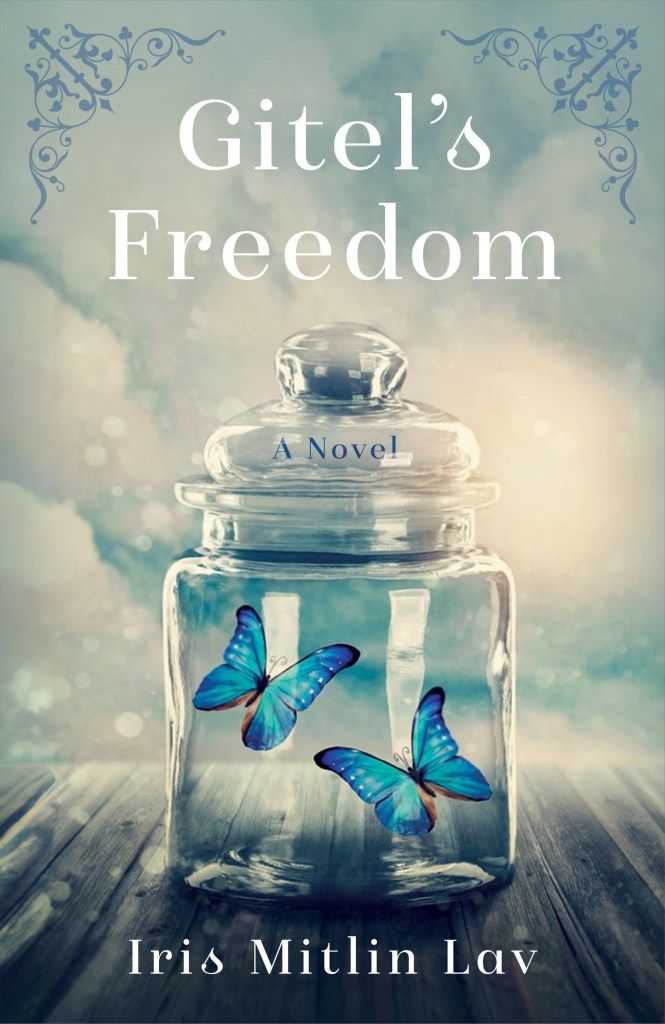
Meet Gitel from Gitel’s Freedom by Iris Mitlin Lav

book cover
Amazon Affiliate Link Used Helps Support this blog

Interviewer: We are here today with Gitel, the main character in Gitel’s Freedom by Iris Mitlin Lav. Gitel has graciously agreed to come back briefly from the afterlife to allow me to interview her.

Hello Gitel. Thank you for granting me this interview. If you were still alive today, how old would you be.

Gitel: Let me see. I was born in February, 1907, so I would be around 118 years old now. 

I: You seemed unhappy a lot of the time you were growing up. What made you so unhappy?

G: I felt stuck between being an old-world girl and being an American girl, although I wanted to be the latter. I was five years old when we came to the United States, to South Bend, Indiana. My mother Rayzel never adjusted to life in the U.S. She never even learned to speak English. She tried to impose on me all the restrictions that would have applied if I had been raised as an Orthodox Jewish girl back in Belorussia. I couldn’t go to the houses of my school friends, I couldn’t play sports, I couldn’t wear pants, I couldn’t go away to college, and lots of other restraints. I defied her to the extent I could by playing on a non-Jewish softball team, for example, but that was not until I was in high school.

I: How did you meet Shmuel? What made you want to marry him?

G: I was already 25 years old and working at Studebaker. My mother was pushing me hard to get married, but I had no use for any of the local men the matchmaker or my mother proposed. They were so provincial and boring. I had just about decided that I didn’t want to marry at all. But when I heard Shmuel speak at a Workmen’s Circle meeting in Chicago, he seemed so different from any men I knew. He was concerned about the welfare of people who didn’t have the money to afford their necessities. And he also had good ideas about what politicians and the government could do to help workers and those without jobs. I fell in love with him and his ideas.

I: What is your conception of happiness and freedom? 

G: When Shmuel died, after having been an invalid for much of the preceding 11 years, I was 60 years old and exhausted from taking care of him, being the breadwinner, and holding the family together. But I soon shook off my exhaustion and realized that for the first time since our first daughter was born a year after we married, I was free from responsibilities and could be my own person. Both daughters were married and on their own. I set about finding a job and a small studio apartment in the city, which my bookkeeping skills allowed me to readily find and afford.  And with no other responsibilities, I could visit with friends or relatives or do volunteer work in my free time. It was wonderful. I worked at that job until I was 72, and then I retired. 

I: Why does so little make you feel happy and free? 

G: My life had been so difficult. Shmuel and I had just been married a couple of years when we lost our business in the Great Depression, when our bank that hcld our working capital and personal funds closed and didn’t reopen. Then Shmuel kept getting sick or injured. Most of the time we didn’t have enough money to live; we were always pinching pennies. And Shmuel insisted that I didn’t work outside the house to supplement his meager income. I never was able to realize my dream of becoming a teacher. After all that, a job with a decent salary, a nice place to live, and free time that I could spend as I pleased seemed to me like a huge reward or recompence for all that I had suffered.

I: If you could go back and change anything in your life, what would you change?

G: There is so much I would want to change. To start with, there were warning signs before we were married that Shmuel’s health might be problematic. But I was too much in love to pay attention to those signs. And above all, I wish I had insisted that Shmuel pay more attention to the warning signs of what might happen during the Depression, rather than my going along with his optimism. We could have waited a few years before opening our drug store, rather than do so in 1932 when the economy was crashing. And I wanted to take our working capital out of the bank. I should have insisted rather than let Shmuel’s reluctance prevail. 

I: Thank you so much for your willingness to be interviewed and for your honest answers. One more question. Is there really life after death? What is it like?

G: Ah. We are forbidden to talk about that. 
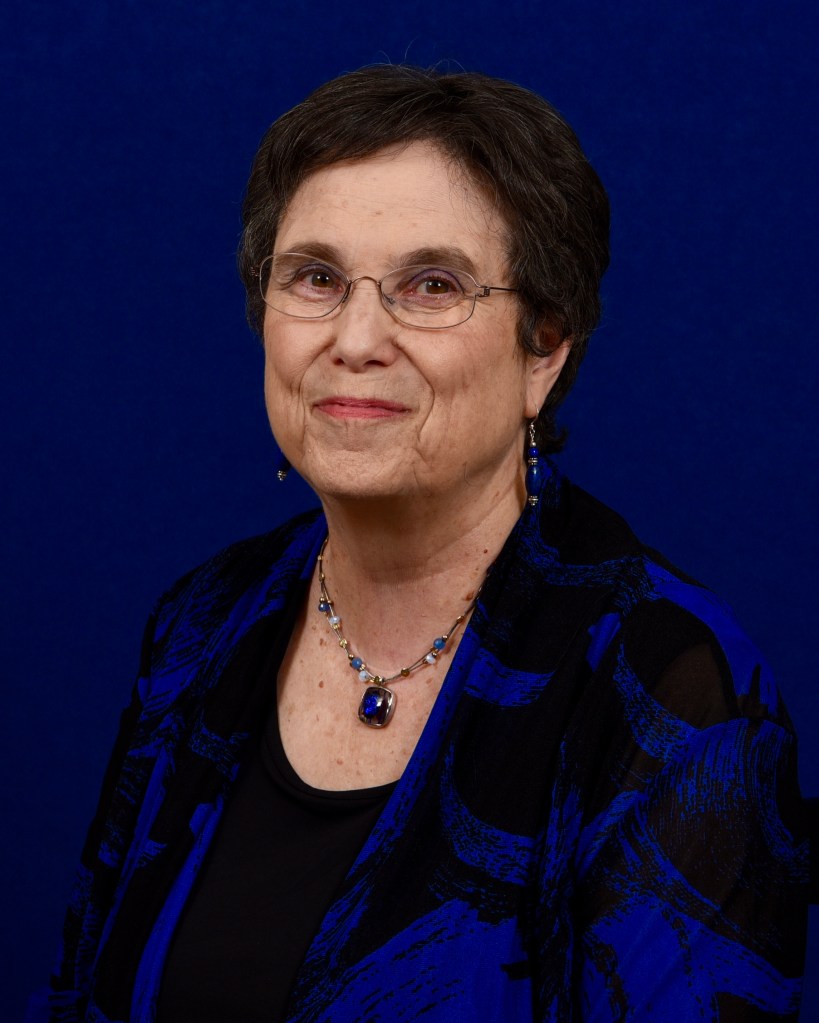

Iris Mitlin Lav grew up in the liberal Hyde Park neighborhood of Chicago, Illinois. She went on to earn an MBA from George Washington University and an AB from the University of Chicago, and to enjoy a long career of public policy analysis and management, with an emphasis on improving policies for low- and moderate-income families. She also taught public finance at Johns Hopkins University and George Mason University, and in 1999 received the Steven D. Gold award for contributions to state and local fiscal policy. Her first novel, “A Wife in Bangkok,” was published in 2020 by She Writes Press. “Gitel’s Freedom” is her second novel. Learn more at: www.irismitlinlav.com
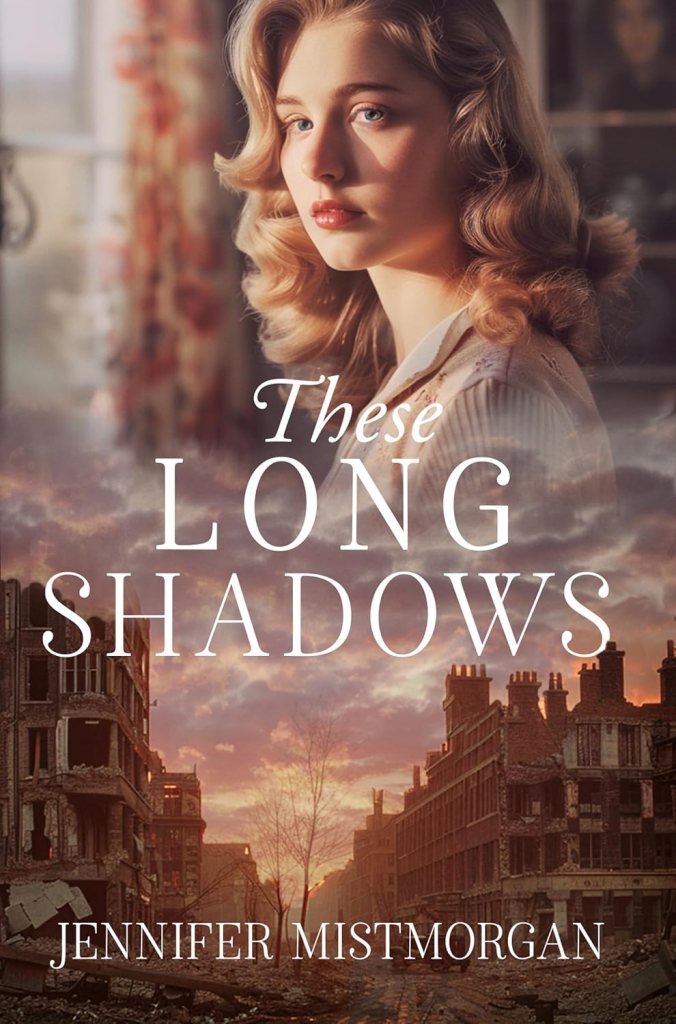
Meet Katie Ables from These Long Shadows by Jennifer Mistmorgan

Amazon Affiliate link helps to support this blog.

Welcome to Novel PASTimes! We are pleased you stopped by today.

Thanks for having me! It’s quite posh here, isn’t it?

Tell us something about where you live?

I live in Hackney in London. It’s a bit grim at the moment. Our street is practically rubble after Hitler aimed his vengeance bombs right at us. Thankfully, my neighbours were safe and our house was spared. It’s crowded, though. What with me and my sister, mum and dad and my four brothers. And that’s before Jonty comes home.

Do you have an occupation?

Yes. I’m a seamstress. I do the hand embroidery and other details on gowns for a fancy French dressmaker in Mayfair. I taught myself to sew and I never dreamed I’d be good enough to get a job at such a place. I couldn’t believe it when Madame Martin took me on. I worked at RAF Bottesford in the war, which is all but over now. The Germans surrendered a few months ago, but the Japanese are drawing things out to the bitter end.

What do you like about your work?

I love working on fancy gowns for some of the richest people in the country. And not just gowns, we also make underthings. They are all very French, if you know what I mean. I could never afford anything like what we make, but I love being able to sew all day.

Who are the special people in your life?

Well, there’s my family. Lucy’s getting married soon and Dad’s a bit unpredictable, but Mum knows how to handle him. Then there’s Jonty. He’s my husband, so maybe I should have put him first. But everything is so complicated that I never know what to say.

See, we got married about two and a half years ago. I was well, in a family way, if you know what I mean. The baby wasn’t his, but he didn’t care. It was his idea to get married! We thought that once the baby was born we’d just get on with being a family. But my darling girl died and everything sort of fell apart after that. I told Jonty to leave. I said some awful things to him. Things that kept him away for two years. But, I regret them. And now that he is being demobilised, we need to find a way to begin again. I honestly have no idea where to start.

Then there’s my friend, Jan. He’s my neighbour’s nephew. We’re just friends. Or so I keep telling myself.

What do you expect the future will hold for you?

I wish I knew. Despite everything that has happened, I know that Jonty is a good man. Well, he was. Maybe the war changed him…? There’s a housing shortage because of all the bombing so we’ll be living with my family. But I don’t want to leave Hackney anyway. Not when my family and friends are here.

What are you most afraid of?

After my baby daughter died, I’m afraid that I can’t have babies that live. It happened to my neighbour Mrs Parkin. She buried every child she ever had. I’ve only done it once but I can’t do it again. I just can’t. It hurts too much.

What have you learned about yourself in the course of your story?

That, despite everything, I am loved and loved well. But it’s a long road, and I don’t want to give too much away, you see.

These Long Shadows by Jennifer Mistmorgan is a second chance, marriage-of-convenience love story with a dash of intrigue set in the dying days of WWII. Perfect for readers who love Sarah Sundin and Roseanna White. Coming March 2025.

————

About the Author

Award-winning Australian author Jennifer Mistmorgan sometimes feels like she was born in the wrong era. So she writes romantic historical fiction set in the 1940s, against the backdrop of WWII and its aftermath. Her romances are full of sweet romance, wartime drama, imperfect faith and characters that feel like friends. She lives in Canberra with her family and a wonky-eared West Highland terrier. 

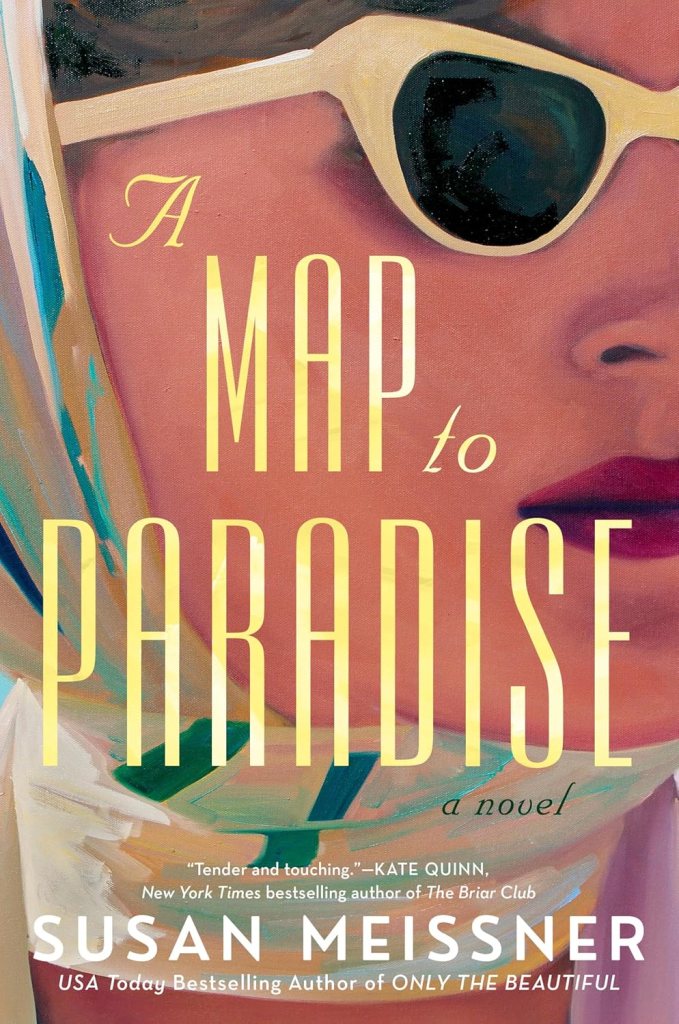
Book Review: A Map to Paradise by Susan Meissner

Amazon Affiliate Link Used helps to support this blog.

Publisher ‏ : ‎ Berkley (March 18, 2025)

Language ‏ : ‎ English

Hardcover ‏ : ‎ 352 pages

ISBN-10 ‏ : ‎ 0593332865

ISBN-13 ‏ : ‎ 978-0593332863


Susan Meissner’s new book explores secrets, friendship bonds, and the consequences of our choices all while whisking readers off to the 1950s in Southern California. It was a time when women were still limited in their choices to make a living, a time when the fear of communism was spreading, and a time when people still knew their neighbors no matter how odd or reclusive they may have been.

We meet Melanie Cole, a budding movie star who is blacklisted due to suspected communist ties, her housekeeper Eva who fled war-torn Europe, and next door neighbor June who lives with her reclusive screenwriter brother-in-law. They are all afraid of something and need each other to escape their circumstances.

This book was at the same time classic Susan Meissner (a story of hope, a story where I learned something from history, a story where her use of descriptive language paints an unforgettable story in my mind) and also a departure for this novelist. I believe this is the first of her books to use swearing, so heads up if that bothers you. The story unfolded differently too. The first half unfolded very slowly for me. There was lots of backstory and not much happening. But then in the second half things are set in motion and the emotions felt real and heart wrenching. What would you change in your past and how would that have changed the present if at all? That’s a question the three friends contemplate and in the end come up with answers. I’m glad I read this even though it isn’t my favorite Meissner novel.


Reviewed by Cindy Thomson. I received a free advanced copy from the publisher and my review is solely my own.

A Chat with Charlotte Thatcher from A Heart’s Charade by Jill Ann Mai

Welcome Charlotte. Tell us a little about yourself. Where and when are you from?

Well, to start, I was born and raised on a farm in Falmouth, Massachusetts. But I’m told my home has long since changed from my timeline in 1776. I believe it’s now a part of Portland, Maine if I’m correct.

How would you describe your family life?

My father is a surveyor in the colonies and owns a family farm where I grew up. Unfortunately, my mother died last year after the first year of the war. With two older siblings and two younger, I suppose I would be considered the middle child. However, I’m hardly the peacemaker of the family. In fact, I tend to bring on more conflict than any of my other siblings. Thankfully, I have an aunt who is not only a Godsend when it comes to taking care of my family and the challenges the war has brought on but has also served as an encouragement to me.

You’re from the colonies, but your story takes place in France. Am I missing something?

No, you’re correct. My older sister’s story takes place more in the colonies, but mine takes a different turn. I’ve been traveling with my sister, Abigail, where we ended up in Paris, France. The city was a stop on our way to London, but I’ve received urgent news from home that has detained me here until I can change things in hopes of bettering my family’s current dilemma.

How do you feel about those challenges you’re currently facing?

I’m not a woman who minds a good challenge or one to give in easily when the matter becomes difficult. Nevertheless, I know people are counting on me to be successful and that creates a lot pressure, especially when it’s not just my own life effected.

Is there anything or anyone you fear while you’re trying to accomplish your goals in Paris?

Yes, actually. Dying before really living my life.

Tell us something about Nicholas. How did you two meet?

You mean that captain of the Royal Navy under King George III? When I first met him, he was a lieutenant and fired cannons upon my town during the onset of the war last year in my sister’s story. Truly, the man is annoyingly upright in every way and follows orders to the exact degree. But since our first run-in, we’ve had plenty of opportunity together, some good, some not. And if you were worried on my part about my town’s destruction, don’t be. I’ve been able to get even in my own way.

Since we’re on the subject of Nicholas, what is your idea of a perfect date?

Let’s just say it occurs at the Seine River in Paris and you wouldn’t believe what happens even if I told you.

Thank you, Charlotte. Before we end our interview, I have one more question for you. If you had one last chance to say something to someone important, what would it be? 

(swallow) 

I’d tell my mother I miss her dearly and I’m so sorry for what I did.


About A Heart’s Charade

She’d left home to escape the war, only to find herself having to face her past again.

It’s 1776. There might be a war going on back home in the colonies, but Charlotte Thatcher is perfectly fine to stay out of it. While touring Paris, France her aunt sends news from home that leaves little choice but to seek out a French noble’s help or stand by while the war ruins her family. Driven by her aunt’s plea and a chance to fully appreciate Paris’ charm, she grabs at the opportunity. But will she be able to secure a partnership with the very man she has outrightly offended?

Captain Nicholas J. Edwards was born to serve the Royal Navy, at least that’s what his father would say. With a perfect reputation and expectations he’s always managed to live up to, Nicholas has been assigned a secret mission in Paris by the king of England. But when his mission in the French city turns out to be a failure, will there be more to his consequences than just his tarnished record? And what happens when the woman whose been a thorn in his side ends up becoming a rose?


About Jill Ann Mai

As an ongoing student of both literature and the Word of God, it is Jill’s privilege to write fiction set in the past, that she prays, points her readers to the hope found in Christ. Apart from writing, Jill spends most of her time with her amazing husband and two daughters who are full of life in Paducah, KY. She enjoys spending time with her family, traveling, and having a good conversation over an equally good cup of coffee. A Heart’s Charade is the second book she’s authored behind Love Beyond the Ashes.

Connect with Jill at

Website

Facebook

Monthly Newsletter

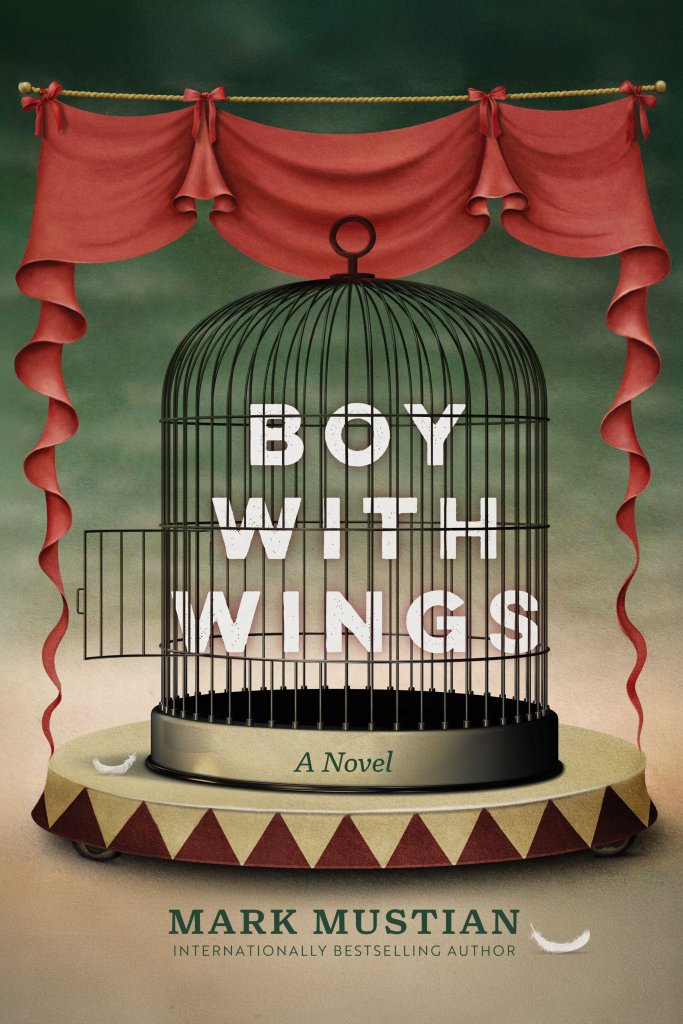
Meet Johnny Cruel from Mark Mustain’s Boy With Wings

Affiliate link used helps to support this blog.

What does it mean to be different?

Johnny Cruel is born with strange appendages on his back, frightening his neighbors and leaving him struggling to find a home. He ends up in a “freak show” traveling the 1930s South, where he bares his back to onlookers who come to gape and fawn. Is he a horror or an angel? Should he hide himself to live his life?

Johnny’s travails in the Depression-era U.S. shine a spotlight on the era, where traveling shows provided entertainment and the odd could bring a thrill to grueling lives. Ideal for fans of Water for Elephants and Weyward, Boy With Wings brings the sideshow performer’s plight to life, surrounded by menace but also adulation, fraud, love and an undeniable magic.

Boy With Wings details Johnny’s life from a small child to a young adult. The following is an interview from his teen years, when he’s the star of the “Alexander’s Traveling Oddities” show that patrons pay extra to see.      

Johnny, what was it like when you first appeared on the show?

I was scared. I didn’t know what it would be like, or even what I was supposed to do. They told me—Tot and Sheila—to just go out there and let them look, but I didn’t want to do it. They made me wear this cape-like thing, and there were all these people staring from behind a rope. But when I took off the cape and showed them, well, it was okay.

Do you like it now, being the star?

I guess. I’ve gotten used to it, and in a way, I suppose I like it some. I listen more to the crowd now, to what they’re saying and their other reactions. People faint sometimes. I get heckled now and then. I sign photos of myself after the shows, which can get a bit tiresome. And I feel bad in some ways because others here work so hard, performing multiple times a day, while I just go out and show the patrons my back. I wish I could sing or dance or do something more, but I haven’t come up with anything yet to add to my act.

What are the other acts like?

Oh, they’re really great! We have Zorat the sword-swallower who also breathes fire—he’s one of my favorites. There’s Sheila the tattooed lady, and Boris who throws knives, and Alfred who has this wooden dummy named Cletus who talks all on his own. There are others more like me—the true freaks, they call us: Otto, who’s a pinhead, Kenneth the Dog-Faced Man, and Tot, the tiny lady who runs the show. There are also these minstrel singers, who have voices that are amazing! We had girls who danced, too, but they had to leave.

What was your life like before the show?

I’d rather not talk about that.

What are the patrons like at your shows?

They’re mostly men: farmers and workers. Sometime women, and occasionally children, too. I see some of the men drinking from bottles—that’s hooch, or so Winifred tells me. Tot made the decision to allow Negros into the shows, and that has made some people mad.

Who is Winifred?

She’s this girl, my friend. She’s the only other kid on the show, though she’s not a performer. She’s Tot’s daughter. She’s. . .  Well, I guess she’s my girlfriend.

Are you religious?

Sure. I study with Zorat—his real name is Robert. We read the Bible, and he tells me of things that he’s learned. I don’t understand lots of it. I wish I could know more.

What do you think the future holds?

I’m not sure. I saw someone from my past recently, and it brought back this big, dark cloud. My mother is dead, but I’d like to find my father, or at least I think that’s what I want. Winifred and I have that in common—she’s looking for her father, too. Who knows what could be out there for us? I’d like to have a regular job, a regular life, but for now I’m okay being on the show. We’re like a big family, you know? Or at least this is the family I’ve got.

Are they really wings?

I think so. I don’t know. I have to turn on my side to sleep.   


[©Cyndi Chambers Sports / 2024]

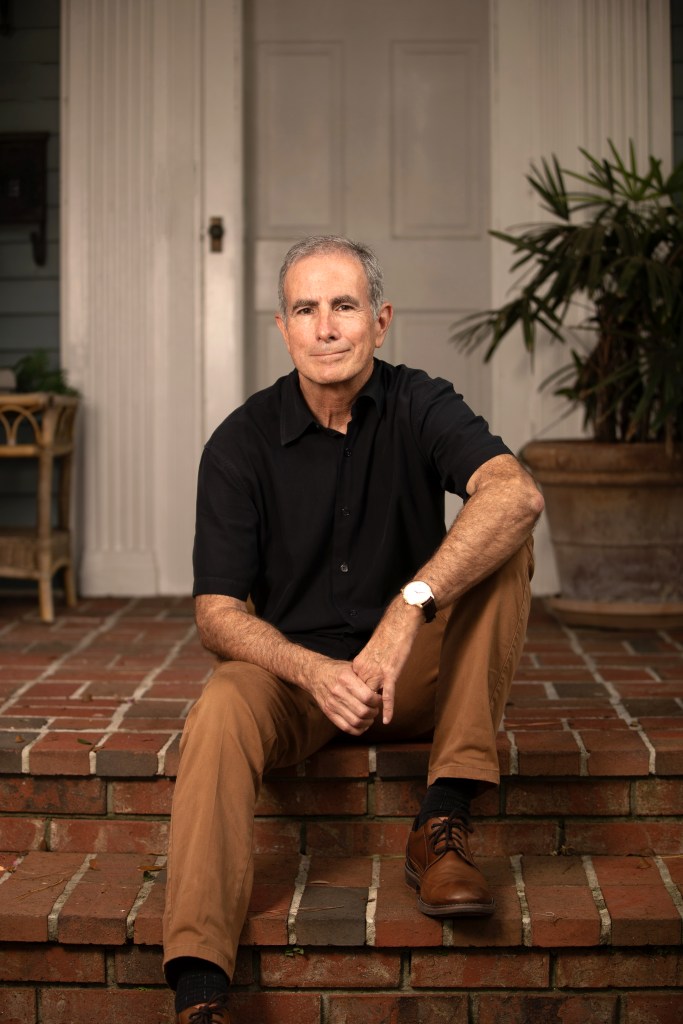
MARK MUSTIAN is the author of the novels “The Return” and “The Gendarme,” the latter an international bestseller that has been published in eleven languages. He was a finalist for the Dayton International Literary Peace Prize, shortlisted for the Saroyan International Award for Writing, and the winner of the Florida Gold Book Award for fiction. He is the founder and president of the Word of South Festival of Literature and Music in Tallahassee, Florida, now in its tenth year. A former elected official and an attorney, he lives in Florida and Michigan with his wife and elderly dog. Learn more at: www.markmustian.com

Follow Mark Mustian on social media:

Facebook: @MarkMustianAuthor | Twitter: @MarkMustian