
Meet Sarah Mendez from The Tudor Queens’ Midwife by Brigitte Barnard

Affiliate link helps support this blog.

Interviewer: Mistress Sarah, you have served Queen Katherine for many years in the birthing
chamber. What have you observed about her strength as a mother?


Sarah: Her Majesty is a woman of unwavering fortitude. Though sorrow has visited her more
times than I dare count, she meets each trial with the resolve of a true queen. I have seen
her cradle a lifeless babe, pressing her lips to its cooling brow, and yet by dawn, she stands
before her ladies, her grief concealed beneath a mantle of dignity. She does not weep where
others may see—her sorrow is carried in her prayers, in the long hours she spends upon her
knees. If strength is measured by endurance, then there is no woman in England, nay, in https://amzn.to/41mTMQIChristendom, stronger than she.

Interviewer: Many whisper of the King’s desire for a son. How does the Queen bear the
weight of such expectations?
Sarah: A queen’s duty is to provide heirs, yet a woman’s body does not always yield to duty.
Her Majesty has done all that is required of her—she has fasted, she has sought the most learned physicians, she has entrusted herself to God’s mercy. I have known many women in my profession who crumble beneath such burdens, yet she does not. She holds to her faith,
to the conviction that she is the true and rightful wife of the King, and that in the end, justice
will prevail. But I would be lying if I said I do not see the toll it takes. The sleepless nights,
the silent prayers murmured when she believes herself alone… Such a burden is not easily

borne.

Interviewer: You are well-spoken for a midwife, Mistress Sarah. Where did you come by
such an education?


Sarah: I was fortunate in my youth. My father believed that a sharp mind was as valuable as
a skilled hand, and though many deem it unnecessary for a woman to read more than a
psalter, he insisted I be taught beyond such limits. I learned Latin, some Greek, and the art
of numbers, but it is in my profession that my knowledge has served me best. The study of
the body is a lifelong pursuit, and I take no greater pride than in aiding women in their hour
of need. Books, however, can only teach so much—true wisdom comes from years at the
birthing bed, from knowing when to act and when to pray.
(She avoids mentioning that her father was a Jewish scholar, that her first letters were not in
Latin but Hebrew. To reveal such a truth would be dangerous, and she is careful with her words.)

Interviewer: The Queen is deeply devout. Have you ever spoken with her about matters of
faith?


Sarah: Her Majesty’s faith is the foundation upon which she stands. It guides her every
thought, every action. She speaks of it often, and I listen with due reverence. A midwife hears many things—prayers whispered in labor, confessions spoken between cries of pain. Faith is a great comfort in the birthing chamber, for it is there that life and death stand side by side. I do not question the Queen’s devotion, nor do I question that faith gives strength where the body falters.
(She does not speak of her own faith. She does not tell the interviewer that when she prays,
it is not to the saints but to the Almighty, that when she fasts, it is not for Lent but for Yom Kippur. Such truths must remain hidden.)

Interviewer: The court is a place of intrigue. Have you ever feared for your safety?


Sarah: Fear is the shadow that walks beside all who serve the great and powerful. A midwife
is a keeper of secrets—she knows who has conceived, who has lost a child, who seeks
remedies best left unspoken. I tread carefully, as all must do. But it is not only courtly
whispers that give me pause. A misplaced word, a careless slip, and a life can be undone. I
take great care to be what I am expected to be—no more, no less. A woman in my position
must always remember that there are ears everywhere, and not all ears are kind


Brigitte Barnard is an amateur historian and home birth midwife whose deep passion for history and expertise in maternal care bring exceptional authenticity to her storytelling. A mother of four, she also breeds Cavalier King Charles Spaniels. Currently, she is working on her next book—a nonfiction exploration of dynastic childbirth in the Tudor court—for one of the UK’s leading publishers.


Introducing Dana Foster from Chasing the Blue Boat by Connie Kallback

Affiliate link used helps to support this blog.

Today we’re chatting with Dana Foster in her favorite spot, the library, in the sprawling town called Fenton, nestled in the foothills south of the Adirondacks in New York. She is in fourth grade as she reveals the beginning of her family’s story from 1970-1974.

Nice to meet you, Dana. Thank you for talking to us in this beautiful Fenton library. We understand you live nearby.

Our house is a block down the street from the side entrance. It’s the smallest in a neighborhood of bigger, two-story houses. But Mom has room to make her pottery there. Her kiln is in the basement. She sells them at the arts and crafts shops in town that draw people from out of town. Then they can enjoy lunch or dessert at any of the quaint restaurants or tea houses. There’s also a playhouse and historic places to tour.

So, your mom is a potter. What does your dad do?

He’s the manager of a cotton mill in town. People like to go to its outlet store to buy seconds, those flawed products you can still use or wear. The tanning mills have them in leather, too.  

It sounds like a town with a variety of attractions. What do you especially like about living here?

Fenton is a safe place for kids to roam free and do what they want. I used to follow my older brother, Luke, everywhere, even if he decided to do something stupid. Like one time, we crept around the outside ledge of this library. We held our arms out against the building and slid along sideways. Almost made me dizzy to look down. We made it past the first corner to the front of the building before anyone saw us. That turned us back quick!  We ran home in a second. But I did it. I’m brave! I proved it to my brother.

Why did you feel you had to prove that?

I was afraid Luke wouldn’t include me in his adventures if I didn’t. But I wanted to prove it to myself, too. I kept trying. Didn’t always work, though.

What’s an example of something that didn’t work?

I watched him cartwheel across the lawn like a clown. I tried but never got the hang of it. When he coached me to make my legs straight by imagining them as the hands on a clock, it didn’t help. I was afraid of falling. Can you think what it took for me to step up on the library ledge?

It sounds as if you and Luke are different in many ways.

Oh, definitely. He never worried about getting in trouble. On a hot day, he pushed me into the fishpond, right here on the other side of the library grounds, and fell in after me to make it look like an accident. I remember how cool the water felt. I wanted to float around, but then Luke told me the groundskeeper warned him the day before to stay away from the pond! 

You didn’t mention Luke at the beginning when you talked about your parents. Why is that?

A terrible thing happened…last summer before fourth grade. (A pause) I just can’t talk about it.

What about your parents? Can they talk about it?

Instead of being sad, Dad is angry. He’s still mad at Mom for letting Luke go when he was supposed to mow the lawn. Luke promised to do it the next day, and he would have. He always did his chores. Dad’s even mad at God for letting it happen. I’ve never heard my parents quarrel until now. So, you can guess how it is at our house.

We’re sorry to hear that.

It’s hard to believe Luke’s not here. I know he’s in heaven as Mom says, but I miss him every day. I thought those summer days would never end. I keep praying for a chance to talk to him one more time or visit him up there. I wonder if he’s growing his hair long like Jesus.

How do you fill your time without Luke?

Yesterday I wandered into his empty room and slipped under the covers in his bed. But the sheets smelled of laundry detergent and fresh air. Not like Luke. I sat on the edge of the bed, staring at his dresser and began to think about peeking into the drawers.

Guess what I found? Luke’s blue sailboat! He sailed it by the street curb after a rainstorm. It looked like the real thing with its mast straight up as it ran with the current. We couldn’t keep up. In the flash of a second, the water swept it down the storm drain! It was gone. And I mean, gone. I saw it happen with my own eyes. I can’t imagine how he rescued it. Anyway, I have it even though it’s beat up pretty bad. 

Can you describe how it looks?

All the gouges, broken mast, and no sails, make it hard to recognize. Mom agreed Luke would want me to have it for safe keeping. It’s all I have left of him.

Do you have any plans for it?

Not yet. I don’t want to let it get away again. It’s very special. Mom says no matter what, I have to trust God with whatever happens, so that’s what I’ll do.

Thank you for meeting with us, Dana. Our best to you and your boat. Who knows? Maybe it will play a role in a future adventure.


More about Chasing the Blue Boat: A novel of longing

Nine-year-old Dana Foster follows her older brother, Luke, wherever he goes. From climbing on ledges, jumping in a fish pond, and causing general mischief, Luke is fearless. But when tragedy strikes the Foster family, everything that Dana has ever known is suddenly turned upside down. When the storms of life come, will the Foster family stand firm in their faith? Or will they shatter under the pressure? Suddenly, a blue boat that Dana and Luke received from their uncle leads Dana on a journey of faith, hope, and love that she will not soon forget.
In this coming-of-age story, discover the truths of God’s grace in suffering, the blessing of forgiveness, and how to hold on to your faith when all hope seems lost.


About Connie

Connie Kallback grew up on the plains of Cheyenne, Wyoming, attended the University of Wyoming, and graduated from the University of Washington in Seattle. She transitioned from English teacher to publishing in New Jersey with CCMI/McGraw-Hill, Prentice Hall, and CPP, Inc, in positions from writer to acquisitions and managing editor. Her early writing, penned while teaching, appeared in magazines, newspapers and literary journals. No longer wearing the hats of Mary Poppins or Sherlock Holmes, necessities of raising six children in two separate families, she writes in South Carolina where she lives with her husband. 

Find Connie here:

Website: www.chasingtheblueboat.com

Published works: https://www.chasingtheblueboat.com/publications.html

Facebook: https://www.facebook.com/connie.kallback

Instagram: Connie Kallback

Find her book on Ambassador InternationalAmazonBarnes and Noble, or wherever books are sold online.

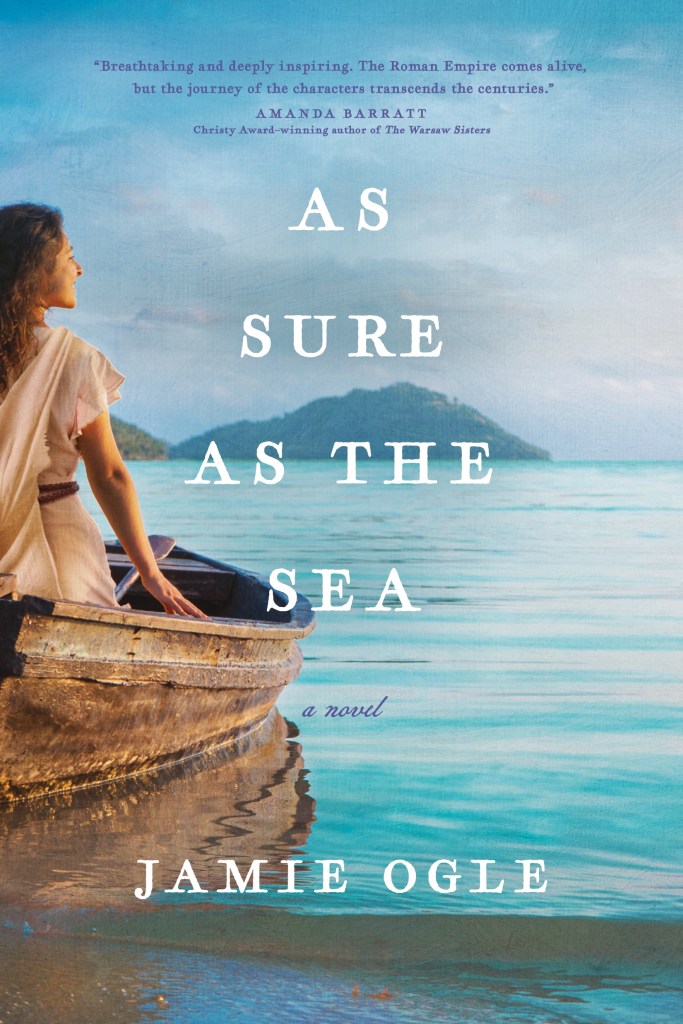
An Interview with Demetria from As Sure as the Sea by Jamie Ogle

Thank you for meeting with us at Novel PASTimes, Demitria. 

Demitria: You can call me Demi, if you like. Will this take long? I need to be out on my boat. The light’s good for diving today and Mersad won’t like it if I’m dawdling. Another dive team is trying to take over my boat, and I can’t afford to waste any diving opportunities now that my brother, Theseus, is injured. 

Don’t worry, we’ll make this quick.  I heard about your brother’s accident. How is he doing?

Demi: You know Theseus. Whenever his nose runs, he’s certain he’s about to die. Although, this is a little more serious than a dripping nose. I’m glad Pastor Nikolas arrived to help when he did. Some might call that a miracle. I know it felt like one at the time, though I certainly don’t deserve any of those after what I’ve done. Perhaps it was a miracle for Nydia. She’s in love with him, you know. 

            With Pastor Nikolas?

Demi:  No. Nydia is in love with Theseus, though her grandmother, Beatrix, is set on finding Pastor Nikolas a wife. Poor man. No singles in Myra can withstand her matchmaking efforts for long. 

            Do you have someone special in your life?

Demi: Not . . . not anymore. Not like that anyway. I was betrothed once to a man named Alexander. He was a lot like Nikolas actually. Handsome, charismatic, passionate about his faith. He’s dead now. Men like that don’t live long anymore. Not since Emperor Diocletian passed his anti-Christian edicts. Things have only gotten worse under the tetrarchy and Emperor Galerius. No one in the empire is allowed to buy or sell anything unless they first offer sacrifices to the emperor and the gods of Rome. It is . . . a dangerous time to live.  

How do you survive in times like this?

Demi: There are a few of us who find work here and there, and some employers and merchants who look the other way so long as the transaction benefits them. I try to provide mussels and clams for my friends, but my job is to harvest red coral and pearl oysters for Mersad. If I don’t make my quota, I’ll lose my boat. And I can’t bear to lose the boat. Aside from Theseus, my boat is the last piece of my family that I have, and it is the lifeline for our church.

Oh? How so?

Demi: Theseus and I take it upriver after dark to trade for supplies with Christians in the farming districts upriver. Without the boat, we would lose access to food we cannot get in the city, and all those upriver would be cut off from trade goods and salt. Since Theseus has been injured, Nikolas and I have begun making the trips upriver. 

That sounds dangerous.

Demi:  It is. In more ways than you can imagine. For one thing, Nikolas and I get along well. He’s actually very easy to talk to—and you wouldn’t think that would be a bad thing, but if Beatrix found out, she’d be matchmaking us next, and we could never be anything more than friends. 

Why not?

Demi: Because if Nikolas really knew me, knew what I’ve done, everything I hold dear would be stripped away, and I . . . I can’t bear to lose anything else I love. And, the other danger is . . . well, Nikolas doesn’t have the best history with boats. He sank his when he came to Myra, and I’m a little fearful he might sink mine too. We’ve had some close calls. But at least he hasn’t drowned the supplies like he did his entire inheritance. All that gold—right to the bottom of the Mediterranean Sea—can you imagine? 

That gold would have been very helpful, considering what you told us about the state of things in the empire.

Demi: That’s why we’re trying to recover it—Nikolas, Theseus, and I. It’s tricky though. Theseus is still recovering and can’t dive yet, and Nikolas . . . well, at least he can swim. But if I’m searching for Nikolas’s gold, I can’t dive for coral, and if I don’t harvest enough coral, I’ll lose the boat, and then . . . I just have to find that gold. And soon.

Well, we won’t keep you from your boat any longer. Thank you for chatting with us today, Demi. I hope you find everything you’re looking for.

Demi: I have a feeling I will. But it might not be in the ways I expect. 

About the Author:

A person with long gray hair smiling

Description automatically generatedJamie Ogle is a pre-dawn writer, homeschool mom by day, and a reader by night. Inspired by her fascination with the storied history of faith, she writes historical fiction infused with hope, adventure, and courageous rebels. Her most recent title, As Sure as the Sea, releases from Tyndale Fiction in February 2025. A Minnesota native, she now lives in Iowa with her husband and their three children, and she can usually be found gardening, beekeeping, and tromping through the woods. For more information about Jamie, go to her website: www.jamieogle.com. (Author photo by Jodi Sheller, Copyright © 2022. All Rights Reserved.)
Additional Links:

Tyndale Media Center: As Sure as the Sea

Tyndale Media Center Author Page: Jamie Ogle

Buy Link

Author’s Links: Website | Facebook | Instagram | BookBub | Goodreads | Amazon

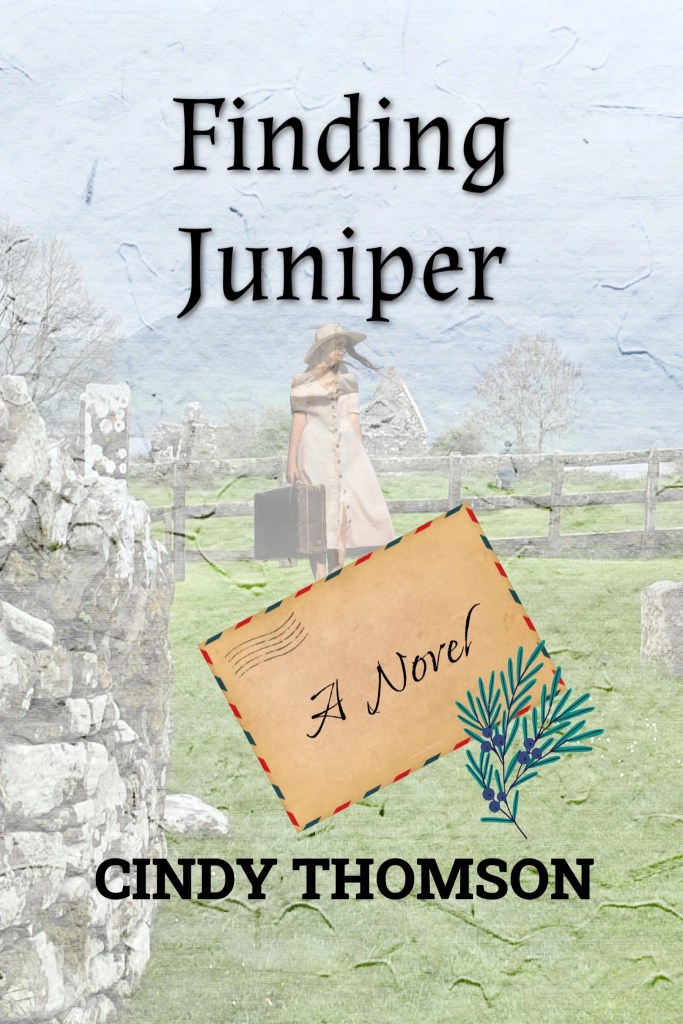
Book Review: Finding Juniper by Cindy Thomson

It’s been a long time since a book brought me to tears, evoking a depth of emotion I rarely experience from reading a novel. Finding Juniper contains that kind of depth.

With the burden of PTSD from WWI and his friend’s rosary in his pocket, Patrick Doyle is summoned to once again confront his past by a cryptic letter that appears to have been written by a child—the long-lost child he’d never known and assumed dead—his daughter, Juniper. 

Caught between two sides of a civil war, Patrick had emigrated to the United States and after much trial, began to rebuild his world with a new family. Shortly after experiencing the loss of his wife, his American daughter, Mardell, beseeches him to travel to his homeland with her and find out what happened to her half-sister, Juniper. Patrick reluctantly embarks on a journey across the pond which stirs up both good and bad memories. 

Author Thomson skillfully weaves Patrick’s reminiscences from the war and life in Ireland alongside Juniper’s journey from life in institutions to that of an independent young woman with questions about the father she never knew and the mother she believes is dead. Following a timeline from 1920 to post WWII, readers will hope and cheer for the characters’ paths to finally meet and may even shed a tear along the way. 

With a balance of Irish melancholy and humor, the author paints a lovely picture of the countryside in Northern Ireland. She shows the culture of superstitious villagers and the kindness of a few towards Juniper and other outsiders through the struggles of post WWII deprivation. 

Finding Juniper is a story of healing family rifts and truth overcoming lies. The truth of the past is brought to light for both Patrick and Juniper in unexpected ways, but just as in real life, the journey there is complicated. 

Fans of historical Christian fiction with a non-preachy message of hope and forgiveness will love this story. Five stars! Highly recommend!

I received a free copy of this book from the author in exchange for an honest review. All opinions are my own.

Review posted by Kathleen Rouser. Find her at: kathleenrouser.com