
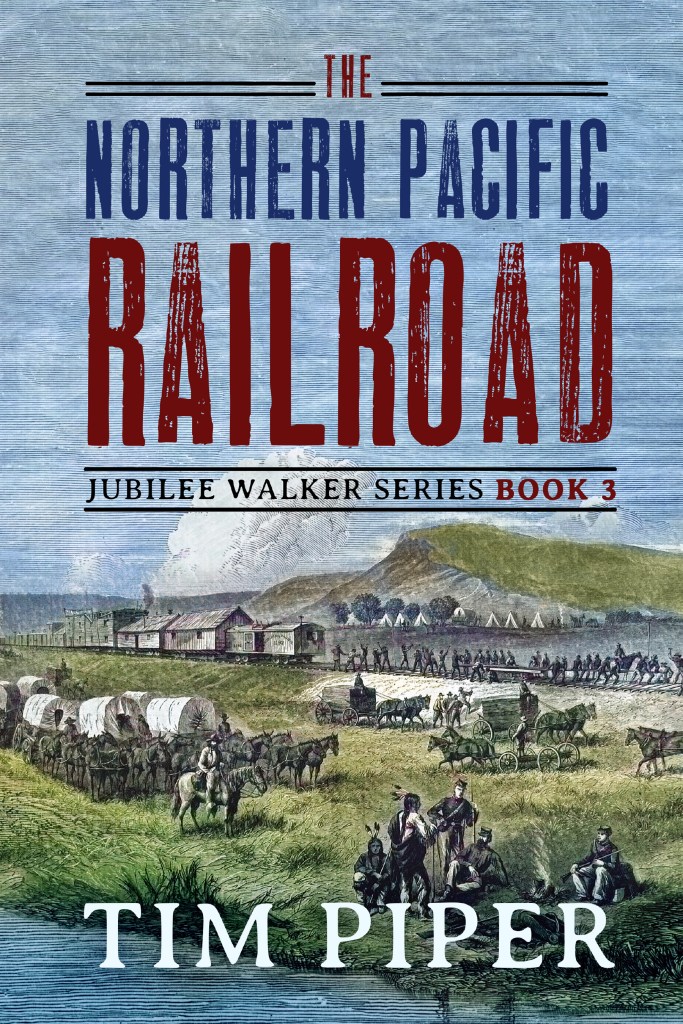
Welcome to Novel PASTimes! We are pleased you stopped by today.
Tell us a bit about yourself.
Thank you for inviting me. My name is Jay Cooke, and I was born in 1821, in Sandusky, Ohio, the son of a lawyer who served in Congress. As a young man, I entered the banking business as a clerk and found I had a talent for it. Shortly before the Civil War, I opened my own investment firm, and I was instrumental in selling Treasury notes to the public to finance the Union war effort. Currently, I am heavily committed—personally and through my investment firm—to financing and constructing the Northern Pacific Railroad, a second transcontinental railroad which will connect the Great Lakes at Duluth, Minnesota, with the Pacific Ocean at Puget Sound.
How did you become acquainted with Jubilee Walker?
Nathaniel Langford, a banker and businessman from Helena, Montana Territory, approached me about sponsoring an expedition to explore the uncharted area of the Yellowstone River during the summer of 1870. He believed, and rightly so, that if the expedition proved that the folktales about the region’s unique geography were true, many tourists would be attracted to the area, and they would be anxious to see my railroad completed to carry them there. One of the members of that Yellowstone expedition was Jubilee Walker. Mr. Langford spoke highly of his service and expertise.
When that expedition proved that the rumors about Yellowstone were, indeed, true, an official government survey was launched in the summer of 1871. Jubilee Walker was hired by General Sherman to guide the army engineering contingent sent on that survey.
Then in 1872, a bill was placed before Congress proposing that the Yellowstone region be designated as the nation’s first national park. Jubilee Walker came to Washington, DC, to help lobby for the passage of that bill. I heard great things about young Mr. Walker’s performance on these expeditions, and I thought he might be of further assistance to me. While he was in Washington, I arranged a meeting with my personal secretary, who invited him to come meet me at my home in Philadelphia.
Mr. Walker graciously accepted my invitation, and, soon after the passage of the park bill, he came to Ogantz, my estate in Philadelphia, for our first meeting.
What is the nature of your business agreement with Mr. Walker?
There are many challenges we face in the construction of the railroad, primary among them funding the effort through to completion. The expense is too great for any single investor, so the project must be financed through the sale of bonds to the public. The public’s willingness to buy those bonds is heavily dependent on the faith they have that our efforts to build the railroad will succeed, and that their investment will bring the returns promised.
The faith those investors have in our success is based on information they read in the news and the credibility of those delivering the message. Though I enjoy a generally favorable public reputation, it is natural for people to look for recommendations from those with less personal interest in the railroad than myself.
This is the role that Jubilee Walker can fulfill for me—offering his personal opinion of the soundness of the idea to build the Northern Pacific Railroad and expressing his confidence that the project can be completed successfully.
I have agreed to make a substantial investment in Mr. Walker’s adventure tourism business upon successful completion of a railroad survey to finalize the railroad’s route. In return, Mr. Walker has agreed to join the survey as my personal representative. As such, he will publicly promote and support the railroad.
What is the greatest obstacle to the completion of the railroad?
The railroad’s exact route has yet to be established across the six hundred miles between Bismarck, Dakota Territory, and Bozeman, Montana Territory. Two surveys are planned for the summer of 1872: One crew will start in Bismarck and proceed west. The other will start in Bozeman and work their way east to meet the westbound crew. Mr. Walker will join the eastbound crew departing from Bozeman.
Unfortunately, the railroad’s route must pass through the traditional hunting grounds of the Sioux tribes. Their leaders have expressed their displeasure with this plan and threatened to retaliate. The army will protect the survey crews, and hopefully no serious incidents will occur. A long-term resolution must be reached, but negotiating with the tribes is the government’s business, not mine.
My concern is that public opinion may turn negative regarding the safety of traveling on a railroad which runs through hostile territory. If the public loses faith that the route can be made safe, they will no longer invest in the railroad’s completion, and the whole enterprise will fail. I am confident that, with Jubilee Walker championing our cause, we will enjoy widespread public support for the project through its completion.
What consequences do you foresee if the railroad survey fails?
America will lose the opportunity to have a critical lifeline tying her coasts together, and our Canadian neighbors will likely capitalize on our failure.
A substantial portion of my personal wealth and the wealth of my investment house are committed to this effort. If the railroad cannot be built to generate the revenue to retire the bonds and pay the investors’ returns, that will severely challenge my ability to meet my debt obligations.
Mr. Walker also has placed his reputation and a significant portion of his personal assets at risk, to ensure that he is committed to a positive outcome on our mutual behalf. And he will be putting his personal safety at risk by facing whatever dangers the survey crew may encounter.
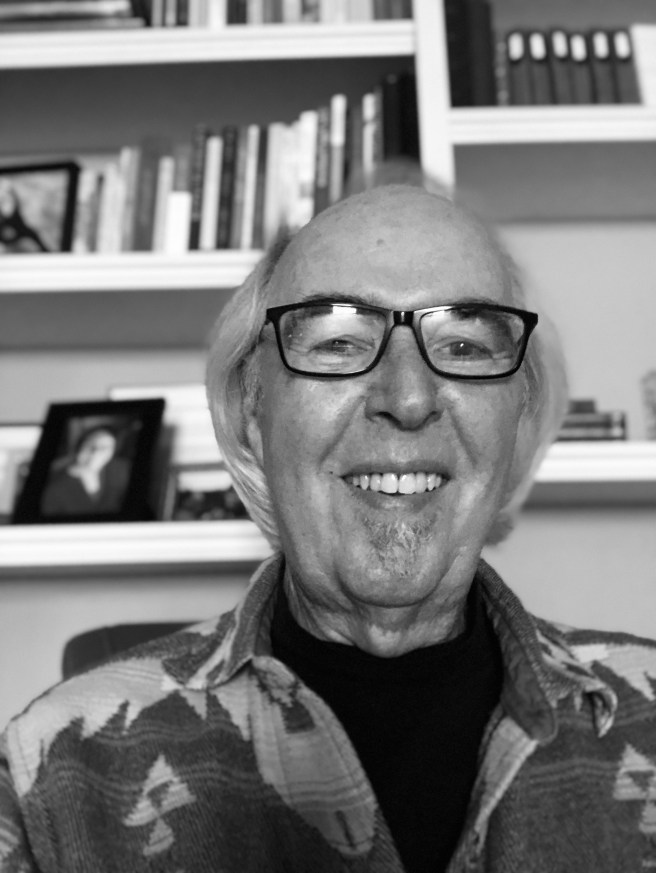
TIM PIPER is retired from a long career in Information Technology and has been a lifelong hobbyist musician. In his earlier days he was an avid hiker and backcountry camper, but his adventures these days are less strenuous and more comfortable. He began his education at Illinois State University as an English major, but life circumstances put him on a more pragmatic path, and he graduated with a BS in Business Admin, a degree he finds appropriately named. He lives in Bloomington, Illinois.
Learn more at www.timpiper-author.com or follow him on Facebook.
https://www.facebook.com/people/Tim-Piper-Author/61550582340267/?sk=about

 Novel PASTimes
So interesting! My 3x great aunt was married to Jay Cooke. He helped finance the Union side of the Civil War, and my 3x great grandfather Allen and his son were fighting on the Confederacy side. They were never out of communication; it must have caused the family so much angst. The Allens later moved back north. Additionally, my novel, A Wolff in the Family, tells the story of the maternal side of my family; my grandfather was a lifetime railroad man based in Utah, and the family’s life was centered around the railroad.
Francine Falk-Allen
LikeLike