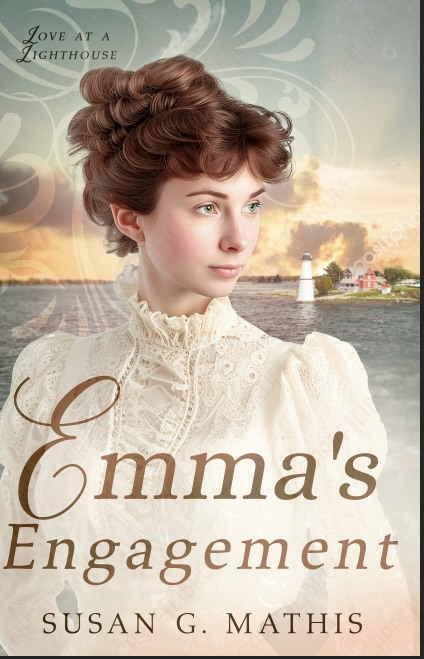
A Chat with Emma Diepolder from Emma’s Engagement by Susan G. Mathis

Welcome Emma Roe Diepolder. Why don’t you tell us a little about yourself.

I grew up in Brockville, Canada, but have lived in 1000 Island Park for the past several years. Now that I’m married to the Rock Island lightkeeper, I live on that tiny island and am a stepmother to Ada. The isolation can be challenging, but being a wife and stepmother and helping to keep people safe is very rewarding.

Tell me something about you that readers may find surprising?

I love the Thousand Islands and live along the St. Lawrence River’s main shipping channel. The 1,864 islands are shared almost equally between New York state and Ontario, Canada. It’s magical. Huge freighters pass by us and the tiny islands along the main channel and share the waterway with all kinds of boats including ships, kayaks, and canoes.

Tell us more about the Rock Island Lighthouse. 

Rock Island Lighthouse, located on Rock Island in the St. Lawrence River within New York’s Thousand Islands region, is a maritime landmark established in 1847 to guide ships through the bustling trade routes of the river. The stone lighthouse, built in 1882 to replace the original wooden structure, stands 50 feet tall and features a classic lantern room. Climbing the lighthouse’s spiral staircase offers stunning panoramic views of the river and surrounding islands. This picturesque site, steeped in maritime heritage and natural beauty, is my home.

Who is this Michael I keep hearing about? 

My husband, Michael Diepolder, serves as the keeper of the Rock Island Lighthouse. Known for his dedication and meticulous care, Michael ensures that the lighthouse remains operational, guiding ships safely through the St. Lawrence River’s treacherous channels. Together we endure the isolation and challenges of lighthouse life, including harsh winters and long nights tending the light and fog bell. Michael’s commitment to his duties exemplifies the perseverance and resilience required of lighthouse keepers during this era. And I love him dearly.

And his daughter? Do you like her?

Ada is Michael’s 11-year-old daughter who lost her mother when she was seven. She attends boarding school in Rochester during the year but is with us during the summer and sometimes on holidays. At first, it was difficult. But now we are dear friends, and I miss her while she’s away. 

If you could leave readers with one message, what would it be? 

Trust in God and His plans for you. Hope for a better future. Hope for love. Hope for healing. God can heal a broken heart and help you forgive those who hurt you. He did that for me.

Here are a few fun, quick questions:  

What is your favorite hobby? Since I was a Millner, I love making hats and other accessories and find great joy in it. I was also a librarian, so I love to read.

Please describe yourself with three words. Creative, questioning, faithful.

What’s your most precious possession? My trunk of Millner goods and our substantial library.

Are you a glass-half-full or glass-half-empty kind of person?

Half full. I try to see the bright side of things, but sometimes it’s a challenge.

What is your biggest pet peeve?

People misunderstand me. They see me as a bookworm, but I’m much more than that.

What is your biggest secret?

I wasn’t sure I would make a good wife and even less sure that I would succeed as a stepmother.

What is your heart’s deepest desire? 

That’s easy. To love and be loved. 

What have you learned about yourself in the course of your story?  

I’ve learned to trust in God and His plans for me. God can heal a broken heart and has helped me forgive those who hurt me. 


About Susan:

Susan G Mathis is an international award-winning, multi-published author of stories set in the beautiful Thousand Islands, her childhood stomping ground in upstate NY. Susan has been published more than thirty times in full-length novels, novellas, and non-fiction books. She has thirteen in her fiction line including, The Fabric of Hope: An Irish Family Legacy, Christmas Charity, Katelyn’s Choice, Devyn’s Dilemma, Sara’s Surprise, Reagan’s Reward, Colleen’s Confession, Peyton’s Promise, Rachel’s ReunionMary’s Moment, A Summer at Thousand Island House, Libby’s Lighthouse, and Julia’s Joy, the second in her three-book lighthouse series. Her book awards include three Illumination Book Awards, four American Fiction Awards, three Indie Excellence Book Awards, five Literary Titan Book Awards, two Golden Scroll Awards, and a Selah Award. Susan is also a published author of two premarital books, two children’s picture books, stories in a dozen compilations, and hundreds of published articles. Susan makes her home in Northern Virginia and enjoys traveling around the world but returns each summer to enjoy the Thousand Islands. Visitwww.SusanGMathis.com/fiction for more. 

Where can people find you online?

Susan’s website: https://www.susangmathis.com/fiction-books

Buy links: Amazon | Barnes&Nobles | Wild Heart Books

Social media links: Website |Author Central |  Facebook | Twitter | Blog | InstagramGoodreads l Book BubPinterest | 

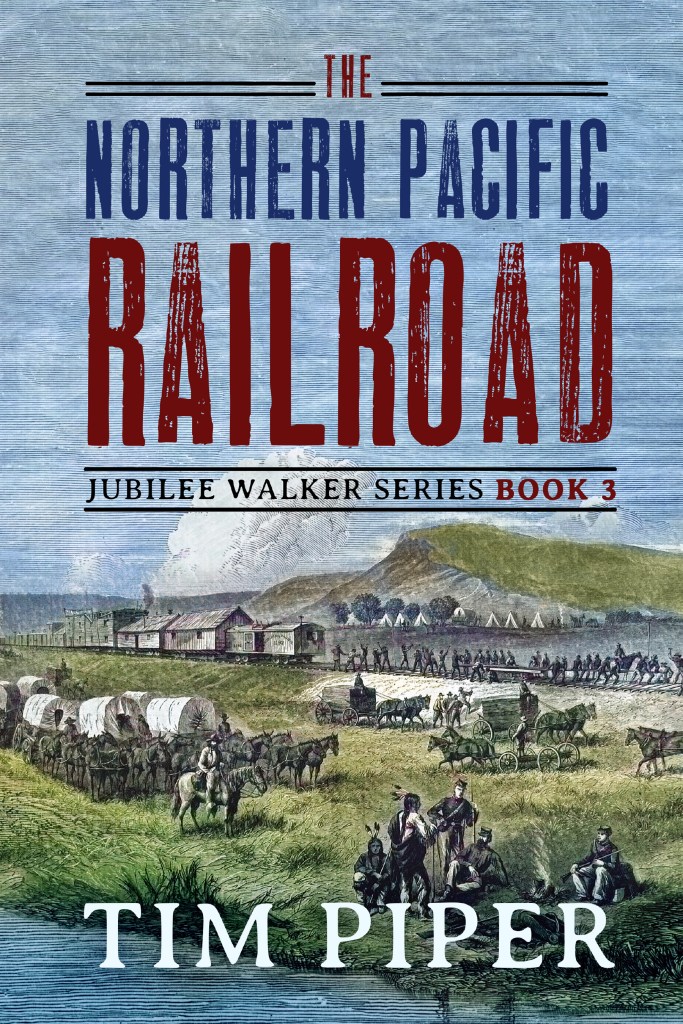
Meet Jay Cooke from Tim Piper’s The Northern Pacific Railroad

Welcome to Novel PASTimes! We are pleased you stopped by today.

Tell us a bit about yourself.

Thank you for inviting me. My name is Jay Cooke, and I was born in 1821, in Sandusky, Ohio, the son of a lawyer who served in Congress. As a young man, I entered the banking business as a clerk and found I had a talent for it. Shortly before the Civil War, I opened my own investment firm, and I was instrumental in selling Treasury notes to the public to finance the Union war effort. Currently, I am heavily committed—personally and through my investment firm—to financing and constructing the Northern Pacific Railroad, a second transcontinental railroad which will connect the Great Lakes at Duluth, Minnesota, with the Pacific Ocean at Puget Sound.

How did you become acquainted with Jubilee Walker?

Nathaniel Langford, a banker and businessman from Helena, Montana Territory, approached me about sponsoring an expedition to explore the uncharted area of the Yellowstone River during the summer of 1870. He believed, and rightly so, that if the expedition proved that the folktales about the region’s unique geography were true, many tourists would be attracted to the area, and they would be anxious to see my railroad completed to carry them there. One of the members of that Yellowstone expedition was Jubilee Walker. Mr. Langford spoke highly of his service and expertise.

When that expedition proved that the rumors about Yellowstone were, indeed, true, an official government survey was launched in the summer of 1871. Jubilee Walker was hired by General Sherman to guide the army engineering contingent sent on that survey.

Then in 1872, a bill was placed before Congress proposing that the Yellowstone region be designated as the nation’s first national park. Jubilee Walker came to Washington, DC, to help lobby for the passage of that bill. I heard great things about young Mr. Walker’s performance on these expeditions, and I thought he might be of further assistance to me. While he was in Washington, I arranged a meeting with my personal secretary, who invited him to come meet me at my home in Philadelphia. 

Mr. Walker graciously accepted my invitation, and, soon after the passage of the park bill, he came to Ogantz, my estate in Philadelphia, for our first meeting.

What is the nature of your business agreement with Mr. Walker?

There are many challenges we face in the construction of the railroad, primary among them funding the effort through to completion. The expense is too great for any single investor, so the project must be financed through the sale of bonds to the public. The public’s willingness to buy those bonds is heavily dependent on the faith they have that our efforts to build the railroad will succeed, and that their investment will bring the returns promised.

The faith those investors have in our success is based on information they read in the news and the credibility of those delivering the message. Though I enjoy a generally favorable public reputation, it is natural for people to look for recommendations from those with less personal interest in the railroad than myself.

This is the role that Jubilee Walker can fulfill for me—offering his personal opinion of the soundness of the idea to build the Northern Pacific Railroad and expressing his confidence that the project can be completed successfully.

I have agreed to make a substantial investment in Mr. Walker’s adventure tourism business upon successful completion of a railroad survey to finalize the railroad’s route. In return, Mr. Walker has agreed to join the survey as my personal representative. As such, he will publicly promote and support the railroad.

What is the greatest obstacle to the completion of the railroad?

The railroad’s exact route has yet to be established across the six hundred miles between Bismarck, Dakota Territory, and Bozeman, Montana Territory. Two surveys are planned for the summer of 1872: One crew will start in Bismarck and proceed west. The other will start in Bozeman and work their way east to meet the westbound crew. Mr. Walker will join the eastbound crew departing from Bozeman.

Unfortunately, the railroad’s route must pass through the traditional hunting grounds of the Sioux tribes. Their leaders have expressed their displeasure with this plan and threatened to retaliate. The army will protect the survey crews, and hopefully no serious incidents will occur. A long-term resolution must be reached, but negotiating with the tribes is the government’s business, not mine.

My concern is that public opinion may turn negative regarding the safety of traveling on a railroad which runs through hostile territory. If the public loses faith that the route can be made safe, they will no longer invest in the railroad’s completion, and the whole enterprise will fail. I am confident that, with Jubilee Walker championing our cause, we will enjoy widespread public support for the project through its completion.

What consequences do you foresee if the railroad survey fails?

America will lose the opportunity to have a critical lifeline tying her coasts together, and our Canadian neighbors will likely capitalize on our failure.

A substantial portion of my personal wealth and the wealth of my investment house are committed to this effort. If the railroad cannot be built to generate the revenue to retire the bonds and pay the investors’ returns, that will severely challenge my ability to meet my debt obligations.

Mr. Walker also has placed his reputation and a significant portion of his personal assets at risk, to ensure that he is committed to a positive outcome on our mutual behalf. And he will be putting his personal safety at risk by facing whatever dangers the survey crew may encounter.


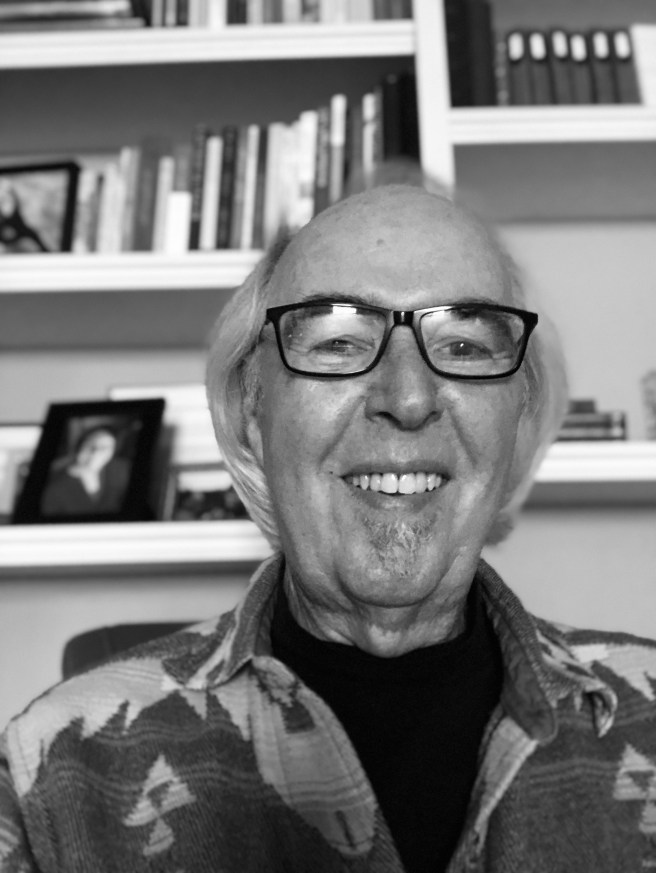
TIM PIPER is retired from a long career in Information Technology and has been a lifelong hobbyist musician. In his earlier days he was an avid hiker and backcountry camper, but his adventures these days are less strenuous and more comfortable. He began his education at Illinois State University as an English major, but life circumstances put him on a more pragmatic path, and he graduated with a BS in Business Admin, a degree he finds appropriately named. He lives in Bloomington, Illinois. 
Learn more at www.timpiper-author.com or follow him on Facebook.

https://timpiper-author.com/

https://www.facebook.com/people/Tim-Piper-Author/61550582340267/?sk=about

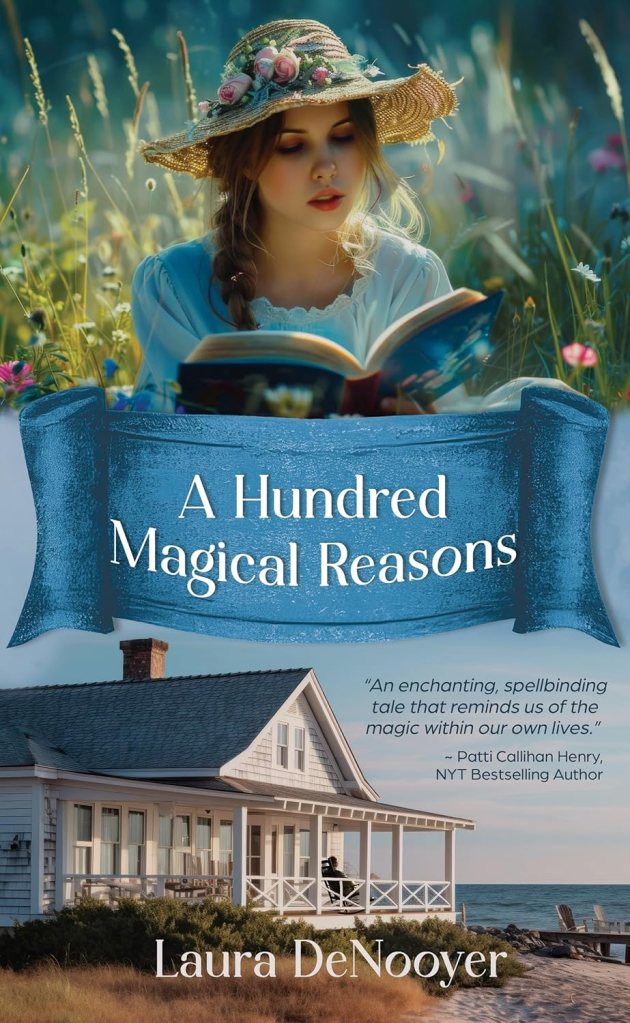
Meet Mrs. Charlotte Rose Gordon from A Hundred Magical Reasons by Laura DeNooyer

Most fairy tales have happy endings, but is it too late for this one? After all, Mrs. Charlotte Rose Gordon is eighty-eight. 

This disgruntled town recluse has grown weary of fighting the dragons of her past—including the desire to clear her husband’s name of a 1918 crime.

Dragons of a different kind pursue Carrie Kruisselbrink.

In 1980, in the summer of her private rebellion, Carrie defies parental expectations and pursues her café dream. While waiting for funding, she takes a job with Mrs. Gordon.

As Mrs. Gordon unfolds the story of her oppressive childhood and delightful friendship with The Wonderful Wizard of Oz author, L. Frank Baum, Carrie never expects to encounter her own fears and soul-searching.

In this modern-day fairy tale that weaves between 1980 and the early 1900s, Mr. Baum’s influence impacts each woman’s personal quests on a hero’s journey neither anticipates. Can Carrie and Mrs. Gordon find common ground in battling their respective dragons?

Welcome, Mrs. Gordon! I appreciate you letting me stop by your front porch  today for an interview. What a lovely garden you have!

Thank you. The dahlias are my favorites. My employee Carrie helps me with the watering. It’s part of her penance, you might say. 

Penance? For what?

At age eleven, she kicked her ball into my flower bed and smashed my tulips, then wrote up a contract vowing to never step foot in my yard again or she’d make it up to me as I deemed fit. Now it’s ten years later, and she broke that vow a month ago when she dropped by. I’m holding her to the contract, since I could use some help around here.

Wow, you drive a hard bargain. What do you need help with?

I hired her to be my scribe. I have to settle the record on—well, never mind. She’s recording my memoirs, for one thing. In return, I’m saving her from a summer of working in fast food.

No wonder. I heard you used to own and manage the Broderick Inn and Tearoom on the lake. 

For thirty-nine years. My mother established it in the late 1800s, so I grew up learning the business of food preparation and hospitality. I took over in 1916. 

Did you have any specialty menu items? 

In the 1950s and ’60s we served Munchkin Delights, Scraps’ Peach Bread Pudding, and Polychrome’s Dewdrop Mist Trifle. 

Munchkin Delights . . . is that connected to The Wizard of Oz? And what about the other two you mentioned?

All three are inspired by Oz books. Mr. L. Frank Baum wrote fourteen of them. Most folks know about The Wonderful Wizard of Oz, but It’s a shame the average person has no clue about the others he wrote. 

Not to mention the bakers at the Broderick Tearoom passing off their own version of blueberry muffins as Munchkin Delights. They don’t even have my original recipe.

Why do you know more than the average person about L. Frank Baum?

Because I met him when I was eight. He, his wife Maud, and their four sons visited our tearoom. Turns out they spent summers at Macatawa Resort near Holland, Michigan, not far from us. That’s eighty years ago, in the early 1900s. He even invited me to their cottage.

Really? What an amazing opportunity! What did you do there?

We had a grand time. His son Kenneth was just a year older than me. We all went boating, fishing, and swimming—all the regular lake activities. But Mr. Baum also planned wonderfully imaginative adventures for us right on his porch. 

He showed me how to run a printing press. We made dioramas. And he told stories, of course. Marvelous stories. Being with him was like indulging in chocolate fudge after months of cold porridge. 

But we did everything on the sly. My parents had no use for fiction, fantasy, or fairy tales. I was only allowed to read The New England PrimerThe Pilgrim’s Progress, and the Bible. They’d never approve of my spending time with someone like Mr. Baum. But thank goodness, my dear Aunt Sophie believed otherwise. She took me to the Baums’ place every year behind my parents’ backs.

Sounds like Mr. Baum was a huge influence on your life.

Yes, in so many ways. He gave me inspiration and courage to try many things I might not have done otherwise. I’m sharing all these memories with Carrie. 

By the way, she has restaurant plans of her own. She hopes to run a literary-themed cafe. But her parents expect her to use her college degree and teach elementary school. It’s such a quandary for her, living under their demands, criticism, and expectations when she has dreams of her own. 

She and I have a lot in common that way. I once had dreams myself until they were destroyed like a house in cyclone. I don’t want the same thing happening to Carrie.

I’m sure you have plenty of expertise and empathy to offer. So . . . you were married to Walter Gordon, the pharmacist. Wasn’t there some kind of . . . secret scandal at Gordon Apothecary? 

If you’ve heard about it, it’s no secret. The whole town knows. In fact, that’s part of why I hired Carrie. In 1918, my dear Walter was falsely accused of a crime, and I have to set the record straight. Once and for all. Folks wag their tongues even now, sixty years later. It’s a cloud that still hangs over my head. 

So go along now. I need to go water my dahlias. And watch where you step in my garden lest you find yourself indebted to me.


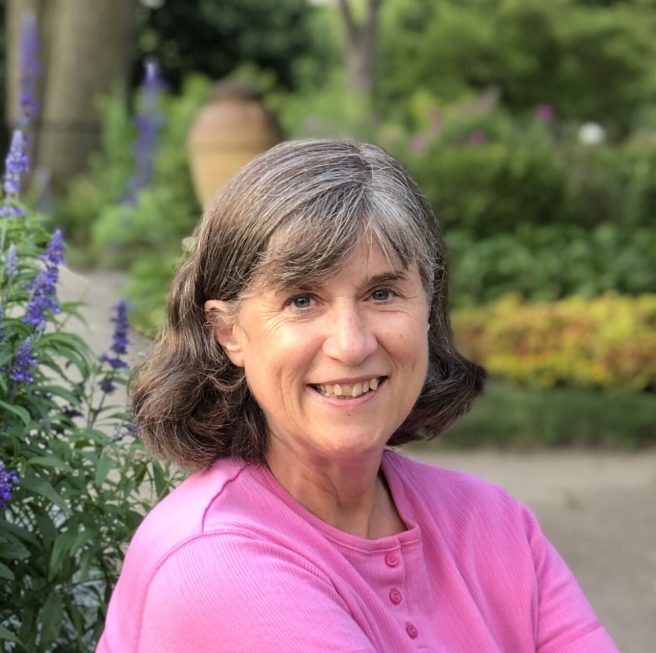
Laura DeNooyer thrives on creativity and encouraging it in others. A Calvin College graduate, she is a teacher, wife, parent of four adult children, and an award-winning author of heart-warming historical and contemporary fiction. Her novels are perfect for fans of Patti Callahan Henry, Erin Bartels, or Heidi Chiavaroli. When she’s not writing, you’ll find her reading, walking, drinking tea with friends, or taking a road trip.


For free recipes, tips, anecdotes, and updates, join Laura’s monthly newsletter: 

A-Taste-Of-Oz-Cookbook-Sampler.com

Purchase link for Amazon: 

https://scrivenings.link/ahundredmagicalreasons

Website & Book Trailer: https://lauradenooyer-author.com/a-hundred-magical-reasons/

Bookbub

https://www.bookbub.com/profile/laura-denooyer-moore

Goodreads

https://www.goodreads.com/author/show/5859120.Laura_DeNooyer_Moore

Facebook author page:

https://www.facebook.com/LauraDeNooyerAuthor/

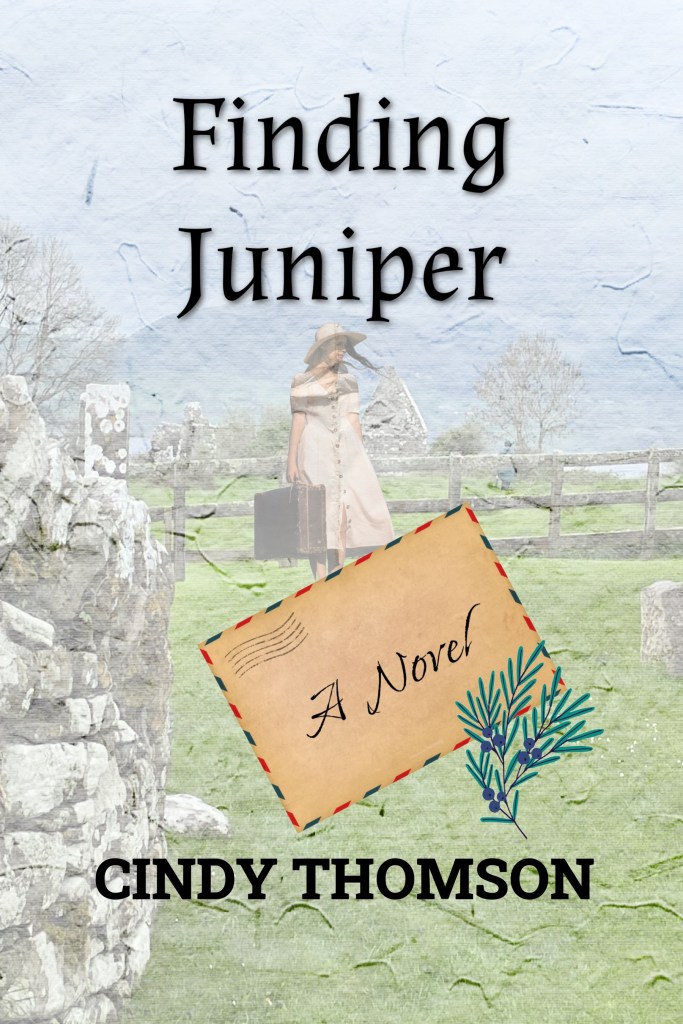
Meet Juniper from Cindy Thomson’s New Novel, Finding Juniper

For Patrick Doyle, the claim that time heals all wounds is a cruel lie.

In 1920, returning from WWI, Paddy finds Ireland creeping toward civil war. Invisible borders separate people, including Paddy and his pregnant girlfriend. With few prospects, Paddy sails to America. However, America is far from the land of opportunity he’d hoped for. And worse, his girl refuses to follow him because of her political involvement.

Thirty years later, Patrick has moved on with his life, building a new family. A letter arrives, suggesting the child he’d assumed died may be alive. Patrick’s American daughter Mardell pushes him to find out what happened to her sister, named Juniper. Patrick anxiously sails to Ireland.

Juniper endured a childhood in institutions, and when she’s released, she moves on without the parents who left her. Operating an apothecary out of an inherited cottage where villagers are slow to trust outsiders, Juniper finally finds a home when her grandmother arrives. Just as she feels comfortable and content, her father shows up at her door, bringing shocking news about her mother.

Finding Juniper invites readers on a journey of confronting the past, healing from old traumas, and redefining what family truly means.


Welcome to the blog, Juniper. Because of the time period of the novel, you might not know what that is.

Juniper: You said this was an interview. Is that what you mean?

Ah, yes, an interview. Readers would like to know about you, especially if they haven’t read the book.

Juniper: [Gasp!] They haven’t read the book? They must or I will cease to exist.

Don’t worry. You’re real to those who have. Tell us something about your childhood. When were you born?

Juniper: Now you sound like those doctors at St. Giles. I was born on the second of June, 1920, in Dublin, Ireland. My childhood was not happy, but you don’t want to hear about that.

Oh, we do! Happy or not, your story will help us get to know you.

Juniper: [Sigh] It won’t really because I’m a new woman, now. But I’ll tell you a wee bit. I grew up without parents, but I wasn’t an orphan. Ireland in those days, well, things were all upside down. My mother got involved in politics. Long story, but she wasn’t in a right state to raise a child. Things are better in Ireland now, in 1950, and I’m doing quite well. When I was young my mother sent me to live with the nuns for a time. I rebelled a bit as a child, so they moved me to St. Giles.

That’s a hospital?

Juniper: Of sorts. So they called it. It was really a place where they put folks, mostly girls, whose families don’t want them or maybe just couldn’t deal with them. They let me go when I was older.

Your parents didn’t want you? I heard a different story.

Juniper: I heard it too. Call it what you will, but in my mind I was abandoned. I’m still trying to adapt.

Say no more. We don’t want to spoil the story.

Juniper: I was happy, though, when I got to work in the gardens. I learned a lot about plants from the gardner at St. Giles. And also from letters my granny sent me. She made herbal cures as well. I am what you might call an herbalist or a natural healer. I think that’s the term from your time.

How fascinating. I bet folks appreciate the things you make.

Juniper: Most do. There was a wee bit of trouble once, a bit of a mix up with one of my cures.

Wait! Don’t tell us.

Juniper: Happy not to talk about that.

So, your father, Patrick, went to America?

Juniper: He did. My mother called him Paddy. I was told he’d died over there.

I heard something different. Life was difficult for him in America. At least in the beginning.

Juniper: Now you wait. Don’t be spoiling things, as you said.

Sorry. Isn’t there a handsome new rector in your village now?

Juniper: Yes, Donal. He’s the kindest person I have ever met. My experience with the church has been less than pleasant, but meeting him has made me look at things differently.

Will something develop between you two?

Juniper: You sound like Granny. We shall see.

Why don’t you tell us about your name?

Juniper: Ah, my name. Granny always called me Juniper, but my birth name was Anna. St. Giles would only call me Anna, so I got used to that. I like Juniper, though, named as I was for a lovely green plant. There is such beauty in the world out of doors. Much healing in plants.

Do you find healing by working in the garden? And in the novel as well?

Juniper: I do feel calmer when I toil in my fields, but healing for my whole self? You’ll have to read to find out.

Thanks for chatting with us, Juniper.


Known for the inspirational Celtic theme employed in most of her books, Cindy Thomson is the author of both fiction and nonfiction. A genealogy enthusiast, she writes from her home in Ohio where she lives with her husband Tom near their three grown sons and their families. Visit her online at CindysWriting.com