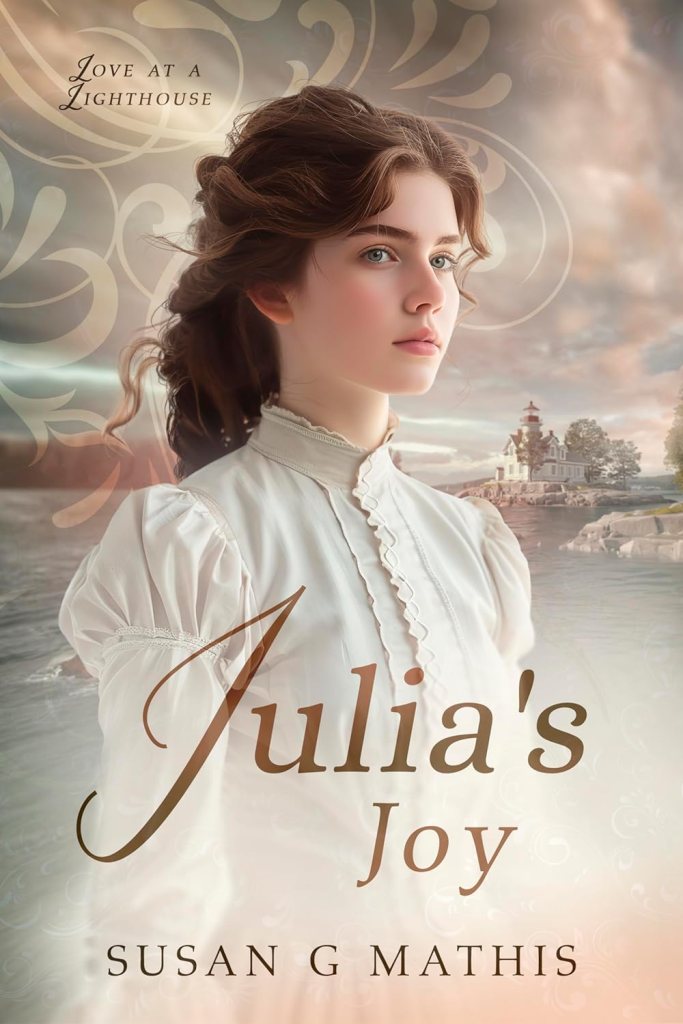
A Chat With Julia Collins from Julia’s Joy by Susan G. Mathis

Welcome Julia Collins. Why don’t you tell us a little about yourself.

I grew up in Brockville, Canada. My father was a businessman from a wealthy family. My mother, Myrtle, was from a middle-class family. They died when I was fourteen, and my grandmother recently died, too. Now my life is very scary and uncertain. 

Tell me something about you that readers may find surprising?

I have come to love the Thousand Islands along the St. Lawrence River’s main shipping channel. The 1,864 islands are shared almost equally between New York state and Ontario, Canada. It’s magical. Huge freighters pass by us and the tiny islands along the main channel and share the waterway with all kinds of boats including ships, kayaks, and canoes.

Tell us more about the Sister Island Lighthouse where you are staying for the summer. 

Sister Island are a string of three tiny islets linked together by concrete breakwalls and walkways, that run parallel to and just south of the international boundary line separating the United States and Canada. It marks a precarious spot along the channel, and the beautiful lighthouse was built of dark gray limestone and embellished beautifully. A fixed white light of the sixth-order, illuminating an arc of 360°, keeps everyone safe.

Who is this William I keep hearing about? 

William Dodge, Jr., became Sister Island Lightkeeper last year after his father passed away from dropsy of the heart, and he suffers from chronic pleurisy. His mother still lives on the island with him. He’s quiet, godly, reflective, and loves the river and life on the island. His faith is strong, and he finds peace in relationship with God. And shhh…I really like him.

And his mother? Do you like her?

Mrs. Dodge was Granny’s friend. She’s a gentle, kind, godly woman who has become like a mother to me. I understand why Granny wanted me to come here, and I never want to be without her wisdom and love.

If you could leave readers with one message, what would it be? 

Trust in God and His plans for you. Hope for a better future. Hope for love. Hope for healing. God can heal a broken heart and help you forgive those who hurt you. He did that for me.

Here are a few fun, quick questions:  

What is your favorite hobby? Painting. I find great joy in it.

Please describe yourself with three words. Creative, questioning, lonely. 

What’s your most precious possession? My art set.

Are you a glass-half-full or glass-half-empty kind of person?

I’m not sure. I try to see the bright side of things, but after all my losses, I’m not sure.

What is your biggest pet peeve?

People misunderstand me. Though I try, folks often judge me wrongly.

What is your biggest secret?

I’d love to be part of the Dodge family. Shhh….don’t tell them, please.

What is your heart’s deepest desire? 

That’s easy. To love and be loved. After losing my parents and grandmother, aloneness is a terrible place to be.

What have you learned about yourself in the course of your story?  

I’ve learned to trust in God and His plans for me. God can heal a broken heart and has helped me forgive those who hurt me. 

About Julia’s Joy:

She came to claim her inheritance, but the mysterious scarred lighthouse keeper makes her question all her plans.

When Julia Collins reluctantly sets foot on Sister Island, compelled by her wealthy grandmother’s will, she is intent on claiming her inheritance and moving on. But when she experiences the peaceful, faith-filled island life, and connects with the handsome lightkeeper, William, Julia finds herself confronting her open wounds from her parents’ deaths.

William Dodge, lightkeeper of Sister Island, harbors a heart hardened by a past betrayal. Between that and his chronic pleurisy, he wants nothing to do with love. But when Julia arrives on the island bursting with vitality and unconventional notions, William’s world is turned upside down. As she chips away at the walls William has built for himself, he finds his reluctance waning.But just as love begins to blossom between them, Julia is faced with a tempting proposal from a prominent Brockville family. Will she succumb to societal expectations or choose the richness of her island life and the love of the steadfast lightkeeper?


About Susan:

Susan G Mathis is an international award-winning, multi-published author of stories set in the beautiful Thousand Islands, her childhood stomping ground in upstate NY. Susan has been published more than thirty times in full-length novels, novellas, and non-fiction books. She has thirteen in her fiction line including, The Fabric of Hope: An Irish Family Legacy, Christmas Charity, Katelyn’s Choice, Devyn’s Dilemma, Sara’s Surprise, Reagan’s Reward, Colleen’s Confession, Peyton’s Promise, Rachel’s ReunionMary’s Moment, A Summer at Thousand Island House, Libby’s Lighthouse, and Julia’s Joy, the second in her three-book lighthouse series. Her book awards include three Illumination Book Awards, four American Fiction Awards, three Indie Excellence Book Awards, five Literary Titan Book Awards, two Golden Scroll Awards, and a Selah Award. Susan is also a published author of two premarital books, two children’s picture books, stories in a dozen compilations, and hundreds of published articles. Susan makes her home in Northern Virginia and enjoys traveling around the world but returns each summer to enjoy the Thousand Islands. Visit www.SusanGMathis.com/fiction for more. 

Where can people find you online?

Susan’s website: https://www.susangmathis.com/fiction-books

Buy links: Amazon | Barnes&Nobles | Wild Heart Books

Social media links: Website |Author Central |  Facebook | Twitter | Blog | InstagramGoodreads l Book BubPinterest | 

Julia’s Joy book trailer: https://www.youtube.com/watch?v=Rq7XLUohjrA
A Chat with Arthur from Sleeping in the Sun by Joanne Howard

Amazon Affiliate Link Helps to Support the Blog

When two visitors arrive to the boarding house in India where an American boy is coming of age during the British Raj, truths unravel, disrupting his life and challenging the family’s sense of home. A unique historical angle ideal for fans of The Poisonwood Bible and The Inheritance of Loss.

In the last years of the British Raj, an American missionary family stays on in Midnapore, India. Though the Hintons enjoy white privileges, they have never been accepted by British society and instead run a boarding house on the outskirts of town where wayward native Indians come to find relief.

Young Gene Hinton can’t get out from under the thumb of his three older brothers, and the only person he can really relate to is Arthur, his family’s Indian servant. But when Uncle Ellis, a high-ranking British judge, suddenly arrives and announces he’ll be staying indefinitely in their humble house, far from his prestigious post in Himalayan foothills, life as Gene knows it is interrupted. While his brothers are excited at the judge’s arrival, he is skeptical as to why this important man is hiding out with them in the backwaters of Bengal.

Also skeptical is Arthur. Then an Indian woman appears on their doorstep—and, after growing close to her, he learns the sinister truth about the judge. Torn between a family that has provided him shelter, work, and purpose his whole life and the escalating outrage of his countrymen, Arthur must decide where his loyalties lie—and the Hintons must decide if they can still call India home.

So, Arthur. Please introduce yourself. What is your role in the Hinton household?

I am the family’s servant. The only one, actually. Which is unusual for such a large house and a family of four young boys, but…they manage with just me. Mrs. Hinton expects me to do the shopping in the bazaar, to tend to garden, to cook meals and serve them…oh, and to feed Minnie, the monkey they keep in the shed.

Is that so? Do many animals take up residence at the house?

Oh no, just Minnie. The house is a boarding house for humans, though. As part of the mission, the Hintons take in anyone who needs a momentary place to stay. It’s nice. The house is a bit far from town and I have so much to do, I don’t get many chances to meet other folk.

What do you do for yourself? 

I shouldn’t say, but I like to get a quiet moment away and enjoy a bidi. Mr. Hinton doesn’t like it, smoking is a sin and all, but I think he must know and doesn’t say anything. Or a pariah dog recently started showing up, and she likes to play with me. She’s quite sweet, and I’ve grown fond of her. Almost thinking of her as my own. I’ve never really had anyone of my own…

I’ve heard this is a somewhat turbulent time in India. Have you seen or experienced any political unrest?

The country is always changing. There’s a serious anti-Raj movement that’s gaining momentum, when just a few decades ago, such sentiment would have been dangerous. But Calcutta and Bengal have always been on the more progressive side of things. Perhaps you have heard of the Bengal Renaissance? I don’t have much time to read, but I know there were works about independence and individualism, that sort of thing. Sounds very American, now that I think about it. But yes: I’ve seen some rallies get out of hand in the bazaar. Some people say the Raj will fall soon. But I have too much to do to pay attention to that. The Hintons depend on me to keep everything running.

Many people want the British out of India. Would that also mean the Hintons have to go? What would life be like for you with them gone?

I…don’t know. I suppose I’d be sad. I’ve known them ever since Mr. and Mrs. Hinton came here to Midnapore, when their oldest was just a baby. But maybe they could stay on? The work that they do as missionaries is with the native Indian tribes here, and I don’t see how they couldn’t go on doing that if the British weren’t in charge. They’re American, after all. Doesn’t that make them exempt?

Does it?

[Pauses.] It does. Of course it does. Because if it doesn’t…then they’re just the same as the British, in the end. And that would mean I’ve been serving the Raj in some way. Which I never intended. I know some Indians don’t have any choice, and the British employ so many people, but I tried not to. The Hintons are just an American missionary family, they don’t have the same kind of power as the British. 

How is life different for this American family compared to a typical British family?

They wouldn’t ever admit it, but of course they have less money and are not so concerned with fitting in with the rest of British society. Like I said, they’d never admit it, but I think they’re quite proud of it, not fitting in, really. It seems…American of them.


Joanne Howard is an Asian American writer from California. She holds an MFA in writing from Pacific University. Her poetry received an honorable mention from Stanford University’s 2019 Paul Kalanithi Writing Award. Her fiction has been published in The Catalyst by UC Santa BarbaraThe Metaworker Literary Magazine and the Marin Independent Journal and her nonfiction has been published in Another New Calligraphy and The Santa Barbara Independent. She lives in Santa Rosa, CA. Find out more at her website.

Instagram: @joannesbooks

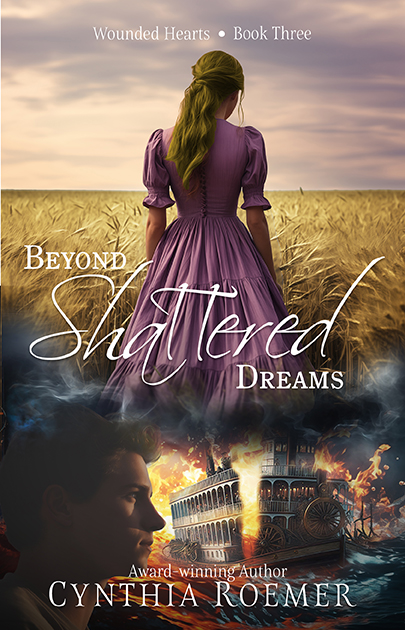
Meet Lydia Gallagher of Beyond Shattered Dreams by Cynthia Roemer

After months in a Confederate prison camp, Private Will Everett boards the Sultana eager to return home and leave behind the horrors of war. One day into the voyage, the overcrowded steamboat explodes, rendering Will injured and unable to recall his identity. With only a pocket watch and the name Will E. etched inside to guide him, Will begins a relentless quest to find his forgotten past. Scarred by her father’s untimely death, Lydia Gallagher struggles to trust God with unwanted changes in her family after the war. The arrival of an elusive, but handsome, stranger only adds to her angst. Until the intricacies of his true nature and the mysteries of his past come to light. As they work to thwart a ruthless man’s efforts to sabotage the farm, their admiration for each other deepens. But when Lydia becomes privy to information that could forever alter their lives, she must choose between losing the man she’s come to love or denying him the one thing he longs for most. 

Welcome to Novel PASTimes! We’re pleased you stopped by today.

Thank you. It’s wonderful to be here.

Share a bit about yourself—your name, where you’re from, what occupies your time.

I’m Lydia Gallagher. I live on a farm four miles west of Elmira, New York. I’ll soon turn eighteen and have two older brothers, Drew and Luke, both of which recently returned from fighting in the War Between the States.

Oh, my. I’m so glad they survived to return home. Such a terrible war. Which side did they fight on?

They fought for the Union. Yes. Truly, the war was a terrible hardship on everyone. I was not yet eleven years old when the war began. Sadly, it stole much of my youth. I still remember waving goodbye to my father as he left to fight. It would be the last time I would ever see him.

I’m so sorry. How about your mother. Is she living?

Yes. She and I grew quite close after my father’s death and my brothers left to fight. We prayed day and night for my brothers’ safe return.

With only the two of you there, how did you manage the farm?

We had Luke’s help until he left for the war in 1863. Mama and I were able to maintain a sizeable garden and our neighbor, Hal Perkins, helped put in some of our crop, but much of the land remained fallow until Drew and Luke returned.

So, with the war over, have your brothers remained on the farm or married and followed other pursuits?

Surprisingly both brothers met and fell in love with Southern women during the war. Drew married Caroline and Luke eventually married Adelaide. While I dearly loved my new sisters-in-law, I disliked the unwanted changes that came about in our family after they wed. I had such great hopes of us all remaining together. But they and God had other plans.

Hmm. Sounds serious. So, were all the changes you experienced bad ones? Or did God have anything good in store?

Grin. Well, there was one positive change that came about. A stranger happened by our place and informed us Luke had hired him to help manage the farm. I was suspicious at first. He seemed quite vague about himself and wouldn’t give any straight answers. But once I learned the reason behind his ambiguity, I understood.

Ah, and was this stranger handsome?

I’ll admit he immediately caught my eye. He was ruddy and well-muscled with sandy hair and amazing hazel eyes. Up until now, no young man had sparked my interest. I’d had a few callers, but honestly, until I met Will, not a one of them struck my fancy. Will definitely changed that. But I had a hard time discerning if he felt the same about me.

So, have things turned out as you hoped for you and Will?

Smile. That’s something you and your fellow readers will have to learn when you read my story in Beyond Shattered Dreams.


Cynthia Roemer is an inspirational, award-winning author who enjoys planting seeds of hope into the hearts of readers. Raised in the cornfields of rural Illinois, she enjoys spinning tales set in the backdrop of the mid-1800’s prairie and Civil War era. Cynthia feels blessed the Lord has fulfilled her life-long dream of being a published novelist. It’s her prayer that her stories will encourage readers in their faith. She and her husband reside on the family farm. Visit Cynthia online at: www.cynthiaroemer.com

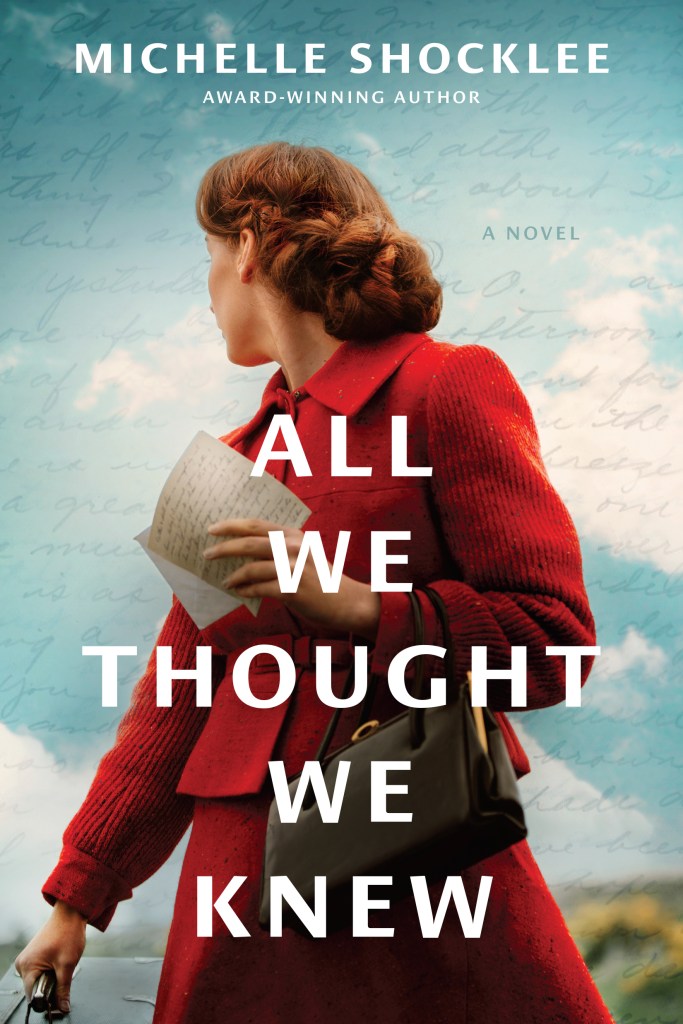
Meet Gunther Schneider from Michelle Shocklee’s All We Thought We Knew

During the turbulent days of World War II, thousands of foreigners were interned in the United States. Men, women, and even children with ties to Japan, Italy, and Germany were sent to detention camps all across the country. In Michelle Shocklee’s new novel All We Thought We Knew, readers meet Gunther Schneider, a German medical student who finds himself caught up in a frightening and seemingly hopeless situation. 

Amazon Affiliate Link Used Helps Support This Blog

NP: Hello, Gunther. It’s a pleasure to meet you. Thank you for stopping by Novel PASTimes to chat with us. 

Gunther: Danke. I’m happy to be here.

NP: Tell us about where you’re from and how you ended up in the United States. 

Gunther: I was born in Krefeld, Germany. It is very beautiful, close to the Rhine River. My parents were Gott-fearing people who believed in the truths taught in the Bible. When Hitler came into power, Mutter feared what would become of Germany. By then Vater had passed away and my older brother had joined the Nazis. Mutter thought it best for me to leave Germany and go to medical school in the United States. She believed I would be safe there.

NP: It must have been hard to leave your homeland and family. 

Gunther: Ja, it was, but I wanted to come to America and study to become a doctor. Although things did not turn out the way I’d hoped, I do not regret leaving Germany. 

NP: You were eventually arrested and detained in a camp for enemy aliens. Can you tell us about that?

Gunther: I was a student at Columbia medical school in New York City when Pearl Harbor was attacked. It may sound naïve, but I didn’t believe the US government would consider me a threat to society, being that it was Japan who’d attacked Hawaii, not Germany. I was quite shocked when I was arrested.

NP: Were your friends arrested too? 

Gunther: Ja, all of them. I’m not certain where some of them ended up, but I was sent to Camp Forrest in Tullahoma, Tennessee. 

NP: I’m not familiar with Camp Forrest. Was that a military installation?

Gunther: It was. I’m told it was one of the largest in the United States. While I was there, I saw thousands of young American men training for war. I felt sad knowing that many of them would die. Had I stayed in Germany, I would have been forced to join Hitler’s army. I’ve often wondered if I would have had to fight against some of the same soldiers I saw at Camp Forrest. 

NP: I’m sure it was hard being held as a prisoner. Was there anything about your time at Camp Forrest that brought you happiness?

Gunther: I met a special friend while I was in Tullahoma. Ava Delaney worked at the camp. She did not treat me like the enemy, which was refreshing. Unfortunately, as a German, I wasn’t always treated kindly by Americans. It was nice to have someone to talk to who didn’t judge me for where I was born. 

NP: It sounds as though you’ve been through many challenges in your life. Can you tell us where your find the strength to face them?

Gunther: My parents taught me to trust in the truths found in the Bible. When I left for America, my mother gave me my father’s Bible. Reading it reminds me that I’m not alone, even if it feels like it sometimes. The stories also remind me that people have always faced difficult challenges, but they also reveal hope. With Gott, there is always hope. 

NP: That’s very true. Thank you for sharing your story with us, Gunther.  


Michelle Shocklee is the author of several historical novels, including Appalachian Song, a Christy Award finalist, Count the Nights by Stars, a Christianity Today fiction book award winner, and Under the Tulip Tree, a Christy and Selah Awards finalist. Her work has been featured in numerous Chicken Soup for the Soul books, magazines, and blogs. Married to her college sweetheart and the mother of two grown sons, she makes her home in Tennessee, not far from the historical sites she writes about. Visit her at MichelleShocklee.com.

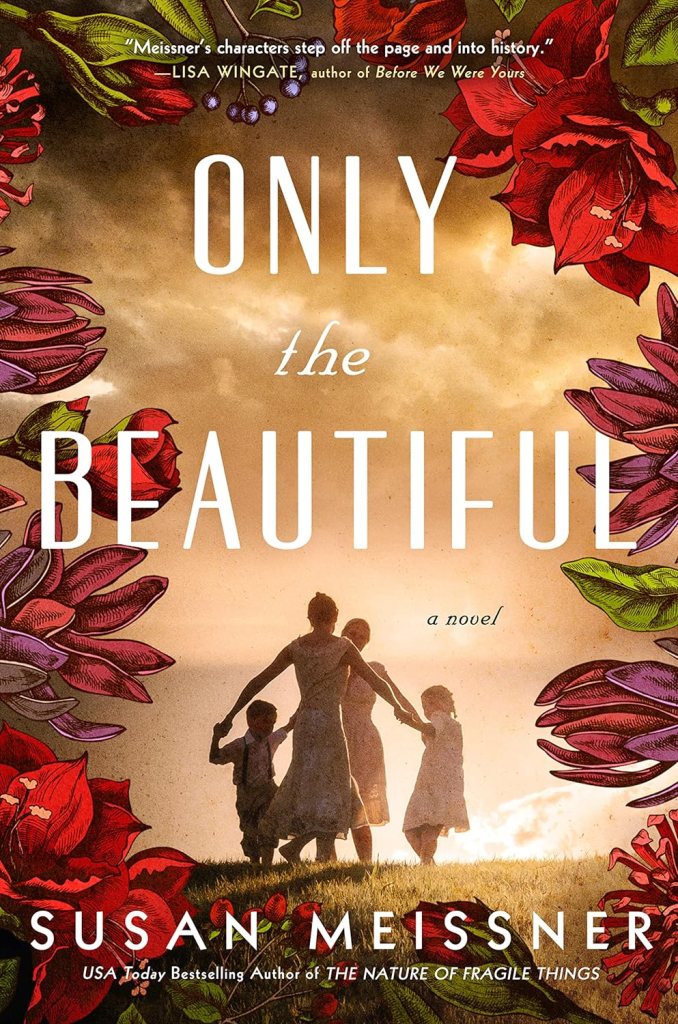
Book Review: Only the Beautiful by Susan Meissner

Amazon Affiliate Link Used Helps to Support this Blog

This touching story begins in 1938 with a teenage girl named Rosie in California who becomes an orphan. Taken in my her parents’ employer, she falls victim to the man of the house and gets pregnant. But Rosie has a secret that made her different, and her secret is betrayed so that she is not sent to a home for unwed mothers but to a mental institution. This thread is intriguing by itself but Meissner links Rosie with a woman, Helen, who works in Europe as a nanny as the Nazis are targeting disabled children. Her heartbreaking experience leads her to do what she can to save as many children as possible. Many years after the war Helen goest back to California and learns that her brother was the father of Rosie’s baby, the only relative Helen has left. Helen had met Rosie when the girl was younger and corresponded with her a few times, But where is Rosie now and what became of her baby?

There are so many lessons we can learn from this story, inspired by the eugenics movement that existed in some places in the US until the 1970s, according to the author’s note, which is not to be missed.

I’m a fan of all of Meissner’s books, but my goodness, this one is exquisite. Highly recommend!

Reviewed by Cindy Thomson, http://www.cindyswriting.com

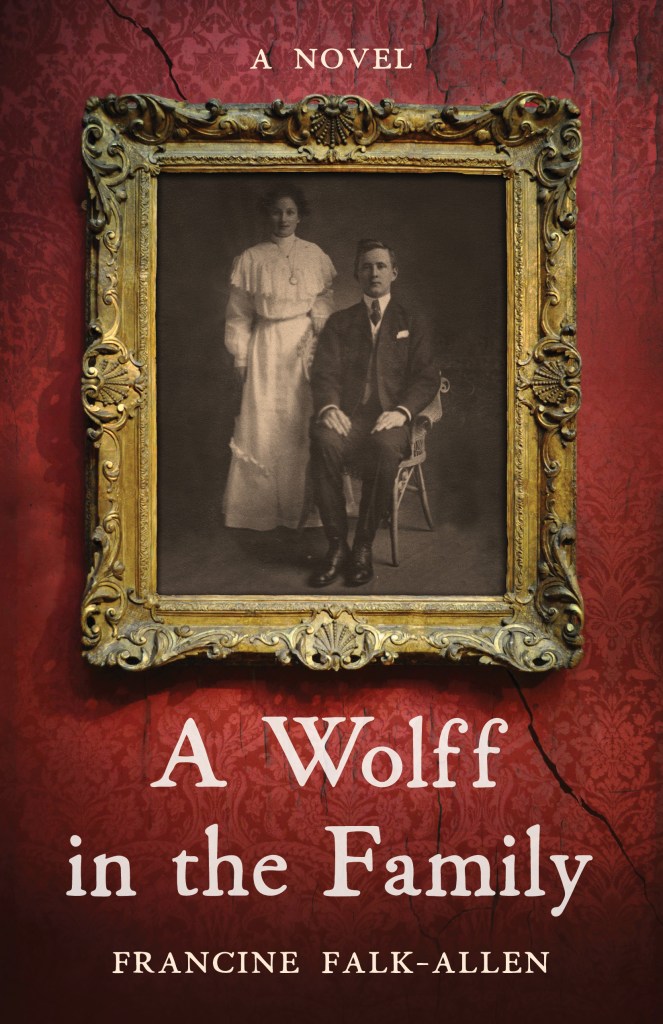
An Interview with Naomi Wolff from A Wolff in the Family by Francine Falk-Allen

Amazon Affiliate Link used supports the blog.

Interviewer: We’re here today with Naomi Wolff, whose exciting western American life was full of twists and turns, especially during the Depression. Naomi, what would you like us to know about yourself?

Naomi: Omigosh. My life exciting? I hardly think so! I just did whatever had to be done, puttin’ one foot in front of the other. I was born in Kansas, lived on farms a lot, except when I was livin’ in Ogden with my husband and family for… lessee, about eighteen years. I have been a mother most of my life. So most folks know how that sure takes up your time. It’s not like you get to do much else.

I: To start with, then, how did you meet your husband and what was it like marrying him?

N: I met Frank at a dance in Kansas City. If me and my family went anywhere at all, off the farm, we went to the little bitty town of Turner to buy feed and supplies, or we went to Kansas City for a day sometimes. Now, Frank was not really much of a dancer, but I think he went to these dances to see if he could meet a pretty girl! And I guess that’s what he did.

I: I can see you’ve always had a pretty face.

N: Well, I never had much time to fuss about my appearance. But Frank told me I had a nice face and I heard that from other people. It’s probably on the verge of sinful to brag, so I won’t say any more about that. Frank courted me a bit and then asked me to marry him pretty early on. He was handsome and had a good job with the railroad, so I thought, this is prob’ly as good as I’m gonna get around here and I said yes. I was eighteen and we married in early 1908. I think I loved him and I thought he loved me too.

Now, Frank was a little different once we got married. We were always amorous, if you know what I mean, when he come home from the rails. But he could be… whaddaya call it? Stern, I think. And given he was bringin’ home the bacon, he expected things a certain way… he wanted the kids quiet and his dinner at 6:00. I knew that was my job so I did things how he liked. Mostly.

I: How many children did you have?

N: Ha! A whole lot of ‘em. I had my firstborn, Frances (she was named after her daddy; his name was Frank Joseph and we named her Frances Josephine)…  Frances was born in November, 1908. And after that, I had eleven more, plus stillborn twins. That was a sad month for us. And then later on another one after those twelve; she was a surprise. 

I: How did you manage a houseful like that? 

N: Oh, I knew how to stretch a dollar real far. Plus we grew vegetables and berries… But with that many kids sometimes you gotta use a yardstick on ‘em, else they run roughshod. I never liked doin’ that but you got to. And Frances started helping me early on, as soon as she could fold a diaper or wash a dish. Anita was next, so I was lucky to have girls as my two oldest so they could help with the housework, the cooking, and taking care of the kids who were younger. Frances, I think she resented it a little…

I: How was your relationship with your children?

N: My relationship? I’m not sure what you mean. Did I love them? Of course I did! If you mean did we get along or were we close… well, Frances was her daddy’s girl. He was real attached to her. And since I was the one left home alone, I was the one who had to teach her right from wrong and tell her no. It wasn’t easy for me to see Frank pay more attention to Frances, either. But Anita and I, we were close. She didn’t always get along with her dad and she and Frances, bein’ so close in age, only a year apart, they butt heads a lot too.

My other kids… well, sometimes they maybe didn’t get enough attention. I loved ‘em so much, but things happened in the middle of my life that not everybody understood. So there came a time when I think some of the kids didn’t like me too much. But their dad was no saint. Lot of things he did, not all of ‘em knew about. He was gone so much… that was hard for me. 

I: Did you know Francine, who wrote this book about you?

N: Oh, for heaven’s sake. I can’t imagine why anyone would write a book about me. I’m just a mother from the country, like my mother was. But no, I never met Francine. I knew about her but my husband had died so I didn’t have a way to drive out to California to see her when she was born. I met her big sister and brother though; we went out there one time. I got to see a lot of my kids and grandkids. That was a real good time for me… prob’ly around 1941 or’42.

I: Do you want to tell me about the things that happened that people didn’t understand? 

N: Oh, no, I’d rather not. If Francine told that story, well, I just hope she told it fair. Frank… he had kind of a mean streak. He put our youngest kids in an orphanage… and I’ll just let people read the book to see why that happened. I have a few regrets in my life but mostly I think things turned out just the way God wanted. You don’t always know in your life how the cookie’s gonna crumble. We had a real hard time around 1929 but things got better.

I: That was the start of the Depression. I’m sure that was mostly what caused the strife in your life.

N: Ha! You might think. But there’s a whole lot more happened that had nothin’ to do with money or the Depression. Nothin’ at all. No, I didn’t have a whole lotta choices in my life, but I made one, changed my life, and the lives of a lotta other people. I guess that’s the story here. Yes, that would be a story worth tellin.’


FRANCINE FALK-ALLEN grew up in northern California, where she still lives. She had polio in 1951 and has lived her life as a disabled person efforting to be a “normie.” 

Falk-Allen was originally an art major and later completed her BA in Managerial Accounting, running her own business for over thirty years. She has always sought creative outlets, such as painting, singing, and writing.

She began doing extensive family genealogy research in 1999, and has traced both her maternal and paternal ancestors back to the 1600’s. 

Her two books, Not a Poster Child: Living Well with a Disability—A Memoir  and No Spring Chicken: Stories and Advice from a Wild Handicapper on Aging, and Disability, have received the Kirkus star for excellence and won other awards.

Her third book is A Wolff in the Family, a riveting early twentieth century saga set in the western United States and based on scandalous family history.

Francine facilitates a writing group and volunteers on her town’s Americans with Disabilities Act Accessibility Committee. She loves the outdoors, swimming, gardening, movies, well-written literature, being with friends and sharing British tea and a little champagne now and then. She resides in San Rafael, California, with her husband, Richard Falk.